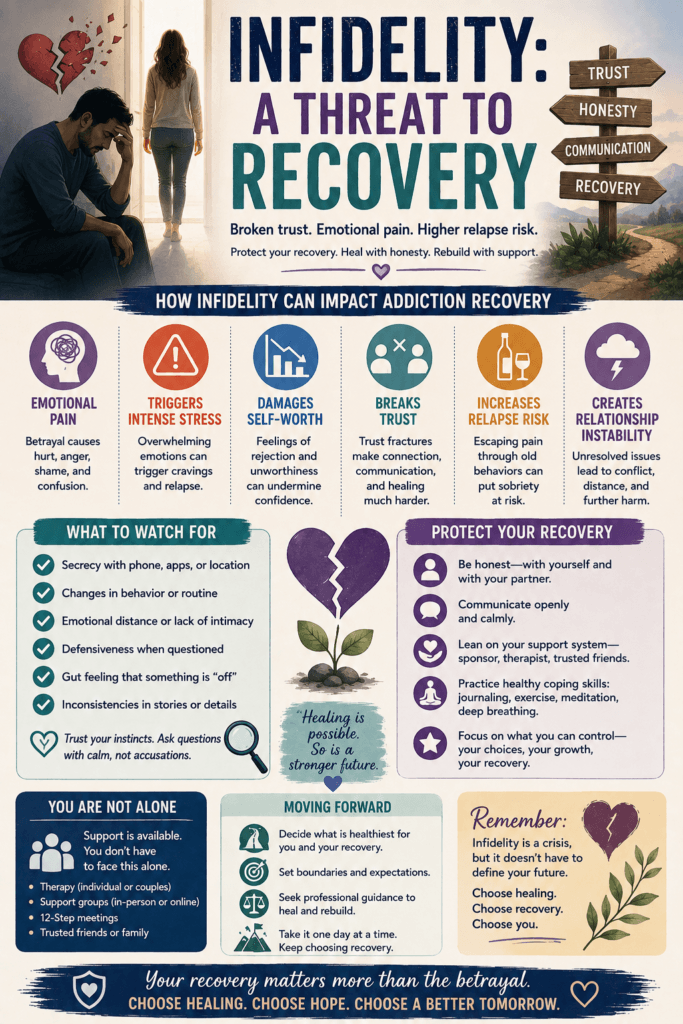
If you’re in addiction recovery, relationships take on a whole new meaning. Trust, honesty, and emotional safety become super important. If you start to worry about whether your partner’s cheating, it can kick up a huge wave of emotions like anxiety, anger, and sadness. These swirling feelings aren’t just tough; they can hit recovery hard. What follows is a rundown on spotting signs of cheating, plus how infidelity can seriously mess with addiction recovery—and what to do about it.
The Link Between Cheating, Trust, and Addiction Recovery
Recovery depends a lot on trust. Whether it’s trust in yourself, your support system, or your partner, loyalty matters. If you start feeling suspicious about your partner, or if you find out they’ve been cheating, it shakes the whole foundation you’re building in recovery.
Cheating isn’t just a relationship issue. More often than not, it’s connected to bigger problems, such as communication breakdowns or issues that may have existed even before recovery started. In my experience talking with people who are rebuilding their lives, stumbling upon infidelity during sobriety creates a storm of uncertainty. Self-doubt comes rolling in, and relapse risk can increase as a way of coping. The pain can feel overwhelming, and for someone in recovery, it’s not just a bump in the relationship but a direct hit to emotional well-being and trust. When the foundation gets shaken, it’s natural to feel lost, scared, and unsure of the next move—especially when the stakes with sobriety are so high.
Common Signs Your Partner Might Be Cheating
Being in recovery can make you a bit more sensitive to changes in your environment and relationships. Sometimes, your gut just knows something’s off. Here are some common red flags to keep an eye out for:
- Unexplained Changes in Behavior: Routines change, secretive texting emerges, or new, unexplained absences arise.
- Decreased Emotional Intimacy: Conversations become short, affection grows scarce, or your partner seems emotionally distant.
- Guarded with Their Phone or Devices: Their phone is suddenly always face down and password-protected, or they make sure not to use it near you.
- Spending More Time Away: Extra work hours, new friends, or frequent unexplained outings start to add up.
- Lack of Interest in Shared Activities: Things you usually do together no longer interest them, or they start going solo.
Noticing one or two of these signs doesn’t guarantee cheating is happening. Sometimes, life stress or other personal issues are the cause. But if several patterns show up and you feel uneasy, it’s worth having a conversation. People in recovery often have an extra-sharp sense for emotional changes, so trust your instincts but remember to seek clarity before jumping to conclusions.
How Suspicion and Infidelity Impact Addiction Recovery
Finding out about cheating, or even just suspecting it, can shake recovery pretty badly. I’ve seen firsthand how emotional pain from betrayal creeps into the rest of life. These are a few ways it can impact recovery:
- Emotional Triggers: Betrayal and stress ramp up anxiety and depression. Old coping habits start to look tempting again.
- Isolation: Withdrawal from support groups, friends, or sponsors may result from shame, embarrassment, or trust issues.
- Loss of Motivation: That “what’s the point?” feeling creeps in, threatening all the hard work you’ve done so far.
- Negative Coping Strategies: Turning back to substances or unhealthy behaviors might seem like the only way to numb the pain.
- Distrust in Future Relationships: Carrying the hurt of betrayal can make it much harder to build trust with others.
It’s super important not to bottle up these feelings. Addiction recovery is already a tough ride, and emotional pain—especially from infidelity—can throw up extra obstacles.
What to Do If You Suspect Cheating During Recovery
Uncertainty eats away at your peace of mind, and letting suspicion simmer can be overwhelming. Here’s what has helped many folks balance recovery and relationship issues:
- Pause Before Reacting: Jumping into confrontation without all the facts can make things worse. Process your feelings first with someone you trust—a sponsor, a counselor, or a solid friend.
- Gather Your Thoughts: Write down what you’ve noticed and how it makes you feel. Sometimes writing helps bring clarity to a messy situation.
- Reach Out to Your Support System: Sponsors, therapists, or peer supporters can give you a more balanced perspective and help keep you grounded.
- Decide on Communication: Consider what you need to ask and, when you’re ready, try to have a calm conversation with your partner. Using “I feel” statements can help keep things from turning into blame games.
- Prioritize Your Sobriety: Whether the relationship continues or not, keep your recovery at the top of the list. Step up meeting attendance or therapy sessions, and don’t hesitate to ask for extra help.
Challenges People Face When Handling Cheating in Recovery
Trying to work through relationship drama while focusing on recovery is no small task. Here are some common hurdles and practical ways to handle them:
- Managing Overwhelming Emotions: Strong waves of emotion can knock you off balance. Mindfulness, breathing exercises, or just taking a quick walk can help you regain some calm.
- Avoiding Isolation: The urge to shut out the world grows, but reaching out to friends or support groups can be a lifeline back to healthier habits.
- Finding the Right Help: Not every therapist is equipped for both addiction and relationship problems. Don’t be shy about asking for good referrals—your sponsor or a treatment center can often help.
- Setting Boundaries: Sometimes, you need to step back or even take a break from the relationship to protect your mental health.
- Dealing with Guilt or Shame: You might wrongly blame yourself, but honest conversations with a sponsor or therapist help break that shame cycle.
Managing Triggers
Triggers can hit especially hard after betrayal. For people in recovery, coping skills that help with cravings—like calling someone, journaling, or redirecting focus—can also make a big difference when coping with emotional pain.
Building New Coping Strategies
If the old ways of dealing with stress no longer work (or actually make things worse), try experimenting with new strategies. Simple routines help more than most people expect—maybe it’s a morning coffee, daily journaling, meditation, or a regular workout. Group meetings or creative hobbies can also become powerful new outlets for stress.
Seeking Relationship Counseling
If you and your partner are willing, seeing a couples counselor who understands addiction recovery can help a lot. Guidance and tools for honest, safe communication can make repair possible, even in tough circumstances.
Real-Life Tips and Applications
Cheating in a relationship during addiction recovery isn’t rare. Many individuals have paved the way with solid, practical tips that make handling these challenges feel less lonely and more manageable:
- Recovery Programs: Groups like Al-Anon or SMART Recovery address trust and relationship struggles. The stories and advice from others on similar paths can really help guide your own.
- Honesty Partners: Having a couple of trusted people (a friend, sponsor, or sibling) you can always be real with helps keep you grounded and supported.
- Daily Emotional Check-Ins: Taking a moment each day to ask yourself how you’re feeling, rather than stuffing it away, goes a long way toward ongoing healing.
- Digital Boundaries: If you feel tempted to snoop digitally, set rules for yourself or talk to your partner about transparency concerns to reduce stress and mistrust.
Frequently Asked Questions
Here are answers to some questions I often hear from folks working through trust issues in recovery.
Question: Does finding out about cheating always lead to relapse?
Answer: Not always. The emotional pain can increase relapse risk, but having a plan and using your support network helps keep sobriety on track.
Question: Should I break up if my partner cheats during my recovery?
Answer: This is a personal call. Some people set new boundaries and stay in the relationship, while others feel that taking space is better. Your recovery always comes first.
Question: How do I rebuild trust after cheating and addiction issues?
Answer: Rebuilding trust takes time, open conversations, and (if possible) professional counseling. Both partners should keep working on their own healing, not just on the relationship.
Key Takeaways: How to Protect Yourself and Your Recovery
Spotting possible cheating signs and noticing how these hurt cuts even deeper during addiction recovery is essential. Don’t ignore your instincts, but don’t act on suspicion alone. Request what you need—whether it’s clarity, support, or some space to process. Stay close to your support system and keep your sobriety at the top of the list. Healing after betrayal can be tough, but many people do find a firmer, healthier path on the other side—even if it’s not clear right away. Remember, you are not alone, and reaching out for help makes all the difference on this adventure to a solid and meaningful recovery.
Video: Surviving the Pain of Infidelity Without Turning Back to Addiction