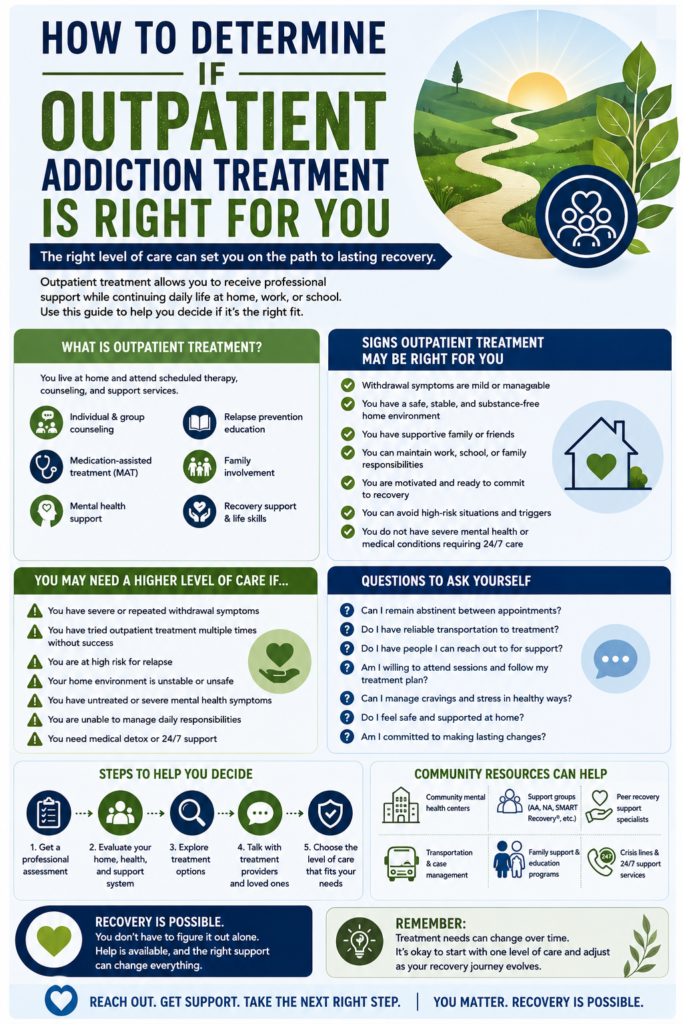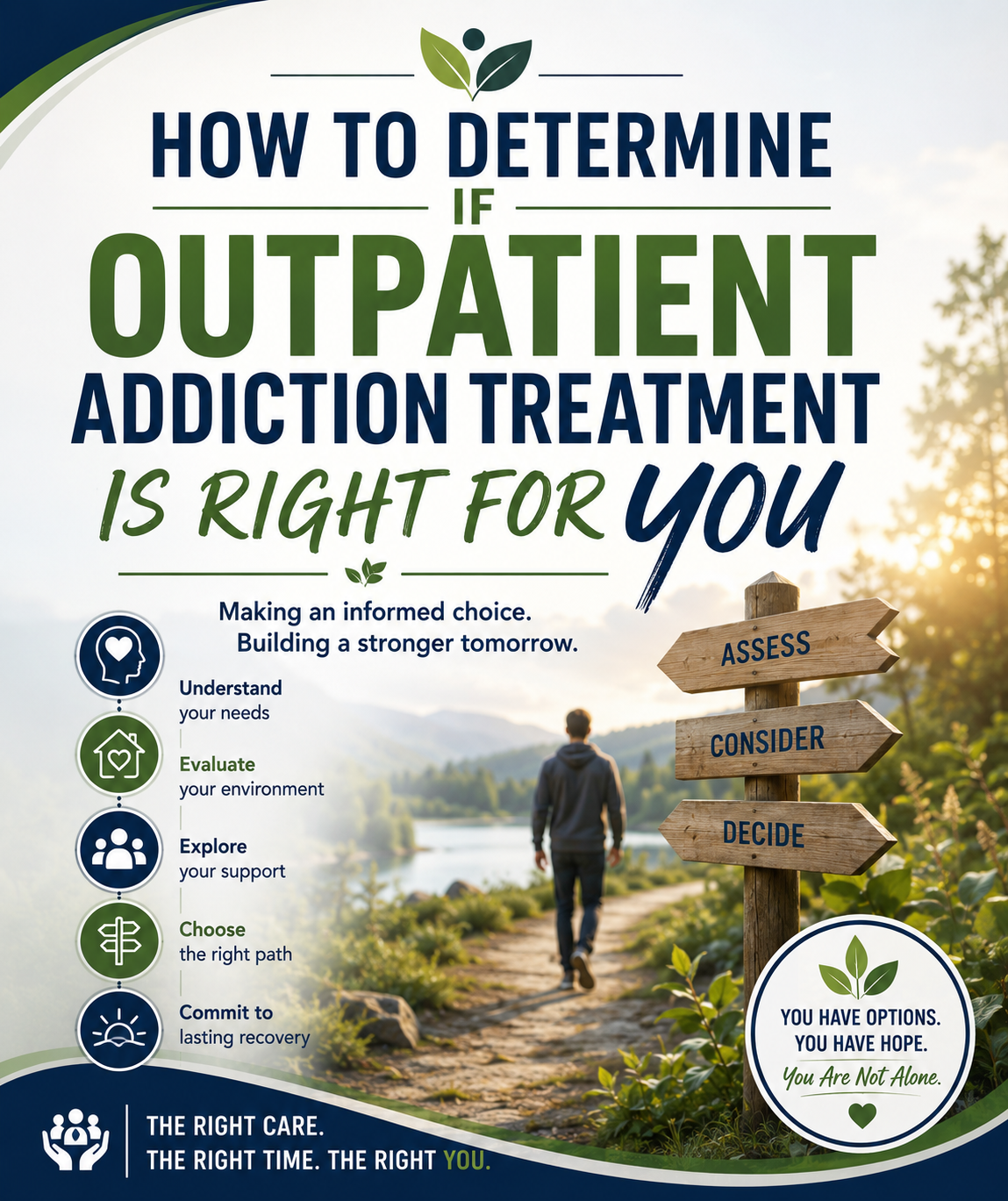
Choosing the right level of addiction treatment is one of the most important decisions an individual can make on the path to recovery. Outpatient addiction treatment offers a flexible approach that allows individuals to receive professional care while continuing to live at home, work, attend school, and maintain family responsibilities. For many people, outpatient programs provide access to counseling, group therapy, medication-assisted treatment, relapse prevention education, and recovery support without the need for residential care. However, outpatient treatment is not the best fit for everyone. Factors such as the severity of substance use, withdrawal risks, mental health conditions, home environment, support systems, and personal motivation all play a role in determining whether outpatient care can effectively support recovery. Understanding these factors can help individuals and families make informed decisions about the level of care most likely to promote long-term success and lasting recovery.
How to Determine If Outpatient Addiction Treatment Is Right for You
Outpatient addiction treatment can be an effective option for many people seeking recovery from substance use disorders. Unlike residential or inpatient treatment, outpatient programs allow individuals to live at home while attending therapy, counseling, medication appointments, and recovery support services. Determining whether outpatient treatment is the right choice depends on several personal, medical, and social factors.
What Is Outpatient Addiction Treatment?
Outpatient treatment provides structured addiction care without requiring a person to stay overnight in a treatment facility. Services may include:
- Individual counseling
- Group therapy
- Family therapy
- Medication-assisted treatment (MAT)
- Relapse prevention education
- Mental health treatment
- Recovery support services
Programs vary in intensity, from weekly counseling sessions to intensive outpatient programs (IOPs) that meet several days per week.
Signs Outpatient Treatment May Be Right for You
1. Your Withdrawal Symptoms Are Mild or Manageable
Outpatient treatment may be appropriate if:
- You do not require medical detoxification.
- Withdrawal symptoms are expected to be mild.
- A healthcare provider determines that outpatient care is safe.
Individuals at risk for severe withdrawal from alcohol, benzodiazepines, or certain other substances may require a higher level of care.
2. You Have a Stable Living Environment
Outpatient treatment works best when:
- Home is safe and supportive.
- Substance use is not occurring regularly in the household.
- Family or friends encourage recovery.
A stable environment can strengthen treatment success.
3. You Can Maintain Daily Responsibilities
Many people choose outpatient treatment because it allows them to:
- Continue working
- Attend school
- Care for children
- Meet family obligations
This flexibility helps individuals receive treatment while maintaining important life responsibilities.
4. You Have Strong Motivation for Recovery
Outpatient treatment often requires a high degree of personal responsibility. Success is more likely when individuals:
- Attend appointments consistently
- Follow treatment recommendations
- Practice recovery skills between sessions
- Stay engaged in the recovery process
5. You Have Supportive Relationships
Positive support from:
- Family members
- Friends
- Recovery groups
- Peer recovery specialists
can improve treatment outcomes and help maintain accountability.
6. You Do Not Have Severe Co-Occurring Medical or Psychiatric Conditions
People with severe mental health symptoms, active psychosis, suicidal thoughts, or complex medical conditions may need a higher level of care before transitioning to outpatient treatment.
Signs You May Need a Higher Level of Care
Residential or inpatient treatment may be more appropriate if:
- Multiple outpatient attempts have been unsuccessful.
- Severe withdrawal is expected.
- There is a high risk of relapse.
- The home environment is unsafe.
- Serious mental health symptoms are present.
- There is ongoing exposure to substance use triggers.
A professional assessment can help determine the most appropriate level of care.
Questions to Ask Yourself
Consider the following:
- Can I stay abstinent between appointments?
- Is my home environment supportive of recovery?
- Do I have reliable transportation to treatment?
- Am I willing to attend counseling and support meetings regularly?
- Can I manage cravings safely outside a treatment facility?
- Do I have people I can contact when I need support?
Honest answers can help guide treatment decisions.
Benefits of Outpatient Treatment
Potential advantages include:
- Greater flexibility
- Lower cost than residential treatment
- Ability to remain with family
- Opportunity to practice recovery skills in real-life settings
- Continued employment or education
- Access to medication-assisted treatment
Challenges of Outpatient Treatment
Potential challenges include:
- Greater exposure to triggers
- Less supervision
- Increased personal responsibility
- Easier access to substances
- Need for strong motivation and support
Understanding these challenges helps individuals prepare for success.
Conclusion
Outpatient addiction treatment can be an excellent option for individuals who have a stable living environment, manageable withdrawal symptoms, supportive relationships, and a strong commitment to recovery. It allows people to receive professional treatment while continuing their daily responsibilities and practicing recovery skills in real-world settings. However, outpatient care is not appropriate for everyone. A thorough assessment by a qualified addiction professional can help determine the level of care that best matches an individual’s needs, ensuring the safest and most effective path toward long-term recovery.
Self-Management Strategies: How to Determine If Outpatient Addiction Treatment Is Right for You
Choosing the right level of addiction treatment is an important step in recovery. Outpatient addiction treatment offers flexibility and allows individuals to continue living at home while receiving professional support. However, successful outpatient treatment requires honesty, self-awareness, commitment, and active participation. The following self-management strategies can help individuals determine whether outpatient addiction treatment is the right fit for their recovery needs.
1. Conduct an Honest Self-Assessment
Ask yourself:
- How severe is my substance use?
- Have I experienced withdrawal symptoms?
- Can I remain abstinent between appointments?
- How motivated am I to make changes?
Being honest about your current situation helps identify the level of support you may need.
2. Evaluate Your Home Environment
Consider whether your living situation supports recovery:
- Is your home safe and stable?
- Are substances readily available?
- Do household members support your recovery?
- Are there frequent triggers or conflicts?
A supportive environment often increases the chances of success in outpatient treatment.
3. Assess Your Ability to Manage Cravings
Outpatient treatment requires individuals to cope with triggers and cravings outside of a treatment facility. Evaluate:
- How often do cravings occur
- Your ability to use coping skills
- Whether you have strategies for high-risk situations
- Access to immediate support when needed
4. Track Your Substance Use Patterns
Keeping a journal can help identify:
- Frequency of use
- Triggers
- Emotional patterns
- High-risk situations
- Progress toward recovery goals
Understanding your patterns can help determine whether outpatient care provides enough support.
5. Identify Your Support System
Strong support often improves outpatient treatment outcomes. Consider:
- Family support
- Friends who encourage recovery
- Recovery groups
- Sponsors or mentors
- Peer Recovery Support Specialists
The more support available, the more successful outpatient treatment may be.
6. Review Previous Treatment Experiences
Ask yourself:
- Have I tried outpatient treatment before?
- What worked well?
- What barriers affected success?
- Would a higher or lower level of care be more appropriate now?
Past experiences can provide valuable insights into current treatment needs.
7. Learn About Different Levels of Care
Educate yourself about:
- Standard outpatient programs
- Intensive outpatient programs (IOP)
- Partial hospitalization programs (PHP)
- Residential treatment
- Medication-assisted treatment (MAT)
Understanding all options helps ensure you choose the most appropriate level of care.
8. Develop a Recovery Readiness Plan
Create a written plan that includes:
- Recovery goals
- Appointment schedules
- Emergency contacts
- Coping strategies
- Relapse prevention techniques
Planning ahead increases accountability and preparedness.
9. Monitor Mental Health Symptoms
Many individuals experience co-occurring mental health conditions. Track:
- Anxiety
- Depression
- Trauma symptoms
- Mood changes
- Sleep problems
Severe symptoms may indicate the need for additional services or a higher level of care.
10. Commit to Active Participation
Outpatient treatment works best when individuals:
- Attend sessions consistently
- Complete assignments
- Practice new coping skills
- Participate in support groups
- Communicate openly with providers
Recovery requires active engagement rather than passive attendance.
11. Be Willing to Reevaluate Your Needs
Recovery needs can change over time. Regularly assess:
- Progress toward goals
- Relapse risk
- Mental health status
- Treatment effectiveness
If outpatient treatment is not meeting your needs, discuss alternative options with your treatment team.
12. Work With Qualified Professionals
Seek professional assessments from:
- Addiction counselors
- Physicians
- Psychiatrists
- Therapists
- Addiction medicine specialists
Professional guidance can help determine the safest and most effective treatment plan.
Conclusion
Determining whether outpatient addiction treatment is right for you requires honest self-reflection, careful assessment of your support system, and a realistic understanding of your recovery needs. Individuals who have a stable environment, manageable cravings, supportive relationships, and strong motivation often benefit from outpatient care. By actively evaluating your situation, tracking progress, developing recovery skills, and working closely with healthcare professionals, you can make informed decisions that support long-term recovery and overall well-being.
Family Support Strategies: How to Determine If Outpatient Addiction Treatment Is Right for You
Family members can play a valuable role in helping a loved one determine whether outpatient addiction treatment is the most appropriate level of care. Because outpatient treatment allows individuals to live at home while receiving therapy and recovery services, family involvement often contributes significantly to treatment success. The following family support strategies can help families assess readiness, offer encouragement, and foster an environment conducive to recovery.
1. Learn About Outpatient Treatment
Families should educate themselves about:
- Standard outpatient programs
- Intensive outpatient programs (IOP)
- Medication-assisted treatment (MAT)
- Counseling and therapy services
- Recovery support programs
Understanding treatment options helps families make informed decisions and provide realistic expectations.
2. Encourage Honest Self-Assessment
Support your loved one in evaluating:
- Substance use severity
- Withdrawal symptoms
- Previous treatment experiences
- Mental health concerns
- Recovery goals
Honest conversations can help identify whether outpatient treatment provides enough structure and support.
3. Evaluate the Home Environment
Families should ask:
- Is the home free of alcohol or illicit substances?
- Are household members supportive of recovery?
- Are there frequent conflicts or triggers?
- Can the environment promote healing and accountability?
A stable home environment is one of the strongest predictors of outpatient treatment success.
4. Provide Emotional Support
Recovery can be challenging and stressful. Families can help by:
- Listening without judgment
- Offering encouragement
- Celebrating progress
- Avoiding criticism or blame
- Remaining patient during setbacks
Emotional support can strengthen motivation and engagement in treatment.
5. Encourage Consistent Treatment Participation
Family members can support recovery by encouraging:
- Attendance at therapy sessions
- Participation in support groups
- Medication adherence
- Completion of treatment assignments
- Regular communication with providers
Consistency is often essential for successful outpatient recovery.
6. Recognize Signs That More Intensive Care May Be Needed
Families should be aware of warning signs such as:
- Frequent relapses
- Severe withdrawal symptoms
- Unsafe living conditions
- Untreated mental health symptoms
- Continued high-risk behaviors
These factors may indicate that residential or inpatient treatment should be considered.
7. Help Build a Recovery Support Network
Encourage connections with:
- Recovery support groups
- Sponsors
- Peer Recovery Support Specialists (PRSS)
- Counselors
- Trusted friends and family members
A strong support network can improve accountability and reduce isolation.
8. Participate in Family Therapy
Family therapy can help:
- Improve communication
- Resolve conflicts
- Address unhealthy family patterns
- Strengthen recovery support
- Develop realistic expectations
Family involvement often improves treatment outcomes.
9. Support Healthy Daily Routines
Families can encourage:
- Regular sleep schedules
- Healthy nutrition
- Physical activity
- Stress management practices
- Structured daily activities
Healthy routines support both physical and emotional recovery.
10. Learn About Relapse Prevention
Understanding relapse warning signs allows families to respond early. Signs may include:
- Isolation
- Mood changes
- Increased stress
- Missing appointments
- Returning to old social circles
- Loss of motivation
Early intervention can help prevent a return to substance use.
11. Establish Healthy Boundaries
Support does not mean removing all consequences. Families should:
- Avoid enabling behaviors
- Encourage accountability
- Maintain clear expectations
- Support treatment recommendations
Healthy boundaries promote responsibility while maintaining support.
12. Stay Flexible Throughout Recovery
Recovery needs can change over time. Families should remain open to:
- Adjusting support strategies
- Reassessing treatment effectiveness
- Considering different levels of care if needed
- Celebrating growth and progress
Flexibility helps families adapt to evolving recovery needs.
Conclusion
Families can play a powerful role in determining whether outpatient addiction treatment is the right choice for a loved one. By educating themselves about treatment options, evaluating the home environment, encouraging treatment participation, and providing emotional support, families help create conditions that promote recovery success. While outpatient treatment can be highly effective for many individuals, ongoing assessment, healthy boundaries, and strong family involvement can help ensure that the chosen level of care continues to meet the individual’s needs throughout the recovery journey.
Community Resource Strategies: How to Determine If Outpatient Addiction Treatment Is Right for You
Community resources can play a significant role in helping individuals determine whether outpatient addiction treatment is the most appropriate level of care. Through education, professional assessments, peer support, and access to recovery services, communities can provide the guidance and support needed to make informed treatment decisions. Understanding and utilizing available resources can improve treatment outcomes and support long-term recovery.
1. Access Professional Assessment Services
One of the most important community resources is a professional substance use assessment. Addiction counselors, physicians, social workers, and behavioral health specialists can evaluate:
- Substance use severity
- Withdrawal risk
- Mental health conditions
- Physical health concerns
- Recovery support needs
These assessments help determine whether outpatient treatment is appropriate or if a higher level of care is needed.
2. Utilize Community Behavioral Health Centers
Community mental health and addiction treatment centers often provide:
- Screening and evaluations
- Outpatient counseling
- Intensive outpatient programs (IOP)
- Medication-assisted treatment (MAT)
- Case management services
These centers help individuals explore treatment options based on their unique needs.
3. Attend Recovery Support Groups
Community-based support groups can provide valuable insight into different treatment experiences. Examples include:
- Alcoholics Anonymous (AA)
- Narcotics Anonymous (NA)
- SMART Recovery
- Faith-based recovery groups
Hearing from others in recovery can help individuals better understand whether outpatient treatment is a good fit for their situation.
4. Connect With Peer Recovery Support Specialists
Peer Recovery Support Specialists (PRSS) provide:
- Recovery coaching
- Resource navigation
- Emotional support
- Guidance based on lived experience
Peers can help individuals understand the realities of outpatient treatment and what is required for success.
5. Participate in Community Education Programs
Educational workshops and public health programs can teach:
- Addiction and recovery basics
- Treatment options
- Levels of care
- Relapse prevention strategies
- Family involvement techniques
Education empowers individuals to make informed decisions about treatment.
6. Explore Medication-Assisted Treatment Resources
Many communities offer access to:
- Buprenorphine providers
- Methadone clinics
- Naltrexone treatment programs
- Integrated counseling services
Medication-assisted treatment can significantly improve recovery outcomes for many individuals receiving outpatient care.
7. Utilize Family Support Programs
Community organizations often provide:
- Family education classes
- Family therapy
- Support groups for loved ones
- Caregiver resources
Family involvement can strengthen recovery and improve outpatient treatment success.
8. Access Transportation and Case Management Services
Practical barriers can interfere with participation in outpatient treatment. Community agencies may offer:
- Transportation assistance
- Housing support
- Employment resources
- Financial assistance programs
- Care coordination
Reducing barriers helps individuals remain engaged in treatment.
9. Seek Co-Occurring Mental Health Services
Many individuals with substance use disorders also experience:
- Depression
- Anxiety
- PTSD
- Bipolar disorder
- Other mental health conditions
Communities that offer integrated mental health and addiction services can provide more comprehensive care.
10. Learn About Local Crisis Resources
Knowing where to turn during a crisis is essential. Communities often provide:
- Crisis hotlines
- Mobile crisis teams
- Emergency behavioral health services
- Detoxification programs
- Emergency psychiatric evaluations
These resources can help individuals access higher levels of care if needed.
11. Participate in Recovery-Friendly Community Activities
Recovery-oriented community programs can promote:
- Social connection
- Healthy recreation
- Volunteer opportunities
- Employment readiness
- Life skills development
These activities support long-term recovery while reinforcing treatment goals.
12. Reevaluate Treatment Needs Regularly
Community providers can help individuals reassess their progress and determine whether:
- Outpatient treatment remains appropriate
- More intensive services are needed
- Treatment goals should be adjusted
- Additional support should be added
Recovery is a dynamic process, and treatment plans should evolve as needs change.
Conclusion
Community resources provide essential support for individuals trying to determine whether outpatient addiction treatment is the right choice. Through professional assessments, behavioral health services, peer recovery programs, family support, medication-assisted treatment, and recovery-focused community activities, individuals can gain the information and support necessary to make informed treatment decisions. By actively utilizing available resources and maintaining ongoing communication with healthcare professionals, individuals can choose a level of care that best supports their recovery goals and long-term well-being.
Frequently Asked Questions
Here are some common questions:
1. What is outpatient addiction treatment?
Outpatient addiction treatment allows individuals to receive counseling, therapy, medication management, and recovery support while continuing to live at home and maintain daily responsibilities such as work, school, or family obligations.
2. How is outpatient treatment different from inpatient treatment?
Outpatient treatment does not require overnight stays. Inpatient or residential treatment involves living at a treatment facility and receiving around-the-clock care and supervision.
3. Who is a good candidate for outpatient treatment?
Outpatient treatment may be appropriate for individuals who:
- Have a stable living environment
- Have mild to moderate substance use disorders
- Are motivated to participate in recovery
- Have supportive family or friends
- Do not require medical detoxification
4. How do I know if my addiction is severe enough to require inpatient treatment?
A professional assessment can help determine the severity of your substance use disorder. Factors such as withdrawal risk, relapse history, mental health conditions, and home environment are often considered.
5. Can I continue working while attending outpatient treatment?
Yes. One of the main advantages of outpatient treatment is flexibility. Many programs offer morning, afternoon, or evening sessions to accommodate work and family schedules.
6. What services are typically offered in outpatient treatment?
Services may include:
- Individual counseling
- Group therapy
- Family therapy
- Relapse prevention education
- Medication-assisted treatment (MAT)
- Mental health services
- Recovery coaching
7. What is an Intensive Outpatient Program (IOP)?
An Intensive Outpatient Program (IOP) provides a higher level of care than standard outpatient treatment, often involving several hours of therapy multiple days per week while allowing participants to live at home.
8. Is outpatient treatment effective?
Yes. Outpatient treatment can be highly effective for many individuals, particularly when combined with strong motivation, social support, and consistent participation.
9. What are the benefits of outpatient treatment?
Benefits may include:
- Lower cost than residential treatment
- Ability to remain with family
- Continued employment or education
- Flexibility
- Real-world practice of recovery skills
10. What are the challenges of outpatient treatment?
Challenges may include:
- Greater exposure to triggers
- Less supervision
- Easier access to substances
- Need for strong personal accountability
- Managing cravings outside a treatment facility
11. Do I need detox before outpatient treatment?
It depends on the substance used and the severity of withdrawal symptoms. Some individuals require medical detoxification before beginning outpatient care.
12. Can outpatient treatment help with mental health conditions?
Yes. Many outpatient programs provide treatment for co-occurring mental health conditions such as anxiety, depression, PTSD, and bipolar disorder.
13. What role does family support play in outpatient treatment?
Family support can:
- Encourage treatment participation
- Improve accountability
- Provide emotional support
- Help identify relapse warning signs
- Strengthen recovery outcomes
14. What if I relapse while in outpatient treatment?
A relapse does not mean treatment has failed. It may indicate that additional support, treatment adjustments, or a higher level of care is needed. Honest communication with treatment providers is important.
15. How can I tell if my home environment supports outpatient treatment?
A supportive environment typically includes:
- Reduced access to substances
- Stable housing
- Encouragement from family or friends
- Limited exposure to triggers
- Safe and healthy relationships
16. What are the signs that I may need a higher level of care?
Signs may include:
- Severe withdrawal symptoms
- Multiple unsuccessful outpatient attempts
- Frequent relapses
- Unsafe living conditions
- Serious mental health symptoms
- Inability to manage daily responsibilities
17. Can medication-assisted treatment be part of outpatient care?
Yes. Many outpatient programs offer medication-assisted treatment using medications such as:
- Buprenorphine
- Methadone
- Naltrexone
These medications can help reduce cravings and support recovery.
18. How long does outpatient treatment last?
Treatment length varies based on individual needs. Some people participate for a few months, while others benefit from longer-term support and ongoing recovery services.
19. What questions should I ask before choosing an outpatient program?
Consider asking:
- What services are offered?
- Are mental health services available?
- Is medication-assisted treatment provided?
- What are the program schedules?
- Does the program accept my insurance?
- What support is available after treatment?
20. What is the most important factor in determining if outpatient treatment is right for me?
The most important factor is whether outpatient treatment provides sufficient support to help you achieve your recovery goals safely and effectively. A professional assessment, honest self-evaluation, family involvement, and access to community resources can help determine the level of care that best matches your individual needs.
Conclusion
Determining whether outpatient addiction treatment is the right choice requires careful self-assessment, professional evaluation, and consideration of personal circumstances. Outpatient care can be highly effective for individuals who have a stable living environment, strong support systems, manageable withdrawal symptoms, and a commitment to actively participating in recovery. At the same time, some individuals may benefit from more intensive levels of care if they face severe substance use disorders, significant mental health challenges, or high relapse risks. The most successful treatment plans are individualized and responsive to changing needs throughout the recovery journey. By working closely with healthcare professionals, utilizing community resources, and maintaining open communication with supportive family members, individuals can choose a treatment path that best supports their health, recovery goals, and long-term well-being.
Video: The Structured Path Forward Without the Hospital Walls #sobriety #treatment