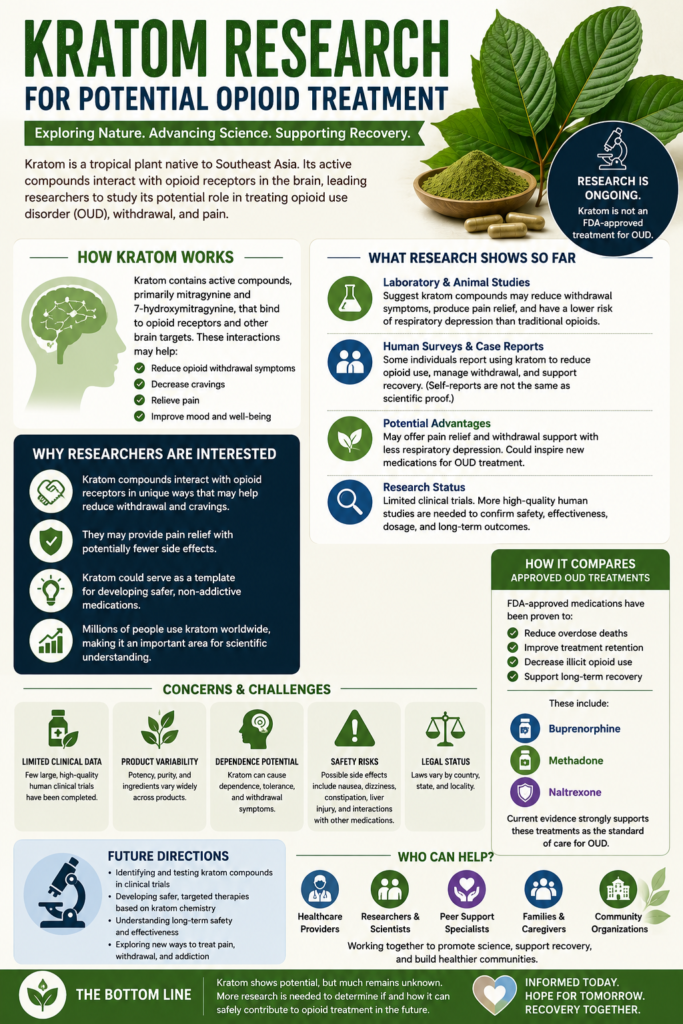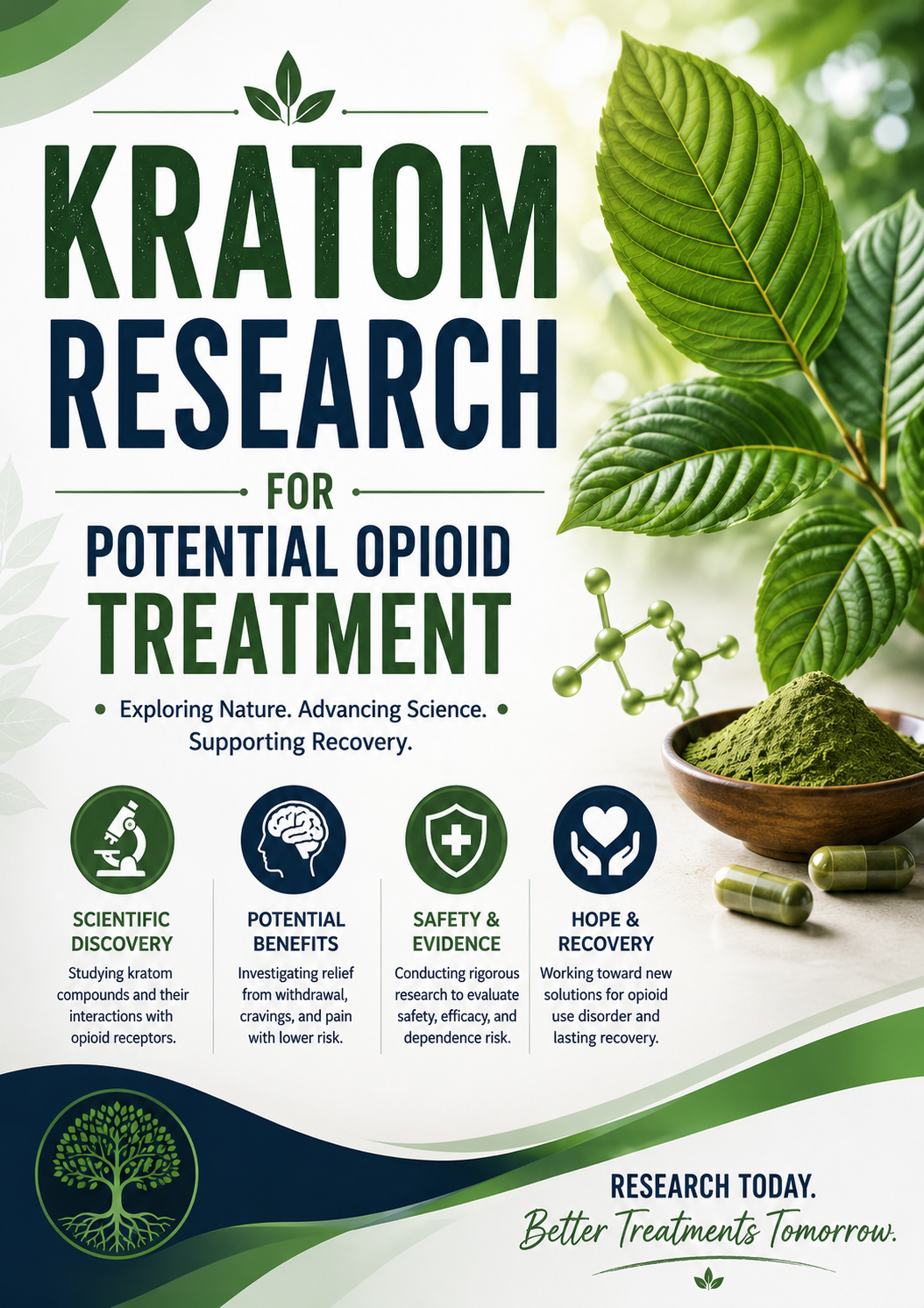
The opioid epidemic continues to be a major public health challenge, prompting researchers to explore new approaches for treating opioid use disorder (OUD), managing withdrawal symptoms, and reducing overdose risk. One substance that has attracted growing scientific interest is kratom, a plant native to Southeast Asia that contains compounds capable of interacting with opioid receptors in the brain. Some individuals report using kratom to relieve pain, reduce opioid cravings, or ease withdrawal symptoms, leading researchers to investigate its potential therapeutic applications. While preliminary studies suggest that certain kratom compounds may possess properties that could contribute to future addiction treatment development, significant questions remain regarding their safety, effectiveness, dosage, and long-term effects. Understanding the current state of kratom research is essential for healthcare providers, patients, families, and communities seeking evidence-based information about its potential role in opioid treatment.
How Kratom Is Being Researched for Potential Opioid Treatment
Kratom is a tropical tree native to Southeast Asia whose leaves contain active compounds, primarily mitragynine and 7-hydroxymitragynine. In recent years, researchers have become interested in kratom because some of its compounds interact with opioid receptors in the brain, raising questions about whether they could potentially play a role in treating opioid use disorder (OUD) or opioid withdrawal. However, research remains limited, and kratom is not currently approved as a treatment for OUD.
Why Researchers Are Interested in Kratom
Traditional opioid medications activate opioid receptors and can reduce pain, cravings, and withdrawal symptoms. Kratom’s active compounds also interact with these receptors, but they appear to do so differently than opioids such as morphine, oxycodone, or heroin.
Researchers are investigating whether kratom compounds might:
- Reduce opioid withdrawal symptoms
- Decrease opioid cravings
- Provide pain relief with potentially lower respiratory depression risk
- Serve as a template for developing safer medications
The goal is not necessarily to use kratom itself as a medication but to better understand its pharmacology and identify compounds that may lead to new treatments.
Current Research Findings
Some laboratory and animal studies suggest that mitragynine may:
- Produce opioid-like effects
- Reduce withdrawal symptoms
- Have a lower tendency to cause respiratory depression than traditional opioids
- Interact with multiple brain systems beyond opioid receptors
Some surveys of kratom users report that individuals have used kratom to:
- Reduce opioid use
- Manage withdrawal symptoms
- Self-treat pain
- Maintain abstinence from other opioids
However, self-reported experiences do not prove effectiveness or safety.
Challenges and Concerns
Researchers have identified several concerns:
Limited Clinical Trials
There have been relatively few high-quality human clinical trials evaluating kratom for opioid use disorder.
Product Variability
Commercial kratom products vary significantly in:
- Potency
- Purity
- Dosage
- Contaminants
This makes research and safety assessments difficult.
Dependence Potential
Although often viewed as less risky than traditional opioids, regular kratom use can lead to:
- Dependence
- Withdrawal symptoms
- Tolerance
- Cravings
Safety Risks
Potential side effects may include:
- Nausea
- Constipation
- Dizziness
- Increased heart rate
- Liver injury in rare cases
- Drug interactions
Comparison With Approved OUD Treatments
Currently, evidence strongly supports FDA-approved medications such as:
- Buprenorphine
- Methadone
- Naltrexone
These medications have been studied extensively and shown to:
- Reduce overdose deaths
- Improve treatment retention
- Reduce illicit opioid use
- Support long-term recovery
Kratom has not yet demonstrated the same level of scientific evidence.
Future Directions
Researchers are exploring:
- Modified versions of kratom compounds
- Novel medications based on mitragynine chemistry
- Safer opioid receptor-targeting drugs
- New approaches to managing withdrawal and pain
Some scientists believe kratom-derived compounds could help inspire future addiction treatments, but considerably more research is needed before they can be recommended clinically.
Conclusion
Kratom is being studied because its active compounds interact with opioid receptors and may reduce withdrawal symptoms, cravings, and pain. While preliminary laboratory research and user reports have generated interest, there is currently insufficient evidence to recommend kratom as a treatment for opioid use disorder. Approved medications such as buprenorphine, methadone, and naltrexone remain the standard of care. Future research may reveal whether kratom-derived compounds can contribute to safer and more effective treatments for opioid addiction.
Self-Management Strategies to Understand Kratom Research for Potential Opioid Treatment
As interest grows in kratom as a possible tool for managing opioid withdrawal and opioid use disorder (OUD), it is important for individuals to understand both the potential benefits and limitations of current research. Because kratom is not an approved treatment for OUD, learning how to evaluate information critically and make informed decisions is essential. The following self-management strategies can help individuals better understand kratom research and its potential role in opioid treatment.
1. Learn the Basics of Kratom
Start by understanding what kratom is and how it works. Kratom contains compounds such as mitragynine and 7-hydroxymitragynine that interact with opioid receptors in the brain. Understanding these mechanisms can help explain why researchers are studying kratom as a possible treatment for opioid withdrawal and pain.
2. Rely on Credible Sources of Information
Seek information from:
- Peer-reviewed scientific journals
- Government health agencies
- Academic medical centers
- Addiction medicine specialists
- Professional healthcare organizations
Avoid relying solely on social media posts, online forums, or anecdotal reports when evaluating kratom research.
3. Understand the Difference Between Research and Proven Treatment
Recognize that promising research findings do not automatically mean a treatment is safe or effective. While some studies suggest kratom may help reduce opioid withdrawal symptoms, more clinical trials are needed before it can be recommended as a standard treatment for OUD.
4. Discuss Kratom With Healthcare Providers
Talk openly with healthcare professionals about:
- Current opioid use
- Recovery goals
- Interest in kratom research
- Potential risks and benefits
- Existing evidence-based treatment options
Professional guidance can help individuals make safer healthcare decisions.
5. Learn About Approved OUD Treatments
Understanding established treatments helps put kratom research into perspective. Learn about:
- Buprenorphine
- Methadone
- Naltrexone
- Behavioral therapies
- Peer recovery support
These treatments have strong scientific evidence supporting their effectiveness.
6. Evaluate Benefits and Risks Objectively
When reviewing kratom research, consider:
- Potential reduction in withdrawal symptoms
- Possible pain-relieving effects
- Risk of dependence
- Withdrawal symptoms from kratom itself
- Product quality concerns
- Potential medication interactions
Balanced evaluation promotes informed decision-making.
7. Keep a Research Journal
Maintain notes on:
- Scientific articles reviewed
- Questions for healthcare providers
- New research findings
- Personal observations and concerns
Organizing information can improve understanding and reduce confusion.
8. Avoid Self-Diagnosis and Self-Treatment
Research findings should not replace professional medical care. Individuals should avoid making treatment decisions solely based on information found on the internet or personal testimonials.
9. Develop Critical Thinking Skills
Ask important questions when reading research:
- Was the study conducted in humans or animals?
- How many participants were involved?
- Were there limitations?
- Were the results replicated?
- Was the study peer-reviewed?
Critical evaluation helps identify reliable information.
10. Stay Updated on New Research
Kratom research continues to evolve. Follow trusted sources and remain open to new evidence as scientists learn more about:
- Effectiveness
- Safety
- Dependence potential
- Possible future medical applications
11. Focus on Overall Recovery Goals
Whether exploring research or considering treatment options, maintain focus on:
- Recovery stability
- Physical health
- Mental health
- Relapse prevention
- Long-term quality of life
Recovery involves more than managing withdrawal symptoms alone.
Conclusion
Understanding kratom research requires curiosity, critical thinking, and a commitment to evidence-based information. While early studies suggest kratom compounds may have potential applications related to opioid withdrawal and pain management, much remains unknown about their long-term safety and effectiveness. By educating themselves, consulting healthcare professionals, carefully evaluating research, and focusing on proven recovery strategies, individuals can make informed decisions while staying engaged in their recovery journey.
Family Support Strategies to Understand Kratom Research for Potential Opioid Treatment
Families often play a critical role in supporting loved ones affected by opioid use disorder (OUD). As interest in kratom research grows, family members may encounter conflicting information about its potential use for opioid withdrawal, pain management, or recovery support. Understanding the current state of research can help families provide informed, balanced, and supportive guidance while promoting evidence-based care.
1. Educate Yourself About Kratom
Family members should learn:
- What kratom is
- How its active compounds affect the brain
- Why researchers are studying it
- The differences between research findings and approved medical treatments
Accurate knowledge helps families avoid misinformation and engage in meaningful discussions.
2. Understand the Current Evidence
It is important to recognize that kratom is still being studied and is not approved as a treatment for opioid use disorder. Families should understand that while some individuals report benefits, scientific evidence remains limited compared to approved medications such as buprenorphine, methadone, and naltrexone.
3. Encourage Open and Honest Communication
Create a safe environment where loved ones can discuss:
- Their recovery goals
- Questions about kratom
- Concerns about withdrawal symptoms
- Treatment preferences
- Information they have found online
Open communication reduces secrecy and promotes informed decision-making.
4. Help Evaluate Information Critically
Families can assist loved ones in assessing information by asking:
- Is the source credible?
- Is the information based on scientific research?
- Are claims supported by clinical studies?
- Are potential risks discussed alongside benefits?
Critical thinking helps separate evidence from personal opinions or marketing claims.
5. Support Consultation With Healthcare Professionals
Encourage discussions with:
- Addiction medicine specialists
- Primary care providers
- Mental health professionals
- Pharmacists
Professional guidance helps ensure treatment decisions are based on current evidence and individual health needs.
6. Learn About Evidence-Based OUD Treatments
Families should become familiar with approved treatments, including:
- Buprenorphine
- Methadone
- Naltrexone
- Counseling and behavioral therapies
- Peer recovery support services
Understanding these options helps families compare emerging research with established standards of care.
7. Recognize Potential Risks
Family members should understand that kratom use may carry risks such as:
- Dependence
- Withdrawal symptoms
- Product contamination
- Drug interactions
- Uncertain dosing
Awareness of these risks encourages balanced conversations rather than viewing kratom as completely safe or completely harmful.
8. Avoid Judgment and Stigma
If a loved one expresses interest in kratom research or has used kratom, respond with curiosity rather than criticism. Judgment can discourage open communication and may push individuals away from supportive relationships.
9. Focus on Recovery Goals
Rather than concentrating solely on kratom, families can help loved ones focus on:
- Long-term recovery
- Physical health
- Mental wellness
- Stable housing and employment
- Healthy relationships
- Relapse prevention
Recovery is a comprehensive process that extends beyond any single treatment approach.
10. Participate in Family Support Programs
Family education and support groups can help relatives better understand addiction, treatment options, and recovery. These programs often provide practical tools for communication, coping, and supporting healthy decision-making.
11. Stay Informed as Research Evolves
Kratom research is ongoing, and new findings continue to emerge. Families should remain open to updated evidence while recognizing that scientific understanding may change over time.
12. Support Healthy Coping Strategies
Encourage alternatives that support recovery and overall well-being, such as:
- Exercise
- Counseling
- Peer support groups
- Stress management techniques
- Healthy sleep habits
- Mindfulness practices
These strategies can complement medical treatment and strengthen recovery.
Conclusion
Family support can significantly influence how individuals understand and respond to emerging research about kratom and opioid treatment. By staying informed, encouraging evidence-based care, promoting open communication, and focusing on long-term recovery goals, families can help loved ones make safe and informed decisions. While kratom research continues to develop, supportive family involvement remains one of the most powerful resources for recovery, health, and overall well-being.
Community Resource Strategies to Understand Kratom Research for Potential Opioid Treatment
Community resources play an important role in helping individuals, families, healthcare professionals, and policymakers understand emerging research about kratom and its potential role in opioid treatment. Because kratom remains an area of active scientific investigation, communities can support informed decision-making by promoting education, evidence-based information, and access to qualified healthcare professionals.
1. Develop Community Education Programs
Community organizations can offer workshops, seminars, and public health presentations that explain:
- What kratom is
- How kratom affects the brain
- Why researchers are studying it
- Current findings and limitations of research
- Differences between research and approved treatments
Education helps community members make informed decisions based on science rather than misinformation.
2. Promote Access to Evidence-Based Information
Communities should encourage the use of reliable sources such as:
- Government health agencies
- Medical universities
- Addiction treatment organizations
- Peer-reviewed scientific journals
- Professional healthcare associations
Providing accurate information helps reduce confusion and misinformation surrounding kratom.
3. Support Addiction Treatment and Recovery Services
Community programs can connect individuals to:
- Medication-assisted treatment (MAT)
- Counseling services
- Recovery coaching
- Peer support programs
- Behavioral health resources
Access to established treatment options ensures individuals receive evidence-based care while researchers continue studying kratom.
4. Encourage Healthcare Provider Education
Healthcare systems can provide continuing education regarding:
- Kratom pharmacology
- Emerging research findings
- Potential benefits and risks
- Dependence and withdrawal concerns
- Patient counseling strategies
Well-informed providers can better answer patient questions and guide treatment decisions.
5. Facilitate Peer Recovery Support Programs
Peer Recovery Support Specialists (PRSS) can:
- Share recovery experiences
- Discuss evidence-based treatment options
- Help individuals navigate healthcare systems
- Encourage informed decision-making
- Provide emotional support during recovery
Peer support often increases engagement and trust.
6. Create Public Awareness Campaigns
Community awareness efforts can address common misconceptions, such as:
- “Kratom is completely safe.”
- “Kratom is the same as approved opioid treatments.”
- “Natural products cannot cause dependence.”
- “Research has already proven kratom is effective for OUD.”
Balanced messaging helps communities understand both the potential and limitations of current research.
7. Establish Community Discussion Forums
Community forums can provide opportunities for:
- Open dialogue about emerging research
- Questions from the public
- Expert presentations
- Family education
- Sharing recovery resources
These forums promote transparency and informed discussion.
8. Support Research Participation Opportunities
When appropriate and ethically conducted, communities can help individuals learn about:
- Clinical trials
- Research studies
- Academic research initiatives
Participation in research contributes to scientific knowledge and the development of future treatments.
9. Provide Family Education Resources
Community organizations can offer family-focused programs that teach:
- Addiction science
- Recovery support strategies
- Kratom research updates
- Evidence-based treatment options
- Effective communication skills
Educated families are better equipped to support loved ones in recovery.
10. Encourage Collaboration Between Community Partners
Effective education often requires collaboration among:
- Healthcare providers
- Addiction treatment centers
- Universities
- Public health departments
- Recovery organizations
- Faith-based groups
Partnerships help ensure consistent and accurate messaging.
11. Promote Harm Reduction Education
Communities can provide education about:
- Overdose prevention
- Naloxone access
- Safe medication practices
- Substance use risk reduction
- Recovery support services
Harm reduction strategies can save lives while individuals seek treatment and recovery.
12. Monitor Emerging Scientific Evidence
Community leaders and healthcare organizations should regularly review new research findings and update educational materials as scientific understanding evolves.
Conclusion
Community resources are essential for helping individuals understand the growing body of research examining kratom’s potential role in opioid treatment. Through education, provider training, public awareness campaigns, peer support, family programs, and access to evidence-based treatment services, communities can promote informed decision-making and reduce misinformation. While research into kratom continues, strong community support systems can help individuals focus on safe, evidence-based recovery while remaining informed about emerging scientific developments.
Frequently Asked Questions
Here are some common questions:
1. What is kratom?
Kratom is a tropical tree native to Southeast Asia. Its leaves contain active compounds, primarily mitragynine and 7-hydroxymitragynine, which interact with opioid receptors and other systems in the brain.
2. Why are researchers studying kratom for opioid treatment?
Researchers are investigating kratom because some of its compounds may help reduce opioid withdrawal symptoms, decrease cravings, relieve pain, and potentially lead to the development of safer treatments for opioid use disorder (OUD).
3. Is kratom approved to treat opioid use disorder?
No. Kratom is not approved by the U.S. Food and Drug Administration (FDA) as a treatment for opioid use disorder, opioid withdrawal, or pain management.
4. How does kratom affect the brain?
Kratom compounds interact with opioid receptors and other neurotransmitter systems in the brain. These interactions may produce pain-relieving, mood-altering, and opioid-like effects.
5. Can kratom reduce opioid withdrawal symptoms?
Some studies and user reports suggest kratom may reduce certain withdrawal symptoms. However, more high-quality clinical research is needed to determine its safety and effectiveness for this purpose.
6. Can kratom help reduce opioid cravings?
Some individuals report decreased opioid cravings while using kratom, but scientific evidence remains limited, and more research is needed before conclusions can be made.
7. Is kratom safer than traditional opioids?
Researchers are studying whether certain kratom compounds may produce less respiratory depression than traditional opioids. However, kratom is not risk-free and can still cause adverse effects and dependence.
8. Can kratom become addictive?
Yes. Regular kratom use can lead to:
- Dependence
- Tolerance
- Withdrawal symptoms
- Cravings
The risk may vary depending on dosage, frequency of use, and individual factors.
9. What are the common side effects of kratom?
Potential side effects may include:
- Nausea
- Constipation
- Dizziness
- Dry mouth
- Increased heart rate
- Drowsiness
- Appetite changes
10. Can kratom cause withdrawal symptoms?
Yes. Some individuals experience withdrawal symptoms after stopping long-term kratom use, including:
- Anxiety
- Irritability
- Insomnia
- Muscle aches
- Restlessness
- Mood changes
11. Why is research on kratom challenging?
Research is complicated because:
- Products vary widely in strength and purity.
- Dosing is not standardized.
- Products may contain contaminants.
- Human clinical trials remain limited.
12. What have animal studies shown?
Some laboratory and animal studies suggest kratom compounds may:
- Reduce opioid withdrawal symptoms
- Produce pain-relieving effects
- Causes less respiratory depression than some opioids
However, animal studies do not always predict human outcomes.
13. What do human studies show?
Most human evidence comes from surveys, case reports, and observational studies. Large-scale clinical trials evaluating kratom’s effectiveness and safety are still lacking.
14. How does kratom compare to approved opioid use disorder treatments?
Approved treatments such as:
- Buprenorphine
- Methadone
- Naltrexone
have undergone extensive scientific testing and are proven to reduce overdose deaths, improve treatment retention, and support recovery. Kratom has not yet demonstrated comparable evidence.
15. Could kratom compounds lead to new medications?
Possibly. Researchers are studying kratom’s active compounds to determine whether modified versions could be developed into safer and more effective medications for pain management and addiction treatment.
16. Are all kratom products the same?
No. Kratom products can vary significantly in:
- Potency
- Chemical composition
- Purity
- Quality
- Contamination risk
This variability makes research and safety assessments difficult.
17. Is kratom legal?
Kratom’s legal status varies by country, state, and local jurisdiction. Some areas allow its sale and use, while others restrict or prohibit it.
18. Should people replace prescribed OUD medications with kratom?
Individuals should not stop prescribed medications or change treatment plans without consulting a healthcare provider. Evidence-based treatments remain the recommended standard of care for OUD.
19. What questions should people ask when reading kratom research?
Consider:
- Was the study conducted in humans?
- How many participants were involved?
- Were the findings peer-reviewed?
- What limitations were identified?
- Were risks discussed along with benefits?
20. What is the biggest takeaway from current kratom research?
The biggest takeaway is that kratom shows scientific promise as a source of compounds that may help researchers better understand opioid withdrawal, pain, and addiction. However, current evidence is insufficient to establish kratom as a safe and effective treatment for opioid use disorder. More rigorous research is needed before clear clinical recommendations can be made.
Conclusion
Kratom research represents an emerging area of interest in the search for new strategies to address opioid use disorder and opioid withdrawal. Although early laboratory studies and user reports have generated optimism about the potential benefits of kratom-derived compounds, current evidence remains limited, and many important questions have yet to be answered. Concerns regarding product variability, dependence potential, safety risks, and the lack of large-scale clinical trials highlight the need for continued scientific investigation. At present, evidence-based treatments such as buprenorphine, methadone, and naltrexone remain the recommended standard of care for opioid use disorder. As research progresses, kratom and its active compounds may provide valuable insights for the development of future therapies, but careful study and rigorous evaluation will be necessary to determine their appropriate role in addiction treatment and recovery.
Video: Does Kratom Actually Work for Opioid Addiction #kratom #addiction #recovery