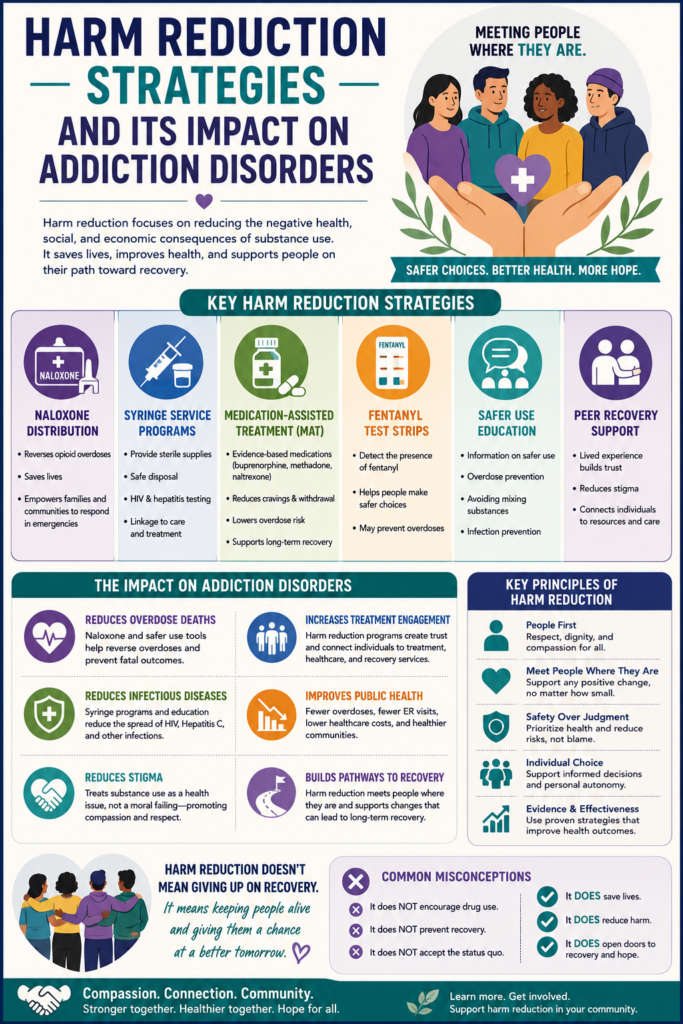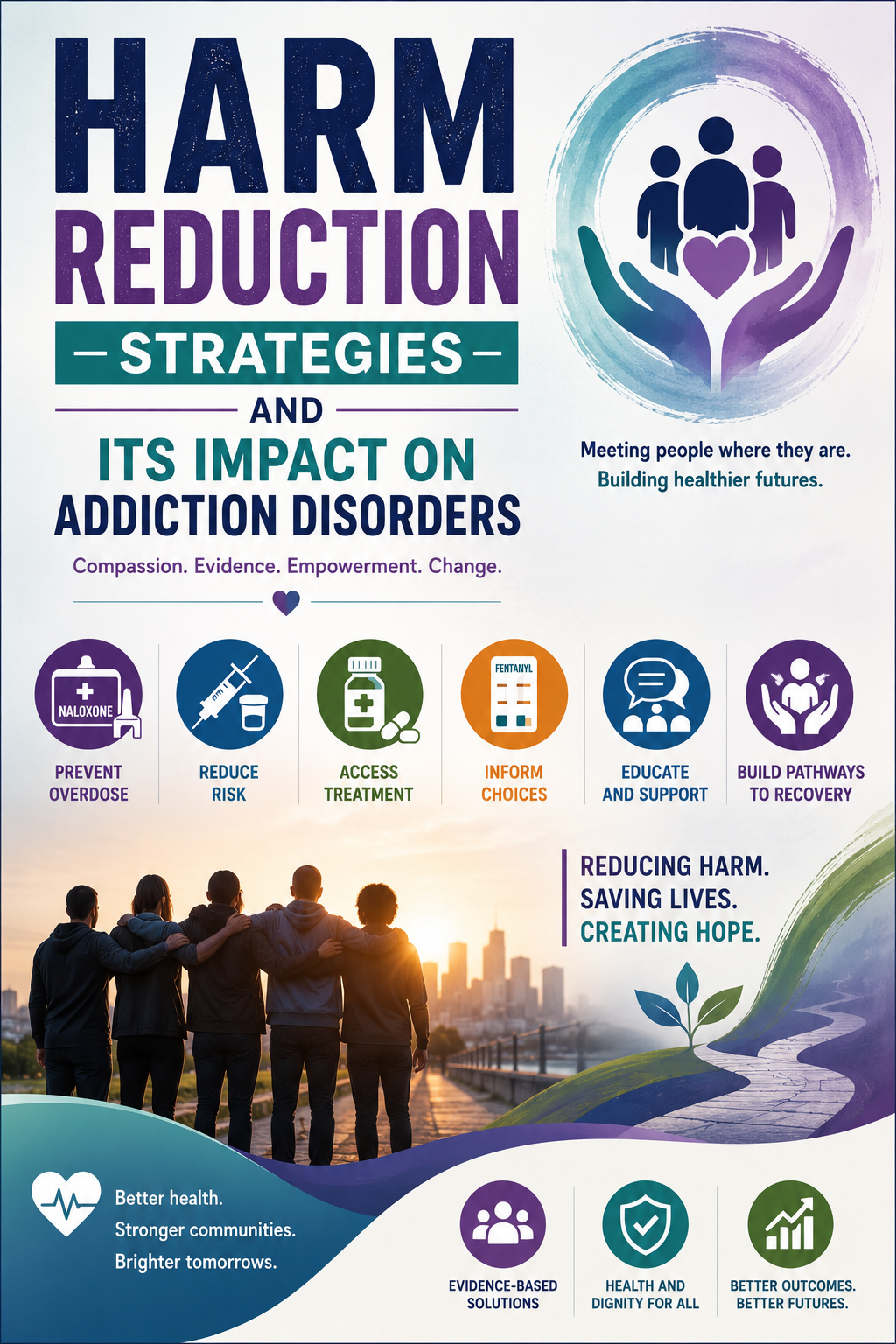
Harm reduction is a practical, evidence-based approach that seeks to minimize the negative consequences associated with substance use while recognizing that recovery is a personal and often gradual process. Rather than requiring immediate abstinence, harm reduction focuses on improving health, preventing overdose, reducing the spread of infectious diseases, and increasing access to healthcare and treatment services. Strategies such as naloxone distribution, syringe service programs, medication-assisted treatment, fentanyl test strips, and peer recovery support have become important tools in addressing addiction disorders and the ongoing overdose crisis. By meeting individuals where they are and promoting safety, dignity, and compassion, harm reduction helps create opportunities for engagement, recovery, and improved quality of life. Understanding these strategies and their impact is essential for individuals, families, healthcare providers, and communities working to address substance use disorders effectively.
Harm Reduction Strategies and Their Impact on Addiction Disorders
Introduction
Harm reduction is a public health approach that aims to reduce the negative health, social, and economic consequences associated with substance use without requiring immediate abstinence. Rather than focusing solely on stopping substance use, harm reduction recognizes that recovery occurs along a continuum and seeks to keep individuals as safe and healthy as possible while they work toward change. Harm reduction strategies have become increasingly important in addressing addiction disorders, particularly amid the ongoing opioid overdose crisis. By prioritizing safety, dignity, and evidence-based interventions, harm reduction helps reduce overdose deaths, prevent infectious diseases, improve healthcare engagement, and create pathways to long-term recovery.
What Is Harm Reduction?
Harm reduction is based on several key principles:
- Meeting people where they are in their recovery journey
- Reducing the risks associated with substance use
- Promoting health and safety
- Respecting individual autonomy
- Reducing stigma and discrimination
- Supporting positive behavior change
Harm reduction does not encourage substance use. Instead, it seeks to minimize harm while supporting individuals in making healthier choices.
Common Harm Reduction Strategies
Naloxone Distribution
Naloxone is a life-saving medication that can rapidly reverse opioid overdoses. Community naloxone programs have saved countless lives by:
- Increasing overdose survival rates
- Allowing more opportunities for treatment engagement
- Empowering families and communities to respond to emergencies
Syringe Service Programs
Syringe service programs provide:
- Sterile injection equipment
- Safe disposal of used syringes
- HIV and hepatitis testing
- Referrals to treatment and healthcare services
These programs reduce the spread of infectious diseases while connecting individuals to care.
Medication-Assisted Treatment (MAT)
Evidence-based medications such as:
- Buprenorphine
- Methadone
- Naltrexone
help reduce cravings, withdrawal symptoms, overdose risk, and illicit opioid use.
Fentanyl Test Strips
Fentanyl test strips allow individuals to test substances for the presence of fentanyl, helping them make safer decisions and potentially reducing overdose risk.
Safer Use Education
Education may include:
- Recognizing overdose signs
- Avoiding mixing substances
- Safe medication storage
- Infection prevention practices
- Emergency response training
Peer Recovery Support
Peer Recovery Support Specialists (PRSS) use lived experience to:
- Build trust
- Reduce stigma
- Connect individuals to resources
- Encourage treatment engagement
Impact on Addiction Disorders
Reduced Overdose Deaths
One of the most significant benefits of harm reduction is a decrease in fatal overdoses. Access to naloxone and treatment services can save lives and provide opportunities for recovery.
Increased Treatment Engagement
Many individuals initially engage with healthcare services through harm reduction programs. These programs often serve as entry points to:
- Counseling
- Recovery support
- Mental health services
- Medication-assisted treatment
Reduced Spread of Infectious Diseases
Syringe service programs have been shown to reduce transmission of:
- HIV
- Hepatitis B
- Hepatitis C
- Other blood-borne infections
Improved Public Health Outcomes
Harm reduction programs often lead to:
- Reduced emergency department visits
- Lower healthcare costs
- Improved community health
- Increased access to preventive services
Reduced Stigma
By treating substance use disorders as health conditions rather than moral failures, harm reduction promotes compassion, dignity, and respect.
Common Misconceptions
“Harm Reduction Encourages Drug Use”
Research has consistently found that harm reduction programs do not increase drug use. Instead, they often increase treatment engagement and improve health outcomes.
“People Must Be Ready for Recovery First”
Many individuals begin making positive changes after developing trusting relationships through harm reduction services. Recovery readiness often develops over time.
“Abstinence and Harm Reduction Cannot Coexist”
Harm reduction and abstinence-based recovery are not opposites. Harm reduction can serve as a bridge to abstinence, treatment, and long-term recovery.
Challenges and Barriers
Despite strong evidence, barriers remain:
- Public stigma
- Political opposition
- Limited funding
- Lack of provider education
- Community misconceptions
- Unequal access in rural areas
Addressing these barriers can expand access to life-saving services.
Conclusion
Harm reduction is a compassionate, evidence-based approach that helps reduce the harms associated with addiction disorders while supporting individuals on their path to recovery. Through strategies such as naloxone distribution, syringe service programs, medication-assisted treatment, safer use education, and peer support, harm reduction has been shown to reduce overdose deaths, improve public health outcomes, and increase engagement in treatment. By meeting individuals where they are and focusing on safety, dignity, and health, harm reduction plays a critical role in addressing addiction disorders and creating opportunities for long-term recovery and improved quality of life.
Self-Management Strategies to Understand Harm Reduction Strategies and Their Impact on Addiction Disorders
Understanding harm reduction can help individuals make informed decisions about their health, safety, and recovery. Harm reduction recognizes that recovery is a personal journey and that reducing the risks associated with substance use can be an important step toward improved well-being. The following self-management strategies can help individuals better understand harm reduction approaches and their impact on addiction disorders.
1. Educate Yourself About Harm Reduction
Learn the basic principles of harm reduction, including:
- Reducing health risks associated with substance use
- Preventing overdose and infectious diseases
- Promoting safer behaviors
- Supporting recovery at all stages
Understanding these concepts can help reduce misconceptions and improve decision-making.
2. Learn About Overdose Prevention
Become familiar with:
- Signs of opioid overdose
- Emergency response procedures
- How naloxone works
- Where naloxone is available in your community
Knowledge of overdose prevention can save lives and improve personal safety.
3. Understand Evidence-Based Treatment Options
Harm reduction includes connecting people to effective treatment options such as:
- Medication-assisted treatment (MAT)
- Counseling and therapy
- Peer recovery support
- Mental health services
Learning about available treatments can help individuals choose appropriate recovery resources.
4. Assess Personal Risk Factors
Evaluate factors that may increase harm, including:
- Mixing substances
- Using alone
- Previous overdose history
- Mental health challenges
- Lack of social support
Identifying risks allows individuals to take steps to improve safety.
5. Develop an Emergency Safety Plan
Create a plan that includes:
- Emergency contacts
- Naloxone availability
- Healthcare provider information
- Crisis hotline numbers
- Trusted support persons
Preparation can improve responses during emergencies.
6. Practice Safer Decision-Making
Focus on reducing harm by:
- Following prescribed medication instructions
- Avoiding dangerous substance combinations
- Seeking medical care when needed
- Using safer coping strategies during stressful situations
Small safety-focused decisions can significantly reduce risks.
7. Monitor Physical and Mental Health
Keep track of:
- Mood changes
- Anxiety or depression symptoms
- Sleep patterns
- Physical health concerns
- Substance use triggers
Regular self-monitoring can help identify issues before they become crises.
8. Build a Recovery Support Network
Connect with:
- Family members
- Friends
- Recovery groups
- Sponsors
- Peer Recovery Support Specialists (PRSS)
- Healthcare providers
Strong social support improves resilience and recovery outcomes.
9. Challenge Stigma and Misinformation
Learn to recognize common myths about addiction and harm reduction. Understanding addiction as a medical condition can reduce self-stigma and encourage treatment engagement.
10. Set Realistic Recovery Goals
Recovery goals may include:
- Reducing substance use
- Improving health
- Preventing overdose
- Attending treatment appointments
- Strengthening relationships
Progress often occurs gradually, and every positive step matters.
11. Utilize Community Resources
Take advantage of available services such as:
- Naloxone programs
- Syringe service programs
- Treatment centers
- Mental health services
- Recovery support groups
Community resources can provide education, support, and access to care.
12. Stay Informed About New Research
Addiction treatment and harm reduction continue to evolve. Following reputable sources can help individuals remain informed about new evidence-based practices and recovery tools.
Conclusion
Self-management plays an important role in understanding harm reduction strategies and their impact on addiction disorders. By educating themselves, assessing personal risks, developing safety plans, utilizing community resources, and engaging in recovery supports, individuals can make informed decisions that improve health and reduce harm. Harm reduction is not about giving up on recovery; it is about promoting safety, preserving life, and creating opportunities for individuals to move toward healthier and more fulfilling lives at their own pace.
Family Support Strategies to Understand Harm Reduction Strategies and Their Impact on Addiction Disorders
Family members often play a critical role in supporting loved ones affected by addiction. Understanding harm reduction strategies can help families provide informed, compassionate, and effective support while reducing risks associated with substance use. Harm reduction recognizes that positive change can occur gradually and that keeping individuals safe and engaged with healthcare services can improve long-term recovery outcomes. The following family support strategies can help families better understand and support harm reduction approaches.
1. Educate Yourself About Harm Reduction
Families should learn:
- What harm reduction means
- Why is it used in addiction treatment
- How it differs from enabling substance use
- The evidence supporting harm reduction practices
Education can reduce confusion and help families make informed decisions.
2. Understand Addiction as a Health Condition
Recognizing addiction as a chronic medical condition rather than a moral failing can:
- Reduce blame and shame
- Improve communication
- Encourage treatment engagement
- Promote empathy and understanding
This perspective helps families support recovery more effectively.
3. Learn About Overdose Prevention
Families should know:
- Signs of overdose
- How to respond to an overdose emergency
- How to administer naloxone
- Where can naloxone be obtained
Prepared families can save lives during critical situations.
4. Support Access to Evidence-Based Treatment
Encourage loved ones to explore:
- Medication-assisted treatment (MAT)
- Counseling services
- Mental health treatment
- Peer recovery support
- Recovery support groups
Harm reduction often serves as a bridge to these treatment options.
5. Maintain Open and Nonjudgmental Communication
Create opportunities for honest discussions by:
- Listening without criticism
- Asking questions respectfully
- Avoiding lectures or threats
- Expressing concern with compassion
Open communication strengthens trust and encourages help-seeking behavior.
6. Distinguish Between Harm Reduction and Enabling
Families often worry that harm reduction enables substance use. Harm reduction aims to reduce risks while encouraging healthier choices. Supporting safety measures, healthcare engagement, and treatment access differs from supporting continued harmful behavior.
7. Participate in Family Education Programs
Family education programs can teach:
- Addiction science
- Recovery principles
- Harm reduction strategies
- Healthy communication skills
- Boundary-setting techniques
Knowledge helps families respond more effectively to challenges.
8. Encourage Safer Behaviors
Without condoning substance use, families can encourage:
- Carrying naloxone
- Avoiding using substances alone
- Seeking medical care when needed
- Participating in treatment services
- Using available recovery supports
Safety-focused conversations can reduce serious consequences.
9. Establish Healthy Boundaries
Supportive boundaries may include:
- Clear expectations
- Consistent consequences
- Protecting family well-being
- Encouraging accountability
- Avoiding rescuing behaviors
Healthy boundaries support both recovery and family health.
10. Support Mental Health and Wellness
Many individuals with addiction disorders also struggle with:
- Anxiety
- Depression
- Trauma
- Stress-related conditions
Families can encourage comprehensive treatment that addresses both substance use and mental health needs.
11. Connect With Family Support Groups
Support groups for families can provide:
- Education
- Coping skills
- Emotional support
- Shared experiences
- Guidance from others facing similar challenges
Families often benefit from learning they are not alone.
12. Focus on Progress Rather Than Perfection
Recovery often involves setbacks and gradual improvement. Families can support long-term success by recognizing positive changes, such as:
- Reduced substance use
- Treatment participation
- Improved health
- Better relationships
- Increased stability
Celebrating progress can strengthen motivation and hope.
13. Challenge Stigma Within the Family
Reducing stigmatizing language and attitudes can create a more supportive environment. Compassion and respect often increase the likelihood that loved ones will seek help and remain engaged in recovery.
14. Utilize Community Resources
Families can connect with:
- Harm reduction programs
- Recovery community organizations
- Behavioral health centers
- Peer support programs
- Educational workshops
Community resources provide valuable information and support.
Conclusion
Family understanding of harm reduction strategies can significantly improve support for individuals affected by addiction disorders. By learning about addiction, overdose prevention, evidence-based treatment, and the goals of harm reduction, families can help reduce risks while encouraging recovery. Through education, open communication, healthy boundaries, and compassionate support, families can become powerful allies in promoting safety, treatment engagement, and long-term recovery. Harm reduction is ultimately about preserving life, improving health, and creating opportunities for positive change, and informed family involvement can play a crucial role in that process.
Community Resource Strategies to Understand Harm Reduction Strategies and Their Impact on Addiction Disorders
Community resources play a vital role in helping individuals, families, healthcare professionals, and policymakers understand harm reduction strategies and their impact on addiction disorders. Harm reduction programs focus on improving health, preventing overdose, reducing the spread of infectious diseases, and connecting individuals to treatment and recovery services. Through education, collaboration, and accessible resources, communities can support healthier outcomes and promote long-term recovery.
1. Provide Community Education Programs
Communities can offer workshops, seminars, and public awareness campaigns that explain:
- The principles of harm reduction
- Addiction as a chronic health condition
- Evidence-based treatment approaches
- Overdose prevention strategies
- Available local resources
Education helps reduce misconceptions and encourages informed decision-making.
2. Expand Naloxone Training and Distribution
Community organizations can increase access to:
- Naloxone education
- Overdose recognition training
- Emergency response instruction
- Free or low-cost naloxone kits
Widespread naloxone availability has been shown to reduce overdose fatalities and improve public safety.
3. Support Syringe Service Programs
Syringe service programs can provide:
- Sterile injection equipment
- Safe syringe disposal
- HIV and hepatitis testing
- Referrals to healthcare and treatment services
These programs reduce disease transmission and serve as important entry points to care.
4. Promote Access to Medication-Assisted Treatment (MAT)
Communities can improve access to evidence-based treatments such as:
- Buprenorphine
- Methadone
- Naltrexone
Expanding treatment availability helps individuals reduce cravings, prevent relapse, and improve recovery outcomes.
5. Develop Peer Recovery Support Programs
Peer Recovery Support Specialists (PRSS) can:
- Share lived recovery experience
- Build trust with individuals seeking help
- Connect people to services
- Provide encouragement and guidance
Peer support often increases treatment engagement and retention.
6. Establish Community Resource Centers
Recovery and wellness centers can provide:
- Educational materials
- Recovery support groups
- Harm reduction supplies
- Mental health referrals
- Employment and housing assistance
Centralized services make it easier for individuals to access support.
7. Encourage Healthcare Provider Training
Communities can promote continuing education for:
- Physicians
- Nurses
- Therapists
- Pharmacists
- Social workers
Provider education improves understanding of harm reduction and encourages evidence-based care.
8. Address Stigma Through Public Awareness Campaigns
Public education efforts can help communities understand that:
- Addiction is a treatable health condition
- Harm reduction does not promote substance use
- Recovery is a process
- Compassion improves outcomes
Reducing stigma encourages individuals to seek help without fear of judgment.
9. Strengthen Partnerships Between Community Organizations
Effective harm reduction often involves collaboration among:
- Public health departments
- Treatment centers
- Hospitals
- Schools
- Faith-based organizations
- Recovery groups
- Law enforcement agencies
Collaboration improves service coordination and community response.
10. Expand Mental Health Services
Many individuals with addiction disorders also experience:
- Depression
- Anxiety
- PTSD
- Trauma-related conditions
Communities that integrate mental health and addiction services can provide more comprehensive care.
11. Create Recovery-Friendly Community Environments
Recovery-friendly initiatives may include:
- Recovery community organizations
- Sober social activities
- Employment support programs
- Housing assistance
- Volunteer opportunities
These resources help individuals build stable and healthy lifestyles.
12. Support Research and Data Collection
Communities can partner with universities and public health agencies to:
- Evaluate program effectiveness
- Monitor overdose trends
- Identify community needs
- Improve service delivery
Data-driven approaches strengthen harm reduction efforts and guide future planning.
13. Offer Family Education and Support Programs
Family-focused resources can teach:
- Harm reduction principles
- Addiction education
- Communication skills
- Overdose prevention
- Boundary setting
Educated families are better prepared to support loved ones while protecting their own well-being.
14. Improve Access in Rural and Underserved Areas
Communities can expand access through:
- Mobile health units
- Telehealth services
- Community outreach programs
- Transportation assistance
- Rural treatment partnerships
Improving accessibility helps reduce disparities in care.
Conclusion
Community resources are essential for increasing understanding of harm reduction strategies and their impact on addiction disorders. Through education, naloxone distribution, syringe service programs, medication-assisted treatment, peer support, mental health services, and public awareness efforts, communities can reduce overdose deaths, improve public health outcomes, and strengthen pathways to recovery. By embracing evidence-based approaches and fostering collaboration among healthcare providers, recovery organizations, families, and community leaders, communities can create safer environments that support health, dignity, and long-term recovery for individuals affected by addiction disorders.
Frequently Asked Questions
Here are some common questions:
1. What is harm reduction?
Harm reduction is a public health approach that aims to reduce the negative consequences of substance use while improving health, safety, and quality of life. It focuses on preventing harm and supporting positive change rather than requiring immediate abstinence.
2. Does harm reduction encourage drug use?
No. Research shows that harm reduction does not increase substance use. Instead, it helps reduce health risks, prevent overdose deaths, and connect individuals with treatment and recovery services.
3. Why is harm reduction important?
Harm reduction saves lives by:
- Preventing overdoses
- Reducing infectious disease transmission
- Increasing access to healthcare
- Connecting people to treatment
- Supporting long-term recovery
4. What are common harm reduction strategies?
Common strategies include:
- Naloxone distribution
- Syringe service programs
- Medication-assisted treatment (MAT)
- Fentanyl test strips
- Safer use education
- Peer recovery support
5. What is naloxone?
Naloxone is a medication that can rapidly reverse an opioid overdose. It is safe, easy to administer, and has saved thousands of lives worldwide.
6. Who should carry naloxone?
Naloxone may be beneficial for:
- People who use opioids
- Family members of individuals at risk of overdose
- Friends and caregivers
- First responders
- Community members trained in overdose response
7. What are syringe service programs?
Syringe service programs provide sterile injection equipment, safe disposal services, disease testing, and referrals to healthcare and addiction treatment services.
8. Do syringe service programs increase drug use?
No. Research consistently shows that syringe service programs do not increase substance use. Instead, they reduce disease transmission and increase treatment engagement.
9. What is medication-assisted treatment (MAT)?
MAT combines medications with counseling and recovery support to treat opioid use disorder. Common medications include:
- Buprenorphine
- Methadone
- Naltrexone
10. How does MAT support recovery?
MAT helps by:
- Reducing cravings
- Preventing withdrawal symptoms
- Lowering overdose risk
- Improving treatment retention
- Supporting long-term recovery
11. What are fentanyl test strips?
Fentanyl test strips are tools that can detect fentanyl in substances, helping individuals make safer decisions and potentially prevent overdose.
12. What role does peer recovery support play in harm reduction?
Peer Recovery Support Specialists (PRSS) use lived experience to:
- Build trust
- Offer encouragement
- Connect individuals to resources
- Support treatment engagement
- Reduce stigma
13. How does harm reduction reduce overdose deaths?
Harm reduction reduces overdose deaths through:
- Naloxone access
- Overdose education
- Safer use practices
- Early intervention
- Increased treatment participation
14. How does harm reduction impact infectious diseases?
Programs such as syringe services and safer use education help reduce transmission of:
- HIV
- Hepatitis B
- Hepatitis C
- Other blood-borne infections
15. Is harm reduction compatible with abstinence-based recovery?
Yes. Harm reduction and abstinence-based recovery can work together. Harm reduction often serves as a pathway that helps individuals survive long enough to pursue treatment and recovery.
16. What is meant by “meeting people where they are”?
This means providing support regardless of a person’s current substance use status and helping them make safer choices without judgment or punishment.
17. How does harm reduction reduce stigma?
Harm reduction views addiction as a health condition rather than a moral failure. This approach promotes dignity, compassion, and respect for individuals affected by substance use disorders.
18. Can harm reduction improve treatment engagement?
Yes. Many people first connect with healthcare providers and treatment services through harm reduction programs, making them important entry points to recovery.
19. What challenges do harm reduction programs face?
Challenges may include:
- Public misconceptions
- Social stigma
- Political opposition
- Limited funding
- Unequal access to services
- Lack of provider education
20. What is the biggest impact of harm reduction on addiction disorders?
The greatest impact of harm reduction is its ability to save lives while creating opportunities for recovery. By reducing overdose deaths, preventing disease, improving healthcare engagement, and fostering compassionate support, harm reduction helps individuals stay alive, healthier, and connected to resources that can support long-term recovery and improved quality of life.
Conclusion
Harm reduction strategies have transformed the way addiction disorders are approached by prioritizing health, safety, and human dignity. Research has shown that harm reduction interventions can reduce overdose deaths, decrease the transmission of infectious diseases, increase engagement in treatment, and improve overall public health outcomes. These strategies do not replace recovery-oriented care but often serve as critical pathways that connect individuals to treatment, support services, and long-term recovery opportunities. While challenges such as stigma, misinformation, and limited access persist, expanding evidence-based harm reduction programs can save lives and strengthen communities. By embracing compassionate, person-centered approaches, society can better support individuals affected by addiction and create more opportunities for recovery, wellness, and lasting positive change.
Video: How This Saves Lives Every Single Day #naloxone #harmreduction #overdose