Genetics plays an important role in shaping many aspects of our health, including how we respond to drugs and alcohol. While substance use disorder is influenced by a combination of biological, psychological, and environmental factors, genetics can increase or decrease a person’s vulnerability. This doesn’t mean that genetics determines someone’s future, but they can help explain why some individuals are more susceptible to developing addiction or experience greater difficulty achieving recovery. Understanding the role of genetics provides valuable insight into the complex nature of substance use disorders and highlights why prevention and treatment approaches should be tailored to each individual. In this article, we’ll explore how genetics influences addiction risk, what current research has discovered, and why genes are only one part of the recovery journey.
How Genes and Substance Abuse Are Connected
Substance abuse refers to patterns of using drugs or alcohol that cause problems in a person’s daily life. This can include physical issues, trouble at work or school, or just struggling to quit even when you want to. Scientists have known for a while that some people seem more at risk, and family history often comes up. If you’ve got parents, siblings, or close relatives who have struggled with substances, your own chances go up, even if you grew up apart from them. That kind of pattern suggests that genes are involved.
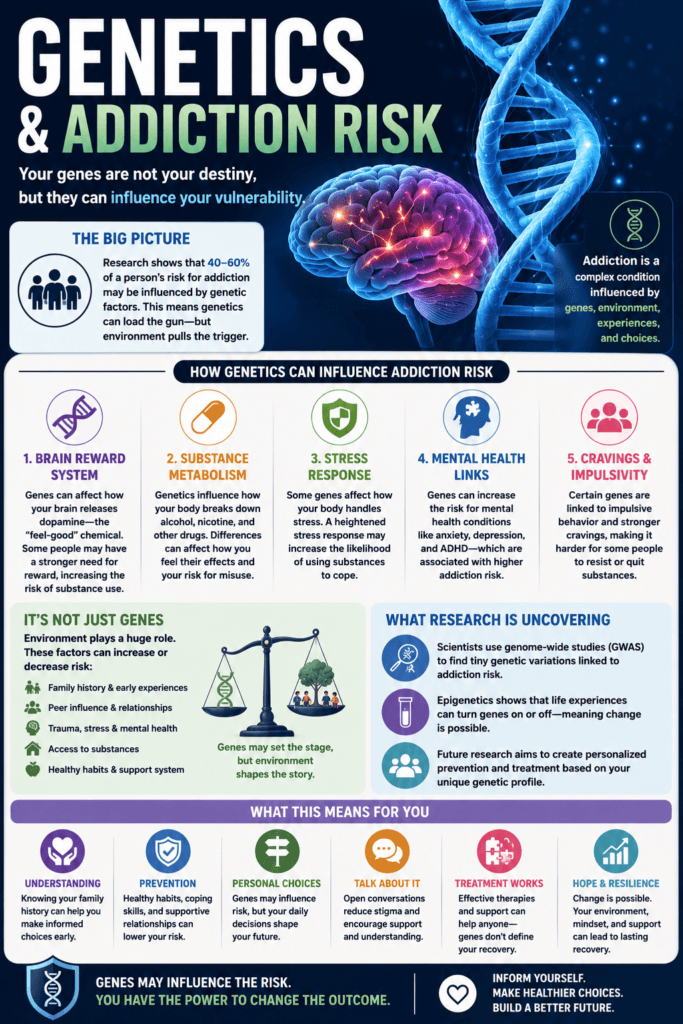
Researchers have estimated that genetics accounts for about 40-60% of a person’s risk for developing a substance use disorder. This means there’s a pretty big inherited component, but it works hand in hand with your environment and experiences. For example, just because a parent had issues with alcohol doesn’t guarantee the same thing for their kids, but it does mean there may be a higher baseline risk.
Breaking Down Genetic Influence: What Actually Happens?
The way genetics contributes to substance abuse isn’t about a single “addiction gene.” Instead, several different genes each play small roles by affecting how your brain processes reward, handles stress, or responds to chemicals in drugs and alcohol. Some of the best-studied areas include:
- Dopamine Pathways: Dopamine is a key neurotransmitter in your brain’s reward system. Genes affecting dopamine production or function can influence how strongly someone reacts to substances that trigger pleasure. Some may be wired to feel a bigger boost, making repeated use more tempting.
- Metabolism: Some people’s bodies break down drugs or alcohol faster or slower, depending on their genetics. Those who metabolize alcohol slowly may feel sicker when drinking and might avoid heavy use, while faster metabolism can lead to drinking larger amounts.
- Impulsivity and Stress Response: Genes can make some people more likely to act on impulse or feel stress more intensely, which can lead to risky decisions around substance use.
It’s a mix of all these small differences, which you can inherit from your parents, that can add up to a higher or lower risk. If you add up all the small differences between genes, you get a picture of why one person might be more prone than another. It shows why the path to addiction or recovery can look so different from one person to the next. Some people find quitting much tougher because their personal mix of genes makes cravings or withdrawal especially tough.
Genetics vs. Environment: How They Interact
This isn’t just about DNA. The environment is a major factor, too. Think of stressful events, trauma, early exposure to drugs, or even how normalized substance use is in your family or community. What’s interesting is that a person’s genetic risk can make them more sensitive to these outside influences.
For example, someone with a higher genetic risk for addiction might be more likely to develop substance abuse if they’re exposed to stressful events or peer pressure. On the flip side, supportive families or communities can “buffer” that risk, helping to prevent problems before they start. This back-and-forth between genes and the environment is what researchers call gene-environment interaction, and it’s a huge area of study. If someone is in an encouraging environment that discourages substance use, they might never run into trouble despite a genetic risk. However, another person with the same genetics but less support could find it harder to stay clear.
Current Research: What Scientists Are Stumbling Upon
Scientists are still figuring out exactly which genes are involved and how they work together. Genome-wide association studies (GWAS) have been really useful in identifying lots of little genetic variations tied to substance use. Some pretty eye-catching results have come from studying people with family histories spanning multiple generations, helping to sort out the specific combinations of genes linked to higher risk.
Some research focuses on groups of genes related to how the body responds to specific substances. For example, a certain gene (ALDH2) helps process alcohol, and some people of East Asian descent have a version that does the job less efficiently. This can cause flushing, nausea, and rapid heartbeat even after small amounts of alcohol, leading many to avoid drinking altogether. That’s how a gene can directly influence behavior and, in this case, lower the risk of alcohol abuse.
Scientists are also looking at mental health genes, since anxiety, depression, and ADHD often run in the same families as substance abuse. Sometimes the same genetic variants that make a person vulnerable to mental health struggles make substance use more likely too. And new technology makes it easier for researchers to check out huge numbers of DNA samples, linking more genes to substance abuse than ever.
Another trend in research is to examine how certain gene variants interact with substances commonly found in people’s environments. For example, in places where cannabis is legal, people who have genetics making them sensitive to its effects could be at greater risk. This opens up questions about policy and healthcare, too, since what’s available and legal clearly interacts with genetic risk in the population.
Practical Signs and What to Look Out For
If you’re wondering whether genetics might play a role in your own life, there are a few practical things to consider:
- Family History: If addiction appears often in close relatives, it makes sense to pay extra attention to your own habits. It doesn’t mean you’re headed for trouble, but self-awareness really helps.
- Strong Reactions: If you find yourself feeling much more intoxicated or affected by substances than your friends, or if you seem to need more to get the same buzz, that can hint at different genetic sensitivities.
- Mental Health: If anxiety, depression, or other mood conditions are part of your life or your family’s history, being mindful of substance use is smart, since these often tie together.
Other signals can involve how quickly you bounce back after using a substance, or if you tend to experience intense cravings compared to others. Paying attention to these signs may help you spot possible risks early. Family stories can be very telling, so having honest conversations can give you a better sense of what to watch for in yourself or those close to you.
What Can You Do With This Info?
Kicking substance abuse or avoiding it in the first place is possible, no matter what your genetic background looks like. Self-knowledge is pretty powerful here. If you know you’re in a higher risk group because of family history, it makes sense to be extra careful about experimenting. Being open with your doctor or therapist can help too; they might have suggestions tailored to your personal risk level.
Some preventive steps can make a big difference, especially for parents who know they have a family history of substance abuse. Early conversations about drugs and alcohol (even with younger kids), helping teens build healthy coping skills, and setting clear family expectations all help.
There are also genetic counseling services out there, although these are more common for other health conditions than for addiction. Still, for people who are really concerned or have had bad experiences in their family, talking to a genetics professional can provide some peace of mind and point out positive ways to manage risk. Getting in touch with support groups or organizations that specialize in substance use prevention can give you extra tools, too.
Common Questions About Genetics and Substance Abuse
People new to this topic usually have many similar questions, so I’ve put together a few of the ones I hear most often.
Question: If addiction runs in my family, does that mean I’ll struggle with it too?
Answer: Not at all. Genetics just raises risk, but doesn’t guarantee anything. Lifestyle, choices, and support all have a big impact, too.
Question: Can genetic testing show if I’ll develop a substance abuse problem?
Answer: We’re not there yet. Genetic tests can find certain risks (like the alcohol flush gene), but they can’t predict addiction for sure. Risk depends on many different genes and your environment combined.
Question: What should I do if I know I have a family history of substance abuse?
Answer: Just being aware is already really important. Talk openly with doctors, watch your own habits, and get support if you ever feel things getting out of control.
Key Takeaways and Making Sense of the Info
Learning about how genetics influences substance abuse can feel a bit overwhelming at first. It’s really not about blaming yourself or your family history; it’s just about understanding another piece of the puzzle. This kind of information can make a real difference in prevention, early intervention, or even just feeling less alone if you’ve struggled or worried in the past.
I find it encouraging to remember that while genetics adds to the risk, they don’t decide everything. Having knowledge helps you make smarter choices and get support when you need it. Whether you’re supporting a friend, looking out for family, or thinking back on your own habits, understanding this science can be pretty handy for steering through the world of substance use.
If you’re interested in learning more or want to support someone you care about, checking out resources from organizations such as the National Institute on Drug Abuse (NIDA) or the Substance Abuse and Mental Health Services Administration (SAMHSA) is worth your time. These sites break down the latest research and offer prevention and recovery tips based on real science.
Video: Half Your Addiction Risk Could Be Genetic #shorts #health #awareness