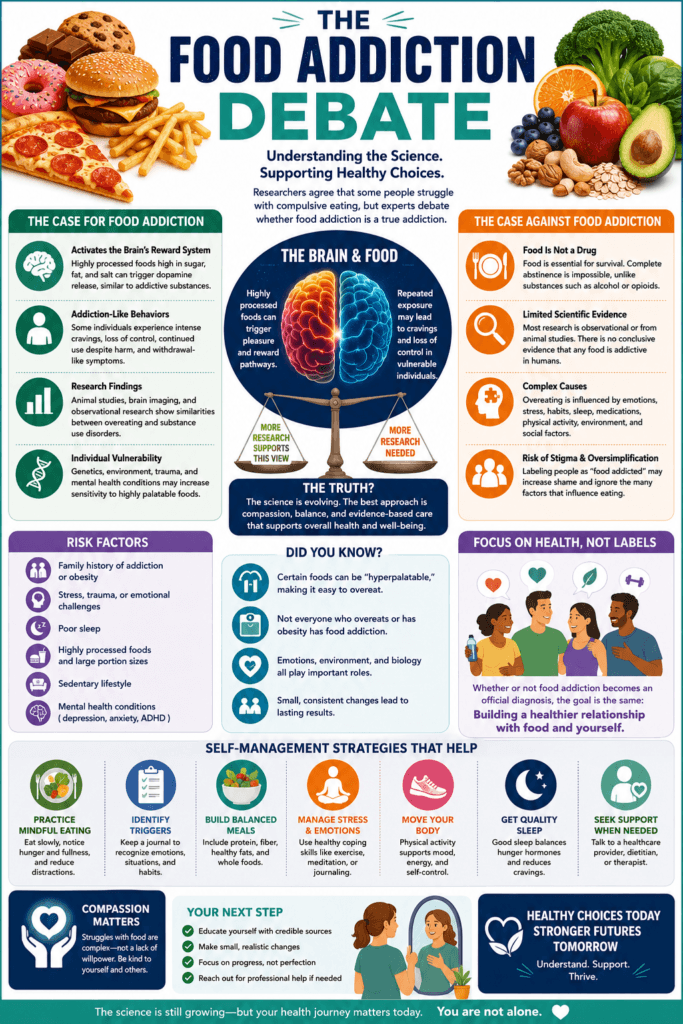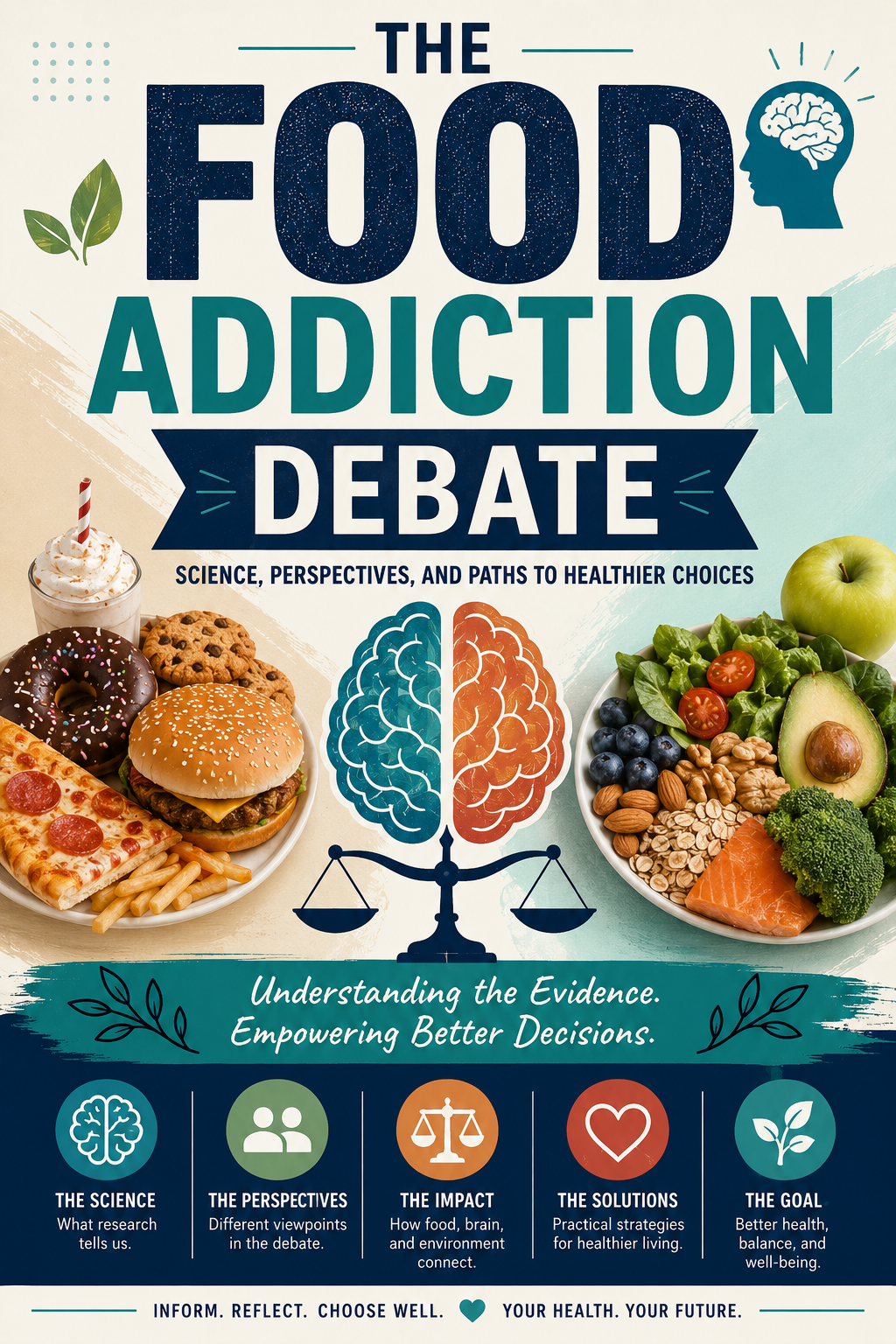
The concept of food addiction continues to generate discussion among researchers because eating behaviors are influenced by a complex interaction of nutrition, brain chemistry, emotions, and environmental factors. Although scientists are still investigating whether highly processed foods trigger addiction-like responses similar to substances such as nicotine or alcohol, many agree that some individuals experience powerful cravings, compulsive eating, and difficulty controlling food intake. Regardless of how these behaviors are classified, understanding personal eating habits and the factors that influence them is an important step toward improving health. Self-management strategies, including recognizing triggers, practicing mindful eating, and developing healthy coping skills, can help individuals build a more balanced relationship with food. By emphasizing sustainable, evidence-based lifestyle changes rather than focusing solely on labels, individuals can support their physical health, emotional well-being, and long-term quality of life.
Food Addiction Debate
The concept of food addiction has generated significant debate among researchers, healthcare professionals, and the public. Some experts believe that certain highly processed foods—especially those high in sugar, fat, and refined carbohydrates—can trigger brain reward pathways in ways that resemble addictive substances. Others argue that while overeating can become compulsive, food itself should not be classified as an addictive substance because eating is necessary for survival, and the evidence differs from that for drugs such as opioids or nicotine. Regardless of the terminology, many experts agree that some individuals experience a loss of control over eating that can lead to significant physical and emotional consequences.
The Argument Supporting Food Addiction
Supporters of the food addiction model point to research showing that highly processed foods can activate the brain’s reward system by increasing dopamine release. Dopamine is involved in motivation, pleasure, and reinforcement. Repeated exposure to highly palatable foods may strengthen cravings and encourage repeated consumption, particularly in vulnerable individuals.
Research has found that some people exhibit behaviors commonly associated with addiction, including:
- Intense cravings for specific foods
- Difficulty controlling intake despite repeated attempts to cut back
- Continued overeating despite negative health consequences
- Spending significant time thinking about or obtaining certain foods
- Feelings of withdrawal-like symptoms, such as irritability or headaches, when reducing highly processed foods
These similarities have led some researchers to propose that food addiction shares characteristics with substance use disorders.
The Argument Against Food Addiction
Critics argue that food differs fundamentally from addictive drugs because it is essential for life. Unlike alcohol or illicit drugs, complete abstinence from food is impossible. Instead, people must learn healthy eating behaviors rather than eliminate food altogether.
Other concerns include:
- Most evidence comes from animal studies or observational research.
- No single ingredient has been conclusively proven to be addictive in humans in the same way as nicotine or opioids.
- Overeating may be influenced by emotional stress, trauma, environmental factors, genetics, habits, sleep deprivation, medications, and mental health conditions rather than addiction alone.
- Labeling overeating as an addiction could increase stigma or oversimplify a complex condition.
Many researchers believe that problematic eating is better understood through multiple biological, psychological, and social factors rather than a single addiction model.
Relationship Between Food Addiction and Obesity
Food addiction and obesity are not synonymous. Many individuals living with obesity do not meet the proposed criteria for food addiction, while some individuals with food addiction maintain a normal body weight. Weight is influenced by genetics, metabolism, physical activity, medications, hormonal conditions, and environmental factors in addition to eating behaviors.
Food Addiction and Eating Disorders
Food addiction shares overlapping features with several eating disorders, particularly binge-eating disorder. Both conditions involve episodes of consuming large amounts of food accompanied by feelings of loss of control. However, binge-eating disorder is a formally recognized mental health diagnosis, whereas food addiction is not currently recognized as a distinct diagnosis in major diagnostic manuals. Careful evaluation by healthcare professionals is important because treatment approaches may differ.
Risk Factors
Several factors may increase vulnerability to compulsive eating behaviors, including:
- Family history of addiction
- Childhood trauma or adverse experiences
- Chronic stress
- Depression or anxiety
- Poor sleep
- Social isolation
- Easy access to highly processed foods
- Genetic susceptibility
- Emotional coping through eating
Current Treatment Approaches
Although food addiction remains debated, treatment generally focuses on improving eating behaviors and addressing underlying emotional and psychological factors.
Evidence-based interventions may include:
- Nutritional counseling with a registered dietitian
- Cognitive Behavioral Therapy (CBT)
- Mindfulness-based interventions
- Treatment for depression, anxiety, or trauma
- Stress management
- Regular physical activity
- Structured meal planning
- Support groups when appropriate
- Medications for obesity or binge-eating disorder in selected individuals
Treatment should be individualized rather than based solely on weight.
Public Health Perspective
The widespread availability and aggressive marketing of inexpensive, highly processed foods have contributed to concerns about compulsive eating. Some public health experts advocate for improved food labeling, healthier school meals, nutrition education, and policies that increase access to nutritious foods. Others caution that policies should avoid stigmatizing individuals with obesity or oversimplifying the causes of unhealthy eating.
Ongoing Research
Scientists continue to investigate:
- Whether specific foods or combinations of ingredients have addictive properties
- Brain imaging differences in individuals with compulsive eating
- Genetic influences on reward sensitivity
- The role of hormones that regulate hunger and satiety
- How stress and trauma influence eating behavior
- Which treatments are most effective for individuals with addiction-like eating patterns
Conclusion
The debate over food addiction reflects the complexity of human eating behavior. There is growing evidence that some highly processed foods may strongly stimulate the brain’s reward system and contribute to compulsive eating in susceptible individuals. At the same time, food is fundamentally different from addictive drugs because it is necessary for survival, and overeating is influenced by biological, psychological, social, and environmental factors. Rather than focusing solely on whether food meets the definition of an addictive substance, healthcare providers increasingly emphasize identifying problematic eating behaviors, treating co-occurring mental health conditions, promoting balanced nutrition, and providing compassionate, evidence-based care tailored to each individual’s needs.
Self-Management Strategies to Understand the Food Addiction Debate
Understanding the debate surrounding food addiction can help individuals make informed decisions about their eating habits without relying on labels or self-blame. Whether compulsive eating is viewed as an addiction, a behavioral pattern, or part of an eating disorder, healthy self-management focuses on building sustainable habits, recognizing personal triggers, and seeking appropriate support when needed.
1. Learn the Science Behind Eating Behavior
Educate yourself about how the brain regulates hunger, fullness, reward, and cravings. Understanding that genetics, hormones, stress, sleep, emotions, and the food environment all influence eating can reduce guilt and encourage healthier choices.
2. Practice Mindful Eating
Eat slowly and pay attention to hunger and fullness cues. Avoid distractions such as television or smartphones during meals. Mindful eating helps increase awareness of why, when, and how much you eat, making it easier to recognize emotional or impulsive eating.
3. Identify Personal Triggers
Keep a journal to track eating habits, emotions, stress levels, and situations that lead to cravings or overeating. Common triggers include:
- Stress
- Anxiety
- Depression
- Loneliness
- Boredom
- Fatigue
- Social situations
- Easy access to highly processed foods
Recognizing patterns allows you to develop healthier coping strategies.
4. Build Balanced Meals
Choose meals that include lean protein, whole grains, fruits, vegetables, healthy fats, and fiber. Balanced meals help stabilize blood sugar, improve satiety, and reduce intense cravings between meals.
5. Avoid Extreme Dieting
Highly restrictive diets often increase cravings and may lead to binge eating or cycles of overeating. Instead of eliminating entire food groups without medical guidance, focus on moderation, consistency, and long-term healthy eating habits.
6. Improve Your Food Environment
Make healthier choices easier by:
- Keeping nutritious snacks readily available
- Limiting highly processed snack foods at home
- Planning meals in advance
- Grocery shopping with a list
- Avoiding shopping while hungry
Small environmental changes can reduce impulsive eating.
7. Develop Healthy Coping Skills
If you notice that you eat in response to emotions rather than hunger, practice alternative coping strategies such as:
- Walking or exercising
- Deep breathing exercises
- Meditation or mindfulness
- Journaling
- Listening to music
- Reading
- Calling a supportive friend
- Engaging in a hobby
Learning new coping skills reduces reliance on food for emotional comfort.
8. Prioritize Sleep and Stress Management
Poor sleep and chronic stress can disrupt hormones that regulate hunger and fullness, making cravings more intense. Aim for consistent, quality sleep and incorporate stress-reduction practices into your daily routine.
9. Stay Physically Active
Regular physical activity supports physical and mental health, improves mood, reduces stress, and helps regulate appetite. Choose activities you enjoy so that exercise becomes a sustainable part of your lifestyle.
10. Avoid Self-Blame
Compulsive eating is influenced by many biological, psychological, and environmental factors. Instead of criticizing yourself after setbacks, practice self-compassion and view each day as an opportunity to make healthier choices.
11. Seek Professional Support When Needed
If food cravings, binge eating, or compulsive eating interfere with your health or daily life, seek help from healthcare professionals. A primary care provider, registered dietitian, psychologist, or therapist can evaluate your symptoms and recommend evidence-based treatment tailored to your needs.
12. Focus on Overall Health Rather Than Labels
Whether or not food addiction is ultimately recognized as a distinct medical diagnosis, the goal remains the same: improving physical health, emotional well-being, and quality of life. Focus on developing healthy habits you can maintain over time rather than becoming overly concerned with diagnostic labels.
Key Takeaway
The food addiction debate continues as researchers explore how highly processed foods interact with the brain’s reward system and influence eating behavior. Regardless of where the scientific debate ultimately leads, self-management focuses on practical, evidence-based strategies such as mindful eating, balanced nutrition, stress management, regular physical activity, adequate sleep, and recognizing emotional triggers. By understanding your own eating patterns and seeking professional support when needed, you can develop a healthier relationship with food and make lasting lifestyle changes that support both physical and emotional well-being.
Family Support Strategies to Understand the Food Addiction Debate
Families play an important role in helping loved ones develop a healthy relationship with food and eating. While researchers continue to debate whether food addiction should be classified as a true addiction, there is broad agreement that some individuals struggle with compulsive eating, intense cravings, and loss of control around certain foods. Family members can provide support by creating a positive home environment, encouraging healthy habits, and avoiding blame or shame.
1. Learn About the Science of Eating Behavior
Educate yourself about the biological, psychological, and environmental factors that influence eating. Hunger, stress, emotions, genetics, sleep, medications, and highly processed foods can all affect eating behaviors. Understanding these influences promotes empathy and reduces misconceptions.
2. Avoid Blaming or Shaming
Criticism about body weight, food choices, or eating habits can increase stress and emotional eating. Instead of focusing on appearance, encourage healthy behaviors and recognize that lasting change often takes time.
3. Encourage Open Communication
Create a safe environment where family members feel comfortable discussing struggles with cravings, overeating, emotional eating, or body image without fear of judgment. Listening with compassion builds trust and encourages individuals to seek help when needed.
4. Promote Healthy Eating as a Family
Model healthy behaviors by:
- Preparing balanced meals together.
- Eating regular family meals when possible.
- Including fruits, vegetables, whole grains, lean proteins, and healthy fats.
- Limiting highly processed snacks and sugary beverages at home.
- Encouraging moderation rather than strict food rules.
When the entire family adopts healthier habits, change becomes more sustainable.
5. Avoid Using Food as a Reward or Punishment
Using food to celebrate achievements, comfort emotional distress, or discipline children may contribute to unhealthy emotional associations with eating. Instead, reward accomplishments with activities, experiences, or words of encouragement.
6. Support Healthy Coping Skills
Help your loved one develop alternatives to emotional eating by encouraging:
- Physical activity
- Hobbies
- Mindfulness or meditation
- Journaling
- Music or creative activities
- Spending time outdoors
- Talking through stressful situations
Healthy coping strategies reduce reliance on food for emotional comfort.
7. Encourage Regular Sleep and Stress Management
Poor sleep and chronic stress can increase cravings and impulsive eating. Families can support healthy routines by encouraging consistent sleep schedules, reducing household stress when possible, and practicing relaxation techniques together.
8. Respect Individual Differences
Not everyone experiences food cravings or overeating in the same way. Avoid comparing family members or expecting identical eating habits. Individualized support helps each person develop realistic and sustainable goals.
9. Seek Professional Help When Appropriate
If compulsive eating, binge eating, or weight-related health concerns begin affecting physical or emotional well-being, encourage evaluation by a healthcare professional. Treatment may involve a primary care provider, registered dietitian, psychologist, therapist, or other specialists experienced in nutrition and behavioral health.
10. Focus on Health Rather Than Weight
Encourage goals such as improving energy, nutrition, strength, sleep, and overall wellness, rather than focusing solely on body weight or appearance. A health-centered approach often leads to more positive and lasting behavior change.
11. Celebrate Small Successes
Recognize progress such as preparing healthier meals, practicing mindful eating, increasing physical activity, managing stress effectively, or attending healthcare appointments. Positive reinforcement builds confidence and motivation.
12. Take Care of Your Own Well-Being
Supporting someone with eating challenges can be emotionally demanding. Family members should also maintain healthy eating habits, manage their own stress, seek support when needed, and model balanced behaviors. Healthy families create stronger environments for long-term success.
Key Takeaway
The debate over food addiction highlights the complexity of eating behavior, but families do not need to wait for scientific consensus to provide meaningful support. By fostering open communication, modeling healthy lifestyle habits, reducing shame, encouraging balanced nutrition, supporting healthy coping strategies, and seeking professional guidance when needed, families can help loved ones develop a healthier relationship with food. Compassion, patience, and consistency create a supportive environment that promotes both physical health and emotional well-being, regardless of how compulsive eating is ultimately classified.
Community Resource Strategies to Understand the Food Addiction Debate
Communities play an essential role in helping individuals understand the complex relationship between eating behaviors, nutrition, mental health, and the ongoing debate surrounding food addiction. While researchers continue to examine whether food addiction should be recognized as a distinct medical diagnosis, community resources can provide education, promote healthy lifestyles, improve access to nutritious foods, and connect individuals with professional support. These resources encourage evidence-based approaches that focus on overall health rather than stigma or blame.
1. Utilize Primary Care and Healthcare Services
Primary care providers can assess eating behaviors, screen for obesity, diabetes, eating disorders, depression, anxiety, and other health conditions that may contribute to compulsive eating. Early identification allows individuals to receive appropriate referrals and treatment.
2. Seek Guidance from Registered Dietitians
Registered dietitians provide individualized nutrition counseling based on scientific evidence. They help individuals develop balanced meal plans, understand hunger and fullness cues, manage cravings, and establish sustainable eating habits rather than relying on restrictive diets.
3. Access Behavioral Health Services
Psychologists, counselors, and therapists can help individuals address emotional eating, stress, trauma, depression, anxiety, or binge-eating behaviors. Evidence-based therapies, such as Cognitive Behavioral Therapy (CBT) and mindfulness-based interventions, can improve coping skills and support healthier relationships with food.
4. Participate in Community Wellness Programs
Many community centers, hospitals, fitness facilities, and public health departments offer wellness programs that include nutrition education, cooking classes, weight-management support, stress-reduction workshops, and opportunities for physical activity. These programs promote healthy lifestyle changes in supportive group settings.
5. Improve Access to Healthy Foods
Communities can support healthy eating by increasing access to affordable, nutritious foods through:
- Farmers’ markets
- Community gardens
- Food cooperatives
- Food banks
- Supplemental nutrition programs
- Healthy school meal initiatives
Greater access to wholesome foods helps individuals make healthier dietary choices.
6. Promote Nutrition Education
Schools, libraries, extension services, nonprofit organizations, and healthcare systems can provide educational programs that teach:
- Reading nutrition labels
- Meal planning
- Healthy grocery shopping
- Portion awareness
- Cooking nutritious meals at home
- Understanding highly processed foods
Education empowers individuals to make informed decisions rather than relying on misinformation.
7. Encourage Physical Activity Programs
Community recreation centers, parks, walking groups, and exercise classes support regular physical activity, which benefits both physical and mental health. Exercise helps reduce stress, improve mood, regulate appetite, and support long-term wellness.
8. Support Research and Public Education
Universities, healthcare organizations, and public health agencies continue to study the biology of eating behavior, obesity, and compulsive eating. Community education should reflect current scientific evidence while acknowledging that the food addiction debate is still evolving.
9. Reduce Weight Bias and Stigma
Community organizations should promote respectful, person-centered messaging that avoids blaming individuals for their weight or eating behaviors. Reducing stigma encourages people to seek medical care, nutrition counseling, and behavioral health services without fear of judgment.
10. Collaborate Across Disciplines
Comprehensive care is most effective when healthcare providers, dietitians, behavioral health professionals, fitness specialists, educators, and community organizations work together. Interdisciplinary collaboration addresses the biological, psychological, and social factors that influence eating behaviors.
11. Encourage Healthy Workplace and School Environments
Employers and schools can support healthier lifestyles by offering nutritious food options, wellness initiatives, physical activity opportunities, stress management programs, and educational resources about nutrition and mental health.
12. Connect Individuals with Appropriate Support Groups
Community support groups for weight management, healthy lifestyle changes, emotional eating, or binge-eating recovery can provide encouragement, accountability, and shared experiences. Participation should complement, not replace, professional medical and behavioral health care when needed.
Key Takeaway
The food addiction debate highlights the complexity of human eating behavior and underscores the need for comprehensive, evidence-based community support. Healthcare services, nutrition counseling, behavioral health care, wellness programs, access to healthy food, education, and supportive environments all contribute to healthier eating behaviors and improved overall well-being. By reducing stigma, promoting accurate information, and expanding access to multidisciplinary resources, communities can help individuals develop lifelong healthy habits while supporting both physical and mental health, regardless of how food addiction is ultimately classified by future research.
Frequently Asked Questions
Here are some common questions:
1. What is food addiction?
Food addiction is the theory that some people develop compulsive eating behaviors toward certain foods—particularly highly processed foods high in sugar, fat, and refined carbohydrates—that resemble some features of substance addiction, such as cravings and difficulty controlling consumption.
2. Is food addiction an officially recognized medical diagnosis?
Currently, food addiction is not recognized as a separate diagnosis in major diagnostic manuals. However, researchers continue to study whether addiction-like eating behaviors represent a distinct condition or overlap with other disorders such as binge-eating disorder.
3. Why is there a debate about food addiction?
The debate exists because food is essential for survival, unlike drugs or alcohol. While some research suggests that certain foods strongly activate the brain’s reward system, scientists have not reached a consensus that food itself is addictive in the same way as substances like nicotine or opioids.
4. Which foods are most often associated with addiction-like eating?
Research most commonly focuses on highly processed foods, including:
- Candy and chocolate
- Cookies and cakes
- Ice cream
- Chips
- Pizza
- Fast food
- Sugary cereals
- Sugar-sweetened beverages
These foods are often engineered to be highly palatable and easy to overconsume.
5. Can food affect the brain’s reward system?
Yes. Eating enjoyable foods naturally activates the brain’s reward pathways by releasing neurotransmitters such as dopamine. Researchers are studying whether repeated exposure to highly processed foods may contribute to stronger cravings and compulsive eating in some individuals.
6. Is food addiction the same as binge-eating disorder?
No. Although they share similarities, they are different concepts. Binge-eating disorder is a recognized mental health condition characterized by recurrent episodes of eating unusually large amounts of food with a sense of loss of control. Food addiction remains a debated concept and is not currently an official diagnosis.
7. Does everyone with obesity have food addiction?
No. Most people living with obesity do not meet the proposed criteria for food addiction. Body weight is influenced by many factors, including genetics, metabolism, hormones, medications, physical activity, sleep, environmental factors, and eating behaviors.
8. Can someone have food addiction without being overweight?
Yes. Some individuals who experience compulsive eating or intense food cravings maintain a body weight within the recommended range due to differences in metabolism, activity level, or eating patterns.
9. What factors increase the risk of compulsive eating?
Several factors may contribute, including:
- Genetics
- Family history of addiction
- Childhood trauma
- Chronic stress
- Depression or anxiety
- Poor sleep
- Emotional distress
- Easy access to highly processed foods
- Learned eating habits
Usually, multiple factors interact rather than a single cause.
10. How can someone manage compulsive eating behaviors?
Helpful strategies include:
- Practicing mindful eating
- Eating balanced meals with adequate protein and fiber
- Managing stress
- Getting enough sleep
- Exercising regularly
- Identifying emotional eating triggers
- Planning meals ahead
- Seeking professional support when needed
11. Should people completely avoid highly processed foods?
Not necessarily. For many individuals, moderation and balanced eating are more sustainable than complete restriction. However, some people may benefit from limiting foods that consistently trigger overeating. A healthcare professional or registered dietitian can help develop an individualized plan.
12. When should someone seek professional help?
Individuals should seek professional evaluation if they experience:
- Frequent loss of control over eating
- Recurrent binge-eating episodes
- Significant distress related to eating
- Weight-related health complications
- Depression or anxiety related to food
- Difficulty managing eating despite repeated attempts
Early intervention often leads to better outcomes.
13. What treatments are available for compulsive eating?
Treatment may include:
- Nutrition counseling with a registered dietitian
- Cognitive Behavioral Therapy (CBT)
- Mindfulness-based therapies
- Treatment for anxiety, depression, or trauma
- Physical activity programs
- Medical evaluation for obesity or eating disorders
- Medications when appropriate for specific conditions
Treatment should be personalized to the individual’s needs.
14. How can families provide support?
Families can:
- Avoid blame or shame
- Encourage balanced meals and healthy routines
- Listen without judgment
- Promote physical activity
- Support stress management
- Encourage professional care when needed
- Focus on health and well-being rather than body weight alone
A supportive home environment can improve long-term success.
15. What is the most important message about the food addiction debate?
Although researchers continue to debate whether food addiction is a distinct medical condition, there is widespread agreement that compulsive eating is real and can significantly affect health and quality of life. The focus should remain on evidence-based care, balanced nutrition, emotional well-being, and individualized treatment rather than labels. With education, healthy lifestyle habits, and professional support when needed, individuals can develop a healthier relationship with food and improve their overall health.
Conclusion
Self-management is a valuable approach for addressing compulsive eating behaviors and promoting long-term health, regardless of where the scientific debate on food addiction ultimately leads. Practicing mindful eating, maintaining balanced nutrition, managing stress, getting adequate sleep, engaging in regular physical activity, and seeking professional guidance when needed can help individuals develop healthier and more sustainable habits. Rather than striving for perfection, focusing on gradual progress and self-compassion encourages lasting lifestyle changes. By understanding the many biological, psychological, and environmental factors that influence eating behaviors, individuals can make informed decisions that support both their overall wellness and quality of life.
Video: Breaking the Emotional Eating Cycle #HealthTips #MentalWellness