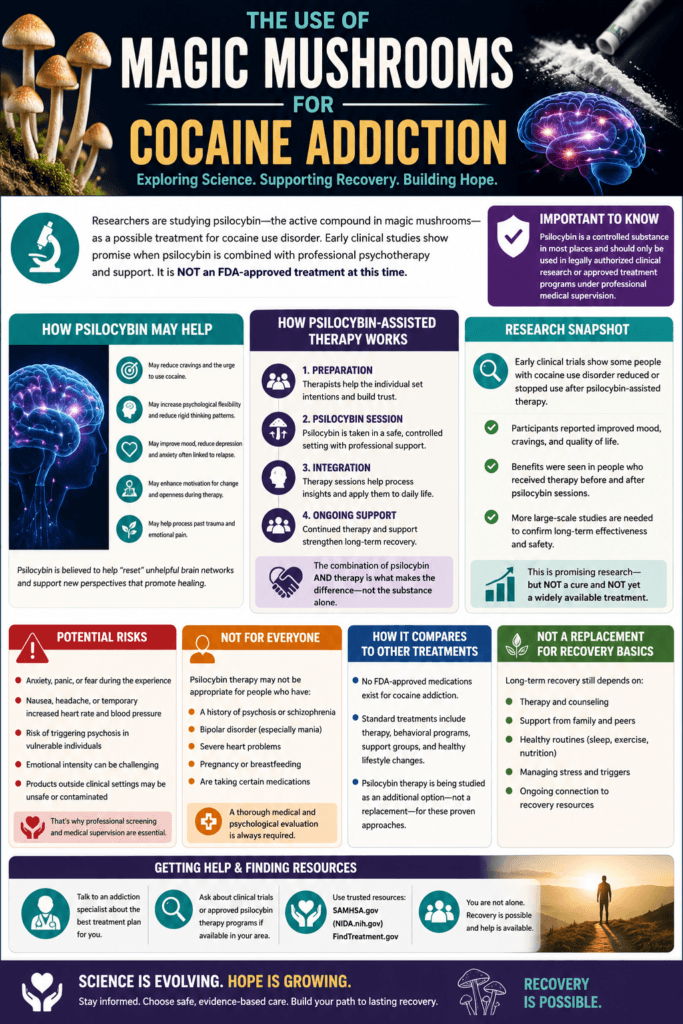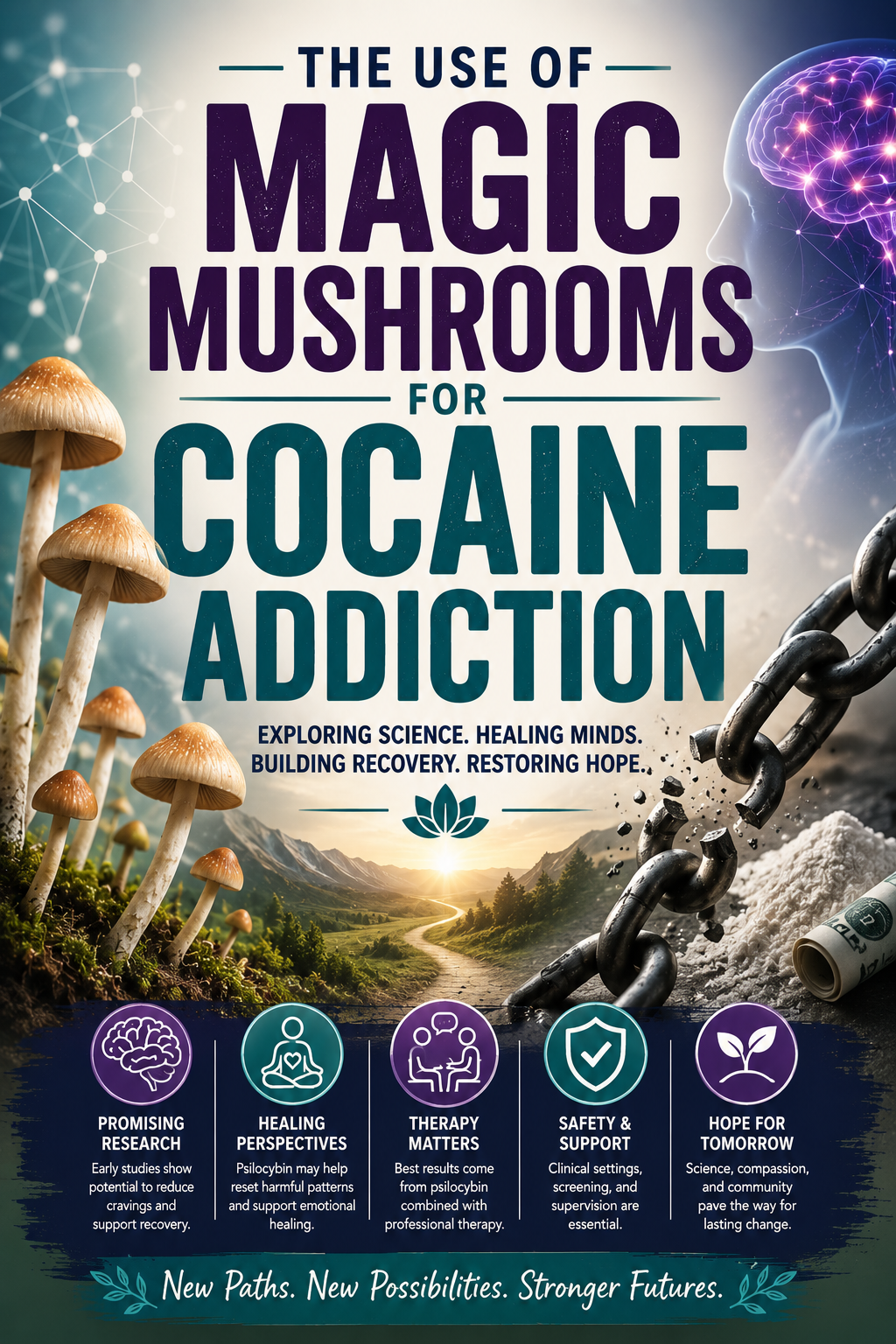
Interest in using magic mushrooms, which contain the psychedelic compound psilocybin, as a potential treatment for cocaine addiction has increased as researchers search for new approaches to treating substance use disorders. Cocaine use disorder remains challenging to treat, and there are currently no FDA-approved medications specifically indicated for this condition. Early clinical studies suggest that psilocybin-assisted psychotherapy may help some individuals reduce cocaine use, manage cravings, and improve psychological well-being by promoting emotional processing and greater cognitive flexibility. However, this research is still in its early stages, and psilocybin remains an investigational therapy for cocaine addiction. Understanding both the potential benefits and the limitations of current research is essential for making informed decisions about treatment.
Using Magic Mushrooms for Cocaine Addiction
Interest in using magic mushrooms, which contain the psychedelic compounds psilocybin and psilocin, to treat cocaine addiction has grown in recent years. Early research suggests that psilocybin-assisted psychotherapy may help some people reduce cocaine use, cravings, and relapse by promoting psychological insight, emotional processing, and changes in rigid patterns of thinking. However, the evidence is still limited, and psilocybin is not currently an FDA-approved treatment for cocaine use disorder. Larger clinical trials are underway to better determine its safety and effectiveness.
Why Researchers Are Interested
Cocaine use disorder is difficult to treat, and unlike opioid or alcohol use disorders, there are no FDA-approved medications specifically indicated for cocaine addiction. Current treatment relies primarily on behavioral therapies such as:
- Cognitive Behavioral Therapy (CBT)
- Contingency Management
- Motivational Interviewing
- Community Reinforcement Approach
- Peer recovery support
Because relapse rates remain relatively high, researchers continue to investigate novel approaches, including psychedelic-assisted therapy.
How Psilocybin May Work
Psilocybin is converted in the body to psilocin, which activates serotonin 5-HT2A receptors in the brain. Unlike cocaine, which primarily affects dopamine pathways, psilocybin appears to temporarily alter communication between brain networks involved in self-awareness, emotional regulation, and cognitive flexibility.
Researchers believe psilocybin may:
- Increase psychological flexibility.
- Reduce rigid patterns of addictive thinking.
- Enhance motivation for change.
- Improve emotional processing.
- Decrease depression and anxiety that often accompany addiction.
- Increase openness during psychotherapy.
- Help individuals develop new perspectives on substance use.
These effects are thought to arise from the combination of the medication and structured psychotherapy rather than from the drug alone.
Current Research
Early pilot studies involving individuals with cocaine use disorder have shown encouraging findings:
- Some participants reduced cocaine use after psilocybin-assisted therapy.
- Several reported decreased cravings.
- Many described increased motivation to remain abstinent.
- Participants often reported meaningful psychological experiences that supported behavioral change.
However, these studies generally involved:
- Small numbers of participants.
- Intensive psychological preparation.
- Continuous therapist support during dosing sessions.
- Integration therapy after treatment.
Because of these limitations, researchers cannot yet conclude that psilocybin is effective for everyone with cocaine addiction.
Potential Benefits
If future studies confirm its effectiveness, psilocybin-assisted therapy could potentially:
- Reduce cocaine cravings.
- Improve treatment engagement.
- Enhance emotional healing.
- Treat co-occurring depression or anxiety in selected individuals.
- Increase long-term recovery success when combined with behavioral therapy.
Potential Risks
Psilocybin is not risk-free. Potential adverse effects include:
- Anxiety or panic during the psychedelic experience.
- Temporary increases in blood pressure and heart rate.
- Confusion or impaired judgment during intoxication.
- Nausea.
- Headache after treatment.
- Fearful or emotionally intense experiences.
Rare but serious risks include triggering prolonged psychiatric symptoms in susceptible individuals.
Who May Not Be Good Candidates?
Psilocybin-assisted therapy is generally avoided or used with extreme caution in individuals with:
- A personal history of psychotic disorders.
- Certain bipolar disorders, particularly a history of mania.
- Active suicidal crisis requiring immediate stabilization.
- Uncontrolled cardiovascular disease.
- Pregnancy (due to insufficient safety data).
Careful screening is a critical part of clinical research protocols.
Importance of Professional Supervision
One of the most important aspects of current research is that psilocybin is not given as a stand-alone treatment. Clinical protocols typically include:
- Comprehensive medical and psychiatric evaluation.
- Preparation sessions before treatment.
- Supervised dosing in a controlled clinical environment.
- Continuous monitoring during the psychedelic experience.
- Multiple psychotherapy sessions afterward to help integrate insights into lasting behavioral change.
These safeguards are considered essential to maximize benefits and reduce risks.
Legal Status
Psilocybin remains a controlled substance under U.S. federal law, although some states and local jurisdictions have created limited medical or research pathways. Availability varies widely depending on location. Outside approved research studies or authorized programs in jurisdictions where permitted, possession and use may remain illegal.
Current Clinical Perspective
At present, most addiction specialists consider psilocybin-assisted therapy to be promising but investigational for cocaine use disorder. The strongest evidence continues to support behavioral therapies, contingency management, and comprehensive recovery services as the foundation of treatment. Psilocybin may eventually become another therapeutic option if ongoing clinical trials demonstrate consistent safety and effectiveness and regulatory agencies approve its use.
Conclusion
Research on psilocybin-assisted therapy for cocaine addiction is encouraging but still in its early stages. Preliminary studies suggest that, when combined with structured psychotherapy and delivered in carefully supervised clinical settings, psilocybin may help some individuals reduce cocaine use and strengthen recovery. However, it should not be viewed as a proven or standalone treatment. Until more high-quality research is completed and regulatory approval is obtained, evidence-based behavioral therapies and comprehensive addiction care remain the standard of treatment for cocaine use disorder.
Self-Management Strategies to Understand the Use of Magic Mushrooms for Cocaine Addiction
Self-management plays an important role in recovery from cocaine addiction, regardless of the treatment approach being explored. While research on psilocybin (magic mushrooms)-assisted therapy is promising, it remains an investigational treatment for cocaine use disorder and should only be considered in legally authorized clinical settings under professional supervision. Individuals can support their recovery by developing healthy habits, building coping skills, and staying engaged in evidence-based treatment.
1. Learn the Current Evidence
Educate yourself about psilocybin-assisted therapy using reliable, evidence-based sources. Understand that current research suggests potential benefits for some individuals, but psilocybin is not an FDA-approved treatment for cocaine addiction, and more research is needed to establish its safety and effectiveness.
2. Avoid Self-Treating with Psychedelics
Do not attempt to treat cocaine addiction by using magic mushrooms on your own. Unsupervised psychedelic use can increase the risk of anxiety, panic, accidents, impaired judgment, or worsening mental health symptoms. Research studies use careful medical screening, therapist support, and structured follow-up that are not present in recreational settings.
3. Stay Engaged in Evidence-Based Treatment
Continue participating in treatments that have demonstrated benefit for cocaine use disorder, such as:
- Cognitive Behavioral Therapy (CBT)
- Motivational Interviewing (MI)
- Contingency Management
- Community Reinforcement Approach
- Individual or group counseling
- Peer recovery support groups
These approaches remain the foundation of treatment while new therapies are being studied.
4. Identify Personal Triggers
Keep a journal to identify situations, emotions, people, or environments that increase cocaine cravings. Common triggers include stress, boredom, anger, loneliness, celebrations, and exposure to people or places associated with previous drug use.
5. Develop Healthy Coping Skills
Replace cocaine use with healthier stress-management techniques, such as:
- Deep breathing exercises
- Mindfulness meditation
- Physical exercise
- Journaling
- Creative hobbies
- Listening to music
- Spending time outdoors
- Talking with supportive friends or family
Developing multiple coping strategies strengthens resilience during recovery.
6. Maintain a Structured Daily Routine
A predictable routine helps reduce idle time and promotes healthy decision-making. Include regular sleep, nutritious meals, physical activity, work or school responsibilities, recovery meetings, and enjoyable sober activities.
7. Support Brain and Physical Health
Healthy lifestyle habits promote healing during recovery:
- Eat balanced, nutritious meals.
- Stay physically active.
- Drink plenty of water.
- Get adequate sleep.
- Avoid excessive alcohol and other substances that may increase relapse risk.
These habits improve mood, concentration, and emotional regulation.
8. Manage Co-Occurring Mental Health Conditions
Depression, anxiety, trauma, and other mental health conditions commonly occur alongside cocaine addiction. Work with healthcare professionals to address these concerns through counseling, therapy, or medication when appropriate. Treating mental health conditions often strengthens recovery.
9. Build a Strong Recovery Support Network
Stay connected with people who support your recovery, including family members, counselors, sponsors, peer support groups, and recovery coaches. Social support improves accountability and provides encouragement during challenging times.
10. Discuss New Treatment Options with Your Healthcare Provider
If you are interested in psilocybin-assisted therapy, talk openly with your healthcare provider or addiction specialist. They can explain the current research, discuss potential risks and benefits, and help determine whether participation in a legally authorized clinical trial is appropriate, if available.
11. Prepare for Cravings and Relapse Prevention
Create a written relapse prevention plan that includes:
- Personal triggers
- Early warning signs
- Healthy coping strategies
- Emergency contacts
- Crisis resources
- Steps to take if cravings become overwhelming
Planning ahead improves confidence and reduces impulsive decisions.
12. Be Patient with Recovery
Recovery from cocaine addiction is often a gradual process. Whether using established therapies or participating in future research, lasting recovery is built through consistent healthy habits, ongoing treatment, and self-compassion. Focus on progress rather than perfection.
Key Takeaway
Although psilocybin-assisted therapy is an exciting area of research, it remains an investigational approach for cocaine addiction and should only be used in legally authorized, professionally supervised settings. The most effective self-management strategies continue to include participating in evidence-based treatment, identifying triggers, practicing healthy coping skills, maintaining structured routines, addressing mental health concerns, and building a strong support network. By staying informed, avoiding self-treatment, and working closely with qualified healthcare professionals, individuals can make informed decisions while strengthening their foundation for long-term recovery.
Family Support Strategies to Understand the Use of Magic Mushrooms for Cocaine Addiction
Families play a critical role in supporting loved ones recovering from cocaine addiction. As research into psilocybin (magic mushrooms)-assisted therapy continues, family members may have questions about its potential benefits and risks. While early clinical studies have shown promising results, psilocybin remains an investigational treatment for cocaine use disorder and is not currently approved by the FDA for this purpose. Families can best support recovery by staying informed, encouraging evidence-based care, and maintaining open, compassionate communication.
1. Learn About the Current Research
Educate yourself using reliable medical and scientific sources. Understand that psilocybin-assisted therapy is being studied in carefully controlled clinical settings with extensive medical and psychological support. Avoid relying on social media, sensational headlines, or anecdotal success stories as substitutes for scientific evidence.
2. Understand That Therapy Is More Than the Medication
Research protocols combine psilocybin with structured psychotherapy before, during, and after the dosing session. The therapeutic process—including preparation, supervision, and integration—is considered a key component of treatment and should not be separated from the medication itself.
3. Avoid Encouraging Self-Treatment
Discourage your loved one from attempting to treat cocaine addiction with recreational or unsupervised use of magic mushrooms. Self-treatment carries significant risks, including unpredictable psychological reactions, impaired judgment, accidental injury, and exposure to unregulated substances.
4. Encourage Evidence-Based Treatment
Support your loved one in continuing treatments that are known to be effective, including:
- Individual counseling
- Cognitive Behavioral Therapy (CBT)
- Motivational Interviewing
- Contingency Management
- Peer recovery groups
- Recovery coaching
- Ongoing medical and behavioral health care
If your loved one expresses interest in psilocybin-assisted therapy, encourage them to discuss it with an addiction specialist rather than pursuing it independently.
5. Promote Open, Nonjudgmental Communication
Create a safe environment where your loved one can discuss treatment options, fears, hopes, and setbacks without fear of criticism. Listening with empathy strengthens trust and encourages honest conversations about recovery.
6. Help Identify Triggers and Support Healthy Coping
Work together to recognize situations that may increase cocaine cravings, such as stress, conflict, loneliness, or exposure to drug-related environments. Encourage healthy alternatives, including exercise, hobbies, mindfulness, and social support.
7. Support Overall Wellness
Families can reinforce healthy daily habits by encouraging:
- Nutritious meals
- Regular sleep
- Physical activity
- Stress management
- Medication adherence when prescribed
- Attendance at healthcare appointments
These routines support brain health and recovery regardless of the treatment approach.
8. Be Aware of Mental Health Needs
Depression, anxiety, trauma, and other mental health conditions commonly occur alongside cocaine addiction. Encourage your loved one to seek comprehensive mental health care, as addressing these conditions can improve recovery outcomes.
9. Respect Legal and Medical Guidelines
Explain that psilocybin-assisted therapy is only available in certain research studies or legally authorized programs in some jurisdictions. Families should avoid pressuring loved ones to seek illegal or unregulated psychedelic treatments.
10. Participate in Family Education and Counseling
Family therapy, educational workshops, and support groups can improve communication, strengthen relationships, and help family members better understand addiction and emerging treatment options. Informed families are better equipped to provide effective support.
11. Celebrate Progress While Remaining Realistic
Recovery is rarely a straight path. Celebrate milestones such as attending therapy, maintaining sobriety, improving health, or strengthening relationships. At the same time, remember that no treatment—including investigational therapies—is a guaranteed cure.
12. Take Care of Yourself
Supporting someone with cocaine addiction can be emotionally challenging. Family members should also prioritize their own well-being by:
- Seeking counseling if needed
- Joining family support groups
- Maintaining healthy boundaries
- Practicing stress-management techniques
- Continuing their own hobbies and relationships
Healthy family members are better able to provide consistent, compassionate support.
Key Takeaway
Psilocybin-assisted therapy for cocaine addiction is an exciting area of scientific research, but it remains investigational and should only be used in legally authorized, professionally supervised settings. Families can best support their loved one by learning about the current evidence, encouraging proven addiction treatments, discouraging unsupervised psychedelic use, promoting healthy daily habits, and maintaining open, compassionate communication. By balancing hope with realistic expectations and supporting comprehensive, evidence-based care, families can become valuable partners in their loved one’s recovery journey.
Community Resource Strategies to Understand the Use of Magic Mushrooms for Cocaine Addiction
As research into psilocybin (magic mushrooms)-assisted therapy for cocaine addiction continues, communities play an important role in providing accurate education, expanding access to evidence-based treatment, and reducing misinformation. Although early studies suggest that psilocybin-assisted psychotherapy may benefit some individuals with cocaine use disorder, it remains an investigational treatment and is not currently approved by the FDA for cocaine addiction. Community resources should focus on promoting scientifically supported information, comprehensive addiction care, and safe, legally authorized treatment options.
1. Promote Evidence-Based Addiction Treatment
Community healthcare organizations should continue to prioritize treatments with established evidence for cocaine use disorder, including:
- Cognitive Behavioral Therapy (CBT)
- Motivational Interviewing (MI)
- Contingency Management
- Community Reinforcement Approach
- Peer recovery support
- Intensive outpatient and residential treatment programs, when appropriate
These interventions remain the standard of care while research on psilocybin continues.
2. Provide Accurate Public Education
Public health agencies, healthcare organizations, and educational institutions should offer balanced information explaining:
- What psilocybin is
- How it is being studied
- Current research findings
- Known risks and limitations
- The difference between clinical research and recreational use
Accurate education helps reduce myths and unrealistic expectations.
3. Connect Individuals with Addiction Specialists
Primary care providers, addiction medicine specialists, psychiatrists, psychologists, and behavioral health clinicians can help individuals evaluate treatment options and determine whether participation in a legally authorized clinical trial is appropriate, if available.
4. Support Clinical Research Participation
Academic medical centers and research institutions conducting approved clinical trials provide opportunities for eligible participants to contribute to scientific knowledge while receiving structured medical and psychological care. Participation should occur only after careful screening and informed consent.
5. Expand Behavioral Health Services
Communities should strengthen access to counseling, mental health treatment, trauma-informed care, and recovery coaching. Because cocaine addiction often co-occurs with depression, anxiety, trauma, or other mental health conditions, comprehensive care improves overall recovery outcomes regardless of whether psychedelic therapies become available in the future.
6. Develop Peer Recovery Networks
Recovery community organizations and peer support groups provide encouragement, accountability, and practical guidance throughout recovery. Peer specialists can also help individuals navigate healthcare systems, access community resources, and maintain long-term engagement in treatment.
7. Reduce Stigma Through Community Education
Community campaigns should emphasize that cocaine addiction is a treatable medical condition rather than a moral failing. Public education should also explain that investigational therapies require scientific evaluation and professional oversight before becoming standard treatment options.
8. Encourage Collaboration Among Healthcare Professionals
Effective care is strengthened when addiction specialists, primary care providers, psychiatrists, psychologists, pharmacists, social workers, and peer recovery specialists work together. Multidisciplinary collaboration ensures that individuals receive coordinated, whole-person care that addresses both substance use and co-occurring medical or mental health conditions.
9. Discourage Unsupervised Psychedelic Use
Community education should clearly explain that self-treating cocaine addiction with recreational or illegally obtained magic mushrooms is not supported by current evidence and may expose individuals to significant risks, including unpredictable psychological effects, contaminated products, accidental injury, and delayed access to proven treatments.
10. Improve Access to Crisis and Recovery Services
Communities should ensure that individuals experiencing relapse, severe cravings, or mental health crises have access to:
- Crisis intervention services
- Emergency behavioral health care
- Substance use treatment programs
- Recovery support organizations
- Case management and social services
Early intervention can reduce harm and improve long-term outcomes.
11. Advocate for Continued Scientific Research
Community leaders, healthcare organizations, and research institutions can support well-designed clinical trials that evaluate the safety, effectiveness, appropriate patient selection, and long-term outcomes of psilocybin-assisted therapy for cocaine use disorder. Continued research is essential before widespread clinical adoption can be considered.
12. Encourage Healthy Lifestyle and Wellness Programs
Community wellness initiatives—including nutrition education, exercise programs, stress management classes, vocational services, and housing support—address many of the social and health factors that influence recovery. These resources complement behavioral therapies and strengthen long-term recovery regardless of future treatment developments.
Key Takeaway
Community resources are essential for helping individuals understand the emerging role of psilocybin-assisted therapy while reinforcing the importance of evidence-based addiction treatment. Accurate public education, behavioral health services, peer recovery support, multidisciplinary healthcare, and access to legally authorized research programs can help individuals make informed decisions about their care. As scientific knowledge continues to evolve, communities that prioritize safety, compassion, and evidence-based practices will be best equipped to support individuals recovering from cocaine addiction and promote lasting recovery.
Frequently Asked Questions
Here are some common questions:
1. Can magic mushrooms help treat cocaine addiction?
Possibly, but the evidence is still emerging. Early clinical studies suggest that psilocybin-assisted psychotherapy may help some people reduce cocaine use, cravings, and relapse risk. However, psilocybin is not currently an FDA-approved treatment for cocaine use disorder, and more research is needed before it can be recommended as standard care.
2. What are magic mushrooms?
Magic mushrooms are naturally occurring fungi that contain the psychedelic compounds psilocybin and psilocin. Psilocybin is being studied for several mental health conditions, including depression, anxiety, alcohol use disorder, tobacco use disorder, and cocaine addiction.
3. How might psilocybin help people with cocaine addiction?
Researchers believe psilocybin may:
- Increase psychological flexibility
- Reduce compulsive thinking
- Help process difficult emotions
- Improve motivation for recovery
- Enhance openness during psychotherapy
- Reduce cravings in some individuals
These potential benefits are thought to occur when psilocybin is combined with structured psychotherapy.
4. Is psilocybin used by itself to treat cocaine addiction?
No. In clinical research, psilocybin is not used as a stand-alone treatment. It is administered alongside:
- Careful medical and psychiatric screening
- Preparation sessions
- Supervised dosing
- Continuous monitoring
- Follow-up integration therapy
The psychotherapy component is considered essential to the treatment approach.
5. Is psilocybin approved by the FDA for cocaine addiction?
No. At this time, the FDA has not approved psilocybin for the treatment of cocaine use disorder. Its use for this condition remains investigational and is generally limited to research studies or legally authorized programs in some jurisdictions.
6. What does the current research show?
Early pilot studies have reported that some participants:
- Reduced cocaine use
- Experienced fewer cravings
- Reported improved mood and motivation
- Found the therapy personally meaningful
However, these studies have involved relatively small numbers of participants, so larger clinical trials are needed to confirm effectiveness and long-term safety.
7. Is it safe to use magic mushrooms on your own to quit cocaine?
No. Self-treating with magic mushrooms is not recommended. Clinical studies are conducted in carefully controlled settings with trained professionals who provide medical screening, psychological support, and monitoring. Using psychedelics without supervision may increase the risk of panic, impaired judgment, accidents, or worsening mental health symptoms.
8. Who should avoid psilocybin-assisted therapy?
Individuals may not be appropriate candidates if they have:
- A personal history of psychotic disorders
- Certain bipolar disorders, especially a history of mania
- Uncontrolled cardiovascular disease
- Pregnancy (due to limited safety data)
- Certain other medical or psychiatric conditions identified during screening
A thorough medical and psychiatric evaluation is essential before treatment.
9. What are the possible side effects?
Common side effects during or shortly after treatment may include:
- Anxiety or fear during the experience
- Nausea
- Headache
- Temporary increases in blood pressure and heart rate
- Confusion or disorientation while under the drug’s effects
Most clinical studies include continuous monitoring to manage these effects safely.
10. How is psilocybin different from cocaine?
Cocaine is a stimulant that rapidly increases dopamine activity and has a high potential for addiction. Psilocybin is a psychedelic that primarily affects serotonin receptors and does not produce the same pattern of reinforcement as cocaine. Although both affect the brain, they act through different biological mechanisms and have different risks and effects.
11. What treatments are currently recommended for cocaine addiction?
Evidence-based treatments include:
- Cognitive Behavioral Therapy (CBT)
- Motivational Interviewing (MI)
- Contingency Management
- Community Reinforcement Approach
- Individual and group counseling
- Peer recovery support
- Treatment for co-occurring mental health conditions
These remain the standard of care while research on psilocybin continues.
12. Can family members support someone interested in psilocybin therapy?
Yes. Families can:
- Learn about current research
- Encourage evidence-based treatment
- Discourage unsupervised psychedelic use
- Support participation in legal clinical trials if appropriate
- Maintain open, nonjudgmental communication
- Encourage ongoing counseling and recovery support
13. Can someone participate in a clinical trial?
Possibly. Eligibility depends on each study’s inclusion and exclusion criteria, which may consider age, medical history, psychiatric history, current substance use, and other factors. Individuals interested in participating in research should speak with an addiction specialist or healthcare provider.
14. Is psilocybin a cure for cocaine addiction?
No. Current research does not support the idea that psilocybin is a cure. If it ultimately becomes an approved treatment, it would likely be one component of a comprehensive recovery plan that includes psychotherapy, healthy lifestyle changes, and ongoing support.
15. What is the most important takeaway?
Psilocybin-assisted therapy is a promising area of research for cocaine addiction, but it remains investigational. Early findings are encouraging, yet more high-quality studies are needed to establish its safety, effectiveness, and long-term outcomes. Individuals should avoid self-treatment and instead work with qualified healthcare professionals to access evidence-based care and, if interested, discuss participation in legally authorized clinical research.
Conclusion
Psilocybin-assisted therapy represents a promising area of research in the treatment of cocaine addiction, but it should not be viewed as a proven or standalone solution. Current evidence suggests that its potential benefits are most likely achieved when it is combined with structured psychotherapy, careful medical and psychological screening, and close professional supervision in legally authorized clinical settings. Until larger clinical trials confirm its long-term safety and effectiveness and regulatory agencies approve its use, evidence-based behavioral therapies remain the standard of care for cocaine use disorder. Continued scientific research, patient education, and comprehensive, individualized treatment will help determine the future role of psilocybin-assisted therapy in supporting long-term recovery.
Video: How Psilocybin Breaks Cocaine Addiction #addiction #mentalhealth #recovery