Vaping’s become pretty common, especially with younger folks, but there’s something about it that often gets overlooked: why vaping actually feels a lot like using a drug. Between the quick rush from the nicotine and the whole ritual around it, vaping can have that familiar “kick” even if you don’t think of yourself as a smoker. I’m going to walk you through why vaping gives off such a strong druglike vibe, even if it seems harmless on the surface.
What Makes Vaping Feel Like a Drug?
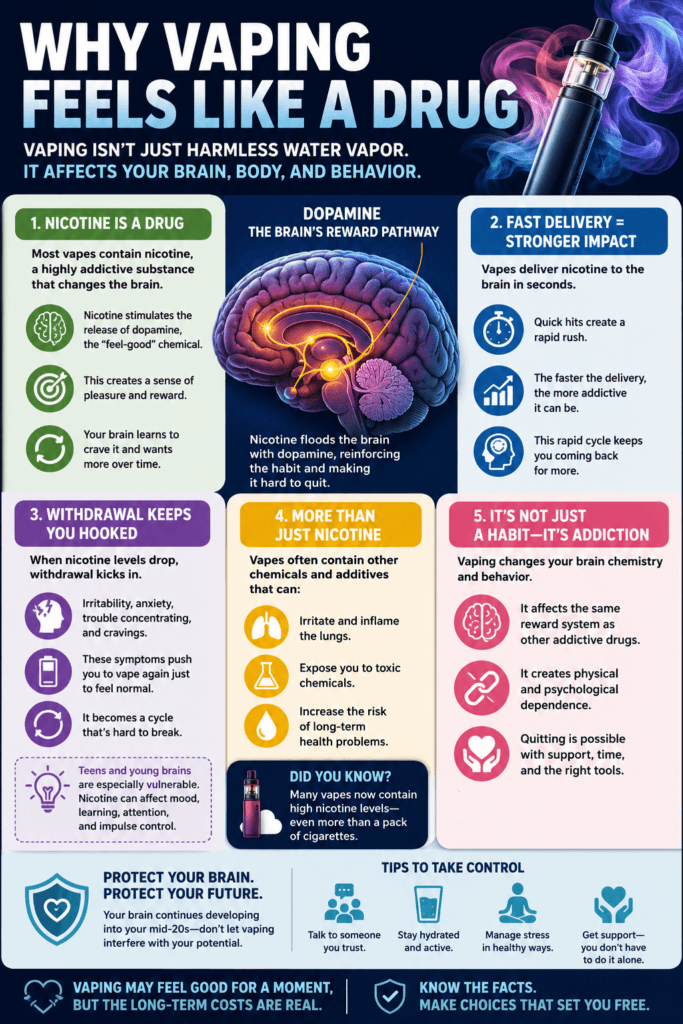
Using a vape doesn’t just come down to flavor or habit. There’s some real science explaining why your brain treats vaping a lot like it would treat taking a drug. A lot of that comes down to nicotine, the main chemical in most vapes. Nicotine is naturally found in tobacco plants and is pretty well-known for being addictive. As soon as you inhale from a vape, nicotine heads straight to your lungs, then quickly gets absorbed into your bloodstream and shoots up to your brain in just a matter of seconds.
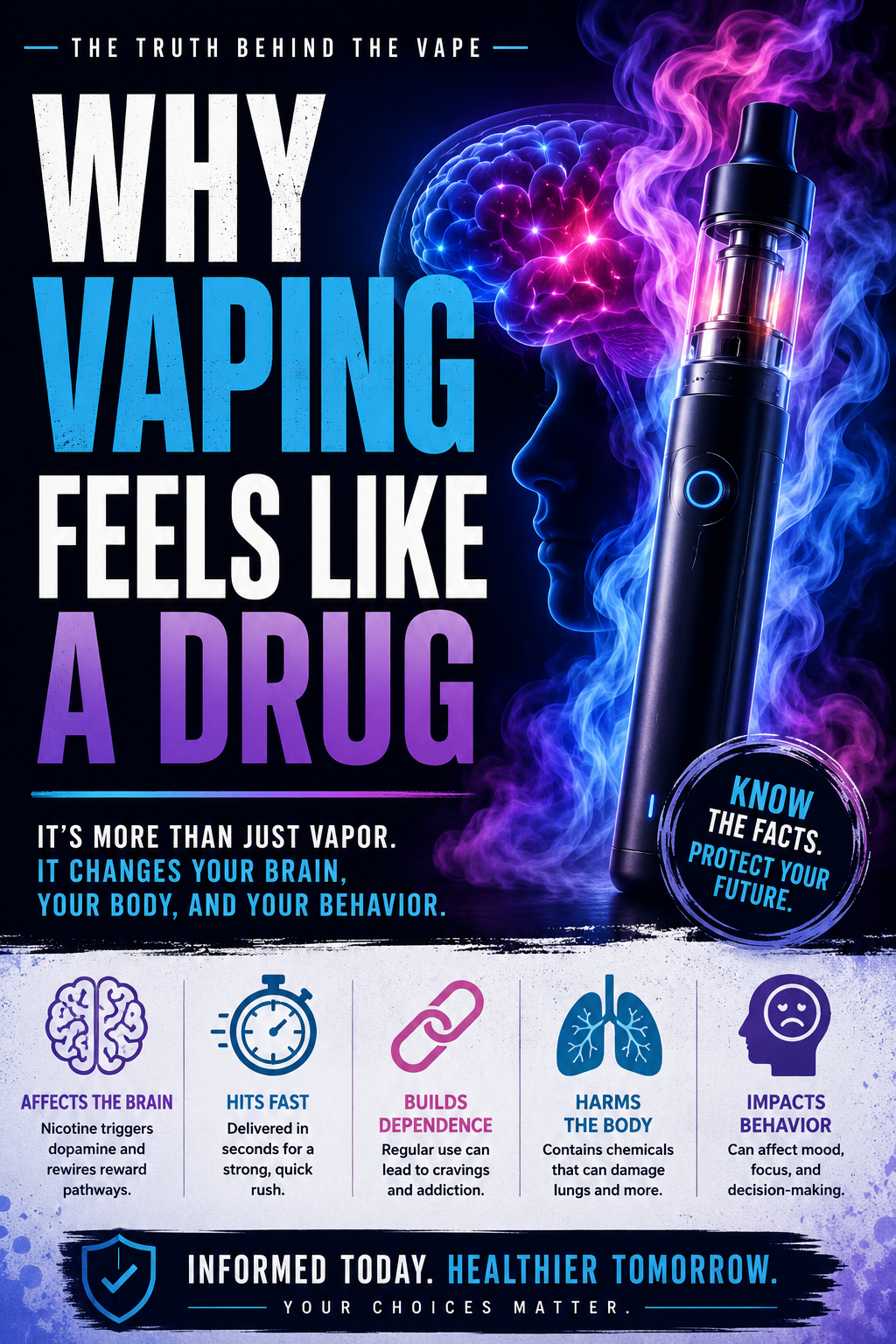
Right when nicotine hits your brain, it starts triggering the release of dopamine—a chemical often called the “reward chemical.” That’s the stuff that makes you feel happy or good. It’s the same dopamine system that gets activated by other drugs, which is why vaping can feel so instantly satisfying, even if you only took a few puffs.
The Science Behind the Buzz
Nicotine is a stimulant, so when you vape, you might notice feelings of alertness, mild excitement, or even relaxation, sort of a weird mix, but pretty common. This effect can be even more noticeable if you’re new to vaping or if you bump up your vape’s nicotine content. These physical and mental changes are what make vaping feel so much like using a drug, even if you’re not chasing a high.
- Fast Absorption: The nicotine gets your system revved up lightning fast. Compared to something like a nicotine patch or gum, inhaling nicotine through a vape pen or e-cigarette delivers a much quicker “buzz.”
- Short-Term Euphoria: The dopamine hit I mentioned above doesn’t last forever. That quick surge of good feelings can leave you wanting another puff pretty soon, which helps explain how vaping can easily turn into a loop of cravings and repeats.
Why Nicotine Is Addictive
A big part of why vaping feels like a drug is simply because nicotine really is addictive. Your brain gets used to those dopamine surges, and after a while, it needs nicotine just to feel “normal” instead of “good.” That’s how you start to get cravings even when you’re not actively using your vape.
After consistent use, your nerve cells start to adapt to higher levels of nicotine. When you don’t have any for a while, your brain’s reward system starts demanding more, and that leads to withdrawal symptoms—things like feeling grumpy, restless, or craving that next puff pretty hard.
Other Ingredients That Influence the Experience
While nicotine is the main event, most vape juices (also known as eliquids) come packed with other chemicals that help customize the vaping experience. Many flavorings are designed to feel smooth or cool, or even have a throat “hit” that mimics smoking real cigarettes. For some people, that sensation is satisfying all by itself, not so much a flavor as that physical feeling at the back of your throat.
Some vapes use additives like caffeine, vitamins, or even cannabis extracts. Each of these other substances can add its own effects, sometimes stepping up the sense that vaping is giving you a druglike experience. For example, vape pens advertised as “energy vapes” may contain caffeine and other mild stimulants, which can add to the overall effect.
It’s also worth noting that the propylene glycol and vegetable glycerin in the base of most eliquids contribute to the throat hit and the smoothness of the vapor. Their ratios are tweaked to create everything from big clouds to an experience that feels closer to smoking. Some folks choose certain blends specifically for the sensation they create, which can contribute to the sense that vaping is more than just flavor—it’s a whole-body experience.
Why the Ritual of Vaping Feels Compelling
The way vaping is done matters, too. If you ever notice how much attention goes into filling the vape, choosing a flavor, or holding the pen, these rituals can become rewarding even when your vape has little nicotine. These little habits make your brain expect something good is about to happen, creating an anticipatory high before you’ve even taken a puff.
For many people, the process can become symbolic, almost soothing. Just seeing a vape, smelling a certain scent, or hearing the familiar click or whir of the device can trigger cravings because your brain connects those cues with pleasure or relief. This type of learned behavior is also seen with other types of drug use, which is why vaping routines can be tough to break.
The Social Side: Why Vaping in Groups Feels Intoxicating
Vaping isn’t always a solo activity. Sometimes, being around others who vape can make the whole experience more appealing and create a kind of social high. Sharing devices, swapping flavors, or just taking part in vaping tricks and competitions can make you feel like you’re part of something exclusive or fun.
There’s a certain social reinforcement when vaping with others, which can amplify those feel-good vibes, even if you’re just using nicotine-free vapes. This sense of belonging can make it even harder to quit or turn down another puff, making vaping feel even more addictive and, yes, druglike.
On top of that, social media has made vaping culture more visible and normalized. Instagram and TikTok are full of people showing off vape tricks, custom gear, and collections of e-liquid flavors. Seeing others enjoy and bond over vaping can further cement it as something fun and inclusive, which increases its appeal just like with any trending group activity.
Comparing Vaping to Traditional Drugs
Cigarettes and vaping products share the nicotine link, but vaping can sometimes feel “stronger” or more immediate, simply because the flavors are sweeter and the device is always ready to go. Many vapes allow for rapid, repeated hits that would feel rough or make you sick with a regular cigarette. This ease of use makes it easier to consume high amounts of nicotine in a short period, which raises both physical and psychological effects.
There’s also the matter of how vaping interacts with your environment. Vapes don’t leave lingering smoky smells, so many people end up vaping more often than they ever smoked. The act feels less limiting than other nicotine products, often making the “high” feel easier and more accessible.
Traditional drugs often carry a sense of taboo or visible harm, while vaping is marketed and perceived as a safer or even stylish option. This can blur the lines between casual use and dependence, making it easier to underestimate how much you’re taking or how often you’re reaching for it, which adds another layer to why vaping feels druglike.
Risks to Pay Attention To
While vaping might feel mild, it’s important to remember that those druglike effects mean that your body and brain are really changing in response to every puff. Here are some things I keep in mind when thinking about the big picture with vaping:
- Tolerance Builds Quickly: Over time, your body gets used to the sensations and effects, which leads some people to seek out higher nicotine vapes or use them more often just to recreate the same buzz.
- Potential for Dependence: Just like with other addictive substances, dependence can build without you noticing. Suddenly skipping the morning puff makes you feel cranky or unfocused.
- Possible Withdrawal: Withdrawal from vaping or nicotine is very real and can feel pretty rough. Symptoms like headaches, trouble sleeping, anxiety, and strong cravings are all part of the package.
Flavorings and Additives
While many people choose vapes for the variety of flavors, the industry is still figuring out what long-term effects those chemicals might have. Some are known to be safe in food, but inhaling them is another story, and we don’t have as much research on what happens after years of daily use.
New research also shows that certain additives, such as diacetyl (used in buttery popcorn flavors) and some sweeteners, can cause lung irritation when inhaled regularly. Awareness about these potential hazards is growing, but many vaping products still come with limited ingredient transparency, so it’s crucial to check labels and pay attention to how your body feels over time.
Practical Tips for Managing Vaping
If you’re trying to be mindful about your vaping, especially because it feels a bit like a drug to you, there are a few small things that can help keep things in check:
- Know Your Nicotine Strength: Vapes come in a massive range of strengths, so picking a lower nicotine option can help cut down on cravings and dependence.
- Set Boundaries: Decide in advance when or where you’ll use your vape, rather than reaching for it every time you crave one.
- Understand Triggers: If you vape more in certain situations, like when you’re bored, stressed, or hanging out with friends, being aware can help you break the cycle.
- Consider Going NicFree: Switching to zero-nicotine juices might take the edge off both cravings and dependence if you still like the ritual of vaping.
- Get Support If Needed: If you find yourself thinking about vaping way more than you’d like, or having a tough time quitting, chatting with a healthcare provider can help. They’re used to helping with nicotine dependence and won’t judge you for reaching out.
Frequently Asked Questions
Question: Is vaping addictive even if there’s no nicotine?
Answer: The behavioral side of vaping, like the routines and sensations, can feel addictive for some people. But without nicotine, your body doesn’t form the same type of chemical dependence.
Question: Why does vaping sometimes make me dizzy or buzzy?
Answer: This usually comes from high nicotine levels or taking too many puffs in a short time. Those quick hits of nicotine can cause lightheadedness, just like smoking a strong cigarette.
Question: Are there long-term effects from regularly vaping?
Answer: While vaping is generally considered less risky than smoking cigarettes, it’s still new enough that we don’t know all the long-term health outcomes. Most health pros recommend using it as a quit-smoking tool rather than a lifelong habit.
Key Takeaways: Why Vaping Feels Like a Drug
Vaping feels so much like a drug mainly because it’s giving your brain and body real, physical changes, mostly thanks to nicotine and the way it activates reward systems. Add in the rituals, social cues, and other ingredients, and you wind up with an experience that’s a lot more than just blowing clouds. Staying aware of how vaping impacts you can help you make smarter choices about when and how you use it, so you’re in control, not your cravings.
Video: Why Quitting Vaping Is So Hard (Brain Science) #shorts #vaping