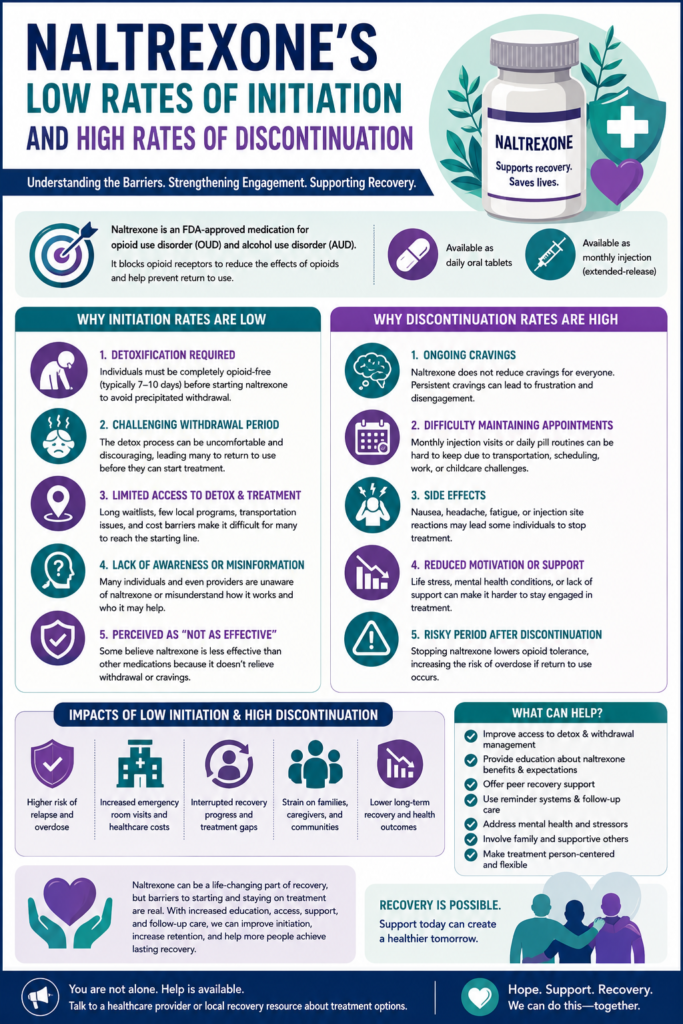
Naltrexone is an evidence-based medication approved for the treatment of both opioid use disorder (OUD) and alcohol use disorder (AUD). Unlike opioid agonist medications, naltrexone works by blocking opioid receptors, reducing the rewarding effects of opioids and alcohol, and helping support recovery. It is available in both oral and extended-release injectable forms and offers several advantages, including the absence of physical dependence and diversion potential. However, despite its effectiveness for many individuals, naltrexone has consistently demonstrated lower rates of treatment initiation and higher rates of discontinuation compared to other medications for opioid use disorder. The requirement for complete detoxification before starting treatment, challenges during early recovery, ongoing cravings, access barriers, and difficulties maintaining long-term engagement all contribute to these outcomes. Understanding the reasons behind these treatment challenges is essential for improving access, increasing retention, and supporting successful recovery outcomes.
Naltrexone: Low Rates of Initiation and High Rates of Discontinuation
Introduction
Naltrexone is an FDA-approved medication used to treat both opioid use disorder (OUD) and alcohol use disorder (AUD). It works by blocking opioid receptors in the brain, preventing opioids from producing euphoric effects and reducing the rewarding effects of alcohol. Naltrexone is available as a daily oral medication and as a long-acting monthly injection known as Vivitrol. Despite its effectiveness for some individuals, naltrexone has historically experienced lower treatment initiation rates and higher discontinuation rates compared to other medications for opioid use disorder, such as Buprenorphine and Methadone. Understanding these challenges is important for improving treatment engagement and long-term recovery outcomes.
Why Are Initiation Rates Low?
Requirement for Complete Detoxification
One of the biggest barriers to starting naltrexone is that individuals must be fully detoxified from opioids before treatment begins. Starting naltrexone too soon can trigger severe precipitated withdrawal symptoms.
This means patients often must:
- Stop opioid use completely
- Remain opioid-free for 7–10 days or longer
- Successfully complete withdrawal before receiving the medication
Many individuals struggle to complete this detoxification period.
Difficulty During Early Recovery
The period immediately after opioid cessation is often associated with:
- Intense cravings
- Withdrawal symptoms
- Anxiety
- Sleep disturbances
- Increased relapse risk
Many individuals return to opioid use before becoming eligible for naltrexone treatment.
Limited Access to Detoxification Services
Some communities have:
- Limited detoxification programs
- Long waitlists
- Transportation barriers
- Insurance challenges
Without access to medically supervised withdrawal services, initiating naltrexone becomes more difficult.
Why Are Discontinuation Rates High?
Reduced Motivation Over Time
As individuals begin feeling better, some may:
- Stop attending appointments
- Believe they no longer need medication
- Underestimate relapse risk
Reduced motivation can contribute to treatment discontinuation.
Craving Management Challenges
Unlike buprenorphine and methadone, naltrexone does not relieve opioid withdrawal symptoms or provide opioid agonist effects. Some individuals continue to experience:
- Cravings
- Emotional distress
- Recovery challenges
This may affect treatment retention.
Injection and Appointment Barriers
For extended-release injectable naltrexone:
- Monthly appointments are required
- Transportation issues may arise
- Scheduling conflicts can occur
- Missed doses increase relapse risk
Side Effects
Some patients discontinue treatment because of:
- Injection site reactions
- Nausea
- Fatigue
- Headaches
- Sleep disturbances
Although many side effects are manageable, they can affect adherence.
Impact on Recovery Outcomes
Low initiation and high discontinuation rates can lead to:
- Increased relapse risk
- Reduced treatment effectiveness
- Greater overdose vulnerability after discontinuation
- Increased healthcare utilization
- Interrupted recovery progress
The period following discontinuation can be particularly dangerous because opioid tolerance decreases, increasing overdose risk if opioid use resumes.
Strategies to Improve Initiation
Healthcare systems can:
- Expand access to detoxification services
- Improve care coordination
- Provide rapid treatment referrals
- Offer patient education about treatment options
- Reduce insurance and financial barriers
Patient Education
Patients may benefit from understanding:
- How naltrexone works
- Treatment expectations
- Potential side effects
- The importance of medication adherence
Strategies to Improve Retention
Strong Recovery Supports
Retention improves when individuals have:
- Counseling services
- Peer recovery support
- Family involvement
- Mental health treatment
- Recovery support groups
Ongoing Follow-Up
Regular follow-up appointments help:
- Monitor progress
- Address concerns
- Manage side effects
- Reinforce recovery goals
Individualized Treatment Planning
Not every medication works equally well for every person. Shared decision-making can help match individuals with the treatment that best fits their needs and preferences.
Comparison With Other OUD Medications
Advantages of Naltrexone
- Non-addictive
- No physical dependence
- No diversion potential
- Monthly injectable option available
- Effective for both OUD and AUD
Challenges Compared With Other Medications
- Requires complete detoxification before starting
- Higher initiation barriers
- Higher discontinuation rates
- Does not relieve withdrawal symptoms
- May provide less craving relief for some individuals
Conclusion
Although naltrexone is an effective treatment option for opioid and alcohol use disorders, its clinical impact is often limited by low rates of treatment initiation and high rates of discontinuation. The requirement for complete opioid detoxification before starting treatment presents a major barrier, while ongoing challenges with cravings, motivation, side effects, and treatment engagement can contribute to early discontinuation. Improving access to detoxification services, strengthening recovery supports, enhancing patient education, and providing individualized treatment planning can help increase both initiation and retention rates. By addressing these barriers, healthcare providers and communities can improve treatment outcomes and support long-term recovery for individuals affected by substance use disorders.
Self-Management Strategies to Understand Naltrexone’s Low Rates of Initiation and High Rates of Discontinuation
Understanding why many individuals struggle to start and continue naltrexone treatment can help patients make informed decisions about their recovery. Naltrexone is an effective medication for some people with opioid use disorder (OUD) and alcohol use disorder (AUD), but challenges related to detoxification, cravings, treatment expectations, and long-term adherence can affect success. The following self-management strategies can help individuals better understand these barriers and improve treatment engagement.
1. Learn How Naltrexone Works
Educate yourself about naltrexone’s mechanism of action. Unlike methadone or buprenorphine, naltrexone blocks opioid receptors rather than activating them. Understanding this difference can help set realistic expectations about:
- Craving management
- Withdrawal symptoms
- Recovery experiences
- Treatment goals
2. Understand the Detoxification Requirement
Before starting naltrexone for OUD, individuals must be opioid-free for a period of time to avoid precipitated withdrawal. Learn:
- Why is detoxification necessary
- How long will opioid abstinence be required
- What withdrawal symptoms to expect
- Available medical detoxification resources
Preparation can reduce anxiety and improve readiness for treatment.
3. Develop a Withdrawal Management Plan
Because withdrawal can be challenging, work with healthcare providers to create a plan that includes:
- Medical supervision when appropriate
- Hydration and nutrition strategies
- Sleep support
- Coping techniques for cravings
- Emergency contacts
Planning ahead may improve the likelihood of successfully initiating treatment.
4. Set Realistic Expectations
Naltrexone does not:
- Eliminate all cravings
- Cure addiction
- Replace counseling or recovery work
Understanding both the benefits and limitations of treatment can reduce frustration and improve long-term commitment.
5. Track Recovery Progress
Keep a journal to monitor:
- Cravings
- Mood changes
- Stress levels
- Triggers
- Recovery milestones
Tracking progress helps identify patterns and reinforces positive changes over time.
6. Create a Medication Adherence Plan
For oral naltrexone:
- Use medication reminders
- Set alarms
- Linking to daily routines
For extended-release injectable naltrexone:
- Schedule appointments in advance
- Use calendar reminders
- Arrange transportation if needed
Consistency improves treatment effectiveness.
7. Learn to Manage Cravings
Since naltrexone may not completely eliminate cravings, develop additional coping strategies such as:
- Mindfulness techniques
- Exercise
- Deep breathing
- Recovery meetings
- Peer support
- Healthy distractions
Building multiple coping tools strengthens recovery.
8. Address Mental Health Needs
Many individuals with substance use disorders also experience:
- Depression
- Anxiety
- Trauma-related symptoms
- Stress
Seeking treatment for co-occurring mental health conditions can improve treatment retention and overall recovery outcomes.
9. Build a Strong Recovery Support Network
Surround yourself with supportive individuals, including:
- Family members
- Friends in recovery
- Sponsors
- Therapists
- Peer Recovery Support Specialists (PRSS)
Strong support systems can increase motivation and reduce the likelihood of discontinuing treatment.
10. Recognize Early Warning Signs of Discontinuation
Be aware of signs such as:
- Missing appointments
- Skipping medication doses
- Increased cravings
- Isolation
- Reduced participation in recovery activities
Addressing these warning signs early can prevent setbacks.
11. Communicate With Your Healthcare Team
Discuss:
- Side effects
- Concerns about treatment
- Craving levels
- Relapse risks
- Recovery goals
Open communication allows providers to make adjustments and offer additional support.
12. Focus on Long-Term Recovery Goals
Rather than viewing naltrexone as the entire solution, focus on broader recovery goals such as:
- Improved health
- Stable relationships
- Employment or education
- Emotional well-being
- Personal growth
Medication is often one part of a comprehensive recovery plan.
13. Understand Relapse Risk After Discontinuation
Stopping naltrexone can increase vulnerability to relapse and overdose, especially because opioid tolerance may be lower after a period of abstinence. Understanding these risks can encourage thoughtful treatment decisions and ongoing recovery planning.
14. Practice Patience With the Recovery Process
Recovery is rarely a straight path. Challenges with starting or staying on medication do not mean failure. Learning from setbacks and remaining engaged in treatment can support continued progress.
Conclusion
Self-management plays a critical role in understanding and overcoming the challenges of initiating and maintaining naltrexone. By learning about the medication, preparing for detoxification, managing cravings, addressing mental health needs, building support networks, and maintaining open communication with healthcare providers, individuals can improve their chances of successfully starting and continuing treatment. Understanding why initiation and discontinuation challenges occur empowers individuals to make informed decisions and strengthens their ability to achieve long-term recovery and improved quality of life.
Family Support Strategies to Understand Naltrexone’s Low Rates of Initiation and High Rates of Discontinuation
Family members can play a crucial role in helping loved ones understand and overcome the challenges associated with starting and staying on naltrexone treatment for opioid use disorder (OUD) or alcohol use disorder (AUD). Because naltrexone often has lower initiation rates and higher discontinuation rates than some other addiction medications, family support can significantly improve treatment engagement, adherence, and long-term recovery outcomes.
1. Learn How Naltrexone Works
Families should educate themselves about:
- How naltrexone blocks opioid receptors
- Its role in treating OUD and AUD
- Differences between naltrexone, buprenorphine, and methadone
- Treatment expectations and limitations
Understanding the medication helps families provide informed support and realistic encouragement.
2. Understand Why Starting Naltrexone Can Be Difficult
One of the biggest barriers to initiating naltrexone is the need for complete opioid detoxification before treatment begins. Families should understand:
- Why opioid-free periods are required
- The challenges of withdrawal
- The risk of relapse during detoxification
- The importance of medical supervision when appropriate
Awareness of these challenges can increase patience and empathy.
3. Provide Emotional Support During Detoxification
The detoxification period can involve:
- Anxiety
- Insomnia
- Mood swings
- Physical discomfort
- Strong cravings
Family members can help by:
- Offering encouragement
- Providing reassurance
- Listening without judgment
- Supporting healthy coping strategies
4. Encourage Professional Treatment and Follow-Up
Families can help loved ones:
- Attend appointments
- Follow medical recommendations
- Complete detoxification safely
- Remain engaged in counseling and therapy
Consistent treatment participation improves recovery outcomes.
5. Help Set Realistic Expectations
Families should understand that naltrexone:
- Is not a cure for addiction
- May not eliminate all cravings
- Works best when combined with counseling and recovery support
- Requires ongoing commitment
Realistic expectations can reduce disappointment and frustration.
6. Support Medication Adherence
For oral naltrexone:
- Encourage consistent medication routines
- Help create reminder systems
For injectable naltrexone:
- Assist with scheduling appointments
- Offer transportation if needed
- Encourage attendance at monthly injections
Practical support can improve treatment retention.
7. Recognize Early Warning Signs of Discontinuation
Family members should watch for:
- Missed appointments
- Skipped doses
- Increased cravings
- Withdrawal from recovery activities
- Changes in mood or motivation
- Increased contact with high-risk environments
Early intervention may prevent treatment dropout.
8. Encourage Participation in Recovery Activities
Support involvement in:
- Counseling
- Peer support groups
- Recovery meetings
- Faith-based programs
- Healthy recreational activities
Recovery support can improve treatment adherence and long-term success.
9. Address Co-Occurring Mental Health Concerns
Many individuals with substance use disorders experience:
- Depression
- Anxiety
- Trauma-related symptoms
- Stress disorders
Families can encourage comprehensive treatment that addresses both addiction and mental health.
10. Avoid Judgment and Blame
Treatment challenges should not be viewed as personal failures. Families can foster a supportive environment by:
- Avoiding criticism
- Practicing empathy
- Recognizing progress
- Encouraging honest communication
Supportive relationships can strengthen recovery motivation.
11. Learn About Relapse and Overdose Risks
Families should understand that discontinuing naltrexone may increase relapse risk. Following periods of abstinence, opioid tolerance decreases, which can increase overdose risk if opioid use resumes.
Knowledge of these risks helps families respond appropriately and support ongoing treatment.
12. Participate in Family Education Programs
Family education programs can teach:
- Addiction science
- Medication-assisted treatment options
- Relapse prevention
- Communication skills
- Healthy boundary setting
Educated families often provide more effective support.
13. Establish Healthy Boundaries
Supportive families can:
- Encourage accountability
- Avoid enabling behaviors
- Maintain clear expectations
- Protect their own well-being
Healthy boundaries benefit both the individual and the family.
14. Focus on Long-Term Recovery
Recovery is often a gradual process. Families can help by celebrating:
- Treatment participation
- Improved health
- Recovery milestones
- Positive lifestyle changes
- Increased stability
Recognizing progress can build confidence and motivation.
Conclusion
Family support can significantly influence whether an individual successfully initiates and remains on naltrexone treatment. By understanding the challenges of detoxification, treatment adherence, craving management, and relapse prevention, families can provide compassionate and informed support throughout the recovery journey. Education, open communication, healthy boundaries, and encouragement of professional treatment can help reduce discontinuation rates and improve long-term recovery outcomes. When families work alongside healthcare providers and recovery supports, they become powerful partners in promoting stability, health, and lasting recovery.
Community Resource Strategies to Understand Naltrexone’s Low Rates of Initiation and High Rates of Discontinuation
Community resources play a critical role in helping individuals, families, healthcare providers, and policymakers understand why naltrexone treatment often experiences lower initiation rates and higher discontinuation rates compared to other medications used for opioid use disorder (OUD). By improving education, expanding access to services, and strengthening recovery supports, communities can help more individuals successfully start and remain engaged in treatment.
1. Expand Community Education Programs
Community organizations can offer educational workshops and public awareness campaigns that explain:
- How naltrexone works
- Differences between naltrexone, methadone, and buprenorphine
- The detoxification requirements before starting treatment
- Common barriers to treatment retention
Education helps individuals make informed treatment decisions.
2. Increase Access to Detoxification Services
Because naltrexone requires complete opioid detoxification before initiation, communities can improve access to:
- Medical detox programs
- Withdrawal management services
- Residential detoxification facilities
- Outpatient withdrawal support
Reducing detoxification barriers can improve treatment initiation rates.
3. Strengthen Care Coordination
Healthcare systems can develop coordinated treatment pathways that connect individuals with:
- Detoxification services
- Naltrexone providers
- Behavioral health services
- Recovery support programs
Smooth transitions between services help prevent treatment dropouts.
4. Expand Access to Medication-Assisted Treatment Information
Many individuals are unaware of all available treatment options. Community resources can provide balanced information about:
- Naltrexone
- Buprenorphine
- Methadone
Understanding options allows individuals to choose treatments that best fit their needs.
5. Utilize Peer Recovery Support Services
Peer Recovery Support Specialists (PRSS) can:
- Share personal recovery experiences
- Explain treatment challenges
- Encourage medication adherence
- Help individuals navigate healthcare systems
- Provide motivation during difficult periods
Peer support often improves treatment engagement and retention.
6. Develop Recovery-Friendly Community Programs
Communities can offer:
- Recovery community centers
- Sober social activities
- Employment support programs
- Housing assistance
- Wellness programs
Stable recovery environments can reduce treatment discontinuation.
7. Improve Transportation Access
Transportation barriers can contribute to missed appointments and treatment dropout. Community resources may include:
- Transportation vouchers
- Ride programs
- Mobile healthcare services
- Telehealth options when appropriate
Improved accessibility supports ongoing participation in care.
8. Offer Family Education Programs
Families can influence treatment success. Community programs can teach:
- How naltrexone works
- Why is detoxification required
- Relapse prevention strategies
- Signs of treatment disengagement
- Effective ways to provide support
Educated families can strengthen treatment adherence.
9. Address Stigma Through Public Awareness Campaigns
Misconceptions about addiction and medication-assisted treatment can discourage treatment participation. Public education campaigns can:
- Normalize treatment seeking
- Reduce stigma
- Promote understanding of addiction as a medical condition
- Encourage early intervention
Reducing stigma can improve both initiation and retention.
10. Expand Mental Health Services
Many individuals receiving naltrexone also experience:
- Depression
- Anxiety
- Trauma-related disorders
- Other mental health conditions
Integrated behavioral health services help address factors that may contribute to treatment discontinuation.
11. Encourage Ongoing Recovery Support
Communities can promote participation in:
- Recovery support groups
- Counseling services
- Faith-based recovery programs
- Peer-led support networks
Ongoing support can improve long-term treatment engagement.
12. Support Flexible Follow-Up Care
Healthcare systems can improve retention by offering:
- Reminder systems
- Flexible appointment scheduling
- Telehealth follow-up options
- Case management services
These services help individuals remain connected to care.
13. Monitor and Evaluate Community Outcomes
Communities can collaborate with public health agencies and researchers to:
- Track treatment initiation rates
- Monitor discontinuation patterns
- Identify barriers to care
- Evaluate intervention effectiveness
Data-driven improvements can strengthen treatment systems.
14. Advocate for Insurance and Financial Access
Financial barriers may prevent individuals from starting or continuing treatment. Communities can advocate for:
- Expanded insurance coverage
- Reduced medication costs
- Coverage for detoxification services
- Increased funding for recovery programs
Financial accessibility supports treatment success.
Conclusion
Community resources are essential for addressing the low initiation rates and high discontinuation rates associated with naltrexone treatment. Through education, expanded detoxification services, peer recovery support, family involvement, transportation assistance, mental health care, and stigma reduction efforts, communities can help individuals overcome barriers to treatment. By creating supportive, recovery-focused environments and improving access to comprehensive care, communities can increase treatment engagement, improve retention rates, and support long-term recovery for individuals affected by opioid and alcohol use disorders.
Frequently Asked Questions
Here are some common questions:
1. What is naltrexone?
Naltrexone is an FDA-approved medication used to treat opioid use disorder (OUD) and alcohol use disorder (AUD). It works by blocking opioid receptors, reducing the rewarding effects of opioids and alcohol.
2. What forms of naltrexone are available?
Naltrexone is available as:
- A daily oral tablet
- An extended-release monthly injection known as Vivitrol
3. What does “low initiation rate” mean?
A low initiation rate means that many individuals who could potentially benefit from naltrexone never actually start treatment.
4. Why do so many people struggle to start naltrexone?
The biggest reason is that individuals with opioid use disorder must be completely opioid-free before starting naltrexone. This detoxification period can be physically and emotionally difficult.
5. Why is detoxification required before starting naltrexone?
Naltrexone blocks opioid receptors. If opioids are still present in the body when naltrexone is started, it can trigger severe precipitated withdrawal symptoms.
6. How long must someone be opioid-free before starting naltrexone?
The required opioid-free period varies depending on the opioid used and individual circumstances, but it is often:
- 7–10 days for short-acting opioids
- Longer for certain long-acting opioids
Healthcare providers determine the safest timeline.
7. What is precipitated withdrawal?
Precipitated withdrawal is a sudden and intense withdrawal syndrome that occurs when opioid receptors are blocked while opioids are still present in the body.
8. What does “high discontinuation rate” mean?
A high discontinuation rate means that many individuals who begin naltrexone treatment stop taking it before completing the recommended course of treatment.
9. Why do people stop taking naltrexone?
Common reasons include:
- Persistent cravings
- Side effects
- Transportation challenges
- Missed appointments
- Mental health issues
- Reduced motivation
- Limited support systems
10. Does naltrexone eliminate cravings?
Not always. While some people experience reduced cravings, others may continue to struggle with cravings and triggers during recovery.
11. What side effects can contribute to discontinuation?
Possible side effects include:
- Nausea
- Headache
- Fatigue
- Dizziness
- Sleep disturbances
- Injection site discomfort
Most side effects are manageable, but they may affect adherence for some individuals.
12. Is naltrexone addictive?
No. Naltrexone is not addictive and does not produce euphoria or physical dependence.
13. How is naltrexone different from buprenorphine and methadone?
Unlike:
- Buprenorphine
- Methadone
Naltrexone is an opioid antagonist, meaning it blocks opioid receptors rather than activating them.
14. What are the advantages of naltrexone?
Benefits include:
- No physical dependence
- No withdrawal when stopped
- No diversion potential
- Monthly injectable option
- Effective treatment for both OUD and AUD
15. Why do some people choose naltrexone over other medications?
Some individuals prefer naltrexone because:
- It is non-addictive
- It blocks opioid effects completely
- It can support both alcohol and opioid recovery
- It does not require daily opioid agonist medication
16. What happens if someone stops naltrexone and returns to opioid use?
After a period of abstinence, opioid tolerance decreases. Returning to opioid use after discontinuing naltrexone may significantly increase the risk of overdose.
17. How can treatment initiation rates be improved?
Strategies include:
- Expanding detoxification services
- Improving access to treatment
- Providing patient education
- Increasing healthcare provider awareness
- Reducing insurance and transportation barriers
18. How can discontinuation rates be reduced?
Retention may improve through:
- Peer recovery support
- Family involvement
- Counseling services
- Mental health treatment
- Appointment reminders
- Ongoing follow-up care
19. What role does family support play?
Families can help by:
- Encouraging treatment participation
- Supporting appointment attendance
- Providing emotional support
- Recognizing relapse warning signs
- Helping maintain motivation during recovery
20. What is the most important takeaway about naltrexone’s low initiation and high discontinuation rates?
The most important takeaway is that naltrexone can be an effective recovery tool, but significant barriers make it difficult for many individuals to start and continue treatment. By improving access to detoxification, strengthening recovery supports, addressing mental health needs, and increasing education about treatment expectations, healthcare providers, families, and communities can help more individuals successfully engage in and benefit from naltrexone treatment.
Conclusion
Naltrexone remains an important treatment option for individuals with opioid and alcohol use disorders, offering a non-addictive approach that can support long-term recovery. However, its effectiveness is often limited by low initiation rates and high discontinuation rates. Barriers such as the need for complete opioid detoxification before treatment, difficulties during withdrawal, limited access to services, side effects, and reduced treatment engagement can make it challenging for individuals to start and remain on the medication. Addressing these obstacles through expanded detoxification services, patient education, peer recovery support, family involvement, mental health care, and ongoing follow-up can improve treatment retention and outcomes. By recognizing and addressing the factors that contribute to treatment dropout, healthcare providers, families, and communities can help more individuals successfully utilize naltrexone as part of a comprehensive recovery plan and achieve lasting improvements in health and well-being.
Video: Most relapse during this exact phase of naltrexone induction #treatment #recovery #realstory