Recovery from addiction involves much more than stopping alcohol or drug use. For many women, recovery also means confronting memories, damaged relationships, parenting concerns, financial consequences, lost opportunities, and decisions made while substance use was controlling their lives. As the mind becomes clearer, guilt about the past can become especially difficult to carry.
Some guilt can be constructive. Recognizing that our behavior hurt someone can motivate accountability, apologies, changed behavior, and healthier choices. But guilt becomes exhausting when a woman spends every day mentally punishing herself for things she cannot change.
Recovery requires responsibility, but it also requires learning how to move forward.
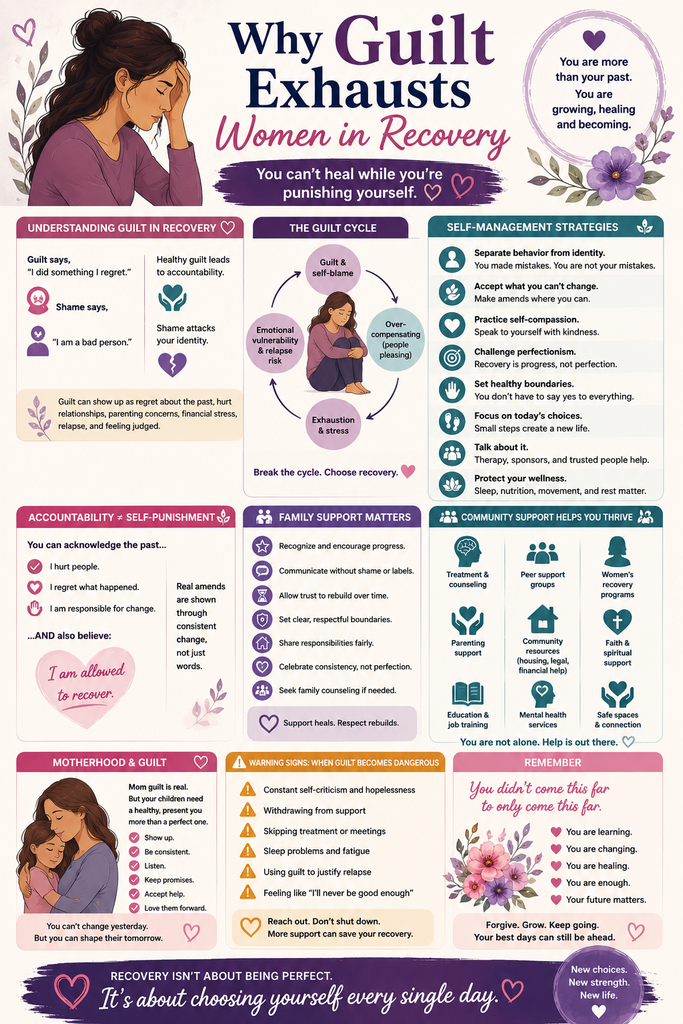
Understanding Guilt in Recovery
Guilt and shame are closely related, but they are not exactly the same.
Guilt says, “I did something I regret.”
Shame says, “I am a bad person.”
This difference matters. Healthy guilt can encourage someone to repair harm and make different choices. Shame can attack a person’s entire identity, creating feelings of worthlessness and hopelessness.
For women in recovery, these emotions may involve:
- Regret about behavior while using substances.
- Feeling that they disappointed their children or family.
- Broken promises or damaged relationships.
- Financial or employment consequences.
- Time lost to addiction.
- Neglecting personal responsibilities.
- Feeling judged because of addiction or treatment.
- Regret surrounding relapse.
- Believing they should have recognized the problem sooner.
- Trying to compensate for the past by doing everything for everyone.
When these thoughts repeat constantly, emotional exhaustion can follow.
Why Guilt Can Become So Exhausting
Guilt requires emotional energy. Repeatedly replaying past mistakes keeps the mind focused on events that cannot be undone.
A woman may wake up thinking about what she did wrong, spend the day trying to prove she has changed, and go to bed worrying that her family will never completely trust her again.
Some women respond by overcompensating. They may become afraid to say no, take responsibility for everyone’s problems, or believe they must constantly prove they deserve forgiveness.
This can create another unhealthy cycle:
Guilt → overcompensating → exhaustion → stress → emotional vulnerability → more guilt.
Recovery involves learning to interrupt that cycle.
Self-Management Strategies: Turning Guilt Into Growth
The goal is not to pretend that harmful behavior never occurred. Instead, healthy recovery involves acknowledging the past while refusing to remain emotionally imprisoned by it.
Helpful strategies include:
- Separate behavior from identity. You can acknowledge, “I made harmful decisions,” without concluding, “I am permanently a bad person.”
- Identify what you can repair. Some consequences can be addressed through apologies, repayment, treatment, consistency, or changed behavior.
- Accept what cannot be changed. Accountability does not require endlessly reliving an event.
- Practice self-compassion. Speak to yourself with the same honesty and humanity you would offer another person working seriously on recovery.
- Challenge perfectionism. Recovery does not require becoming a flawless person.
- Keep realistic expectations. Trust may take time to rebuild.
- Journal about progress. Record changes you are making today instead of documenting only past failures.
- Protect sleep and physical health. Emotional exhaustion becomes harder to manage when the body is depleted.
- Develop healthy boundaries. You do not have to say yes to everything because you feel guilty about your past.
- Recognize relapse warning signs. Overwhelming guilt, isolation, hopelessness, and emotional exhaustion deserve attention before they escalate.
- Talk about difficult emotions. A counselor, sponsor, peer-support specialist, or trusted person can help put guilt into perspective.
Accountability Without Self-Punishment
Self-forgiveness does not mean pretending nothing happened.
A woman can say:
“I hurt people.”
“I regret what happened.”
“I am responsible for changing my behavior.”
And also say:
“I am allowed to recover.”
These ideas can exist together.
When appropriate and safe, making amends may be part of healing. But meaningful amends are more than words. Consistently showing up, maintaining recovery, respecting boundaries, keeping promises, and behaving differently can become powerful forms of accountability.
Sometimes the most meaningful apology is sustained change.
Family Support Strategies
Families may carry their own pain from the period when addiction was active. Recovery does not require relatives to immediately forget what happened. However, repeatedly using someone’s past as a weapon can make rebuilding relationships more difficult.
Families can help by:
- Recognizing genuine progress.
- Discussing current problems without bringing up every past mistake.
- Communicating concerns clearly rather than through humiliation.
- Allowing trust to rebuild gradually.
- Establishing reasonable boundaries.
- Avoiding labels such as “failure” or “bad mother.”
- Encouraging treatment and recovery activities.
- Separating accountability from punishment.
- Participating in family counseling when appropriate.
- Learning about addiction and recovery.
- Taking responsibility for their own emotional health.
- Celebrating consistency rather than expecting perfection.
Family members also need permission to heal. Supporting a loved one does not require ignoring previous harm or abandoning personal boundaries.
Healthy recovery allows both sides to rebuild.
Motherhood and Recovery Guilt
Mothers in recovery may experience particularly intense guilt about how addiction affected their children.
A mother might wonder:
“Did I damage my children?”
“Will they ever trust me again?”
“Did I miss too much?”
These questions can be painful.
Children may need time, stability, age-appropriate explanations, counseling, or other support. A mother cannot rewrite yesterday, but she can influence what her children experience today.
Showing up consistently, maintaining recovery, listening, keeping promises, creating stability, and accepting appropriate help can gradually create new experiences within the family.
Parenting in recovery does not require being perfect. It requires continuing to become healthier and more dependable.
Family Members Should Avoid Using Guilt as Control
Statements such as “After everything you’ve done to us” may come from genuine hurt, but repeatedly using guilt to control someone can interfere with healthy communication.
Past behavior should be addressed when necessary, particularly when safety, trust, finances, parenting, or boundaries are involved. But conflict should focus on specific behaviors and solutions rather than attacking someone’s entire identity.
Both the person in recovery and the family deserve opportunities to heal.
Community Support Strategies
Recovery becomes harder when guilt creates isolation. Community connections can help women recognize that they are not the only people rebuilding their lives after addiction.
Helpful resources may include:
- Substance use disorder treatment programs.
- Individual counseling or psychotherapy.
- Trauma-informed treatment when appropriate.
- Women-focused recovery programs.
- Peer recovery specialists.
- Recovery community organizations.
- Mutual-help groups such as 12-step and non-12-step programs.
- Parenting support programs.
- Family therapy.
- Vocational and educational programs.
- Housing and transportation assistance.
- Legal and social-service resources.
- Domestic violence resources when safety is a concern.
- Community mental health services.
- Crisis services for severe emotional distress.
Support should address the whole person—not simply substance use.
When Guilt Becomes a Relapse Risk
Guilt can become dangerous when it turns into hopelessness.
A person who constantly believes, “I’ll never make this right,” may begin wondering whether continuing recovery is worthwhile. That emotional state can increase vulnerability to isolation and returning to old coping behaviors.
Warning signs may include withdrawing from support, skipping treatment, persistent negative self-talk, disrupted sleep, abandoning healthy routines, increasing cravings, or believing that one mistake means recovery has completely failed.
These signals should be reasons to increase support, not to withdraw it.
Learning to Receive Forgiveness
Sometimes other people forgive a woman before she forgives herself.
She may continue carrying a punishment that nobody else is asking her to carry.
Self-forgiveness is not forgetting. It means recognizing that a human being can take responsibility, learn, change, and continue living.
Recovery provides an opportunity to demonstrate that change through daily actions.
Progress, Not Perfection
A woman in recovery does not have to spend the rest of her life paying the emotional price for her worst moments.
Her past deserves honesty.
The people who were hurt deserve acknowledgment.
Her recovery deserves protection.
And her future deserves a chance.
There will still be difficult days, uncomfortable memories, relationship challenges, and mistakes. Recovery does not remove ordinary human imperfection.
The goal is progress.
Conclusion
Guilt can become exhausting when women in recovery carry responsibility for the past into every moment of the present. Healthy guilt can encourage accountability and change, but chronic shame and self-punishment can drain emotional energy and interfere with recovery.
Self-management strategies can help women distinguish responsibility from shame, establish boundaries, recognize progress, and practice self-compassion. Families can encourage accountability while avoiding humiliation, and community resources can provide treatment, peer connection, parenting assistance, counseling, and practical support.
Recovery does not require denying the past.
It means learning from it without allowing it to control the future.
You can regret what happened, repair what you can, forgive what you cannot change, and continue becoming the person you want to be.
Frequently Asked Questions
Here are some common questions:
1. Why can guilt feel so overwhelming during recovery?
Recovery often brings greater awareness of past behaviors and their consequences. A woman may begin thinking about damaged relationships, parenting concerns, financial problems, missed opportunities, or promises made during active addiction. Constantly revisiting these experiences can become emotionally exhausting.
2. What is the difference between guilt and shame?
Guilt focuses on behavior: “I did something I regret.”
Shame attacks identity: “I am a bad person.”
Guilt can sometimes motivate accountability and change, while persistent shame can contribute to isolation, hopelessness, and low self-worth.
3. Is guilt always unhealthy in recovery?
No. Healthy guilt can help someone recognize harm, accept responsibility, make appropriate amends, and change future behavior. It becomes problematic when responsibility turns into constant self-punishment.
4. Why might women experience intense guilt related to addiction?
Some women feel pressure to be dependable mothers, partners, daughters, caregivers, or professionals. When addiction interferes with these responsibilities, the difference between personal expectations and past behavior may contribute to significant guilt.
5. Why does guilt cause emotional exhaustion?
Constant self-criticism requires mental and emotional energy. Replaying mistakes, worrying about others’ opinions, trying to compensate for the past, and believing you must constantly prove yourself can eventually contribute to emotional burnout.
6. Can guilt increase relapse vulnerability?
It can. Persistent shame, hopelessness, isolation, and emotional distress may become relapse risks for some people. Recognizing these feelings early and increasing recovery support can help protect progress.
7. What is the guilt-overcompensation cycle?
A woman may feel guilty about her past and respond by trying to satisfy everyone around her. This can lead to poor boundaries, excessive responsibilities, exhaustion, stress, and increased emotional vulnerability—potentially creating even more guilt.
8. Does self-forgiveness mean avoiding responsibility?
No. Self-forgiveness and accountability can exist together. Someone can acknowledge harm, apologize when appropriate, repair what can be repaired, and change her behavior without believing she deserves lifelong punishment.
9. What are healthy ways to manage guilt?
Helpful approaches may include:
- Identifying what can and cannot be changed.
- Separating past behavior from current identity.
- Practicing self-compassion.
- Making appropriate amends.
- Establishing healthy boundaries.
- Journaling about progress.
- Discussing guilt with a therapist or recovery support person.
- Focusing on today’s actions rather than repeatedly reliving yesterday’s mistakes.
10. Why are boundaries important for women experiencing recovery guilt?
Guilt can make saying “no” difficult. A woman may believe she owes everyone unlimited time, attention, or forgiveness because of her past. Healthy boundaries allow accountability without sacrificing emotional well-being.
11. Why can motherhood intensify recovery guilt?
Mothers may worry about how addiction affected their children’s stability, trust, or emotional well-being. These concerns can be painful, but consistent recovery, dependable parenting, listening, keeping appropriate promises, and seeking family support can help create healthier experiences going forward.
12. Can a mother repair her relationship with her children?
In many situations, relationships can improve, although rebuilding trust may take time. Consistency is important. Children may also benefit from age-appropriate communication, counseling, family therapy, or other supportive services.
13. How can family members support a woman dealing with guilt?
Families can recognize progress, communicate concerns without humiliation, maintain appropriate boundaries, allow trust to rebuild gradually, and encourage treatment. They can also seek counseling or family recovery resources for themselves.
14. Should families forget everything that happened during addiction?
No. Recovery does not require pretending harm never occurred. Families have a right to their feelings and boundaries. The goal is to address past harm constructively without continually using it to attack someone’s identity.
15. What does making amends mean?
Making amends generally involves acknowledging harm and taking appropriate steps to repair it when doing so is safe and reasonable. Sometimes, changes in behavior, reliability, repayment, respect for boundaries, or consistent recovery can become important parts of making things right.
16. What if someone is not ready to forgive?
Forgiveness cannot be demanded. People affected by addiction may need their own time and healing process. A woman in recovery can continue demonstrating change even when another person’s forgiveness does not happen immediately—or at all.
17. What community resources can help women manage recovery guilt?
Resources may include addiction treatment programs, individual counseling, trauma-informed therapy, women’s recovery programs, peer recovery specialists, mutual-help groups, parenting programs, family counseling, recovery community organizations, and community mental health services.
18. When should guilt become a reason to seek additional help?
Additional support is important when guilt becomes persistent or is accompanied by severe hopelessness, social withdrawal, increasing cravings, disrupted sleep, missed treatment, inability to function, or thoughts of self-harm.
19. What can a woman tell herself when guilt becomes overwhelming?
A helpful reminder is:
“I am responsible for my choices, but I am more than my worst choices. I can repair what I can, learn from what I cannot change, and make healthier decisions today.”
20. What is the most important message for women struggling with guilt in recovery?
Recovery requires accountability, not endless self-punishment. A woman cannot change yesterday, but she can influence what happens today through treatment, honesty, healthy boundaries, consistent actions, and self-compassion. The past can become part of her story without defining her future.
Video: Why Guilt Holds Women Back in Recovery #recovery #guilt #women