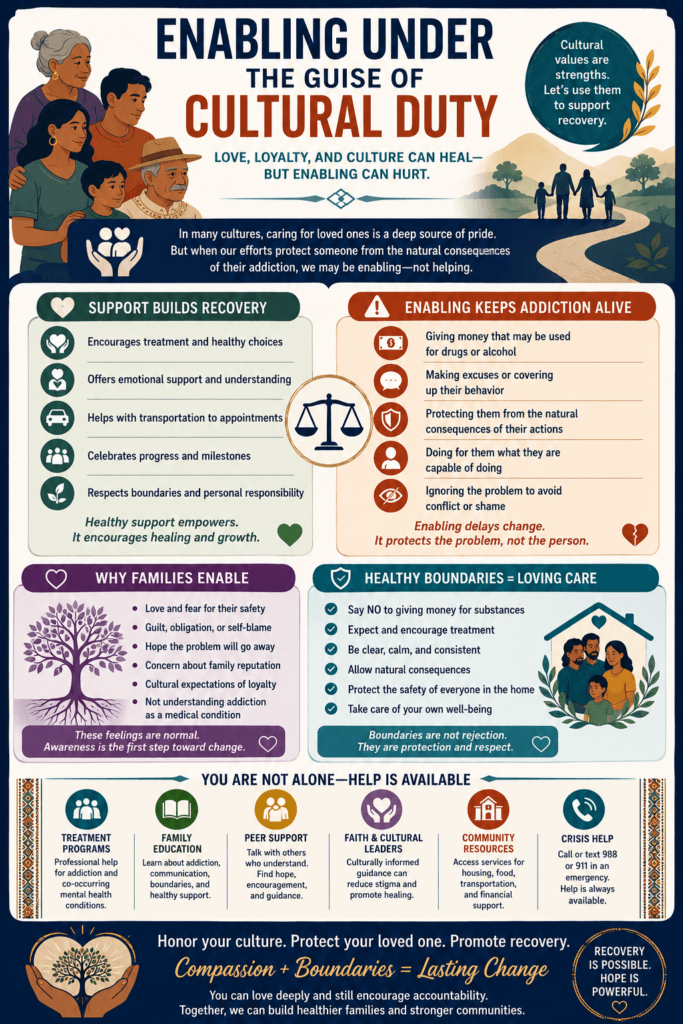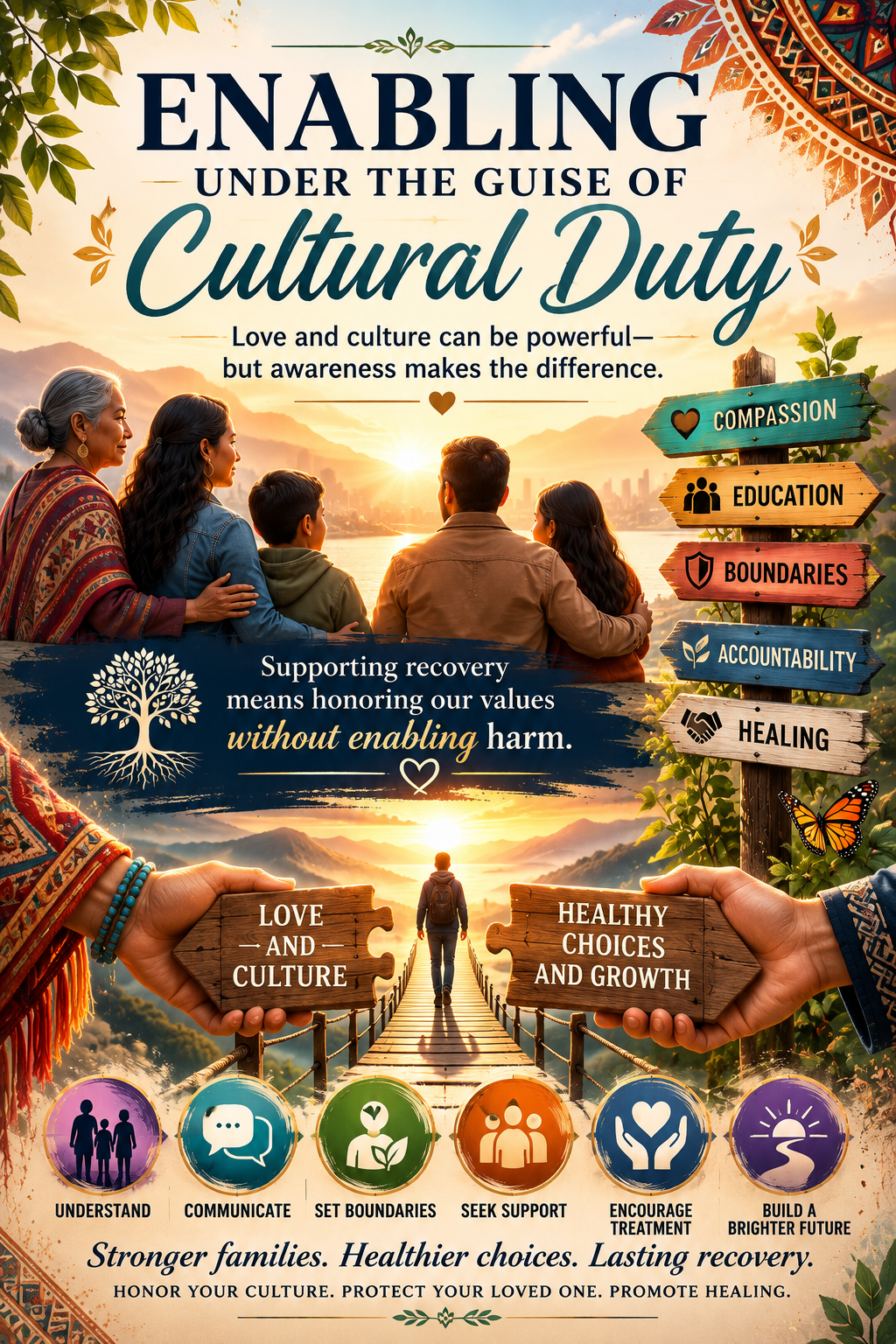
Enabling under the guise of cultural duty refers to situations in which deeply valued cultural beliefs and family responsibilities may unintentionally support or prolong harmful substance use or addictive behaviors. Many cultures emphasize loyalty, respect for elders, caregiving, generosity, and maintaining family unity, and these values often provide a strong foundation for resilience and recovery. However, when acts of protection or assistance prevent a loved one from experiencing the natural consequences of their actions or delay access to treatment, they may unintentionally become enabling behaviors. Understanding the difference between healthy support and enabling is essential for families, healthcare professionals, and communities. By recognizing addiction as a chronic, treatable medical condition and balancing compassion with accountability, families can honor their cultural traditions while encouraging recovery and personal responsibility.
Enabling Under the Guise of Cultural Duty
Families and communities often play an important role in supporting loved ones through difficult times, including recovery from addiction. In many cultures, values such as loyalty, respect for elders, family unity, generosity, and caring for relatives are deeply cherished and can provide powerful sources of strength. However, these same values can sometimes make it difficult to distinguish between healthy support and enabling. Enabling under the guise of cultural duty occurs when well-intentioned actions unintentionally allow harmful substance use or addictive behaviors to continue by shielding a person from the natural consequences of their actions. Understanding this distinction helps families provide compassionate support while encouraging accountability and recovery.
What Is Enabling?
Enabling refers to behaviors that unintentionally make it easier for someone to continue engaging in harmful substance use or addictive behaviors. These actions are usually motivated by love, fear, guilt, or a desire to protect the individual from pain or embarrassment rather than by a wish to support the addiction.
Examples of enabling behaviors include:
- Frequently giving money that may be used to purchase substances.
- Making excuses for substance-related behavior.
- Covering up legal, financial, or work-related consequences.
- Ignoring repeated harmful behaviors.
- Taking over responsibilities that the individual is capable of managing.
- Protecting the person from the natural consequences of substance use.
The Influence of Cultural Values
Cultural traditions often encourage families to care for one another through times of hardship. These values can strengthen recovery by fostering connection, resilience, and mutual support. At the same time, some cultural expectations may make it difficult to address addiction openly.
Examples of cultural influences include:
- Strong expectations of family loyalty.
- Respect for elders and authority figures.
- Belief that family problems should remain private.
- Responsibility to care for relatives regardless of circumstances.
- Fear of bringing shame or embarrassment to the family.
- Emphasis on forgiveness and maintaining family unity.
These values are not inherently harmful. The challenge arises when they unintentionally discourage seeking treatment or setting healthy boundaries.
Healthy Support Versus Enabling
Supportive behaviors encourage recovery while promoting responsibility. Enabling behaviors reduces accountability and may unintentionally reinforce addiction.
Healthy Support
Healthy support may involve:
- Encouraging participation in treatment.
- Offering transportation to appointments.
- Providing emotional encouragement.
- Learning about addiction as a medical condition.
- Helping locate community resources.
- Celebrating recovery milestones.
- Practicing respectful communication.
- Supporting healthy daily routines.
Enabling Behaviors
Enabling behaviors may include:
- Paying debts caused by ongoing substance use without addressing the underlying problem.
- Calling an employer to excuse repeated absences caused by substance use.
- Giving money despite concerns that it may be used to purchase drugs or alcohol.
- Ignoring unsafe or harmful behaviors.
- Avoiding conversations about addiction because of fear or shame.
- Repeatedly rescuing the person from preventable consequences.
Why Families May Enable
Families often enable because they are trying to protect someone they love. These behaviors usually arise from compassion rather than harmful intentions.
Common reasons include:
- Fear for the person’s safety.
- Guilt or self-blame.
- Hope the problem resolves on its own.
- Concern about family reputation.
- Desire to avoid conflict.
- Cultural expectations regarding caregiving.
- Lack of knowledge about addiction.
The Impact of Enabling
Although enabling is typically well-intentioned, it can delay recovery by reducing motivation to seek treatment and limiting opportunities for personal responsibility.
Potential consequences include:
- Continued substance use.
- Delayed entry into treatment.
- Increased financial strain on the family.
- Emotional exhaustion among caregivers.
- Family conflict.
- Reduced trust within relationships.
- Greater risk of medical, legal, or social complications.
Establishing Healthy Boundaries
Healthy boundaries help families provide support without reinforcing harmful behaviors. Boundaries are expressions of care and respect, not punishment.
Examples include:
- Refusing to provide money that may support substance use.
- Encouraging treatment rather than rescue from repeated consequences.
- Communicating expectations clearly and respectfully.
- Protecting the safety of children and other family members.
- Following through consistently with agreed-upon limits.
- Seeking professional guidance when setting boundaries becomes difficult.
Encouraging Treatment
One of the most supportive actions families can take is encouraging evidence-based treatment. Recovery is more successful when individuals receive comprehensive care tailored to their needs.
Treatment may include:
- Addiction medicine services.
- Individual counseling.
- Family therapy.
- Group therapy.
- Peer recovery support.
- Treatment for co-occurring mental health conditions.
- Medication for opioid or alcohol use disorders when appropriate.
The Role of Community and Faith Leaders
In many cultures, respected community members and faith leaders influence attitudes toward addiction and recovery. When they provide accurate information and encourage professional treatment, they can help reduce stigma and promote healing.
Community leaders can:
- Promote evidence-based addiction education.
- Encourage compassion rather than judgment.
- Support families in establishing healthy boundaries.
- Connect individuals with treatment resources.
- Foster recovery-friendly communities.
Respecting Culture While Supporting Recovery
Cultural traditions and recovery goals do not have to conflict. Families can honor their values while also encouraging accountability and professional treatment.
Helpful approaches include:
- Balancing compassion with healthy boundaries.
- Encouraging open discussions about addiction.
- Reducing shame through education.
- Respecting individual dignity.
- Recognizing addiction as a treatable medical condition.
- Seeking culturally responsive healthcare when available.
Conclusion
Enabling under the guise of cultural duty highlights the complex relationship between family values, caregiving, and addiction recovery. Cultural traditions of loyalty, compassion, and family responsibility are important strengths that can support healing when combined with healthy boundaries and evidence-based treatment. By learning to distinguish between supportive behaviors and enabling behaviors, families can provide meaningful encouragement while promoting personal responsibility and long-term recovery. Through education, open communication, culturally responsive care, and collaboration with healthcare professionals and community resources, families can honor their cultural values while helping loved ones build healthier, substance-free lives.
Self-Management Strategies to Understand Enabling Under the Guise of Cultural Duty
Understanding the difference between cultural responsibility and enabling is an important part of recovery and personal growth. Many cultures emphasize values such as family loyalty, respect for elders, caring for relatives, and maintaining family unity. These traditions can provide strength, resilience, and emotional support during recovery. However, when acts of kindness unintentionally allow harmful substance use or addictive behaviors to continue, they may become enabling rather than supportive. Self-management strategies can help individuals honor their cultural values while developing healthy boundaries, personal responsibility, and long-term recovery skills.
Learn the Difference Between Support and Enabling
Educating yourself about addiction and recovery helps you recognize when supportive actions encourage healing and when they unintentionally reinforce unhealthy behaviors.
Healthy support may include:
- Encouraging participation in treatment.
- Offering emotional encouragement.
- Helping locate community resources.
- Celebrating recovery milestones.
- Respecting personal accountability.
- Supporting healthy daily routines.
Enabling behaviors may include:
- Making excuses for harmful behaviors.
- Avoiding discussions about substance use.
- Providing money that may be used to purchase drugs or alcohol.
- Repeatedly rescuing yourself or others from preventable consequences.
- Ignoring ongoing signs of addiction.
Reflect on Your Cultural Values
Take time to consider how your cultural background influences your beliefs about family responsibility, caregiving, and addiction. Understanding these influences can help you make thoughtful decisions that support recovery without compromising your values.
Questions to ask yourself include:
- What family values are most important to me?
- How do these values support recovery?
- Are there situations where I confuse helping with enabling?
- How can I honor my culture while encouraging accountability?
- What boundaries are consistent with both my values and my well-being?
Accept Personal Responsibility
Recovery involves accepting responsibility for your own choices while recognizing that you cannot control others’ decisions. Focusing on what you can change helps build confidence and resilience.
Practice responsibility by:
- Following your treatment plan.
- Keeping appointments.
- Taking medications as prescribed, if applicable.
- Being honest about challenges.
- Learning from setbacks.
- Making amends when appropriate.
Develop Healthy Boundaries
Healthy boundaries protect your emotional well-being while encouraging responsible behavior. Boundaries are not acts of rejection—they are expressions of respect for yourself and others.
Examples include:
- Saying “no” respectfully when necessary.
- Avoiding financial support that could contribute to substance use.
- Protecting your physical and emotional safety.
- Communicating expectations clearly.
- Following through consistently with your decisions.
Build Healthy Communication Skills
Open and respectful communication strengthens relationships and reduces misunderstandings.
Practice communication by:
- Speaking honestly and respectfully.
- Using “I” statements to express feelings.
- Listening without becoming defensive.
- Asking for clarification when needed.
- Addressing concerns early rather than avoiding difficult conversations.
Strengthen Healthy Coping Skills
Learning positive ways to manage stress reduces the temptation to rely on unhealthy relationship patterns or substance use.
Healthy coping strategies include:
- Deep breathing exercises.
- Mindfulness meditation.
- Physical exercise.
- Journaling.
- Creative hobbies.
- Spending time outdoors.
- Reading.
- Practicing gratitude.
Build a Supportive Recovery Network
Recovery is strengthened by relationships that encourage healthy choices and accountability.
Your support network may include:
- Family members.
- Trusted friends.
- Healthcare providers.
- Therapists.
- Peer recovery specialists.
- Recovery support groups.
- Faith or spiritual communities, if they align with your beliefs.
- Community organizations.
Learn to Manage Feelings of Guilt
Many people struggle with guilt when setting healthy boundaries, especially if cultural expectations emphasize constant caregiving. Remember that supporting recovery sometimes means allowing loved ones to experience the natural consequences of their choices.
Helpful reminders include:
- Boundaries are acts of care, not punishment.
- Protecting your own well-being is healthy.
- You are responsible for your choices, not another person’s addiction.
- Compassion and accountability can exist together.
Continue Learning About Addiction
The more you understand addiction as a chronic, treatable medical condition, the easier it becomes to make informed decisions that support recovery.
Continue learning by:
- Reading evidence-based resources.
- Attending educational workshops.
- Asking healthcare professionals questions.
- Participating in family education programs.
- Learning from peer recovery specialists.
Monitor Your Emotional Well-Being
Supporting yourself and others can be emotionally challenging. Regular self-reflection helps you recognize when additional support may be needed.
Pay attention to:
- Stress levels.
- Anxiety.
- Feelings of resentment.
- Emotional exhaustion.
- Difficulty maintaining boundaries.
- Burnout.
- Symptoms of depression.
Seek professional support if these concerns begin affecting your daily life.
Practice Self-Compassion
Recovery and personal growth involve learning new behaviors over time. Be patient with yourself as you develop healthier ways of balancing compassion, cultural values, and accountability.
Practice self-compassion by:
- Accepting that change takes time.
- Celebrating personal progress.
- Learning from mistakes without excessive self-criticism.
- Recognizing your strengths.
- Seeking support when challenges arise.
Conclusion
Self-management is essential for understanding and addressing enabling behaviors that may be presented as a cultural duty. By learning the difference between healthy support and enabling, reflecting on personal and cultural values, developing healthy boundaries, practicing effective communication, strengthening coping skills, and building a supportive recovery network, individuals can honor their cultural traditions while promoting accountability and healing. Recovery is strengthened when compassion is balanced with responsibility, allowing both individuals and families to grow in healthier, more supportive ways. With education, self-awareness, and ongoing support, it is possible to respect cultural values while encouraging lasting recovery and emotional well-being.
Family Support Strategies to Understand Enabling Under the Guise of Cultural Duty
Families are often the strongest source of love, identity, and support during addiction recovery. In many cultures, caring for relatives, respecting elders, maintaining family unity, and helping loved ones through difficult times are deeply held values that promote resilience and healing. However, these same values can sometimes make it difficult to recognize when well-intentioned support unintentionally enables continued substance use. Understanding the difference between healthy support and enabling allows families to honor their cultural traditions while encouraging accountability, treatment, and long-term recovery.
Learn the Difference Between Support and Enabling
Families who understand addiction are better able to provide assistance that promotes recovery rather than unintentionally reinforcing harmful behaviors.
Healthy support includes:
- Encouraging participation in treatment.
- Providing emotional encouragement.
- Helping with transportation to appointments.
- Celebrating recovery milestones.
- Encouraging healthy routines.
- Respecting personal responsibility.
Enabling behaviors may include:
- Giving money that may be used to buy drugs or alcohol.
- Covering up substance-related problems.
- Repeatedly rescuing a loved one from preventable consequences.
- Ignoring unsafe behaviors.
- Making excuses for continued substance use.
- Taking over responsibilities that the individual can manage independently.
Honor Cultural Values While Promoting Recovery
Cultural traditions of compassion, loyalty, and family responsibility can be powerful strengths in recovery. Families can preserve these values while also encouraging healthy change.
Healthy approaches include:
- Supporting recovery rather than substance use.
- Encouraging honesty and accountability.
- Respecting family traditions that promote healing.
- Seeking culturally responsive treatment when available.
- Viewing addiction as a treatable medical condition rather than a moral failure.
Encourage Open and Respectful Communication
Addiction often creates fear, shame, and misunderstanding within families. Open communication helps reduce stigma and encourages recovery-focused conversations.
Helpful communication strategies include:
- Listen without judgment.
- Use calm and respectful language.
- Ask open-ended questions.
- Express concern with compassion.
- Avoid blaming or shaming.
- Encourage honest discussions about treatment and recovery.
Establish Healthy Boundaries
Healthy boundaries allow families to remain supportive without enabling harmful behaviors. Boundaries communicate love while encouraging responsibility.
Examples include:
- Refusing to provide money that may support substance use.
- Not covering up legal or work-related consequences.
- Clearly communicating household expectations.
- Following through consistently with agreed-upon limits.
- Protecting children and other vulnerable family members.
Encourage Professional Treatment
Families can make a meaningful difference by encouraging evidence-based treatment rather than trying to manage addiction on their own.
Treatment options may include:
- Addiction medicine specialists.
- Individual counseling.
- Family therapy.
- Group therapy.
- Peer recovery specialists.
- Medication for opioid or alcohol use disorders when appropriate.
- Residential or outpatient treatment programs.
Understand the Role of Shame
In some cultures, concerns about family reputation or public perception may discourage individuals from seeking treatment. Families can reduce stigma by promoting understanding and acceptance.
Families can help by:
- Talking openly about addiction as a medical condition.
- Avoiding language that blames or labels.
- Encouraging early intervention.
- Supporting treatment without embarrassment.
- Recognizing that seeking help demonstrates strength.
Promote Personal Responsibility
Recovery requires individuals to take responsibility for their choices while receiving appropriate support.
Families can encourage responsibility by:
- Allowing natural consequences when appropriate.
- Supporting problem-solving instead of rescuing.
- Encouraging independent decision-making.
- Recognizing personal achievements.
- Reinforcing healthy behaviors.
Participate in Family Education Programs
Learning together strengthens family relationships and improves recovery outcomes.
Helpful educational opportunities include:
- Family therapy.
- Addiction education classes.
- Caregiver workshops.
- Communication skills training.
- Peer-led family support groups.
- Community recovery education programs.
Support Healthy Family Routines
Stable family routines provide consistency and reduce stress during recovery.
Healthy routines include:
- Eating meals together.
- Encouraging regular sleep schedules.
- Participating in physical activities.
- Planning substance-free family events.
- Celebrating holidays and traditions in healthy ways.
- Practicing stress management together.
Care for Your Own Well-Being
Supporting someone with addiction can be emotionally demanding. Family members should also care for their own physical and emotional health.
Self-care strategies include:
- Attending family support groups.
- Seeking counseling if needed.
- Maintaining friendships.
- Exercising regularly.
- Practicing relaxation techniques.
- Making time for hobbies.
- Getting adequate sleep.
Work Together as a Family
Recovery is most successful when families work as a team while respecting each person’s role and responsibilities.
Families can strengthen recovery by:
- Establishing shared recovery goals.
- Supporting treatment participation.
- Communicating honestly.
- Respecting healthy boundaries.
- Celebrating progress together.
- Remaining patient during setbacks.
Conclusion
Family support is one of the most valuable resources in addiction recovery, and cultural traditions of compassion, loyalty, and caregiving can provide a strong foundation for healing. By learning to distinguish between healthy support and enabling, families can honor their cultural values while promoting accountability, professional treatment, and personal growth. Open communication, healthy boundaries, education, and self-care allow families to provide meaningful support without unintentionally reinforcing harmful behaviors. With understanding, patience, and evidence-based guidance, families can help their loved ones build lasting recovery while preserving the values that strengthen their relationships and communities.
Community Resource Strategies to Understand Enabling Under the Guise of Cultural Duty
Communities play an essential role in helping individuals and families understand the difference between healthy support and enabling behaviors. In many cultures, values such as family loyalty, respect for elders, generosity, and caregiving are important sources of strength. These traditions can promote resilience and recovery, but they may also make it difficult to recognize when well-intentioned actions unintentionally support continued substance use. Community resources provide education, professional guidance, peer support, and culturally responsive services that help families balance compassion with accountability while respecting their cultural beliefs and traditions.
Access Community Addiction Treatment Programs
Community addiction treatment centers provide education and evidence-based care that help individuals and families understand addiction as a chronic, treatable medical condition.
Services may include:
- Comprehensive substance use assessments
- Individual counseling
- Family therapy
- Group therapy
- Medication for opioid or alcohol use disorders when appropriate
- Relapse prevention planning
- Recovery education
- Case management
Participate in Family Education Programs
Many community organizations offer educational programs that teach families how to support recovery without enabling harmful behaviors.
Programs often include:
- Addiction education workshops
- Communication skills training
- Healthy boundary education
- Caregiver support classes
- Family counseling
- Parenting education
- Stress management strategies
Connect with Peer Recovery Organizations
Peer recovery specialists and family peer support workers use their lived experience to help individuals and families navigate recovery while maintaining healthy relationships.
Peer services may provide:
- Recovery coaching
- Family mentoring
- Emotional support
- Resource navigation
- Goal setting
- Recovery planning
- Encouragement during challenging situations
Utilize Community Mental Health Services
Mental health professionals can help families understand the emotional factors that contribute to enabling behaviors, such as guilt, fear, anxiety, or unresolved trauma.
Available services include:
- Individual counseling
- Family therapy
- Trauma-informed care
- Psychiatric evaluations
- Stress management counseling
- Crisis intervention
- Dual diagnosis treatment
Engage Faith and Cultural Leaders
Faith leaders, tribal leaders, and other respected cultural leaders often influence family values and community attitudes. When they provide accurate, evidence-based information about addiction, they can help reduce stigma while respecting cultural traditions.
Community leaders can:
- Promote healthy caregiving practices.
- Encourage professional treatment.
- Reduce stigma surrounding addiction.
- Support family education.
- Foster compassionate community discussions.
Participate in Recovery Support Groups
Recovery support groups provide opportunities for individuals and families to learn from others who have experienced similar challenges.
Benefits include:
- Shared experiences
- Emotional encouragement
- Practical coping strategies
- Healthy accountability
- Reduced isolation
- Long-term recovery support
Utilize Community Health Centers
Community health centers often provide integrated services that address physical health, behavioral health, and social needs in one location.
Services may include:
- Primary healthcare
- Behavioral health counseling
- Substance use treatment referrals
- Preventive care
- Care coordination
- Health education
Access Social Service Programs
Many enabling behaviors develop because families struggle with financial or social stressors. Community social service agencies can reduce these pressures by providing practical assistance.
Helpful resources include:
- Housing assistance
- Food assistance
- Transportation services
- Employment support
- Childcare resources
- Financial counseling
- Legal aid
- Case management
Participate in Cultural Awareness Programs
Community education programs that integrate cultural traditions with evidence-based addiction treatment help families understand that respecting cultural values and promoting accountability can coexist.
Topics may include:
- Cultural strengths in recovery
- Healthy family boundaries
- Communication across generations
- Reducing stigma
- Supporting treatment participation
- Balancing caregiving with accountability
Utilize Crisis Services When Needed
Families should know where to seek immediate help if substance use or emotional distress becomes dangerous.
Important community resources include:
- Hospital emergency departments
- Emergency medical services (911)
- Local behavioral health crisis teams
- Mobile crisis response units
- Community crisis stabilization centers
- The 988 Suicide & Crisis Lifeline for immediate support during mental health or emotional crises
Promote Recovery-Friendly Communities
Communities can reduce enabling and strengthen recovery by creating environments that encourage treatment, education, and compassion.
Community initiatives include:
- Recovery awareness events
- Public education campaigns
- Recovery-friendly workplaces
- School prevention programs
- Community wellness activities
- Volunteer opportunities
- Partnerships between healthcare providers and community organizations
Advocate for Culturally Responsive Care
Healthcare systems that recognize and respect cultural beliefs while providing evidence-based treatment can improve trust and treatment engagement.
Advocacy efforts may include:
- Expanding culturally responsive addiction treatment
- Increasing interpreter and translation services
- Providing culturally sensitive educational materials
- Supporting workforce diversity
- Encouraging community partnerships
- Promoting equitable access to care
Conclusion
Community resources are essential to helping individuals and families understand enabling behaviors that may be presented as a cultural duty. Through addiction treatment programs, family education, peer recovery services, mental health counseling, faith and cultural leadership, social services, and culturally responsive care, communities can help families balance compassion with accountability while honoring their cultural traditions. By reducing stigma, expanding access to evidence-based treatment, and strengthening partnerships among healthcare providers, community organizations, and cultural leaders, communities create supportive environments where individuals and families can thrive. These collaborative efforts empower families to provide meaningful support that encourages responsibility, healing, and lasting recovery while preserving the values that strengthen their cultural identity.
Frequently Asked Questions
Here are some common questions:
1. What does “enabling under the guise of cultural duty” mean?
It refers to situations where deeply held cultural values—such as family loyalty, caregiving, respect for elders, or protecting family honor—may unintentionally support or prolong harmful substance use or addictive behaviors. The intention is usually to help a loved one, but the outcome may delay treatment or reduce personal accountability.
2. Is caring for a family member considered enabling?
No. Caring for a loved one is not the same as enabling. Healthy support encourages recovery, treatment, and personal responsibility, while unintentionally making it easier for harmful behaviors to continue.
3. What is the difference between support and enabling?
Healthy support:
- Encourages professional treatment.
- Offers emotional encouragement.
- Respects healthy boundaries.
- Promotes accountability.
- Helps develop independent living skills.
Enabling:
- Gives money that may be used for substances.
- Makes excuses for harmful behavior.
- Hides or minimizes addiction.
- Protects someone from the natural consequences of their actions.
- Takes over responsibilities that the person can manage themselves.
4. Why do families sometimes enable loved ones?
Most families enable because they care deeply about the person and want to protect them from harm.
Common reasons include:
- Love and compassion
- Fear for the person’s safety
- Guilt or self-blame
- Hope the problem will improve on its own
- Desire to avoid conflict
- Cultural expectations of caregiving
- Concern about family reputation
5. Can cultural traditions be a strength during recovery?
Yes. Cultural values such as compassion, respect, generosity, family unity, and mutual support can strengthen recovery when combined with healthy boundaries, accountability, and evidence-based treatment.
6. Does setting boundaries mean you don’t love your family?
No. Healthy boundaries are an expression of love and respect. They protect both the individual and the family while encouraging responsibility and healthier decision-making.
7. How can I tell if I am enabling someone?
You may be enabling if you regularly:
- Cover up their substance use.
- Give money despite concerns it may support addiction.
- Make excuses for missed work or school.
- Rescue them from repeated consequences.
- Ignore dangerous behaviors to avoid conflict.
- Feel responsible for solving problems caused by their substance use.
8. What are examples of healthy family support?
Healthy family support includes:
- Encouraging treatment participation.
- Attending family therapy.
- Providing transportation to appointments.
- Listening without judgment.
- Celebrating recovery milestones.
- Supporting healthy daily routines.
- Communicating honestly and respectfully.
9. How can families balance cultural values with accountability?
Families can honor their cultural traditions while supporting recovery by:
- Encouraging treatment.
- Setting respectful boundaries.
- Practicing open communication.
- Learning about addiction as a medical condition.
- Seeking culturally responsive healthcare.
- Supporting responsibility instead of rescuing.
10. What role do healthcare professionals play?
Healthcare professionals help families:
- Understand addiction.
- Develop healthy communication skills.
- Establish appropriate boundaries.
- Create individualized treatment plans.
- Address co-occurring mental health conditions.
- Connect with community resources.
11. How can peer recovery specialists help?
Peer recovery specialists use their own lived experience with recovery to:
- Offer encouragement.
- Share practical coping strategies.
- Help families understand recovery.
- Connect individuals with community services.
- Promote hope and long-term engagement in treatment.
12. Can enabling delay recovery?
Yes. Although enabling usually comes from good intentions, it may reduce motivation to seek treatment by protecting individuals from experiencing the natural consequences of continued substance use. Healthy support encourages change while maintaining compassion.
13. What community resources are available?
Helpful community resources include:
- Addiction treatment centers
- Community mental health clinics
- Family education programs
- Peer recovery organizations
- Family support groups
- Faith-based organizations, if desired
- Housing and employment assistance
- Crisis intervention services
14. How can families reduce stigma surrounding addiction?
Families can help reduce stigma by:
- Viewing addiction as a treatable medical condition.
- Using respectful, person-first language.
- Encouraging open conversations.
- Supporting early treatment.
- Learning about addiction through reliable educational resources.
- Sharing hope and recovery success stories when appropriate.
15. When should professional help be sought?
Professional help should be sought if substance use is causing problems with health, relationships, work, school, finances, or legal responsibilities, or if a loved one continues using despite harmful consequences. Immediate medical or emergency assistance is needed if someone experiences an overdose, has thoughts of self-harm or suicide, becomes violent, or shows severe confusion, difficulty breathing, seizures, or loss of consciousness.
16. What is the most important message about enabling under the guise of cultural duty?
Families do not have to choose between honoring their cultural values and supporting recovery. Compassion, loyalty, and caregiving remain important strengths when combined with healthy boundaries, honest communication, and evidence-based treatment. By understanding the difference between helping and enabling, families can provide meaningful support that promotes healing, personal responsibility, stronger relationships, and lasting recovery.
Conclusion
Enabling under the guise of cultural duty highlights the importance of balancing compassion, family responsibility, and accountability in addiction recovery. Cultural values such as love, loyalty, respect, and caregiving are powerful strengths that can support healing when combined with healthy boundaries and evidence-based treatment. Families do not have to choose between honoring their traditions and encouraging recovery—they can do both by promoting open communication, seeking professional guidance, and supporting their loved one in taking responsibility for their recovery journey. With education, culturally responsive care, peer support, and strong community resources, families can transform well-intentioned caregiving into healthy support that empowers lasting recovery, strengthens family relationships, and preserves the cultural values that unite them.
Video: The Delicate Balance of Family Support #familydrama #addictiontreatment