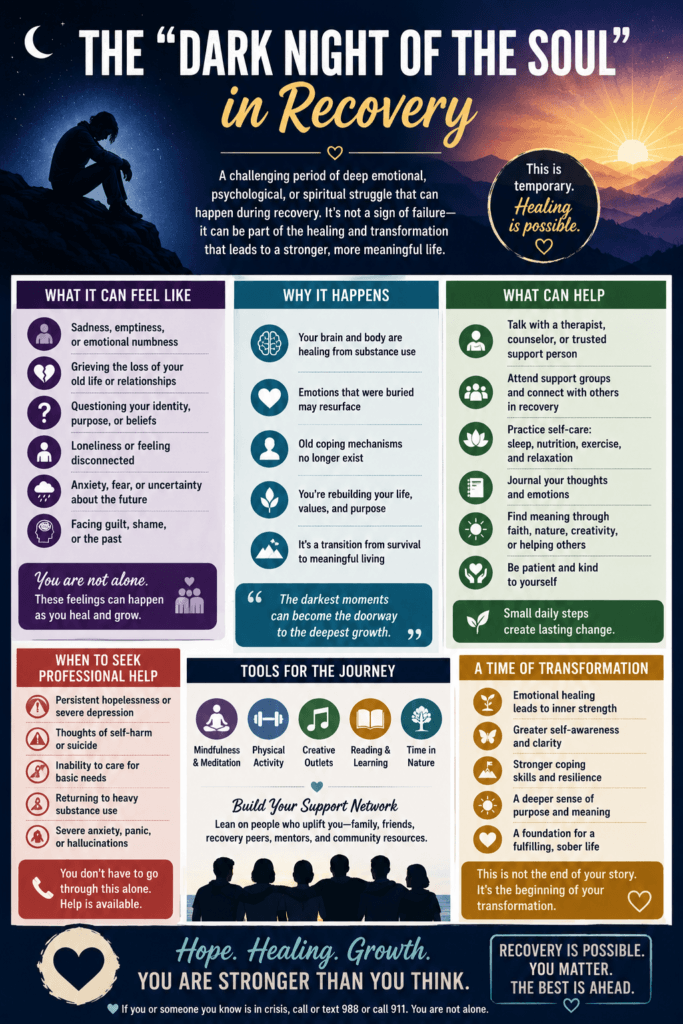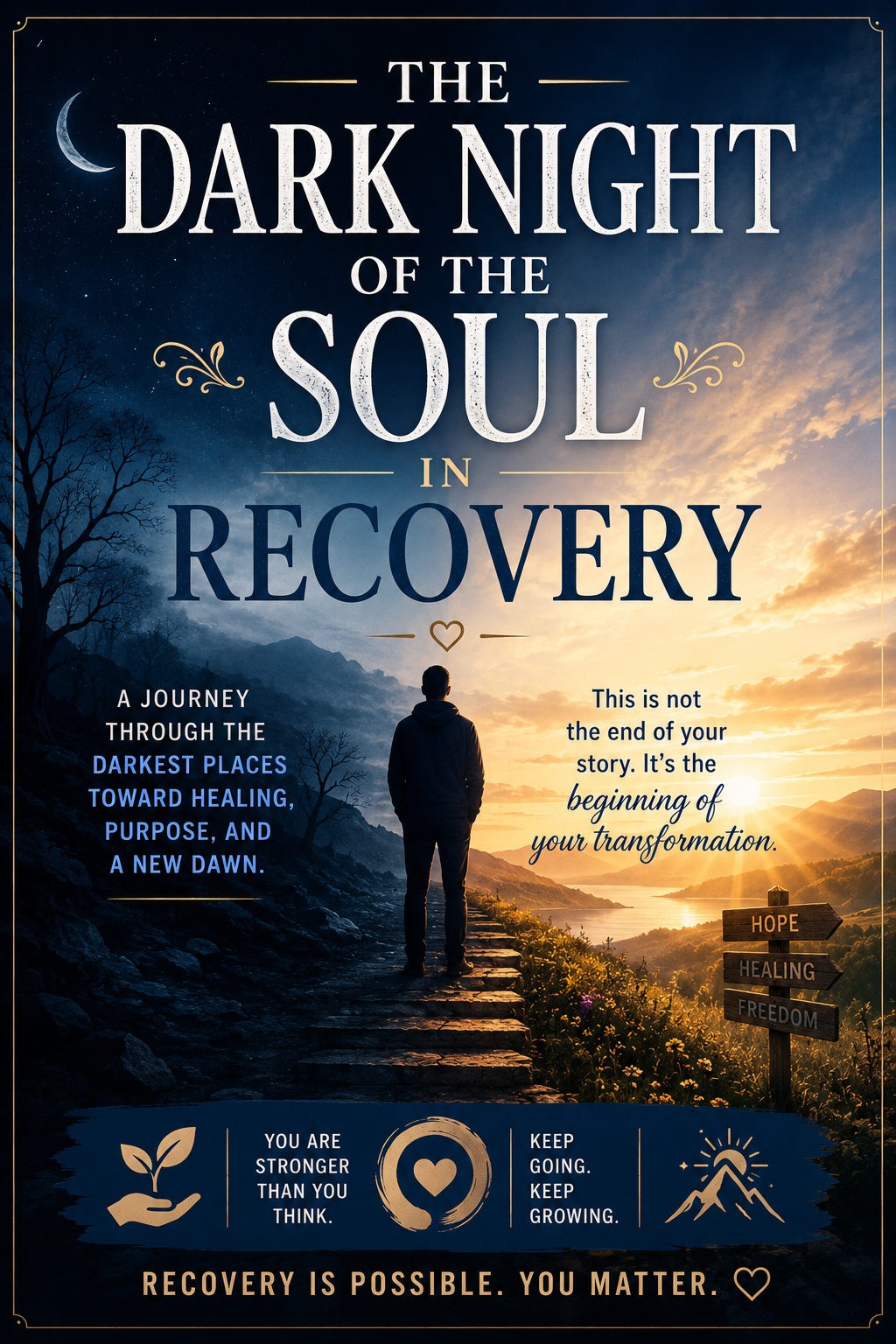
The phrase “dark night of the soul” is often used to describe a period of profound emotional, psychological, or spiritual struggle that can occur during recovery from addiction. Originally rooted in spiritual literature, the term has come to represent a deeply personal experience in which individuals may feel lost, uncertain, or disconnected as they adjust to life without alcohol or drugs. Although not everyone experiences recovery in this way, some people find that unresolved emotions, grief, trauma, or questions about identity and purpose emerge after substance use ends. These challenges can be difficult, but they also provide an opportunity for healing, self-discovery, and personal growth. It is important to recognize that while emotional ups and downs can be part of recovery, persistent depression, severe anxiety, or thoughts of self-harm are not simply a normal stage of healing and should be evaluated by a qualified healthcare professional. Recovery is a highly individual journey, and emotional experiences vary from person to person.
The “Dark Night of the Soul” in Recovery
The phrase “dark night of the soul” describes a period of profound emotional, psychological, or spiritual struggle during which a person may feel lost, disconnected, or uncertain about the future. Originally associated with Christian mysticism, particularly the writings of Saint John of the Cross, the term is now used more broadly to describe times of deep personal transformation. In addiction recovery, some individuals use this phrase to describe a period when they feel emotionally overwhelmed after stopping alcohol or drug use, even as they are making progress. Others do not relate to this concept at all, and that’s equally valid. Recovery experiences vary widely from person to person.
What Does the “Dark Night of the Soul” Mean in Recovery?
During active addiction, substances may temporarily numb emotional pain, trauma, stress, or uncomfortable feelings. As recovery begins, those emotions often resurface. Without the familiar coping mechanism of substance use, individuals may experience sadness, grief, loneliness, guilt, anxiety, or a sense of emptiness. This adjustment can feel overwhelming, especially during early recovery.
For some, this period is described as a “dark night of the soul” because it involves confronting difficult emotions while beginning to develop healthier coping strategies. It is important to note that these experiences are not universal, and they should not be viewed as an expected or required stage of recovery.
Common Emotional Experiences
People who describe this type of experience may report:
- Feeling emotionally numb
- Grieving the loss of their former lifestyle
- Questioning their identity without substances
- Feeling lonely or isolated
- Experiencing guilt or shame about past behaviors
- Feeling uncertain about the future
- Loss of confidence
- Difficulty finding purpose or meaning
- Emotional ups and downs
These feelings can be part of the adjustment process, but persistent or severe symptoms should be evaluated by a healthcare professional because they may indicate depression, anxiety, trauma-related conditions, or other treatable mental health disorders.
Why Can Recovery Feel So Difficult?
Addiction changes the brain’s reward system. As substance use stops, the brain needs time to adapt to functioning without drugs or alcohol. During this period, individuals may notice reduced motivation, lower mood, or difficulty experiencing pleasure from everyday activities.
Other factors that can contribute include:
- Healing brain chemistry
- Unresolved trauma
- Relationship changes
- Financial stress
- Legal or employment concerns
- Learning new coping skills
- Lifestyle adjustments
- Co-occurring mental health conditions
Signs That Professional Support May Be Needed
While emotional discomfort can occur during recovery, some symptoms require prompt professional evaluation.
Seek help if someone experiences:
- Persistent hopelessness
- Severe depression
- Thoughts of self-harm or suicide
- Inability to care for basic needs
- Severe anxiety or panic attacks
- Hallucinations or confusion
- Return to heavy substance use
- Significant impairment in daily functioning
These symptoms are medical concerns and should not be dismissed as simply part of a “dark night of the soul.”
Healthy Ways to Navigate Difficult Periods
Recovery is strengthened through healthy coping strategies and supportive relationships.
Helpful approaches include:
- Attending counseling regularly
- Participating in peer recovery groups
- Practicing mindfulness or meditation
- Journaling emotions
- Exercising regularly
- Eating nutritious meals
- Maintaining healthy sleep habits
- Spending time in nature
- Developing creative hobbies
- Connecting with trusted friends and family
The Role of Spirituality
For some individuals, spirituality becomes an important source of comfort and resilience during recovery. This may involve:
- Prayer
- Meditation
- Attending religious services
- Reading spiritual literature
- Spending quiet time in reflection
- Practicing gratitude
- Connecting with a faith community
Others may find meaning through nature, relationships, creativity, volunteer work, or personal values rather than formal religion. Recovery can be deeply meaningful with or without a spiritual framework.
The Importance of Community
Recovery is rarely achieved alone. Supportive relationships help reduce isolation and provide encouragement during emotionally challenging periods.
Support may come from:
- Family
- Friends
- Therapists
- Peer recovery specialists
- Mutual-support groups
- Healthcare providers
- Faith communities
- Community recovery organizations
Growth Through Recovery
Many individuals report that working through difficult emotional periods eventually leads to personal growth. Over time, they may develop:
- Greater emotional resilience
- Improved coping skills
- Stronger relationships
- Increased self-awareness
- Better stress management
- Renewed purpose
- Greater appreciation for life
- Improved physical and mental health
Growth is not guaranteed or linear, and setbacks can occur. Recovery is a process that unfolds differently for each person.
Hope Beyond the Darkness
Periods of emotional struggle do not mean recovery has failed. For many people, these experiences lessen over time with support and effective treatment. If symptoms persist or become severe, professional evaluation is essential because additional treatment—such as therapy, medication for an underlying mental health condition, or changes to the recovery plan—may be needed.
Conclusion
The “dark night of the soul” is a phrase that some people use to describe a deeply challenging emotional or spiritual period during recovery from addiction. Although not everyone experiences recovery this way, it can reflect the difficult process of healing, adjusting to life without substances, and developing healthier coping strategies. Recovery is not only about stopping substance use—it is also about rebuilding emotional well-being, relationships, and a meaningful life. With evidence-based treatment, supportive relationships, self-compassion, and, for those who find it helpful, spiritual practices, individuals can move through difficult periods and continue toward long-term recovery and wellness.
Self-Management Strategies to Understand the “Dark Night of the Soul” in Recovery
The “dark night of the soul” is a phrase some people use to describe a period of deep emotional, psychological, or spiritual struggle during recovery from addiction. During this time, individuals may experience feelings of sadness, uncertainty, loneliness, or a loss of purpose as they adjust to life without alcohol or drugs. While not everyone experiences recovery this way, learning healthy self-management strategies can help individuals navigate difficult emotions, build resilience, and continue moving toward long-term recovery. It is also important to remember that persistent depression, severe anxiety, or thoughts of self-harm are not simply part of recovery and should be evaluated by a healthcare professional.
Learn About the Recovery Process
Understanding that recovery involves healing both the brain and the body can help normalize emotional ups and downs. Learning about addiction and recovery reduces fear and encourages realistic expectations.
Ways to educate yourself include:
- Read evidence-based recovery materials.
- Learn how addiction affects brain chemistry.
- Understand common emotional challenges during recovery.
- Attend recovery education workshops.
- Ask healthcare providers questions about the healing process.
Accept Your Emotions Without Judgment
Recovery often brings emotions that were previously masked by substance use. Rather than avoiding or suppressing these feelings, practice acknowledging them with curiosity and self-compassion.
Helpful reminders include:
- Emotions are temporary.
- Difficult feelings do not mean recovery is failing.
- Healing takes time.
- Progress is not always linear.
- Seeking help is a sign of strength.
Practice Mindfulness and Meditation
Mindfulness helps you observe thoughts and emotions without reacting impulsively. Regular practice can improve emotional regulation and reduce stress.
Simple mindfulness activities include:
- Deep breathing exercises.
- Guided meditation.
- Body scan relaxation.
- Mindful walking.
- Spending quiet time in nature.
- Practicing gratitude each day.
Build a Structured Daily Routine
Having a consistent schedule creates stability during emotionally challenging periods and reduces opportunities for relapse.
Include daily habits such as:
- Waking up and going to bed at consistent times.
- Eating balanced meals.
- Exercising regularly.
- Attending work, school, or volunteer activities.
- Scheduling recovery meetings or counseling.
- Making time for hobbies and relaxation.
Journal Your Thoughts and Feelings
Writing about your experiences can help you identify emotional patterns, process difficult experiences, and recognize personal growth over time.
Consider journaling about:
- Daily emotions.
- Recovery successes.
- Personal goals.
- Gratitude.
- Stressful situations.
- Coping strategies that worked well.
Develop Healthy Coping Skills
Replacing substance use with healthy coping strategies strengthens recovery and builds emotional resilience.
Healthy alternatives include:
- Physical exercise.
- Listening to music.
- Reading.
- Creative arts.
- Gardening.
- Yoga or stretching.
- Spending time with supportive people.
- Learning new skills or hobbies.
Explore Your Personal Values and Purpose
Recovery provides an opportunity to reconnect with what gives your life meaning. Purpose does not have to come from spirituality—it may come from relationships, creativity, service, learning, or personal growth.
Ways to explore purpose include:
- Setting meaningful goals.
- Volunteering.
- Helping others in recovery.
- Pursuing education.
- Developing career skills.
- Strengthening family relationships.
Build a Strong Support Network
Healing is often easier when you remain connected with supportive individuals who encourage recovery.
Your support network may include:
- Family members.
- Trusted friends.
- Therapists.
- Peer recovery specialists.
- Recovery support groups.
- Healthcare providers.
- Faith communities, if they align with your beliefs.
Take Care of Your Physical Health
Physical health and emotional health are closely connected. Caring for your body can improve your mood and reduce stress.
Focus on:
- Eating nutritious meals.
- Staying hydrated.
- Exercising regularly.
- Getting 7–9 hours of sleep each night.
- Attending regular medical appointments.
- Following prescribed treatment plans.
Practice Self-Compassion
Recovery is a journey, not a race. Treat yourself with the same kindness you would offer a friend facing similar challenges.
Practice self-compassion by:
- Avoiding harsh self-criticism.
- Recognizing personal strengths.
- Celebrating small achievements.
- Learning from setbacks rather than dwelling on them.
- Accepting that healing takes time.
Monitor Your Mental Health
Some emotional challenges during recovery may reflect treatable mental health conditions rather than a normal adjustment process.
Seek professional evaluation if you experience:
- Persistent sadness lasting more than two weeks.
- Severe anxiety.
- Panic attacks.
- Loss of interest in daily activities.
- Difficulty functioning at work or home.
- Thoughts of self-harm or suicide.
- Return to substance use.
Stay Connected to Professional Care
Continuing treatment even when you begin feeling better helps maintain recovery and reduces relapse risk.
Stay engaged by:
- Attending counseling sessions.
- Following healthcare recommendations.
- Participating in recovery meetings.
- Working with peer recovery specialists.
- Updating your relapse prevention plan regularly.
Conclusion
The “dark night of the soul” is a phrase that some individuals use to describe a deeply challenging period of emotional or spiritual growth during recovery. While not everyone experiences recovery in this way, learning healthy self-management strategies can help individuals navigate difficult emotions with greater confidence and resilience. By understanding the recovery process, practicing mindfulness, maintaining healthy routines, developing positive coping skills, building supportive relationships, and seeking professional help when needed, individuals can continue moving toward healing and long-term recovery. Recovery is a process of growth, and with patience, support, and self-compassion, even the most difficult seasons can become opportunities for lasting transformation.
Family Support Strategies to Understand the “Dark Night of the Soul” in Recovery
The phrase “dark night of the soul” is sometimes used to describe a period of deep emotional, psychological, or spiritual struggle during recovery from addiction. While not everyone experiences recovery this way, some individuals report feeling grief, loneliness, uncertainty, or a loss of identity as they adjust to life without alcohol or drugs. Family members can play a vital role during these difficult periods by providing patience, encouragement, and understanding. It is also important to recognize that severe depression, persistent hopelessness, or thoughts of self-harm are not simply part of recovery and require prompt evaluation by a healthcare professional.
Learn About the Recovery Process
Educating yourself about addiction and recovery helps families understand why emotional ups and downs may occur. Recovery involves healing the brain, body, relationships, and daily routines, and emotional challenges are not uncommon during this process.
Ways to learn include:
- Read evidence-based information about addiction and recovery.
- Attend family education programs offered by treatment centers.
- Ask healthcare providers questions about emotional healing.
- Learn about common recovery milestones and challenges.
- Understand the difference between normal adjustment and signs of a mental health crisis.
Practice Compassionate Communication
Supportive communication helps create a safe environment where your loved one feels comfortable sharing difficult emotions without fear of judgment.
Helpful communication strategies include:
- Listen without interrupting.
- Validate emotions without trying to immediately “fix” them.
- Use calm, respectful language.
- Ask open-ended questions.
- Avoid criticism, blame, or shame.
- Express hope and encouragement.
Be Patient with Emotional Changes
Recovery often involves significant emotional adjustment. Mood swings, frustration, grief, or sadness may occur as individuals learn healthier ways to cope with life.
Families can help by:
- Allowing time for healing.
- Avoiding unrealistic expectations.
- Celebrating small improvements.
- Offering encouragement during setbacks.
- Remember that recovery is a gradual process.
Encourage Professional Support
While family support is valuable, it is not a substitute for professional care. Encourage your loved one to remain engaged in evidence-based treatment.
Professional support may include:
- Individual counseling
- Group therapy
- Family therapy
- Peer recovery specialists
- Addiction medicine providers
- Mental health professionals
- Recovery support groups
Support Healthy Daily Habits
Healthy routines can improve emotional well-being and provide stability during recovery.
Families can encourage:
- Regular sleep schedules
- Nutritious meals
- Physical activity
- Stress-reducing activities
- Time outdoors
- Consistent treatment attendance
- Balanced daily routines
Respect Individual Beliefs About Meaning and Purpose
Some people find comfort through spiritual or religious practices during recovery, while others find purpose through relationships, creativity, nature, volunteering, or personal growth. Support your loved one’s chosen source of meaning without imposing your own beliefs.
Ways to be supportive include:
- Respecting individual values.
- Encouraging activities that bring purpose.
- Supporting volunteer work or hobbies.
- Participating in meaningful family activities.
- Encouraging healthy reflection and personal growth.
Help Reduce Isolation
Feeling disconnected from others can make recovery more difficult. Families can strengthen emotional support by remaining engaged and encouraging healthy social connections.
Helpful ideas include:
- Spending quality time together.
- Inviting your loved one to family activities.
- Encouraging friendships that support recovery.
- Supporting participation in peer recovery groups.
- Celebrating milestones together.
Establish Healthy Boundaries
Healthy boundaries protect everyone in the family while promoting responsibility and recovery. Boundaries are supportive, not punitive.
Healthy boundaries include:
- Communicating expectations clearly.
- Avoiding enabling behaviors.
- Encouraging accountability.
- Respecting privacy while remaining available.
- Seeking professional guidance if conflicts arise.
Recognize Warning Signs That Need Immediate Attention
Emotional struggles during recovery should not be ignored if they become severe or interfere with daily functioning.
Seek immediate professional help if your loved one experiences:
- Thoughts of self-harm or suicide.
- Persistent hopelessness.
- Severe depression lasting more than two weeks.
- Hallucinations or severe confusion.
- Return to heavy substance use.
- Inability to care for basic needs.
- Extreme mood changes or aggressive behavior.
If there is an immediate risk of harm, contact emergency services or your local crisis response system without delay.
Practice Self-Care
Supporting someone in recovery can be emotionally demanding. Caring for yourself helps you stay healthy and provide more effective support.
Self-care strategies include:
- Getting enough sleep.
- Exercising regularly.
- Maintaining friendships.
- Attending family support groups.
- Seeking counseling if needed.
- Practicing mindfulness or relaxation techniques.
- Making time for enjoyable activities.
Foster Hope
One of the most valuable gifts families can offer is hope. Recovery is possible, even during emotionally difficult periods.
You can foster hope by:
- Recognizing progress rather than perfection.
- Celebrating recovery milestones.
- Encouraging future goals.
- Reminding your loved one of their strengths.
- Maintaining a positive and realistic outlook.
Conclusion
Families are an important source of strength during emotionally challenging periods of addiction recovery, including what some people describe as the “dark night of the soul.” By learning about the recovery process, communicating with empathy, encouraging professional treatment, supporting healthy routines, respecting individual sources of meaning, and maintaining healthy boundaries, families can create an environment that promotes healing and resilience. Equally important is recognizing when emotional distress may reflect a treatable mental health condition that requires professional care. With patience, compassion, evidence-based treatment, and ongoing family support, individuals can move through difficult seasons of recovery and continue building healthier, more meaningful lives.
Community Resource Strategies to Understand the “Dark Night of the Soul” in Recovery
The phrase “dark night of the soul” is sometimes used to describe a period of profound emotional, psychological, or spiritual struggle during recovery from addiction. For some individuals, this experience involves feelings of loneliness, grief, uncertainty, or a search for meaning as they adjust to life without alcohol or drugs. While not everyone experiences recovery this way, community resources can provide valuable support during emotionally challenging times. Access to healthcare professionals, peer recovery services, mental health programs, educational resources, and supportive community networks can help individuals develop healthy coping skills, reduce isolation, and continue progressing in recovery. It is important to remember that persistent depression, severe anxiety, or thoughts of self-harm should be evaluated by a qualified healthcare professional and are not simply considered a normal part of recovery.
Connect with Community Mental Health Services
Community mental health centers provide comprehensive care for individuals experiencing emotional distress during recovery. These services help address depression, anxiety, trauma, and other mental health conditions that may occur alongside substance use disorders.
Services may include:
- Individual counseling
- Group therapy
- Psychiatric evaluations
- Medication management when appropriate
- Trauma-informed care
- Crisis intervention
- Dual diagnosis treatment
Participate in Peer Recovery Programs
Peer recovery specialists offer encouragement, understanding, and practical guidance based on their own lived experience with recovery. They help individuals navigate emotional challenges while remaining engaged in treatment.
Peer recovery services may provide:
- Recovery coaching
- Goal setting
- Emotional support
- Resource navigation
- Relapse prevention planning
- Connection to local recovery programs
- Ongoing encouragement
Attend Recovery Support Groups
Support groups provide opportunities to connect with others who understand the emotional challenges of recovery. Sharing experiences can reduce feelings of isolation and foster hope.
Benefits include:
- Emotional encouragement
- Shared coping strategies
- Accountability
- Healthy social connections
- Increased confidence
- Long-term recovery support
Explore Spiritual or Meaning-Centered Resources
For some individuals, spiritual or faith-based communities provide comfort, hope, and a sense of purpose during recovery. Others may find meaning through secular organizations focused on personal growth, mindfulness, or service to others.
Community resources may include:
- Faith-based recovery groups
- Meditation centers
- Mindfulness programs
- Volunteer organizations
- Nature-based wellness groups
- Community service opportunities
- Personal growth workshops
Participation should always align with an individual’s personal beliefs and values.
Utilize Community Wellness Programs
Healthy community activities support emotional well-being while encouraging positive social interaction and stress reduction.
Programs may include:
- Exercise classes
- Walking groups
- Yoga sessions
- Art and music programs
- Community gardens
- Recreation centers
- Nutrition education
- Mindfulness workshops
Participate in Educational Programs
Learning about addiction, recovery, emotional healing, and resilience helps individuals better understand the challenges they may experience during recovery.
Educational opportunities include:
- Recovery workshops
- Public health seminars
- Community education classes
- Online webinars
- Library health education programs
- Recovery conferences
- Skill-building classes
Utilize Crisis Resources When Needed
Some emotional struggles require immediate professional attention. Communities provide emergency services for individuals experiencing severe psychological distress or substance use crises.
Important crisis resources include:
- Hospital emergency departments
- Mobile crisis response teams
- Local behavioral health crisis centers
- Emergency medical services (911)
- The 988 Suicide & Crisis Lifeline provides immediate support if someone is experiencing suicidal thoughts, emotional distress, or another mental health crisis
Connect with Recovery Community Organizations
Recovery community organizations provide ongoing support beyond formal treatment, helping individuals develop meaningful relationships and healthy lifestyles.
Services often include:
- Recovery coaching
- Social events
- Volunteer opportunities
- Employment support
- Educational resources
- Family education
- Recovery celebrations
Access Employment and Educational Assistance
Meaningful work and lifelong learning can help restore confidence, purpose, and independence during recovery.
Community resources may offer:
- Job readiness programs
- Resume assistance
- Career counseling
- Vocational rehabilitation
- GED preparation
- College advising
- Continuing education opportunities
Encourage Family Participation
Families also benefit from community education and support. When family members understand the emotional aspects of recovery, they are better equipped to provide effective encouragement.
Helpful family resources include:
- Family counseling
- Educational workshops
- Family support groups
- Parenting programs
- Caregiver education
- Communication skills training
Promote Social Connection
Recovery is strengthened by positive relationships and community involvement. Communities can create welcoming environments that reduce stigma and encourage participation.
Examples include:
- Volunteer opportunities
- Community events
- Hobby clubs
- Recreational sports
- Book clubs
- Creative arts programs
- Recovery-friendly community activities
Advocate for Recovery-Friendly Communities
Community members can help reduce stigma and improve recovery support by promoting inclusive, compassionate environments.
Advocacy efforts include:
- Supporting recovery awareness campaigns
- Promoting evidence-based addiction education
- Encouraging recovery-friendly workplaces
- Expanding access to behavioral healthcare
- Supporting affordable mental health services
- Increasing access to peer recovery programs
- Reducing discrimination toward individuals in recovery
Conclusion
Community resources play an essential role in supporting individuals who experience profound emotional or spiritual challenges during addiction recovery, including what some describe as the “dark night of the soul.” Access to mental health services, peer recovery specialists, support groups, wellness programs, educational opportunities, spiritual or meaning-centered communities, and crisis services provides a strong foundation for healing. Equally important, communities that reduce stigma and promote compassionate, evidence-based care help individuals feel connected rather than isolated. With the support of healthcare professionals, family, peers, and community organizations, individuals can navigate difficult periods of recovery, build resilience, and move toward a healthier, more purposeful life.
Frequently Asked Questions
Here are some common questions:
1. What is the “dark night of the soul” in recovery?
The “dark night of the soul” is a phrase that some people use to describe a period of deep emotional, psychological, or spiritual struggle during addiction recovery. Individuals may experience feelings of sadness, uncertainty, loneliness, or a loss of purpose as they adjust to life without alcohol or drugs. Not everyone experiences recovery this way, and recovery journeys vary greatly from person to person.
2. Is the “dark night of the soul” a medical diagnosis?
No. The “dark night of the soul” is not a medical or mental health diagnosis. It is a descriptive term that originated in spiritual writings and is sometimes used to explain periods of personal transformation or emotional struggle. Persistent emotional symptoms should be evaluated by a qualified healthcare professional to determine whether they may be related to conditions such as depression, anxiety, trauma, or another treatable mental health disorder.
3. Why might someone experience this during recovery?
When substance use stops, emotions that were previously numbed or avoided may become more noticeable. At the same time, the brain is adapting to functioning without alcohol or drugs, and individuals may also be rebuilding relationships, routines, and a sense of identity.
Common contributing factors include:
- Brain healing after substance use
- Unresolved trauma
- Grief and loss
- Major lifestyle changes
- Relationship challenges
- Questions about identity and purpose
- Stress related to work, finances, or family
4. Does everyone in recovery experience a “dark night of the soul”?
No. Many people recover without describing this type of experience. Others may experience emotional challenges that they do not identify with this term. Recovery is highly individual, and there is no single “correct” emotional path.
5. What emotions are common during this period?
Some individuals may experience:
- Sadness
- Loneliness
- Anxiety
- Guilt or shame
- Emotional numbness
- Grief
- Fear about the future
- Loss of confidence
- Uncertainty about identity or purpose
These feelings may lessen as recovery progresses, especially with appropriate support.
6. How is this different from depression?
Although some symptoms may overlap, the two are not the same. Depression is a medical condition that can significantly affect mood, thinking, and daily functioning. The term “dark night of the soul” is a personal or spiritual description rather than a diagnosis. If symptoms are severe, persistent, or interfere with daily life, a healthcare professional should evaluate them.
7. What can help during emotionally difficult periods of recovery?
Helpful strategies include:
- Attending counseling
- Participating in recovery support groups
- Working with a peer recovery specialist
- Exercising regularly
- Practicing mindfulness or meditation
- Journaling
- Maintaining healthy sleep habits
- Eating nutritious meals
- Staying connected with supportive family and friends
8. Does spirituality have to be part of recovery?
No. Some individuals find strength through religious or spiritual practices, while others find meaning through relationships, nature, creativity, volunteering, personal values, or community involvement. Recovery can be successful with or without a spiritual framework.
9. When should someone seek professional help?
Professional help should be sought if a person experiences:
- Persistent sadness lasting more than two weeks
- Severe anxiety or panic attacks
- Difficulty functioning in daily life
- Loss of interest in most activities
- Thoughts of self-harm or suicide
- Hallucinations or severe confusion
- Return to heavy substance use
These symptoms require medical or mental health evaluation and should not be dismissed as simply part of recovery.
10. How can family members help?
Families can:
- Listen with empathy.
- Learn about addiction and recovery.
- Encourage professional treatment.
- Support healthy routines.
- Avoid judgment or criticism.
- Respect personal beliefs and coping styles.
- Celebrate recovery progress.
- Seek support for themselves when needed.
11. What role do peer recovery specialists play?
Peer recovery specialists use their lived experience to provide encouragement, emotional support, and practical guidance. They help individuals stay engaged in recovery, connect with community resources, and develop healthy coping skills while offering hope that recovery is possible.
12. Can someone grow from this experience?
Yes. Many people report that working through emotionally difficult periods leads to personal growth. Although experiences vary, some individuals develop:
- Greater emotional resilience
- Improved coping skills
- Stronger relationships
- Increased self-awareness
- Greater appreciation for life
- Renewed purpose and meaning
Growth is not guaranteed, and recovery may involve setbacks, but many people find that healing continues over time.
13. How long does the “dark night of the soul” last?
There is no set timeline. For some people, emotional struggles improve over weeks or months as they continue treatment and build healthy coping skills. Others may need longer-term support, especially if they are also living with depression, anxiety, trauma, or another mental health condition.
14. What community resources are available?
Helpful resources may include:
- Addiction treatment programs
- Community mental health centers
- Peer recovery organizations
- Recovery support groups
- Family education programs
- Crisis services
- Faith-based or secular support communities
- Wellness and mindfulness programs
15. What is the most important message to remember?
Recovery is a journey of healing, growth, and change. Emotional struggles do not mean that recovery has failed. Whether or not someone identifies with the phrase “dark night of the soul,” difficult periods can be managed with evidence-based treatment, healthy coping strategies, supportive relationships, and community resources. If emotional distress becomes severe or persistent, seeking professional help is an important step toward healing. With patience, support, and appropriate care, recovery is possible, and many people go on to build meaningful, healthy, and fulfilling lives.
Conclusion
The “dark night of the soul” is a meaningful concept for some individuals in recovery, reflecting a period of emotional or spiritual transformation as they rebuild their lives without substance use. While this experience can feel overwhelming, it does not mean that recovery has failed. With evidence-based treatment, healthy coping strategies, supportive relationships, and access to mental health and recovery resources, many people emerge from these difficult periods with greater resilience, self-awareness, and a renewed sense of purpose. Recovery is not a straight path, and every individual’s journey is unique. By approaching emotional challenges with patience, self-compassion, and professional support when needed, individuals can continue moving forward, strengthen their recovery, and build healthier, more meaningful, and fulfilling lives.
Video: That Crushing Void is Part of Your Healing #Recovery #Sobriety #AddictionRecovery