Depression and burnout are increasingly common mental health concerns that can significantly affect a person’s emotional well-being, physical health, relationships, and overall quality of life. Although these conditions share many symptoms—such as fatigue, difficulty concentrating, and loss of motivation—they are not the same. Burnout is typically the result of prolonged, unmanaged stress related to work, caregiving, or other demanding responsibilities, whereas depression is a medical condition that can affect every aspect of a person’s life regardless of the source of stress. Recognizing the early warning signs of depression or burnout is essential because early intervention can improve recovery, prevent symptoms from worsening, and help individuals regain a sense of balance, purpose, and emotional well-being. Increasing awareness also reduces stigma and encourages people to seek support before reaching a crisis point.
Understanding the Signs of Depression or Burnout
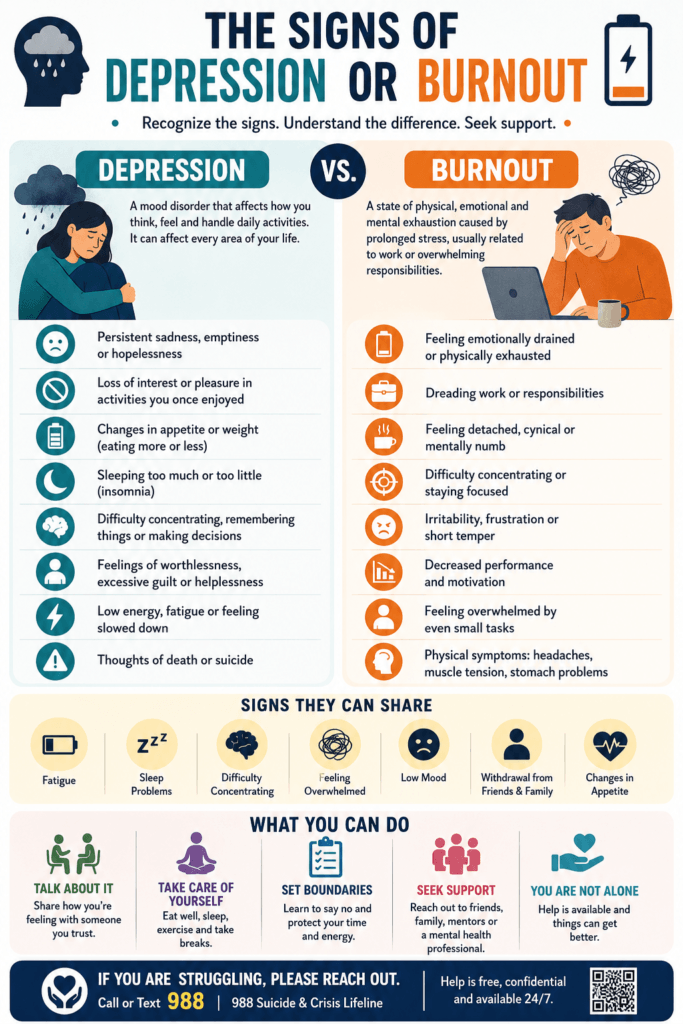
Depression and burnout share many symptoms, making them difficult to distinguish. Both can cause fatigue, lack of motivation, poor concentration, irritability, and reduced productivity. However, while burnout is primarily related to prolonged stress from work, caregiving, or overwhelming responsibilities, depression is a medical condition that affects nearly every aspect of a person’s life. Recognizing the differences is important because treatment approaches may differ, although both benefit from early intervention and support.
What Is Burnout?
Burnout is a state of emotional, physical, and mental exhaustion caused by chronic, unmanaged stress. It commonly occurs in healthcare workers, first responders, teachers, caregivers, students, and individuals balancing multiple responsibilities. Burnout often develops gradually and may improve when stressors are reduced and healthy recovery strategies are implemented.
Common Signs of Burnout
- Feeling emotionally drained or exhausted most days
- Dreading work or daily responsibilities
- Loss of motivation or enthusiasm for activities once enjoyed at work
- Feeling detached, cynical, or emotionally numb
- Difficulty concentrating or making decisions
- Increased irritability or frustration
- Frequent headaches, muscle tension, or stomach problems
- Trouble sleeping despite feeling exhausted
- Reduced productivity despite working harder
- Feeling overwhelmed by even small tasks
What Is Depression?
Depression is a mood disorder that affects thoughts, emotions, physical health, and behavior. Unlike burnout, depression extends beyond work or specific stressors and often persists even during vacations or time away from responsibilities. Depression can develop from biological, psychological, environmental, or genetic factors and usually requires professional evaluation.
Common Signs of Depression
- Persistent sadness or feelings of emptiness
- Loss of interest or pleasure in activities previously enjoyed
- Feeling hopeless or worthless
- Excessive guilt or self-blame
- Significant fatigue or lack of energy
- Sleeping too much or experiencing insomnia
- Changes in appetite or weight
- Difficulty concentrating or remembering information
- Moving unusually slowly or feeling restless
- Frequent crying spells
- Social withdrawal from family and friends
- Thoughts of death, self-harm, or suicide
Burnout vs. Depression
| Burnout | Depression |
|---|---|
| Usually linked to work or caregiving stress | Affects every area of life |
| Symptoms improve when stress decreases | Symptoms often persist regardless of circumstances |
| Emotional exhaustion is the primary feature | Persistent sadness and hopelessness are prominent |
| May feel frustrated or detached | May feel worthless or guilty |
| Motivation often returns with adequate rest | Motivation often remains low despite rest |
| Usually reversible with stress management | Often requires professional treatment |
Physical Warning Signs
Both conditions may produce physical symptoms, including:
- Constant fatigue
- Frequent illnesses due to reduced immune function
- Headaches
- Digestive problems
- Muscle aches
- Increased blood pressure
- Sleep disturbances
- Low energy throughout the day
Emotional Warning Signs
Watch for emotional changes such as:
- Increased irritability
- Feeling overwhelmed
- Emotional numbness
- Loss of compassion or empathy
- Persistent anxiety
- Hopelessness
- Feeling disconnected from others
- Low self-esteem
Behavioral Warning Signs
Behavioral changes often include:
- Social isolation
- Increased alcohol or substance use
- Declining work or school performance
- Missing deadlines or appointments
- Avoiding responsibilities
- Poor self-care
- Increased procrastination
- Loss of interest in hobbies
Risk Factors
Several factors increase the risk of developing burnout or depression:
- Chronic workplace stress
- Caregiver responsibilities
- Trauma or adverse life experiences
- Financial stress
- Lack of sleep
- Poor work-life balance
- Chronic medical illness
- Substance use disorders
- Limited social support
- Family history of depression
When to Seek Professional Help
Seek evaluation by a healthcare provider or mental health professional if symptoms:
- Last longer than two weeks
- Interfere with work, school, or relationships
- Continue despite taking time off or reducing stress
- Include severe anxiety or panic attacks
- Lead to increased substance use
- Cause feelings of hopelessness or worthlessness
- Include thoughts of self-harm or suicide
Early treatment often leads to better outcomes and may include psychotherapy, lifestyle changes, stress reduction, medications when appropriate, and strengthening social support.
Strategies for Recovery
Recovery often involves multiple approaches:
- Prioritize adequate sleep and consistent routines.
- Engage in regular physical activity.
- Maintain balanced nutrition and hydration.
- Set healthy boundaries and learn to say no when overwhelmed.
- Practice mindfulness, relaxation techniques, or meditation.
- Stay connected with supportive family and friends.
- Participate in counseling or therapy if symptoms persist.
- Reduce alcohol and drug use, which can worsen mood symptoms.
- Schedule enjoyable activities and regular breaks.
- Seek professional evaluation rather than trying to manage severe symptoms alone.
A Note About Suicide Risk
Depression can increase the risk of suicide, particularly when accompanied by feelings of hopelessness, isolation, or substance use. Any thoughts of self-harm or suicide should be taken seriously. Immediate help is available through emergency services or by contacting the 988 Suicide & Crisis Lifeline in the United States by calling or texting 988.
Conclusion
Burnout and depression can look similar, but they are not the same condition. Burnout is generally related to prolonged stress and may improve when the underlying stressors are addressed. Depression is a medical illness that affects mood, thinking, physical health, and daily functioning across all areas of life. Recognizing early warning signs, seeking support, and obtaining professional care when needed can prevent symptoms from worsening and promote long-term recovery. Early intervention benefits not only the individual but also their family, workplace, and overall quality of life.
Self-Management Strategies to Understand the Signs of Depression or Burnout
Recognizing the early signs of depression or burnout is an important step toward protecting your mental and physical well-being. Self-management does not replace professional treatment, but it can help you become more aware of changes in your mood, energy, and daily functioning. By monitoring symptoms, practicing healthy habits, and seeking support early, you can often prevent symptoms from worsening.
1. Monitor Your Mood Daily
Keep a journal or use a mental health app to track your emotions, energy level, sleep, appetite, and stress. Look for patterns over several weeks rather than focusing on a single difficult day. Persistent sadness, irritability, or emotional exhaustion may signal that additional support is needed.
Try this:
- Rate your mood from 1 to 10 each day.
- Record stressful events and how you responded.
- Note activities that improve or worsen your mood.
2. Prioritize Quality Sleep
Poor sleep contributes to both burnout and depression. Establish a consistent bedtime and wake-up schedule, limit screen time before bed, and create a relaxing nighttime routine. Most adults benefit from 7–9 hours of sleep each night.
Healthy sleep habits include:
- Going to bed at the same time every night.
- Avoiding caffeine late in the day.
- Keeping the bedroom cool, dark, and quiet.
- Limiting naps to 20–30 minutes.
3. Maintain Regular Physical Activity
Exercise improves mood by increasing endorphins and reducing stress hormones. Even moderate activity can help reduce symptoms of anxiety, depression, and emotional exhaustion.
Aim for:
- At least 150 minutes of moderate exercise each week.
- Walking, swimming, cycling, yoga, or strength training.
- Stretching or short movement breaks during stressful workdays.
4. Practice Stress Management Techniques
Learning healthy ways to manage stress can reduce the risk of burnout and improve emotional resilience.
Helpful techniques include:
- Deep breathing exercises.
- Mindfulness meditation.
- Progressive muscle relaxation.
- Prayer or spiritual practices.
- Guided imagery.
- Journaling.
- Listening to calming music.
Even five to ten minutes of relaxation each day can make a difference.
5. Establish Healthy Boundaries
Burnout often develops when people consistently ignore their own needs. Learn to recognize your limits and avoid taking on more responsibilities than you can reasonably manage.
Healthy boundaries include:
- Saying “no” when necessary.
- Taking scheduled breaks.
- Using vacation time.
- Avoiding excessive overtime.
- Protecting personal time for rest and family.
6. Maintain Healthy Nutrition
A balanced diet supports both brain and body health. Skipping meals, consuming excessive sugar, or relying heavily on caffeine can worsen fatigue and mood changes.
Focus on:
- Fruits and vegetables.
- Whole grains.
- Lean proteins.
- Healthy fats.
- Drinking enough water throughout the day.
7. Stay Connected With Others
Isolation can worsen depression and burnout. Maintain regular contact with supportive friends, family members, coworkers, or peer support groups.
Ways to stay connected:
- Schedule regular phone calls.
- Meet friends for coffee or walks.
- Join community organizations.
- Participate in faith communities or volunteer work.
8. Continue Activities You Enjoy
Loss of interest in enjoyable activities is often an early warning sign of depression. Make time for hobbies even if motivation is low.
Examples include:
- Reading.
- Gardening.
- Painting.
- Music.
- Cooking.
- Spending time outdoors.
- Playing with pets.
Pleasant activities help restore emotional balance.
9. Recognize Early Warning Signs
Become familiar with your personal symptoms before they become overwhelming.
Watch for:
- Constant fatigue.
- Irritability.
- Difficulty concentrating.
- Feeling emotionally numb.
- Loss of motivation.
- Increased absenteeism.
- Persistent sadness.
- Sleep changes.
- Appetite changes.
- Feeling overwhelmed by simple tasks.
Early recognition allows for earlier intervention.
10. Reduce Alcohol and Substance Use
Some individuals attempt to manage stress or emotional pain with alcohol or drugs. Although they may provide temporary relief, they often worsen depression, anxiety, sleep quality, and overall functioning.
Instead:
- Practice healthy coping skills.
- Seek counseling when stress becomes difficult to manage.
- Reach out to trusted support people.
11. Schedule Regular Mental Health Check-Ins
Ask yourself these questions each week:
- Am I enjoying activities I usually like?
- Have I felt sad or emotionally exhausted most days?
- Am I sleeping well?
- Do I feel hopeful about the future?
- Have my relationships changed?
- Am I relying on unhealthy coping behaviors?
- Do I still feel fulfilled by my work or responsibilities?
Honest self-reflection helps identify problems early.
12. Seek Professional Help Early
If symptoms last more than two weeks, interfere with daily functioning, or continue despite self-care efforts, speak with a healthcare provider or mental health professional. Early treatment often leads to faster recovery and may include counseling, stress management strategies, lifestyle changes, or medication when appropriate.
Seek immediate emergency care if you experience thoughts of self-harm or suicide.
Building Long-Term Emotional Resilience
Developing resilience helps protect against both depression and burnout. Long-term emotional wellness includes maintaining healthy routines, nurturing meaningful relationships, practicing gratitude, setting realistic expectations, accepting that setbacks are part of life, and asking for help when needed. Self-management is not about handling everything alone—it is about recognizing when you need additional support and taking action before symptoms become overwhelming. Small, consistent habits practiced each day can significantly improve emotional health and overall quality of life.
Family Support Strategies to Understand the Signs of Depression or Burnout
Family members often notice changes in mood, behavior, and daily functioning before the individual recognizes them. Providing compassionate, nonjudgmental support can make a significant difference in helping a loved one identify whether they may be experiencing depression or burnout. While families cannot diagnose these conditions, they can encourage healthy habits, promote open communication, and help connect their loved one with professional care when needed.
1. Learn the Difference Between Depression and Burnout
Educate yourself about the symptoms of both conditions. Burnout is usually related to prolonged stress from work, caregiving, or other responsibilities, while depression affects many aspects of life, including emotions, physical health, relationships, and daily functioning. Understanding these differences allows family members to respond with empathy rather than criticism.
2. Recognize Early Warning Signs
Pay attention to gradual changes that may indicate your loved one is struggling.
Common warning signs include:
- Persistent sadness or hopelessness
- Constant fatigue despite adequate rest
- Irritability or frequent frustration
- Loss of interest in hobbies or family activities
- Social withdrawal
- Difficulty concentrating
- Changes in appetite or weight
- Sleeping too much or too little
- Declining work or school performance
- Increased alcohol or substance use
- Feelings of worthlessness or excessive guilt
Recognizing these changes early allows families to encourage support before symptoms become more severe.
3. Encourage Open and Honest Communication
Create a safe environment where your loved one feels comfortable discussing their emotions without fear of judgment.
Helpful conversation starters include:
- “I’ve noticed you seem more exhausted lately. How are you feeling?”
- “You don’t seem like yourself recently. Is something bothering you?”
- “I’m here to listen whenever you’re ready to talk.”
- “You don’t have to go through this alone.”
Listen more than you speak, avoid interrupting, and validate their feelings rather than trying to solve the problem immediately.
4. Avoid Judgment or Criticism
Depression and burnout are not signs of laziness, weakness, or lack of motivation. Avoid statements that minimize their experience, such as:
- “Just think positive.”
- “Everyone gets stressed.”
- “You just need to work harder.”
- “Snap out of it.”
Instead, offer reassurance and understanding.
Supportive responses include:
- “I’m sorry you’re going through this.”
- “Thank you for telling me.”
- “We’ll figure this out together.”
- “I’m here to support you.”
5. Encourage Healthy Daily Routines
Families can gently support healthy habits that improve emotional well-being.
Encourage:
- Regular sleep schedules
- Balanced meals
- Physical activity
- Time outdoors
- Relaxation techniques
- Breaks from work or caregiving responsibilities
- Participation in enjoyable hobbies
Join your loved one in these activities whenever possible, as shared experiences can provide motivation and reduce feelings of isolation.
6. Help Reduce Stress at Home
When someone is experiencing burnout or depression, everyday responsibilities may feel overwhelming. Family members can temporarily ease the burden by:
- Sharing household chores
- Helping with childcare
- Preparing healthy meals
- Running errands
- Assisting with appointments
- Encouraging regular rest
Reducing stress allows more energy for recovery.
7. Encourage Professional Help
If symptoms persist for more than two weeks, worsen over time, or interfere with daily functioning, encourage your loved one to seek professional evaluation.
Offer practical support by:
- Helping locate a healthcare provider or therapist
- Assisting with scheduling appointments
- Providing transportation if needed
- Offering childcare during appointments
- Attending appointments if your loved one requests support
Professional treatment may include counseling, stress management strategies, medication, or a combination of approaches.
8. Support Without Taking Over
Offer assistance while respecting your loved one’s independence.
Instead of doing everything for them, ask:
- “What would be most helpful right now?”
- “How can I support you today?”
- “Would you like company, or would you prefer some quiet time?”
This approach empowers the individual while ensuring they feel supported.
9. Watch for Signs of Crisis
Take immediate action if your loved one:
- Talks about wanting to die
- Expresses hopelessness or feeling like a burden
- Gives away important possessions
- Withdraws completely from family and friends
- Begins reckless or dangerous behavior
- Talks about self-harm or suicide
Never ignore these warning signs. Stay with the person if you believe they are in immediate danger and seek emergency assistance, or contact the 988 Suicide & Crisis Lifeline in the United States by calling or texting 988.
10. Take Care of Yourself
Supporting someone with depression or burnout can be emotionally demanding. Family members should also prioritize their own well-being by:
- Maintaining healthy routines
- Seeking support from trusted friends or counselors
- Joining caregiver or family support groups
- Setting healthy boundaries
- Taking regular breaks to prevent caregiver burnout
A healthy caregiver is better equipped to provide effective, compassionate support.
Building a Supportive Home Environment
A positive home environment promotes healing and emotional resilience. Families can foster recovery by practicing patience, expressing appreciation, celebrating small improvements, encouraging healthy routines, and maintaining open communication. Recovery from depression or burnout often takes time, and progress may occur gradually. Consistent encouragement, understanding, and emotional support help reduce feelings of isolation and remind loved ones that they are valued, supported, and never alone in their journey toward better mental health.
Community Resource Strategies to Understand the Signs of Depression or Burnout
Recovering from depression or burnout often requires more than individual effort and family support. Community resources provide education, professional treatment, peer support, and practical assistance that can help individuals recognize symptoms early and receive appropriate care. Connecting with community services can reduce isolation, improve coping skills, and promote long-term emotional well-being.
1. Utilize Primary Care Providers
Primary care providers are often the first professionals to recognize symptoms of depression or burnout. They can evaluate physical and emotional symptoms, rule out medical conditions that may contribute to fatigue or mood changes, screen for depression and anxiety, and refer individuals to mental health specialists when needed.
Community clinics and family physicians also provide ongoing monitoring to ensure symptoms improve over time.
2. Access Mental Health Professionals
Licensed mental health professionals provide evidence-based treatments that help individuals understand and manage depression or burnout.
These professionals may include:
- Psychiatrists
- Psychologists
- Licensed professional counselors
- Clinical social workers
- Marriage and family therapists
- Psychiatric nurse practitioners
Treatment may involve cognitive behavioral therapy (CBT), interpersonal therapy, stress management, mindfulness-based approaches, medication when appropriate, or a combination of therapies.
3. Participate in Peer Support Groups
Peer support groups connect individuals with others who have experienced similar challenges. Sharing experiences in a safe environment reduces feelings of loneliness and provides practical coping strategies.
Benefits include:
- Emotional encouragement
- Reduced stigma
- Increased hope
- Shared problem-solving
- Improved confidence in recovery
- Accountability for healthy habits
Support groups may be available in person or online through hospitals, community mental health centers, nonprofit organizations, or faith-based groups.
4. Utilize Employee Assistance Programs (EAPs)
Many employers offer Employee Assistance Programs that provide confidential mental health services at no cost to employees.
Services often include:
- Short-term counseling
- Stress management coaching
- Financial counseling
- Legal consultation
- Referrals for ongoing mental health care
- Work-life balance resources
Seeking help through an EAP can be an effective first step for individuals experiencing work-related burnout.
5. Take Advantage of Workplace Wellness Programs
Many workplaces offer wellness initiatives that support mental health.
Examples include:
- Stress reduction workshops
- Mindfulness classes
- Mental health education
- Flexible scheduling
- Employee wellness coaching
- Physical fitness programs
- Burnout prevention training
Participating in these programs may help reduce stress before it progresses to more serious mental health concerns.
6. Explore Community Recreation Programs
Regular physical activity and social engagement improve emotional well-being and reduce symptoms of depression and burnout.
Community resources may include:
- Walking clubs
- Fitness centers
- Yoga classes
- Parks and recreation programs
- Community gardening
- Art and music classes
- Volunteer opportunities
These activities promote both physical health and meaningful social connections.
7. Connect with Faith-Based Organizations
For many individuals, faith communities provide emotional, spiritual, and practical support during difficult times.
Faith organizations may offer:
- Pastoral counseling
- Support groups
- Volunteer assistance
- Meal delivery
- Prayer groups
- Community outreach programs
- Social activities that reduce isolation
Participation can strengthen resilience while complementing professional mental health treatment.
8. Utilize Educational Resources
Reliable educational materials help individuals and families better understand depression and burnout.
Community education may include:
- Public health seminars
- Mental health awareness campaigns
- Hospital education programs
- College wellness centers
- Public libraries
- Community health fairs
- Online educational webinars
Accurate information reduces stigma and encourages early intervention.
9. Seek Financial and Social Service Assistance
Financial strain, unemployment, housing instability, and caregiving responsibilities can contribute to chronic stress and depression.
Community agencies may provide assistance with:
- Housing support
- Food assistance
- Utility assistance
- Employment services
- Caregiver support
- Transportation
- Childcare resources
Reducing external stressors often improves emotional health and overall functioning.
10. Use Crisis Resources When Needed
Immediate help should be sought if someone experiences:
- Thoughts of self-harm
- Suicidal thoughts
- Severe emotional distress
- Inability to care for themselves
- Psychosis or loss of touch with reality
In the United States, individuals can contact the 988 Suicide & Crisis Lifeline by calling or texting 988 for free, confidential support available 24 hours a day. In life-threatening emergencies, call 911 or go to the nearest emergency department.
11. Encourage Mental Health Screening Events
Many communities offer free or low-cost mental health screenings through hospitals, schools, universities, employers, and nonprofit organizations.
These screenings can help individuals:
- Recognize early symptoms
- Identify risk factors
- Learn about available treatments
- Receive referrals for professional evaluation
- Begin care before symptoms worsen
Early screening often leads to better treatment outcomes.
12. Build a Personal Community Support Network
Recovery is strengthened by maintaining meaningful relationships with supportive individuals.
A healthy support network may include:
- Family members
- Friends
- Coworkers
- Healthcare providers
- Therapists
- Peer support groups
- Faith leaders
- Mentors
- Community volunteers
Having multiple sources of support reduces isolation and increases resilience during stressful periods.
Strengthening Community Awareness
Communities play an essential role in preventing depression and burnout by promoting mental health education, reducing stigma, increasing access to care, and encouraging early intervention. Schools, workplaces, healthcare systems, nonprofit organizations, and faith communities all contribute to creating environments where individuals feel safe asking for help. By using available community resources, people experiencing depression or burnout can gain professional guidance, practical support, and meaningful social connections that promote recovery and improve overall quality of life.
Frequently Asked Questions
Here are some common questions:
1. What is the difference between depression and burnout?
Answer:
Burnout is a state of emotional, physical, and mental exhaustion caused by prolonged or unmanaged stress, often related to work, caregiving, or overwhelming responsibilities. Depression is a medical condition that affects mood, thinking, behavior, and physical health across all areas of life. While burnout may improve with rest and stress reduction, depression often requires professional evaluation and treatment.
2. Can burnout turn into depression?
Answer:
Yes. If burnout is not recognized and managed, ongoing stress may contribute to the development of depression in some individuals. Persistent emotional exhaustion, hopelessness, and loss of interest in life should be evaluated by a healthcare professional.
3. What are the earliest warning signs of depression?
Answer:
Early signs may include:
- Persistent sadness
- Loss of interest in favorite activities
- Fatigue
- Difficulty concentrating
- Changes in sleep or appetite
- Irritability
- Feelings of guilt or worthlessness
- Social withdrawal
Symptoms lasting more than two weeks should be discussed with a healthcare provider.
4. What are the early signs of burnout?
Answer:
Common early signs include:
- Feeling emotionally exhausted
- Dreading work or daily responsibilities
- Reduced motivation
- Difficulty concentrating
- Irritability
- Frequent headaches
- Feeling overwhelmed
- Declining work performance
5. Can someone experience both depression and burnout at the same time?
Answer:
Yes. Burnout and depression can occur together because prolonged stress increases the risk of developing depression. A mental health professional can determine whether one or both conditions are present and recommend appropriate treatment.
6. How long do symptoms need to last before seeking help?
Answer:
If symptoms continue for more than two weeks, interfere with daily life, or continue despite rest and stress reduction, it is important to seek professional evaluation. Immediate help should be sought if suicidal thoughts develop.
7. Does everyone with burnout dislike their job?
Answer:
No. Many people enjoy their careers but become overwhelmed by excessive workloads, long hours, emotional demands, staffing shortages, or poor work-life balance. Burnout reflects chronic stress rather than a lack of passion.
8. Can depression cause physical symptoms?
Answer:
Yes. Depression commonly causes physical symptoms such as:
- Chronic fatigue
- Headaches
- Muscle aches
- Digestive problems
- Sleep disturbances
- Appetite changes
- Low energy
Sometimes physical symptoms appear before emotional symptoms become obvious.
9. Is feeling tired always a sign of depression or burnout?
Answer:
No. Fatigue can result from many medical conditions, including thyroid disorders, anemia, infections, sleep disorders, or medication side effects. A healthcare provider can determine the underlying cause.
10. How can family members recognize that someone may be struggling?
Answer:
Family members may notice:
- Increased isolation
- Mood changes
- Loss of interest in hobbies
- Declining work or school performance
- Irritability
- Sleep changes
- Poor self-care
- Frequent expressions of hopelessness
Compassionate conversations and encouragement to seek help can make a significant difference.
11. Can exercise help with depression or burnout?
Answer:
Regular physical activity can improve mood, reduce stress, increase energy, and promote better sleep. While exercise is an important part of recovery, it should complement—not replace—professional treatment for moderate or severe depression.
12. What lifestyle habits help prevent burnout?
Answer:
Helpful habits include:
- Maintaining healthy work-life boundaries
- Getting enough sleep
- Exercising regularly
- Eating a balanced diet
- Taking regular breaks
- Practicing stress management
- Staying connected with supportive family and friends
- Taking vacations and personal time when possible
13. Can children and teenagers experience depression or burnout?
Answer:
Yes. Academic pressure, social challenges, family stress, sports, and extracurricular demands can contribute to burnout, while depression can occur at any age. Symptoms may include irritability, withdrawal, declining grades, changes in sleep, or loss of interest in activities.
14. Is depression a sign of weakness?
Answer:
No. Depression is a medical condition influenced by biological, psychological, environmental, and genetic factors. It is not caused by a lack of willpower or personal weakness, and effective treatments are available.
15. When should someone seek immediate emergency help?
Answer:
Seek emergency assistance immediately if someone:
- Talks about suicide or self-harm
- Has a plan to end their life
- Expresses hopelessness or feeling like a burden
- Becomes unable to care for themselves
- Experiences hallucinations or severe confusion
In the United States, call or text 988 to reach the 988 Suicide & Crisis Lifeline, or call 911 if there is an immediate danger.
16. Can burnout improve without medication?
Answer:
Often, yes. Burnout may improve through stress reduction, healthy boundaries, adequate sleep, exercise, counseling, time away from work, and improved work-life balance. However, if symptoms persist or depression develops, professional treatment may be necessary.
17. How is depression treated?
Answer:
Treatment depends on the individual’s needs and may include:
- Psychotherapy (such as Cognitive Behavioral Therapy)
- Lifestyle changes
- Stress management techniques
- Support groups
- Antidepressant medications, when appropriate
- Treatment of any co-occurring medical or mental health conditions
Many people benefit from a combination of these approaches.
18. What is the most important message about depression and burnout?
Answer:
Both depression and burnout are real, treatable conditions. Recognizing the warning signs early, practicing healthy self-care, maintaining supportive relationships, and seeking professional help when symptoms persist can lead to recovery. No one should feel ashamed to ask for help, and early intervention often results in better mental health and an improved quality of life.
Conclusion
Understanding the signs of depression and burnout empowers individuals, families, employers, and communities to recognize when someone may be struggling and to respond with compassion and appropriate support. While burnout may improve through stress reduction, healthy boundaries, and lifestyle changes, depression often requires professional evaluation and evidence-based treatment. Neither condition should be ignored or dismissed as a personal weakness, as both can have serious consequences if left untreated. By promoting mental health education, encouraging open conversations, practicing self-care, and seeking professional help when needed, individuals can improve their emotional resilience and overall quality of life. Early recognition and timely intervention are key to recovery, helping people restore hope, rebuild healthy relationships, and achieve lasting mental wellness.
Video: You Might Have Depression and Not Know It #MentalHealthAwareness #Depression