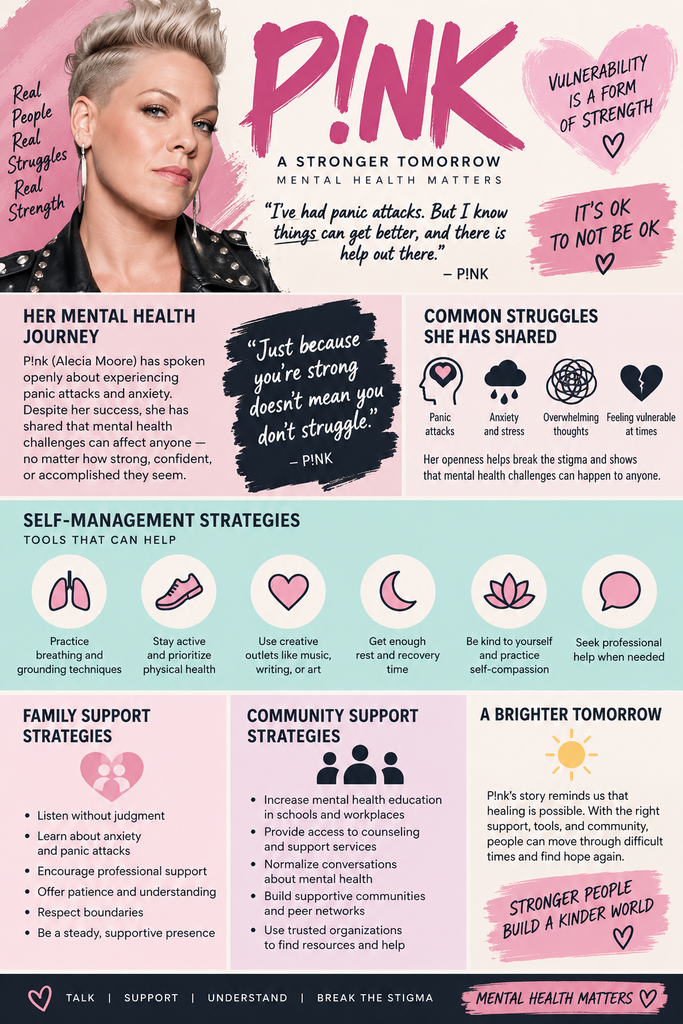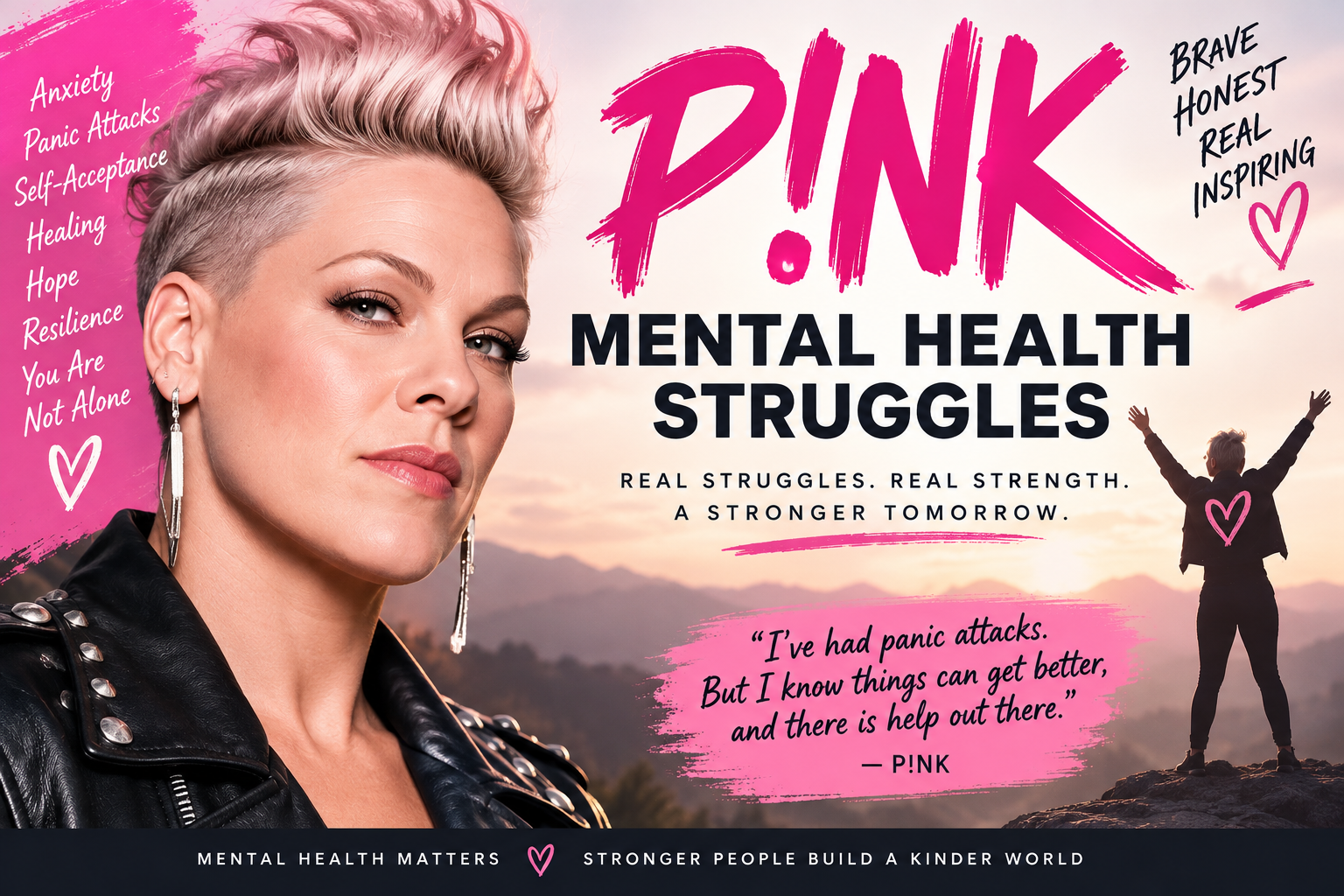
P!nk, born Alecia Moore, is known for her powerful voice, fearless performances, and outspoken personality. Behind that confidence, however, she has also spoken publicly about experiencing mental health challenges, including panic attacks. By sharing her experiences, P!nk helps challenge the assumption that successful, confident people are protected from emotional struggles. In a Child Mind Institute mental health campaign, she offered a hopeful message that difficult periods can improve and that meaningful relationships and self-acceptance can be part of healing.
Understanding P!nk’s Mental Health Struggles
P!nk’s openness about panic attacks is particularly important because panic symptoms can be frightening and sometimes misunderstood. A panic attack can involve intense fear along with physical sensations such as a racing heartbeat, trembling, shortness of breath, dizziness, or a feeling of losing control. Experiencing these symptoms does not mean a person lacks strength or resilience.
Her story also illustrates an important mental health principle: outward confidence does not necessarily reflect what someone is experiencing internally. Fame, professional success, financial security, or a strong public personality cannot eliminate vulnerability to anxiety or emotional distress.
Speaking openly about mental health can also reduce shame. The Child Mind Institute has featured P!nk as part of its efforts to encourage people—particularly young people—to talk about emotional difficulties and recognize that asking for support is a healthy response rather than a weakness.
Self-Management Strategies
Although everyone’s mental health needs are different, P!nk’s message of resilience provides an opportunity to discuss practical strategies for managing anxiety and emotional stress.
- Recognize personal triggers. Keeping track of situations, thoughts, physical sensations, sleep patterns, and stressors surrounding anxiety can help identify patterns.
- Practice grounding techniques. Slow breathing, mindfulness, stretching, exercise, or focusing attention on the immediate environment may help reduce escalating anxiety.
- Protect sleep and recovery time. Chronic exhaustion can make emotional regulation more difficult.
- Use healthy emotional outlets. Music, writing, exercise, art, and other creative activities can provide constructive ways of processing difficult emotions.
- Practice self-compassion. Mental health symptoms should not be treated as personal failures. Recovery often involves learning to respond to yourself with the same patience you would offer someone you care about.
- Seek professional help when needed. Recurrent panic attacks, persistent anxiety, depression, or symptoms interfering with daily functioning deserve evaluation by a qualified healthcare or mental health professional.
Family Support Strategies
Family members and close friends can play an important role, but supporting someone does not mean trying to become their therapist.
- Listen without immediately judging, criticizing, or trying to solve every problem.
- Ask what kind of support would actually be helpful.
- Learn about panic attacks, anxiety, and other mental health conditions.
- Avoid statements such as “just calm down” or “you have nothing to worry about.”
- Encourage professional care when symptoms become persistent or disruptive.
- Respect healthy boundaries and personal space.
- During periods of severe distress, take statements about hopelessness, self-harm, or suicide seriously and seek appropriate help.
Support is often most effective when it combines compassion with respect for the individual’s independence.
Community Support Strategies
Mental health recovery does not have to happen in isolation. Communities can make it easier for people to seek help before symptoms become overwhelming.
- Healthcare providers can routinely screen for anxiety, depression, substance use, and other mental health concerns.
- Schools and workplaces can provide mental health education and accessible counseling resources.
- Community organizations can offer support groups, peer programs, wellness activities, and educational workshops.
- Public figures who discuss mental health responsibly can help normalize conversations about treatment and recovery.
- Families can use reputable mental health organizations to learn how to recognize symptoms and locate appropriate professional services.
Campaigns such as the Child Mind Institute’s mental health initiatives emphasize that talking about emotional difficulties can help people feel less isolated and make it easier to seek support.
What We Can Learn From P!nk’s Journey
P!nk’s story reminds us that strength and mental health struggles can coexist. A person can be successful, independent, creative, and resilient while still experiencing panic, anxiety, or periods when additional support is needed.
Her public discussion of panic attacks also reinforces a broader message: mental health should be discussed with the same openness and compassion as physical health. Managing emotional well-being may involve recognizing symptoms, developing coping skills, maintaining supportive relationships, and seeking professional treatment when necessary.
Most importantly, mental health recovery should not be defined as never struggling again. It can mean learning how to recognize difficult moments, knowing when to ask for help, and continuing to build a meaningful life despite them. P!nk’s message that better moments can still be ahead offers a simple but valuable reminder that emotional distress does not have to define the rest of someone’s story.
Frequently Asked Questions
Here are some common questions:
1. Has P!nk spoken publicly about her mental health?
Yes. P!nk, whose birth name is Alecia Moore, has publicly discussed experiencing panic attacks and emotional struggles. Her openness has helped reinforce the message that mental health challenges can affect anyone, regardless of confidence, talent, or success.
2. What mental health struggles has P!nk discussed?
P!nk has specifically spoken about experiencing panic attacks. She has also discussed difficult periods in her life and the importance of recognizing that emotional struggles can improve with time and appropriate support.
3. What is a panic attack?
A panic attack is a sudden episode of intense fear or discomfort. Symptoms may include a racing heartbeat, sweating, trembling, dizziness, shortness of breath, chest discomfort, nausea, or a feeling of losing control. Panic attacks can feel frightening even when there is no immediate danger.
4. Does experiencing panic attacks mean someone has panic disorder?
No. A person can experience one or more panic attacks without having panic disorder. Panic disorder involves recurrent unexpected panic attacks along with ongoing concern or behavioral changes related to future attacks. A healthcare professional should make the diagnosis.
5. How has P!nk helped reduce mental health stigma?
By discussing her experiences publicly, P!nk helps challenge the idea that mental health difficulties should be hidden. When well-known people speak responsibly about mental health, it can encourage others to recognize their own symptoms and seek help.
6. What can people learn from P!nk’s mental health journey?
One important lesson is that strength and vulnerability can coexist. Someone may appear confident and successful while experiencing significant emotional distress privately. Asking for support is not inconsistent with being strong or independent.
7. What self-management strategies can help with anxiety and panic symptoms?
Helpful strategies may include identifying triggers, maintaining a regular sleep schedule, exercising, limiting excessive caffeine and alcohol intake, practicing slow breathing or grounding techniques, using creative outlets, and developing healthy stress-management routines. Persistent or worsening symptoms should be discussed with a healthcare professional.
8. How can family members support someone experiencing panic attacks?
Family members can listen without judgment, remain calm, learn about anxiety and panic symptoms, and ask the individual what type of support is helpful. They can also encourage professional care without criticizing, minimizing, or trying to control the person’s recovery.
9. What community resources can help people experiencing mental health difficulties?
Resources may include primary care clinicians, therapists, psychiatrists, community mental health centers, peer-support programs, school or workplace counseling services, and reputable mental health organizations. Treatment can be individualized according to the person’s symptoms and needs.
10. When should someone seek professional help for panic attacks?
Professional evaluation is appropriate when panic attacks recur, cause significant distress, interfere with work or relationships, lead to avoidance behaviors, or occur alongside depression, substance misuse, or other concerning symptoms. New chest pain, severe breathing difficulty, fainting, or other potentially serious physical symptoms also require appropriate medical assessment.
11. What is the overall message of P!nk’s story?
P!nk’s openness demonstrates that mental health struggles do not erase a person’s strength or accomplishments. Recovery can involve self-awareness, healthy coping strategies, supportive relationships, professional treatment when necessary, and the understanding that difficult periods do not have to define someone’s future.
12. Why is P!nk’s story important for mental health awareness?
Her visibility can help normalize conversations about panic attacks and emotional well-being. The broader lesson is simple: people should be able to discuss mental health without shame and have access to compassionate, evidence-based support when they need it.
Video: P!nk’s Mental Health Journey