Streaming services have made entertainment available almost anywhere, at any time. Watching several episodes of a favorite show occasionally may simply be a relaxing way to spend an evening. The problem begins when binge-watching becomes difficult to control and repeatedly interferes with sleep, responsibilities, relationships, exercise, or emotional well-being.
Breaking the cycle does not necessarily mean giving up television or streaming completely. Instead, the goal is to understand what drives excessive viewing, recognize unhealthy patterns, and develop healthier ways to manage stress, boredom, loneliness, and other triggers.
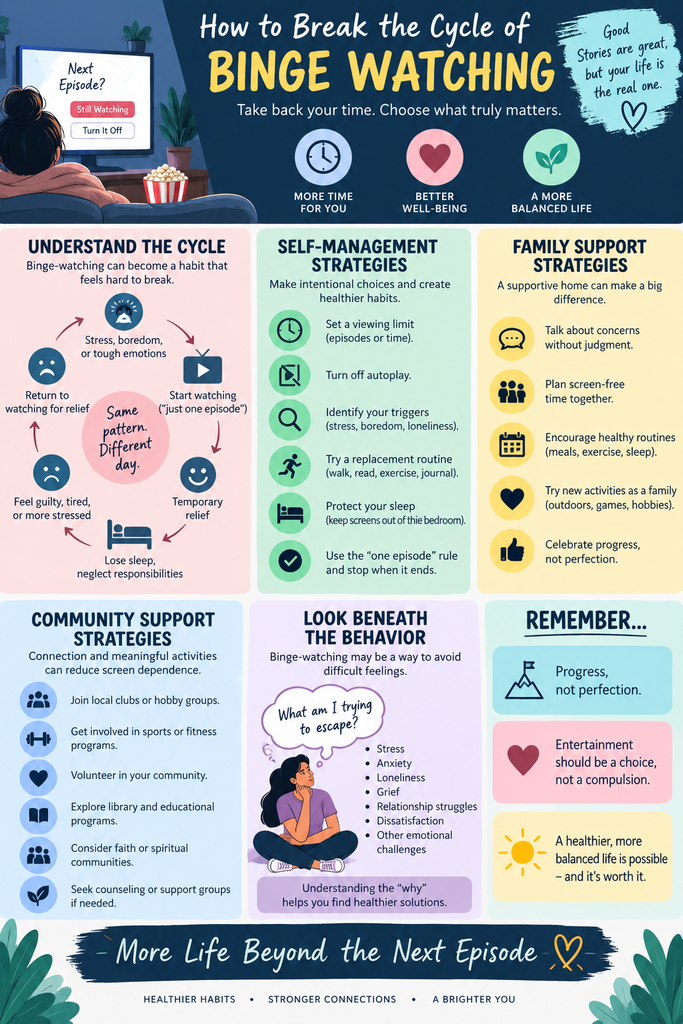
Understanding the Binge-Watching Cycle
Binge-watching can become a behavioral habit reinforced by immediate rewards. An exciting episode provides stimulation and temporary escape, while cliffhangers and automatic episode playback make continuing especially easy. Over time, a person may begin to reach for entertainment automatically whenever uncomfortable emotions arise.
A common cycle may look like this:
Stress, boredom, loneliness, or anxiety → urge to escape → start watching → temporary relief → continue watching longer than planned → lose sleep or neglect responsibilities → experience guilt, fatigue, or additional stress → return to watching for relief.
The goal is to interrupt this cycle before watching becomes the automatic response to every uncomfortable feeling.
Recognizing When Binge-Watching Is Becoming a Problem
The number of episodes watched is not the only issue. Loss of control and negative consequences are more important warning signs.
Possible signs include:
- Frequently watching much longer than intended
- Staying awake late despite needing to work or attend school
- Repeatedly saying, “Just one more episode”
- Losing interest in hobbies or social activities
- Avoiding responsibilities to continue watching
- Eating mindlessly throughout viewing sessions
- Feeling restless or irritable when unable to watch
- Using television primarily to avoid difficult emotions
- Trying unsuccessfully to reduce screen time
- Feeling guilty after binge-watching but repeating the behavior
One or two of these behaviors do not automatically mean someone has an addiction. However, repeated loss of control deserves attention.
Self-Management Strategies
Changing binge-watching habits starts by making viewing intentional rather than automatic. Instead of relying only on willpower, change the environment and routine that support the behavior.
Set a Viewing Limit
Decide how many episodes or how much time you will watch before starting. A timer can serve as an external reminder when the planned viewing period has ended.
Turn Off Autoplay
Autoplay removes the natural stopping point between episodes. Turning it off creates a moment in which you must consciously decide whether to continue.
Identify Your Triggers
Keep track of what happens immediately before a binge. Ask yourself:
- Was I stressed?
- Was I lonely?
- Was I procrastinating?
- Was I bored?
- Was I trying not to think about something upsetting?
Understanding the trigger helps identify what you actually need.
Create a Replacement Routine
If watching television has become the default response to discomfort, prepare alternative activities.
Consider:
- Taking a short walk
- Calling or texting someone
- Reading
- Listening to music or a podcast
- Exercising
- Journaling
- Working on a hobby
- Practicing relaxation or mindfulness
- Completing one small household task
The replacement activity does not need to be complicated. It simply needs to interrupt the automatic pattern.
Protect Your Sleep
Avoid turning the bedroom into a streaming center when possible. Establish a consistent stopping time and give yourself time away from screens before bed. Sleep deprivation can worsen concentration, mood, and decision-making, making unhealthy habits harder to change.
Use the “One Episode” Rule
Choose one episode and stop when it ends. Stand up, drink water, stretch, or walk into another room. Even a short interruption can help break the automatic transition into another episode.
Family Support Strategies
Family members may notice excessive screen use before the person recognizes how disruptive it has become. Support works best when it focuses on behavior and consequences rather than criticism.
Families can:
- Discuss concerns without using labels such as “lazy” or “addicted”
- Ask what the person gets emotionally from binge-watching
- Establish reasonable screen-free family periods
- Plan activities that do not involve television
- Encourage regular meals, exercise, and sleep routines
- Avoid repeatedly arguing while the person is watching
- Model balanced technology use themselves
- Celebrate improvements rather than demanding perfection
A helpful conversation might focus on observable consequences: “I’ve noticed you’re staying awake until 3 a.m. watching shows and struggling to get up for work. Is something making it difficult to stop?”
Community Support Strategies
Sometimes excessive binge-watching is connected to isolation. Building meaningful activities outside the home can reduce dependence on screens for entertainment and emotional escape.
Community support may include:
- Recreational sports or fitness programs
- Volunteer opportunities
- Faith or spiritual communities
- Libraries and educational programs
- Hobby or special-interest groups
- Community centers
- Social clubs
- Peer-support communities
- Counseling or behavioral health services
Community involvement creates structure, connection, purpose, and alternative sources of enjoyment.
Look Beneath the Behavior
For some people, binge-watching is less about television and more about what television helps them avoid. Excessive viewing may temporarily distract someone from stress, loneliness, grief, anxiety, depression, relationship difficulties, or dissatisfaction with everyday life.
This distinction matters. Simply removing the television does not resolve an underlying emotional problem.
Ask yourself: “What feeling, thought, responsibility, or situation am I trying to escape when I start watching?”
The answer can provide important clues about what needs attention.
When Professional Help May Be Useful
Consider speaking with a healthcare or mental health professional when excessive viewing repeatedly disrupts sleep, work, school, relationships, physical activity, or basic responsibilities, or when attempts to reduce viewing repeatedly fail.
Professional support may also be appropriate when binge-watching is being used to cope with significant depression, anxiety, trauma, loneliness, or another mental health concern.
Progress, Not Perfection
Breaking the binge-watching cycle does not require eliminating entertainment. A healthier goal is to learn to choose when to watch, rather than feeling compelled to continue.
Start with small changes: disable autoplay, establish a stopping time, identify emotional triggers, protect sleep, and replace some screen time with activities that provide connection or meaning.
Self-management helps restore control. Family support can provide encouragement and accountability. Community involvement provides alternatives to isolation and endless screen time.
Entertainment should be something you choose—not something that quietly takes control of your time. Breaking the cycle begins when you stop asking, “What’s the next episode?” and start asking, “What do I need right now?”
Frequently Asked Questions
Here are some common questions:
1. What is binge-watching?
Binge-watching generally means watching multiple episodes of a television or streaming series in one sitting. Occasional binge-watching is not necessarily harmful, but it can become problematic when it repeatedly interferes with sleep, relationships, work, exercise, or other responsibilities.
2. Why is binge-watching so difficult to stop?
Streaming platforms make continued viewing easy through autoplay, cliffhangers, personalized recommendations, and immediate access to the next episode. Watching may also provide temporary relief from boredom, stress, loneliness, or uncomfortable emotions.
3. Is binge-watching an addiction?
Binge-watching is not itself recognized as a standalone substance use disorder. However, some people can develop problematic or compulsive viewing patterns characterized by loss of control and continued behavior despite negative consequences.
4. What are signs that binge-watching is becoming unhealthy?
Warning signs can include regularly watching longer than planned, sacrificing sleep, neglecting responsibilities, withdrawing from other activities, repeatedly failing to cut back, and using television primarily to escape difficult emotions.
5. How can I stop after one episode?
Decide on your limit before starting, disable autoplay, set a timer, and create an activity you will do immediately afterward. Getting up and leaving the viewing area can also create a clear stopping point.
6. Can binge-watching affect sleep?
Yes. Staying up late can reduce total sleep time and disrupt a consistent bedtime routine. Exciting or emotionally intense content may also make it harder for some people to settle down afterward.
7. What emotional triggers can contribute to excessive binge-watching?
Common triggers may include stress, boredom, loneliness, anxiety, sadness, procrastination, and a desire to escape everyday problems. Identifying the trigger can make it easier to choose a healthier coping strategy.
8. What can I do instead of binge-watching?
Try activities that meet the need behind the urge, such as walking, exercising, reading, journaling, listening to music, calling a friend, pursuing a hobby, or spending time outdoors.
9. How can family members help?
Family members can express concerns without judgment, encourage screen-free activities, establish shared routines, model balanced technology habits, and recognize progress rather than criticizing setbacks.
10. How can community support help reduce excessive screen time?
Community activities provide opportunities for connection and meaningful engagement outside the home. Volunteer programs, recreational sports, libraries, classes, faith communities, clubs, and support groups can help replace some passive screen time with social interaction.
11. Should I completely stop watching television?
Not necessarily. For many people, the goal is moderation rather than complete avoidance. Entertainment can remain enjoyable when it fits into life without consistently replacing sleep, responsibilities, relationships, or healthy activities.
12. What should I do if I keep returning to binge-watching?
Instead of treating a setback as failure, examine what happened beforehand. Identifying the trigger, changing your environment, adjusting your viewing limits, and developing alternative coping strategies can help you respond differently next time.
13. When should I consider professional help?
Consider talking with a healthcare or mental health professional if viewing feels uncontrollable, repeatedly disrupts daily functioning, or is being used to cope with persistent depression, anxiety, grief, trauma, or significant loneliness.
14. What is the first step toward breaking the binge-watching cycle?
Start by tracking when, why, and how long you watch. Then make one manageable change, such as turning off autoplay, setting a one-episode limit, or establishing a firm bedtime.
15. Can I enjoy streaming without falling back into binge-watching?
Yes. The goal is intentional viewing. Decide what you want to watch and when you will stop before pressing play. Entertainment can be part of a balanced life when watching remains a choice rather than an automatic response to every uncomfortable feeling.
Video: Why You Can’t Stop Binge Watching (And How to Fix It)