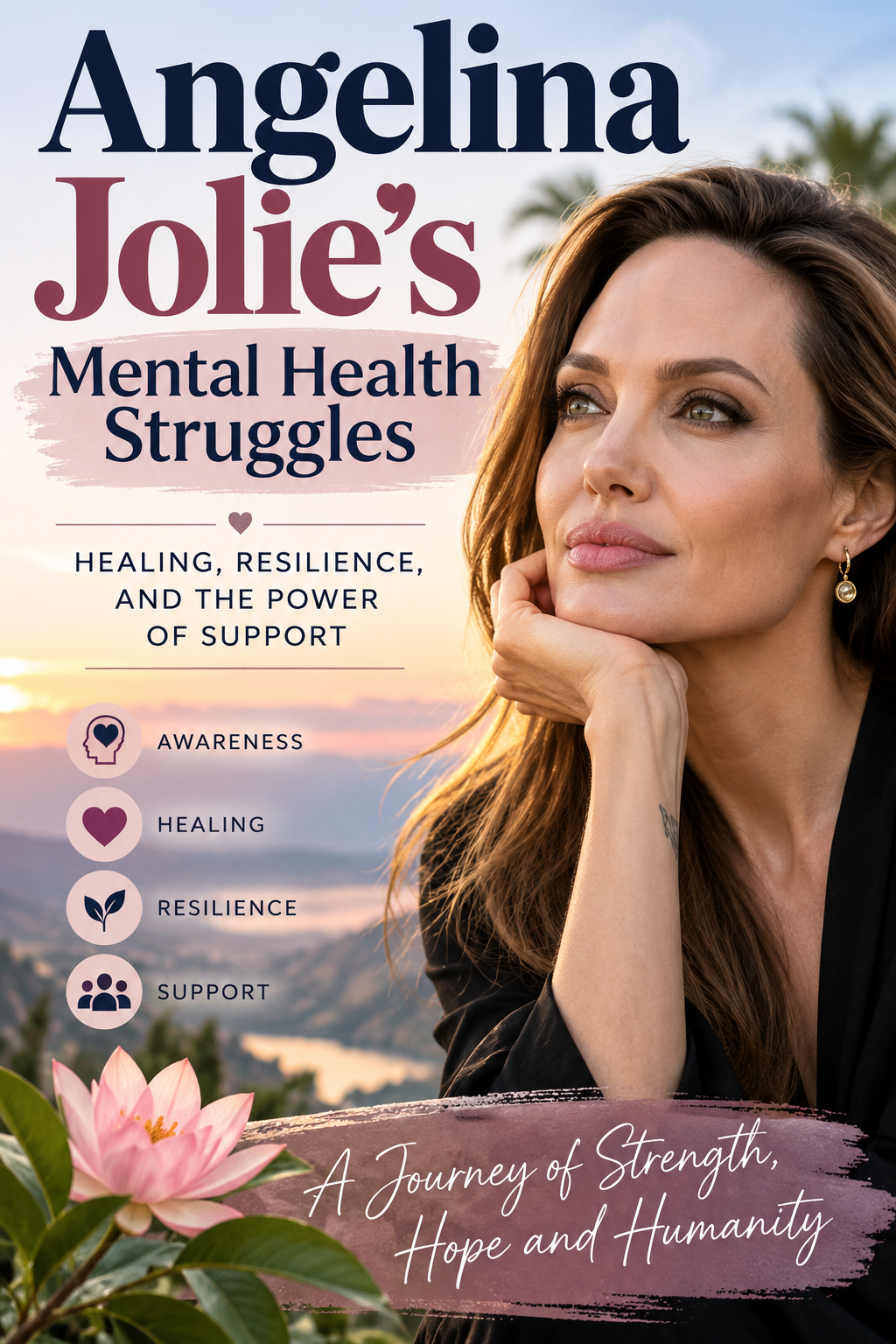
Angelina Jolie is known worldwide as an Academy Award-winning actor, filmmaker, humanitarian, and mother. Behind her public success, however, she has spoken over the years about periods of emotional difficulty, family upheaval, health concerns, and times when she felt disconnected from herself. In a 2023 interview, Jolie said she had not felt like herself for about a decade and described motherhood as an important source of meaning during difficult periods. More recently, she has discussed gradually rediscovering parts of herself after years of personal challenges.
It is important not to diagnose Jolie based on interviews or media reports. Her story is better understood through what she has publicly shared: emotional distress, stressful life transitions, family challenges, physical-health concerns, and a continuing process of healing.
Early Emotional Struggles
Jolie has long been open about having a difficult and unconventional youth. A TIME profile published in 2000 reported that she had acknowledged self-harming behavior earlier in her life.
Experiences such as self-harm should never be dismissed as simply attention-seeking or rebellious behavior. Self-harm can be associated with overwhelming emotional distress and difficulty regulating painful feelings. A person’s outward success also does not reveal what they are experiencing emotionally.
Jolie’s experiences illustrate an important mental-health lesson: emotional suffering can affect people regardless of fame, wealth, career success, or social status.
Family Changes and Emotional Healing
Major changes in relationships and family structure can create prolonged stress. After separating from Brad Pitt, Jolie spoke publicly about focusing on her children and helping the family heal. In a 2021 interview, she described the preceding years as difficult and said her family was gradually healing.
In an earlier interview, Jolie also mentioned attending a therapy meeting and reconnecting with her father, Jon Voight, while trying to provide stability for her children.
Healing after major life changes rarely happens immediately. Divorce, grief, illness, family conflict, career transitions, and parenting pressures can all affect emotional well-being. Recovery often occurs gradually and may involve professional support, stronger relationships, new routines, and rediscovering a sense of identity.
Physical Health and Mental Well-Being
Jolie has also experienced significant physical-health concerns. After learning that she carried a BRCA1 genetic variant associated with substantially increased cancer risk, she underwent preventive surgeries. She has written about losing her mother and grandmother to cancer and emphasized that women’s health care should address emotional well-being and mental health as well as physical disease.
Physical and emotional health are closely connected. Medical procedures, fear of illness, caregiving responsibilities, grief, chronic stress, and uncertainty can affect mood, sleep, relationships, and coping.
Self-Management Strategies
Self-management does not mean handling mental-health difficulties alone. Instead, it involves recognizing emotional needs and developing healthy ways to respond.
Helpful strategies can include:
- Recognizing emotional changes. Notice persistent sadness, anxiety, irritability, isolation, hopelessness, or changes in sleep and daily functioning.
- Creating healthy routines. Regular sleep, nutritious meals, physical activity, and predictable daily routines can support emotional stability.
- Finding meaningful activities. Art, writing, music, volunteering, hobbies, or meaningful work can provide healthy outlets for difficult emotions.
- Setting boundaries. Protecting personal time and limiting unnecessary stress can be especially important during periods of transition.
- Seeking professional care. Therapy or other behavioral-health treatment can provide tools for coping with grief, trauma, relationship changes, anxiety, depression, or self-harming urges.
- Maintaining human connection. Isolation can intensify emotional distress. Staying connected with trusted people can provide perspective and emotional support.
Jolie has described creative work as meaningful during difficult periods. When discussing her return to acting, she spoke about reconnecting with parts of herself and feeling creatively alive again.
Family Support Strategies
Family members can play an important role when someone is experiencing emotional distress, but support should not become judgment, control, or constant monitoring.
Families can:
- Listen without immediately trying to solve every problem.
- Ask directly and compassionately how the person is doing.
- Avoid minimizing emotional pain because someone appears successful.
- Encourage professional help when distress persists or interferes with everyday life.
- Support healthy routines while respecting independence.
- Learn the warning signs of depression, self-harm, substance misuse, and suicidal thinking.
- Maintain healthy boundaries and seek support for themselves when necessary.
Jolie’s public comments about her children and extended family also illustrate how relationships can become an important source of meaning during periods of change. She has repeatedly discussed focusing on creating stability for her children while her family healed.
Community Support Strategies
Mental-health recovery should not depend entirely on an individual or family. Communities can create environments where people feel safer asking for help.
Community resources may include:
- Mental-health counselors and therapists
- Psychiatrists and primary-care clinicians
- School and workplace mental-health programs
- Trauma-informed services
- Peer-support and grief-support groups
- Community wellness programs
- Crisis-intervention and suicide-prevention services
Reducing stigma is also essential. People should be able to discuss emotional distress without being labeled as weak, unstable, or incapable.
Finding Identity After Difficult Experiences
One particularly valuable theme in Jolie’s public reflections is rediscovering identity. In 2023, she said she had not felt like herself for years and described her creative work as part of moving forward.
This idea extends beyond celebrity experiences. People recovering from trauma, grief, divorce, illness, addiction, or other major life changes sometimes become so focused on surviving that they lose touch with interests and identities they once valued.
Recovery can therefore involve more than reducing symptoms. It can also mean asking: Who am I now? What gives my life meaning? What relationships matter to me? What would I like the next chapter of my life to look like?
Conclusion
Angelina Jolie’s publicly described experiences show that mental-health struggles can exist alongside professional achievement, parenting, creativity, and humanitarian work. Her story should not be used to assign her a psychiatric diagnosis that she has not publicly established. Instead, it can open a broader conversation about emotional distress, major life transitions, family relationships, physical health, and recovery.
Self-management can help people recognize their needs and develop healthier coping strategies. Families can provide compassion, stability, and encouragement. Communities can make professional treatment and social support easier to access.
Most importantly, struggling during one period of life does not have to define everything that follows. Healing can involve professional care, supportive relationships, meaningful activities, healthier boundaries, and gradually rebuilding a sense of identity and purpose.
Frequently Asked Questions
Here are some common questions:
1. Has Angelina Jolie struggled with her mental health?
Yes. Angelina Jolie has publicly discussed periods of significant emotional distress, including difficulties during her youth, feeling disconnected from herself, family challenges, grief, and stressful life transitions. These experiences should be discussed based on what she has shared publicly rather than assuming a particular psychiatric diagnosis.
2. Has Angelina Jolie been diagnosed with a mental illness?
Public discussions about Jolie often attach diagnostic labels to her, but it is important not to diagnose someone from interviews, biographies, or media reports. The more accurate approach is to focus on the emotional struggles and experiences she has personally described.
3. Did Angelina Jolie have emotional difficulties when she was younger?
Yes. Jolie has spoken openly about having a difficult adolescence and experiencing emotional pain. Earlier interviews and profiles also documented her discussion of self-harming behavior during her youth.
4. Did Angelina Jolie struggle with self-harm?
Jolie has publicly discussed self-harming behavior earlier in her life. Self-harm can be a way some people attempt to cope with overwhelming emotional distress, although the reasons vary greatly from person to person. Anyone currently experiencing urges to self-harm should seek professional support.
5. What difficult life experiences may have affected Angelina Jolie emotionally?
Jolie has publicly discussed family difficulties, the loss of her mother to cancer, serious health decisions, relationship changes, parenting responsibilities, and other major transitions. Experiencing several stressful events does not automatically cause a mental disorder, but significant life stress can affect emotional well-being.
6. How did losing her mother affect Angelina Jolie?
Jolie has spoken about the profound importance of her mother, Marcheline Bertrand, who died from ovarian cancer in 2007. Grief following the death of a parent can affect people for years and may influence identity, relationships, parenting, and emotional well-being.
7. Did Angelina Jolie’s physical-health concerns affect her emotional well-being?
Jolie learned that she carried a BRCA1 genetic variant associated with a substantially increased risk of breast and ovarian cancer. She subsequently underwent preventive surgeries. She has written about the importance of considering emotional and mental well-being alongside physical health when women face serious medical decisions.
8. How have Angelina Jolie’s children influenced her journey?
Jolie has frequently described motherhood as extremely important to her. During difficult periods, she has said she focuses on her children and on creating stability for her family. Meaningful relationships can provide purpose and emotional support, although children should not be expected to serve as substitutes for professional mental-health care.
9. What self-management strategies can help someone experiencing similar emotional difficulties?
Healthy strategies include maintaining regular sleep and exercise, identifying emotional triggers, journaling, engaging in meaningful activities, maintaining supportive relationships, setting healthy boundaries, and recognizing when professional help is needed.
10. How can families support someone experiencing mental-health struggles?
Families can listen without judgment, take emotional distress seriously, encourage healthy routines, learn warning signs, respect appropriate boundaries, and encourage professional treatment when symptoms interfere with everyday functioning.
11. What community resources can support mental-health recovery?
Resources may include therapists, psychiatrists, primary-care clinicians, support groups, grief counseling, trauma-informed programs, community mental-health centers, school or workplace programs, and crisis services.
12. What can people learn from Angelina Jolie’s experiences?
Her public story illustrates that emotional struggles can coexist with professional success, creativity, parenting, and public achievement. Mental-health difficulties do not mean someone lacks strength or accomplishment.
13. Can creativity help with emotional healing?
For some people, yes. Art, acting, music, writing, gardening, and other meaningful activities can provide emotional expression and help rebuild a sense of identity. They can complement—but should not replace—professional treatment when treatment is needed.
14. Can someone rediscover themselves after years of emotional difficulty?
Yes. Recovery is often gradual, not a single event. Therapy, supportive relationships, meaningful activities, healthier routines, appropriate medical care, and time can all help rebuild identity and well-being.
15. What is the main message from Angelina Jolie’s mental-health journey?
Her publicly described experiences offer a broader lesson about resilience: people can experience periods of profound emotional difficulty while continuing to grow and find meaning. Seeking support, maintaining healthy relationships, practicing self-care, and accessing professional services when necessary can all be important parts of recovery.
If someone is in immediate danger or experiencing suicidal or self-harming thoughts in the United States, call or text 988 to reach the Suicide & Crisis Lifeline.
Video:
