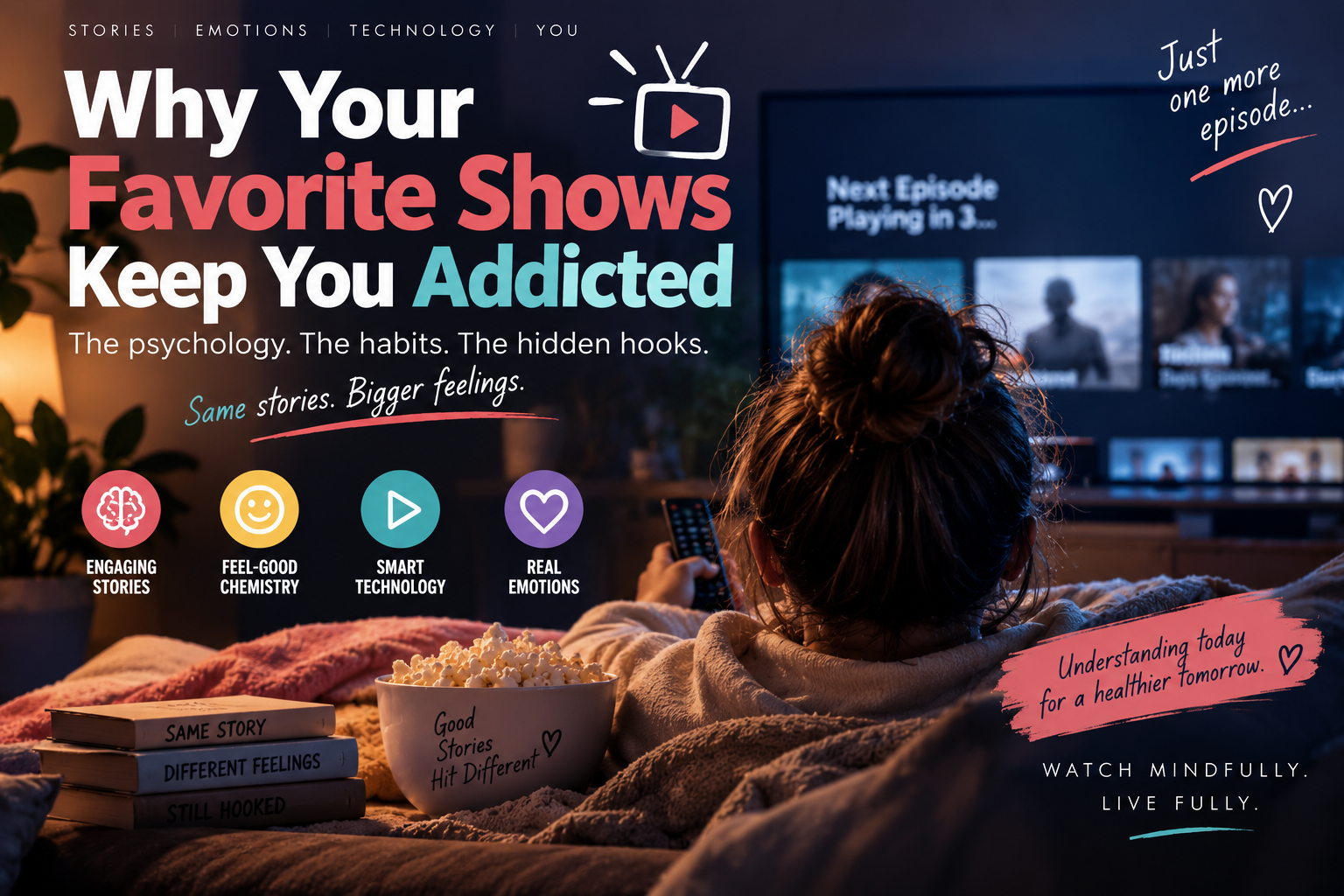
Have you ever promised yourself you would watch just one episode of your favorite television show, only to discover that several hours have passed? Streaming platforms make it easier than ever to watch entire seasons without interruption. With autoplay, personalized recommendations, cliffhanger endings, and unlimited access to entertainment, stopping after one episode can become surprisingly difficult.
For many people, watching television is a healthy way to relax, escape daily stress, and enjoy meaningful stories. However, when binge-watching begins interfering with sleep, relationships, work, or emotional well-being, it may develop into a problematic behavioral pattern.
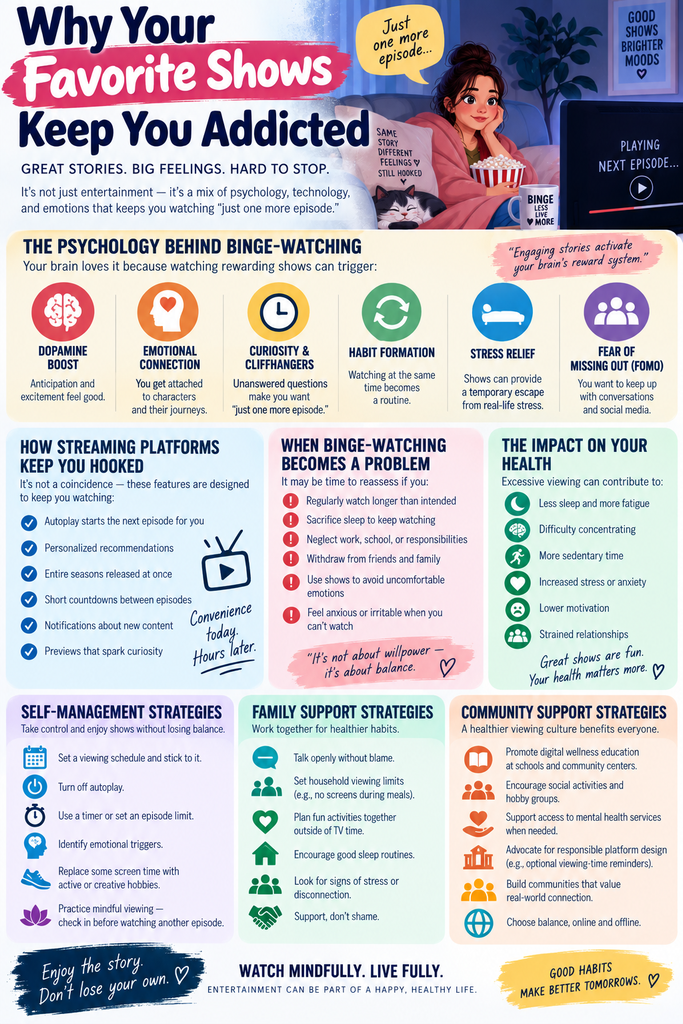
The psychology behind binge-watching involves reward anticipation, emotional attachment to fictional characters, habit formation, and the desire to escape uncomfortable emotions. Streaming platforms also use design features that encourage viewers to continue watching.
Although excessive television viewing is sometimes described as an addiction, binge-watching is not currently recognized as a separate mental health disorder in the DSM-5-TR.
Understanding why favorite shows can be hard to stop watching can help you develop healthier viewing habits while maintaining a balanced relationship with entertainment.
The goal is not to eliminate television from your life. The goal is to enjoy entertainment without letting it interfere with your health, relationships, or personal responsibilities.
Why Your Brain Wants to Watch Just One More Episode
Television shows are designed to capture attention through engaging stories, emotional experiences, and anticipation about what happens next.
When viewers become invested in a storyline, they may experience curiosity, excitement, suspense, or emotional attachment to fictional characters.
These experiences involve brain systems associated with motivation, attention, learning, and reward.
Dopamine, a neurotransmitter involved in reward prediction and motivation, contributes to how individuals anticipate potentially rewarding experiences.
However, binge-watching should not be described simply as a dopamine addiction. Dopamine participates in many normal activities, and its involvement does not establish that watching television is equivalent to substance addiction.
Why stopping can feel difficult
Several psychological mechanisms may encourage continued viewing:
- Reward anticipation: Viewers want to discover what happens next in an engaging storyline.
- Emotional investment: Strong connections with fictional characters can increase the desire to continue watching.
- Habit formation: Watching television at the same time each day can become an automatic routine.
- Stress relief: Entertainment may provide temporary relief from emotional distress.
- Reduced stopping cues: Streaming services allow episodes to play continuously without requiring viewers to make an active decision.
- Fear of missing out: Popular shows may create pressure to keep up with conversations and social media discussions.
These mechanisms can make binge-watching appealing without necessarily indicating a mental health disorder.
The Cliffhanger Effect: Why You Cannot Stop Watching
Cliffhangers are storytelling techniques that create suspense by ending an episode before an important question is answered.
A character may disappear, a relationship may suddenly change, or a major secret may be revealed just before the credits appear.
These endings encourage viewers to continue watching because they want resolution.
How cliffhangers influence viewing behavior
Cliffhangers can create:
- Increased curiosity about unresolved storylines.
- Emotional anticipation.
- A desire to reduce uncertainty.
- Stronger attachment to ongoing narratives.
- Difficulty stopping at a planned time.
Streaming platforms often release multiple episodes simultaneously, allowing viewers to satisfy their curiosity immediately.
Unlike traditional television schedules, which provide natural breaks between episodes, streaming services make continued viewing almost effortless.
Self-management strategies
- Decide how many episodes you will watch before starting.
- Avoid beginning a new episode when you have limited time.
- Turn off autoplay when possible.
- Stop at a planned time rather than waiting for a storyline to resolve.
- Remind yourself that unresolved fictional events do not require immediate attention.
Learning to tolerate the curiosity cliffhangers create can help individuals regain control over their viewing habits.
Autoplay and Personalized Recommendations: How Streaming Platforms Encourage Binge-Watching
Streaming platforms use design features that make continued viewing convenient.
Autoplay automatically begins another episode after the previous one ends.
Personalized recommendation systems suggest additional content based on viewing history and other engagement signals.
These features reduce the effort required to continue watching.
Why autoplay matters
Without autoplay, viewers must actively decide whether to begin another episode.
With autoplay, the next episode may begin before the viewer has considered whether they want to continue.
This can contribute to passive viewing, particularly when someone is tired, distracted, or using television to relax.
Common streaming features that encourage continued viewing
- Automatic playback of the next episode.
- Personalized content recommendations.
- Short countdowns between episodes.
- Entire seasons released simultaneously.
- Notifications about new episodes.
- Automatically generated previews.
- Recommendations based on previously watched content.
These features make content discovery and viewing convenient, but they may also contribute to longer viewing sessions.
Self-management strategies
- Disable autoplay.
- Turn off unnecessary streaming notifications.
- Establish a viewing schedule.
- Avoid browsing streaming platforms without a specific viewing goal.
- Use a timer to signal when your planned viewing period has ended.
- Consider watching television in shared spaces rather than alone in bed.
Small environmental changes can make it easier to maintain intentional viewing habits.
Emotional Escape: When Television Becomes a Coping Mechanism
Many individuals watch television to relax after stressful days.
Entertainment can provide temporary relief from work pressure, loneliness, anxiety, or emotional exhaustion.
However, problems may develop when television becomes the primary way someone avoids difficult emotions or responsibilities.
This pattern is sometimes described as experiential avoidance.
Experiential avoidance involves attempting to escape uncomfortable internal experiences, such as sadness, anxiety, or distressing thoughts.
Warning signs of emotional avoidance through television
- Watching television whenever uncomfortable emotions arise.
- Avoiding important conversations by continuing to watch shows.
- Using television to postpone responsibilities.
- Feeling unable to relax without watching something.
- Staying awake for hours to avoid thinking about personal problems.
- Withdrawing from friends or family to continue watching.
Occasional emotional escape is not necessarily harmful.
However, relying exclusively on television to manage distress may prevent individuals from developing other effective coping strategies.
Self-management strategies
- Identify emotions that trigger prolonged viewing.
- Keep a journal documenting viewing habits and emotional patterns.
- Practice mindfulness before turning on the television.
- Develop alternative stress-management activities.
- Seek counseling when persistent emotional distress interferes with daily life.
- Maintain regular contact with supportive friends and family.
The goal is to develop several healthy coping strategies rather than relying on a single activity.
Parasocial Relationships: Why Fictional Characters Feel Like Real Friends
Have you ever felt emotionally connected to a television character or experienced sadness when your favorite series ended?
These experiences may involve parasocial relationships.
A parasocial relationship is a one-sided emotional connection that a person develops with a media personality or fictional character.
Although the relationship isn’t reciprocal, the emotional experience can still feel meaningful.
Why viewers develop emotional attachments
Television characters may provide:
- Familiarity and predictability.
- Emotional comfort.
- A sense of companionship.
- Opportunities to identify with personal struggles.
- Inspiration or motivation.
- A temporary escape from loneliness.
Parasocial relationships are common and are not inherently unhealthy.
However, difficulties may arise when fictional relationships consistently replace meaningful real-world social connections.
Self-management strategies
- Enjoy fictional characters while maintaining real-world relationships.
- Participate in social activities outside of watching television.
- Join hobby groups or community organizations.
- Reflect on whether television is meeting emotional needs that supportive relationships could also address.
- Seek professional assistance if loneliness or social withdrawal becomes persistent.
Entertainment can provide companionship, but maintaining reciprocal relationships remains important for emotional well-being.
How Binge-Watching Can Affect Sleep and Physical Health
One of the most common consequences of excessive television viewing is reduced sleep.
Individuals may keep watching episodes late into the night even when they know they need to wake up early.
This behavior is sometimes associated with bedtime procrastination.
Potential consequences of excessive late-night viewing
- Reduced sleep duration.
- Daytime fatigue.
- Difficulty concentrating.
- Irritability.
- Reduced motivation.
- Disrupted daily routines.
- Increased sedentary time.
- Interference with work or academic responsibilities.
Screen exposure, engaging content, and delayed bedtimes may contribute to sleep difficulties.
However, the relationship between television viewing and health depends on several factors, including total viewing time, physical activity, sleep habits, and individual circumstances.
Self-management strategies
- Establish a consistent bedtime.
- Stop watching television at a predetermined time.
- Avoid starting lengthy episodes shortly before bed.
- Keep televisions and streaming devices out of the bedroom when practical.
- Participate in regular physical activity.
- Take movement breaks during extended viewing sessions.
Protecting sleep is particularly important for individuals managing depression, anxiety, or other mental health conditions.
Recognizing When Binge-Watching Becomes Problematic
Watching several episodes of a television show does not automatically indicate addiction.
Some individuals enjoy occasional television marathons without experiencing significant negative consequences.
The more important question is whether viewing behavior interferes with everyday functioning.
Warning signs of problematic binge-watching
- Repeatedly watching longer than intended.
- Difficulty reducing viewing time despite repeated attempts.
- Neglecting work, school, or family responsibilities.
- Consistently sacrificing sleep to continue watching.
- Withdrawing from meaningful social activities.
- Using television as the primary method of managing emotional distress.
- Continuing excessive viewing despite significant negative consequences.
- Feeling distressed when unable to watch television.
These behaviors may indicate a need to reassess viewing habits.
However, problematic binge-watching is not currently recognized as a distinct psychiatric diagnosis.
A healthcare professional can help evaluate whether excessive viewing is associated with depression, anxiety, attention difficulties, sleep problems, or other concerns.
Self-Management Strategies: How to Break the Binge-Watching Cycle
Developing healthier viewing habits does not require eliminating television.
Instead, individuals can set boundaries that let them enjoy entertainment while protecting their health and responsibilities.
Create a realistic viewing schedule
Setting limits before beginning a television session can reduce unplanned viewing.
Practical strategies
- Choose specific days or times for watching television.
- Decide how many episodes to watch in advance.
- Use a timer to signal when a viewing session ends.
- Avoid watching television during scheduled work or study periods.
- Establish a consistent bedtime.
- Plan alternative activities for evenings when you are not watching television.
Realistic limits are generally easier to maintain than overly restrictive rules.
Identify emotional triggers
Some individuals binge-watch primarily when experiencing stress, loneliness, boredom, or emotional exhaustion.
Understanding these patterns can help individuals develop healthier responses.
Self-management strategies
- Keep a viewing journal.
- Record emotional states before and after watching television.
- Identify situations associated with prolonged viewing.
- Practice alternative coping strategies when distress occurs.
- Seek professional counseling if television viewing becomes a persistent form of emotional avoidance.
Recognizing a behavior’s function is an important step toward changing it.
Replace passive viewing with meaningful activities
Reducing television time may create opportunities to participate in activities that support physical and emotional well-being.
Healthy alternatives include:
- Walking or exercising.
- Reading books.
- Cooking or learning new recipes.
- Participating in creative hobbies.
- Spending time with friends.
- Volunteering.
- Attending community events.
- Practicing meditation.
- Learning a new skill.
The goal is not to remain constantly productive.
Rest and entertainment are important, but a balanced routine allows room for several meaningful activities.
Practice mindful viewing
Mindful viewing involves making intentional decisions about what, when, and how long to watch.
Instead of automatically continuing to the next episode, individuals can pause and evaluate whether they genuinely want to continue.
Helpful questions include:
- Am I watching because I enjoy this show?
- Am I continuing because autoplay started another episode?
- Am I avoiding something important?
- Will watching another episode interfere with my sleep?
- Is there another activity that would better meet my current needs?
Mindful viewing can help individuals distinguish intentional entertainment from automatic behavior.
Family Support Strategies: Encouraging Healthier Viewing Habits
Family members can help create an environment that supports balanced screen use.
However, excessive television viewing should not automatically be treated as addiction or a personal failure.
Compassionate communication and collaborative problem-solving are generally more helpful than criticism or punishment.
Encourage open communication
Family members can begin by discussing how television viewing affects sleep, responsibilities, and relationships.
Helpful strategies
- Express concern without assigning blame.
- Ask what the individual enjoys about their favorite shows.
- Discuss whether viewing habits interfere with important activities.
- Encourage realistic and mutually agreed-upon boundaries.
- Recognize positive changes.
- Avoid using shame or humiliation.
For example, a family member might say:
“I’ve noticed we’ve been staying up later watching shows. Would you like to try setting an earlier stopping time so we can get more sleep?”
This approach encourages cooperation rather than conflict.
Establish healthy household viewing routines
Families can work together to create screen-use habits that support everyone’s needs.
Family strategies
- Establish television-free family meals.
- Agree on reasonable viewing times.
- Encourage regular sleep schedules.
- Plan shared activities outside the home.
- Avoid using television as the only form of family entertainment.
- Model balanced screen use.
Parents and caregivers can support children by establishing age-appropriate screen limits and encouraging a variety of recreational activities.
Recognize underlying emotional needs
Excessive television viewing may sometimes be associated with loneliness, stress, depression, or other emotional difficulties.
Family members should avoid assuming that the behavior is simply a lack of discipline.
Supportive approaches
- Ask whether the individual is experiencing stress or emotional distress.
- Encourage meaningful social connections.
- Offer opportunities for shared activities.
- Support access to counseling when needed.
- Respect personal privacy and autonomy.
Understanding the emotional purpose of television viewing can help families identify more effective ways to provide support.
Encourage healthy alternatives without eliminating enjoyment
Television can provide relaxation, shared experiences, and opportunities for family bonding.
The goal should be balance, not complete avoidance.
Family activities include:
- Taking evening walks.
- Playing board games.
- Cooking together.
- Participating in recreational sports.
- Visiting local parks.
- Attending community events.
- Watching a planned episode together and discussing the storyline afterward.
Shared activities can strengthen relationships while reducing reliance on passive entertainment.
Community Support Strategies: Promoting Healthy Digital Habits
Community organizations, schools, healthcare professionals, and digital wellness programs can help individuals develop balanced relationships with television and streaming platforms.
Provide digital wellness education
Digital wellness programs can teach individuals how streaming features influence viewing behavior.
Community strategies
- Explain how autoplay and recommendation systems work.
- Encourage intentional media consumption.
- Teach practical time-management skills.
- Promote healthy sleep habits.
- Discuss the relationship between screen use and emotional well-being.
- Provide education about problematic digital behaviors.
Digital wellness education should focus on informed decision-making rather than portraying all screen use as harmful.
Improve access to mental health services
Individuals who use television excessively to avoid emotional distress may benefit from professional support.
Community resources include:
- Community mental health centers.
- School and university counseling services.
- Outpatient behavioral health programs.
- Telehealth counseling.
- Support groups addressing loneliness or social isolation.
- Primary care providers who can assess sleep and mental health concerns.
Treatment should address the underlying difficulties contributing to problematic viewing rather than focusing exclusively on screen time.
Encourage meaningful social connections
Community activities can help individuals build friendships and enjoy experiences outside digital entertainment.
Examples include:
- Recreational sports leagues.
- Community art and music classes.
- Volunteer organizations.
- Book clubs.
- Walking and hiking groups.
- Educational workshops.
- Local cultural events.
Meaningful social connections can reduce isolation and provide alternatives to prolonged passive viewing.
Promote responsible streaming platform design
Streaming platforms can support healthier viewing habits by giving users more control over their viewing experience.
Potential features include:
- Easily accessible autoplay controls.
- Optional viewing-time reminders.
- Customizable notification settings.
- Clear parental controls.
- Simple options for disabling automatic previews.
- Tools that let users set personal viewing limits.
These features can help viewers make more intentional decisions about their entertainment habits.
Important Lessons About Binge-Watching and Behavioral Health
1. Enjoying television is not the same as having an addiction.
Watching multiple episodes can be a normal recreational activity. Concern increases when viewing repeatedly interferes with health, responsibilities, or relationships.
2. Streaming features can encourage continued viewing.
Autoplay, cliffhangers, and personalized recommendations can reduce natural stopping points and make extended viewing more convenient.
3. Emotional avoidance may contribute to excessive viewing.
Some individuals use television to escape stress, loneliness, or uncomfortable emotions.
4. Healthy boundaries support balanced entertainment.
Setting realistic viewing limits and protecting sleep can help individuals maintain control over their routines.
5. Family support should emphasize cooperation.
Compassionate communication and shared household routines can encourage healthier viewing habits without creating shame.
6. Community resources can support digital wellness.
Mental health services, educational programs, and recreational activities can help individuals develop balanced relationships with entertainment.
7. Professional evaluation may be helpful when viewing becomes difficult to control.
Persistent viewing problems may be associated with underlying mental health, sleep, or behavioral concerns that deserve appropriate assessment.
Conclusion: Enjoy Your Favorite Shows Without Losing Control of Your Time
Favorite television shows can provide entertainment, relaxation, emotional connection, and opportunities to escape everyday stress. Cliffhangers, engaging characters, autoplay, and personalized recommendations make it easy to keep watching long after you meant to stop.
For most individuals, binge-watching is an enjoyable recreational activity. However, when television viewing repeatedly interferes with sleep, responsibilities, relationships, or emotional well-being, it may be time to reassess viewing habits.
Self-management strategies such as disabling autoplay, establishing realistic viewing limits, identifying emotional triggers, and developing alternative activities can help individuals regain control over their routines.
Families can support healthier habits through compassionate communication, shared activities, and appropriate household boundaries. Communities can contribute by promoting digital wellness education, improving access to mental health services, and providing opportunities for meaningful social connection.
The goal is not to eliminate television or feel guilty about enjoying favorite shows. It is to develop a balanced relationship with entertainment that supports overall well-being.
Your favorite shows should be something you choose to enjoy—not something that consistently takes priority over your sleep, relationships, responsibilities, and personal goals.
Frequently Asked Questions
Here are some common questions:
1. Why is it so difficult to stop watching my favorite television shows?
Your favorite television shows are designed to capture your attention through engaging storylines, emotional connections, suspense, and unexpected developments.
Streaming platforms also use features such as autoplay, personalized recommendations, and cliffhanger endings that make it easy to continue watching.
When an episode ends with an unresolved storyline, your brain may anticipate the satisfaction of discovering what happens next.
These psychological and technological factors can make it hard to stop, even when you originally planned to watch only one episode.
2. Can watching television become an addiction?
Excessive television viewing can develop into a problematic behavioral pattern when it repeatedly interferes with sleep, relationships, work, or other important responsibilities.
However, binge-watching is not currently recognized as a separate mental health disorder in the DSM-5-TR.
Watching several episodes of a favorite show does not automatically indicate addiction.
The primary concern is whether television viewing becomes difficult to control and continues despite significant negative consequences.
3. How does dopamine influence binge-watching?
Dopamine is a neurotransmitter involved in motivation, learning, reward prediction, and goal-directed behavior.
When viewers anticipate an exciting development in a television show, brain systems associated with motivation and reward may contribute to their desire to continue watching.
However, binge-watching should not be described simply as a dopamine addiction.
Dopamine is involved in many normal activities, and its participation does not establish that watching television is equivalent to substance addiction.
4. Why do cliffhangers make me want to watch another episode?
Cliffhangers create suspense by ending an episode before an important question or conflict is resolved.
This can increase curiosity and encourage viewers to keep watching to find out what happens next.
When streaming platforms make the next episode immediately available, viewers can satisfy that curiosity without waiting.
To reduce unplanned viewing, decide how many episodes you will watch before starting and set a stopping time that doesn’t depend on the storyline reaching a satisfying conclusion.
5. How does autoplay encourage binge-watching?
Autoplay automatically begins the next episode without requiring the viewer to make an active decision.
This reduces natural stopping points and makes continued viewing more convenient.
When individuals are tired, distracted, or emotionally invested in a show, they may continue watching simply because another episode has started.
Disabling autoplay can help restore a moment of intentional decision-making between episodes.
Emotional and Psychological Effects of Binge-Watching
6. Why do people binge-watch when they feel stressed or depressed?
Television can provide temporary relief from stress, sadness, loneliness, or emotional exhaustion.
Engaging storylines may redirect attention away from uncomfortable thoughts and provide a sense of relaxation.
However, when television becomes the primary way to avoid emotional difficulties, it may interfere with developing other healthy coping strategies.
Individuals experiencing persistent depression or anxiety may benefit from professional counseling and additional emotional support.
7. Can binge-watching become a form of emotional avoidance?
Yes. Some individuals use television to postpone difficult conversations, avoid responsibilities, or escape uncomfortable emotions.
This pattern may become problematic when viewing consistently interferes with everyday functioning.
Warning signs include:
- Watching television whenever emotional distress occurs.
- Avoiding important responsibilities to continue watching.
- Staying awake to avoid thinking about personal problems.
- Withdrawing from relationships.
- Feeling unable to relax without television.
Recognizing emotional triggers can help individuals develop healthier coping mechanisms.
8. Why do fictional characters sometimes feel like real friends?
Viewers may develop emotional connections with fictional characters through repeated exposure to their personalities, relationships, and experiences.
These one-sided emotional connections are known as parasocial relationships.
Parasocial relationships can provide entertainment, comfort, and familiarity.
They are not inherently unhealthy.
However, difficulties may arise when fictional relationships consistently replace meaningful real-world social connections.
9. Can binge-watching increase loneliness?
Binge-watching does not automatically cause loneliness.
For some individuals, television provides entertainment, relaxation, and opportunities to connect with others through shared interests.
However, prolonged viewing may contribute to social isolation when it repeatedly replaces meaningful relationships or social activities.
Individuals who use television primarily to cope with loneliness may benefit from developing additional social connections through friendships, hobbies, volunteering, or community programs.
10. Can binge-watching worsen depression or anxiety?
Excessive television viewing may be associated with depression, anxiety, sleep disturbances, and reduced physical activity.
However, the relationship is complex.
Individuals experiencing depression or anxiety may watch more television to manage emotional distress, while prolonged viewing may also interfere with activities that support mental health.
Research showing an association does not necessarily establish that binge-watching directly causes depression or anxiety.
Persistent mental health symptoms should be evaluated by a qualified healthcare professional.
Recognizing Problematic Viewing Habits
11. How do I know if my binge-watching has become unhealthy?
Binge-watching may become problematic when television repeatedly takes priority over important aspects of daily life.
Warning signs include:
- Watching longer than originally intended.
- Repeatedly sacrificing sleep to continue watching.
- Neglecting work, school, or household responsibilities.
- Withdrawing from family members or friends.
- Feeling unable to reduce viewing time.
- Using television as the primary method of coping with emotional distress.
- Continuing excessive viewing despite significant negative consequences.
Occasional television marathons are not necessarily harmful.
The more important consideration is whether viewing habits interfere with health, relationships, and everyday functioning.
12. Is watching an entire season in one day unhealthy?
Watching an entire television season in one day does not automatically indicate a behavioral health problem.
The potential consequences depend on factors such as total viewing time, sleep duration, physical activity, and whether important responsibilities are neglected.
Occasional extended viewing may be an enjoyable recreational activity.
However, regularly spending entire days watching television while neglecting sleep, relationships, or personal responsibilities may indicate the need to establish healthier boundaries.
13. Why do I feel guilty after binge-watching?
Guilt may occur when viewing habits conflict with personal goals or responsibilities.
For example, someone may regret staying awake late, postponing important tasks, or missing opportunities to spend time with family.
Guilt may also arise from unrealistic expectations about productivity or the belief that leisure activities are inherently unproductive.
Instead of criticizing yourself, consider whether your viewing habits are consistent with your personal priorities.
Entertainment and rest are legitimate needs, but maintaining balance can help reduce unwanted consequences.
14. Can binge-watching affect my sleep?
Yes. Watching television late at night can reduce sleep duration and disrupt consistent sleep schedules.
Engaging storylines, autoplay, and the desire to finish an episode may encourage viewers to delay bedtime.
Insufficient sleep can contribute to:
- Daytime fatigue.
- Difficulty concentrating.
- Irritability.
- Reduced motivation.
- Impaired judgment.
- Difficulty managing emotional stress.
Setting a consistent bedtime and stopping television at a set time can help protect sleep.
15. Can excessive television viewing affect physical health?
Prolonged television viewing may increase sedentary time, especially when it replaces physical activity.
Extended periods of sitting can also cause temporary discomfort or stiffness.
Potential concerns associated with excessive sedentary behavior include reduced physical fitness and increased cardiometabolic health risks over time.
Individuals can reduce prolonged sitting by taking regular movement breaks, staying active, and maintaining balanced daily routines.
Self-Management Strategies: How to Regain Control of Your Viewing Habits
16. How can I stop watching television after just one episode?
Setting viewing limits before you start can help reduce unplanned binge-watching.
Helpful strategies include:
- Decide how many episodes you will watch.
- Disable autoplay.
- Set a timer before beginning.
- Avoid starting lengthy episodes shortly before bedtime.
- Stop watching when your planned viewing period ends.
- Schedule another enjoyable activity afterward.
The goal is to make television viewing an intentional choice rather than an automatic behavior.
17. What is mindful television viewing?
Mindful viewing involves paying attention to why, when, and how long you watch television.
Instead of automatically continuing to the next episode, pause and consider whether watching more aligns with your current needs and responsibilities.
Helpful questions include:
- Am I watching because I genuinely enjoy this show?
- Am I continuing simply because autoplay started another episode?
- Am I avoiding an important responsibility?
- Will another episode interfere with my sleep?
- Would another activity better support my current emotional needs?
Mindful viewing can help individuals develop a more balanced relationship with entertainment.
18. How can I reduce binge-watching without giving up my favorite shows?
Reducing binge-watching does not require eliminating television.
You can enjoy TV while setting boundaries that protect other important activities.
Practical strategies include:
- Schedule specific viewing times.
- Limit the number of episodes watched in one session.
- Turn off autoplay.
- Establish television-free periods.
- Avoid watching television during meals or work.
- Participate in hobbies and social activities.
- Maintain consistent sleep schedules.
Realistic limits are generally easier to maintain than overly restrictive rules.
19. What activities can replace excessive television viewing?
Healthy alternatives can provide relaxation, enjoyment, and opportunities for personal growth.
Examples include:
- Walking or exercising.
- Reading.
- Cooking.
- Gardening.
- Playing board games.
- Participating in creative hobbies.
- Spending time with friends.
- Volunteering.
- Attending community events.
- Learning a new skill.
The goal is not to eliminate entertainment but to develop a balanced routine that includes several enjoyable and meaningful activities.
20. When should someone seek professional help for problematic binge-watching?
Professional evaluation may be helpful when television viewing repeatedly interferes with daily functioning and attempts to reduce viewing time have been unsuccessful.
Individuals may also benefit from counseling when excessive viewing is associated with depression, anxiety, loneliness, sleep disturbances, or persistent emotional avoidance.
A mental health professional can help identify underlying concerns and develop individualized strategies for improving emotional well-being and behavioral control.
Family Support Strategies
21. How can families help someone who watches too much television?
Family members can encourage healthier viewing habits through compassionate communication and collaborative problem-solving.
Helpful strategies include:
- Discussing concerns without criticism.
- Establishing mutually agreed-upon viewing limits.
- Encouraging shared activities outside television.
- Supporting consistent sleep schedules.
- Recognizing emotional triggers.
- Avoiding shame or punishment.
- Encouraging professional assistance when viewing interferes with daily functioning.
Family support should focus on developing healthier routines rather than controlling another person’s recreational choices.
22. How can parents prevent excessive binge-watching in children and teenagers?
Parents can support healthy screen habits by establishing age-appropriate boundaries and encouraging a variety of recreational activities.
Helpful strategies include:
- Setting consistent viewing schedules.
- Encouraging physical activity.
- Maintaining screen-free family meals.
- Protecting bedtime routines.
- Monitoring age-appropriate content.
- Modeling balanced screen use.
- Encouraging friendships and offline hobbies.
- Discussing how autoplay and recommendations influence viewing behavior.
Parents should consider the child’s developmental stage, emotional needs, and overall daily functioning when establishing screen-use expectations.
23. Can watching television together strengthen family relationships?
Yes. Shared television viewing can provide opportunities for relaxation, conversation, and family bonding.
Discussing storylines, characters, and themes may encourage communication and shared interests.
However, television should not consistently replace direct interaction or other meaningful family activities.
Families can maintain balance by combining shared entertainment with conversations, outdoor activities, meals, and recreational experiences.
24. What should families do if television viewing is causing relationship conflicts?
Family members should begin by discussing how viewing habits affect their shared time, responsibilities, and emotional connection.
Helpful approaches include establishing mutually agreed-upon boundaries, scheduling television-free activities, and addressing underlying concerns without assigning blame.
If conflicts persist, family counseling may help improve communication and develop realistic expectations.
The goal should be collaborative problem-solving rather than treating television viewing as a moral failure.
Community Support and Digital Wellness
25. How can communities promote healthier television viewing habits?
Community organizations can encourage balanced screen use through education, recreational programs, and mental health support.
Helpful strategies include:
- Providing digital wellness education.
- Encouraging physical activity.
- Offering affordable recreational opportunities.
- Supporting community clubs and social activities.
- Teaching healthy sleep habits.
- Improving access to mental health services.
- Promoting responsible media consumption.
Community programs should recognize that television can provide legitimate entertainment while encouraging individuals to maintain balanced daily routines.
26. How can streaming platforms encourage healthier viewing habits?
Streaming platforms can provide features that help users make intentional decisions about their viewing time.
Potential tools include:
- Easily accessible autoplay controls.
- Optional viewing-time reminders.
- Customizable notification settings.
- Parental controls.
- Simple options for disabling automatic previews.
- Clear information about episode duration.
- User-defined viewing limits.
These features can help individuals maintain greater control over their entertainment habits.
27. Can support groups help someone struggling with excessive television viewing?
Support groups may provide encouragement and practical strategies for individuals struggling to manage screen-related behaviors.
However, research specifically evaluating support groups for problematic binge-watching is limited.
Individuals may benefit from counseling, digital wellness programs, or community activities that address underlying concerns such as loneliness, stress, or emotional avoidance.
Professional assessment may be appropriate when viewing habits significantly interfere with everyday functioning.
Important Lessons About Binge-Watching and Addiction
28. Is binge-watching similar to substance addiction?
Problematic binge-watching and substance use disorders may share certain behavioral features, such as difficulty controlling behavior and continuing despite negative consequences.
However, they are not clinically equivalent.
Substance use disorders involve substance-specific effects, including intoxication, physiological adaptation, and, for some substances, potentially dangerous withdrawal.
Binge-watching is not currently recognized as a distinct psychiatric disorder in the DSM-5-TR.
It is important to distinguish ordinary entertainment, problematic viewing habits, and clinically established addictive disorders.
29. Can someone enjoy television without developing unhealthy viewing habits?
Yes. Television can provide relaxation, entertainment, social connection, and opportunities to learn about different experiences.
Healthy viewing habits involve making intentional choices about entertainment while maintaining adequate sleep, physical activity, relationships, and personal responsibilities.
Individuals can enjoy favorite shows without experiencing significant negative consequences.
The goal is balance, not complete avoidance.
30. What is the most important lesson about why favorite shows keep us watching?
Favorite television shows combine engaging stories, emotional connections, suspense, and convenient streaming technology.
These features can encourage viewers to continue watching beyond their original intentions.
However, enjoying television does not automatically indicate addiction.
Recognizing emotional triggers, disabling autoplay, establishing realistic viewing limits, and maintaining meaningful offline activities can help individuals develop healthier entertainment habits.
Your favorite shows should provide enjoyment and relaxation without consistently taking priority over your health, relationships, responsibilities, and personal goals.
Video: