Aging and addiction are two topics that come loaded with a lot of assumptions, rumors, and straight-up myths. Especially when the two meet. Many people picture addiction as a young person’s problem or see age as a shield against substance issues. I’ve seen firsthand how these myths can get in the way of care and support for older adults, so it’s worth digging deeper into what’s real and what’s just old news.
The Myths Holding Back Honest Conversation
Addiction in older adults isn’t something you see front and center in most news coverage or everyday conversations. There’s this idea floating around that if you make it to retirement, problems with drugs or alcohol simply won’t happen. The reality, though, is pretty different. According to the National Institute on Drug Abuse, substance use in adults over 65 has been rising for both alcohol and prescription drugs (source).
I want to clear up some of the most common myths I hear on this topic, so nobody is left in the dark or left behind.
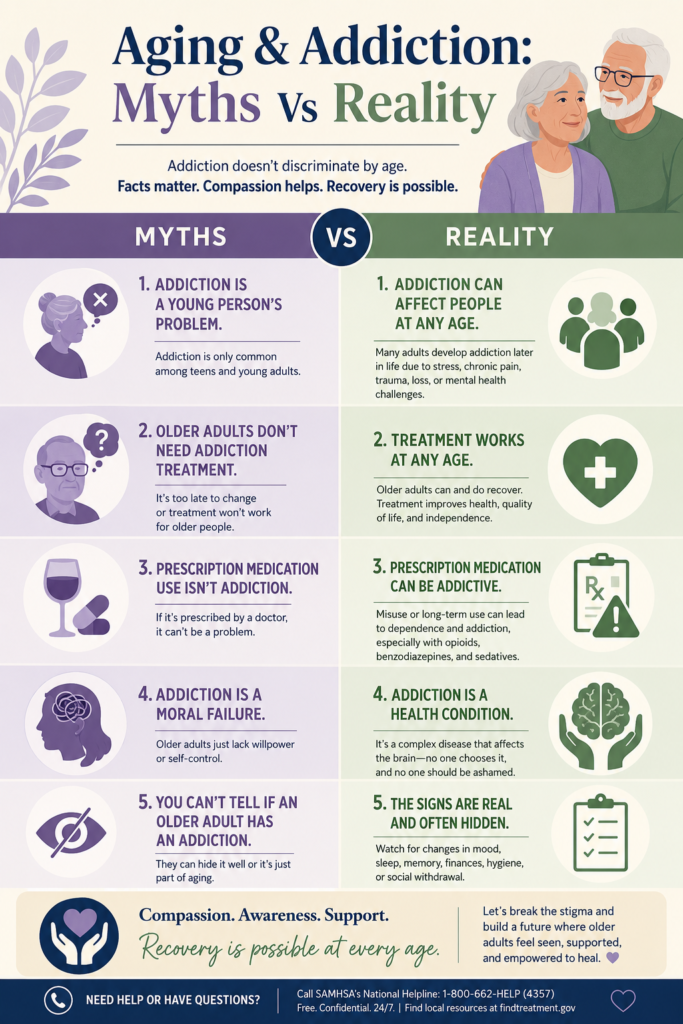
- Myth: Addiction is only a problem for young people.
Plenty of folks believe addiction hits hardest in your 20s or 30s, but substance use issues can show up at any age. In fact, some people develop these problems later in life, often due to chronic pain, social changes, or loss. - Myth: Older adults are too wise or experienced to struggle with addiction.
I hear this one a lot. The truth is, wisdom and life experience help, but nobody is automatically immune to addiction. Life events, changing health, and easy access to prescriptions all play a part. - Myth: If an older adult has been drinking or using medications for years, it’s not a real problem.
It’s easy to overlook longstanding habits, but tolerance and dependence can build quietly over decades. Just because use has become routine doesn’t mean it isn’t risky or harmful. - Myth: Treating addiction in older adults isn’t worth the effort; they can’t change.
This one is especially discouraging and totally off base. Older adults actually benefit from treatment and can see real improvements in quality of life and health when they get help (SAMHSA).
Realities of Aging and Addiction
When you look at the actual numbers and stories, aging and addiction take on a whole new light. Here’s what’s actually happening in the real world, far from those tired stereotypes.
Data from the Substance Abuse and Mental Health Services Administration (SAMHSA) shows that nearly a million adults aged 65 and older were living with a substance use disorder in the U.S. as of recent years. That covers alcohol, prescription painkillers, sedatives, and even stimulants. I’m always surprised at how many older adults face these challenges with very little support or understanding from those around them (source).
Aging can bring about a lot of changes that set the stage for addiction issues, such as:
- Retirement and extra downtime
- Loss of routine and purpose
- Physical health decline or chronic pain
- Loneliness after friends or a spouse passes away
- More medications, sometimes with habit-forming risks
These switches can leave people more vulnerable to using substances to cope, sometimes without even realizing it’s becoming a problem. Additionally, life stressors like caregiving for a partner, losing independence, or dealing with major illnesses can drive substance use. These circumstances make it easier for substance habits to sneak up, especially if family and friends are far away or not paying close attention. And technological challenges may prevent some older adults from seeking information or help online, increasing their sense of isolation and risk.
Understanding the Unique Risks of Addiction as We Age
It’s really important to talk about why substance use can be extra risky for older adults. Our bodies change as we get older; we break down alcohol and medications more slowly, and side effects hit harder. Here’s how some of those changes can turn what used to be casual or harmless into something tougher to manage:
- Increased sensitivity: Alcohol, sedatives, or painkillers can have a much bigger impact on balance, reaction time, and even heart rate in older adults than in younger folks.
- Higher medication interactions: Many older adults take several prescriptions at once, which raises the risk of harmful interactions between drugs and alcohol.
- Hidden symptoms: Substance use problems often show up as falls, confusion, or memory issues. Things that can be mistaken for age-related problems instead of addiction.
- Stigma: There’s a real discomfort or shame for many older folks about admitting to addiction, making it less likely they’ll seek help or even talk about what’s going on.
All these factors mean that even moderate use can tip into problems way faster in later life. I’ve seen people who never struggled with drinking or pills for decades suddenly run into trouble after a surgery or a major life change. Health issues like liver or kidney disease, which are more common as we age, can make substances far riskier than before. And natural changes in sleep, balance, or memory can mask the warning signs of substance issues, sometimes delaying needed conversations and intervention.
Getting Past the Stigma with Real Stories and Relatable Examples
I once worked with a neighbor in his seventies who started drinking more after his spouse passed away. Nobody noticed right away, since it looked like ordinary grieving. Over time, he became more withdrawn and had a couple of falls. The truth didn’t come out until a minor car accident sparked a doctor’s visit, and the real conversation started.
Stories like this show that addiction in older adults isn’t always about parties or reckless behavior. Sometimes it’s slow and sneaky, mingling with everyday struggles. Even prescription drug issues can begin with good intentions and the right prescription. Chronic pain, surgeries, or trouble sleeping can prompt doctors to prescribe medications that carry real addiction potential if not managed closely. Other times, someone might mix alcohol with a sedative without realizing how the effects multiply, increasing the risk of falls or confusion. Real stories break down shame and remind us that anyone, at any age, can get trapped by substance use.
Practical Steps for Recognizing and Addressing Addiction in Aging
Seeing the signs isn’t always easy, so I keep a short checklist in mind when it comes to older adults and substance risks. Here are some things worth watching for, whether it’s for yourself, a loved one, or a friend:
- Noticeable changes in mood or personality (more sadness, anxiety, or anger)
- Frequent accidents or falls
- Mixed-up pill-taking or running out of medicine early
- Loss of interest in social activities
- Memory problems that don’t fit with normal aging
If you’re seeing these kinds of changes and suspect substances might be in the mix, gently bringing it up can be tough but really important. Sometimes all it takes is one honest conversation to start breaking down shame or secrecy.
Treatment options for older adults are out there, and they really do work. Some things that help include:
- Programs staffed by providers who understand older adults’ special needs
- Counseling or peer support groups designed for seniors
- Regular check-ins with doctors about prescription use and mental health
- Community centers or activities that boost social connection
- Telehealth programs or home visits for those with limited mobility
The main point is this: support should feel practical, welcoming, and judgment-free. Most older adults value privacy and may prefer smaller, quieter groups or flexible appointment scheduling. Having someone from a similar background, or another older person who has walked a similar path, can make a huge difference in the willingness to seek help and stick with a plan. Local organizations such as churches, senior centers, and nonprofit groups may run support meetings or offer transportation, helping to close the gap for those facing mobility or financial barriers.
Barriers and Roadblocks to Recovery
I run into a few common obstacles when talking with older adults about addiction and treatment. These can hold some people back, but knowing what you’re up against makes tackling these issues a little easier:
- Lack of awareness: Many doctors and family members just don’t think to ask, so signs get missed.
- Fear of judgment: There’s a big stigma around addiction, and some older adults worry about being seen as irresponsible or weak.
- Financial worries: Fixed incomes or Medicare complexities can make accessing treatment confusing or feel out of reach.
- Limited mobility: Health issues can make it harder to get to appointments or support meetings in person.
- Generational attitudes: Some folks grew up with tough values about personal problems, making it harder to speak up or seek outside support even when it’s needed.
Tackling these barriers often means making information easy to find, offering transportation support, or even arranging telehealth appointments when travel is tough. It can also help raise awareness among doctors and social workers, so they’re more likely to ask honest questions and catch problems before they get worse.
Frequently Asked Questions About Aging and Addiction
There are a handful of questions I hear all the time, especially from families or caregivers:
Question: Are seniors really at risk for drug or alcohol addiction?
Answer: Older adults definitely face unique risks, including increasing medication use, physical changes, and life events. It’s not just a younger person’s issue. Changes in metabolism, smaller social circles, and feelings of isolation can all increase risks and decrease support, making it extra important to pay attention.
Question: Is it safe for older adults to detox from substances?
Answer: Because older bodies process substances differently, professional guidance is super important for safe detox and withdrawal. Doctors can tailor plans based on health conditions and medications. Home detox can be especially dangerous for seniors, so linking up with a medical team is always the safest route.
Question: What kind of treatment works best for older adults?
Answer: Programs that prioritize privacy, maintain manageable group sizes, and combine physical and mental health support tend to work best. Connecting with trusted doctors or agencies, such as SAMHSA, is a good starting point. Some organizations even offer age-specific therapy or home-based options for those unable to travel easily.
Question: What role can family and friends play?
Answer: Support from loved ones makes a big difference. Checking in, listening without judgment, and encouraging professional help all go a long way. Even just showing up to appointments or helping clear up medication schedules can be a great starting step.
Final Thoughts
Misconceptions about aging and addiction keep too many people from getting the help they deserve. Recognizing the real risks, the warning signs, and the power of supportive care can go a long way for older adults and their families. Honest conversations and tailored support help break down stigma, opening the door for healthier aging and a better quality of life for everyone involved. Getting the word out about these realities and solutions is key. Nobody should feel alone or hopeless when support and hope are possible at any age.
Video: This happens after retirement more than you’d think #AgingAndAddiction #LifeTransitions #Recovery