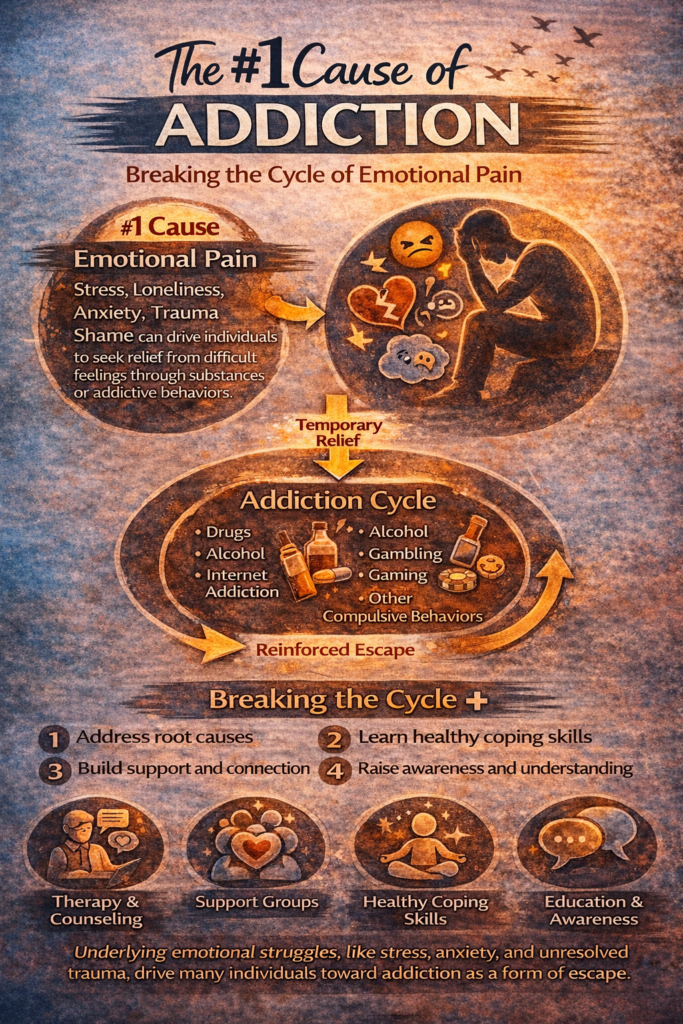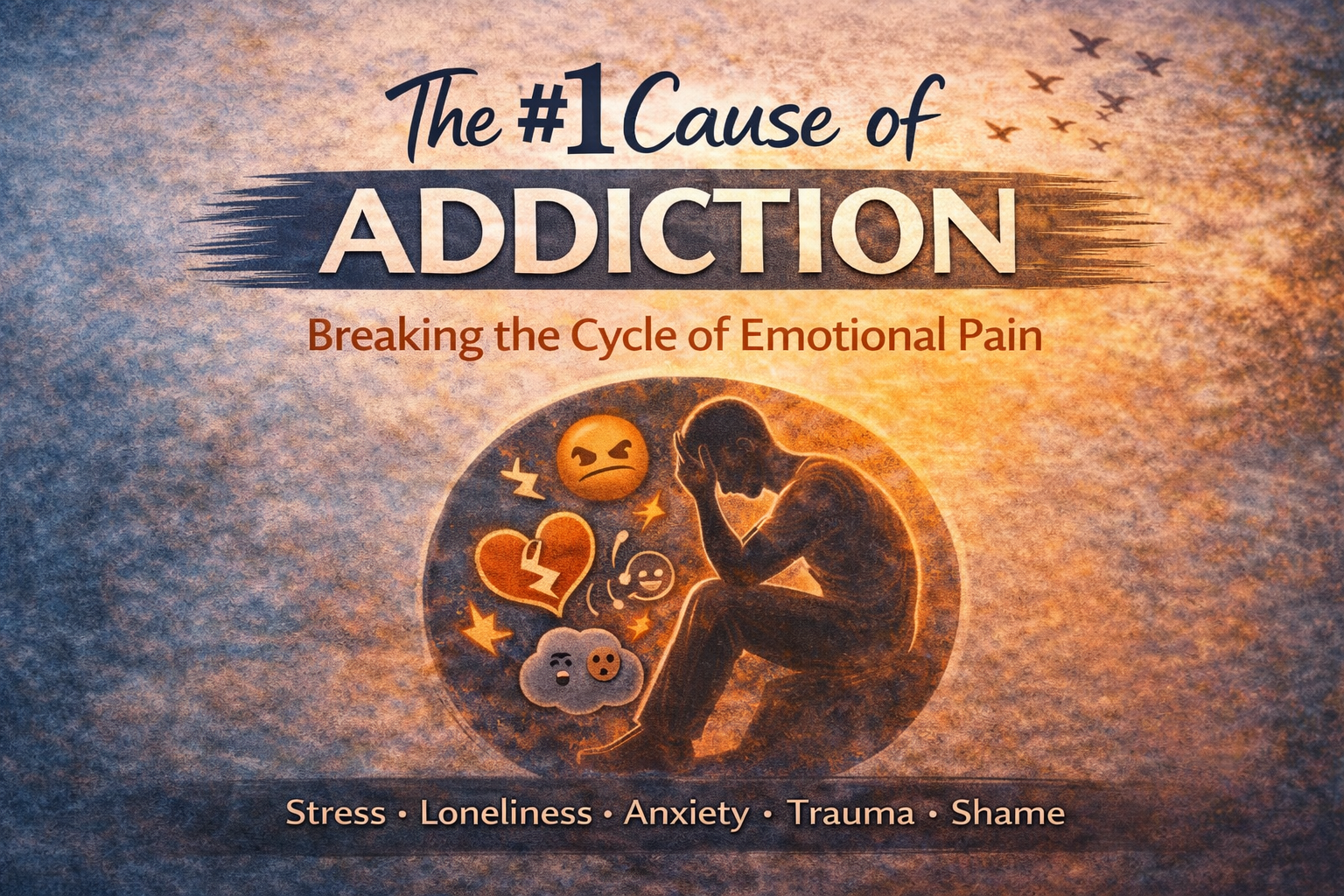
Addiction is a complex condition that affects millions of individuals and families around the world. While many factors, such as genetics, environment, and social influences, can contribute to addiction, experts often identify unresolved emotional pain and the desire to escape difficult feelings as one of the primary underlying causes. Individuals may turn to substances or addictive behaviors as a way to cope with stress, trauma, loneliness, anxiety, or other emotional struggles. Understanding this root cause is essential because it shifts the focus from blaming the individual to recognizing the deeper emotional challenges that may drive addictive behaviors.
The Root of the Struggle: Understanding the #1 Cause of Addiction
Addiction is a complex condition that affects millions of people worldwide. It can involve substances such as alcohol and drugs or behaviors like gambling, gaming, or excessive internet use. While many factors contribute to addiction—including genetics, environment, and mental health—many experts and recovery communities identify emotional pain and the desire to escape it as one of the primary underlying causes of addiction. At its core, addiction often begins as an attempt to cope with discomfort, trauma, stress, or unresolved emotional struggles.
Addiction as a Form of Escape
For many individuals, addictive behaviors start as a way to relieve emotional distress. Feelings such as anxiety, loneliness, shame, grief, or depression can become overwhelming. Substances or addictive behaviors may temporarily numb these feelings or create a sense of pleasure and relief. Over time, the brain begins to associate the substance or behavior with emotional comfort, making it increasingly difficult to stop.
This cycle can gradually develop into dependence. What once seemed like a simple way to cope becomes a habit that interferes with health, relationships, and daily responsibilities.
The Role of Emotional Pain and Trauma
Many people struggling with addiction have experienced some form of emotional pain or trauma, such as childhood adversity, family conflict, loss, abuse, or chronic stress. These experiences can create deep emotional wounds that are difficult to process without support. In the absence of healthy coping skills, individuals may turn to substances or compulsive behaviors as a way to avoid confronting painful feelings.
Addiction, in this sense, can be understood as an attempt to self-medicate emotional suffering rather than simply a lack of willpower.
Brain Chemistry and Reinforcement
Addictive substances and behaviors activate the brain’s reward system, releasing chemicals such as dopamine that produce feelings of pleasure or relief. This reinforcement strengthens the desire to repeat the behavior. Over time, the brain may rely on the addictive activity to feel normal, making it harder to experience satisfaction from everyday life.
This biological process explains why addiction can become so powerful and why recovery often requires both psychological and social support.
Healing the Root Cause
Because emotional pain often lies beneath addiction, recovery frequently involves addressing the underlying issues rather than focusing only on stopping the behavior. Effective recovery approaches may include:
- Therapy and counseling
- Support groups and peer recovery programs
- Developing healthy coping strategies
- Building supportive relationships
- Practicing self-awareness and emotional regulation
These strategies help individuals learn healthier ways to manage stress, process emotions, and rebuild a sense of purpose.
A Path Toward Recovery
Understanding the root causes of addiction can change how we view and respond to it. Rather than seeing addiction as a moral failure, it can be recognized as a response to unresolved pain and unmet emotional needs. With compassion, support, and appropriate resources, individuals can begin to heal the underlying struggles that contribute to addiction.
Recovery is not simply about stopping harmful behaviors—it is about addressing the deeper causes and building a healthier, more fulfilling life.
Looking Within: Self-Management Strategies to Understand the #1 Cause of Addiction
Addiction is often misunderstood as simply a lack of self-control, but research and recovery experiences suggest that the #1 underlying cause of addiction is often emotional pain or the attempt to escape difficult feelings. People frequently turn to substances or addictive behaviors to cope with stress, trauma, loneliness, anxiety, or unresolved emotional struggles. Understanding this root cause is an important step toward prevention and recovery. One of the most effective ways to address it is through self-management strategies that help individuals recognize emotional triggers, develop healthy coping skills, and build greater self-awareness.
1. Developing Self-Awareness
Self-awareness is the foundation of understanding addiction. Individuals can begin by paying attention to their thoughts, emotions, and behaviors. Journaling, meditation, or reflection can help identify patterns, such as when urges occur or what emotional states trigger them. Recognizing these triggers allows individuals to better understand the emotional needs behind addictive behaviors.
2. Identifying Emotional Triggers
Addictive behaviors often arise when individuals experience difficult emotions such as sadness, stress, boredom, anger, or loneliness. Learning to identify these emotional triggers can help people understand why they may feel the urge to escape. Once these triggers are recognized, individuals can begin developing healthier ways to respond.
3. Practicing Healthy Coping Strategies
Replacing harmful behaviors with healthier coping strategies is essential in managing emotional pain. Effective coping methods may include:
- Physical exercise
- Deep breathing or mindfulness practices
- Creative activities such as art, writing, or music
- Talking with trusted friends or mentors
These activities help release stress and process emotions in healthier ways.
4. Setting Personal Goals
Setting realistic personal goals helps individuals stay focused on growth and self-improvement. Goals may include improving physical health, strengthening relationships, or learning new skills. Achieving these goals can provide a sense of purpose and accomplishment that reduces reliance on addictive behaviors.
5. Building Emotional Resilience
Emotional resilience refers to the ability to cope with life’s challenges without becoming overwhelmed. Developing resilience involves practicing patience, positive thinking, and problem-solving skills. Over time, individuals learn that difficult emotions can be managed rather than avoided.
6. Creating Healthy Daily Routines
Structured daily routines can reduce stress and provide stability. Healthy routines may include regular sleep schedules, balanced nutrition, exercise, and time for relaxation. These habits help support both mental and physical well-being.
7. Seeking Support and Connection
Self-management does not mean handling everything alone. Seeking support from counselors, mentors, support groups, or trusted family members can provide guidance and encouragement. Sharing experiences with others often reduces feelings of isolation and strengthens recovery efforts.
Moving Toward Understanding and Healing
Understanding the root causes of addiction requires honesty, patience, and self-reflection. Through self-management strategies such as self-awareness, emotional regulation, and healthy coping skills, individuals can begin to address the underlying emotional pain that often leads to addictive behaviors. By learning to face challenges rather than escape them, people can build healthier habits and create a stronger foundation for long-term recovery and personal growth.
Understanding Addiction Together: Family Support Strategies for Addressing the #1 Cause of Addiction
Addiction is often misunderstood as simply a lack of discipline or poor decision-making. However, many researchers and recovery professionals recognize that the #1 underlying cause of addiction is often emotional pain and the desire to escape it. Feelings such as trauma, stress, loneliness, shame, or unresolved emotional struggles can lead individuals to seek relief through substances or addictive behaviors. Because addiction often develops within the context of relationships and life experiences, families play a critical role in helping loved ones understand and address these underlying emotional challenges. Through support, communication, and compassion, families can create an environment that encourages healing and recovery.
1. Encouraging Open and Honest Communication
One of the most important ways families can support a loved one struggling with addiction is by creating a space where open and honest conversations can take place. When individuals feel safe sharing their feelings without fear of judgment, they are more likely to talk about the emotional pain they may be experiencing. Active listening, empathy, and patience can help build trust and allow deeper issues to surface.
2. Practicing Compassion Rather Than Blame
Addiction can cause frustration and confusion for family members. However, approaching the situation with blame or criticism may increase feelings of shame and isolation. Instead, families can focus on compassion and understanding, recognizing that addiction often develops as a coping response to emotional struggles rather than a simple choice.
3. Learning About Addiction
Education is a powerful tool for families. By learning about the emotional, psychological, and biological aspects of addiction, family members can better understand what their loved one may be experiencing. Attending educational workshops, reading about addiction recovery, or participating in family support programs can provide valuable insight and guidance.
4. Encouraging Healthy Emotional Expression
Families can help individuals address the root causes of addiction by encouraging healthy ways to express emotions. Activities such as talking openly about feelings, journaling, creative outlets, or physical exercise can help individuals process difficult emotions rather than avoid them.
5. Supporting Professional Help
Professional support, such as counseling, therapy, or recovery programs, can help individuals explore the emotional pain that may contribute to addiction. Families can play a supportive role by encouraging their loved one to seek help and by participating in family therapy when appropriate.
6. Building a Supportive and Stable Environment
A supportive home environment can make a significant difference in recovery. Families can focus on creating a space that promotes stability, encouragement, and healthy routines. Consistent schedules, positive reinforcement, and supportive relationships can help individuals feel more secure as they work through underlying issues.
7. Taking Care of Family Well-Being
Supporting someone with addiction can be emotionally challenging. Families should also prioritize their own well-being by seeking support groups, counseling, or community resources. Taking care of personal mental health allows family members to provide stronger, more balanced support.
Healing as a Family
Addiction affects not only the individual but also the entire family system. By focusing on understanding the emotional root causes of addiction and supporting open communication, families can become an important part of the healing process. When families approach addiction with empathy, education, and support, they help create an environment where individuals feel empowered to address emotional pain and move toward lasting recovery.
Strengthening Recovery Support: Community Resource Strategies to Understand the #1 Cause of Addiction
Addiction is often viewed only as a behavioral problem, but many health professionals and recovery communities recognize that the #1 underlying cause of addiction is frequently emotional pain and the attempt to escape it. Experiences such as trauma, chronic stress, loneliness, or unresolved emotional struggles can lead individuals to seek relief through substances or addictive behaviors. Because addiction affects not only individuals but also families and entire communities, community resources play a vital role in helping people understand these underlying causes and find healthier paths to healing. Through education, support services, and prevention programs, communities can create environments that promote understanding, compassion, and recovery.
1. Community Education and Awareness Programs
One of the most effective strategies is increasing public understanding of addiction. Community centers, schools, and healthcare organizations can offer educational workshops and awareness campaigns that explain the emotional, psychological, and biological factors that contribute to addiction. When communities understand that addiction often stems from emotional pain rather than moral failure, stigma is reduced, and individuals are more likely to seek help.
2. Access to Mental Health Services
Community mental health clinics and counseling centers provide essential services for individuals dealing with emotional stress, trauma, or depression. These services help people address the underlying emotional struggles that may lead to addictive behaviors. Providing affordable and accessible mental health care allows individuals to receive support before addiction develops or worsens.
3. Support Groups and Peer Recovery Programs
Peer support groups, such as recovery meetings and community support networks, create safe spaces where individuals can share experiences and learn from others facing similar challenges. These groups help people recognize the emotional triggers behind addiction and develop healthier coping strategies.
4. Youth and Prevention Programs
Early intervention programs in schools and community organizations can help young people understand the emotional factors that contribute to addiction. Educational programs focused on emotional intelligence, stress management, and resilience help youth develop healthy coping skills that reduce the risk of addictive behaviors later in life.
5. Trauma-Informed Community Services
Many individuals struggling with addiction have experienced trauma. Community organizations that adopt trauma-informed approaches recognize how past experiences influence behavior and provide supportive environments that promote healing. Training for teachers, social workers, healthcare providers, and community leaders can improve how communities respond to individuals dealing with emotional pain.
6. Community Activities and Social Connection
Communities can also reduce the risk of addiction by creating opportunities for healthy social interaction and meaningful engagement. Recreational programs, volunteer opportunities, cultural events, and sports activities help individuals build positive relationships and reduce feelings of isolation that may contribute to addictive behaviors.
7. Collaboration Between Community Organizations
Effective prevention and recovery efforts often require collaboration between schools, healthcare providers, local governments, faith-based organizations, and nonprofit groups. By working together, these organizations can provide comprehensive support systems that address the emotional, social, and environmental factors related to addiction.
Building Compassionate Communities
Understanding the root causes of addiction requires a shift from judgment to compassion. Communities that prioritize education, mental health support, and social connection can help individuals address emotional pain before it leads to harmful behaviors. By providing accessible resources and supportive environments, communities empower individuals to develop healthier coping strategies and move toward recovery.
When communities work together to understand the deeper causes of addiction, they not only support individuals in need but also create stronger, healthier environments where healing and growth are possible.
Frequently Asked Questions
Here are some common questions:
1. What is considered the #1 cause of addiction?
Many experts believe that unresolved emotional pain—such as trauma, stress, loneliness, anxiety, or shame—is one of the primary underlying causes of addiction. People may turn to substances or addictive behaviors as a way to escape or numb difficult emotions.
2. Why does emotional pain lead to addiction?
When individuals experience overwhelming emotions, they may look for ways to relieve that discomfort. Substances or behaviors like alcohol, drugs, gambling, or excessive internet use can temporarily reduce emotional distress, creating a cycle where the person relies on these behaviors to cope.
3. Is addiction only caused by emotional pain?
No. Addiction is complex and can be influenced by several factors, including genetics, environment, mental health conditions, peer pressure, and access to substances. However, emotional pain is often a major underlying factor that contributes to addictive behaviors.
4. What types of emotional struggles can lead to addiction?
Some common emotional challenges associated with addiction include:
- Stress
- Loneliness
- Anxiety
- Depression
- Trauma
- Grief
- Shame or low self-esteem
These emotions may push individuals to seek temporary relief through addictive behaviors.
5. How does addiction become a cycle?
Addiction often follows a pattern:
- Emotional pain or stress occurs.
- The person uses a substance or engages in a behavior to escape the feeling.
- Temporary relief is experienced.
- The underlying emotional issue remains unresolved.
- The person repeats the behavior when the pain returns.
Over time, this cycle can become difficult to break.
6. Can understanding the root cause help with recovery?
Yes. Understanding the emotional reasons behind addiction helps individuals address the real source of their struggles. Recovery programs often focus on healing emotional wounds and developing healthier coping strategies.
7. What are healthy ways to cope with emotional pain instead of addiction?
Healthier coping strategies may include:
- Talking with trusted friends or family members
- Counseling or therapy
- Exercise and physical activity
- Journaling or creative expression
- Mindfulness and stress management techniques
These methods help individuals process emotions in healthier ways.
8. Can therapy help address the root cause of addiction?
Yes. Therapies such as cognitive behavioral therapy (CBT), trauma-informed therapy, and counseling can help individuals identify emotional triggers, process past experiences, and develop healthier coping mechanisms.
9. How can families help someone dealing with emotional pain and addiction?
Families can help by providing support, empathy, and open communication. Encouraging professional help, avoiding judgment, and creating a supportive environment can help individuals feel safe addressing the underlying issues behind addiction.
10. Can addiction be prevented by addressing emotional struggles early?
Yes. Teaching emotional awareness, resilience, and healthy coping skills can reduce the risk of addiction. Early support, mental health resources, and strong relationships can help individuals manage emotional challenges before they turn to harmful behaviors.
11. Is recovery possible even if addiction has lasted for years?
Yes. Recovery is possible at any stage. With proper support, treatment, and commitment to addressing the emotional roots of addiction, individuals can rebuild healthier habits and lead meaningful lives.
12. What is the most important message about the cause of addiction?
The key message is that addiction often begins as a response to emotional pain, not simply a lack of willpower. Understanding this can lead to more compassionate support, better treatment approaches, and more successful recovery outcomes.
Conclusion
Recognizing emotional pain as a major underlying cause of addiction allows individuals, families, and communities to approach addiction with greater empathy and understanding. Rather than focusing solely on stopping harmful behaviors, effective recovery involves addressing the emotional issues that contribute to addiction and developing healthier coping strategies. Through education, support systems, counseling, and compassionate care, individuals can learn to manage their emotions in positive ways. By addressing the root causes of addiction, it becomes possible to promote long-term healing, resilience, and a healthier path toward recovery.
Video: This Is Why You Can’t Stop #psychology #shorts