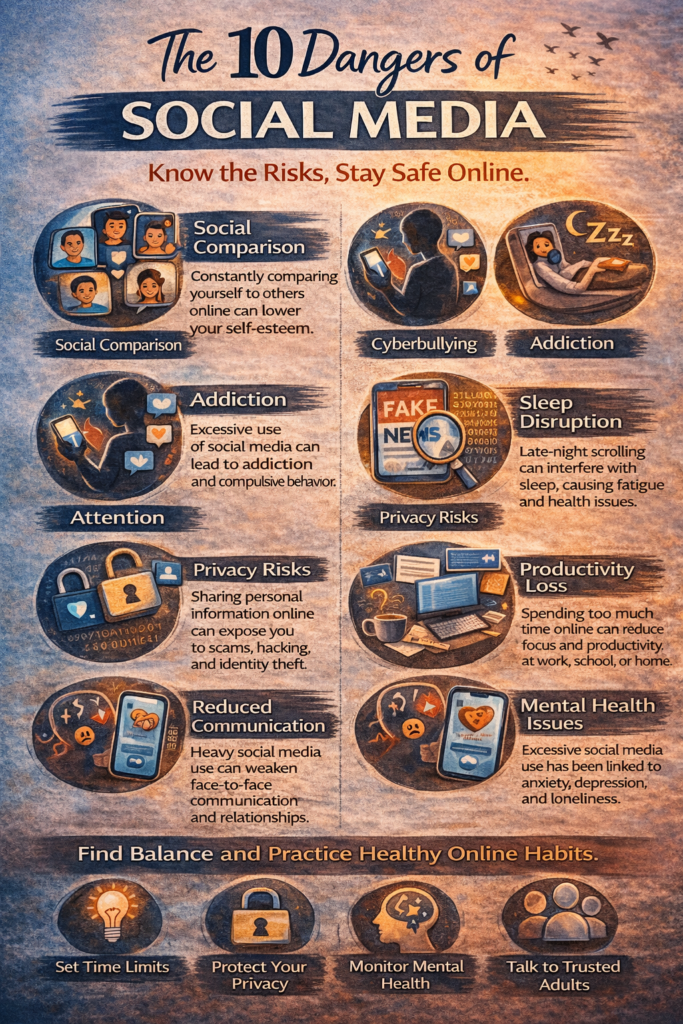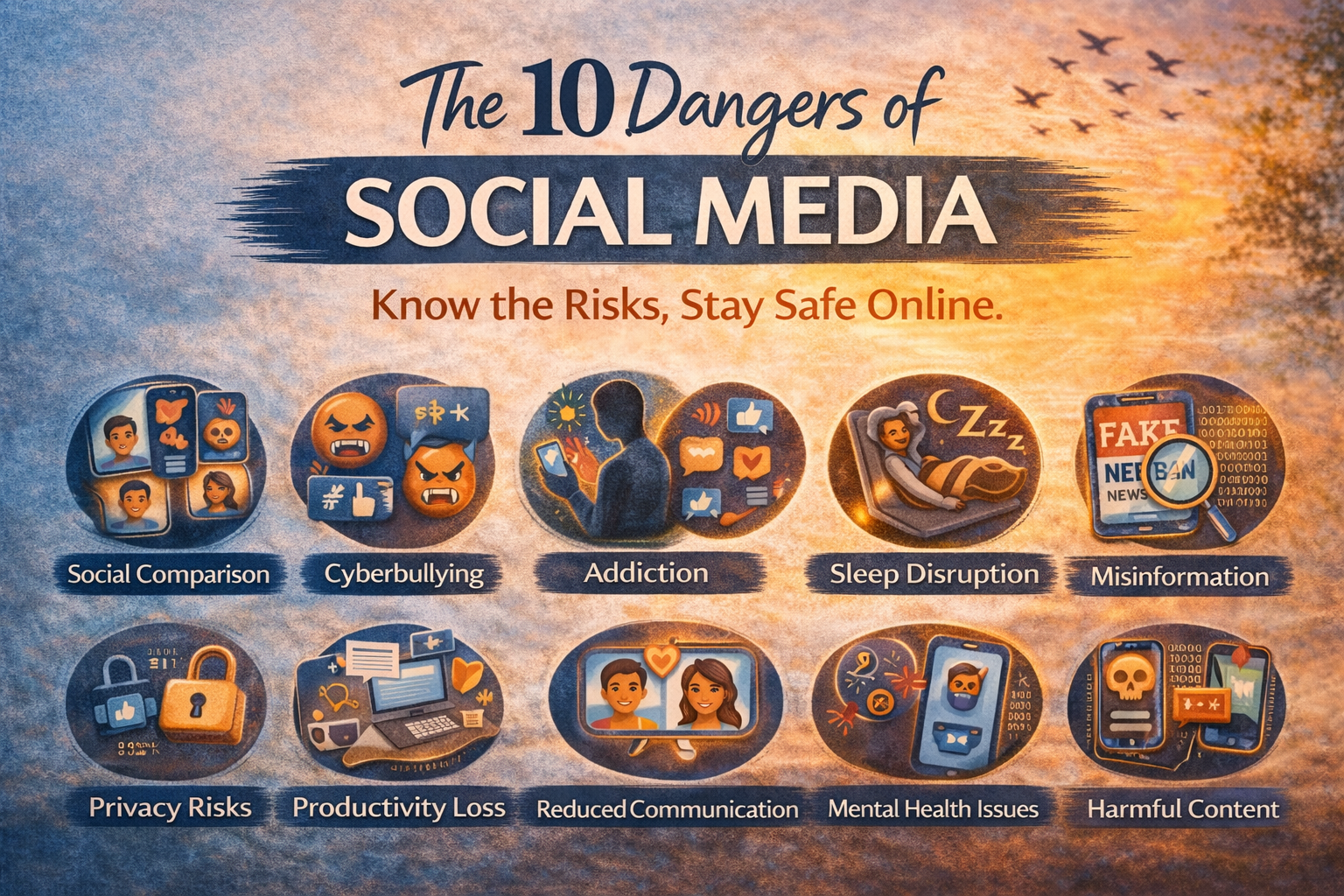
Social media has become one of the most influential tools in modern communication, allowing people to connect, share information, and interact with others across the world instantly. Platforms such as Facebook, Instagram, and TikTok provide opportunities for learning, entertainment, and maintaining relationships. However, alongside these benefits come several risks that can affect individuals’ mental health, relationships, productivity, and personal safety if used excessively. Some of the most common dangers include cyberbullying, addiction, privacy risks, misinformation, sleep disruption, and unhealthy social comparison. These issues highlight how careless or excessive social media use can negatively impact overall well-being. Recognizing these dangers is an important first step toward developing healthier digital habits, protecting personal information, and maintaining a balanced relationship between online activities and real-life responsibilities.
Behind the Screen: 10 Dangers of Social Media
Social media has transformed how people communicate, learn, and share information. Platforms such as Facebook, Instagram, TikTok, and X allow individuals to stay connected with friends, family, and communities around the world. While social media provides many benefits, excessive or careless use can also create serious risks. Understanding the potential dangers of social media is important for promoting healthier digital habits and protecting mental, emotional, and social well-being.
1. Social Comparison and Low Self-Esteem
One of the biggest dangers of social media is constant comparison. Many people post only the best parts of their lives, creating unrealistic expectations. When individuals compare themselves to these idealized images, it can lead to feelings of inadequacy, low self-esteem, and dissatisfaction with their own lives.
2. Cyberbullying
Social media can sometimes become a platform for harassment, insults, and bullying. Cyberbullying can have serious emotional effects, especially among teenagers and young adults. Victims may experience anxiety, depression, or social withdrawal due to negative online interactions.
3. Addiction and Excessive Use
Social media platforms are designed to keep users engaged through notifications, likes, and endless scrolling. Over time, people may develop habits of constantly checking their phones, making it difficult to focus on work, school, or personal relationships.
4. Sleep Disruption
Many people use social media late at night, which can interfere with healthy sleep patterns. The blue light from screens and the mental stimulation from scrolling can make it harder to fall asleep, leading to fatigue and reduced concentration during the day.
5. Decreased Productivity
Excessive time spent on social media can reduce productivity at school, work, or home. Constant notifications and the temptation to check updates can interrupt concentration and make it difficult to complete important tasks.
6. Privacy and Security Risks
Sharing personal information online can expose individuals to privacy threats. Hackers, scammers, and identity thieves may use personal data posted on social media for fraudulent activities. Oversharing can also make individuals vulnerable to stalking or harassment.
7. Spread of Misinformation
Social media allows information to spread quickly, but not all information shared online is accurate. False news, rumors, and misleading content can influence opinions and create confusion, especially when users do not verify the credibility of sources.
8. Reduced Face-to-Face Communication
Heavy reliance on social media communication can weaken real-life social skills. Spending too much time interacting online may reduce opportunities for meaningful face-to-face conversations and personal relationships.
9. Mental Health Challenges
Excessive social media use has been linked to increased levels of anxiety, depression, loneliness, and stress. Constant exposure to online criticism, negative comments, or unrealistic expectations can take a toll on emotional well-being.
10. Exposure to Harmful Content
Social media platforms can expose users to inappropriate or harmful content, including violence, misinformation, or unhealthy behaviors. Younger users may be particularly vulnerable if they lack guidance on how to evaluate and manage online content.
Finding a Healthy Balance
Social media itself is not inherently harmful. When used responsibly, it can help people stay connected, share ideas, and build communities. The key is balance. Setting time limits, protecting personal information, verifying online content, and prioritizing real-life relationships can help individuals enjoy the benefits of social media while minimizing its risks.
By becoming aware of the dangers of social media, individuals can make more mindful choices about how they engage online and develop healthier digital habits for the future.
Taking Control of Your Digital Life: Self-Management Strategies for the 10 Dangers of Social Media
Social media has become a central part of modern communication, allowing people to share experiences, connect with others, and access information instantly. While these platforms provide many benefits, they also present several risks when used excessively or without awareness. Issues such as social comparison, cyberbullying, addiction, privacy concerns, and mental health challenges can emerge when social media use becomes unbalanced. Fortunately, individuals can reduce these risks by practicing effective self-management strategies that promote responsible and mindful digital behavior.
1. Managing Social Comparison and Low Self-Esteem
To avoid negative comparisons on social media, individuals can focus on developing self-awareness and gratitude. Reminding yourself that social media often shows only the highlights of people’s lives can help maintain perspective. Limiting exposure to accounts that trigger negative feelings and following content that promotes positivity and inspiration can also improve self-esteem.
2. Preventing Cyberbullying Exposure
Self-management involves setting boundaries and protecting personal well-being online. Individuals can block or report users who engage in bullying or harassment. Adjusting privacy settings and carefully choosing who can comment on or interact with posts can help create a safer online environment.
3. Reducing Social Media Addiction
Setting daily time limits and scheduling specific periods for social media use can prevent compulsive scrolling. Many smartphones provide screen-time monitoring tools that help users track and reduce their screen time. Practicing digital detox periods—such as taking breaks from social media in the evenings or on weekends—can also promote healthier habits.
4. Protecting Sleep Quality
To prevent sleep disruption, individuals can develop healthy nighttime routines. Avoid using social media at least one hour before bedtime and keep electronic devices out of the bedroom when possible. Replacing late-night scrolling with relaxing activities such as reading or meditation can improve sleep quality.
5. Improving Productivity
Self-management strategies such as time management and goal setting can reduce social media distractions. Turning off nonessential notifications and using focus apps or website blockers during work or study hours can help maintain concentration and productivity.
6. Safeguarding Privacy and Security
Users should regularly review privacy settings and avoid sharing sensitive personal information online. Strong passwords, two-factor authentication, and careful consideration before posting personal details can significantly reduce privacy risks.
7. Preventing the Spread of Misinformation
Practicing critical thinking and digital literacy helps individuals evaluate the reliability of online content. Before sharing posts or articles, users should verify information through trusted sources and avoid spreading unverified claims.
8. Strengthening Real-Life Communication
Balancing online interactions with offline relationships is essential. Individuals can prioritize face-to-face conversations, participate in social activities, and schedule regular time with friends and family to maintain strong real-world connections.
9. Supporting Mental Health
Monitoring emotional responses while using social media is an important self-management skill. If social media triggers stress, anxiety, or sadness, taking breaks or limiting exposure can be beneficial. Practicing mindfulness, exercise, and other stress-management techniques can also support mental well-being.
10. Avoiding Harmful Content Exposure
Users can manage their feeds by unfollowing accounts that promote negative or harmful content and selecting platforms that provide positive and educational material. Reporting inappropriate content and using parental or personal content filters can further protect users from harmful material.
Building Healthy Digital Habits
Social media is not inherently harmful; the key lies in how it is used. By practicing self-awareness, setting boundaries, and maintaining a balanced relationship with technology, individuals can enjoy the benefits of social media while minimizing its risks. Developing strong self-management strategies empowers people to take control of their digital lives and use social media in ways that support personal growth, well-being, and meaningful connections.
Strengthening Digital Safety: Family Support Strategies for the 10 Dangers of Social Media
Social media has become a major part of everyday life, shaping how people communicate, learn, and interact with others. While these platforms offer many benefits, they also expose individuals—especially young people—to various risks such as cyberbullying, addiction, privacy threats, and mental health challenges. Because families are often the first line of guidance and protection, they play an essential role in helping members navigate social media safely. Through open communication, healthy boundaries, and supportive guidance, families can help reduce the impact of the 10 common dangers of social media.
1. Addressing Social Comparison and Low Self-Esteem
Families can help reduce negative self-comparisons by encouraging self-confidence and realistic perspectives about social media. Parents and caregivers can discuss how online posts often show only the positive highlights of people’s lives, not the full reality. Reinforcing self-worth through praise, encouragement, and support can help family members build healthier self-esteem.
2. Preventing Cyberbullying
Families should create a safe environment where members feel comfortable talking about online experiences. Encouraging children or teenagers to report bullying incidents and helping them block or report harmful users can reduce the emotional impact of cyberbullying. Teaching respectful online behavior also promotes kindness and empathy.
3. Reducing Social Media Addiction
Establishing family technology rules can help manage screen time. Families can set daily time limits, encourage device-free meals, and schedule regular family activities without screens. Modeling balanced technology use is also important, as children often learn habits by observing adults.
4. Protecting Healthy Sleep Habits
Families can support better sleep by setting technology curfews, such as turning off devices at least an hour before bedtime. Creating a family rule that keeps phones and tablets out of bedrooms at night can help improve sleep quality and overall well-being.
5. Improving Productivity and Focus
Encouraging structured routines can help reduce distractions from social media. Families can designate specific times for homework, work, or study when devices are limited or turned off. Providing quiet, distraction-free spaces for productivity can also support concentration.
6. Safeguarding Privacy and Security
Families can teach responsible online behavior by discussing the importance of protecting personal information. Helping family members understand privacy settings, secure passwords, and the risks of oversharing online can help prevent identity theft and other security issues.
7. Preventing the Spread of Misinformation
Families can encourage critical thinking and media literacy. Discussing how to identify reliable sources and verify information before sharing it helps family members develop responsible online habits and avoid spreading false information.
8. Strengthening Real-Life Relationships
Families can promote stronger offline relationships by spending quality time together. Activities such as family meals, outings, game nights, or outdoor recreation encourage meaningful interaction and reduce dependence on online communication.
9. Supporting Mental Health
Families can help by regularly checking in on each other’s emotional well-being. If social media causes stress, anxiety, or sadness, family members can encourage breaks from it and support healthier coping strategies, such as exercise, hobbies, or counseling.
10. Protecting Against Harmful Content
Parents and caregivers can monitor social media use, especially for younger users. Using parental controls, discussing appropriate online behavior, and guiding children toward positive, educational content can reduce their exposure to harmful material.
Building a Healthy Digital Family Culture
Social media is a powerful tool that can bring people together, but it must be used responsibly. Families that prioritize open communication, set clear boundaries, and encourage healthy habits can create a supportive environment that helps members avoid the dangers of social media. By working together, families can ensure that social media remains a helpful tool for connection and learning rather than a source of harm.
Building Safer Digital Communities: Community Resource Strategies for the 10 Dangers of Social Media
Social media has become deeply integrated into modern society, influencing communication, information sharing, and social interaction. While these platforms offer many advantages, they also expose users to risks such as cyberbullying, misinformation, addiction, privacy concerns, and mental health challenges. Addressing these dangers requires more than individual awareness—it requires community involvement. Schools, healthcare organizations, local governments, community centers, and nonprofit groups can work together to promote digital safety and responsible social media use. Through education, support services, and public awareness initiatives, communities can help individuals manage the 10 dangers of social media more effectively.
1. Promoting Self-Esteem and Reducing Social Comparison
Community organizations can offer youth development programs and self-esteem workshops that help individuals build confidence and resilience. Schools and community centers can provide mentoring programs, counseling services, and activities that focus on personal strengths rather than online validation.
2. Preventing Cyberbullying Through Education
Communities can implement anti-cyberbullying campaigns in schools and youth programs. Educational workshops can teach digital citizenship, empathy, and responsible online behavior. Local organizations can also provide reporting systems and counseling support for individuals affected by cyberbullying.
3. Addressing Social Media Addiction
Community health programs can raise awareness about the risks of excessive social media use. Workshops on digital wellness and healthy screen habits can help individuals learn to manage their time online. Libraries, recreation centers, and youth clubs can offer engaging offline activities that encourage balanced lifestyles.
4. Encouraging Healthy Sleep Habits
Public health organizations can provide educational materials on the impact of screen use on sleep. Community programs may promote technology-free activities, evening recreational events, or wellness seminars that encourage healthier daily routines.
5. Supporting Productivity and Academic Success
Schools and educational programs can teach time management and digital discipline. Workshops that help students and professionals balance technology use with academic and career responsibilities can reduce social media-related distractions.
6. Strengthening Privacy and Online Security
Community resource centers and local organizations can host cybersecurity awareness programs that teach individuals how to protect personal information online. These programs can include lessons on password safety, privacy settings, and recognizing online scams.
7. Combating Misinformation
Communities can promote media literacy education through libraries, schools, and public forums. Teaching people how to evaluate sources, fact-check information, and recognize misleading content helps reduce the spread of misinformation on social media.
8. Encouraging Real-Life Social Connections
Community events such as festivals, sports leagues, volunteer programs, and cultural gatherings help individuals build meaningful relationships offline. These activities reduce overreliance on online communication and strengthen social bonds within the community.
9. Supporting Mental Health Services
Mental health professionals, community clinics, and counseling centers can provide support for individuals experiencing anxiety, depression, or stress related to social media use. Community-based mental health programs help normalize conversations about emotional well-being and encourage people to seek help when needed.
10. Protecting Individuals from Harmful Online Content
Community organizations can collaborate with schools and parents to provide digital safety training that helps individuals recognize harmful or inappropriate online content. Educational initiatives can guide users toward healthier online spaces and responsible digital behavior.
Strengthening Digital Wellness in Communities
When communities work together to address the dangers of social media, they create safer digital environments for everyone. By offering education, support services, and opportunities for meaningful offline engagement, communities empower individuals to use social media responsibly. Through collective efforts, communities can ensure that technology enhances communication and learning while protecting their members’ well-being.
Frequently Asked Questions
Here are some common questions:
1. What are the 10 dangers of social media?
The ten common dangers of social media include:
- Social comparison
- Cyberbullying
- Social media addiction
- Sleep disruption
- Spread of misinformation
- Privacy and security risks
- Productivity loss
- Reduced face-to-face communication
- Mental health issues such as anxiety or depression
- Exposure to harmful or inappropriate content
These risks can affect emotional well-being, relationships, and daily responsibilities.
2. Why is social comparison considered dangerous?
Social media often shows idealized images of people’s lives. Constantly comparing yourself to others online can lower self-esteem, create unrealistic expectations, and lead to feelings of dissatisfaction or inadequacy.
3. What is cyberbullying on social media?
Cyberbullying refers to harassment, threats, or harmful messages directed at someone through social media platforms. It can cause emotional distress, anxiety, depression, and social withdrawal.
4. How does social media addiction develop?
Social media platforms are designed to keep users engaged through notifications, likes, and comments. This constant feedback can lead to compulsive use, where individuals feel the need to check their accounts frequently.
5. Can social media affect sleep?
Yes. Using social media late at night can disrupt sleep patterns. The blue light from screens and the stimulation from scrolling can make it harder to fall asleep and reduce sleep quality.
6. Why is misinformation a concern on social media?
Information spreads quickly on social media, and not all content is verified. False news, rumors, or misleading information can influence opinions and decisions if users do not verify them against reliable sources.
7. How does social media threaten privacy?
Sharing personal information such as location, phone numbers, or personal photos can expose individuals to identity theft, scams, hacking, or stalking. Weak privacy settings can make this information accessible to strangers.
8. Can social media reduce productivity?
Yes. Frequent notifications and the habit of checking social media can interrupt focus and reduce efficiency at school, work, or home.
9. How does social media affect mental health?
Excessive use of social media has been linked to increased stress, anxiety, depression, loneliness, and feelings of isolation, especially when users experience cyberbullying or negative comparisons.
10. How can people protect themselves from the dangers of social media?
People can reduce risks by:
- Setting limits on daily social media use
- Adjusting privacy settings
- Verifying information before sharing it
- Taking breaks from social media
- Focusing on real-life relationships and activities
11. Are young people more vulnerable to social media dangers?
Yes. Children and teenagers may be more vulnerable because they are still developing emotional and social skills. Guidance from parents, teachers, and communities can help them use social media responsibly.
12. Is social media always harmful?
No. Social media can be beneficial when used responsibly. It can help people connect, learn new information, promote creativity, and build supportive communities. The key is maintaining balance and responsible use.
Conclusion
Social media has become one of the most influential tools in modern communication, allowing people to connect, share information, and interact with others across the world instantly. Platforms such as Facebook, Instagram, and TikTok provide opportunities for learning, entertainment, and maintaining relationships. However, alongside these benefits come several risks that can affect individuals’ mental health, relationships, productivity, and personal safety if used excessively. Some of the most common dangers include cyberbullying, addiction, privacy risks, misinformation, sleep disruption, and unhealthy social comparison. These issues highlight how careless or excessive social media use can negatively impact overall well-being. Recognizing these dangers is an important first step toward developing healthier digital habits, protecting personal information, and maintaining a balanced relationship between online activities and real-life responsibilities.
Video: Cyberbullying is worse than you think #MentalHealthMatters #InternetSafety