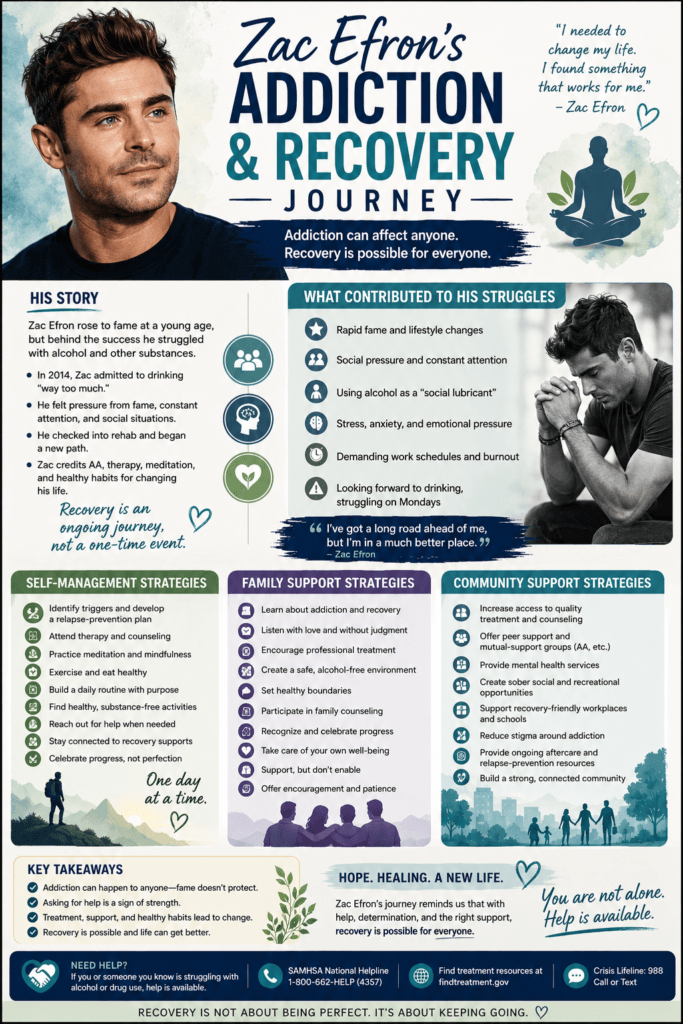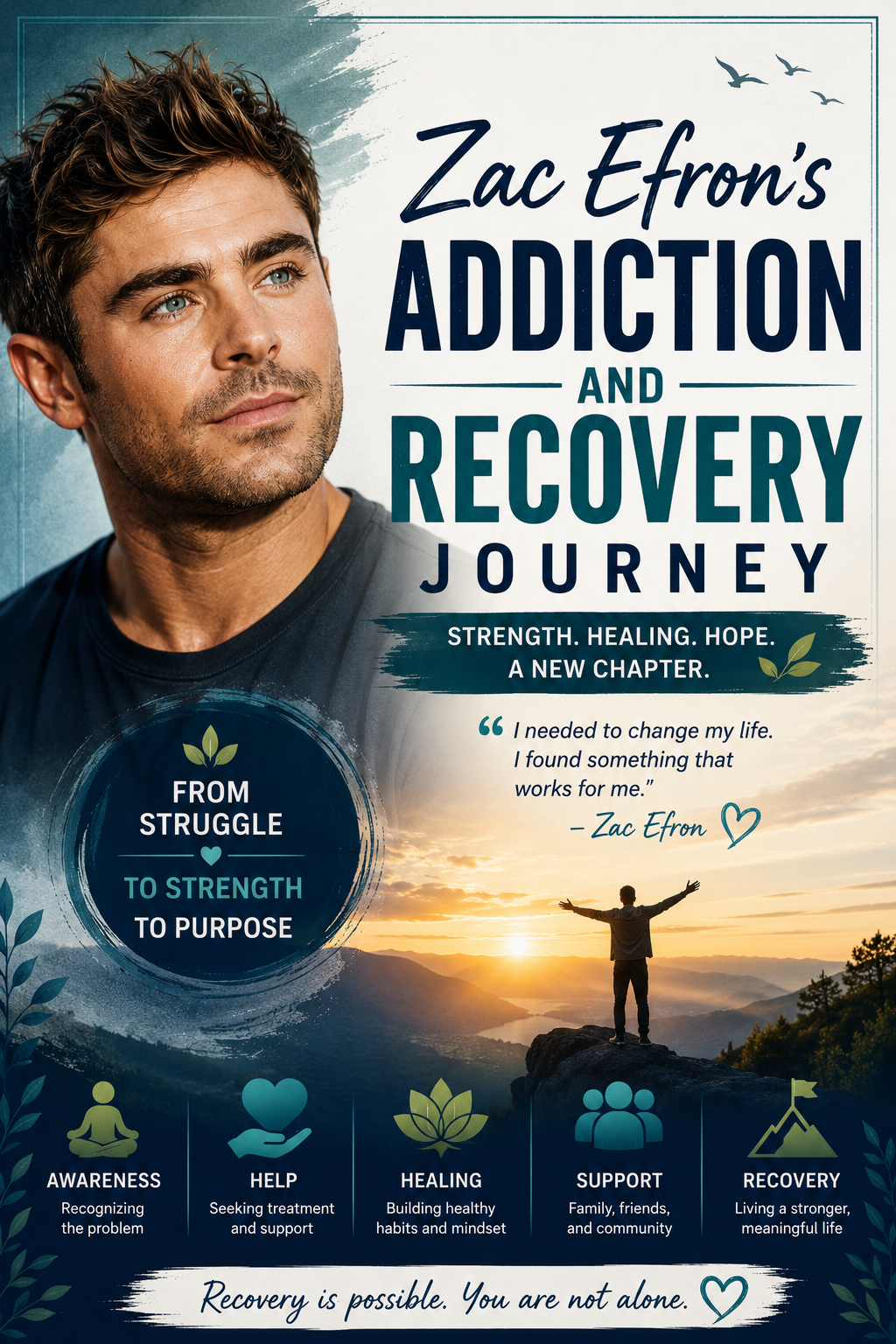
Zac Efron became internationally famous at a young age, but behind his successful acting career, he has spoken publicly about struggling with alcohol and other drug use. In 2014, Efron described drinking “way too much” and discussed how the pressures surrounding fame, constant public attention, heavy workloads, and his social life contributed to unhealthy patterns. He entered rehabilitation and later discussed participating in Alcoholics Anonymous (AA) and therapy.
Efron’s experience provides an opportunity to understand addiction without assuming that celebrity, money, career success, or physical fitness protects someone from substance-related problems. His public comments also illustrate an important recovery principle: treatment is not simply about stopping substance use. Recovery can involve learning why substances became important, developing healthier coping skills, accepting support, and building a different daily life.
Understanding What Contributed to His Addiction
Efron has described becoming famous very quickly and struggling particularly with life outside of work. He said constant media attention and the social pressures surrounding celebrity became difficult to manage. He described substances as becoming a type of “social lubricant,” something he increasingly relied upon to feel comfortable socially.
His experience highlights several factors that can contribute to problematic substance use:
- Chronic stress and pressure.
- Rapid changes in lifestyle or success.
- Social environments where substance use is common.
- Using alcohol or drugs to become more socially comfortable.
- Emotional isolation despite being surrounded by people.
- Burnout from demanding work schedules.
- Using substances to escape uncomfortable emotions.
- Gradually prioritizing drinking or partying over responsibilities.
Efron described recognizing a warning sign when he found himself looking forward to weekends to drink and have fun, while Mondays and Tuesdays became increasingly difficult.
Recognizing the Need for Help
One of the most important lessons from Efron’s story is recognizing when substance use is interfering with everyday life. A person does not have to lose everything before seeking treatment.
Warning signs can include:
- Needing alcohol or drugs to feel comfortable socially.
- Thinking frequently about the next opportunity to use substances.
- Difficulty functioning after drinking or drug use.
- Substance use interfering with work or relationships.
- Increasing tolerance or escalating use.
- Continuing despite negative consequences.
- Feeling unable to control or reduce substance use.
- Using substances primarily to cope with stress or uncomfortable emotions.
Efron ultimately entered rehabilitation. In subsequent interviews, he spoke positively about recovery and said that attending AA had changed his life and helped him become more comfortable with himself.
Self-Management Strategies
Efron’s public discussions about meditation, slowing down his thoughts, exercise, and recovery support illustrate how developing healthier coping strategies can become part of life after treatment. On Running Wild with Bear Grylls, he discussed meditation and his desire not to depend on an external substance to feel comfortable with himself.
Self-management strategies inspired by these broader recovery principles include:
- Identify situations and emotions that trigger cravings.
- Develop a written relapse-prevention plan.
- Attend counseling or addiction treatment consistently.
- Participate in mutual-support programs when helpful.
- Establish healthy sleep and exercise routines.
- Practice meditation, mindfulness, or relaxation.
- Learn healthier ways to manage social anxiety and stress.
- Develop meaningful hobbies and substance-free activities.
- Build relationships with people who support recovery.
- Recognize burnout before it becomes overwhelming.
- Ask for help when cravings or emotional difficulties increase.
- Continue recovery activities even when life begins to improve.
The Role of Mental and Emotional Health
Substance use can sometimes become a method of managing anxiety, loneliness, stress, insecurity, or emotional discomfort. Recovery, therefore, may require understanding what function alcohol or drugs were serving in a person’s life.
Efron has described feeling more comfortable in his own skin after beginning recovery and attending AA. He also discussed meditation as a way to slow his mind and become more comfortable in the present.
Healthy emotional coping may involve:
- Individual therapy.
- Cognitive behavioral strategies.
- Mindfulness and meditation.
- Stress-management techniques.
- Healthy physical activity.
- Recognizing uncomfortable emotions instead of escaping them.
- Developing confidence without relying on substances.
- Maintaining realistic expectations about recovery.
Family Support Strategies
Specific details about the private role Efron’s family played in his treatment should not be assumed without reliable evidence. However, his story can be used to illustrate how families generally can support someone experiencing addiction.
Families can help by:
- Learning that addiction is a treatable health condition.
- Listening without immediately criticizing or blaming.
- Encouraging professional addiction treatment.
- Supporting attendance at counseling and recovery programs.
- Creating substance-free activities and environments.
- Learning the warning signs of recurrence.
- Encouraging healthy sleep, exercise, and daily routines.
- Avoiding enabling behaviors.
- Establishing clear and healthy boundaries.
- Participating in family therapy when appropriate.
- Recognizing recovery progress.
- Seeking counseling or support for themselves when needed.
Family support should not mean attempting to control another person’s recovery. Sustainable recovery ultimately requires the individual’s participation while family members maintain their own well-being and boundaries.
Community Support Strategies
Efron publicly credited AA with making an important difference in his life. Mutual-support organizations are one example of the larger recovery community that can provide connection and accountability.
Communities can support people in recovery by:
- Expanding access to evidence-based addiction treatment.
- Providing affordable counseling and behavioral healthcare.
- Offering peer recovery programs.
- Making mutual-support meetings widely available.
- Increasing access to outpatient and intensive outpatient programs.
- Providing residential treatment when clinically appropriate.
- Integrating addiction and mental healthcare.
- Supporting recovery-friendly workplaces.
- Creating sober recreational and social activities.
- Providing education about substance use disorders.
- Reducing stigma surrounding treatment and recovery.
- Helping people remain connected to services after rehabilitation.
Recovery Is an Ongoing Process
Efron described addiction recovery in 2014 as an ongoing struggle rather than something permanently resolved by completing rehabilitation. That perspective illustrates why continuing care can be important.
Recovery may require:
- Continuing treatment after rehabilitation.
- Recognizing new triggers as life circumstances change.
- Maintaining supportive relationships.
- Developing healthier coping mechanisms.
- Responding quickly to warning signs.
- Reassessing treatment when current strategies stop working.
- Accepting that asking for additional help is part of recovery.
Lessons From Zac Efron’s Journey
Efron’s publicly documented experience demonstrates that outward success does not reveal what someone may be experiencing privately. Addiction can develop alongside a successful career, financial security, physical fitness, and public admiration.
His story can help reinforce several recovery lessons:
- Addiction can affect people from every background.
- Early success does not protect someone from emotional difficulties.
- Substance use can begin as a coping mechanism and become increasingly disruptive.
- Recognizing that something is wrong is an important step.
- Professional treatment can provide an opportunity for change.
- Peer support can strengthen recovery.
- Meditation and other healthy coping strategies can help replace substance-centered coping.
- Recovery requires continued attention rather than a single treatment episode.
- Seeking treatment should be viewed as a sign of taking a health problem seriously.
Conclusion
Zac Efron’s public discussion of addiction and recovery offers more than a celebrity story. It demonstrates how stress, social pressure, emotional discomfort, burnout, and unhealthy coping can contribute to substance-related problems even when someone’s life appears successful from the outside.
His decision to seek treatment, participate in AA, and develop healthier coping strategies illustrates several components commonly associated with recovery. Self-management can strengthen coping and relapse-prevention skills. Families can provide encouragement while maintaining healthy boundaries. Communities can make professional treatment, peer support, mental health care, and ongoing recovery services easier to access.
The broader lesson is that recovery involves more than removing alcohol or drugs. It involves developing healthier ways to manage life, relationships, emotions, stress, and identity—and continuing to use those skills over time.
Frequently Asked Questions
Here are some common questions:
1. Did Zac Efron publicly discuss having problems with alcohol and drugs?
Yes. In 2014, Efron publicly discussed struggling with alcohol and drug use. He said he had been drinking excessively and described addiction as an ongoing struggle.
2. Did Zac Efron go to rehab?
Yes. Efron entered rehabilitation in 2013. He later spoke publicly about the experience and about changes he made afterward.
3. What factors contributed to his substance use problems?
Efron described several pressures surrounding his lifestyle and career, including:
- Becoming famous at a young age.
- Constant public and media attention.
- Demanding work schedules.
- Burnout and isolation.
- Social pressure.
- Using substances to feel more comfortable socially.
- Looking forward to drinking as an escape from the workweek.
4. How did Efron realize his substance use was becoming a problem?
He described reaching a point where he increasingly looked forward to weekends and drinking, while Mondays and Tuesdays became difficult to get through. He recognized this pattern as a warning that something needed to change.
5. Did Zac Efron attend Alcoholics Anonymous?
Yes. In 2014, Efron said he was attending Alcoholics Anonymous meetings and credited the experience with making a meaningful difference in his life.
6. Did therapy play a role in his recovery?
Yes. Efron also reported seeing a therapist during this period. His experience demonstrates how professional treatment and peer support can work together as parts of recovery.
7. What healthy coping strategies did he discuss?
Efron discussed meditation as one way he learned to calm his mind. In a 2014 interview, he said he did not want to depend on an artificial substance to make himself comfortable and described trying to meditate regularly.
8. What role did structure play in his recovery?
In 2016, Efron said sobriety helped him find greater structure in his life. Structure can be valuable in recovery because predictable routines can support healthier sleep, exercise, treatment participation, relationships, and coping behaviors.
9. What self-management strategies can people learn from his journey?
- Identify personal triggers.
- Develop a relapse-prevention plan.
- Attend therapy consistently.
- Participate in peer or mutual-support programs when helpful.
- Practice mindfulness or meditation.
- Establish healthy daily routines.
- Exercise and participate in substance-free activities.
- Recognize stress and burnout early.
- Build relationships that support recovery.
- Seek professional help when cravings or substance use return.
10. How can families support someone experiencing addiction?
- Learn about substance use disorders and recovery.
- Encourage professional treatment.
- Listen without shaming the person.
- Encourage healthy routines and substance-free activities.
- Set appropriate boundaries.
- Avoid enabling harmful behaviors.
- Participate in family counseling when appropriate.
- Recognize positive recovery progress.
- Learn possible warning signs of recurrence.
- Seek support for their own emotional well-being.
Specific details about how Efron’s own family participated in his addiction treatment are private, so general family-support principles should not be presented as facts about his family.
11. How can communities support addiction recovery?
- Expand access to evidence-based addiction treatment.
- Provide affordable mental health counseling.
- Support peer and mutual-support programs.
- Develop sober recreational opportunities.
- Reduce stigma surrounding addiction and treatment.
- Support recovery-friendly workplaces.
- Provide continuing care after rehabilitation.
- Improve access to relapse-prevention services.
- Connect people with appropriate levels of treatment.
12. Did Efron consider recovery finished after rehab?
No. In 2014, he characterized addiction as an ongoing struggle, even while saying that AA had changed his life and that he felt more comfortable with himself. This is an important reminder that completing rehabilitation may be one stage of a longer recovery process.
13. Does Zac Efron’s experience prove that the same recovery methods will work for everyone?
No. His experience is one individual story. Recovery plans should be individualized and may involve behavioral therapy, medications when appropriate, peer support, residential or outpatient treatment, family involvement, and treatment for co-occurring mental health conditions.
14. What is an important lesson from Zac Efron’s story?
His experience demonstrates that career success, fame, financial resources, or physical fitness do not make someone immune to substance-related problems. It also shows the importance of recognizing unhealthy patterns, accepting professional help, developing healthier coping strategies, and maintaining support for recovery.
15. What is the overall message of Zac Efron’s addiction and recovery journey?
Recovery involves more than stopping alcohol or drug use. It can require changing routines, coping with stress differently, addressing emotional needs, accepting support, and, over time, developing a healthier life. Efron’s public comments about rehabilitation, AA, therapy, meditation, and structure provide useful examples of several elements that can support that process
Video: Zac Efron’s Secret Struggle 🤫 #zacefron #recovery