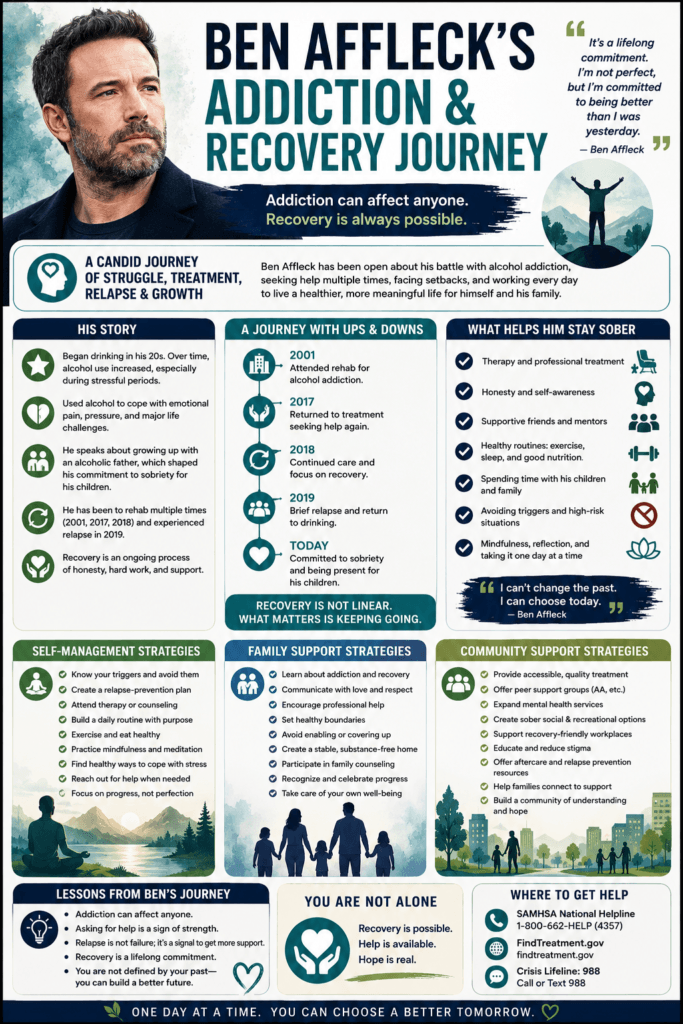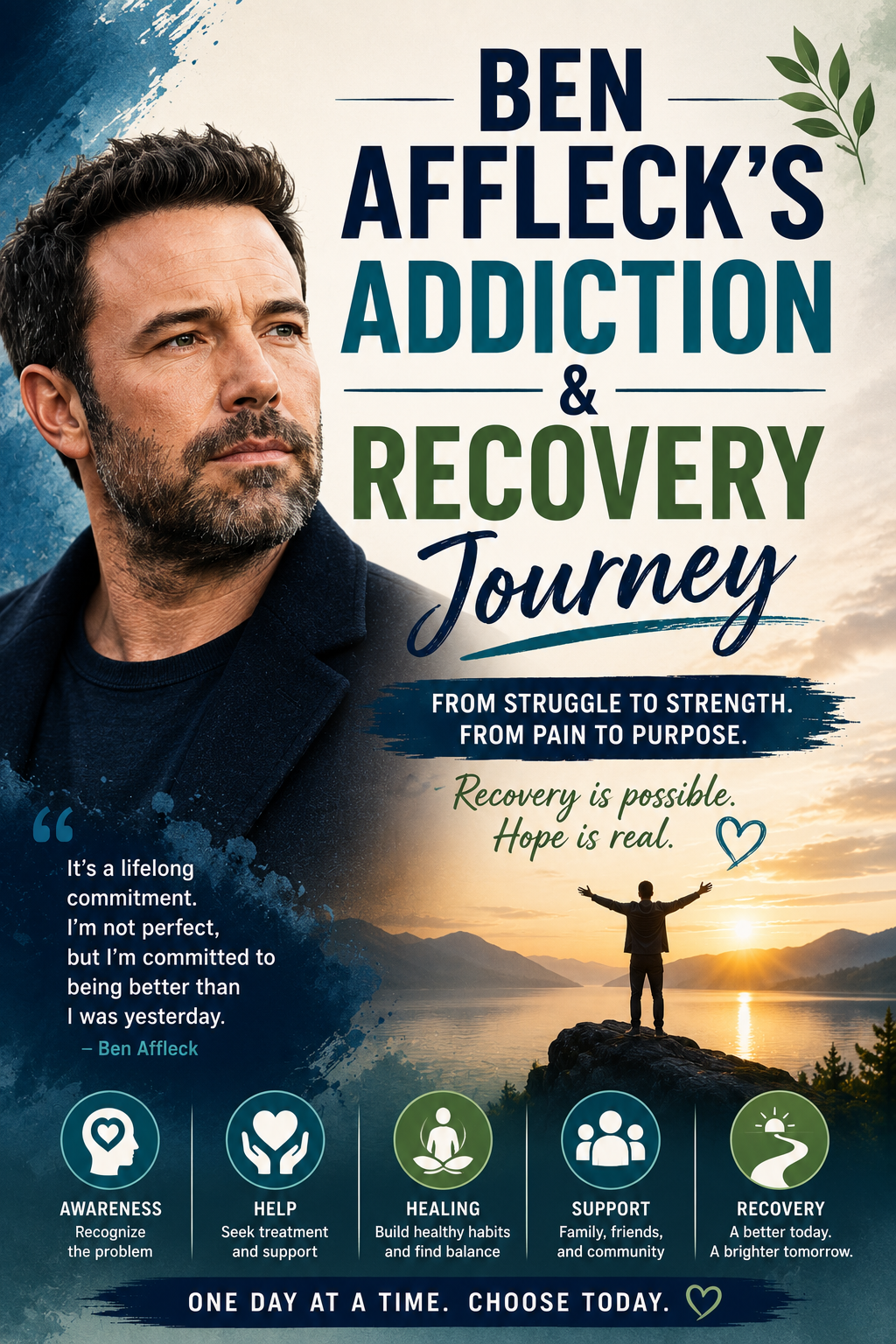
Ben Affleck’s experience with alcohol addiction and recovery demonstrates that substance use disorder can affect people regardless of fame, career success, or financial resources. The actor and filmmaker has publicly discussed his struggles with alcohol, periods of treatment, relapse, and his continuing efforts toward sobriety. His story provides an opportunity to understand addiction as a chronic, treatable condition in which recovery may involve professional treatment, personal responsibility, supportive relationships, and long-term lifestyle changes.
Understanding Ben Affleck’s Struggle With Alcohol
Affleck has described drinking relatively normally earlier in adulthood before his alcohol consumption increased significantly during a difficult period in his personal life. He acknowledged that increased drinking contributed to additional problems rather than solving the emotional discomfort he was experiencing.
Several themes from his public discussions help explain his experience:
- Increasing alcohol consumption over time.
- Using alcohol to cope with emotional discomfort.
- Relationship difficulties and major life stress.
- Difficulty initially accepting the seriousness of his drinking.
- A family history of alcohol and other substance problems.
- Shame and regret surrounding the consequences of alcohol use.
- The need for repeated treatment and continued recovery support.
Affleck has also spoken about growing up with a father who struggled with alcoholism. He explained that his father’s experience influenced how he viewed his own drinking and strengthened his desire to be sober for his children.
Recognizing Addiction as a Cycle
One of the important lessons from Affleck’s account is how substance use can develop into a cycle. He described experiencing discomfort, attempting to make himself feel better through behaviors such as drinking, and then experiencing additional problems because of those behaviors.
This cycle can involve:
- Experiencing stress, sadness, anxiety, or emotional discomfort.
- Using alcohol for temporary relief.
- Developing negative consequences from drinking.
- Feeling shame, regret, or additional emotional pain.
- Drinking again to escape those feelings.
- Finding it increasingly difficult to control alcohol use.
Understanding this cycle can help shift the question from simply “Why doesn’t the person stop?” to “What is maintaining the alcohol use, and what treatment and coping skills could interrupt that cycle?”
Treatment, Relapse, and Recovery
Affleck has received treatment for alcohol problems on multiple occasions. Public accounts document rehabilitation treatment in 2001, 2017, and 2018. He also publicly acknowledged a brief return to drinking in 2019 after a period of sobriety.
His experience illustrates an important recovery principle: relapse or recurrence does not erase previous progress, but it should be taken seriously. It can indicate that a recovery plan needs to be strengthened or adjusted.
After recurrence, helpful responses may include:
- Reconnecting with addiction treatment.
- Identifying what happened before drinking resumed.
- Reviewing triggers and high-risk situations.
- Increasing counseling or recovery support.
- Reestablishing healthy routines.
- Addressing mental health and relationship stressors.
- Developing stronger relapse-prevention strategies.
- Continuing recovery rather than allowing shame to prevent treatment.
Affleck has specifically discussed the danger of believing an alcohol problem has been completely conquered. In a 2020 interview, he explained that some of his returns to drinking occurred when he believed he had the problem under control and could safely drink again.
Self-Management Strategies
Self-management does not mean treating alcohol addiction alone. Instead, it means actively participating in recovery while using professional and social support.
Helpful self-management strategies include:
- Accept that alcohol use has become a problem when evidence shows loss of control or significant consequences.
- Identify emotional, environmental, and social triggers.
- Develop a written relapse-prevention plan.
- Maintain regular addiction treatment appointments.
- Establish predictable daily routines.
- Spend time with supportive, substance-free friends.
- Develop healthier ways to cope with stress.
- Participate in exercise, hobbies, or meaningful activities.
- Recognize thoughts such as “I can control it now” as possible warning signs.
- Seek help early when cravings or emotional distress increase.
- Address depression, anxiety, or other mental health concerns with qualified professionals.
- Focus on progress rather than letting shame about past behavior interfere with recovery.
Affleck has said that sobriety has brought him a greater appreciation for ordinary routines, friendships, and time with his children.
Moving Beyond Shame
Affleck has spoken openly about regret and shame surrounding addiction and his divorce. He has also emphasized that remaining trapped in shame is not productive.
For people in recovery, moving beyond shame can involve:
- Accepting responsibility without defining oneself entirely by past behavior.
- Making appropriate amends when possible.
- Learning from consequences rather than denying them.
- Practicing self-reflection instead of self-punishment.
- Discussing difficult emotions in therapy.
- Rebuilding trust through consistent actions.
- Recognizing that recovery is demonstrated over time.
Accountability and compassion can exist together. A person can acknowledge harm caused during active addiction while still believing that change is possible.
Family Support Strategies
Family relationships have been an important theme in Affleck’s public discussions about alcohol. He has spoken about wanting to protect his children from experiencing the uncertainty he remembered from growing up with an alcoholic parent.
Families supporting someone with addiction can:
- Learn about alcohol use disorder and recovery.
- Encourage professional treatment.
- Communicate concerns calmly and clearly.
- Listen without humiliating or shaming the person.
- Avoid covering up the serious consequences of drinking.
- Establish healthy boundaries around alcohol-related behavior.
- Create alcohol-free activities when appropriate.
- Encourage treatment after recurrence.
- Recognize positive behavioral changes.
- Support consistent routines and responsibilities.
- Consider family counseling.
- Participate in family-support programs.
- Protect children from unsafe or unpredictable behavior.
- Seek emotional support for themselves.
Family support does not mean taking responsibility for another person’s sobriety. Recovery ultimately requires the individual’s participation, while family members have the right to maintain boundaries and protect their own well-being.
The Importance of Supportive Relationships
Affleck has publicly acknowledged supportive friends during his recovery, including other people with experience maintaining sobriety. In a 2020 interview, he expressed gratitude for friends who supported him as he worked toward recovery.
Healthy recovery relationships can provide:
- Encouragement during difficult periods.
- Accountability.
- Substance-free companionship.
- Someone to contact during cravings.
- Examples of successful recovery.
- Reduced isolation.
- Support following a recurrence of alcohol use.
Recovery often becomes more sustainable when individuals do not attempt to manage addiction entirely alone.
Community Support Strategies
Communities can strengthen recovery by making treatment and continuing support accessible. Addiction treatment should extend beyond short periods of rehabilitation because many people require ongoing care.
Helpful community strategies include:
- Expand access to evidence-based alcohol addiction treatment.
- Provide affordable mental health counseling.
- Increase access to outpatient and intensive outpatient programs.
- Provide residential treatment when clinically appropriate.
- Support peer-recovery and mutual-support programs.
- Integrate addiction and mental health services.
- Develop recovery-friendly workplaces.
- Provide sober recreational and social opportunities.
- Educate communities about alcohol use disorder.
- Reduce stigma surrounding treatment and relapse.
- Improve access to continuing care following rehabilitation.
- Provide family education and support programs.
- Connect people returning to alcohol use with treatment rather than judgment.
His Children as Motivation for Recovery
Affleck has repeatedly identified his children as a major priority. In 2020, he expressed concern about his alcohol problems affecting them, particularly because he understood from his own childhood what it was like to have a parent struggling with alcohol.
In 2021, Affleck again described the effect of his drinking on his children as an important turning point in his understanding of sobriety and responsibility.
His experience demonstrates how meaningful personal values can become part of recovery motivation. For another person, that motivation might involve:
- Children or family relationships.
- Physical health.
- Career or education.
- Personal independence.
- Spiritual values.
- Rebuilding damaged relationships.
- Becoming emotionally present.
- Developing a meaningful future.
Motivation alone does not cure addiction, but identifying personally meaningful reasons for recovery can strengthen engagement with treatment.
Lessons From Ben Affleck’s Journey
Affleck’s public experience offers several broader lessons about alcohol addiction and recovery:
- Addiction can affect anyone.
- Family history may contribute to vulnerability, but it does not determine a person’s future.
- Alcohol may temporarily reduce emotional discomfort while ultimately creating additional problems.
- Admitting loss of control can be an important milestone in recovery.
- Rehabilitation may be one part of a much longer recovery process.
- Relapse should be addressed rather than hidden because of shame.
- Supportive relationships can strengthen recovery.
- Healthy routines can provide stability.
- Family members need support and their own boundaries.
- Long-term recovery requires continued attention even after life begins improving.
Conclusion
Ben Affleck’s addiction and recovery journey illustrates the complexity of alcohol use disorder. His public discussions have included family history, escalating alcohol use, rehabilitation, recurrence, regret, relationships, supportive friendships, and the importance he places on being present for his children.
His story also demonstrates why addiction recovery should not be reduced to a single decision to stop drinking. Self-management strategies can help people recognize triggers and develop healthier coping skills. Family support can provide encouragement while maintaining appropriate boundaries. Community resources can provide treatment, counseling, peer support, and continuing care.
Perhaps the most useful lesson is that recovery does not require pretending the past never happened. It involves acknowledging what happened, accepting appropriate responsibility, learning from recurrence, reconnecting with support, and continuing to build a healthier life one decision at a time.
Frequently Asked Questions
Here are some common questions:
1. What addiction has Ben Affleck publicly discussed?
Ben Affleck has publicly discussed his struggle with alcohol addiction/alcohol use disorder. In 2017, he announced that he had completed treatment and described alcohol addiction as something he had faced previously and would continue to address.
2. When did Ben Affleck first seek treatment?
Affleck first entered rehabilitation for alcohol-related problems in 2001. He later returned to treatment, demonstrating that recovery may require additional care at different stages of life.
3. Did he return to treatment later?
Yes. Affleck publicly discussed completing treatment in 2017 and, in 2018, completing a 40-day stay at a treatment center, followed by outpatient care.
4. Did Ben Affleck experience a relapse?
Yes. Affleck has publicly acknowledged setbacks in his recovery. He has described relapse as embarrassing while also continuing to engage with recovery. His experience illustrates that recurrence can be a signal to reassess and strengthen treatment rather than abandon it.
5. What factors contributed to his problems with alcohol?
Affleck has described emotional discomfort, difficult periods in his personal life, and increasing alcohol consumption. He explained how drinking could temporarily relieve uncomfortable feelings but ultimately make his problems worse, creating a destructive cycle.
6. Does addiction run in Ben Affleck’s family?
Affleck has publicly discussed a significant family history of alcohol and other substance problems. He has specifically described growing up with a father who struggled with alcoholism and later became sober.
7. Why was accepting his alcohol problem important?
Affleck has explained that it took considerable time for him to fully accept that he had an alcohol problem. Acceptance can be an important recovery step because it allows someone to recognize that returning to controlled drinking may not be realistic for them and that continued treatment may be necessary.
8. How did his children influence his recovery?
Fatherhood has been a major theme in Affleck’s public discussions about recovery. In 2017, he said he wanted to live fully and be the best father possible, while also teaching his children that there should be no shame in asking for help.
9. What self-management strategies can people learn from his experience?
- Recognize and accept problematic drinking.
- Identify emotional and environmental triggers.
- Develop a relapse-prevention plan.
- Maintain regular therapy or addiction treatment.
- Establish healthy daily routines.
- Avoid situations that increase the risk of drinking.
- Develop healthier ways to cope with emotional discomfort.
- Stay connected with supportive people.
- Seek help quickly after a lapse.
- Avoid assuming that one drink will be different this time.
10. How did family and friends support Affleck?
Affleck has publicly expressed gratitude for support from family and friends. In his 2017 statement, he specifically thanked his co-parent, Jennifer Garner, for supporting him during his recovery. In 2018, he again emphasized how meaningful support from family and others had been.
11. How can families support someone recovering from alcohol addiction?
- Learn about alcohol use disorder.
- Encourage professional treatment.
- Communicate without humiliation or excessive criticism.
- Maintain healthy boundaries.
- Avoid enabling alcohol-related behaviors.
- Encourage continued care after rehabilitation.
- Support healthy routines and alcohol-free activities.
- Develop a plan for responding to relapse.
- Participate in family counseling when appropriate.
- Seek support for their own emotional health.
12. What community support can help people with alcohol addiction?
- Evidence-based addiction treatment.
- Individual and group counseling.
- Peer and mutual-support programs.
- Outpatient and intensive outpatient treatment.
- Residential treatment when appropriate.
- Mental health services.
- Recovery-friendly workplaces.
- Sober recreational activities.
- Family education programs.
- Continuing care and relapse-prevention services.
13. Did Affleck view rehabilitation as a complete cure?
No. After his 2018 treatment, he described addiction as a lifelong struggle and recovery as an ongoing commitment. He also continued with outpatient care after leaving the treatment center.
14. What can his experience teach us about relapse?
His story illustrates that recovery is not necessarily a straight path. A recurrence of alcohol use does not erase previous progress, but it should be taken seriously. Treatment may need to be resumed, intensified, or modified, and the circumstances leading to the relapse should be examined.
15. What is the most important lesson from Ben Affleck’s recovery journey?
One of the strongest messages from Affleck’s public statements is that seeking help should not be viewed as weakness or failure. His experience demonstrates how treatment, self-awareness, family and peer support, accountability, and continued engagement with recovery can all play important roles in addressing alcohol addiction.
Video: Ben Affleck’s Recovery: A Lesson in Perseverance #Sobriety #RecoveryIsPossible