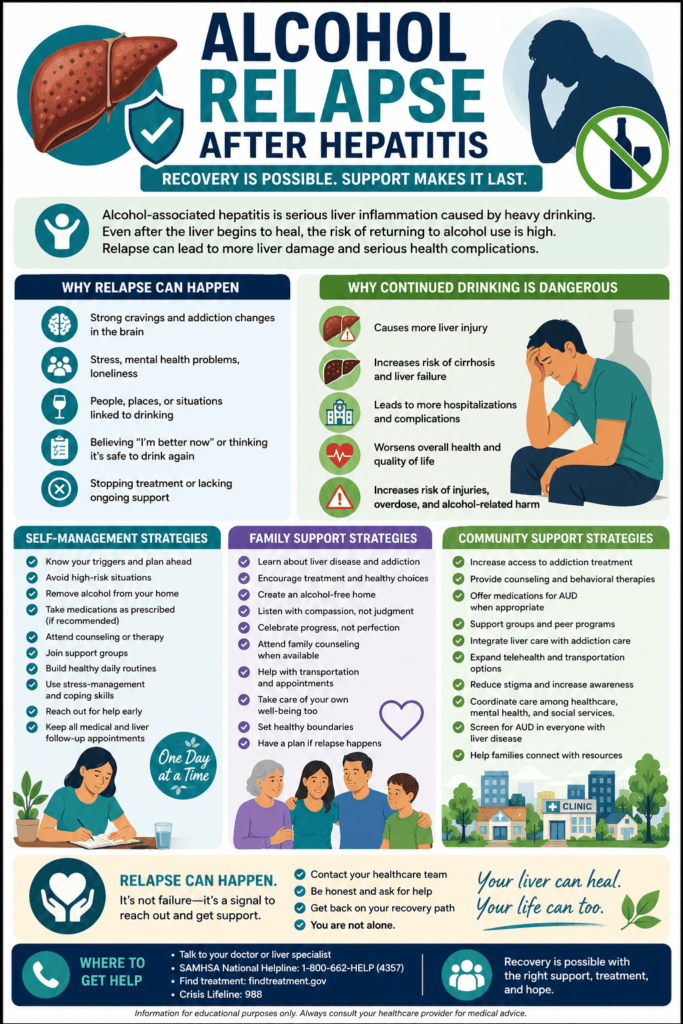
Alcohol-associated hepatitis is a serious form of liver injury caused by prolonged, heavy alcohol exposure. Recovery from the acute illness can be an important turning point, but improvement in liver function does not automatically resolve alcohol use disorder (AUD). Returning to alcohol use remains a major concern because renewed drinking can contribute to additional liver injury and disease progression. For people with alcohol-associated liver disease, supporting alcohol abstinence is a central component of treatment.
Why Alcohol Relapse Can Occur After Hepatitis
A person may understand that alcohol has damaged their liver and still experience powerful cravings or return to drinking. AUD is a treatable medical condition involving behavioral, psychological, and biological factors. Stress, social environments, cravings, untreated mental health problems, and limited recovery support can all make sustained abstinence difficult.
Common factors that may contribute to returning to alcohol include:
- Strong alcohol cravings.
- Exposure to people, places, or situations associated with drinking.
- Stressful life events.
- Depression, anxiety, loneliness, or other emotional difficulties.
- Believing that improved liver tests mean drinking is safe again.
- Limited access to addiction treatment.
- Lack of continuing recovery support.
- Stopping treatment after the immediate medical crisis has passed.
Research also supports integrating liver care with treatment for alcohol use. A 2025 AASLD report found that incorporating hepatology education into AUD treatment was associated with a lower rate of return to alcohol use, highlighting the potential value of coordinated care.
Why Continued Drinking Matters
Alcohol-associated liver disease includes conditions ranging from fatty liver and steatohepatitis to alcohol-associated hepatitis and cirrhosis. Continuing harmful alcohol use can worsen liver disease, while sustained abstinence is a major therapeutic goal.
Returning to drinking may:
- Cause additional liver injury.
- Interfere with liver recovery.
- Increase the risk of progression to cirrhosis.
- Contribute to liver decompensation.
- Increase hospitalization and healthcare needs.
- Complicate the treatment of other medical conditions.
- Increase the risk of alcohol-related injuries and other complications.
Self-Management Strategies
Recovery requires more than deciding not to drink. Developing a structured plan can help people recognize risks before cravings or stressful situations become overwhelming. Behavioral treatment can teach skills for managing triggers and maintaining changes in alcohol use.
Helpful self-management strategies include:
- Identify personal triggers for drinking.
- Develop a written plan for responding to cravings.
- Remove alcohol from the home.
- Avoid high-risk drinking environments during early recovery.
- Attend scheduled liver and addiction treatment appointments.
- Participate in counseling or behavioral therapy.
- Consider mutual-support groups if they are personally helpful.
- Build daily routines involving sleep, nutrition, physical activity, and meaningful activities.
- Develop alcohol-free methods of coping with stress.
- Contact a trusted person when cravings become difficult to manage.
- Discuss medications for AUD with a qualified healthcare professional.
- Treat a return to drinking as a reason to reconnect with treatment rather than abandoning recovery.
Medications may also be part of treatment. NIAAA notes that FDA-approved medications for AUD can help promote abstinence or prevent a return to heavy drinking. However, liver disease can influence medication selection, so treatment should be individualized by clinicians familiar with the patient’s liver function and overall medical condition.
Family Support Strategies
Family members can significantly influence the recovery environment. Support is most effective when it combines compassion with healthy boundaries rather than criticism, threats, or attempts to control every decision.
Families can help by:
- Learning about both AUD and alcohol-associated liver disease.
- Recognizing addiction as a medical and behavioral health condition.
- Avoiding alcohol-centered activities when possible.
- Keeping alcohol out of the home when appropriate.
- Encouraging continued medical and addiction treatment.
- Attending family counseling when available.
- Learning the person’s common relapse triggers.
- Encouraging healthy routines and alcohol-free activities.
- Avoiding shame after a lapse or recurrence of alcohol use.
- Maintaining appropriate boundaries around unsafe behavior.
- Developing an emergency plan for serious medical symptoms.
- Seeking support for their own emotional well-being.
Family counseling can strengthen relationships and contribute to a supportive recovery environment.
Community Support Strategies
Long-term recovery is easier when people can access addiction treatment beyond the hospital or liver clinic. Community services can provide continuing support as patients transition from acute medical treatment into longer-term recovery.
Helpful community strategies include:
- Increase access to evidence-based AUD treatment.
- Connect liver specialists with addiction medicine professionals.
- Provide behavioral therapies such as cognitive behavioral therapy and motivational interventions.
- Expand access to medications for AUD when clinically appropriate.
- Provide peer and mutual-support programs.
- Increase access to outpatient and intensive outpatient treatment.
- Provide residential treatment when clinically appropriate.
- Expand telehealth services for people with transportation or geographic barriers.
- Provide family education and counseling.
- Screen patients with alcohol-related liver disease for AUD.
- Reduce stigma surrounding both addiction and relapse.
- Coordinate follow-up between primary care, hepatology, mental health, and addiction treatment providers.
Evidence-based AUD care can include behavioral treatment, medications, mutual-support programs, or combinations of these approaches. Treatment should be individualized because no single recovery approach works for everyone.
When a Return to Drinking Happens
A return to alcohol use does not mean treatment has no value. It should prompt reassessment of what happened and what additional support is needed. The treatment team can examine triggers, cravings, medication options, behavioral strategies, mental health concerns, and the intensity of addiction treatment.
After a return to alcohol use:
- Contact the healthcare or addiction treatment team.
- Be truthful about the amount and frequency of alcohol consumed.
- Identify what preceded the episode.
- Review and strengthen the recovery plan.
- Increase treatment intensity when appropriate.
- Reevaluate medications for AUD with a clinician.
- Reconnect with counseling and recovery supports.
- Continue liver follow-up and recommended laboratory monitoring.
Frequently Asked Questions
Here are some common questions:
1. What is alcohol-associated hepatitis?
Alcohol-associated hepatitis is inflammation and injury of the liver associated with heavy alcohol use. Severity varies, and severe cases can lead to liver failure, hospitalization, and death.
2. Can someone relapse after recovering from alcohol-associated hepatitis?
Yes. Improvement in liver health does not automatically eliminate alcohol use disorder (AUD), cravings, triggers, or the risk of returning to drinking.
3. Why might someone drink again after such a serious illness?
Alcohol use disorder is a medical condition, not simply a lack of motivation. Factors that may contribute include:
- Alcohol cravings.
- Stress or emotional distress.
- Depression or anxiety.
- Social pressure.
- Exposure to previous drinking environments.
- Limited recovery support.
- Discontinuing addiction treatment.
- Believing improved health means alcohol is safe again.
4. What happens to the liver if drinking resumes?
Continued alcohol exposure can cause additional liver injury and interfere with recovery. Depending on the person’s condition, it may contribute to the progression of liver disease, cirrhosis, liver decompensation, hospitalization, and other serious complications.
5. Is any amount of alcohol safe after alcohol-associated hepatitis?
People with alcohol-associated liver disease are generally advised to abstain from alcohol. A healthcare professional or liver specialist should provide individualized recommendations.
6. Does a relapse mean recovery has failed?
No. A return to alcohol use signals that the treatment and recovery plan should be reassessed. The person may need additional counseling, medication, recovery support, or a higher level of addiction treatment.
7. What should someone do after returning to alcohol use?
- Contact the healthcare or addiction treatment team.
- Be honest about how much alcohol was consumed.
- Identify what triggered the return to drinking.
- Reconnect with counseling or recovery support.
- Continue liver-related medical follow-up.
- Discuss whether treatment intensity needs to change.
- Ask whether medication for AUD may be appropriate.
8. Are medications available to help prevent alcohol relapse?
Yes. Medications for alcohol use disorder can reduce drinking or help support abstinence. Because liver disease may affect which medications are appropriate, medication selection should be individualized by a qualified healthcare professional.
9. How can someone manage alcohol cravings?
Helpful strategies may include:
- Recognizing personal triggers.
- Avoiding high-risk situations.
- Removing alcohol from the home.
- Contacting a supportive person when cravings develop.
- Practicing stress-management techniques.
- Participating in counseling.
- Attending peer or mutual-support programs.
- Taking prescribed AUD medications consistently.
10. How can family members support recovery?
Families can learn about both liver disease and addiction, encourage treatment, create an alcohol-free home environment when appropriate, participate in family counseling, and communicate without shame or judgment. Healthy boundaries are also important.
11. Should family members watch for warning signs of relapse?
Yes. Changes such as withdrawing from recovery activities, reconnecting with high-risk drinking environments, increasing secrecy, romanticizing previous alcohol use, or skipping treatment appointments may indicate that additional support is needed. However, no single behavior proves that someone is drinking.
12. What community resources can support recovery?
- Addiction medicine programs.
- Outpatient or intensive outpatient treatment.
- Behavioral health counseling.
- Peer recovery programs.
- Mutual-support groups.
- Liver disease programs.
- Primary care services.
- Telehealth addiction treatment.
- Family counseling and education.
- Residential treatment when clinically appropriate.
13. Why should liver treatment and addiction treatment be coordinated?
Alcohol-associated hepatitis involves both liver health and alcohol use. Treating only the liver leaves an important cause of future injury unaddressed. Coordinated hepatology and addiction care can address medical complications, cravings, mental health, medications, and long-term recovery simultaneously.
14. Can the liver recover after alcohol-associated hepatitis?
Some liver injury may improve with sustained abstinence and appropriate medical treatment, but recovery depends on the severity and extent of liver damage. Advanced fibrosis or cirrhosis may not be fully reversible.
15. What is the most important message about relapse after alcohol-associated hepatitis?
A return to drinking should be taken seriously, but it should also lead to renewed treatment rather than shame. Protecting the liver requires treating both the liver disease and the alcohol use disorder while strengthening self-management, family involvement, and long-term community support.
Conclusion
Recovering from alcohol-associated hepatitis requires attention to both liver disease and alcohol use disorder. Medical stabilization can help the liver, but long-term recovery also requires addressing cravings, triggers, emotional health, relationships, and access to effective addiction treatment.
Self-management provides practical skills for responding to triggers and cravings. Families can create supportive environments while maintaining healthy boundaries. Communities and healthcare systems can improve outcomes by integrating hepatology, addiction medicine, behavioral health, medication management, and ongoing recovery services. Treating the liver and treating the alcohol use disorder together provides a stronger foundation for lasting recovery.
Video: What Happens When You Drink After Hepatitis? #LiverDisease #AlcoholUseDisorder