The first year of grief in addiction recovery is often one of the most emotionally complex phases of healing. While sobriety marks a critical milestone, it also brings heightened awareness of losses connected to addiction—lost time, strained relationships, missed opportunities, and the absence of a substance that once served as a coping mechanism. As the brain and emotional system recalibrate, individuals may experience waves of sadness, regret, vulnerability, and identity confusion. This period is not a sign of weakness or failure; rather, it reflects the psychological and emotional adjustments required to build a life without substances. Understanding this grief as a normal and necessary part of recovery helps reduce shame and prepares individuals for the emotional work ahead.
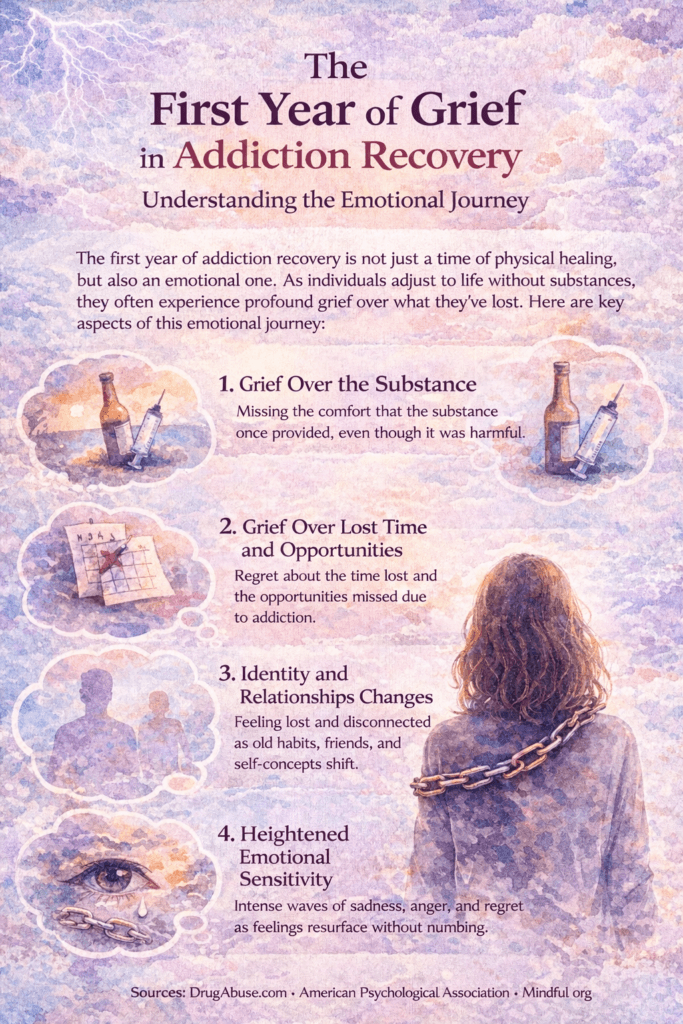
The First Year of Grief in Addiction Recovery: Understanding the Emotional Journey
The first year of addiction recovery is often described as a period of transformation—but it is also a season of grief. While much attention is given to sobriety milestones and behavioral change, the emotional reality is more complex. Recovery involves not only letting go of substances but also mourning the losses tied to addiction. The first year, in particular, can feel like an emotional awakening filled with unexpected waves of sadness, anger, regret, and even confusion.
Grieving the Substance Itself
For many individuals, substances were not just harmful habits—they were coping mechanisms. They provided relief from stress, trauma, loneliness, or emotional pain. In early recovery, there is often a surprising sense of loss when that coping tool is removed. Even though the substance caused harm, it may have also felt like a companion, a comfort, or a source of escape. Acknowledging this grief without shame is essential. Missing something that once provided relief does not mean someone wants to return to it—it means they are adjusting.
Grieving Lost Time and Opportunities
As clarity increases during the first year, individuals may reflect on strained relationships, disrupted careers, financial consequences, or delayed personal goals. This awareness can trigger deep regret. The realization of “what could have been” may surface repeatedly, especially during anniversaries or significant life events. Grief at this stage often includes self-forgiveness work and learning to focus on rebuilding rather than reliving the past.
Grieving Relationships and Identity
Addiction often reshapes identity and social circles. In recovery, some friendships may fade if they were centered around substance use. Family roles may shift. Individuals may no longer identify with their former lifestyle, yet they may not fully recognize who they are becoming. This identity transition can feel disorienting. It is common to grieve both the person one used to be and the uncertainty of who one is now.
Emotional Intensity in Early Recovery
The first year frequently includes heightened emotional sensitivity. Without substances numbing feelings, emotions may feel raw and amplified. Individuals may experience mood swings, vulnerability, or emotional triggers. These fluctuations are not signs of failure—they are part of neurological and psychological recalibration.
The Role of Anniversaries and Milestones
Birthdays, holidays, and sobriety milestones can intensify grief. These moments often prompt reflection. While they can bring pride and hope, they may also resurface memories tied to addiction. Preparing for these emotionally charged periods with support systems and structured coping strategies is important.
Growth Within Grief
Although grief is painful, it is also transformative. The first year of recovery teaches emotional regulation, resilience, and acceptance. Many individuals discover strengths they did not know they possessed. Over time, grief shifts from sharp pain to reflective understanding. It becomes integrated into the recovery narrative rather than dominating it.
Conclusion
The first year of grief in addiction recovery is not a sign that sobriety is failing—it is evidence that healing is happening. Grief reflects awareness, growth, and the process of letting go. By acknowledging losses, seeking support, and practicing self-compassion, individuals can move through this emotional terrain with stability. Recovery is not just the absence of substances; it is the rebuilding of a life—and that rebuilding often begins with grieving what was left behind.
Staying Steady: Self-Management Strategies During the First Year of Grief in Addiction Recovery
The first year of addiction recovery is not only about abstaining from substances—it is about learning how to live, feel, and cope without them. Alongside physical stabilization and lifestyle changes, many individuals experience profound grief. This grief may involve the loss of a coping mechanism, strained relationships, missed opportunities, or a former identity. Because emotional intensity can heighten relapse risk, developing intentional self-management strategies during this period is essential for long-term stability.
1. Normalize the Grief Process
The first step in managing grief is understanding that it is expected. Feeling sadness, regret, anger, or nostalgia does not mean recovery is failing—it means healing is occurring. Naming emotions (“I’m feeling regret today” rather than “Something is wrong with me”) reduces emotional overwhelm and increases self-awareness.
Keeping a grief journal can help track emotional patterns and triggers. Writing allows individuals to process feelings rather than suppress them.
2. Establish Structured Daily Routines
Grief can disrupt concentration, sleep, and motivation. A predictable daily routine provides stability during emotional turbulence. Key components include:
- Consistent sleep schedule
- Regular meals
- Physical activity
- Scheduled recovery meetings or therapy
- Time for reflection or relaxation
Structure reduces chaos and protects against impulsive decision-making.
3. Develop Healthy Emotional Outlets
During addiction, substances often served as emotional regulation tools. In recovery, new outlets must replace them. Effective strategies include:
- Exercise to regulate stress hormones
- Mindfulness or meditation to increase emotional tolerance
- Creative expression (art, music, writing)
- Talking openly with trusted supporters
Emotions that are expressed constructively are less likely to build into relapse triggers.
4. Practice Self-Compassion
The first year often brings intense self-criticism about past behaviors. Reframing internal dialogue is critical. Instead of:
- “I ruined everything,”
try - “I am rebuilding, and growth takes time.”
Self-compassion reduces shame, which is a powerful relapse driver. Recovery requires patience with progress, not perfection.
5. Prepare for Emotional Triggers and Anniversaries
Holidays, birthdays, or sobriety milestones may intensify grief. Planning ahead reduces vulnerability. This might include:
- Scheduling extra support meetings
- Avoiding high-risk environments
- Checking in with a sponsor or therapist
- Setting realistic expectations for emotionally charged events
Anticipation and preparation strengthen resilience.
6. Set Manageable Goals
Grief can feel overwhelming when paired with major life rebuilding tasks. Break goals into small, achievable steps. Success in manageable tasks builds confidence and reinforces forward momentum.
7. Strengthen Support Systems
Isolation amplifies grief. Regular contact with peer groups, counselors, family members, or mentors provides reassurance and accountability. Asking for help is not a weakness—it is strategic self-care.
8. Monitor for Emotional Burnout
Signs of emotional overload include irritability, sleep disruption, avoidance behaviors, or increased cravings. Early recognition allows for timely adjustments, such as increasing therapy sessions or prioritizing rest.
Conclusion
The first year of grief in addiction recovery is emotionally demanding, but it is also transformative. With structured routines, emotional awareness, healthy coping outlets, self-compassion, and strong support systems, individuals can navigate grief without returning to substance use. Grief does not signal regression—it signals growth. By managing emotions intentionally, individuals lay the foundation for sustainable recovery built on resilience, authenticity, and renewed purpose.
Walking Beside Them: Family Support Strategies During the First Year of Grief in Addiction Recovery
The first year of addiction recovery is often described as a time of rebuilding—but it is also a time of grief. While the individual in recovery is grieving the loss of substances, lost time, damaged relationships, and former identity, families are also navigating their own emotional adjustments. This shared, but often unspoken, grief can create tension, misunderstanding, or emotional distance if not addressed intentionally. Families who understand the grief process and respond with structure, empathy, and consistency can become powerful stabilizing forces during this critical year.
Understanding the Grief in Recovery
In the first year, individuals may experience:
- Sadness over losing a familiar coping mechanism
- Regret about past actions
- Identity confusion
- Emotional sensitivity and mood fluctuations
- Anxiety during anniversaries or milestones
Families may misinterpret these emotions as instability or lack of progress. Recognizing grief as a normal component of recovery reduces miscommunication and prevents unnecessary conflict.
Key Family Support Strategies
1. Normalize Emotional Fluctuations
The brain and emotional system are recalibrating during the first year. Families can support this process by acknowledging that mood swings, sadness, or vulnerability are not signs of failure. Simple validation—“It makes sense that this feels hard right now”—can reduce shame and isolation.
2. Practice Active Listening
During grief, individuals need space to process without being “fixed.” Families can:
- Listen without interrupting
- Avoid minimizing statements like “Just move on.”
- Ask open-ended questions such as “What feels most overwhelming right now?”
Active listening builds trust and emotional safety.
3. Encourage Structured Routines
Consistency supports emotional regulation. Families can reinforce healthy habits by:
- Respecting therapy or meeting schedules
- Supporting regular sleep and meal patterns
- Creating predictable home environments
Structure reduces stress and strengthens recovery stability.
4. Prepare for Emotional Milestones
Holidays, anniversaries, or sobriety milestones can intensify grief. Families can proactively plan:
- Additional support check-ins
- Low-stress celebrations
- Avoiding high-risk social environments
Preparation reduces emotional overwhelm.
5. Avoid Pressuring for “Quick Progress.”
Recovery grief does not follow a strict timeline. Pressuring someone to “be over it” may increase internal shame. Families can focus on steady growth rather than dramatic transformation. Progress in recovery is often quiet and gradual.
6. Reinforce Hope Without Denying Pain
It is possible to validate grief while maintaining optimism. Families can acknowledge hardship while reminding the individual of progress made. Statements like, “This is hard, but look how far you’ve come,” balance empathy and encouragement.
7. Set Healthy Boundaries
Supporting grief does not mean removing accountability. Clear expectations around responsibilities, communication, and respect create stability. Boundaries provide safety for both the individual and the family system.
8. Seek Family Counseling if Needed
Grief in recovery can reopen old wounds within the family. Professional guidance can improve communication, process lingering resentment, and create a unified recovery-support plan.
Conclusion
The first year of grief in addiction recovery is emotionally complex for both individuals and families. When families respond with empathy, structure, and balanced boundaries, they transform grief from a destabilizing force into an opportunity for deeper connection. Healing during this year is not about eliminating sadness—it is about learning to move through it together. With patience, understanding, and intentional support, families can help create a foundation where recovery not only survives but also strengthens.
Stronger Together: Community Resource Strategies During the First Year of Grief in Addiction Recovery
The first year of addiction recovery is often marked by emotional turbulence. Beyond physical stabilization, individuals face grief related to lost time, strained relationships, identity shifts, and the absence of substances that once served as coping tools. While personal resilience and family support are essential, community resources play a critical role in helping individuals navigate this emotionally vulnerable period. Recovery is strengthened when communities provide structured, accessible, and compassionate systems of care.
Understanding Grief in Early Recovery
Grief during the first year may include:
- Mourning the loss of a coping mechanism
- Regret over past decisions
- Social disconnection from former peer groups
- Emotional sensitivity during milestones and anniversaries
- Anxiety about rebuilding life roles
Without adequate support, these emotional stressors can increase relapse risk. Community-level interventions create protective layers that reduce isolation and promote stability.
Key Community Resource Strategies
1. Accessible Peer Support Groups
Community-based recovery meetings provide shared understanding and normalization of grief experiences. Hearing others describe similar emotional waves reduces feelings of isolation. Peer support fosters accountability while creating a safe space to process loss without judgment.
Specialized grief-in-recovery groups can be particularly beneficial during the first year, as they directly address emotional adjustment rather than focusing solely on abstinence.
2. Integrated Mental Health Services
Many individuals experience co-occurring anxiety, depression, or trauma symptoms during early recovery. Community clinics offering affordable counseling, psychiatric services, and trauma-informed therapy provide critical emotional support. Early mental health intervention reduces the likelihood that grief evolves into untreated depression or relapse triggers.
3. Structured Day Programs and Recovery Centers
Recovery community centers offering workshops, skill-building classes, vocational training, and sober social events provide meaningful engagement. Structured activities reduce idle time, which can intensify rumination and emotional distress.
Programs focused on life skills, emotional regulation, and stress management equip individuals with tools to navigate grief constructively.
4. Crisis Support and Relapse Prevention Services
Hotlines, mobile crisis units, and walk-in support clinics offer immediate assistance during emotional spikes. The first year often includes unpredictable moments of vulnerability. Knowing that immediate help is available can prevent impulsive decisions.
5. Employment and Housing Assistance
Practical instability amplifies emotional grief. Communities that provide job placement services, resume workshops, and transitional housing reduce environmental stressors. Stability in housing and employment strengthens emotional resilience.
6. Public Awareness and Stigma Reduction
Community campaigns that frame addiction recovery as a health journey rather than a moral failure encourage individuals to seek help without shame. Reducing stigma creates an atmosphere where grief can be openly discussed rather than hidden.
7. Faith-Based and Cultural Support Networks
For some individuals, spiritual or cultural community groups provide comfort, meaning-making, and a sense of belonging during grief. These networks can complement clinical services and offer additional layers of emotional support.
Conclusion
The first year of grief in addiction recovery is a period of vulnerability—but it is also a period of growth. Communities that offer peer support, mental health access, structured programming, crisis intervention, and practical assistance create environments where healing can flourish. Recovery is not sustained by willpower alone; it is reinforced by accessible, compassionate systems of care. When communities invest in coordinated support strategies, they transform grief from a destabilizing force into an opportunity for resilience, connection, and long-term recovery stability.
Frequently Asked Questions
Here are some common questions:
1. Why is the first year of recovery often described as a year of grief?
The first year of recovery involves more than stopping substance use. It includes grieving the loss of a coping mechanism, lost time, strained relationships, missed opportunities, and even a former identity. Emotional awareness increases as substances are removed, making grief more noticeable.
2. Is it normal to miss the substance during recovery?
Yes. Even though substances caused harm, they may have provided temporary relief from stress or emotional pain. Missing that relief does not mean someone wants to relapse—it reflects adjustment to new coping methods.
3. What types of grief are common in early recovery?
Common forms include:
- Grief over damaged relationships
- Regret about past decisions
- Loss of social circles tied to substance use
- Identity confusion
- Fear of rebuilding life
4. How does grief increase relapse risk?
Unprocessed grief can lead to emotional overwhelm, depression, or anxiety. If individuals lack healthy coping strategies, they may be tempted to return to substances to numb those feelings.
5. How long does grief last in recovery?
Grief does not follow a strict timeline. Emotional intensity is often strongest in the first year due to neurological and psychological adjustments, but healing continues beyond that period.
6. Are mood swings normal during the first year?
Yes. The brain is recalibrating after prolonged substance use. Emotional highs and lows are common, particularly in early sobriety.
7. Why do anniversaries and holidays feel especially difficult?
Milestones often trigger reflection. Birthdays, holidays, or sobriety anniversaries can bring pride but also memories of past behaviors or losses, intensifying grief temporarily.
8. How can someone cope with grief in recovery?
Effective strategies include:
- Attending therapy or support groups
- Practicing mindfulness or meditation
- Journaling emotions
- Maintaining structured routines
- Seeking peer or family support
9. Is grief a sign that recovery is failing?
No. Grief is often a sign of emotional healing and increased awareness. It indicates that the individual is processing rather than avoiding emotions.
10. Can grief coexist with hope?
Absolutely. Recovery often involves holding both sadness and optimism simultaneously. Growth frequently emerges from emotional processing.
11. How can families support someone grieving in recovery?
Families can:
- Validate emotions without minimizing them
- Encourage therapy and structured routines
- Avoid pressuring for “quick progress.”
- Provide consistent emotional support
12. When should professional help be sought?
Professional support is important if grief leads to:
- Persistent depression
- Thoughts of self-harm
- Severe anxiety
- Social withdrawal
- Strong relapse urges
Early intervention improves outcomes.
13. Does everyone experience grief in the first year?
Not everyone experiences it in the same way, but most individuals encounter some form of emotional adjustment or loss during early recovery.
14. What is the key takeaway about grief in the first year?
Grief is not a setback—it is part of the rebuilding process. Processing loss creates space for resilience, self-awareness, and long-term stability in recovery.
Conclusion
Although the first year of grief in addiction recovery can feel overwhelming, it is also deeply transformative. Grief creates space for reflection, accountability, and personal growth. With structured support, healthy coping strategies, and compassionate relationships, individuals can move through this period with increasing resilience. Over time, the intensity of grief often softens, giving way to clarity, strengthened identity, and renewed purpose. Recovery is not merely about abstinence—it is about rebuilding a meaningful life, and that rebuilding process frequently begins by honoring and working through grief rather than avoiding it.
Video: The First Year of Sobriety Almost Broke Me #recovery #sobriety #griefandgrowth