Drug overdose affects both women and men, but women may experience a distinct combination of biological, psychological, medical, and social factors that influence substance use and recovery. Although men currently have a substantially higher overall overdose death rate in the United States, focusing only on that comparison can hide important risks faced by women.
Trauma, depression, chronic pain, pregnancy and postpartum changes, caregiving responsibilities, intimate-partner violence, stigma, and barriers to treatment can intersect with substance use. Understanding these factors can help women, families, healthcare professionals, and communities prevent overdoses and improve access to treatment.
Women and Overdose: Understanding the Numbers
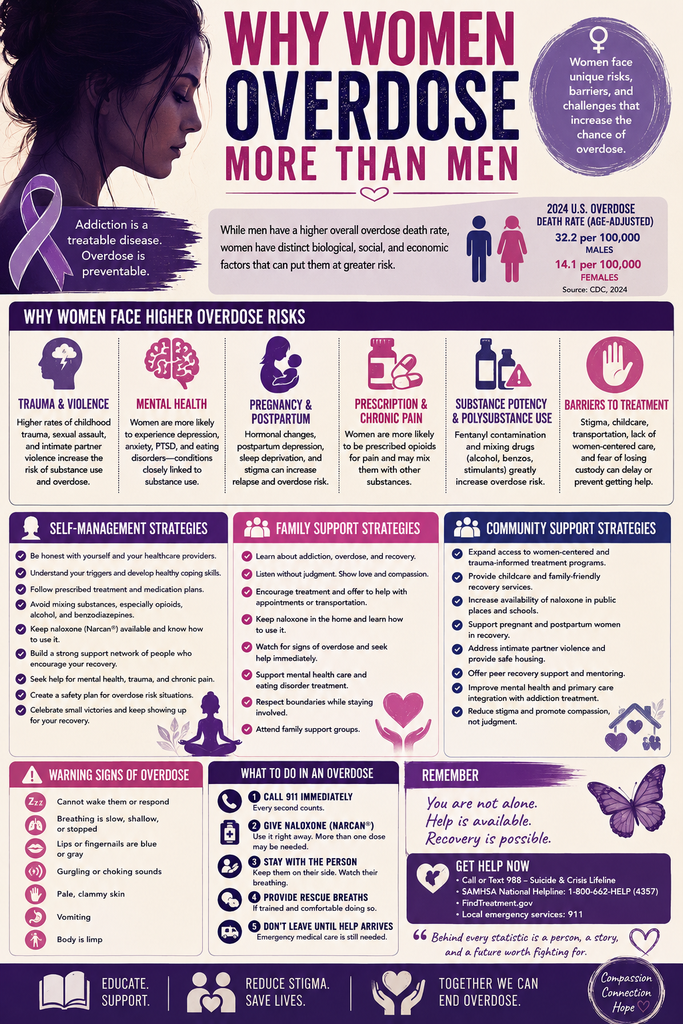
It would be inaccurate to say that women, as a group, currently overdose more than men. In 2024, the U.S. age-adjusted drug overdose death rate was 32.2 per 100,000 males compared with 14.1 per 100,000 females.
However, statistics do not mean women’s risks should be overlooked. Overdose prevention should recognize that women may enter substance use, experience its consequences, and encounter barriers to treatment differently.
Trauma and Substance Use
Trauma can play an important role in substance use among some women. Experiences such as childhood abuse, sexual assault, intimate-partner violence, grief, or other traumatic events may contribute to emotional distress.
Some people begin using alcohol or drugs in an attempt to cope with painful memories, anxiety, insomnia, or overwhelming emotions. Unfortunately, substances may provide temporary relief while creating additional physical, emotional, and social problems.
Trauma-informed treatment recognizes this connection without assuming that every woman with a substance use disorder has experienced trauma.
Depression, Anxiety, and Other Mental-Health Conditions
Substance use disorders may coexist with depression, anxiety, post-traumatic stress, eating disorders, and other mental-health conditions.
When mental-health symptoms remain untreated, someone may attempt to manage them through alcohol, opioids, sedatives, or other substances. At the same time, substance use can worsen psychiatric symptoms.
Effective treatment should therefore screen for and address both substance use and mental health rather than assuming one condition must be treated before the other.
Chronic Pain and Prescription Medications
Women experiencing chronic pain may be exposed to prescription medications as part of legitimate medical treatment. Medication exposure alone does not mean someone will develop addiction.
However, anyone using opioids or other sedating medications needs education about overdose risk, medication interactions, and safe use. Combining opioids with alcohol or other central nervous system depressants can be particularly dangerous.
Pain management should balance adequate treatment of pain with appropriate monitoring and overdose prevention.
Pregnancy and the Postpartum Period
Pregnancy should never become a reason to shame someone with a substance use disorder.
Women with opioid use disorder during pregnancy require compassionate, evidence-based medical treatment. Abruptly stopping opioids without medical supervision is not an appropriate substitute for professional care.
The postpartum period also deserves attention. Sleep deprivation, hormonal changes, depression or anxiety, caregiving demands, and other stresses can complicate recovery.
Treatment programs that allow mothers to receive care while maintaining appropriate connections with their children can remove an important barrier to seeking help.
The Danger of Fentanyl and Polysubstance Use
Illegally manufactured fentanyl remains a major overdose concern. People may encounter fentanyl in the illicit drug supply without knowing it is present.
Using more than one substance can further increase danger. Opioids combined with alcohol, benzodiazepines, or other sedating substances can suppress breathing. Stimulants mixed with or contaminated by opioids can also create unpredictable overdose situations.
Someone does not need to consider themselves “addicted” to be vulnerable to an overdose.
Barriers That May Keep Women From Treatment
Women can face practical and social obstacles that delay treatment.
These may include:
- Fear of judgment or stigma
- Childcare responsibilities
- Fear of losing custody of children
- Transportation problems
- Financial difficulties
- Lack of women-centered treatment programs
- Unsafe or controlling relationships
- Trauma histories
- Lack of family support
- Pregnancy-related concerns
- Co-occurring mental-health conditions
- Difficulty finding programs that address both medical and behavioral-health needs
Treatment becomes more accessible when services address these realities rather than expecting every patient to fit into the same recovery model.
Self-Management Strategies
Women concerned about substance use or overdose can take practical steps to reduce risk while seeking appropriate treatment.
Helpful strategies include:
- Be honest about substance use. Tell healthcare professionals what substances, medications, and supplements you use so potentially dangerous interactions can be identified.
- Avoid mixing substances. Combining opioids with alcohol or other sedating drugs can substantially increase overdose risk.
- Keep naloxone available when opioid exposure is possible. Make sure trusted people know where it is and how to administer it.
- Recognize changes in tolerance. Overdose risk can increase after detoxification, incarceration, hospitalization, or another period without opioid use.
- Address mental health. Seek treatment for depression, anxiety, PTSD, eating disorders, or other conditions occurring alongside substance use.
- Identify personal triggers. Stress, trauma reminders, loneliness, relationship conflict, pain, and sleep problems can contribute to cravings or relapse.
- Develop a recovery network. Maintain contact with healthcare professionals, counselors, peers, friends, or other supportive people.
- Seek evidence-based treatment. Opioid use disorder can be treated with medications such as buprenorphine, methadone, or naltrexone when clinically appropriate.
- Develop an overdose-response plan. Know who will call 911, where naloxone is stored, and what to do during an emergency.
Family Support Strategies
Family members can play an important role in overdose prevention without becoming responsible for another person’s entire recovery.
Families can:
- Learn the signs of opioid overdose.
- Keep naloxone accessible when opioid exposure is possible.
- Learn how to administer naloxone.
- Call 911 immediately when an overdose is suspected.
- Discuss substance use without humiliation or threats.
- Encourage evidence-based addiction and mental-health treatment.
- Help with transportation, childcare, or appointments when appropriate.
- Recognize depression, trauma, and anxiety as possible treatment needs.
- Establish healthy boundaries without abandoning the individual.
- Support recovery following relapse rather than treating relapse as proof of failure.
- Encourage continued treatment during pregnancy and after childbirth.
- Seek counseling or peer support for themselves when necessary.
A person experiencing an opioid overdose cannot administer naloxone to herself. Family members, friends, and others nearby may therefore become critical links in the overdose-survival chain.
Community Support Strategies
Preventing overdose among women requires more than telling individuals to make better choices. Communities can remove barriers that make treatment difficult to obtain or maintain.
Important strategies include:
- Expand access to evidence-based addiction treatment.
- Make naloxone widely available.
- Integrate addiction treatment with primary care, women’s health, mental health care, and reproductive healthcare.
- Provide trauma-informed services.
- Expand programs designed for pregnant and postpartum women.
- Offer childcare and family-centered treatment options.
- Improve transportation to treatment.
- Provide safe services for women experiencing intimate-partner violence.
- Expand peer-recovery programs.
- Improve access to affordable mental health treatment.
- Reduce stigma surrounding addiction during pregnancy and motherhood.
- Provide culturally responsive and sex-specific recovery resources.
- Strengthen continuity of care after detoxification, hospitalization, incarceration, or residential treatment.
Recognizing an Opioid Overdose
An opioid overdose is a medical emergency. Warning signs may include inability to wake the person, very slow or stopped breathing, limpness, vomiting or gurgling sounds, or blue or purple lips and fingernails.
If an opioid overdose is suspected, call 911 immediately and administer naloxone when available. Additional doses may be necessary, and emergency medical evaluation is still required even if the person wakes up.
The Importance of Women-Centered Treatment
Effective addiction treatment does not mean creating an entirely different standard of care for women. It means recognizing factors that may affect treatment engagement and recovery.
A woman may simultaneously be managing addiction, trauma, depression, pregnancy, parenting, chronic pain, housing instability, or an unsafe relationship. Asking her to address only the substance use while ignoring everything surrounding it may leave important drivers of risk untreated.
Treatment that addresses the whole person can improve the opportunity for sustained recovery.
Conclusion
The question is not simply, “Why do women overdose more than men?” Current U.S. mortality data show that men have a higher overall drug overdose death rate.
A more useful question is: “What makes women vulnerable to overdose, and how can those risks be reduced?”
Women may experience unique combinations of trauma, mental-health conditions, chronic pain, pregnancy and postpartum challenges, caregiving responsibilities, stigma, and barriers to treatment. These circumstances do not make overdose inevitable.
Overdose prevention works best when individuals have practical safety tools, families understand how to respond without judgment, and communities provide accessible, evidence-based, trauma-informed, and family-centered treatment.
Addiction is treatable. Overdose is preventable. Naloxone can save lives, and compassionate treatment can create opportunities for long-term recovery.
Frequently Asked Questions
Here are some common questions:
1. Do women actually overdose more than men?
Not overall in the United States. Current mortality data show that men have a substantially higher drug overdose death rate than women.
However, women may experience different risk factors and treatment barriers that can increase their vulnerability to substance-related harm. A more accurate question is: Why do women face unique overdose risks?
2. Why can women be vulnerable to overdose?
Overdose risk is influenced by many factors rather than biological sex alone. For some women, risk may involve a combination of mental-health conditions, trauma, chronic pain, pregnancy or postpartum challenges, caregiving responsibilities, intimate-partner violence, stigma, polysubstance use, and difficulty accessing treatment.
3. Does biology affect how women respond to drugs?
Biological differences can influence how some substances are absorbed, distributed, metabolized, and eliminated. Hormones, body composition, medications, pregnancy, age, and individual health conditions can also influence drug effects.
These differences do not mean every woman will respond to substances in the same way.
4. What role does trauma play in substance use among women?
Trauma can be an important factor for some women with substance use disorders. Experiences may include childhood abuse, sexual assault, intimate-partner violence, or other traumatic events.
Some individuals use substances in an attempt to manage emotional pain, anxiety, intrusive memories, or sleep difficulties. Trauma-informed treatment can address both substance use and the underlying trauma without blaming the individual.
5. Are depression and anxiety connected to women’s substance use?
They can be. Depression, anxiety, PTSD, eating disorders, and other mental-health conditions may coexist with substance use disorders.
Someone may initially use alcohol or drugs to cope with emotional symptoms, while continued substance use may ultimately worsen those symptoms. Treating both conditions together can be important for recovery.
6. Can chronic pain increase overdose risk?
Chronic pain may expose some patients to opioid medications or other sedating medications. Appropriate pain treatment does not automatically lead to addiction, but medication safety remains important.
Risk can increase when opioids are taken differently than prescribed or combined with substances such as alcohol or benzodiazepines.
7. Why is polysubstance use dangerous?
Polysubstance use means using more than one substance within the same period.
Combining opioids with alcohol, benzodiazepines, or other central nervous system depressants can dangerously suppress breathing. Combining stimulants and opioids can also produce unpredictable effects and does not cause one drug to safely “cancel out” the other.
8. How does fentanyl affect women’s overdose risk?
Illegally manufactured fentanyl has contributed substantially to overdose deaths in the United States. It may appear in the illicit drug supply, sometimes without the person knowing it is present.
Because fentanyl is a powerful opioid, exposure can cause severe respiratory depression and fatal overdose.
9. Can pregnancy and the postpartum period affect substance-use risk?
Yes. Pregnancy and the postpartum period can involve major physical, emotional, and social changes.
Women may experience depression, anxiety, sleep deprivation, relationship stress, financial pressures, pain, or difficulties maintaining addiction treatment. Pregnant and postpartum women with substance use disorders need compassionate, evidence-based medical and behavioral healthcare rather than stigma or punishment.
10. Why might mothers delay addiction treatment?
Some mothers may worry about childcare, transportation, finances, employment, judgment, or separation from their children. Fear concerning child-custody consequences may also discourage some women from discussing substance use.
Treatment programs that address childcare, parenting, housing, transportation, and family needs can help reduce these barriers.
11. Does stigma make overdose prevention more difficult for women?
It can. Women who use substances may experience significant judgment, particularly when they are pregnant or raising children.
Shame and fear can prevent someone from disclosing substance use or seeking treatment. Addiction should be addressed as a health condition requiring appropriate care rather than as evidence that someone is a bad person or parent.
12. What can women do to reduce overdose risk?
Women can be honest with healthcare professionals about medications and substance use, avoid dangerous substance combinations, recognize personal triggers, address mental-health symptoms, maintain supportive relationships, and seek evidence-based addiction treatment.
When opioid exposure is possible, keeping naloxone available and teaching trusted people how to administer it can also save a life.
13. Why does opioid tolerance matter?
Tolerance can decrease after someone stops using opioids for a period of time.
This can happen following detoxification, hospitalization, incarceration, residential treatment, or a period of recovery. Returning to a previously tolerated amount can then cause an overdose because the person’s body may no longer tolerate that dose.
14. What are common signs of an opioid overdose?
Possible signs include:
- Inability to wake or respond
- Very slow, irregular, or stopped breathing
- Limpness or unconsciousness
- Blue, gray, or unusually pale lips or skin
- Gurgling, choking, or unusual snoring sounds
- Very small pupils
A suspected opioid overdose should always be treated as a medical emergency.
15. What should someone do during a suspected opioid overdose?
Call 911 immediately and administer naloxone if it is available. Follow the emergency dispatcher’s instructions, provide rescue breathing or CPR when appropriate and trained to do so, and remain with the person until emergency help arrives.
More than one dose of naloxone may be necessary. Even if the person wakes up, emergency medical evaluation is still important.
16. What is naloxone?
Naloxone is a medication that rapidly reverses an opioid overdose by blocking opioid effects.
It can restore breathing when opioids are responsible for respiratory depression. Naloxone does not treat overdoses caused solely by non-opioid substances, but administering it is appropriate when opioid involvement is suspected.
17. How can families help prevent overdose?
Families can learn overdose warning signs, keep naloxone available, encourage treatment, help with transportation or childcare, listen without judgment, support mental-health care, and recognize relapse or increasing substance use as reasons to reassess treatment.
Families should combine compassion with healthy boundaries rather than using shame or humiliation.
18. How can communities reduce overdose risk among women?
Communities can expand access to evidence-based addiction and mental-health treatment, naloxone, trauma-informed care, women’s health services, and programs for pregnant and postpartum women.
Childcare, transportation assistance, safe housing, intimate-partner violence services, peer recovery programs, and family-centered treatment can also remove practical barriers that keep women from receiving care.
19. Why is women-centered addiction treatment important?
Women-centered care recognizes that relationships, trauma histories, pregnancy, parenting, mental-health conditions, safety, and caregiving responsibilities may influence treatment and recovery.
It does not mean every woman needs identical services. Treatment should be individualized according to each person’s medical, psychological, social, and recovery needs.
20. What is the most important message about women and overdose?
The most important message is that overdose risk is preventable and addiction is treatable.
Men currently have a higher overall overdose death rate, but women can face distinct vulnerabilities that deserve attention. Effective prevention means understanding trauma, mental health, chronic pain, pregnancy and postpartum needs, substance interactions, stigma, and barriers to treatment.
Women should not have to reach a life-threatening crisis before receiving help. Early intervention, evidence-based treatment, access to naloxone, supportive families, and compassionate communities can save lives.
Video: The hidden overdose dangers every woman needs to know #safetytips #prevention