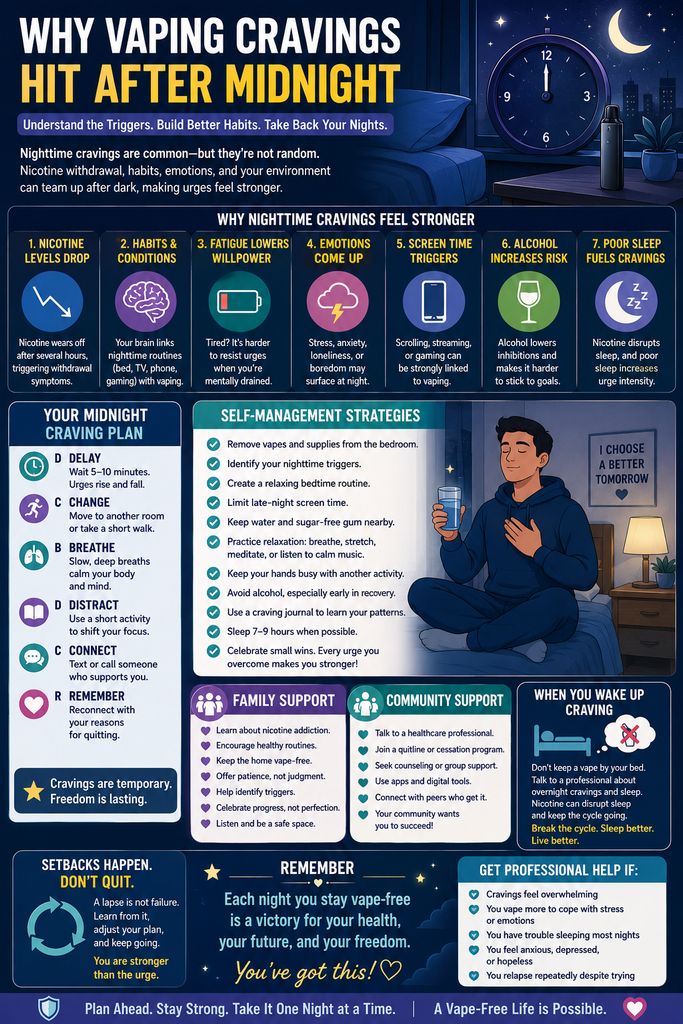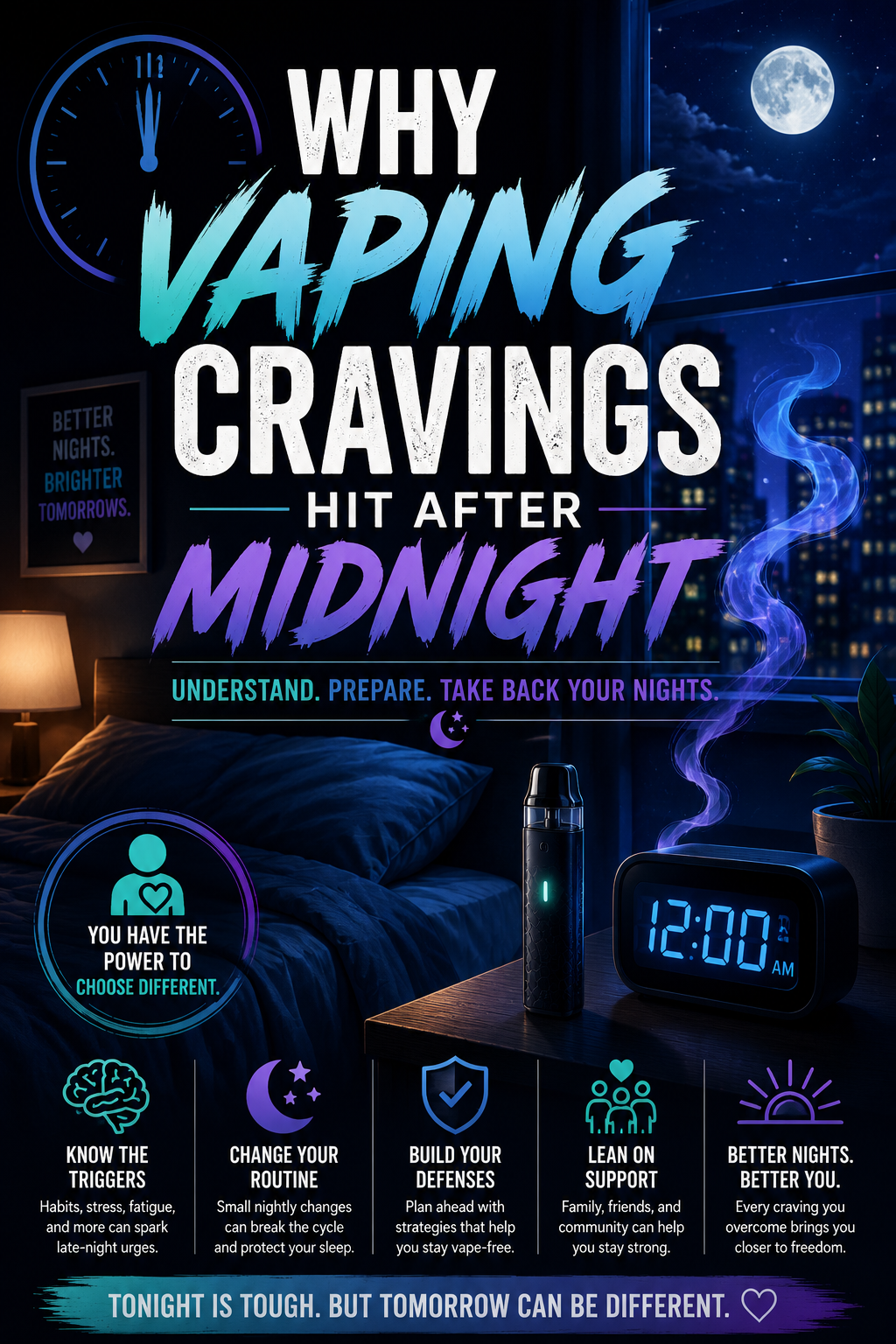
For people trying to cut back or quit vaping, nighttime can be one of the most challenging periods. Cravings that seem manageable during the day may suddenly feel more intense as the evening progresses. This does not necessarily mean nicotine dependence becomes stronger after midnight. Instead, several factors—including nicotine withdrawal, learned routines, fatigue, emotional stress, boredom, disrupted sleep, and familiar environmental triggers—may come together and intensify the desire to vape.
Recognizing what drives nighttime cravings can make them easier to anticipate and manage. Instead of depending on willpower alone, people can identify their personal triggers, change established nighttime routines, and develop practical coping strategies to manage urges without reaching for a vape.
Why Nicotine Creates Cravings
Nicotine reaches the brain quickly and activates nicotinic acetylcholine receptors, influencing dopamine and other neurotransmitter systems involved in reinforcement, attention, and mood. With repeated exposure, the brain adapts to nicotine.
When nicotine levels fall, a dependent person may experience withdrawal symptoms such as:
- Strong urges to vape
- Irritability
- Restlessness
- Anxiety
- Difficulty concentrating
- Low mood
- Increased appetite
- Sleep disturbances
Using nicotine again can temporarily relieve withdrawal, reinforcing the cycle and teaching the brain that vaping is a rapid response to discomfort.
Why Cravings May Feel Stronger Late at Night
1. Nicotine Levels May Be Falling
If someone has gone several hours without vaping, declining nicotine levels can trigger withdrawal. Depending on the person’s usual pattern of use, this may become particularly noticeable during the evening or overnight.
For frequent users, the brain may have become accustomed to repeated nicotine exposure throughout the day.
2. The Brain Learns Nighttime Vaping Routines
Cravings are not driven solely by nicotine withdrawal. They can also be conditioned responses.
If someone routinely vapes while lying in bed, gaming, watching television, scrolling through social media, driving home, or studying late at night, the brain can begin associating those activities with nicotine.
Eventually, simply beginning the activity may trigger an urge.
Common nighttime triggers include:
- Getting into bed
- Watching television
- Gaming
- Using a phone
- Studying
- Drinking alcohol
- Being alone
- Finishing work
- Driving at night
- Feeling bored
Breaking these associations is an important part of recovery.
Fatigue Can Make Cravings Harder to Resist
Self-control and decision-making can become more difficult when someone is exhausted. After spending the day managing work, school, family responsibilities, stress, and other demands, a person may have fewer psychological resources available for coping with cravings.
A thought like “I’ll just take one hit” may be harder to challenge when someone is tired.
This is one reason good sleep routines can be an important component of nicotine recovery.
Stress and Emotions Can Surface at Night
Daytime responsibilities often keep people occupied. At night, distractions decrease, and uncomfortable thoughts or emotions may become more noticeable.
Someone might experience:
- Anxiety
- Loneliness
- Anger
- Sadness
- Relationship stress
- Work or school worries
- Boredom
- Rumination
If vaping has previously provided temporary relief or distraction, the brain may respond to emotional discomfort with a learned message: vape now.
Recovery involves developing additional ways to regulate these emotions.
Screen Time Can Become a Trigger
Phones, gaming, streaming, and social media frequently accompany vaping. Someone who repeatedly scrolls and vapes simultaneously can develop a strong behavioral association between the two.
Late-night screen use may also delay sleep, creating additional opportunities for cravings.
Changing the nighttime environment can therefore be as important as resisting nicotine itself.
Alcohol Can Increase Vulnerability
For some people, alcohol and vaping are strongly connected. Drinking may lower inhibitions and make it harder to follow a quit plan.
A person who rarely thinks about vaping during the day may experience powerful urges while drinking with friends or relaxing with alcohol at night.
Recognizing this connection can help people prepare for high-risk situations.
Self-Management Strategies for Midnight Cravings
Nighttime cravings are easier to manage when a plan is in place before they begin.
Helpful strategies include:
- Remove vaping devices and supplies from the bedroom.
- Identify your most common nighttime triggers.
- Establish a consistent bedtime routine.
- Reduce unnecessary late-night screen time.
- Keep water nearby.
- Use sugar-free gum or another appropriate oral substitute.
- Practice slow breathing or relaxation exercises.
- Take a brief walk or change environments when a craving begins.
- Keep your hands occupied with another activity.
- Avoid situations strongly associated with vaping during early recovery.
- Track when cravings occur and what happened immediately beforehand.
- Remind yourself that cravings rise and fall rather than remaining at peak intensity indefinitely.
- Seek professional help when cravings are difficult to manage.
Instead of asking, “How do I make sure I never crave nicotine?”, a more realistic recovery question is: “What will I do when the craving arrives?”
Create a Midnight Craving Plan
A simple plan can reduce impulsive decisions.
When a craving begins:
- Delay: Do not immediately respond to the urge.
- Change: Move to another room or activity.
- Breathe: Slow your breathing and allow the urge to pass.
- Distract: Choose a brief activity that requires attention.
- Connect: Contact a supportive person if needed.
- Remember: Reconnect with your reason for quitting.
Every time someone experiences a craving without vaping, they have an opportunity to weaken the connection between the trigger and nicotine use.
Family Support Strategies
Family members can help without becoming the “nicotine police.” Constant criticism, searching belongings, or turning every craving into an argument may increase stress.
More supportive approaches include:
- Learn about nicotine dependence and withdrawal.
- Ask how the person would like to be supported.
- Keep the home environment as vape-free as possible.
- Avoid vaping around someone who is trying to quit.
- Encourage healthy nighttime routines.
- Recognize progress rather than demanding perfection.
- Help identify nighttime triggers.
- Offer distraction or companionship during difficult cravings.
- Encourage professional cessation support.
- Respond to setbacks with problem-solving rather than humiliation.
Family support works best when it strengthens the person’s recovery rather than attempting to control it.
Community Support Strategies
People trying to stop vaping do not have to manage nicotine dependence alone. Healthcare and community resources can provide education, behavioral support, and evidence-based treatment.
Helpful resources may include:
- Primary care professionals
- Tobacco-cessation programs
- Behavioral counseling
- School or college health services
- Community health centers
- Pharmacists
- Quitline services
- Digital cessation programs
- Peer-support communities
- Mental health services when anxiety, depression, or other concerns contribute to nicotine use
Healthcare professionals can also discuss evidence-based medications used for tobacco cessation and determine which approaches are appropriate for the individual.
What If You Wake Up Craving a Vape?
For someone with significant nicotine dependence, waking during the night and wanting nicotine may indicate that the body has become accustomed to frequent exposure.
Rather than keeping a vape beside the bed, consider discussing persistent overnight cravings with a healthcare professional. Treatment can address both nicotine dependence and contributing sleep problems.
It is also important to recognize that nicotine itself can interfere with healthy sleep, potentially contributing to a cycle of nicotine use, disturbed sleep, fatigue, stress, and further nicotine use.
A Setback Does Not Have to Become a Return to Regular Vaping
If someone vapes after trying to quit, the response matters.
Instead of thinking, “I ruined everything, so I might as well keep vaping,” examine what happened.
Ask:
- What time was it?
- What was I doing?
- What was I feeling?
- Was I tired, stressed, drinking, or bored?
- What could I do differently next time?
A lapse can reveal vulnerabilities that need to be addressed.
Conclusion
Vaping cravings that seem to strike after midnight are not mysterious. Nicotine withdrawal, conditioned habits, fatigue, emotional stress, boredom, screen use, alcohol, and sleep disruption can combine to make nighttime a high-risk period for someone trying to quit.
The solution is not simply greater willpower. Effective recovery involves recognizing triggers, changing routines, preparing for cravings, strengthening sleep habits, seeking evidence-based cessation support, and building a supportive environment.
With self-management strategies, family encouragement, community resources, and professional treatment when needed, midnight can gradually stop being associated with vaping. Each successfully managed craving helps build a new nighttime routine—one in which nicotine no longer has to be part of going to sleep.
Frequently Asked Questions
Here are some common questions:
1. Why do vaping cravings sometimes feel stronger at night?
Nighttime cravings can result from several factors occurring together, including falling nicotine levels, withdrawal, fatigue, stress, boredom, established vaping routines, and environmental triggers. For someone accustomed to vaping frequently, going several hours without nicotine may make cravings more noticeable.
2. Does nicotine withdrawal cause nighttime cravings?
Yes. Regular nicotine exposure can lead to physical dependence. When nicotine levels decline, withdrawal symptoms may include cravings, irritability, restlessness, anxiety, difficulty concentrating, low mood, increased appetite, and sleep disturbances.
3. Why do I automatically want to vape when I get into bed?
Your brain may have developed a conditioned association between bedtime and vaping. If you repeatedly vape while lying in bed, watching television, gaming, or scrolling on your phone, those activities can eventually trigger cravings even before significant withdrawal develops.
4. Can stress make vaping cravings worse after midnight?
Yes. During the day, work, school, family responsibilities, and other activities may provide distractions. At night, worries and emotions can become more noticeable. If nicotine has been used as a coping strategy, stress may automatically trigger the desire to vape.
5. Why does being tired make it harder to resist vaping?
Fatigue can make decision-making and emotional regulation more difficult. After managing cravings and responsibilities throughout the day, resisting an urge may feel harder late at night.
6. Can my phone trigger vaping cravings?
Potentially. If vaping regularly occurs while scrolling through social media, watching videos, or gaming, screen use can become associated with nicotine. Reducing late-night screen time or changing where and how you use your devices may help break that association.
7. Does alcohol make nighttime vaping more likely?
It can. Alcohol can lower inhibitions and weaken adherence to a quit plan. Drinking and vaping may also become strongly associated behaviors, so alcohol can act as a powerful trigger for some people trying to stop vaping.
8. Can nicotine interfere with sleep?
Yes. Nicotine is a stimulant, and nicotine use and withdrawal can both contribute to sleep difficulties. Poor sleep can increase fatigue and stress the following day, potentially making cravings harder to manage.
9. What should I do when a midnight craving starts?
Try a simple craving plan:
- Delay: Give the urge time to decrease.
- Change: Move to another room or activity.
- Breathe: Practice slow, controlled breathing.
- Distract: Do something that occupies your attention.
- Connect: Contact a supportive person if necessary.
- Remember: Revisit your reasons for quitting.
10. Should I keep my vape beside the bed in case cravings become severe?
If your goal is quitting, keeping a vape within immediate reach can make impulsive use easier. Removing vaping devices and supplies from the bedroom can create distance between the craving and the behavior.
11. What can replace the hand-to-mouth habit of vaping?
Depending on personal preferences, water, sugar-free gum, or another appropriate oral substitute may help. Keeping your hands occupied with another activity can also address the behavioral component of the habit.
12. How can I prevent cravings before bedtime?
Develop a consistent evening routine, identify your triggers, remove vaping supplies from your sleeping area, reduce unnecessary late-night screen use, practice relaxation techniques, and plan in advance for what you will do if a craving occurs.
13. What if I wake up during the night specifically wanting nicotine?
Repeatedly waking with strong nicotine cravings may suggest substantial nicotine dependence. Consider discussing these symptoms with a healthcare professional, who can assess your nicotine use, withdrawal, sleep, and appropriate cessation options.
14. Are medications available to help with nicotine cravings?
Yes. Evidence-based tobacco-cessation treatments can include nicotine-replacement therapies and certain prescription medications. The most appropriate option depends on factors such as age, nicotine-use pattern, medical history, and other medications, so professional guidance can be helpful.
15. How can family members help with nighttime cravings?
Family members can maintain a vape-free environment, avoid vaping around the person, encourage healthy sleep routines, offer distraction or companionship during difficult cravings, recognize progress, and avoid shaming someone after a setback.
16. What community resources can help someone quit vaping?
Primary care practices, pharmacists, tobacco-cessation programs, quitlines, behavioral counseling, community health centers, school or college health services, and appropriate digital cessation programs may provide support.
17. How long does a nicotine craving last?
Cravings typically rise and fall rather than remaining at maximum intensity indefinitely. Their frequency and intensity vary among individuals, especially during early nicotine withdrawal. Having a plan can make it easier to tolerate the urge without vaping.
18. What happens if I vape once after trying to quit?
A lapse does not have to become a complete return to regular vaping. Identify what triggered the episode—such as fatigue, alcohol, stress, screens, or loneliness—and adjust your plan for the next similar situation.
19. When should I consider professional help?
Professional support is worth considering when cravings are difficult to control, repeated quit attempts have been unsuccessful, nicotine use is interfering with sleep or daily functioning, or vaping is being used heavily to manage anxiety, stress, or other emotional difficulties.
20. What is the most important thing to remember about midnight vaping cravings?
A craving is an urge, not a command. Nighttime cravings can reflect nicotine withdrawal combined with learned routines and emotional or environmental triggers. By identifying those patterns, changing nighttime habits, and using evidence-based cessation support, the association between midnight and vaping can gradually weaken.
Video: Why you only want to vape at night #vape #lifestyle #health