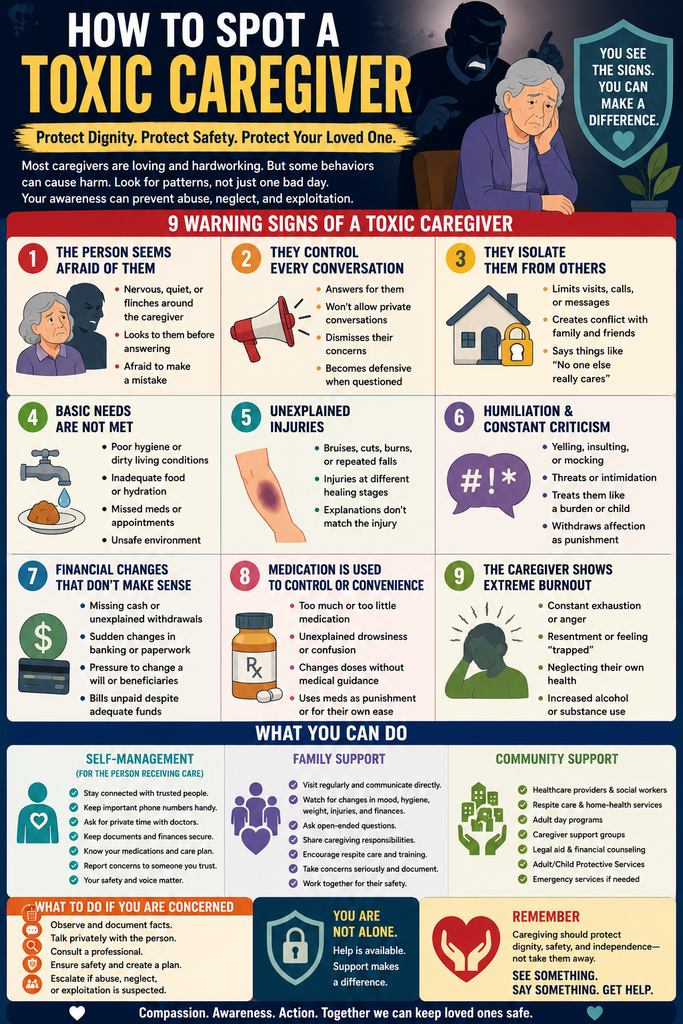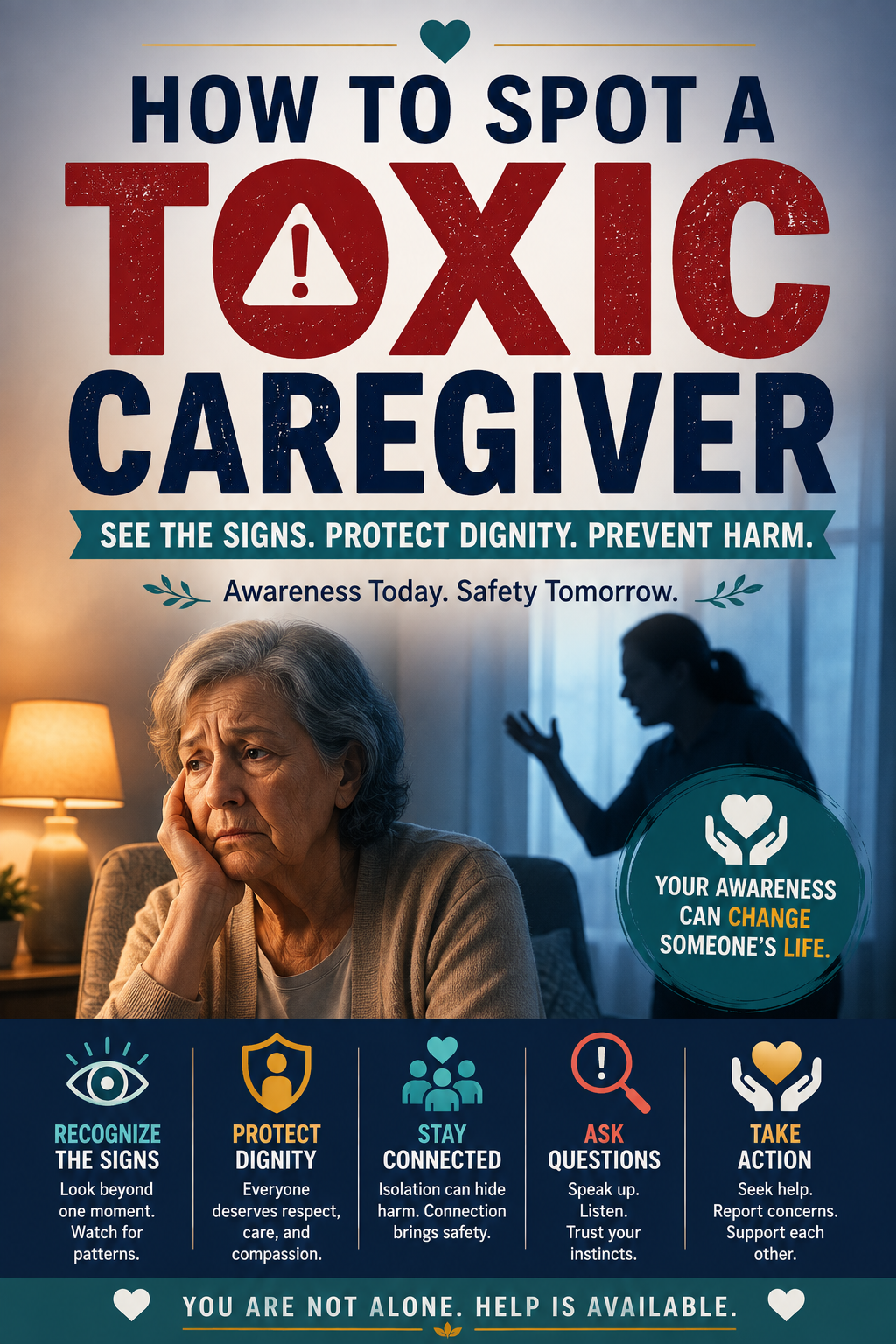
Caregivers often provide essential physical, emotional, and practical support to older adults, children, people with disabilities, and individuals recovering from illness or addiction. Most caregivers work hard under demanding circumstances. However, some caregiving relationships can become unhealthy, controlling, neglectful, exploitative, or abusive.
Although a title such as “How to Spot a Toxic Caregiver Instantly” gets attention, there is rarely a single behavior that proves someone is a harmful caregiver. A better approach is to recognize patterns, warning signs, changes in the person receiving care, and immediate safety concerns. One impatient moment is different from persistent intimidation, humiliation, neglect, manipulation, or exploitation.
Recognizing these patterns early can help families intervene before serious harm occurs.
What Is a “Toxic” Caregiver?
“Toxic caregiver” is not a medical diagnosis. It is an informal term that may describe a caregiver whose repeated behavior damages the physical safety, emotional well-being, dignity, independence, or finances of the person receiving care.
Concerning behavior may involve:
- Emotional or verbal abuse
- Excessive control
- Neglect
- Financial exploitation
- Social isolation
- Intimidation
- Manipulation
- Physical abuse
- Sexual abuse
- Inappropriate medication practices
The focus should remain on the behavior and its consequences, rather than simply labeling the individual.
Warning Sign #1: The Person Seems Afraid of the Caregiver
One of the most concerning observations is a sudden change in behavior when the caregiver enters the room.
The person receiving care may:
- Become unusually quiet
- Look toward the caregiver before answering questions
- Appear nervous or frightened
- Withdraw statements after the caregiver arrives
- Avoid discussing what happens at home
- Flinch when approached
- Seem afraid of making a mistake
These behaviors do not automatically prove abuse, but they deserve careful attention.
Warning Sign #2: The Caregiver Controls Every Conversation
A supportive caregiver can provide useful information while still allowing the person receiving care to communicate whenever possible.
Be cautious when a caregiver repeatedly:
- Answers every question for the person
- Interrupts or corrects them constantly
- Refuses to leave them alone with healthcare professionals
- Prevents private conversations
- Dismisses the person’s concerns
- Makes every decision without appropriate involvement
- Becomes defensive when asked routine questions
Excessive control can interfere with autonomy and sometimes conceal mistreatment.
Warning Sign #3: Isolation From Family and Friends
A harmful caregiver may gradually restrict access to other people.
Warning signs can include:
- Preventing visitors
- Controlling telephone access
- Canceling family gatherings
- Reading private messages
- Blocking contact with friends
- Making relatives feel unwelcome
- Claiming that “no one else really cares”
- Creating conflict between the person and supportive relatives
Isolation can increase dependence on the caregiver and make mistreatment more difficult to detect.
Warning Sign #4: Basic Needs Are Not Being Met
Neglect may be intentional or may result from inadequate caregiver skills, overwhelming responsibilities, or lack of resources. Regardless of the cause, unmet needs require attention.
Possible indicators include:
- Poor hygiene
- Soiled clothing or bedding
- Dehydration
- Inadequate food
- Untreated wounds
- Missed medical appointments
- Unsafe living conditions
- Poor medication management
- Lack of necessary mobility assistance
- Repeated preventable injuries
The goal should be to determine why care needs are not being met and how to restore safety.
Warning Sign #5: Unexplained Injuries
Injuries deserve careful evaluation, particularly when the explanation does not match the injury or changes repeatedly.
Potential warning signs include:
- Unexplained bruising
- Burns
- Cuts
- Repeated falls without appropriate evaluation
- Injuries at different stages of healing
- Delays in obtaining medical attention
- Explanations inconsistent with the person’s functional abilities
Not every injury indicates abuse. Older adults and medically vulnerable people may bruise or fall easily. Patterns and context matter.
Warning Sign #6: Humiliation and Constant Criticism
Emotional abuse can occur without leaving physical injuries.
A harmful caregiver may:
- Insult the person
- Mock their disability or memory problems
- Threaten abandonment
- Yell frequently
- Treat an adult like a child
- Use embarrassing information against them
- Intentionally frighten them
- Withhold affection as punishment
- Repeatedly tell them they are a burden
Dignity remains important regardless of someone’s age, illness, disability, or level of dependence.
Warning Sign #7: Financial Changes That Don’t Make Sense
Caregivers may legitimately assist with finances, but unexplained changes in finances deserve attention.
Possible warning signs include:
- Missing cash
- Unexplained withdrawals
- Sudden changes in banking
- Unusual purchases
- Bills going unpaid despite adequate resources
- Property disappearing
- Pressure to change a will
- Unexpected changes in beneficiaries
- Forged signatures
- A caregiver developing an unexplained financial dependence on the person
Financial exploitation can occur gradually and may be difficult for families to recognize.
Warning Sign #8: Medication Is Used for Convenience or Control
Medication management is often an important caregiving responsibility. However, medication should not be altered casually or used simply to make someone easier to manage.
Potential concerns include:
- Giving more medication than prescribed
- Withholding necessary medication
- Repeated unexplained sedation
- Sharing another person’s medication
- Changing doses without professional guidance
- Using medication as punishment or control
Medication concerns should be reviewed promptly by an appropriate healthcare professional.
Warning Sign #9: The Caregiver Shows Extreme Burnout
Not every struggling caregiver is abusive. Caregiver burnout can produce irritability, exhaustion, frustration, depression, and reduced ability to provide safe care.
Signs that a caregiver needs help may include:
- Severe exhaustion
- Frequent anger
- Social withdrawal
- Resentment toward the person receiving care
- Feeling trapped
- Sleep deprivation
- Neglecting personal health
- Increasing alcohol or substance use
- Statements suggesting they cannot continue
Recognizing caregiver burnout early can protect both the caregiver and the person receiving care.
Self-Management Strategies for the Person Receiving Care
When possible and safe, individuals receiving care can take steps to preserve autonomy and maintain connections outside the caregiving relationship.
Helpful strategies include:
- Maintain regular contact with trusted family and friends.
- Keep important telephone numbers accessible.
- Attend medical appointments regularly.
- Request private time with healthcare professionals when needed.
- Keep important financial and identification documents secure.
- Understand medications and treatment plans when possible.
- Maintain access to personal finances when appropriate.
- Document concerning incidents if it can be done safely.
- Tell a trusted person when something feels wrong.
- Seek help promptly if feeling threatened or unsafe.
People with cognitive or physical limitations may need trusted advocates to help implement these protections.
Family Support Strategies
Families should remain involved without automatically assuming either that everything is fine or that every caregiving mistake represents abuse.
Helpful approaches include:
- Visit regularly when possible.
- Maintain direct communication with the person receiving care.
- Observe changes in mood, hygiene, weight, injuries, and behavior.
- Review whether medical appointments are being maintained.
- Ask open-ended questions about daily care.
- Pay attention to unexplained financial changes.
- Share caregiving responsibilities when possible.
- Arrange respite care to reduce caregiver burnout.
- Encourage professional caregiver training.
- Take reports of mistreatment seriously.
- Document significant concerns.
- Seek professional guidance when warning signs accumulate.
The goal is safety and appropriate care, not confrontation for its own sake.
Community Support Strategies
Families and caregivers should not have to manage complex care situations completely alone.
Community resources may include:
- Primary care and healthcare professionals
- Home-health services
- Social workers
- Respite-care programs
- Adult day programs
- Caregiver support groups
- Community mental health services
- Aging and disability organizations
- Case-management programs
- Legal assistance programs
- Adult or child protective services when appropriate
- Emergency services for immediate danger
Community support can also prevent harm by reducing caregiver isolation and providing practical assistance before burnout becomes severe.
How to Respond to a Concerning Pattern
If you suspect harmful caregiving, avoid relying on one dramatic confrontation as your only response.
Instead:
- Document objective observations.
- Speak privately with the person receiving care when safe.
- Listen without immediately challenging their account.
- Consult healthcare or social-service professionals.
- Review medication, financial, and caregiving arrangements when appropriate.
- Increase safe contact and supervision.
- Develop alternative caregiving arrangements if necessary.
- Escalate concerns when there is evidence of abuse, neglect, exploitation, or immediate danger.
If confronting the caregiver could put the vulnerable person at greater risk, prioritize safety and professional guidance over confrontation.
Don’t Confuse Burnout With Intentional Abuse—but Don’t Ignore Harm
A caregiver may genuinely love someone and still become overwhelmed enough that care deteriorates. This distinction matters because the appropriate intervention may include respite care, training, mental health treatment, additional home assistance, or a different caregiving arrangement.
However, caregiver stress does not excuse abuse.
Understanding why harmful behavior is occurring can guide intervention, but protecting the person receiving care remains the priority.
Look for Patterns, Not Labels
Instead of asking only, “Is this caregiver toxic?”, ask more specific questions:
- Is the person receiving care safe?
- Are their basic needs being met?
- Are they treated with dignity?
- Can they communicate privately?
- Are medications being managed appropriately?
- Are finances protected?
- Are they becoming unusually fearful or isolated?
- Does the caregiver need additional support?
- Are concerning behaviors becoming more frequent or severe?
These questions provide more useful information than a label alone.
Conclusion
There is no reliable way to identify a “toxic caregiver” instantly. Harmful caregiving is better recognized through patterns of control, fear, humiliation, neglect, isolation, exploitation, inappropriate medication practices, or unexplained injuries.
At the same time, caregiver burnout deserves attention. Families and communities can reduce risk by sharing responsibilities, providing respite, maintaining regular contact, supporting caregivers, and ensuring vulnerable people have safe ways to communicate concerns.
The most important principle is simple: caregiving should preserve safety, dignity, respect, and as much independence as reasonably possible. When those qualities repeatedly disappear, it is time to look more closely and seek appropriate support.
Frequently Asked Questions
Here are some common questions:
1. What is a “toxic caregiver”?
“Toxic caregiver” is not a medical diagnosis. It is an informal term for a caregiver whose repeated behavior may harm the physical safety, emotional well-being, dignity, independence, or finances of the person receiving care.
2. What are common warning signs of harmful caregiving?
Warning signs can include excessive control, intimidation, humiliation, isolation, neglect of basic needs, unexplained injuries, financial exploitation, inappropriate medication practices, and unusual fearfulness around the caregiver.
3. Can you identify a toxic caregiver instantly?
Usually not. One unpleasant interaction does not necessarily establish abuse or neglect. Look for patterns of behavior, changes over time, inconsistencies in explanations, and signs that the person receiving care feels unsafe or controlled.
4. Why might someone become quiet when their caregiver enters the room?
Fear can be one explanation, particularly if the person suddenly stops talking, changes their story, or looks toward the caregiver before answering. However, these behaviors have other possible explanations and should prompt careful, private assessment rather than immediate conclusions.
5. Is controlling every conversation a warning sign?
It can be. Be particularly attentive when a caregiver consistently answers on the person’s behalf, interrupts them, refuses to allow private conversations with healthcare professionals, or becomes defensive when routine questions are asked.
6. Why is social isolation concerning?
Isolation can increase someone’s dependence on a caregiver and reduce opportunities for others to notice mistreatment. Restricting visits, calls, messages, or contact with supportive family and friends deserves attention.
7. What are possible signs of caregiver neglect?
Potential signs include poor hygiene, dehydration, inadequate nutrition, soiled bedding, untreated wounds, missed medications, missed medical appointments, unsafe living conditions, or lack of necessary assistance.
8. Do unexplained bruises always mean abuse?
No. Older adults and medically vulnerable individuals may bruise or fall for many reasons. Concern increases when injuries are recurrent, explanations are inconsistent, medical attention is delayed, or injuries appear alongside other warning signs.
9. What does emotional abuse by a caregiver look like?
It can include frequent yelling, insults, threats, humiliation, intimidation, mocking disabilities or memory problems, treating an adult like a child, or repeatedly telling someone that they are a burden.
10. What are warning signs of financial exploitation?
Watch for unexplained withdrawals, missing cash or possessions, sudden changes to banking arrangements, unpaid bills despite adequate funds, unusual purchases, forged signatures, or unexpected pressure to change wills, beneficiaries, or financial arrangements.
11. Can medication be used as a form of control?
Medication management becomes concerning when someone intentionally gives too much or too little medication, withholds necessary treatment, changes doses without appropriate medical direction, or uses medication primarily to sedate or control the person.
12. Is caregiver burnout the same as abuse?
No. Caregiver burnout can involve exhaustion, irritability, resentment, sleep problems, and difficulty maintaining adequate care. Burnout deserves intervention and support, but stress does not excuse abusive or neglectful behavior.
13. How can the person receiving care protect themselves?
When possible and safe, they can:
- Stay connected with trusted people.
- Request private conversations with healthcare professionals.
- Keep important documents secure.
- Understand their medications and care plan.
- Maintain appropriate access to finances.
- Report concerning behavior to someone they trust.
- Keep important contact information accessible.
14. What can family members do if they are concerned?
Visit regularly, communicate directly with the person receiving care, observe changes in behavior and physical condition, ask open-ended questions, review significant financial or medication concerns when appropriate, and document objective observations.
15. Should I confront the caregiver immediately?
Not necessarily. A confrontation can sometimes increase risk for the vulnerable person. If abuse, coercion, or retaliation is possible, prioritize private assessment, documentation, professional guidance, and safety planning.
16. How can families prevent caregiver burnout?
Families can share caregiving responsibilities, arrange respite care, encourage adequate sleep and healthcare, provide practical assistance, obtain caregiver training, and connect caregivers with counseling or support groups.
17. What community resources may be helpful?
Depending on the situation, resources may include healthcare professionals, social workers, home health services, respite programs, adult day services, caregiver support groups, case managers, legal assistance, and protective services when abuse or neglect is suspected.
18. What if the person receiving care has dementia or difficulty communicating?
Communication difficulties can make recognizing mistreatment more complicated. Pay particular attention to unexplained behavioral changes, fearfulness, injuries, hygiene, nutrition, medication management, sleep changes, and interactions between the caregiver and the person.
19. When does a situation require urgent action?
Immediate action is appropriate when there is serious physical danger, suspected sexual abuse, severe neglect, significant medication misuse, threats of violence, or another situation creating an immediate risk to someone’s safety.
20. What is the most important thing to remember?
Look beyond labels and ask whether the person is safe, respected, properly cared for, financially protected, socially connected, and treated with dignity. Caregiving should support a person’s well-being and independence—not create fear, control, neglect, or exploitation.
Video: How to tell if your parent’s caregiver is actually bad #eldercare #familycare