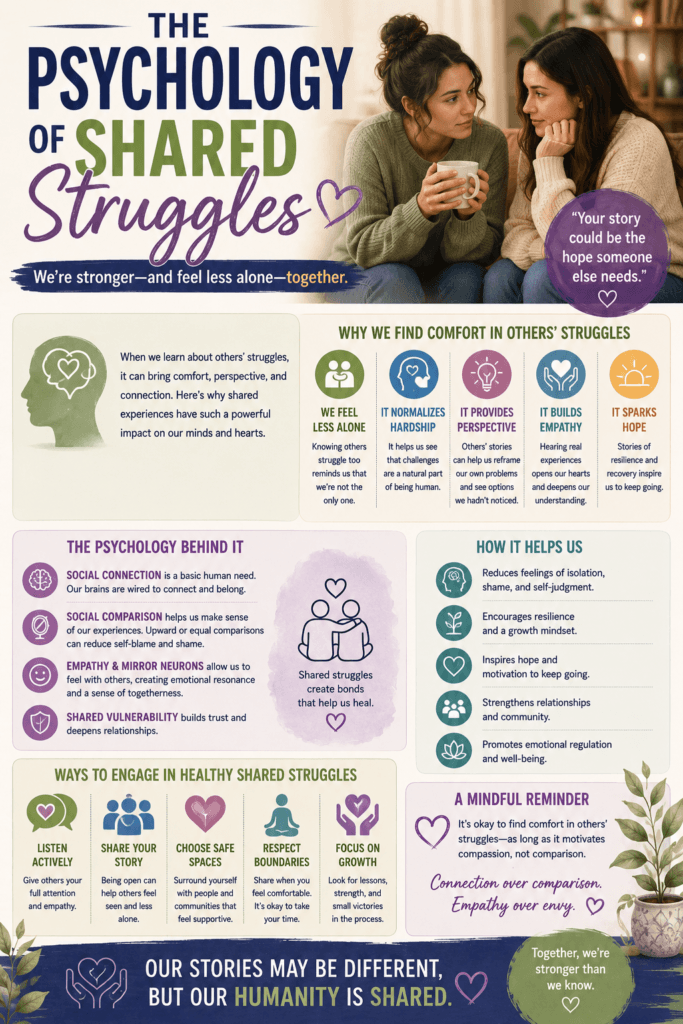
Finding comfort in the struggles of others is a deeply human response. Hearing how someone faced a difficult experience, persevered through hardship, or simply kept going can remind us that we are not alone in our own challenges. This sense of connection goes beyond curiosity; it reflects our natural need for empathy, belonging, and shared understanding. Stories of adversity can provide perspective, validation, and hope, and help us recognize that difficult experiences are part of the human condition. Understanding why shared struggles bring comfort can also reveal how connecting through personal experiences may strengthen our ability to cope with our own challenges.
How We Connect Through Shared Experiences
One of the biggest reasons I find comfort in others’ struggles is the sense that I’m not alone in what I’m going through. Knowing that someone else has faced something similar, maybe even worse, makes my own challenges feel less isolating. This sense of connection is more than just about empathy; it’s really about feeling like we belong to a bigger story or a supportive community.
People are wired to look for relatable stories. Whether it’s a friend, a celebrity, or even a character in a book, seeing that struggle and vulnerability is both validating and grounding. When someone shares their story, it gives me permission to feel my feelings without judgment. In fact, experts often mention that vulnerability helps build connection and authenticity in relationships, and that being real is key to every human bond.
Why We Gravitate Toward Struggle Stories
There’s a reason why books, movies, and even social media are packed with transformation stories—the kind where someone faces impossible odds or messes up and manages to bounce back. These stories speak to us because they mirror the ups and downs we face in everyday life. I know that when I watch someone share an honest moment about failing or hurting, it feels real and accessible. This breaks down the idea that everyone else has their life perfectly sorted while I’m struggling.
- Belonging: Seeing others struggle reminds me that I’m not the only one who faces tough days.
- Perspective: It helps me remember that hardship is part of being alive, not something unique to me.
- Hope: Knowing people can grow through pain gives me hope for getting through my own stuff.
These stories also show the wide variety in human experience and resilience. When different backgrounds and obstacles are represented, it paints a broader picture of what strength can look like. Sometimes, just knowing that another person has walked a bumpy road and still found moments of laughter allows me to recognize my own capacity to keep moving forward.
Psychological Reasons Behind Finding Comfort
Psychologists have studied the concept of “social comparison,” the tendency to compare oneself with others. Sometimes, this can make things worse, like scrolling through perfect holiday photos online, but when it’s about shared struggles, it often has the opposite effect. It normalizes both the setback and the emotions that come with it.
Research suggests that hearing about another person’s hardship can actually reduce feelings of shame and loneliness. A study from the American Psychological Association found that self-compassion grows when you realize your struggles are part of a “shared human experience.” This doesn’t mean we enjoy others’ troubles; it means connecting through hardship is a normal part of how we relate and find emotional relief. Over time, making sense of shared difficulties fosters solidarity.
What Sharing Our Struggles Does for Us
I’ve noticed that talking about my challenges, either with close friends or through writing, takes the edge off whatever I’m dealing with. After opening up and getting a simple “me too,” the weight of stress or embarrassment usually lightens a bit. When others share, it’s a reminder that being honest about not being okay is pretty normal—and it’s genuinely okay.
Some ways that sharing and hearing about struggles help:
- Reduces Stigma: Opens up conversations, especially about things like anxiety, depression, or failure.
- Promotes Healing: Processing feelings with someone trustworthy supports healing and increases emotional resilience.
- Strengthens Relationships: Opening up actually strengthens trust between people.
There is also power in helping others feel heard. Supporting someone else through their struggle, even by just listening, fosters empathy and can help both sides feel understood. Mutual sharing, when done respectfully, can be a foundation for long-lasting bonds or even spark new friendships. Throughout life, these moments make our support networks even stronger.
Finding Inspiration and Practical Advice
It’s not just comfort I’m after. Other people’s stories often come with handy lessons, real-life hacks, or just a shift in perspective that helps me see my own way forward. When someone shares how they got through a rough spot, maybe juggling too many jobs, suffering a loss, or getting past a breakup, it’s often packed with practical advice. These takeaways can turn into action steps I can try myself. Sometimes, simply knowing what worked or didn’t work for others can help me decide my own approach.
For example, I’ve picked up tips for handling anxiety from reading about someone’s daily grounding routine or learned about local support resources from a story in an online forum. The value in these stories isn’t just the emotional support—it’s the opportunity to actually do something constructive about your own situation. When struggles are met with creative solutions, it can spark new ideas and boost my own sense of hope.
A Closer Look: The Social Media Effect
It’s no secret that social media can be a double-edged sword. Scrolling through endless images of perfect vacations and wins should feel inspiring, but honestly, it can make struggles feel bigger and more personal. But there’s another side to it: accounts, groups, or hashtags dedicated to raw honesty and shared hardships. Spaces where people openly talk about depression, addiction, or chronic illness often create tiny communities packed with genuine support.
I’ve found that these spaces can be uplifting, especially when the focus is on real talk rather than just chasing likes. It’s comforting to see that there’s almost always someone out there who gets what I’m going through. Knowing this makes it a lot easier to keep moving forward.
Beyond that, social media can speed up finding help or forming connections with those on similar paths. Online mental health advocates, open forums, and group chats have formed an evolving landscape where vulnerability is not just accepted but even celebrated. These digital conversations can lead to in-person support groups, therapy referrals, and a broader safety net for anyone needing extra encouragement in tough times.
What to Watch Out For
There’s a flip side to all this, too. While hearing about other people’s experiences can be comforting, too much comparison or dwelling on negativity can reinforce feelings of despair or helplessness. It’s really important to stay aware of your own state of mind and to balance the input you get from others’ stories.
- Comparison Trap: Not every story is healthy to follow. Sometimes, it’s good to step away if content makes you feel worse about yourself.
- Boundaries: Curating your intake, especially if it brings up old wounds or triggers heavy emotions, is totally okay.
- Seeking Professional Help: If stories of hardship start to feel overwhelming, reaching out to a counselor, therapist, or support group can be a really smart move.
It’s helpful to check in with yourself regularly. Ask whether a specific story lifts you up or pulls you down. Remember: it’s perfectly fine to mute, unfollow, or block accounts that consistently bring you distress. Protecting your peace is part of building resilience, too!
Resilience, Growth, and Moving Ahead
Seeing others steer through hardship and come out the other side, even if it’s just getting out of bed on a rough morning, can be a powerful motivator. It breaks the loneliness of what I’m facing and sparks the idea that growth is possible, even from pain I’d rather avoid. Many cultures celebrate collective strength and overcoming obstacles, so this isn’t just a personal thing; it’s something we’ve valued as humans for generations.
Over time, these shared experiences create a “mental toolbox” of ways to tackle difficulties. The more I learn about different coping strategies and stories, the more options I have when problems come up in my own life. It’s a way of quietly building resilience, and it doesn’t happen in isolation.
Regularly connecting with others about hardships also helps us adopt new attitudes and find fresh solutions. We can switch things up in our self-care routines, learn about community resources, or just feel encouraged enough to try again tomorrow. All of these little acts build into something bigger: hope, grit, and a willingness to keep going, no matter the setback.
Frequently Asked Questions
Here are some common questions I get about why we look for comfort in the struggles of others:
Question: Is it normal to feel better when I hear about someone else’s tough time?
Answer: Yes, this is a really common experience. It’s not about feeling happy at someone’s pain, but more about finding connection, validation, and sometimes hope.
Question: How do I avoid feeling negative or overwhelmed when I hear too many stories of hardship?
Answer: Pay close attention to how different stories affect your mood. Limit exposure if you start to feel down, and balance heavy stories with uplifting content or ones focused on recovery and growth.
Question: Can sharing my own struggles help others?
Answer: Absolutely. Your openness might inspire someone else to reach out for help or just realize they’re not alone, which can have a bigger impact than you think.
Key Takeaways for Finding Comfort in Others’ Struggles
Finding solace in someone else’s tough times is all about connection and shared humanity. It helps break the stigma around struggle, reminds us that ups and downs are normal, and provides both emotional relief and practical advice. The next time you read or hear about someone’s difficult adventure, know that the comfort you feel is deeply rooted in how we’re all wired to seek community, learn from each other, and get through life’s messier moments together.
Video: Why We Feel Alone #FearLess #SharedStruggles