Teen communication can get pretty complicated, and sarcasm often plays a bigger role than most realize. For lots of teens, sarcasm slips into everyday conversations. Sometimes it’s a joke; other times, it’s an automatic response. While it might seem like harmless banter, sarcasm can actually create some deeper problems in relationships with parents, friends, and even teachers. In this article, I’m breaking down why sarcasm isn’t as harmless as it appears, how it affects teens, and what can help build healthier ways to talk and listen.
Why Sarcasm Feels So Tempting for Teens
It’s honestly no surprise that sarcasm is common with teenagers. It can be a really quick way to either cover up some nerves, get a laugh, or even dodge having to answer seriously. Think about it: when a teen says, “Oh, great, another homework assignment,” while rolling their eyes, the message isn’t really about the homework. It’s about showing frustration, but with a protective layer so it’s not too vulnerable.
For some teens, sarcasm can feel like a shortcut to bonding with others, especially if that’s just what the group does. Social media, TV shows, and movies show sarcasm as entertaining or witty, which pretty much encourages teens to use it. It can also be a way of testing boundaries without being openly confrontational. Sometimes sarcasm can help teens feel like they belong to a certain group or communicate a shared attitude about school or authority. These subtle ways of connecting might feel safer or easier than speaking openly.
How Sarcasm Hurts Communication
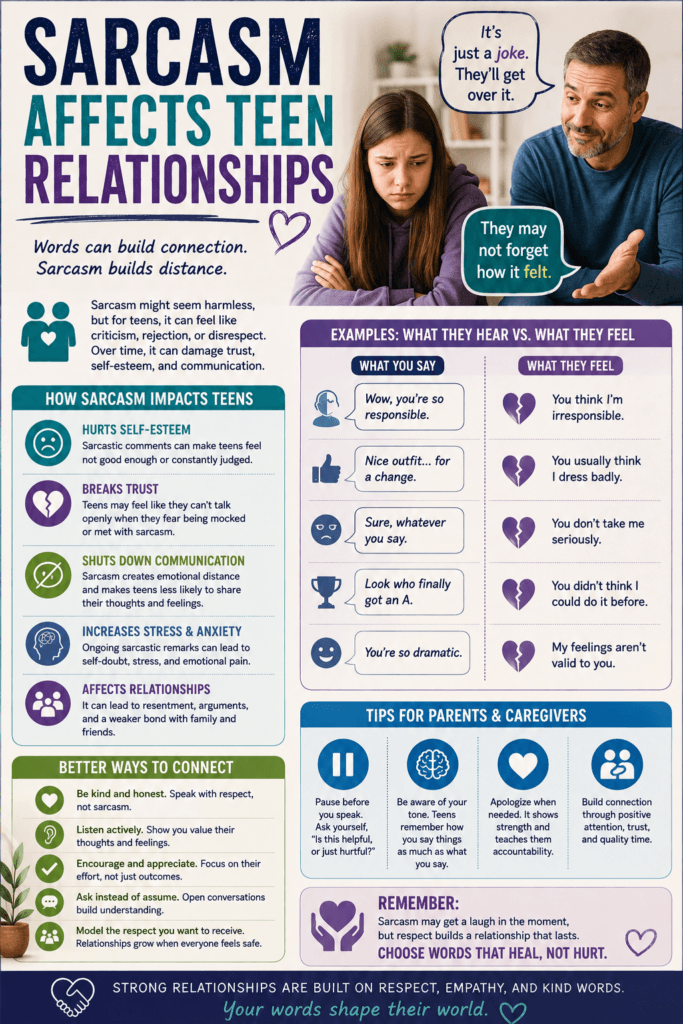
Even though sarcasm can get some laughs or help deflect tough questions, it takes a toll in the long run. Here are a few ways sarcasm can mess with real communication:
- Confusing Messages: Sarcasm is all about saying one thing while meaning the opposite. That can leave friends or family unsure if you’re joking, annoyed, or totally serious.
- Hidden Frustrations: Sarcasm often hides what someone really wants to say. Over time, that can make it super hard to talk openly about feelings or problems because no one’s sure what’s true and what’s just a sarcastic jab.
- Hurt Feelings: Even gentle sarcasm can sting, especially if someone is worried or insecure. When conversation gets more sarcastic, trust can start to chip away, making it tougher to get close or sort out disagreements.
Researchers have found that sarcasm is often misunderstood, especially between teens and adults, because nonverbal cues such as tone of voice and facial expressions can be missed. That risk of miscommunication can pile up over time, making it even harder to connect meaningfully. If people can’t be sure what you mean, they may stop reaching out or hesitate to share their true thoughts.
Ways Sarcasm Impacts Teen Relationships
Sarcasm doesn’t just make conversations awkward. It can seriously affect relationships in lots of ways. Here’s where things get tricky:
- Friendship Woes: When sarcasm shows up in close friendships, it might initially be taken as teasing. But if it’s constant, people can start feeling like they’re not actually respected or trusted. It can also make it hard for friends to help each other during tough times.
- Family Frustrations: Sarcasm in families, especially between teens and parents, turns talks about important stuff into arguments or eye-rolling battles. When a teen makes sarcastic comments during serious conversations, parents sometimes see it as disrespectful. Meanwhile, teens using sarcasm may feel like they’re protecting themselves, which only adds tension.
- School Problems: Teachers and classmates may misread sarcastic comments as rudeness or as being a “know-it-all.” That puts a strain on teamwork in class and can even affect grades if a teacher feels disrespected, even if that wasn’t the point at all. Over time, classmates might avoid group work or avoid inviting someone into conversations for fear that things could go sour or become embarrassing.
What Makes Someone Use Sarcasm So Much?
The habit of using sarcasm doesn’t happen randomly. Some reasons that teens rely on it include:
- Protection: It’s less scary to toss out a sarcastic comment than to admit you feel hurt, nervous, or embarrassed. Sarcasm serves as a sort of shield to avoid vulnerability.
- Fitting In: If sarcasm is the “normal” way friends or family talk, it just becomes part of how communication happens. No one wants to be the odd one out by being serious all the time.
- Media Influence: Watching characters on TV win arguments or get laughs with sarcasm can make it seem appealing or even like the “right” thing to do, and teens may feel pressure to keep up that same style.
- Lack of Good Examples: Sometimes, teens haven’t seen much clear, open, and respectful communication at home or at school, so sarcasm becomes the go-to method. They use what they see, even if it doesn’t always work.
All these factors blend together and may lead teens to stick with sarcasm. Sometimes it feels like the only way to be noticed or avoid feeling uncomfortable, especially when they’re not sure how to handle big feelings.
Healthier Ways to Communicate
Dropping sarcasm isn’t about joking around; it’s about knowing when communication is building people up instead of tearing them down. These habits can help switch conversations onto a better track:
- Say What You Mean: Being real about what you’re feeling, like saying “I’m upset about that assignment” instead of joking, takes courage, but it’s far more effective at solving problems.
- Listen Without Jumping In: When someone shares something, try not to cut them off, make fun of them, or dismiss their feelings. That makes everyone feel heard and valued.
- Use Humor Carefully: There’s a big difference between fun jokes everyone enjoys and sarcastic quips that hurt feelings. Checking in with friends and family about what’s funny (and what’s not) creates a safer space for everyone.
- Model Directness: If someone in a friend group or family becomes more direct, others might follow suit because it works better. Sometimes, teens have to be the first to try a new way, even if it’s awkward at first.
One small change at a time can make it easier to swap out sarcasm for something more real. Encouraging open dialogue, practicing patience, and showing understanding can help this process along. It’s important to recognize that it may take a while for everyone to get used to less sarcasm, but positive results can encourage more honest conversations.
Common Roadblocks and How to Get Past Them
Breaking away from sarcasm can be tough if it’s been the norm for a while. Here are some issues teens (and parents too) might run into, with tips that can actually help:
- It Feels Awkward at First: Switching to honest conversation after being sarcastic for years can feel super weird. Sticking with it a few times helps it become easier, especially when others respond positively over time.
- Peer Pressure: Some friend groups just lean heavily on sarcasm. If one person stops, it might seem like the joke is ruined. It can help to start small—maybe one-on-one with a close, supportive friend, then try it in larger groups.
- Family Habits: If family conversations are always sarcastic, bringing it up directly (like saying, “Can we try to talk more openly?”) can sometimes be all it takes to start a new pattern. Being the first to suggest change is tough, but it can shift how everyone interacts.
- Sensitivity to Criticism: Teens might misread direct feedback as criticism. Parents, teachers, and friends can work together to praise honest attempts at real communication, even if it’s not perfect right away. This encouragement can help ease the discomfort of trying something new.
Friend Group Example
I had a friend in high school whose group was nonstop sarcastic. At first, it was entertaining, but every time someone wanted to talk about a real problem, things got flattened with a joke. One day, my friend called it out—”Can we just talk about this without joking for a second?”—and it actually reset the conversation. That first time was awkward, but after that, the group started being more balanced. This really taught me how directness can change the whole vibe.
Family Example
In my own family growing up, sarcasm sometimes replaced real conversation, especially during arguments. When I stopped responding with witty remarks and just admitted I was upset, it changed how my parents listened. It didn’t make things perfect, but we definitely started understanding each other better and began solving issues instead of just trading jokes.
Why This Matters: Emotional Health and Self-Esteem
Consistent sarcasm may look harmless, but it can chip away at self-confidence, trust, and even mental health. Teens who experience sarcasm at home sometimes start to doubt themselves or become anxious about opening up in other settings. Friends or siblings might hold back when something upsets them, rather than risk being the butt of the next joke. This can also lower self-esteem over time and may even contribute to anxiety or depressive thoughts.
Research suggests teens do better emotionally when they’re part of groups or families where honesty and kindness are the norm. Everyone messes up sometimes, but creating more real talk and less sarcasm signals that it’s okay to be yourself and ask for help. By building this kind of positive communication, teens not only strengthen their relationships but also feel more accepted and understood—crucial things for building self-worth.
Frequently Asked Questions
Here are some questions teens and parents usually have about sarcasm in communication:
Question: If sarcasm is meant as a joke, why do people still get hurt?
Answer: Even if the comment was meant to be funny, it can miss the mark or hit a sensitive spot. Everyone has different boundaries for what feels hurtful, and sarcasm blurs those lines. Moreover, underlying frustrations might actually leak out, so even unintentional jabs can sting.
Question: How can I get my friends to use less sarcasm?
Answer: Bringing it up honestly can actually work; just explain that sarcasm can sometimes make things tricky or hurt your feelings. Suggest being more real with each other, at least for serious topics. You can also try leading by example, communicating directly, and showing that openness can feel good for everyone in the group.
Question: Is all sarcasm bad?
Answer: Not always! Some groups use sarcasm playfully, and everyone’s fine with it. It becomes a problem when people no longer feel comfortable, heard, or respected. Watch for signs that someone is feeling left out or upset, and shift the conversation if things start to go south.
Key Takeaways for Healthier Teen Communication
Building better communication isn’t just about banning sarcasm; it’s about finding real connection. Being honest, choosing words thoughtfully, and steering clear of jokes that cut too deep go a long way. Everyone slips up sometimes, but paying attention to how words affect the people around you is really important. More respect and directness mean stronger trust, healthier relationships, and a lot less drama in the long run. Encouraging these habits can help teens build lasting friendships and family bonds that are deeply supportive and real. Ultimately, honest and caring words set the stage for trust, allowing everyone to feel safe, valued, and ready to face challenges together.
Video: Why Teens Hate Sarcasm #teencommunication #parentingteens