Divorce is one of life’s most emotionally challenging experiences, often bringing feelings of grief, rejection, loneliness, anger, financial insecurity, and uncertainty about the future. For some individuals, the emotional stress associated with ending a marriage can increase vulnerability to alcohol misuse, drug use, or other unhealthy coping behaviors. What begins as an attempt to escape emotional pain may gradually develop into a pattern of substance dependence or addiction.
The relationship between divorce and addiction is complex. Divorce does not automatically cause substance use disorder, and many individuals navigate separation without developing addiction. However, significant life changes, unresolved emotional distress, reduced social support, and preexisting mental health concerns can increase the risk of problematic substance use.
Understanding how divorce may contribute to addiction is essential for recognizing early warning signs and encouraging healthier coping strategies. Through self-management, family involvement, professional treatment, and community resources, individuals can navigate the emotional challenges of divorce while protecting their mental health and supporting long-term recovery.
Understanding the Connection Between Divorce and Addiction
Divorce involves more than legally dissolving a marriage. It often means losing emotional companionship, shared routines, financial stability, family traditions, and expectations for the future.
These changes can activate the body’s stress-response system, affecting sleep, emotional regulation, decision-making, and vulnerability to substance use.
Some individuals turn to alcohol, prescription medications, cannabis, or other substances to temporarily reduce emotional discomfort. Although substances may initially produce relaxation or emotional relief, repeated use can reinforce avoidance-based coping and increase the risk of dependence.
For individuals already recovering from substance use disorders, divorce may also increase the risk of recurrence of substance use, particularly when emotional distress is combined with reduced support or disrupted treatment.
Importantly, the relationship can work in both directions: substance use problems may contribute to marital conflict and divorce, while divorce-related stress may worsen existing substance use or increase the risk of developing problematic patterns.
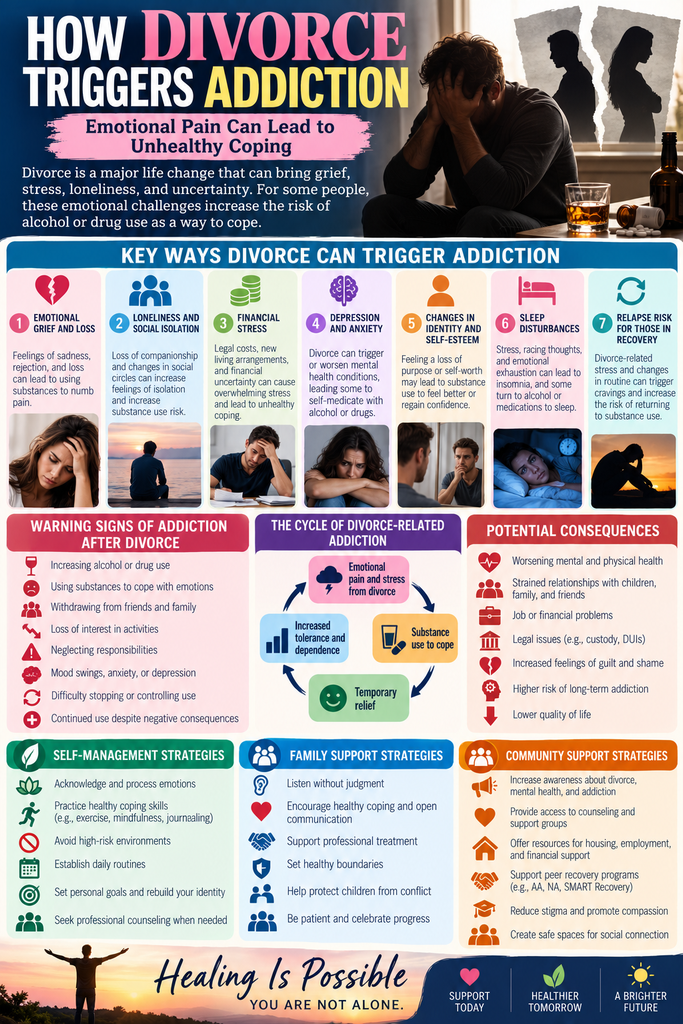
Seven Ways Divorce Can Increase the Risk of Addiction
1. Emotional Grief and Loss
Divorce can trigger a grieving process similar in some respects to other major losses. Individuals may mourn the end of their relationship, the loss of shared dreams, or changes in their family structure.
Grief may involve sadness, anger, disbelief, guilt, and emotional exhaustion.
Some individuals attempt to numb these feelings through alcohol or drugs rather than processing their emotions.
Common warning signs include:
- Drinking to avoid sadness or loneliness.
- Using substances after emotionally difficult conversations.
- Increased alcohol consumption during periods of grief.
- Avoiding discussions about the separation.
- Feeling unable to relax without substances.
- Withdrawing from supportive relationships.
Healthy grief processing, counseling, and emotional support can reduce reliance on substances for temporary relief.
2. Loneliness and Social Isolation
Divorce often changes social relationships and daily routines. Individuals may lose regular companionship, shared friendships, or connections with extended family members.
Loneliness can contribute to depression, anxiety, and emotional vulnerability.
Substances may replace social connection, especially during evenings, weekends, or holidays when isolation feels more pronounced.
Potential warning signs include:
- Spending increasing amounts of time alone.
- Drinking or using drugs in isolation.
- Avoiding previously enjoyable activities.
- Losing interest in social relationships.
- Feeling disconnected from friends and family.
- Using substances to manage boredom or emptiness.
Maintaining supportive relationships and participating in meaningful activities can help reduce isolation.
3. Financial Stress and Uncertainty
Divorce may create significant financial challenges, including legal expenses, changes in household income, housing instability, and child-support obligations.
Financial uncertainty can contribute to chronic stress, sleep disturbances, and emotional exhaustion.
Some individuals may use alcohol or drugs to temporarily escape financial worries.
However, substance misuse can worsen financial problems through increased spending, reduced productivity, impaired judgment, and potential employment difficulties.
Developing a realistic financial plan and seeking appropriate assistance can help reduce stress-related substance use.
4. Depression, Anxiety, and Emotional Distress
Divorce can increase the risk of depressive and anxiety symptoms, particularly when the separation involves conflict, betrayal, uncertainty, or loss of social support.
Some individuals may experience persistent sadness, hopelessness, panic symptoms, irritability, or difficulty concentrating.
Substance use may become a form of self-medication.
For example, someone may drink alcohol to fall asleep or misuse sedating medications to manage anxiety.
Although these substances may provide temporary relief, they can disrupt sleep, worsen mood symptoms, and increase dependence risk.
Individuals experiencing persistent emotional symptoms should receive appropriate mental health evaluation.
5. Changes in Identity and Self-Esteem
Marriage often becomes an important part of personal identity. Following divorce, individuals may struggle with questions about their worth, purpose, attractiveness, and future.
Feelings of rejection or failure may contribute to negative self-talk and emotional insecurity.
Some individuals may seek temporary confidence or emotional escape through alcohol, drugs, or impulsive behaviors.
Common emotional challenges include:
- Feeling personally responsible for the marriage ending.
- Questioning self-worth or attractiveness.
- Experiencing fear of future relationships.
- Comparing oneself with a former spouse.
- Feeling embarrassed about divorce.
- Struggling to establish a new identity.
Developing self-compassion and meaningful goals can help rebuild confidence without relying on substances.
6. Sleep Disturbances and Emotional Exhaustion
Divorce-related stress can interfere with sleep, contributing to insomnia, fatigue, and impaired emotional regulation.
Some individuals begin using alcohol, cannabis, or sedative medications to manage sleep difficulties.
Alcohol may initially cause drowsiness but often disrupts sleep quality later in the night. Misusing prescription sedatives can also lead to tolerance, dependence, and overdose risk, especially when combined with alcohol or opioids.
Healthy sleep routines and evidence-based insomnia treatment, such as cognitive behavioral therapy for insomnia (CBT-I), are safer long-term approaches.
7. Relapse Vulnerability During Divorce
Individuals recovering from substance use disorders may experience increased cravings during divorce because of emotional stress, changes in routine, and reduced support.
Potential triggers include:
- Arguments with a former spouse.
- Child custody disputes.
- Financial instability.
- Loneliness during weekends or holidays.
- Exposure to former drinking or drug-using environments.
- Feelings of rejection, anger, or hopelessness.
- Disruption of counseling or recovery meetings.
A return to substance use should prompt reassessment and additional support rather than shame or punishment.
Psychological Signs That Divorce-Related Stress May Be Contributing to Addiction
Recognizing early warning signs can help prevent substance use from escalating.
| Psychological signs | Possible behavioral changes |
|---|---|
| Persistent sadness or emotional numbness | Increasing alcohol or drug use |
| Anxiety and overwhelming worry | Using substances to calm down |
| Loneliness and isolation | Drinking or using drugs alone |
| Anger and resentment | Impulsive substance use after conflicts |
| Low self-esteem | Using substances to feel more confident |
| Insomnia and fatigue | Misusing alcohol or sedating medications for sleep |
| Hopelessness and emotional exhaustion | Neglecting responsibilities or recovery routines |
A substance use disorder is not diagnosed solely by the amount someone drinks or uses drugs. Clinical assessment considers impaired control, cravings, continued use despite harm, and other diagnostic criteria.
Self-Management Strategies: Coping With Divorce Without Turning to Addiction
Self-management can help individuals process emotional pain, manage stress, and develop healthier coping mechanisms during and after divorce.
The goal isn’t to eliminate difficult emotions, but to respond in ways that support long-term emotional and physical health.
Helpful self-management strategies include:
- Acknowledge emotional pain: Recognize sadness, anger, loneliness, and disappointment as understandable responses to major life changes.
- Identify substance use triggers: Track situations, thoughts, and emotions that increase cravings or urges to drink or use drugs.
- Develop healthy coping skills: Practice mindfulness, breathing exercises, journaling, exercise, or creative activities.
- Establish daily routines: Maintain consistent sleep, meals, physical activity, and meaningful responsibilities.
- Limit high-risk environments: Avoid situations that encourage excessive drinking or drug use, particularly during periods of emotional vulnerability.
- Create a relapse prevention plan: Identify warning signs, supportive contacts, coping strategies, and steps to take if substance use recurs.
- Set healthy communication boundaries: When possible, reduce unnecessary conflict with a former spouse.
- Rebuild personal identity: Explore hobbies, educational opportunities, friendships, and goals unrelated to the previous marriage.
- Seek professional counseling: Consider psychotherapy to address grief, depression, anxiety, or relationship-related trauma.
- Ask for addiction treatment when needed: Evidence-based treatment may include behavioral therapy, peer support, and medications for alcohol or opioid use disorders.
Individuals who have developed physical dependence on alcohol or benzodiazepines should not abruptly discontinue use without medical guidance because withdrawal can be dangerous.
Family Support Strategies: Helping a Loved One Navigate Divorce and Addiction
Family members can provide emotional stability during divorce, especially when someone is experiencing substance use problems.
However, supportive involvement should not minimize harmful behaviors, take over responsibilities indefinitely, or ignore safety concerns.
Healthy family support balances compassion, encouragement, accountability, and personal boundaries.
Recommended family support strategies include:
- Listen without judgment: Let loved ones talk about grief, anger, and disappointment without criticism.
- Recognize early warning signs: Watch for increasing substance use, isolation, mood changes, or neglect of responsibilities.
- Encourage professional treatment: Help identify qualified addiction specialists, counselors, or mental health providers.
- Avoid blame and shame: Recognize that addiction is a treatable medical condition rather than a moral failure.
- Establish healthy boundaries: Communicate expectations regarding substance use, financial assistance, and household responsibilities.
- Support recovery activities: Encourage participation in counseling, recovery meetings, and healthy social activities.
- Protect children from conflict: Avoid involving children in adult disagreements or making them responsible for a parent’s emotional well-being.
- Encourage healthy co-parenting: When safe and appropriate, promote respectful communication focused on children’s needs.
- Develop emergency plans: Know how to respond to overdose, suicidal thoughts, severe withdrawal, or other urgent safety concerns.
Family therapy may help address communication difficulties and improve support when participation is appropriate and safe.
Community Support Strategies: Building a Strong Recovery Network
Community resources can reduce isolation, improve access to treatment, and provide practical assistance during divorce.
Individuals facing both relationship loss and addiction may need coordinated support involving mental health services, addiction treatment, legal assistance, housing resources, and peer recovery programs.
Helpful community support strategies include:
- Expand access to addiction treatment: Provide affordable outpatient counseling, intensive outpatient programs, residential treatment when indicated, and medications for substance use disorders.
- Offer divorce recovery support groups: Create safe spaces for individuals to discuss grief, loneliness, and relationship transitions.
- Encourage peer recovery support: Connect individuals with trained recovery coaches or peer support specialists.
- Provide financial counseling: Help individuals develop budgets and address financial stress after separation.
- Support accessible mental health services: Offer psychotherapy, psychiatric care, and telehealth options.
- Promote family education: Teach families about addiction warning signs, relapse prevention, and supportive communication.
- Improve community awareness: Reduce stigma surrounding divorce, addiction, and mental health treatment.
- Offer practical assistance: Connect individuals with childcare, transportation, employment, and housing resources.
- Strengthen social connections: Encourage volunteer opportunities, recreational activities, and community engagement.
A strong recovery network can provide both emotional reassurance and practical support during major life transitions.
The Role of Professional Addiction Treatment
Some individuals can reduce risky substance use by improving coping skills and strengthening support systems. Others require structured professional treatment.
A comprehensive assessment should consider substance use patterns, withdrawal risk, mental health symptoms, medical conditions, trauma history, and social circumstances.
Treatment options may include:
- Cognitive behavioral therapy (CBT): Helps identify and change unhealthy thought patterns and substance-related behaviors.
- Motivational interviewing: Helps individuals explore their goals and motivation for change.
- Medication treatment: Naltrexone or acamprosate may be appropriate for alcohol use disorder; buprenorphine and methadone are effective options for opioid use disorder.
- Integrated mental health care: Addresses co-occurring depression, anxiety, trauma-related symptoms, and substance use disorders.
- Peer recovery programs: Provide encouragement, accountability, and supportive relationships.
- Relapse prevention counseling: Helps individuals prepare for emotionally challenging situations and develop effective coping responses.
Treatment should be individualized and based on clinical needs, patient preferences, and available resources.
Helping Children When Divorce and Addiction Occur Together
Children may experience confusion, sadness, anxiety, or insecurity when parents separate, particularly if substance misuse contributes to family instability.
Children benefit from predictable routines, age-appropriate explanations, and reassurance that they are not responsible for the divorce or a parent’s substance use.
Helpful strategies for protecting children include:
- Maintain consistent daily routines whenever possible.
- Avoid discussing adult conflicts in front of children.
- Encourage children to express their emotions.
- Provide reassurance about safety and stability.
- Avoid asking children to monitor a parent’s substance use.
- Seek counseling when children experience persistent emotional or behavioral difficulties.
- Prioritize safe caregiving and supervision.
- Encourage healthy relationships with trusted adults.
When substance use creates immediate safety concerns, protecting children and arranging appropriate supervision must take priority.
Conclusion: Divorce Can Be a Turning Point Toward Recovery
Divorce can create significant emotional, financial, and social challenges that increase vulnerability to substance misuse. Feelings of grief, loneliness, rejection, and uncertainty may lead some individuals to use alcohol or drugs as temporary coping mechanisms.
However, substance use often complicates the healing process by worsening emotional distress, disrupting relationships, and increasing health risks.
Recognizing the connection between divorce-related stress and addiction is an important step toward prevention and recovery.
Through self-management strategies, compassionate family support, professional addiction treatment, and community resources, individuals can develop healthier coping mechanisms and rebuild their lives after divorce.
Although the end of a marriage can be painful, it can also become an opportunity for personal growth, renewed purpose, stronger relationships, and emotional healing.
Divorce may mark the end of a relationship, but it does not have to mark the beginning of addiction. With appropriate support, it can begin recovery, build resilience, and lead to a healthier future.
Addiction and Mental Health Resources
- SAMHSA National Helpline: 1-800-662-HELP (4357) — Confidential treatment referral and information.
- FindTreatment.gov: findtreatment.gov — Locate substance use and mental health treatment services.
- 988 Suicide & Crisis Lifeline: Call or text 988 for immediate emotional crisis support.
- SMART Recovery: smartrecovery.org — Evidence-informed recovery support meetings.
- Al-Anon Family Groups: al-anon.org — Support for families and friends affected by another person’s drinking.
Frequently Asked Questions and Answers
Understanding the Connection Between Divorce and Addiction
1. Can divorce trigger addiction?
Yes. Divorce-related stress may contribute to the development or worsening of problematic substance use. Emotional pain, loneliness, financial difficulties, and disruptions in daily routines can increase vulnerability. However, divorce does not automatically cause addiction, and many individuals navigate separation without developing a substance use disorder.
2. Why do some people turn to alcohol or drugs after divorce?
Some individuals use alcohol or drugs to temporarily escape sadness, anger, rejection, anxiety, or loneliness. This behavior is often described as self-medication. Although substances may provide short-term emotional relief, repeated use can reinforce unhealthy coping patterns and increase the risk of dependence.
3. What emotional experiences during divorce can increase addiction risk?
Common emotional experiences include:
- Grief over the loss of a relationship.
- Feelings of rejection or abandonment.
- Loneliness and social isolation.
- Anger, resentment, or betrayal.
- Financial insecurity and uncertainty.
- Anxiety about parenting or custody arrangements.
- Depression and hopelessness.
- Loss of identity and self-confidence.
These experiences can become substance use triggers when individuals lack effective coping strategies or adequate emotional support.
4. Is addiction more common among divorced individuals?
Some population studies have found associations between marital separation or divorce and increased rates of problematic alcohol or substance use. However, the relationship is complex and can operate in both directions. Substance use problems may contribute to marital instability, while divorce-related stress may worsen substance use.
5. Can divorce cause someone who previously recovered from addiction to relapse?
Yes. Divorce can increase the risk of returning to substance use by triggering emotional distress, disrupting treatment routines, and reducing social support. Individuals in recovery may experience increased cravings during custody disputes, financial difficulties, or periods of loneliness. A recurrence of substance use should prompt renewed treatment and support rather than shame.
Psychological Warning Signs
6. What are the early warning signs of addiction after divorce?
Warning signs may include:
- Increasing alcohol or drug consumption.
- Drinking or using drugs alone.
- Using substances to fall asleep or reduce anxiety.
- Hiding substance use from family or friends.
- Neglecting work, parenting, or household responsibilities.
- Experiencing cravings or difficulty controlling use.
- Withdrawing from social relationships.
- Continuing substance use despite negative consequences.
Early recognition can help individuals seek assistance before substance use becomes more severe.
7. Can divorce-related depression lead to substance misuse?
Yes. Depression following divorce may increase vulnerability to substance misuse, particularly when individuals use alcohol or drugs to numb sadness or hopelessness. Unfortunately, substance use can worsen depressive symptoms, interfere with sleep, and reduce motivation. Integrated treatment may be necessary when depression and substance use disorder occur together.
8. How does loneliness after divorce contribute to addiction?
Loneliness can increase emotional distress and reduce access to supportive relationships. Some individuals begin using alcohol or drugs during evenings, weekends, or holidays when feelings of isolation are strongest. Maintaining friendships, joining support groups, and participating in meaningful activities can reduce loneliness and strengthen recovery.
9. Can financial stress after divorce increase substance use?
Yes. Legal expenses, housing changes, reduced household income, and child-support obligations may create significant stress. Some individuals use substances to temporarily escape financial worries. However, problematic substance use can worsen financial instability through increased expenses, reduced productivity, and impaired decision-making.
10. Why do some people develop insomnia and begin misusing medications after divorce?
Divorce-related anxiety and stress can disrupt sleep. Some individuals begin using alcohol, benzodiazepines, or other sedating substances to manage insomnia. Repeated use may lead to dependence, and combining sedatives with alcohol or opioids can increase overdose risk. Cognitive behavioral therapy for insomnia (CBT-I) is an evidence-based treatment for chronic insomnia.
11. Can divorce-related anger trigger alcohol or drug use?
Yes. Anger, resentment, and unresolved conflict may increase cravings or impulsive substance use, especially among individuals who previously relied on substances to regulate emotions. Counseling, emotional regulation skills, and healthy communication boundaries can help reduce this risk.
12. Can divorce affect a person’s self-esteem and increase addiction vulnerability?
Yes. Divorce may contribute to feelings of rejection, failure, or diminished self-worth. Some individuals use substances to temporarily feel more confident or escape negative self-perceptions. Developing self-compassion, rebuilding personal identity, and seeking counseling can support healthier emotional adjustment.
Self-Management Strategies
13. How can someone cope with divorce without using alcohol or drugs?
Helpful coping strategies include:
- Acknowledging and processing grief.
- Maintaining regular sleep and meal schedules.
- Participating in physical activity.
- Practicing mindfulness or relaxation techniques.
- Journaling about emotions and personal goals.
- Maintaining friendships and supportive relationships.
- Avoiding high-risk substance use environments.
- Seeking individual counseling or peer support.
- Developing healthy hobbies and meaningful routines.
The goal is to manage difficult emotions without relying on substances for temporary relief.
14. What is a relapse prevention plan during divorce?
A relapse prevention plan identifies emotional triggers, early warning signs, coping strategies, and supportive contacts. It may include scheduled counseling appointments, recovery meetings, strategies for managing interactions with a former spouse, and a plan for responding to cravings or substance use recurrence.
15. Can exercise help reduce addiction risk after divorce?
Regular physical activity may improve mood, reduce stress, support sleep, and provide structure during major life transitions. Walking, swimming, cycling, yoga, and strength training can complement professional mental health or addiction treatment. Exercise should not replace treatment when a substance use disorder is present.
16. Should someone avoid dating immediately after divorce to protect addiction recovery?
No universal rule requires individuals to avoid dating after divorce. However, people in early recovery may benefit from prioritizing emotional stability, treatment engagement, and healthy boundaries before entering emotionally demanding relationships. Decisions should reflect individual readiness and recovery needs.
17. How can someone rebuild their identity after divorce?
Rebuilding identity may involve exploring personal interests, reconnecting with friends, pursuing education, volunteering, setting career goals, or developing new routines. Counseling can help individuals separate their self-worth from the outcome of their marriage and build a stronger sense of purpose.
Family Support Strategies
18. How can family members help someone experiencing divorce-related addiction?
Family members can provide emotional support by listening without judgment, encouraging professional treatment, and helping maintain healthy routines. They should recognize warning signs of substance misuse while establishing appropriate boundaries. Compassionate communication can reduce shame and encourage engagement in treatment.
19. What should families avoid when supporting someone with addiction after divorce?
Families should avoid blaming, shaming, threatening, or minimizing substance use problems. They should also avoid repeatedly covering up harmful behaviors or assuming responsibility for another person’s recovery. Healthy support combines empathy, accountability, and appropriate boundaries.
20. How can parents protect children when divorce and addiction occur together?
Parents should prioritize children’s physical and emotional safety, maintain predictable routines, and avoid involving children in adult conflicts. Children should never be responsible for monitoring a parent’s substance use. Family counseling and age-appropriate emotional support may help children adjust to changes in their family structure.
21. Can family therapy help individuals experiencing divorce and addiction?
Yes. Family therapy may improve communication, strengthen boundaries, and help family members understand substance use disorders. It can also address conflict and support healthier relationships. However, joint counseling may be inappropriate when coercion, intimidation, or domestic violence is present; safety assessment should come first.
22. How can a former spouse support addiction recovery?
When safe and appropriate, a former spouse may support recovery by communicating respectfully, avoiding unnecessary conflict, and cooperating on parenting responsibilities. However, a former spouse is not responsible for managing another person’s addiction or ensuring their recovery.
Community Support and Professional Treatment
23. What community resources can help someone struggling with addiction after divorce?
Helpful resources include:
- Addiction treatment centers and outpatient programs.
- Individual and group counseling.
- Divorce recovery support groups.
- Alcoholics Anonymous and Narcotics Anonymous.
- SMART Recovery meetings.
- Peer recovery coaching.
- Community mental health clinics.
- Financial counseling and housing assistance.
- Family education and support programs.
Access to multiple forms of support can reduce isolation and improve recovery outcomes.
24. When should someone seek professional addiction treatment after divorce?
Professional evaluation is recommended when substance use becomes difficult to control, interferes with responsibilities, causes relationship or health problems, or continues despite harmful consequences. Withdrawal symptoms, persistent cravings, and repeated unsuccessful attempts to stop are additional warning signs.
25. What treatments are available for divorce-related substance use disorders?
Evidence-based treatment options include cognitive behavioral therapy, motivational interviewing, relapse prevention counseling, and medications when clinically indicated. For alcohol use disorder, medications such as naltrexone or acamprosate may be appropriate. For opioid use disorder, buprenorphine and methadone are effective treatment options.
26. Can someone recover from addiction while experiencing divorce-related stress?
Yes. Recovery is possible even during significant emotional and legal challenges. Consistent treatment, supportive relationships, healthy coping strategies, and practical assistance can help individuals maintain progress while adjusting to major life changes.
27. Is inpatient rehabilitation necessary for someone whose substance use increases after divorce?
Not necessarily. Treatment intensity depends on the severity of substance use, withdrawal risk, co-occurring mental health conditions, medical needs, and available support. Some individuals benefit from outpatient counseling, while others require medically managed withdrawal or residential treatment.
28. Can peer recovery support help during divorce?
Yes. Peer recovery specialists and support groups can provide encouragement, shared experiences, accountability, and practical coping strategies. Peer support can complement professional treatment and help reduce isolation during emotionally challenging periods.
Long-Term Recovery and Emotional Healing
29. How long does emotional recovery from divorce take?
There is no fixed timeline for recovering emotionally from divorce. Adjustment depends on relationship history, individual coping skills, financial circumstances, parenting responsibilities, and social support. Some people improve within months, while others need longer-term counseling or support.
30. What is the most important lesson about divorce and addiction?
The most important lesson is that emotional pain does not have to lead to substance dependence. Divorce can create significant stress, but recognizing warning signs, developing healthy coping mechanisms, and seeking appropriate support can reduce addiction risk and promote long-term recovery.
Video: