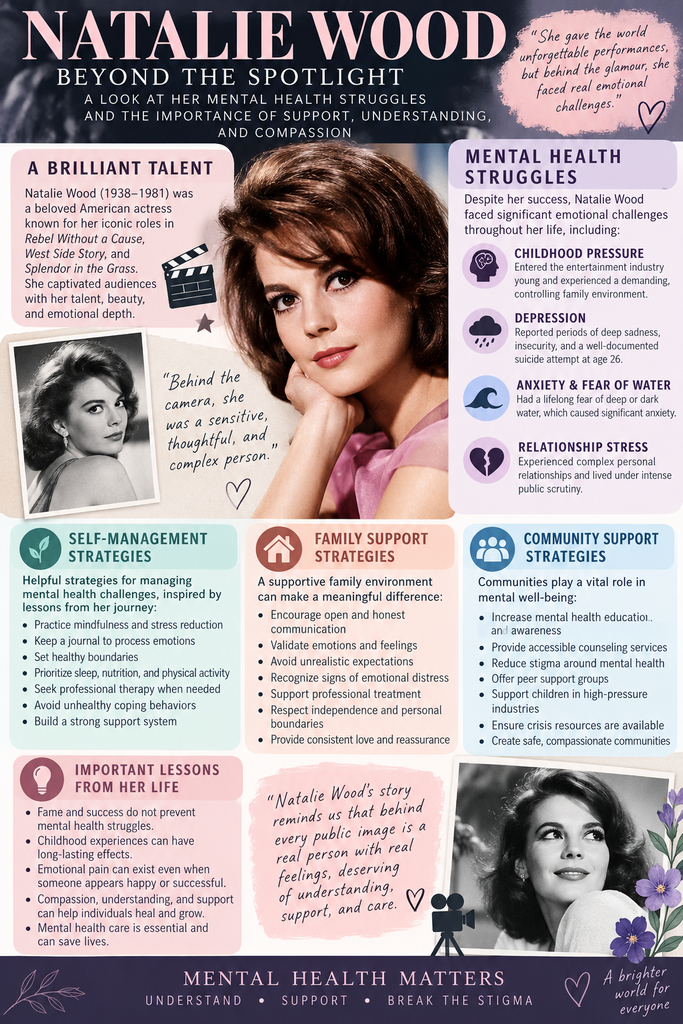
Natalie Wood was one of Hollywood’s most celebrated actresses, admired for her beauty, talent, and unforgettable performances in films such as West Side Story, Rebel Without a Cause, and Splendor in the Grass. Behind her glamorous public image, however, Wood reportedly experienced emotional challenges, childhood pressures, anxiety, and a longstanding fear of water. Her experiences provide an opportunity to explore how early-life stress, demanding careers, and personal relationships can influence mental well-being.
Although Natalie Wood’s complete psychological history is not publicly documented, accounts of her life suggest that fame and success did not protect her from emotional distress. Her story reminds us of the importance of recognizing mental health concerns, developing healthy coping mechanisms, and creating supportive environments through family relationships and community resources.
Understanding her experiences can help individuals and families recognize the effects of childhood adversity, emotional stress, and unresolved fears while emphasizing the importance of compassion and appropriate mental health care.
Natalie Wood’s Mental Health Journey
Childhood Pressures and Emotional Trauma
Natalie Wood entered the entertainment industry at a young age and became a successful child actress before she fully understood Hollywood’s demands. Biographers describe her mother, Maria Gurdin, as highly controlling and intensely focused on her daughter’s acting career.
Wood reportedly experienced considerable pressure to succeed, meet expectations, and maintain her public image. Such childhood experiences can contribute to later difficulties with self-esteem, emotional regulation, and personal boundaries.
Children raised in high-pressure environments may learn to associate love and acceptance with achievement rather than their inherent worth.
Potential psychological consequences include:
- Fear of failure and disappointing others.
- Perfectionism and excessive self-criticism.
- Difficulty expressing emotions and personal needs.
- Anxiety related to performance and public expectations.
- Challenges developing independence and healthy boundaries.
These are recognized potential effects of stressful childhood environments, not confirmed diagnoses in Wood’s case.
Depression, Emotional Distress, and Suicidal Behavior
Despite her successful career, Natalie Wood experienced periods of significant emotional distress. Biographer Gavin Lambert documented a suicide attempt when she was 26, while other biographical accounts describe depression, insecurity, and emotional instability.
Her experiences demonstrate that professional accomplishments, financial security, and public admiration do not necessarily protect someone from mental health challenges.
Depression may involve persistent sadness, hopelessness, fatigue, sleep disturbances, diminished interest in activities, and feelings of worthlessness. In severe cases, individuals may experience suicidal thoughts or behaviors.
Recognizing emotional distress early and obtaining appropriate professional treatment can reduce suffering and improve long-term outcomes.
Anxiety and Fear of Water
One of Natalie Wood’s most widely documented fears was her intense anxiety surrounding deep or dark water. Biographical accounts suggest that childhood experiences, family beliefs, and her mother’s warnings may have contributed to this fear.
Wood’s fear of water reportedly continued throughout adulthood and affected certain filming experiences.
Her experience illustrates how learned fears and emotionally distressing childhood experiences can persist for years.
Specific phobias can cause intense anxiety, avoidance behaviors, physical symptoms, and difficulties participating in ordinary activities.
Evidence-based treatments, particularly cognitive behavioral therapy (CBT) and carefully structured exposure therapy, can help individuals gradually reduce fear responses and regain confidence.
Relationships, Self-Esteem, and Public Expectations
Natalie Wood experienced complex personal relationships, including marriages, divorces, and the challenges of balancing her career with family life.
Constant public scrutiny may increase emotional stress, especially when personal relationships become subjects of media attention.
Biographical accounts also describe Wood’s interest in psychotherapy and self-reflection. Her official biographical website notes that journaling and psychotherapy were part of her efforts toward self-discovery.
Her experiences highlight the importance of developing an identity beyond professional accomplishments, romantic relationships, or public approval.
Self-Management Strategies for Mental Health
Natalie Wood’s experiences provide an opportunity to discuss practical strategies for individuals managing depression, anxiety, childhood trauma, or emotional stress.
Self-management does not replace professional treatment, particularly when symptoms are severe, but it can strengthen emotional resilience and improve everyday functioning.
Recommended self-management strategies:
- Recognize emotional triggers: Identify situations, relationships, or memories that contribute to anxiety, sadness, or emotional distress.
- Practice mindfulness: Use meditation, deep breathing, and grounding techniques to reduce stress and improve emotional awareness.
- Set healthy boundaries: Learn to say no, protect your time, and separate your self-worth from others’ expectations.
- Maintain a journal: Record emotions, recurring thoughts, accomplishments, and personal challenges to identify patterns.
- Prioritize physical wellness: Maintain consistent sleep, regular physical activity, balanced nutrition, and meaningful social connections.
- Seek professional counseling: Consider CBT, trauma-focused psychotherapy, or other evidence-based treatments when appropriate.
- Avoid unhealthy coping behaviors: Limit alcohol and other substances that may worsen anxiety, depression, or emotional regulation.
- Create a personal safety plan: Individuals experiencing suicidal thoughts should identify warning signs, supportive contacts, coping strategies, and crisis resources with professional guidance.
An important lesson from Wood’s life is that emotional healing involves more than appearing successful or happy. Developing self-awareness, recognizing personal needs, and accepting support are essential components of mental well-being.
Family Support Strategies: Creating a Safe and Understanding Environment
Families play an important role in recognizing mental health challenges and helping loved ones access appropriate care.
Natalie Wood’s childhood illustrates how family expectations and interpersonal relationships can influence emotional development. Although parental encouragement can promote achievement, excessive pressure and emotional control may contribute to psychological distress.
Family members can help create a supportive environment by encouraging open communication, respecting personal boundaries, and recognizing signs of emotional difficulty.
Helpful family support strategies include:
- Encourage honest communication: Let loved ones share their feelings without fear of criticism, judgment, or punishment.
- Validate emotional experiences: Acknowledge that anxiety, depression, and emotional distress are real experiences requiring understanding.
- Avoid unrealistic expectations: Encourage personal growth without making affection or approval dependent on success.
- Recognize warning signs: Watch for persistent sadness, social withdrawal, hopelessness, substance misuse, or significant behavioral changes.
- Support professional treatment: Help loved ones find qualified mental health providers and attend appointments when appropriate.
- Promote healthy independence: Respect personal decisions and encourage confidence and emotional autonomy.
- Participate in family counseling: Address communication difficulties, unresolved conflicts, and unhealthy relationship patterns.
- Provide consistent emotional reassurance: Remind loved ones that their value is not determined by achievements, appearance, or social status.
Family support is especially important for individuals with childhood trauma. A stable, compassionate home environment can reduce emotional isolation and support recovery.
Community Support Strategies: Building Mental Health Awareness
Community resources can help individuals overcome barriers to mental health treatment, reduce stigma, and develop supportive relationships.
Natalie Wood lived during a period when mental health concerns were often less openly discussed than they are today. Public expectations around celebrity status can make personal struggles especially difficult to disclose.
Modern communities can help by improving access to mental health education, counseling, crisis intervention, and peer support programs.
Effective community support strategies include:
- Expand mental health education: Provide information about depression, anxiety, trauma, and available treatments.
- Promote accessible counseling services: Support community mental health clinics, affordable psychotherapy, and telehealth programs.
- Encourage peer support: Connect individuals with support groups where they can discuss experiences and learn coping strategies.
- Reduce mental health stigma: Normalize conversations about psychological distress and professional treatment.
- Support children in demanding environments: Encourage schools, entertainment organizations, and youth programs to prioritize emotional development and child protection.
- Provide crisis intervention resources: Make suicide prevention services and emergency mental health support readily available.
- Develop trauma-informed programs: Train professionals and community organizations to recognize the potential effects of childhood adversity.
- Strengthen social connections: Encourage volunteer opportunities, recreational programs, and community activities that reduce isolation.
Community involvement can help individuals recognize that mental health challenges are treatable and that seeking assistance is a sign of self-awareness rather than weakness.
Lessons From Natalie Wood’s Life
Natalie Wood’s experiences offer several important lessons about mental health, childhood development, and emotional resilience.
Her early professional success demonstrates how achievement can coexist with psychological distress. Her reported struggles with depression, fear, and difficult family dynamics remind us that emotional health deserves attention regardless of a person’s public accomplishments.
Her life also illustrates the importance of distinguishing outward appearances from internal experiences.
A person who appears confident, accomplished, or socially successful may still struggle with anxiety, depression, or unresolved emotional pain.
Importantly, Wood should not be defined solely by her difficulties. Her family also describes her as a loving mother, a dedicated actress, and someone who actively pursued personal growth.
Conclusion: Looking Beyond Fame to Understand Mental Health
Natalie Wood’s life reminds us that fame, beauty, and professional success cannot guarantee emotional well-being. Her reported experiences with childhood pressure, depression, anxiety, and relationship difficulties highlight the complex relationship between personal history and psychological health.
Her story encourages greater awareness of childhood adversity and emotional distress, and the importance of seeking professional help when needed.
Through self-management strategies, compassionate family relationships, and accessible community resources, individuals experiencing mental health challenges can develop healthier coping mechanisms, strengthen emotional resilience, and improve their quality of life.
Natalie Wood’s legacy extends beyond her remarkable Hollywood career. Her experiences encourage us to look beyond outward appearances, recognize emotional suffering, and create environments where individuals feel safe seeking help.
Mental health is not defined by fame, wealth, or success. Everyone deserves understanding, emotional support, and the opportunity to heal.
Mental Health Resources
Individuals experiencing depression, anxiety, trauma, or suicidal thoughts can access professional assistance through:
- 988 Suicide & Crisis Lifeline: Call or text 988 in the United States for free, confidential crisis support.
- National Alliance on Mental Illness (NAMI): www.nami.org — Mental health education, advocacy, and family support.
- SAMHSA: www.samhsa.gov — Behavioral health information and treatment resources.
- Mental Health America: mhanational.org — Mental health screening tools, education, and support resources.
Frequently Asked Questions and Answers
1. Did Natalie Wood struggle with mental health problems?
Yes. Biographical accounts describe Natalie Wood experiencing periods of depression, emotional distress, insecurity, and anxiety. Although her complete medical history is not publicly available, reports of her psychological struggles suggest that she faced significant challenges despite her successful Hollywood career.
2. What contributed to Natalie Wood’s emotional struggles?
Several factors may have influenced her emotional well-being, including childhood pressures, demanding career expectations, complicated relationships, and constant public attention. Biographers have described her mother’s intense involvement in her acting career. However, it is not possible to determine precisely how much each experience contributed to her psychological difficulties.
3. Did Natalie Wood experience childhood trauma?
Biographical accounts describe Wood’s childhood as highly demanding, with considerable pressure to succeed in the entertainment industry. Some accounts also describe emotionally distressing experiences and controlling parental behavior. Such circumstances can increase the risk of anxiety, low self-esteem, and difficulties establishing healthy boundaries later in life.
4. Did Natalie Wood suffer from depression?
Wood reportedly experienced significant depressive symptoms during portions of her adult life. Biographical accounts also describe a suicide attempt when she was 26. However, publicly available information does not establish her complete psychiatric diagnoses or treatment history.
5. Why was Natalie Wood afraid of water?
Natalie Wood reportedly experienced a longstanding fear of deep or dark water. Biographical accounts associate this fear with childhood experiences and warnings from her mother. Although the precise origin of her fear is uncertain, her experience illustrates how persistent fears can influence emotional well-being and daily activities.
6. Did Natalie Wood receive professional mental health treatment?
Biographical accounts indicate that Wood participated in psychotherapy and engaged in personal reflection. Therapy may help individuals explore emotional difficulties, address relationship concerns, develop coping strategies, and improve psychological well-being. Details of her treatment and its effectiveness remain limited.
7. Did Natalie Wood attempt suicide?
According to published biographical accounts, Natalie Wood attempted suicide during her twenties. This reported experience highlights the seriousness of psychological distress and the importance of recognizing warning signs. Individuals experiencing suicidal thoughts should receive compassionate support and timely professional evaluation.
8. How did Hollywood fame affect Natalie Wood’s mental health?
Wood began acting as a child and experienced intense professional expectations throughout her career. Public scrutiny, demanding schedules, and pressure to maintain a successful image may contribute to stress and emotional exhaustion. Her experiences demonstrate that public recognition and financial success do not necessarily protect individuals from psychological difficulties.
9. Did Natalie Wood’s relationships affect her emotional well-being?
Wood experienced complicated personal relationships, including marriages and divorces. Relationship difficulties can contribute to emotional stress, particularly when accompanied by public scrutiny. However, the precise psychological effects of her relationships cannot be established without comprehensive personal and clinical information.
10. Was Natalie Wood diagnosed with an anxiety disorder?
Public accounts describe significant fears and anxiety, particularly concerning water. However, there is insufficient verified clinical information to establish whether she received a formal diagnosis of a specific anxiety disorder. Experiencing anxiety does not automatically indicate a diagnosable psychiatric condition.
11. How can childhood pressure influence mental health in adulthood?
Excessive childhood expectations may contribute to perfectionism, low self-esteem, fear of failure, and difficulties regulating emotions. Children who feel that acceptance depends on achievement may carry these beliefs into adulthood. Supportive parenting, emotional validation, and professional counseling can help individuals develop healthier patterns.
12. What are common signs of depression that families should recognize?
Depression can present differently among individuals. Common warning signs include:
- Persistent sadness, hopelessness, or irritability.
- Loss of interest in previously enjoyable activities.
- Changes in sleep patterns or appetite.
- Fatigue and reduced motivation.
- Feelings of guilt or worthlessness.
- Difficulty concentrating or making decisions.
- Social withdrawal or isolation.
- Thoughts of death or suicide.
Symptoms that persist, interfere with functioning, or raise safety concerns warrant professional evaluation.
13. What self-management strategies can help individuals experiencing emotional distress?
Healthy self-management strategies include identifying emotional triggers, maintaining regular sleep, staying physically active, practicing mindfulness, and building supportive relationships. Journaling and relaxation exercises can also help people process their emotions. Persistent or severe symptoms should be addressed through professional mental health treatment rather than self-management alone.
14. How can family members support someone struggling with depression or anxiety?
Family members can support someone by listening actively, being patient, and communicating without judgment. They should acknowledge emotional experiences, avoid minimizing symptoms, and encourage appropriate professional care. Respecting personal boundaries and offering practical assistance can also strengthen recovery.
15. What should families avoid when supporting someone with mental health challenges?
Families should avoid criticizing emotional symptoms, making unrealistic demands, comparing individuals with others, or suggesting that mental illness reflects personal weakness. Dismissing symptoms with statements such as “just be happy” can discourage communication. Compassion, understanding, and consistent support are more constructive approaches.
16. What community resources are available for individuals experiencing mental health struggles?
Community resources include outpatient mental health clinics, licensed therapists, psychiatrists, peer support groups, crisis intervention programs, and educational organizations. The National Alliance on Mental Illness (NAMI), Mental Health America, and SAMHSA provide information and resources for individuals and families seeking assistance.
17. Can childhood trauma contribute to depression and anxiety later in life?
Yes. Adverse childhood experiences can increase the risk of depression, anxiety disorders, post-traumatic stress symptoms, and difficulties with emotional regulation. However, childhood adversity does not inevitably result in mental illness. Protective relationships, early intervention, and evidence-based psychotherapy can promote resilience and recovery.
18. Can someone appear successful and happy while experiencing depression?
Yes. Individuals experiencing depression may continue working, maintaining relationships, and achieving professional success while struggling emotionally. Outward appearances do not reliably indicate psychological well-being. Natalie Wood’s public image and reported private struggles illustrate the importance of looking beyond appearances.
19. Did Natalie Wood’s mental health struggles contribute to her death?
There is no established evidence that Natalie Wood’s mental health difficulties caused her death. She died in November 1981 after entering the water near Catalina Island, California. The circumstances surrounding her death have been investigated and remain the subject of public discussion. It would be inappropriate to attribute her death to depression, anxiety, or suicidal behavior without supporting evidence.
20. What lessons can we learn from Natalie Wood’s mental health journey?
Natalie Wood’s experiences emphasize the importance of recognizing emotional distress, understanding the potential effects of childhood pressures, and encouraging individuals to seek appropriate support. Her story reminds us that professional accomplishments do not eliminate psychological vulnerability and that mental health deserves the same attention as physical health.
Video: