When it comes to addiction, the conversation often leaves out how different the experience can be for women. Many women dealing with addiction keep it a secret, sometimes for years, and figuring out why that happens can help friends, family, and professionals offer better support. In this article, I’m going to walk through some likely reasons women hide their addictions, share what that looks like in real life, and break down a few tips to help spot warning signs. The hope is to give you clearer insight not just into the “what” but also the “why,” paving the way for greater understanding and more effective support for women facing these challenges.
Understanding Why Addiction Is Hidden More by Women
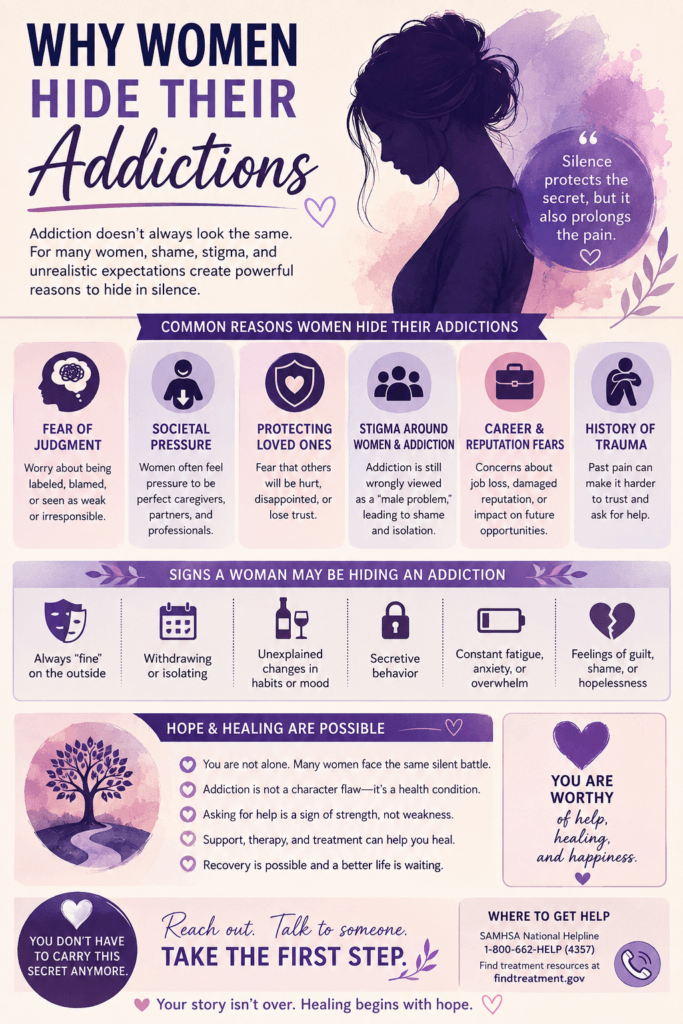
The way addiction affects women is shaped by personal, social, and even historical factors. Society tends to judge women harshly if they don’t fit certain roles, especially when it comes to addiction. It’s not just about hiding a bad habit; often it’s about dodging shame, criticism, or even the risk of losing relationships or children. These pressures are really intense, and they’re different from what men usually face.
For example, surveys done by organizations like the Substance Abuse and Mental Health Services Administration (SAMHSA) show that more women than men say they hesitate to get help because they’re afraid people will judge them. Many also say they worry about their kids or family finding out. When women are already expected to be caregivers and hold everything together, admitting to addiction can feel almost impossible. Extra invisible weights fall on women—a mother worried her drinking will affect how she’s viewed as a caretaker, or a high-achieving professional anxious that admitting a prescription pill problem will cost her reputation. These concerns are not just hypothetical; they’re lived realities for many.
Historical attitudes play a big part too. Women with substance use issues were once labeled with terms like “fallen woman,” and even though language has shifted, the stigma sticks around. Because of this, women hide problems longer, and that can delay recovery. Social expectations may have loosened, but deep-rooted biases can persist within families, workplaces, and communities. So, for many women, the instinct to hide is hardwired over generations.
Common Reasons Women Hide Their Addictions
Addiction isn’t just about alcohol or drugs. It can also show up with gambling, eating disorders, or even shopping. Here are a few reasons why women might keep these struggles to themselves:
- Fear of Judgment: Worries about being labeled or shamed keep many women quiet.
- Family Pressure: Many feel like they should “hold it all together” for kids and partners, and revealing an addiction can feel like failing everyone.
- Career Concerns: Some women fear that their bosses or coworkers will find out, risking their jobs or professional reputations.
- Loss of Custody: The idea of losing their kids is terrifying. In some places, being honest about addiction can lead to child welfare investigations or custody challenges.
- Denial: Sometimes it’s easier to hide what’s happening than to face it, even with yourself.
Women may also worry about letting down their support system. This fear keeps the struggle hidden, often leading to a longer period of active use before getting help. Deep emotions like embarrassment, fear, or even anger can make opening up about addiction seem impossible.
How Addiction Hiding Shows Up in Daily Life
This isn’t just about sneaking a drink or hiding bottles. For many women, secrecy becomes a way of life. They cover their tracks at work, use substances in private, and sometimes even lie to doctors about their habits. Some might double up on responsibilities to distract from the problem, while others withdraw from friends and family. If you notice a loved one suddenly becomes hyper-focused on keeping busy or isolates more than usual, it might be a sign that something deeper is going on.
From what I’ve seen and heard, the emotional toll can be just as tough as the physical one. Guilt, anxiety, and loneliness become regular feelings. This can spiral into more substance use, making things even harder to talk about. Isolation feeds shame, which feeds secrecy—a cycle that’s hard to break without outside support.
Spotting the Warning Signs
It’s not always easy to tell when someone is hiding an addiction, but there are a few things I watch for if I’m concerned about someone I care about. Here’s a short checklist you can use as a reference:
- Sudden changes in mood or behavior, especially irritability or withdrawal from social contact
- More secrecy about plans, money, or time spent alone
- Losing interest in things that used to matter (like hobbies, friends, or family get-togethers)
- Skipping out on responsibilities or showing up late often—at work, at home, or to social events
- Physical changes such as weight loss, tiredness, or poor self-care habits
Sometimes, these changes come on slowly. You might only notice in hindsight how much someone has pulled away. It’s important to remember that addiction isn’t always loud or obvious. Subtle clues, when considered together, can help you spot when help is needed.
Barriers Women Face in Getting Help
Even if a woman wants to reach out, there can be extra hurdles. For one thing, addiction treatment isn’t always set up with women’s needs in mind. Childcare is a biggie—if you don’t have someone to take care of your kids while you’re in treatment, that can be a dealbreaker. Programs may not address the emotional side of motherhood or may lack female staff whom many women feel more comfortable opening up to.
Another challenge: some treatment options are more expensive or require taking time off work, which isn’t realistic for single moms or those living paycheck to paycheck. This leaves many women feeling that it’s easier to keep pretending everything is fine. Even finding information about women-focused programs can be tricky, leading to frustration or just giving up on the idea of getting help. There’s a real need for flexible, accessible support services created with women’s realities in mind.
How Past Trauma Plays a Role
Many women struggling with addiction have gone through trauma—anything from past abuse, serious loss, or feeling unsafe as a kid. Using substances can feel like the only way to cope. Admitting to addiction often means opening up about that pain, and that’s a really hard conversation to start, especially if you don’t feel supported or understood.
In fact, research suggests that past trauma is one of the biggest predictors of substance use among women. Healing isn’t just about stopping the behavior. It also means feeling safe enough to share what happened and to find healthier ways to cope. Group therapy, trauma-informed care, and sensitive counseling can all make a difference for women facing these challenges. It’s important to find professionals or support groups that recognize trauma and avoid judgment.
Breaking Down the Stigma
Changing how we talk about addiction is really important. More open conversations can make women feel less alone and more likely to ask for help. Even small things like listening without judging, using supportive language, and showing you care can make a really big difference.
Some great resources offer community support without pressure or shame. Online groups, women-only meetings, and helplines provide judgment-free spaces to share and get advice. If you want to learn how to be more supportive, organizations like Women for Sobriety have helpful guides for friends and family.
It’s crucial to keep spreading the word about success stories where women have asked for help and recovered—this gives hope and ends the idea that addiction must remain a “hidden” issue. Community members, families, and professionals can take small actions, like sharing resources or just checking in, to help chip away at the stigma brick by brick.
Practical Tips for Supporting Women with Hidden Addictions
If you’re worried about someone or just want to be a more supportive friend, it helps to understand what makes a safe space for opening up. Here are some tips to make a difference:
- Keep conversations private, patient, and nonjudgmental.
- Offer help with things like rides, childcare, chores, or just listening—simple gestures can mean a lot.
- Share information about confidential support groups or resources in your area or online.
- Stay consistent. Sometimes trust builds slowly, and showing up in small ways creates a big impact over time.
Be patient and remember recovery isn’t a straight road. Offering ongoing encouragement, even when progress stalls, can help someone feel less alone on their adventure.
FAQs About Women and Hidden Addictions
Here are some questions I often hear about women hiding their addictions, along with straightforward answers to bring clarity:
Question: Why do women feel more shame about addiction than men?
Answer: Society often holds women to stricter standards, especially when it comes to caregiving and responsibility. There’s extra pressure not to be seen as “weak” or “unfit,” which adds to the shame. Even well-meaning friends or family members can make women feel as though they’re letting everyone down, adding to the emotional burden.
Question: What types of addiction are most commonly hidden by women?
Answer: Alcohol and prescription drugs are common, but gambling, food-related addictions, and compulsive shopping are often kept secret. Anything with a heavy stigma can become a hidden struggle for women looking to avoid judgment.
Question: What’s the best way to help if I think someone is struggling?
Answer: Reach out with empathy and patience, focus on support rather than confrontation, and offer information about resources without forcing help. Ask open-ended questions, and let your concern show in your willingness to listen, not just to “fix” things.
Question: Are there women-only support groups for addiction?
Answer: Yes, there are many women-only meetings online and locally through organizations like Women for Sobriety or special groups within Alcoholics Anonymous. These spaces give a sense of safety and understanding that mixed groups can’t always provide.
Moving Forward: Changing the Story
Women don’t hide addiction because they’re weak. It’s usually about dealing with tough expectations, fear, and a need to protect loved ones. Breaking the cycle requires a mix of understanding, community resources, and making sure support is truly accessible. Every bit of empathy and openness chips away at the secrecy, making it easier for women to get the help they deserve. If you or someone you know is struggling, remember real change is possible. Support may begin with just one open, honest conversation—and sometimes that’s enough to turn the tide.
Video: Why Women Suffer in Silence #WomensMentalHealth #BreakTheSilence