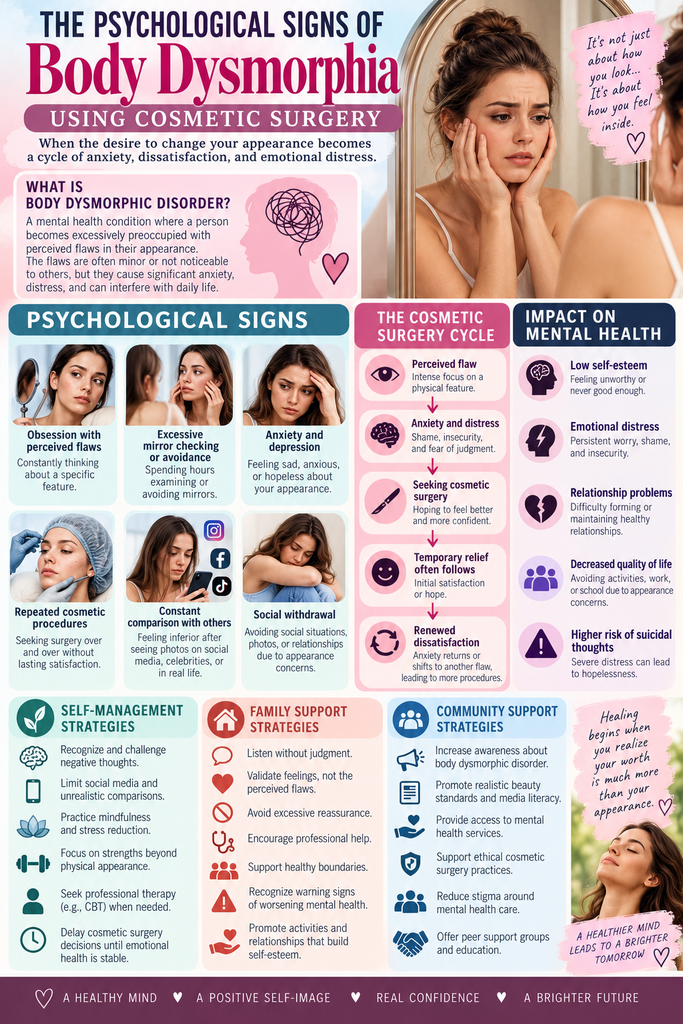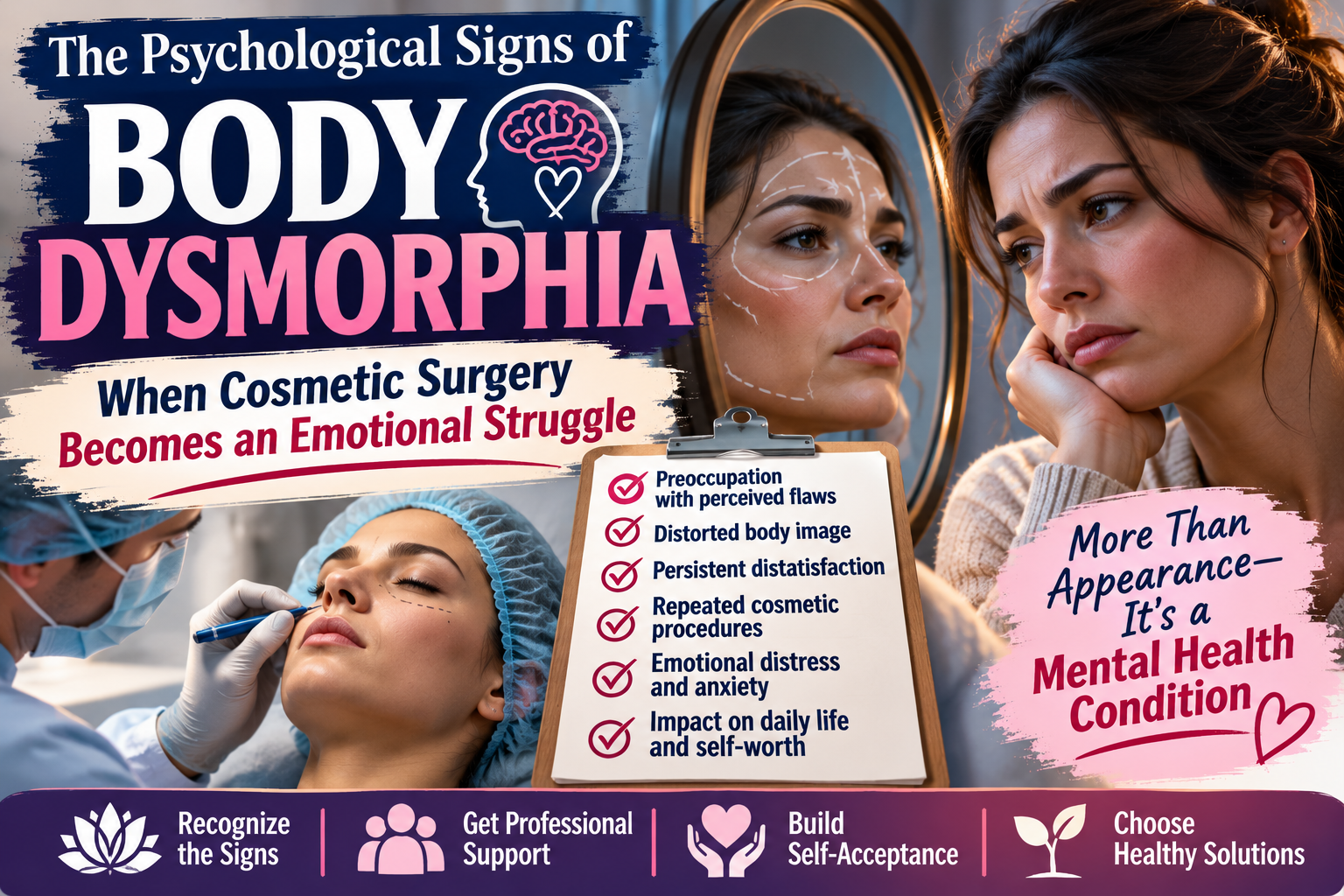
In today’s appearance-focused society, cosmetic surgery has become increasingly popular as people seek to enhance their features, boost confidence, or address perceived imperfections. While cosmetic procedures can provide satisfaction for some people, others may develop an unhealthy preoccupation with their appearance, leading to emotional distress, repeated surgeries, and persistent dissatisfaction. For individuals experiencing body dysmorphic disorder (BDD), cosmetic surgery may become part of a cycle of temporary reassurance, renewed anxiety, and continued attempts to correct perceived flaws.
Body dysmorphic disorder is a mental health condition characterized by excessive concern about one or more perceived physical imperfections that are minor or not noticeable to others. Individuals may spend hours examining their appearance, comparing themselves with others, seeking reassurance, or avoiding social situations because of shame or embarrassment.
Understanding the psychological signs of body dysmorphia is essential for recognizing when cosmetic surgery may be driven by underlying emotional distress rather than a realistic desire for physical change. Through self-management, family support, and community resources, individuals can develop healthier relationships with their bodies, improve emotional well-being, and seek appropriate mental health treatment.
Understanding Body Dysmorphic Disorder and Cosmetic Surgery
Body dysmorphic disorder is classified in the DSM-5-TR among obsessive-compulsive and related disorders. It involves persistent preoccupation with perceived defects in physical appearance, accompanied by repetitive behaviors or mental rituals.
These behaviors may include mirror checking, excessive grooming, skin picking, comparing physical features, or repeatedly requesting reassurance about appearance.
BDD is more than ordinary dissatisfaction with physical appearance. The preoccupation causes clinically significant distress or interferes with social relationships, employment, education, or everyday functioning.
Individuals with BDD may focus on their nose, skin, hair, facial symmetry, body shape, or other features. Some seek cosmetic procedures hoping that changing their appearance will eliminate their anxiety or improve self-esteem.
However, cosmetic surgery generally does not resolve the underlying psychological symptoms of BDD. Even when a procedure achieves its intended physical result, the individual may remain dissatisfied or shift attention to another perceived imperfection.
Importantly, choosing cosmetic surgery does not automatically indicate body dysmorphic disorder. Many individuals pursue cosmetic procedures without experiencing significant psychological distress or unhealthy appearance preoccupations.
Psychological Signs of Body Dysmorphia
Recognizing the warning signs of body dysmorphic disorder can help individuals and families identify when appearance concerns require professional attention.
1. Obsessive Preoccupation With Perceived Physical Flaws
Individuals with BDD may spend several hours each day thinking about a specific physical feature they consider unattractive or defective.
Their concerns may seem disproportionate to the feature’s actual appearance, but the emotional distress they experience is genuine.
Common behaviors include:
- Constantly examining facial or body features.
- Focusing intensely on minor asymmetries or imperfections.
- Feeling unable to stop thinking about appearance.
- Believing others are noticing or judging perceived flaws.
- Experiencing anxiety when looking at photographs.
- Avoiding social situations because of appearance concerns.
These preoccupations can interfere with concentration, relationships, and daily responsibilities.
2. Repeated Cosmetic Procedures Without Lasting Satisfaction
Some individuals with BDD pursue multiple cosmetic procedures in an attempt to achieve an idealized appearance.
Although they may initially feel hopeful about surgery, dissatisfaction can return after recovery.
Warning signs may include:
- Seeking repeated procedures on the same physical feature.
- Feeling disappointed despite technically successful surgery.
- Believing another procedure will finally provide happiness.
- Frequently changing cosmetic surgeons.
- Becoming preoccupied with minor postoperative imperfections.
- Experiencing significant emotional distress when a surgeon recommends against further surgery.
Repeated procedures alone do not establish BDD. Assess the underlying motivation, degree of distress, repetitive behaviors, and functional impairment.
3. Excessive Mirror Checking or Mirror Avoidance
Mirror-related behaviors are common among individuals with body dysmorphic disorder.
Some repeatedly examine their appearance, while others avoid mirrors entirely because seeing their reflection triggers anxiety or shame.
Both behaviors may reinforce appearance-related distress.
Examples include:
- Spending excessive time checking mirrors or phone cameras.
- Comparing facial features from different angles.
- Repeatedly taking selfies to examine perceived imperfections.
- Avoiding reflective surfaces.
- Using makeup, clothing, or hairstyles to conceal perceived flaws.
- Feeling distressed when unable to check appearance.
These behaviors often provide temporary relief but may strengthen obsessive thinking over time.
4. Persistent Feelings of Shame and Low Self-Esteem
Individuals experiencing BDD may connect their personal value to their physical appearance.
They may believe that happiness, relationships, professional success, or social acceptance depend on achieving a particular appearance.
This can lead to:
- Feelings of worthlessness or inadequacy.
- Persistent embarrassment about appearance.
- Fear of rejection or criticism.
- Excessive dependence on external validation.
- Social withdrawal.
- Depression and emotional isolation.
The emotional impact can be substantial, particularly when individuals believe cosmetic surgery is their only opportunity to feel confident.
5. Constant Comparison With Others
Social comparison is another common psychological feature of body dysmorphia.
Individuals may repeatedly compare themselves with celebrities, influencers, friends, or digitally altered photographs.
Social media can intensify this behavior by exposing users to carefully curated images, beauty filters, and unrealistic appearance standards.
Potential warning signs include:
- Comparing facial features with celebrities.
- Feeling inferior after viewing social media.
- Obsessively studying before-and-after surgery photographs.
- Seeking unrealistic physical perfection.
- Believing everyone else looks more attractive.
- Experiencing increased anxiety after viewing appearance-focused content.
Frequent comparison can reinforce negative self-perceptions and contribute to dissatisfaction.
6. Anxiety, Depression, and Social Avoidance
BDD frequently occurs alongside other mental health conditions, including major depressive disorder, social anxiety, and obsessive-compulsive symptoms.
Individuals may avoid social gatherings, dating, photographs, or professional opportunities because they fear judgment about their appearance.
BDD is also associated with an elevated risk of suicidal thoughts and behaviors, making early recognition and appropriate treatment particularly important.
The Psychological Cycle of Cosmetic Surgery and Body Dysmorphia
For some individuals, cosmetic surgery becomes part of a repetitive emotional cycle rather than a lasting solution.
Perceived physical flaw
Intense focus on an appearance concern
Anxiety and emotional distress
Shame, insecurity, and fear of judgment
Seeking cosmetic correction
Hoping a procedure will resolve emotional distress
Temporary reassurance or disappointment
Relief may fade, or the result may feel inadequate
Renewed appearance preoccupation
Attention shifts to another perceived flaw or further correction
Illustrative cycle that may occur in some individuals with BDD; it is not inevitable for everyone seeking cosmetic procedures.
Understanding this cycle can help individuals recognize when repeated cosmetic procedures are being used to manage psychological distress rather than address a physical concern.
Self-Management Strategies: Developing a Healthier Body Image
Self-management strategies can help individuals recognize unhealthy thought patterns, reduce appearance-related anxiety, and develop greater emotional resilience.
However, moderate to severe BDD typically requires professional mental health treatment.
Recommended self-management strategies include:
- Identify appearance-related triggers: Recognize situations, social media content, or emotional experiences that intensify negative body-image thoughts.
- Reduce compulsive mirror checking: Work toward healthier mirror habits, ideally through a structured treatment plan.
- Limit social comparison: Reduce exposure to unrealistic beauty standards and heavily edited photographs.
- Practice mindfulness: Use grounding exercises and relaxation techniques to manage anxiety without engaging in appearance rituals.
- Challenge negative beliefs: Identify automatic thoughts such as “I am unattractive” or “I cannot be happy unless I change my appearance.”
- Develop nonappearance-based self-esteem: Focus on relationships, personal strengths, achievements, values, and meaningful activities.
- Keep a thought journal: Record distressing appearance concerns, emotional triggers, and how you cope.
- Delay cosmetic surgery decisions: Consider postponing elective procedures while you evaluate and treat significant appearance-related distress.
- Seek evidence-based psychotherapy: CBT specifically adapted for BDD can help reduce obsessive thoughts, avoidance, and compulsive behaviors.
Treatment may also include selective serotonin reuptake inhibitors (SSRIs), prescribed and monitored by a qualified clinician. Clinicians often use medication and psychotherapy together when appropriate.
Family Support Strategies: Helping a Loved One With Body Dysmorphia
Family members may struggle to understand why someone remains unhappy with their appearance despite reassurance or successful cosmetic procedures.
Repeated statements such as “You look beautiful” may provide temporary comfort but can unintentionally reinforce reassurance-seeking behaviors.
Family support should focus on validating emotional distress without reinforcing distorted appearance beliefs.
Helpful family strategies include:
- Listen without judgment: Encourage loved ones to describe their emotional experiences and appearance-related concerns.
- Validate feelings rather than perceived defects: Acknowledge distress without confirming that a physical feature is flawed.
- Avoid excessive reassurance: Repeated appearance-based reassurance may temporarily relieve anxiety while maintaining compulsive behavior.
- Encourage professional evaluation: Support access to mental health professionals experienced in treating BDD.
- Avoid criticism or ridicule: Never dismiss appearance concerns as vanity, attention-seeking, or superficial behavior.
- Promote healthy boundaries: Avoid participating in repeated mirror checking, comparison rituals, or compulsive appearance discussions.
- Encourage meaningful activities: Support hobbies, relationships, education, and activities unrelated to physical appearance.
- Recognize emotional warning signs: Monitor for worsening depression, social isolation, hopelessness, or suicidal thoughts.
- Consider family therapy: Family involvement may help reduce accommodation of compulsive behaviors and improve communication.
Families should remember that BDD is a legitimate mental health disorder rather than simply dissatisfaction with appearance.
Community Support Strategies: Promoting Body Image Awareness
Communities play an important role in reducing appearance-related stigma and improving access to appropriate mental health services.
Cosmetic surgery providers, schools, healthcare professionals, and social media organizations can help prevent and identify issues early.
Effective community support strategies include:
- Provide body-image education: Teach individuals about unrealistic beauty standards, digital image manipulation, and the psychological effects of social comparison.
- Encourage mental health screening: Promote BDD screening when patients report significant appearance-related distress or seek repeated cosmetic procedures.
- Improve access to specialized treatment: Expand access to CBT, psychiatric services, and other evidence-based BDD treatments.
- Promote ethical cosmetic surgery practices: Encourage realistic expectations, informed consent, and appropriate psychological assessment before elective procedures.
- Support responsible social media use: Promote media literacy and awareness of digitally altered images.
- Develop peer support programs: Connect individuals with reputable mental health organizations and support communities.
- Reduce stigma: Educate the public that BDD is a recognized psychiatric disorder rather than vanity.
- Provide crisis resources: Ensure individuals experiencing severe distress or suicidal thoughts can access immediate support.
The Role of Cosmetic Surgeons and Healthcare Professionals
Cosmetic surgeons and healthcare professionals have an important responsibility to recognize psychological warning signs before elective procedures.
Patients experiencing BDD may have unrealistic expectations or believe that changing their appearance will resolve broader emotional difficulties.
Preoperative assessment should explore the patient’s motivations, expectations, psychiatric history, and degree of appearance-related preoccupation.
Clinicians may use validated screening instruments such as the Body Dysmorphic Disorder Questionnaire (BDDQ) or cosmetic-setting adaptations to identify patients who may benefit from additional evaluation.
A positive screening result is not a diagnosis, but it should prompt further assessment.
When BDD is suspected, postponing elective cosmetic surgery and referring the patient for mental health evaluation is generally appropriate.
Important clinical considerations include:
- Assess the severity of appearance-related distress and functional impairment.
- Identify repetitive behaviors such as mirror checking and reassurance seeking.
- Evaluate depression, anxiety, obsessive-compulsive symptoms, and suicide risk.
- Explore expectations regarding cosmetic outcomes.
- Screen for unrealistic beliefs about how surgery will change relationships or self-worth.
- Consider referral to psychiatry or a therapist specializing in BDD.
- Coordinate care between mental health and cosmetic surgery professionals.
Cosmetic surgery should not be presented as a substitute for evidence-based psychiatric treatment.
When Should Someone Seek Professional Help?
Seek professional evaluation when appearance-related concerns consume substantial time, interfere with everyday functioning, or cause persistent emotional distress.
Warning signs include avoiding work or social activities, repeatedly seeking cosmetic procedures without satisfaction, compulsive appearance checking, and experiencing depression or hopelessness.
Individuals who believe they cannot live with their appearance or who express suicidal thoughts require prompt mental health assessment.
In the United States, individuals experiencing a mental health crisis can call or text 988 for immediate support. An immediate threat to safety warrants emergency services.
Conclusion: Healing Begins Beyond Physical Appearance
Body dysmorphic disorder can significantly affect emotional well-being, relationships, and quality of life. For some individuals, cosmetic surgery becomes an attempt to manage psychological distress rather than simply improve physical appearance.
Although cosmetic procedures may change external features, they generally cannot resolve the obsessive thoughts, compulsive behaviors, and negative self-perceptions associated with BDD.
Recognizing the psychological warning signs is an important step toward appropriate treatment.
Through self-management strategies, compassionate family support, community education, and evidence-based mental health care, individuals experiencing body dysmorphia can develop healthier relationships with their appearance and improve emotional resilience.
Recovery does not necessarily mean loving every physical feature. It is to reduce the power that appearance-related concerns have over a person’s identity, happiness, and daily life.
True emotional healing begins when individuals recognize that their worth extends far beyond physical appearance.
Mental Health Resources
- International OCD Foundation: iocdf.org — Educational resources about BDD and treatment.
- National Alliance on Mental Illness (NAMI): nami.org — Mental health education and family support.
- SAMHSA: samhsa.gov — Behavioral health treatment resources.
- 988 Suicide & Crisis Lifeline: Call or text 988 for crisis support in the United States.
Frequently Asked Questions and Answers
Understanding Addiction Across the Lifespan
1. Can addiction develop at any age?
Yes. Addiction can develop during adolescence, young adulthood, middle age, or older adulthood. Although certain risk factors are more common at specific life stages, no age group is completely protected from substance use disorders.
2. Why does addiction affect people differently at different ages?
Age influences brain development, physical health, social responsibilities, emotional stress, and exposure to substances. Teenagers may face peer pressure, while middle-aged adults may experience work-related stress. Older adults may face loneliness, chronic pain, or medication-related risks.
3. Is addiction a disease or a personal choice?
Addiction is a treatable medical condition involving changes in brain function, behavior, and the ability to control substance use. Although the decision to initially use a substance may involve personal choice, addiction develops through complex biological, psychological, and environmental processes. It should not be viewed simply as a lack of willpower.
4. Can someone develop addiction without a family history?
Yes. Genetics can influence vulnerability, but addiction can develop without a known family history. Mental health conditions, trauma, repeated substance exposure, chronic stress, and environmental factors can also contribute.
5. Does addiction always begin with illegal drugs?
No. Substance use disorders can develop through alcohol, nicotine, prescription medications, or illegal drugs. Some individuals develop problems after repeated exposure to prescribed opioids or sedatives, while others develop alcohol use disorder through gradually increasing consumption.
Addiction in Teenagers and Young Adults
6. Why are teenagers vulnerable to addiction?
Adolescence involves ongoing brain development, particularly in systems associated with judgment, impulse control, and decision-making. Peer influence, curiosity, emotional stress, and early substance exposure may increase vulnerability.
7. Can experimenting with drugs during adolescence lead to addiction?
Yes. Early substance use is associated with an increased risk of developing substance use disorders later in life. However, experimentation does not inevitably lead to addiction. Risk depends on the substance, frequency of use, genetic vulnerability, mental health, and environmental factors.
8. What are the warning signs of addiction in teenagers?
Common warning signs include:
- Sudden changes in behavior or mood.
- Declining academic performance.
- Withdrawal from family activities.
- Secretive behavior or unexplained absences.
- Changes in friendships.
- Loss of interest in hobbies.
- Unexplained financial needs.
- Continued substance use despite negative consequences.
These changes may have other explanations, so supportive communication and appropriate evaluation are important.
9. Why are college students and young adults at risk for addiction?
Young adults may experience academic pressure, financial stress, relationship difficulties, and social environments where substance use is normalized. Binge drinking, vaping, and recreational drug use can increase the risk of substance-related problems.
10. Can social media influence addiction risk among young people?
Social media can expose young people to content that normalizes substance use or encourages risky behaviors. However, social media alone does not cause addiction. Parental guidance, media literacy, and healthy social relationships can help reduce harmful influences.
Addiction in Middle-Aged Adults
11. Can someone develop addiction for the first time in their 40s or 50s?
Yes. Individuals may develop substance use disorders during middle adulthood despite having no previous addiction history. Chronic stress, divorce, financial difficulties, depression, and exposure to potentially addictive medications can contribute to vulnerability.
12. How does work-related stress contribute to addiction?
Chronic occupational stress may increase the desire to use alcohol or drugs for relaxation or emotional relief. Repeated substance use as a coping strategy can reinforce unhealthy behavioral patterns and increase the risk of dependence.
13. Can divorce or relationship problems trigger addiction in middle-aged adults?
Divorce and relationship difficulties may increase emotional distress, loneliness, and anxiety. Some individuals turn to substances to temporarily manage these emotions. However, divorce does not automatically cause addiction, and many people cope without developing substance use disorders.
14. Can chronic pain lead to addiction?
Chronic pain can increase vulnerability to problematic substance use, particularly when individuals are exposed to opioids or use substances to manage emotional distress. However, appropriate opioid treatment does not automatically lead to addiction. Pain management should involve individualized assessment, monitoring, and consideration of nonopioid treatments when appropriate.
15. Why is addiction sometimes overlooked in successful professionals?
Individuals may continue working and maintaining family responsibilities despite experiencing problematic substance use. Professional success can create the false impression that addiction is not present. Substance use disorders are diagnosed through patterns of impaired control, harmful consequences, and other clinical criteria rather than employment status.
Addiction in Older Adults
16. Can addiction develop after age 65?
Yes. Older adults can develop substance use disorders for the first time or experience recurrence of earlier substance use problems. Retirement, grief, loneliness, chronic pain, sleep disturbances, and medication exposure may contribute to risk.
17. Why is alcohol more dangerous for some older adults?
Age-related physiological changes can increase sensitivity to alcohol. Older adults may also have medical conditions or take medications that interact with alcohol. Drinking can increase the risk of falls, confusion, impaired coordination, and other health complications.
18. Can prescription medications cause addiction in older adults?
Certain prescription medications, including opioids and benzodiazepines, can lead to physical dependence and, in some individuals, substance use disorders. Physical dependence alone does not establish addiction. Regular medication reviews and appropriate prescribing can reduce risks.
19. How can loneliness contribute to addiction in older adults?
Loneliness and social isolation may increase depression, anxiety, and emotional distress. Some older adults begin using alcohol or medications to manage these feelings. Social engagement, counseling, and community support programs can help reduce isolation.
20. Why is addiction often missed in older adults?
Symptoms such as confusion, falls, fatigue, sleep problems, and memory difficulties may be attributed to aging or chronic medical conditions. Routine substance use screening and medication reviews can help identify concerns that might otherwise be overlooked.
Psychological Warning Signs and Risk Factors
21. What are the most common psychological warning signs of addiction?
Common warning signs include:
- Strong cravings for alcohol or drugs.
- Difficulty controlling substance use.
- Increasing reliance on substances to manage emotions.
- Anxiety or irritability when substances are unavailable.
- Continued use despite negative consequences.
- Social withdrawal and secrecy.
- Loss of interest in meaningful activities.
- Neglecting personal responsibilities.
- Repeated unsuccessful attempts to reduce use.
A professional assessment is necessary to determine whether a substance use disorder is present.
22. Can depression and anxiety increase addiction risk?
Yes. Depression and anxiety may increase vulnerability when individuals use substances to manage emotional symptoms. Substance use can also worsen psychiatric symptoms, creating a cycle of distress and continued use. Integrated treatment can address both conditions.
23. Does trauma increase addiction risk at any age?
Yes. Childhood adversity, interpersonal violence, serious accidents, grief, and other traumatic experiences can contribute to substance use vulnerability. Trauma-informed care helps individuals address emotional distress while developing healthier coping strategies.
24. Can someone become addicted even if they only use substances occasionally?
Yes, depending on the substance and pattern of use. However, occasional use does not automatically indicate addiction. Substance use disorders involve clinical features such as impaired control, cravings, continued use despite harm, and functional impairment.
25. Are older adults less likely to recover from addiction?
No. Older adults can respond well to evidence-based addiction treatment. Treatment may need to account for chronic medical conditions, medication interactions, mobility limitations, and available social support.
Self-Management Strategies
26. What self-management strategies can help prevent addiction at any age?
Helpful strategies include:
- Recognizing personal and family risk factors.
- Monitoring alcohol and drug use patterns.
- Identifying emotional triggers.
- Developing healthy stress-management skills.
- Maintaining regular sleep and physical activity.
- Building supportive relationships.
- Avoiding high-risk substance use environments.
- Seeking mental health treatment when needed.
- Establishing meaningful personal goals.
- Asking for professional assistance when substance use becomes difficult to control.
Self-management strategies can support prevention and recovery but should not replace professional treatment when clinically indicated.
27. How can someone recognize when substance use is becoming a problem?
Warning signs include increasing consumption, difficulty stopping, cravings, using substances to manage emotional distress, and continuing use despite health, financial, or relationship problems. Screening tools and professional evaluation can help determine whether treatment is needed.
28. Is it safe to stop drinking alcohol or taking sedatives suddenly?
Not always. Individuals who have developed physical dependence on alcohol or benzodiazepines may experience dangerous withdrawal symptoms, including seizures. A medical assessment is important before abruptly stopping these substances.
29. Can healthy lifestyle changes support addiction recovery?
Yes. Regular exercise, adequate sleep, balanced nutrition, stress-management techniques, and supportive relationships can improve overall well-being. These strategies complement evidence-based treatment and may help reduce relapse risk.
Family and Community Support
30. How can families recognize addiction in loved ones of different ages?
Families should watch for changes in substance use patterns, behavior, mood, responsibilities, and relationships. Warning signs may differ by age, but impaired control and continued substance use despite harm are important concerns.
31. How can parents prevent substance use problems in teenagers?
Parents can encourage open communication, provide age-appropriate education, establish consistent boundaries, supervise activities appropriately, and support emotional well-being. Early intervention for depression, anxiety, bullying, or trauma may also reduce vulnerability.
32. How can families support middle-aged adults struggling with addiction?
Families can provide emotional support, encourage professional treatment, avoid judgment, and establish healthy boundaries. Recognizing stress related to employment, finances, caregiving, or relationships can help families understand potential substance use triggers.
33. How can families support older adults experiencing addiction?
Families can assist with medication reviews, transportation to appointments, social engagement, and access to age-appropriate treatment. They should avoid assuming that substance-related symptoms are simply part of aging.
34. What community resources help people recover from addiction?
Community resources include addiction treatment centers, mental health clinics, peer recovery programs, support groups, recovery housing, transportation assistance, and educational programs. Accessible services can improve engagement in treatment and long-term recovery outcomes.
35. How can communities reduce addiction stigma across generations?
Communities can provide accurate addiction education, promote compassionate language, support evidence-based treatment, and challenge stereotypes about who develops substance use disorders. Recognizing addiction as a treatable medical condition encourages individuals to seek help earlier.
Treatment and Long-Term Recovery
36. Does addiction treatment work differently for teenagers and older adults?
Treatment principles are similar, but interventions should reflect developmental needs, medical conditions, family involvement, and individual circumstances. Adolescents may benefit from family-based treatment, while older adults may require medication reviews and accommodations for chronic health conditions.
37. What medications are available for addiction treatment?
Medication options depend on the substance use disorder. Buprenorphine and methadone are effective treatments for opioid use disorder. Naltrexone and acamprosate are options for alcohol use disorder. Medication selection should be individualized and supervised by qualified healthcare professionals.
38. Can someone recover from addiction without attending inpatient rehabilitation?
Yes. Many individuals recover through outpatient treatment, medications, counseling, and peer support. Residential or inpatient treatment may be appropriate for individuals with severe symptoms, complex medical needs, or unsafe living environments.
39. Can addiction return after years of sobriety?
Yes. Substance use disorders can involve periods of remission and recurrence. Stress, trauma, untreated mental health symptoms, and major life changes may increase vulnerability. Ongoing recovery support and early intervention can help reduce risk.
40. Is it ever too late to recover from addiction?
No. Recovery can begin at any age. Whether someone is 16, 35, 55, or 80, appropriate treatment and supportive relationships can improve health, functioning, and quality of life.
Video: