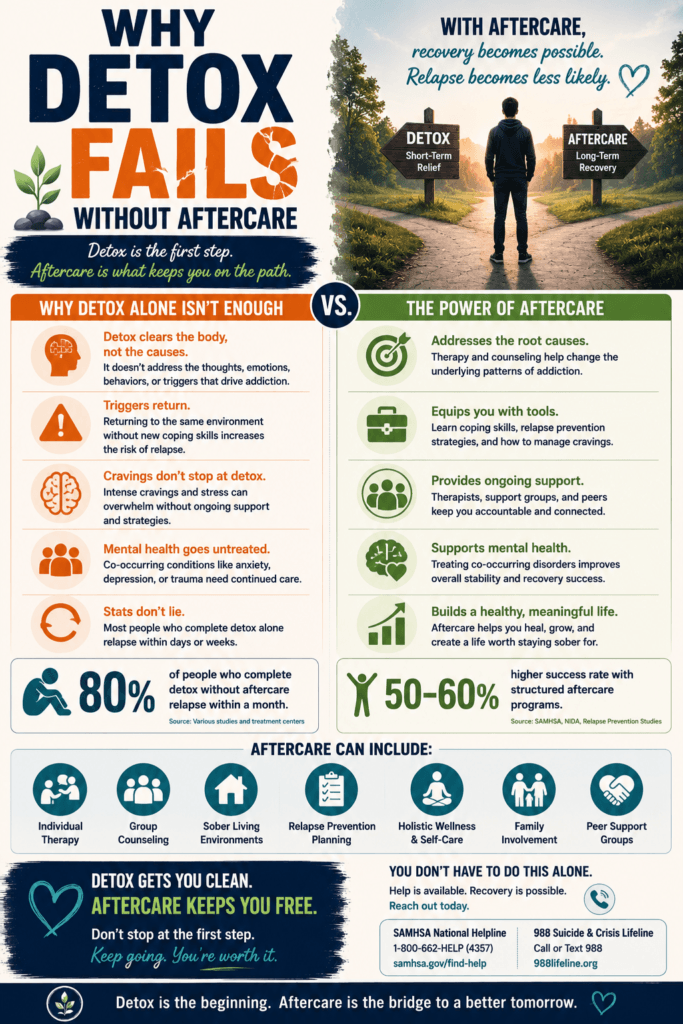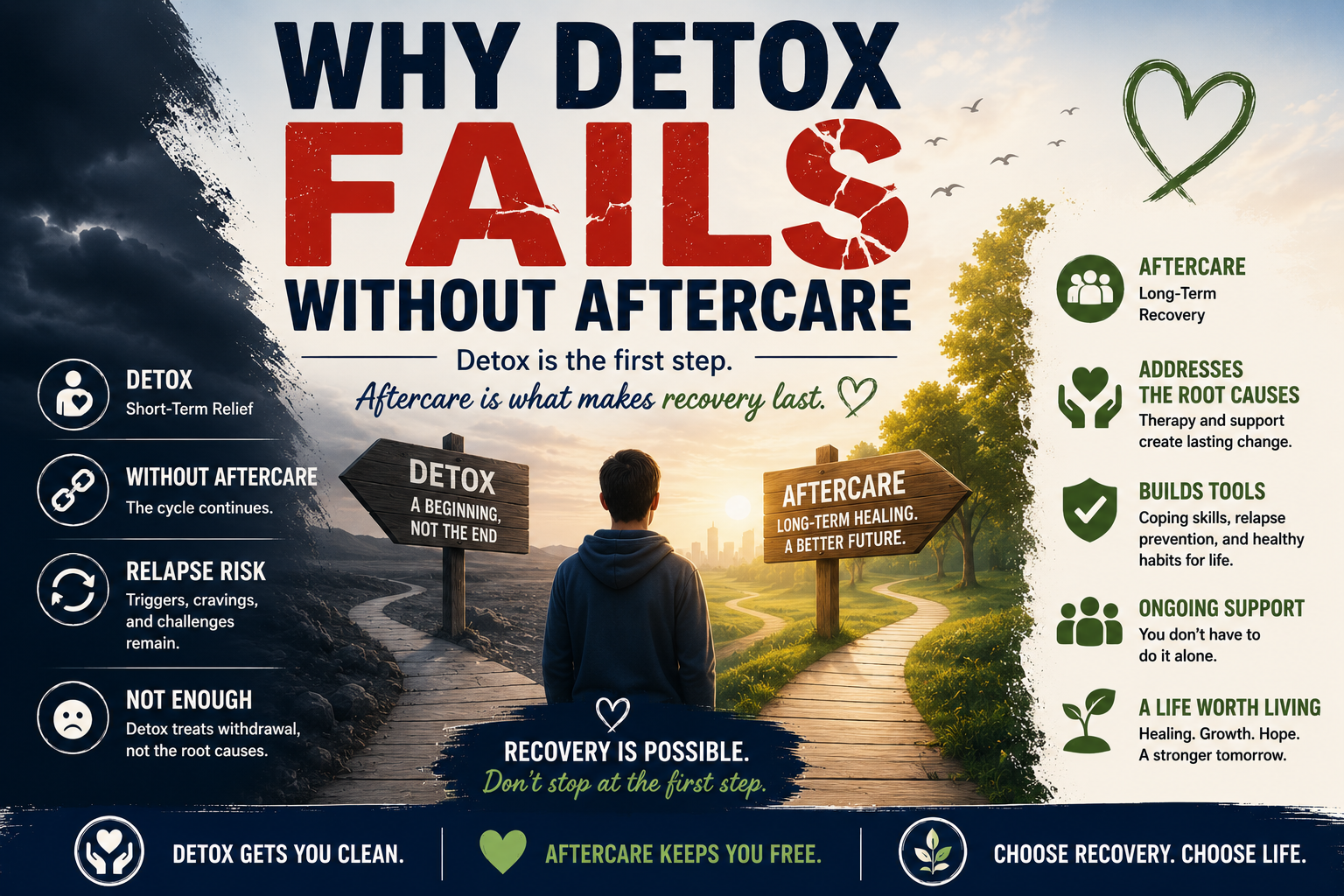
Detox programs are often seen as the first big step toward breaking free from substance use. There’s a lot of focus on getting through those first intense days, handling withdrawal, and starting to feel physically better. But finishing detox can sometimes set up a false sense of security. It might feel like the battle is over, but the truth is, detox is only the beginning. Without aftercare, the odds of staying on track are much slimmer. Here’s why aftercare isn’t just some nice extra. It’s an important follow-up that can make all the difference in long-term recovery.
Why Detox Alone Isn’t Enough
Detox helps clear substances from your body and gets you through withdrawal as safely as possible. Once the drugs or alcohol are out of your system, it can feel like a huge milestone (and it is), but there’s a lot that detox can’t do by itself. The biggest problem is that physical withdrawal is just one piece of the bigger recovery puzzle. The psychological side of addiction, the habits, the cravings, and the triggers—none of those really go away just because you finished detox.
Studies show that relapse rates are much higher for people who do detox without any kind of follow-up care. This is because old environments, old stressors, and even old friends can start pulling you right back into the same patterns. Without ongoing support, it’s tough to keep your motivation up or handle the challenges that pop up every day. Aftercare fills that gap by giving you tools, accountability, and a genuine sense of community.
What Is Aftercare and Why Does It Matter?
Aftercare is a catch-all term for the support, guidance, and resources available after detox. It can look a little different for everyone, and there isn’t just one right answer. Some people do outpatient counseling, group therapy, or peer support meetings like NA or AA. Others might enroll in a sober living home, get regular check-ins with a recovery coach, or take part in relapse prevention programs.
- Counseling and Therapy: Ongoing therapy is pretty handy for working through triggers, mental health concerns, and relationship difficulties.
- Group Support: Peer meetings aren’t just about sharing stories. They offer understanding, encouragement, and tips from folks who’ve been in your shoes.
- Sober Living: These homes offer a structured, substance-free environment that makes it easier to build healthy routines.
Aftercare gives you the backup needed to problem-solve real-life situations, mend relationships, and keep your progress steady. It isn’t just about staying sober. Aftercare addresses the emotional, social, and practical changes that come with building a new lifestyle. Consistent aftercare leads to higher rates of long-term sobriety, fewer relapses, and better overall mental health.
What Goes Wrong Without Aftercare?
It’s easy to underestimate how fragile things can be after detox. Once the body feels better, old habits and cravings sneak up surprisingly fast. Without aftercare, people face a few common pitfalls:
- Isolation: Coming out of detox and returning to old routines without any backup can leave you feeling totally alone, which raises the urge to use again.
- Unaddressed Triggers: Temptations and stressful situations haven’t gone anywhere, and without tools to handle them, it’s really tough to make new choices.
- Loss of Motivation: Detox can bring a temporary boost in confidence, but once cravings return or life gets hectic, it’s easy to fall back on old habits.
Research shared by the National Institute on Drug Abuse points out that relapse rates go down by as much as 50% when aftercare is in place. That’s a super important reminder that recovery lives way beyond those first detox days.
How Aftercare Builds Real Recovery Skills
So, what does aftercare actually teach that detox doesn’t? Here’s what I’ve found to be really important about it:
- Identifying Triggers: Aftercare helps you spot the situations, places, or feelings tied to relapse, so you can avoid or tackle them head-on.
- Coping Strategies: You learn practical ways to manage stress, anxiety, boredom, or sadness, using tools that don’t involve substances.
- Personal Accountability: Regular meetings and check-ins keep you involved and remind you why you’re making these changes.
- Goal Setting: Aftercare isn’t just about not using; it’s about building a meaningful, satisfying life that supports your recovery.
Who Needs Aftercare? (Hint: Pretty Much Everyone!)
Even folks who breeze through detox or feel very confident afterward still run into surprises. Recovery isn’t just for people with the most severe habits, and aftercare isn’t just for those afraid they’ll relapse at the first sign of trouble. The structure, social support, and sense of purpose gained from aftercare can benefit anyone who’s completed a detox program.
Family and friends sometimes think that “detox was enough” and that wanting more support means failure. That couldn’t be further from the truth. Recovery is a process, and nobody should have to white-knuckle it solo. Plenty of research—and loads of personal stories—show how much aftercare can strengthen skills, relationships, and confidence for the long haul.
Common Types of Aftercare and How to Pick What’s Right for You
Picking an aftercare option can feel like another big decision, but trying different choices (or combining a few) usually works best. Here are some common aftercare programs to check out:
- 12 Step Meetings: Groups like AA or NA focus on social support, personal growth, and accountability through a spiritual approach.
- SMART Recovery: This science-based alternative uses tools from psychology and self-management to make healthy choices.
- Outpatient Counseling: Weekly sessions with a therapist can help you dig into the emotional or mental side of things.
- Sober Living Homes: Live with others who are also rebuilding their lives for extra structure and community support.
- Alumni Groups: Many detox centers offer regular group meetings and events so past clients can stay connected.
The cool thing is you can mix and match. Many people attend therapy sessions weekly, attend a group meeting on the weekend, and stay in touch with a sponsor or recovery coach. It’s about tracking down what helps you thrive and building a routine that really supports your goals.
Why Some People Skip Aftercare—And What to Do About It
I’ve heard from plenty of folks who skip aftercare because they think it’s not for them, they don’t have time, or they’re worried about stigma. Sometimes, detox programs don’t offer enough aftercare, or maybe it’s just tough to find something that feels like a good fit. No shame in that.
If this sounds familiar, it’s worth talking openly with your detox team before discharge about aftercare choices. Trying something for just a few weeks can really help you see what works, and you don’t have to commit forever. There are also online groups, apps, and flexible programs that make it much easier to squeeze support into a busy life.
Real-Life Benefits I’ve Seen From Aftercare
From what I’ve witnessed (and what research backs up), aftercare helps people:
- Handle big life changes and stress without turning back to old habits
- Build up a sense of confidence and pride as they meet goals
- Make new friendships with people who “get it” on a real level
- Strengthen family relationships and rebuild trust
- Prevent relapses before they start, even months or years later
All these benefits are why aftercare keeps coming up in people’s success stories. It’s the piece that supports you through those days, weeks, and months after detox when things get unpredictable.
Frequently Asked Questions
Here are a few questions I often get from people considering aftercare:
Question: What if I don’t like group therapy?
Answer: Group therapy isn’t for everyone, and that’s totally fine. One-on-one counseling, digital recovery coaching, or even art or exercise-based recovery programs can offer support in a way that works for you.
Question: Do I really need aftercare if I feel great after detox?
Answer: Feeling great is awesome, but new cravings, stress, or triggers can still surprise you. Aftercare helps you build a safety net, so you’re ready for whatever comes your way.
Question: My schedule is crazy. How can I make aftercare fit?
Answer: Plenty of programs now offer virtual meetings, evening sessions, or on-demand support through apps. It’s very doable to find something that fits your life, even if it has to change from time to time.
Moving Forward with Confidence
Detox clears the path, but aftercare is what actually helps you stay on it. By saying yes to follow-up care that works for you, you gain real skills, new routines, and helpful people by your side. If you or someone you care about is starting recovery, make aftercare just as much of a priority as detox itself. It’s the best thing you can do to stack the odds in your favor for lifelong change. Taking this step can truly boost your recovery and support you every step of the way.
Video: The Real Work Begins After Detox: Here’s What You Need To Know