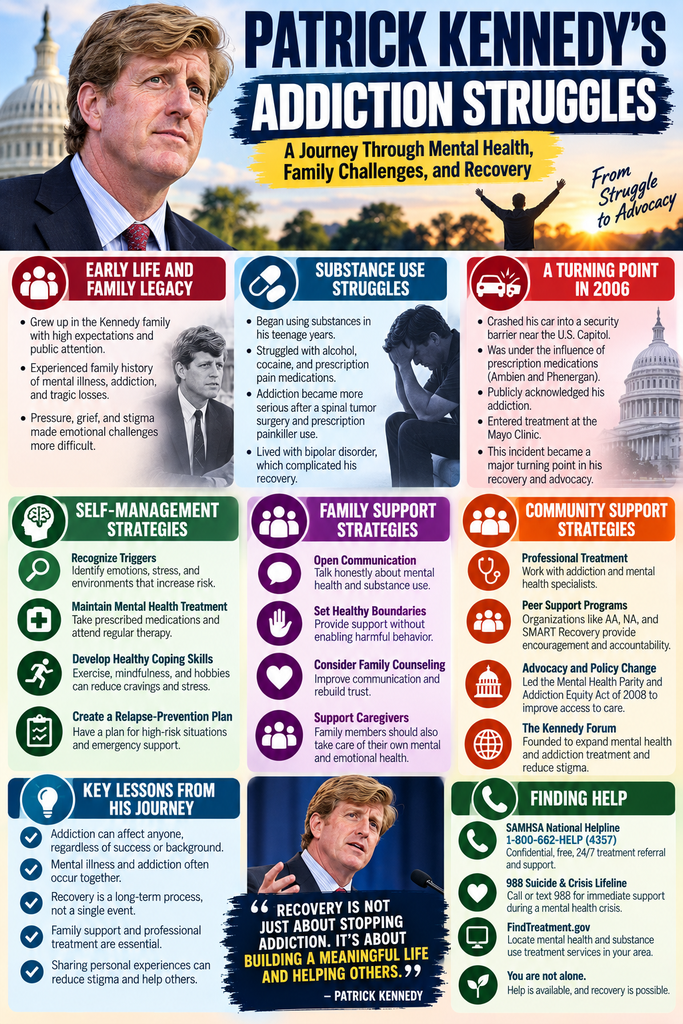
Patrick J. Kennedy, a former United States congressman and member of one of America’s most prominent political families, has spent much of his life navigating the challenges of addiction, mental illness, family expectations, and public scrutiny. As the youngest son of the late Senator Edward “Ted” Kennedy, he grew up surrounded by political influence, privilege, and extraordinary pressure.
Despite his successful political career, Kennedy struggled with alcohol and prescription medication misuse, alongside publicly disclosed mental health conditions. His experiences eventually transformed him into a nationally recognized advocate for addiction treatment, mental health care, and recovery.
Kennedy’s story illustrates that addiction does not discriminate based on wealth, education, professional achievement, or family background. It also demonstrates how untreated mental health conditions, emotional distress, and substance use can become intertwined.
By examining his journey through self-management, family support, and community resources, individuals and families can better understand the challenges of addiction and the strategies that support long-term recovery.
Patrick Kennedy’s Early Life and Family Legacy
Born on July 14, 1967, Patrick Joseph Kennedy II grew up in a family known for political leadership, public service, and personal tragedy. His father, Senator Ted Kennedy, was a central figure in American politics, while his uncles included President John F. Kennedy and Senator Robert F. Kennedy.
Growing up in such a prominent family meant that Kennedy experienced unusual public attention and expectations. His family’s history also included significant experiences with mental illness, substance use, grief, and loss.
Kennedy has discussed these issues in his memoir, A Common Struggle: A Personal Journey Through the Past and Future of Mental Illness and Addiction, published in 2015.
His story helps illustrate how family circumstances, inherited vulnerabilities, psychological stress, and access to substances can interact. However, no single family experience explains why an individual develops addiction.
How family experiences can influence addiction
- Genetic vulnerability: Family histories of addiction or mental illness can increase susceptibility to certain conditions.
- Emotional stress: Chronic stress may make it harder to regulate emotions.
- Family expectations: Pressure to succeed can contribute to anxiety and perfectionism.
- Stigma: Fear of disappointing loved ones may discourage people from seeking help.
- Unresolved grief: Difficult losses can complicate emotional well-being.
- Learned behaviors: Family attitudes toward alcohol, medication, and mental health treatment can influence coping strategies.
Understanding these influences can help families approach addiction with greater compassion while maintaining personal accountability.
Patrick Kennedy’s Early Struggles With Substance Use
Kennedy’s addiction difficulties began during adolescence. He has discussed entering rehabilitation at approximately age 17 and experiencing substance use problems that continued into adulthood.
His history included cocaine use during his teenage years and later problems involving alcohol and prescription pain medications.
He has also publicly discussed living with bipolar disorder, a mental health condition involving significant changes in mood, energy, and activity levels.
When substance use disorders and bipolar disorder occur together, treatment becomes particularly important because substance use can destabilize mood and complicate psychiatric care.
Kennedy’s experiences illustrate several common challenges:
- Beginning substance use during adolescence, when the brain is still developing.
- Experiencing recurring addiction symptoms despite earlier treatment.
- Managing substance use alongside an ongoing mental health condition.
- Struggling with the misconception that completing rehabilitation permanently eliminates addiction.
- Needing continuing care rather than relying exclusively on short-term treatment.
Kennedy later emphasized that understanding addiction as a chronic, treatable condition was important to his recovery.
Prescription Painkiller Addiction and Mental Health
Kennedy’s difficulties with prescription pain medications became an especially significant part of his addiction history.
He underwent surgery to remove a spinal tumor during young adulthood and subsequently received prescription pain medications. He later described how access to these medications contributed to his addiction.
Prescription opioids can effectively treat certain forms of pain, but they also carry risks of physical dependence, tolerance, and opioid use disorder.
Physical dependence alone is not the same as addiction. Addiction involves impaired control over substance use, continued use despite harm, and other behavioral and psychological symptoms.
For Kennedy, prescription medication misuse became part of a larger struggle involving mental health, emotional well-being, and repeated treatment.
His experience demonstrates why patients with addiction histories may benefit from carefully coordinated pain management and psychiatric care.
The 2006 Capitol Hill Accident: A Turning Point
One of the most publicized events in Kennedy’s addiction history occurred on May 4, 2006, when he crashed his vehicle into a security barrier near the United States Capitol.
Kennedy reported experiencing disorientation and memory loss after taking prescribed medications, including the sleep medication Ambien and the anti-nausea medication Phenergan.
Following the accident, he publicly acknowledged his longstanding addiction to prescription pain medications and entered treatment at the Mayo Clinic.
In June 2006, he pleaded guilty to driving under the influence of prescription medication. His sentence included probation, continued treatment, monitoring, and recovery meetings.
The incident became an important turning point in his public discussion of addiction.
Rather than withdrawing permanently from public life, Kennedy increasingly used his experience to advocate for improved addiction treatment and mental health services.
Lessons from the 2006 incident
- Prescription medications can impair judgment and driving ability.
- Medication interactions require careful medical supervision.
- Addiction can continue or recur despite previous treatment.
- Public accountability and treatment can occur together.
- Seeking professional assistance is a responsible response to addiction-related problems.
Kennedy’s experience reinforces the importance of recognizing warning signs before substance use creates serious consequences.
Self-Management Strategies for Addiction and Mental Health Recovery
Self-management involves developing daily habits, coping skills, and treatment routines that support recovery.
For individuals experiencing addiction alongside bipolar disorder or other mental health conditions, coordinated treatment is especially important.
1. Recognize addiction triggers
Identifying triggers can help individuals understand situations that increase their vulnerability to substance use.
Helpful strategies include:
- Keeping a journal of emotions, cravings, and stressful situations.
- Recognizing the relationship between sleep disruption and mood changes.
- Avoiding environments associated with previous substance use.
- Developing a plan for managing cravings.
- Discussing medication concerns with healthcare professionals.
2. Maintain consistent mental health treatment
Bipolar disorder generally requires ongoing clinical management, which may include medication, psychotherapy, and regular psychiatric follow-up.
People with co-occurring addiction and bipolar disorder benefit from treatment that addresses both conditions.
Self-management strategies include:
- Taking prescribed psychiatric medications as directed.
- Attending regular appointments with mental health professionals.
- Monitoring mood changes and sleep patterns.
- Avoiding alcohol and nonprescribed drugs.
- Reporting medication side effects or emerging symptoms promptly.
Individuals should not stop prescribed psychiatric medications without consulting their healthcare professional.
3. Develop healthy coping mechanisms
Substance use may temporarily numb emotional discomfort, but it can worsen psychological distress over time.
Healthier coping strategies include:
- Participating in regular physical activity.
- Practicing mindfulness and relaxation exercises.
- Establishing consistent sleeping and waking times.
- Engaging in meaningful hobbies.
- Maintaining supportive social connections.
- Seeking professional assistance during periods of emotional instability.
4. Create a relapse-prevention plan
Recovery requires preparation for difficult circumstances.
A relapse-prevention plan may include identifying early warning signs, maintaining professional treatment, developing emergency contacts, and limiting access to substances associated with previous addiction.
For individuals with a history of opioid addiction, clinicians may also consider evidence-based medications for opioid use disorder, such as buprenorphine or methadone, when appropriate.
Self-management is not the same as self-treatment. Effective recovery often depends on professional care and continuing support.
Family Support Strategies: Healing Relationships and Reducing Stigma
Family relationships can strongly influence recovery, particularly when addiction and mental illness have affected several generations.
Kennedy’s experiences within his prominent family demonstrate the importance of discussing mental health concerns openly rather than allowing stigma to prevent treatment.
His father publicly supported his decision to enter rehabilitation following the 2006 accident, emphasizing the family’s encouragement of his treatment.
Family support can provide stability, emotional connection, and motivation, but it must be balanced with healthy boundaries.
Encourage open communication
Families should create opportunities for honest conversations about substance use and emotional difficulties.
Supportive communication involves:
- Listening without immediately assigning blame.
- Encouraging individuals to discuss cravings or emotional distress.
- Avoiding language that labels addiction as a moral failure.
- Recognizing that recovery may involve setbacks.
- Discussing concerns calmly and respectfully.
Establish healthy boundaries
Families can offer compassion while refusing to enable harmful behavior.
Boundaries may involve expectations about substance use, financial responsibility, treatment participation, and respectful communication.
Clear boundaries protect both the individual experiencing addiction and the people supporting them.
Participate in family counseling
Family therapy may help relatives understand how addiction affects relationships and communication.
Potential benefits include:
- Addressing longstanding family conflicts.
- Improving emotional communication.
- Rebuilding trust after addiction-related incidents.
- Understanding how mental illness affects family functioning.
- Developing shared strategies for managing stressful situations.
Support the emotional health of caregivers
Family members may experience exhaustion, anxiety, frustration, or guilt when supporting someone with addiction.
Encourage them to maintain their own mental health care, social relationships, and personal boundaries.
Families can support recovery without becoming responsible for another person’s treatment decisions.
Community Support Strategies: Turning Personal Recovery Into Public Advocacy
One of the most significant aspects of Patrick Kennedy’s journey is his transition from publicly discussing his own addiction to advocating for systemic changes in mental health care.
During his 16 years in the United States House of Representatives, Kennedy worked to improve access to treatment for people experiencing mental illness and substance use disorders.
The Mental Health Parity and Addiction Equity Act
Kennedy was a leading sponsor of the Mental Health Parity and Addiction Equity Act of 2008.
Signed into law on October 3, 2008, the legislation generally requires applicable health plans that provide mental health or substance use disorder benefits to apply financial requirements and treatment limitations no more restrictively than comparable medical and surgical benefits.
The law marked an important step toward reducing discriminatory insurance practices, though it did not guarantee universal access to treatment.
The Kennedy Forum
Following his congressional career, Kennedy founded The Kennedy Forum, an organization focused on improving mental health and addiction care.
Its work emphasizes:
- Expanding access to evidence-based addiction treatment.
- Strengthening mental health insurance protections.
- Reducing stigma surrounding psychiatric conditions.
- Supporting prevention and early intervention.
- Improving coordination between mental health and general medical services.
- Encouraging policymakers to prioritize behavioral health.
Kennedy’s advocacy reflects the broader importance of community-level changes in supporting recovery.
Peer-support programs
Community recovery organizations can provide ongoing encouragement and accountability.
Programs such as Alcoholics Anonymous and Narcotics Anonymous offer peer connections for individuals recovering from substance use problems.
Other options include SMART Recovery, recovery community centers, and professionally facilitated support groups.
Peer support can complement clinical treatment, although it should not replace necessary medical or psychiatric care.
Community education and prevention
Communities can reduce addiction-related harm by improving education, prevention, and access to treatment.
Effective strategies include:
- Offering substance use prevention programs in schools.
- Expanding affordable mental health services.
- Training healthcare professionals to recognize addiction.
- Providing recovery-friendly employment opportunities.
- Supporting family education programs.
- Improving access to treatment in underserved communities.
Community support helps transform recovery from an isolated personal struggle into a shared public health responsibility.
Patrick Kennedy’s Books and Mental Health Advocacy
Kennedy has also used writing and public speaking to educate others about addiction and mental illness.
His 2015 memoir, A Common Struggle, coauthored with journalist Stephen Fried, explores his personal experiences with addiction, bipolar disorder, treatment, and family history.
In 2024, Kennedy and Fried published Profiles in Mental Health Courage, which shares experiences of individuals and families confronting mental illness and addiction.
The books encourage greater understanding of behavioral health conditions and challenge the shame that often prevents people from seeking assistance.
Kennedy’s willingness to share difficult experiences has become an important part of his advocacy.
Lessons From Patrick Kennedy’s Addiction and Recovery Journey
Patrick Kennedy’s experiences provide several lessons for individuals, families, healthcare professionals, and communities.
Addiction can affect anyone
Political influence, financial resources, and professional achievement do not eliminate the risk of developing a substance use disorder.
Mental illness and addiction require coordinated care
When bipolar disorder and addiction occur together, addressing only one condition may leave important treatment needs unmet.
Recovery is a continuing process
Kennedy’s history of repeated treatment demonstrates that addiction recovery may require long-term management, professional support, and adjustments over time.
Family encouragement can strengthen recovery
Supportive relationships may encourage treatment participation, emotional stability, and accountability.
Community advocacy can create lasting change
Kennedy turned his personal experiences into efforts to improve access to mental health treatment for millions of Americans.
Sharing recovery experiences can reduce stigma
Public discussions of addiction and mental illness may encourage others to seek help rather than conceal their symptoms.
Finding Help for Addiction and Mental Health Challenges
Individuals experiencing addiction, depression, bipolar disorder, or other mental health concerns can benefit from early professional assessment.
In the United States, the Substance Abuse and Mental Health Services Administration provides treatment referrals through its National Helpline at 1-800-662-HELP (4357).
The website FindTreatment.gov can help individuals locate substance use and mental health treatment providers.
Anyone experiencing suicidal thoughts or an immediate emotional crisis can call or text 988 to reach the Suicide & Crisis Lifeline.
Conclusion: Patrick Kennedy’s Journey From Addiction to Advocacy
Patrick Kennedy’s addiction struggles reveal the complicated relationship between substance use, mental illness, family experiences, and public expectations.
His experiences with prescription medication addiction, bipolar disorder, repeated treatment, and the 2006 Capitol Hill accident became defining moments in his personal and professional life.
Rather than letting those experiences end his public contributions, Kennedy became a prominent advocate for mental health parity, addiction treatment, and better access to behavioral healthcare.
His journey demonstrates the importance of three interconnected recovery strategies: self-management to maintain healthy behaviors, family support to strengthen relationships, and community resources to provide ongoing treatment and connection.
Most importantly, Kennedy’s experience reminds us that recovery is not simply about overcoming addiction. It is also about building a meaningful life, maintaining emotional well-being, and using personal experiences to create positive change.
Recovery is not defined by a person’s past struggles, but by the continuing commitment to healing, responsibility, and a healthier future.
Frequently Asked Questions and Answers
1. What addictions has Patrick Kennedy struggled with?
Former U.S. Congressman Patrick J. Kennedy has publicly discussed struggles with alcohol, cocaine, and prescription pain medication addiction. His substance use difficulties began during adolescence and continued into adulthood. He has also spoken openly about living with bipolar disorder. Kennedy’s experiences demonstrate how addiction and mental health conditions can occur together, making comprehensive treatment particularly important.
2. When did Patrick Kennedy’s addiction problems begin?
Kennedy has described experiencing substance use problems during his teenage years. He entered addiction treatment at approximately age 17. Despite receiving help early in life, he experienced recurring difficulties with alcohol and drugs. His history illustrates why addiction often requires ongoing treatment, behavioral changes, and long-term recovery support.
3. How did Patrick Kennedy’s family background influence his addiction struggles?
Kennedy grew up in a prominent political family that experienced public scrutiny, personal tragedies, and mental health challenges. In his memoir, he discusses the Kennedy family’s experiences with mental illness and addiction. Genetic vulnerability, emotional stress, and family attitudes toward treatment can influence addiction risk. However, no single family experience can fully explain an individual’s substance use disorder.
4. What mental health condition has Patrick Kennedy publicly discussed?
Kennedy has openly discussed living with bipolar disorder, a mental health condition characterized by episodes of depression and mania or hypomania. Bipolar disorder can affect mood, energy, sleep, judgment, and daily functioning. When it occurs alongside substance use disorder, coordinated psychiatric and addiction treatment is especially important.
5. What happened during Patrick Kennedy’s 2006 car accident?
On May 4, 2006, Kennedy crashed his vehicle into a security barrier near the U.S. Capitol. He reported taking prescribed medications, including Ambien and Phenergan, before the accident. He subsequently entered addiction treatment and pleaded guilty to driving under the influence of prescription medication. The incident brought national attention to his addiction struggles and treatment needs.
6. How did prescription pain medications contribute to Patrick Kennedy’s addiction?
Kennedy has discussed developing problems with prescription painkillers after receiving medical treatment for a spinal condition. Opioid pain medications can be medically appropriate, but they also carry risks of dependence and addiction. His experience highlights the importance of careful prescribing, medication monitoring, and alternative pain-management strategies when clinically appropriate.
7. Did Patrick Kennedy receive professional addiction treatment?
Yes. Kennedy has publicly discussed undergoing addiction treatment multiple times, including treatment following his 2006 automobile accident. His recovery has involved professional mental health care, medication management, peer support, and lifestyle changes. His experience demonstrates that returning to treatment when needed can be part of managing a chronic condition.
8. How did Patrick Kennedy achieve sobriety?
Kennedy has described maintaining recovery through a combination of professional treatment, medication for bipolar disorder, regular exercise, and participation in 12-step meetings. In a 2015 CBS interview, he said he swims every morning and attends daily recovery meetings. He emphasized managing addiction one day at a time.
9. What self-management strategies can help people recovering from addiction?
Self-management involves identifying triggers, building healthy coping skills, and staying consistent with treatment.
- Recognize emotional and environmental triggers.
- Attend scheduled counseling and psychiatric appointments.
- Take prescribed medications as directed.
- Maintain healthy sleep and exercise routines.
- Develop strategies for managing cravings.
- Create a relapse-prevention plan.
- Build meaningful relationships and sober activities.
These strategies can strengthen recovery when combined with evidence-based professional care.
10. How can families support someone experiencing addiction?
Families can provide emotional encouragement while maintaining clear expectations and boundaries. Honest communication, education about addiction, and participation in family counseling may help strengthen relationships. Loved ones should avoid enabling harmful behavior while recognizing that addiction is a treatable medical condition rather than simply a lack of willpower.
11. What role has Patrick Kennedy’s wife played in his recovery?
Kennedy’s wife, Amy Kennedy, has played an important role in his family life during recovery. In a 2015 interview, Kennedy said his commitment to sobriety was central to their relationship before they married. Their experiences illustrate how healthy relationships can provide motivation, encouragement, and accountability. However, maintaining recovery remains the individual’s responsibility.
12. Can addiction and bipolar disorder be treated simultaneously?
Yes. Integrated treatment is generally recommended when substance use disorder and bipolar disorder occur together. Treatment may involve psychiatric medication, psychotherapy, addiction counseling, and peer support. Addressing both conditions reduces the risk that untreated symptoms will interfere with recovery.
13. What is the Mental Health Parity and Addiction Equity Act?
The Mental Health Parity and Addiction Equity Act of 2008 is a federal law that generally requires covered health plans offering mental health or substance use disorder benefits to apply financial requirements and treatment limitations comparably to medical and surgical benefits. Kennedy was a leading sponsor of the legislation. It aims to reduce discriminatory insurance restrictions affecting behavioral healthcare.
14. What is the Kennedy Forum?
The Kennedy Forum is a nonprofit organization co-founded by Patrick Kennedy that advocates for improvements in mental health and addiction treatment. Its priorities include insurance coverage parity, evidence-based treatment, prevention, youth mental health, and reducing barriers to behavioral healthcare. The organization works with policymakers, healthcare professionals, community organizations, and other stakeholders.
15. How has Patrick Kennedy used his addiction experiences to help others?
Kennedy has transformed his personal experiences into public advocacy. Through legislation, speaking engagements, nonprofit leadership, and writing, he has promoted greater access to addiction and mental health treatment. His work encourages people to recognize behavioral health conditions as legitimate medical concerns deserving appropriate care and insurance coverage.
16. What books has Patrick Kennedy written about addiction and mental health?
Kennedy coauthored two notable books with journalist Stephen Fried:
- A Common Struggle (2015), which explores his personal experiences with addiction, mental illness, family history, and mental health policy.
- Profiles in Mental Health Courage, which shares stories of individuals and families navigating mental illness and addiction.
Both books emphasize treatment, reducing stigma, and the importance of discussing mental health openly.
17. Why is relapse prevention important in addiction recovery?
Addiction can involve recurring symptoms, even after substantial periods of improvement. Relapse-prevention planning helps individuals identify warning signs, manage cravings, and respond to stressful situations before substance use resumes. A strong plan may include professional contacts, coping strategies, medication management, and peer-support meetings. Returning to substance use should prompt renewed assessment and support rather than shame.
18. What community support programs can help people with addiction?
Community resources can provide education, encouragement, and accountability. Alcoholics Anonymous, Narcotics Anonymous, SMART Recovery, and local recovery community centers offer different approaches to peer support. Professional outpatient programs, psychiatric services, and family support groups may also be beneficial. Individuals should select resources that match their treatment needs and personal preferences.
19. What are the warning signs of prescription medication addiction?
Warning signs may include taking more medication than prescribed, repeatedly seeking early refills, experiencing strong cravings, concealing medication use, or continuing use despite harmful consequences. Some individuals have difficulty at work, in relationships, or with daily responsibilities. Physical dependence alone does not establish addiction, so professional evaluation is important when concerns arise.
20. How can someone manage emotional distress without using alcohol or drugs?
Healthy coping strategies include psychotherapy, regular exercise, mindfulness, journaling, relaxation techniques, and maintaining supportive relationships. Individuals may also benefit from establishing consistent routines and recognizing early changes in emotional well-being. Those experiencing significant psychiatric symptoms should seek professional care rather than relying exclusively on self-management.
21. How does family stigma affect addiction treatment?
Stigma can make individuals reluctant to disclose symptoms or seek professional assistance. Families may mistakenly view addiction as a personal weakness, which can increase shame and isolation. Education, respectful communication, and recognition of addiction as a treatable medical condition can encourage earlier intervention and healthier family relationships.
22. Why is long-term treatment important for people with addiction and mental illness?
Substance use disorders and conditions such as bipolar disorder may require ongoing management. Long-term care can help individuals maintain psychiatric stability, identify emerging symptoms, and strengthen relapse-prevention skills. Treatment needs may change over time, making regular reassessment important.
23. Is Patrick Kennedy still involved in mental health and addiction advocacy?
Yes. As of October 2026, Kennedy remains publicly involved in behavioral health advocacy. His official website and The Kennedy Forum describe his ongoing work on mental health parity, access to addiction treatment, prevention, and healthcare policy. His advocacy reflects a long-term commitment to improving behavioral health systems.
24. Where can someone find help for addiction and mental health challenges?
In the United States, individuals can contact the SAMHSA National Helpline at 1-800-662-HELP (4357) for confidential treatment information and referrals. The website FindTreatment.gov helps people locate mental health and substance use treatment providers. Anyone experiencing suicidal thoughts or an immediate emotional crisis can call or text 988 for crisis support.
25. What is the most important lesson from Patrick Kennedy’s addiction and recovery journey?
Patrick Kennedy’s experiences demonstrate that addiction can affect anyone, regardless of professional success, financial resources, or family background. His recovery story emphasizes the importance of acknowledging substance use problems, treating co-occurring mental health conditions, seeking professional assistance, and developing consistent recovery routines.
His transition from personal struggles to public advocacy also shows how lived experience can drive meaningful social change.
Video: