Cheating in relationships is a tough topic, and when addiction is involved, things can get even more complicated. Addiction—whether it’s drugs, alcohol, gambling, or another issue—puts a huge strain on trust and communication. Having seen people close to me deal with these kinds of relationship challenges, I’ve learned that recognizing early red flags is really important for protecting yourself and making clear decisions.
How Addiction Connects to Cheating
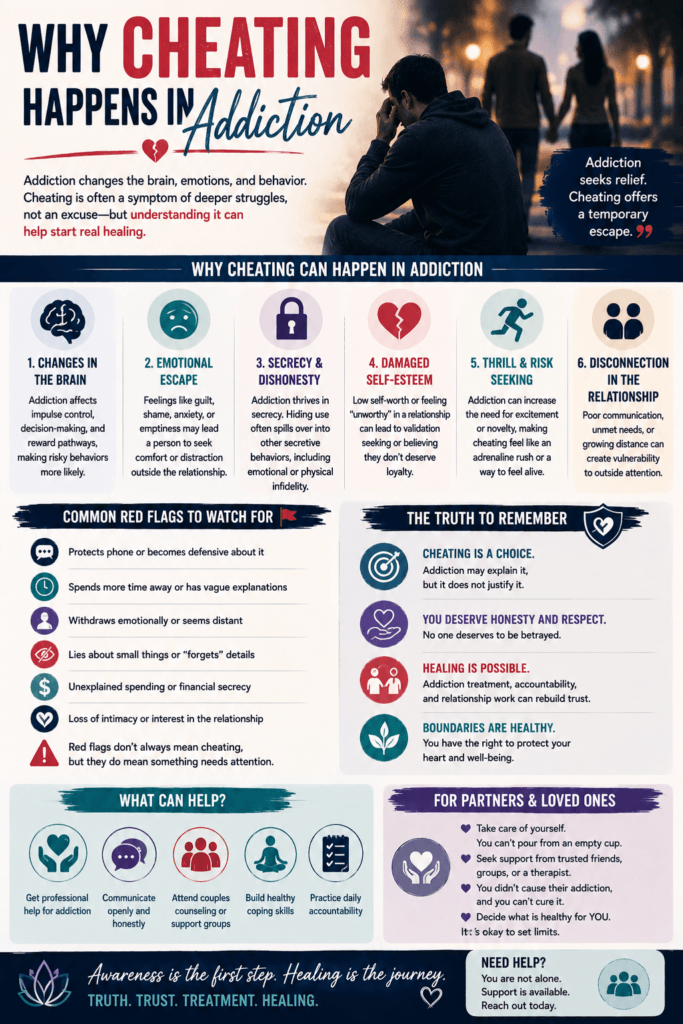
It’s not rare for addiction to act as a trigger for cheating. People use cheating as an escape, a way to feel in control, or a way to avoid tough feelings. Someone struggling with addiction already deals with cravings and impulses, and these habits make it a lot harder to stick to healthy boundaries in relationships.
Addiction can mess with someone’s thinking. When someone’s focused on feeding their addiction, considering the impact of their actions on others can get pushed aside. Often, the secrecy and lies involved in hiding an addiction blend right in with hiding infidelity. The mix creates an environment where cheating is easier to rationalize and harder to detect until it has done a lot of damage.
Common Reasons Cheating Happens with Addicts
- Impulsivity: Addiction chips away at self-control. When judgment is impaired by substance use or behaviors tied to addiction, risky sexual choices or infidelity can easily happen.
- Escapism: The emotional chaos addiction creates often leads someone to seek relief outside of their relationship. Cheating might be an attempt to escape stress, shame, or loneliness, even temporarily.
- Thrill Seeking: For some, both addiction and cheating feed the need for excitement and adrenaline. Sex or intimate attention outside the relationship can feel like another “high” to chase.
- Low Self-Worth: Shame and guilt surrounding addiction can cause people to sabotage relationships through cheating, convinced they don’t deserve real connection or lasting love.
- Broken Communication: Addiction often kills communication. When couples aren’t talking honestly, misunderstandings grow, resentments build, and emotional needs aren’t met, setting the stage for infidelity.
Relationship Red Flags to Watch For
If you’re with someone struggling with addiction, knowing what to look for can help keep you from getting blindsided. Here are some warning signs I’ve seen come up over and over again in these situations:
- Mysterious Absences: Regularly disappearing without good reasons, especially late at night, is a pretty big warning sign, especially when combined with a history of lying about their whereabouts.
- Guarded Phone Habits: Changing passwords, hiding their screen, or panicking if you go near their devices might suggest that they’re hiding conversations or activities from you.
- Changes in Intimacy: If your partner suddenly seems distant or cold, or suddenly has a new burst of sexual energy that doesn’t match your recent connection, it’s worth paying attention to. Sometimes cheating brings sudden changes in intimacy, either up or down.
- New Friendships Under Wraps: Secretive or unexplained relationships with new people, especially if your partner won’t introduce you, are another red flag, especially when addiction is in the picture.
- Financial Secrecy: Extra spending, missing money, or odd charges can signal both addiction relapses and cheating, since both usually need to be funded and kept secret.
- Defensive Attitude: If even simple questions trigger big defensive reactions or accusations (like being called “crazy” or “paranoid”), your partner might be trying to turn attention away from their own actions.
How Addiction Changes the Warning Signs
Addiction puts a different spin on classic cheating red flags. While some behaviors, like secretive phone habits or disappearing for hours, show up in many affairs, addiction makes the pattern way more chaotic and hard to pin down. When someone’s struggling with addiction, what looks like a relapse could also be covering up an affair, or vice versa.
Here’s what I’ve noticed: addiction often comes with lots of secrets and lies, so it’s much easier for cheating to get lost in the mess. Emotional ups and downs, unpredictable moods, and shifting priorities can all make regular relationship struggles feel impossible to unpack. Don’t ignore your intuition just because you know addiction is already causing tension. That gut feeling can be pointing you toward something more.
Tips for Spotting Cheating Early
- Trust Patterns, Not Just Apologies: Consistent bad behavior means more than words. Promises to “do better” should be followed by real change over time.
- Look for Cross-Over Lies: If someone lies about small things, like where they are, who they’re texting, or what money is being spent on, it’s easier for bigger lies (like cheating) to go unnoticed.
- Track Emotional Distance: Sudden or unexplained emotional withdrawal usually means something is up, whether it’s relapse or infidelity. Both can exist together, making the warning signs even stronger.
- Notice Who Takes Responsibility: Someone blaming everyone else (including you) for all their problems isn’t likely to come clean about cheating, let alone their addiction.
- Connect with Trusted Support: Family, friends, or a counselor can offer perspective you might be missing when you’re caught up in the situation. Sometimes someone on the outside can spot patterns you’re too close to see.
Protecting Yourself in a Turbulent Relationship
If you notice these red flags, it’s really important to take steps to look after your own well-being. Addiction can pull you into a cycle of broken trust, second chances, and repeated hurt. Setting boundaries and having a support system ready to go makes a huge difference, whether or not cheating is actually involved.
- Make Your Boundaries Clear: Know what’s okay with you and what crosses the line. Write it down if you need to so you don’t waver in challenging moments.
- Keep Honest Records: If something feels off or you catch them in a lie, document what happens. This isn’t about being a detective; it’s about helping you remember what really happened if there’s ever doubt.
- Get Support: Reach out to loved ones, support groups, or therapy. You don’t have to go through this alone, and other perspectives can be really grounding.
- Put Your Needs First: Sometimes it feels selfish, but taking care of yourself (physically, emotionally, financially) is super important when dealing with both addiction and infidelity.
What Healthy Relationships Look Like (Even During Recovery)
Not every relationship involving addiction is doomed. I’ve seen people work through serious issues if both partners commit to honesty, communication, and real recovery, both individually and together. Spotting red flags doesn’t have to mean you walk away right away; sometimes it means it’s time to have a real, honest conversation or seek help together. The healthiest couples I know dealing with addiction are the ones who put transparency and ongoing support at the center of everything.
Frequently Asked Questions
How do I know if I’m overreacting or if it’s really cheating?
It’s normal to doubt your own feelings when addiction is involved. Jot down what specific actions or changes make you uneasy. Talking to a trusted friend or counselor helps sort through feelings versus facts. Either way, trust what your experiences are telling you, even before you have proof.
What’s the best way to confront my partner if I suspect cheating?
Use calm, honest language and focus on what you’ve seen, not accusations. For example, “I noticed you’ve been gone a lot, and I feel disconnected. Can we talk about what’s going on? It’s not easy, but keeping things open (rather than explosive) usually elicits more honest responses.
Can someone recover from addiction and still be faithful?
Yes, with a strong support system and a real commitment to recovery, people absolutely can change. Recovery isn’t just about quitting the substance or behavior; it’s about learning how to rebuild trust and make healthier choices moving forward.
Final Thoughts
Recognizing the early warning signs of cheating in a relationship where addiction is part of the story can save you from a lot of heartbreak. Paying attention to changes in behavior, trusting your instincts, and putting your needs and boundaries first are super important steps. Remember, you’re not alone, and taking care of yourself is never wrong, no matter how messy things get. If you’re struggling, reaching out for help is a sign of strength, not weakness. Real recovery and real relationships are built on trust and truth, even when it takes time to get there.
Video: The Secret World of Addiction and Its Role in Cheating