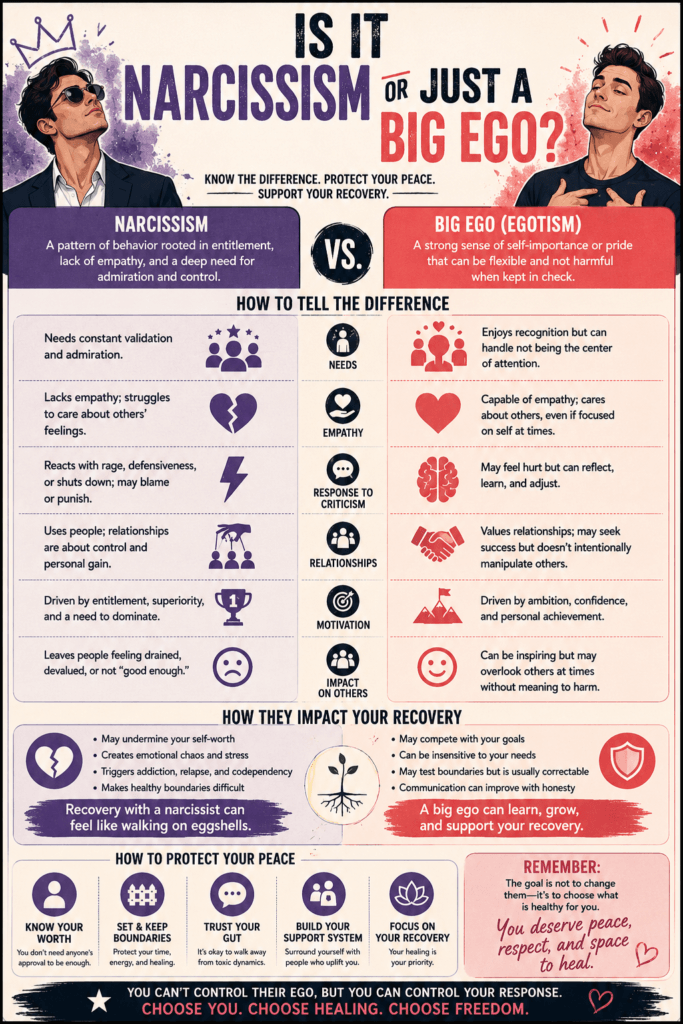
Recovery from a toxic relationship, mental health challenges, or emotional burnout can be a difficult and deeply personal journey. The people surrounding you can either support your progress or make the healing process more challenging. Although narcissistic and egotistical behaviors may appear similar at first, understanding the differences can help you recognize unhealthy relationship patterns and protect your emotional well-being. By learning how these traits affect communication, boundaries, trust, and self-esteem, you can better identify behaviors that may interfere with your recovery. Understanding the warning signs also allows you to establish healthier boundaries, choose supportive relationships, and create an environment that encourages healing, personal growth, and lasting emotional wellness.
Narcissist vs. Egotist: What’s the Actual Difference?
The words “narcissist” and “egotist” get tossed around a lot, but they aren’t duplicates. Here’s what I notice when I’m figuring out who’s who:
- Narcissist: A narcissist tends to crave constant admiration, struggles with empathy, and may even manipulate or gaslight others to get their way. Narcissism often has roots in personality disorders such as Narcissistic Personality Disorder (NPD) (source).
- Egotist: An egotist is someone who thinks a lot of themselves and doesn’t mind showing it. They might brag, interrupt, or hog the spotlight, but it’s not always tied to deep manipulation or cruelty.
Both can drain your energy, but narcissists tend to have a bigger impact on recovery because of their emotionally destructive patterns, making them more complicated to bounce back from.
How Each Personality Affects Your Recovery
Keeping your recovery on track is really important, and knowing who’s helpful or harmful can make it easier to protect yourself. Here’s how I see narcissists and egotists getting in the way:
When You’re Dealing With a Narcissist
- Emotional Manipulation: Narcissists often guilt-trip or gaslight you, making you second-guess your own judgment. This builds up self-doubt when you need confidence most.
- Lack of Empathy: They don’t really get or care about your emotional injuries, and often dismiss your feelings as overreactions.
- Sabotage: Some narcissists dislike seeing you get better because your growth takes away their control. Discouragement and subtle put-downs are common tactics.
When You’re Dealing With an Egotist
- Self-centered Behaviors: Egotists love attention and talking about themselves, but don’t usually scheme or manipulate on purpose. They can make you feel ignored, but it doesn’t usually leave lasting harm.
- Insensitive Comments: They might constantly one-up or brag, which is irritating and sometimes invalidating. However, the effect tends to stop at annoyance rather than causing deep wounds.
In short, narcissists often create deeper injuries that require time and outside support to heal, whereas egotists may slow your progress but aren’t usually as damaging long-term.
Spotting the Signs: Red Flags to Watch For
Spotting these personalities early is a big deal for your peace of mind. Here are the solid signs I look out for:
- Gaslighting or Bending the Truth: Narcissists are more likely to deny your experiences or outright lie to you.
- Never Apologizing: Narcissists almost never admit they’re wrong, while egotists might say sorry, but it could take a while.
- Controlling Conversations: Both love talking about themselves, but narcissists often punish or belittle you when you try to express your feelings.
- Empathy Test: Toss a problem you’re facing into the conversation. Narcissists usually ignore it or spin it back to themselves; egotists might offer advice or try to help, even if the conversation circles back to them.
Tips for Protecting Your Recovery From Harmful Personalities
Whether you’re around a narcissist, an egotist, or a mix, setting boundaries is essential. These simple steps help guard your recovery:
- Name the Pattern: Recognize and label the behavior, at least to yourself or in a private journal. This separates your emotions from someone else’s actions.
- Set Clear Limits: Boundaries matter. Taking a break, ending calls quicker, or changing the subject as needed—it’s all fair game.
- Lean on a Go-To Support Person: Find someone outside the situation, like a therapist or trusted friend, who understands but isn’t personally involved.
- Keep Simple Records: Track conversations or incidents privately to spot patterns, making confusing phases easier to figure out.
- Invest in Self-Care: After tough social exchanges, do something that recenters you, whether it’s walking, relaxing with a good show, or journaling your thoughts.
Dealing With Setbacks: Challenges and How To Manage Them
Even with solid boundaries, healing isn’t a smooth ride, especially with these personalities around. Here are some common hurdles and how to get past them:
- Guilt Over Setting Boundaries: It’s very common to feel guilty when stepping back, especially if the other person complains. Remind yourself that these limits are part of your healing.
- Falling Back Into Old Patterns: Old habits return under stress. Noticing when it happens can be half the battle. Try a grounding exercise, like deep breathing, to interrupt old cycles.
- Feeling Isolated: Both narcissists and egotists can make you feel alone, but reaching out to a support group or an online space really matters. Community helps you avoid getting stuck in isolation.
Pitfalls of Social Media
Behaviors from both personality types show up online, too. Clean up your feed by removing or blocking users who drain you—it’s important for your mental health, even if it’s uncomfortable at first.
Building Healthier Connections
If things have been rough, don’t lose faith: you can still build relationships that boost your recovery. Here’s what helps most:
- Seek Out Consistency: Supportive friends show up for you repeatedly, not just when it suits them.
- Mutual Listening: Healthy relationships are a two-way street—both people have space to share and be heard.
- Real Encouragement: The best encouragement feels genuine, without sly digs or attached expectations.
Your recovery shines most when you have a handful of supportive people around. If you can’t think of anyone right now, reaching out to a therapist is a great first step—trust that things can and do improve over time.
FAQ: Narcissists, Egotists, and Recovery
Here are some of the questions I get most often:
Q: Can an egotist become dangerous to my recovery?
A: Egotists are more likely to annoy than harm you in the long run, but if their self-centeredness triggers tough memories or old wounds, it’s wise to step back or get extra support.
Q: What if I suspect I’m the egotist or narcissist?
A: Realizing you have some self-centered traits is a healthy step toward change. Being honest with yourself and reaching out to a mental health professional can turn your relationships around.
Q: Should I confront a narcissist about their behavior?
A: Confronting a narcissist often leads to defensiveness or escalating the situation. When you need to set a boundary, keep it clear and straightforward, and walk away if things get intense.
Key Takeaways for Recovery
Handling narcissists and egotists during recovery calls for patience, strong boundaries, and a tight support network. Narcissists pose a bigger challenge because of their lack of empathy and intentional manipulation, while egotists are often just frustrating. Zeroing in on patterns, holding your boundaries, and putting your own needs first help you set the stage for real growth—even when the people around you are hard to deal with.
Healing isn’t always steady, especially with these personalities nearby, but you’re not alone. Staying focused on your well-being, continuing to read up on these types, and reaching out for help make all the difference in the world, one day at a time.
Video: Is It Narcissism or Just a Big Ego? Know the Difference