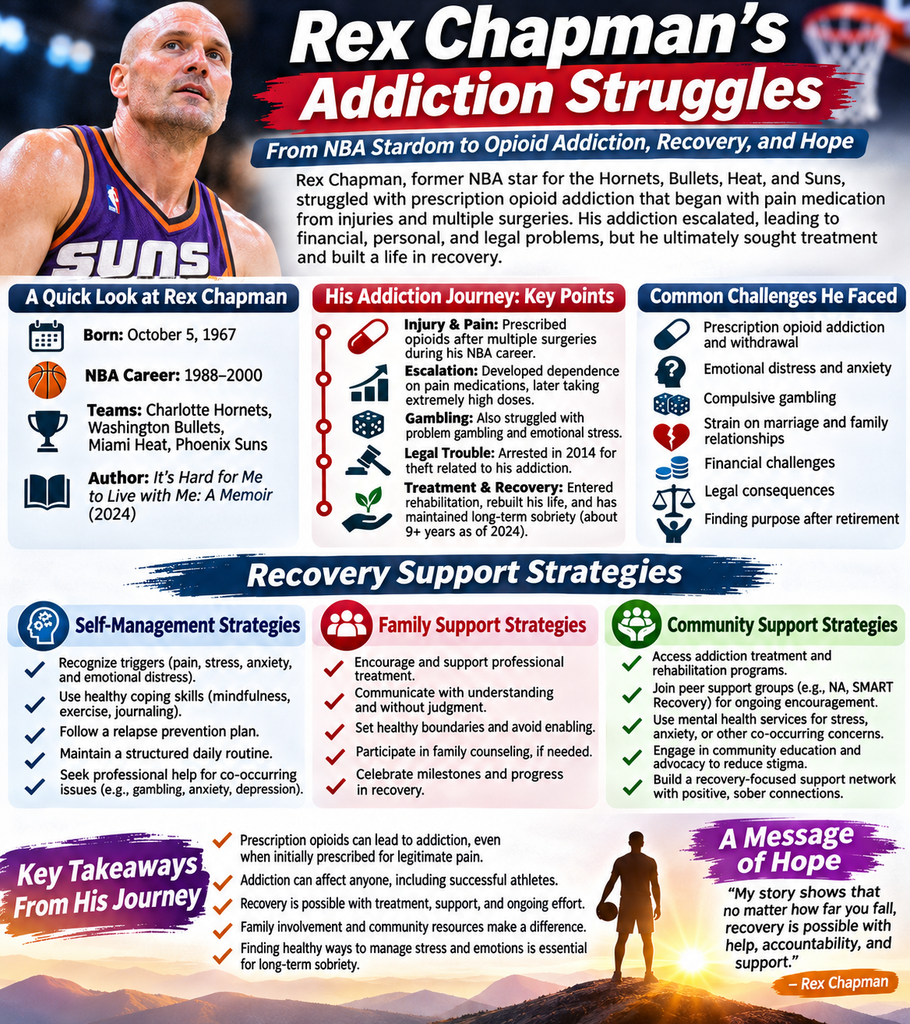
Rex Chapman was once one of the most exciting players in professional basketball. Known for his athleticism, shooting, and competitive spirit, the former NBA star built a successful career with the Charlotte Hornets, Washington Bullets, Miami Heat, and Phoenix Suns. However, behind his accomplishments on the basketball court, Chapman faced a devastating struggle with prescription opioid addiction that affected his health, relationships, finances, and personal life.
What began with pain medication following injuries and surgeries eventually developed into a serious substance use disorder. Chapman’s addiction continued after his retirement from professional basketball, contributing to financial difficulties, isolation, and legal consequences.
His journey eventually led him to seek treatment and begin rebuilding his life. By publicly discussing his experiences, Chapman has helped raise awareness about prescription opioid addiction, the dangers of untreated substance use disorders, and the importance of recovery support.
His story provides valuable lessons about self-management, family involvement, professional treatment, and community resources that can help individuals overcome addiction and restore hope.
Rex Chapman’s Early Life and NBA Success
Born October 5, 1967 | Former NBA shooting guard
Rex Chapman became a standout basketball player at the University of Kentucky before being selected eighth overall by the Charlotte Hornets in the 1988 NBA Draft.
Throughout his 12-season NBA career, Chapman earned recognition for his scoring ability, three-point shooting, and memorable performances.
He played for several professional teams and became particularly well-known for his years with the Phoenix Suns.
However, the physical demands of professional basketball exposed him to injuries and surgeries that would later become important elements of his addiction story.
Like many professional athletes, Chapman faced pressure to perform while managing physical pain and the expectations of elite competition.
His experience demonstrates how even successful athletes can become vulnerable to prescription medication misuse.
How Prescription Pain Medication Contributed to Addiction
Chapman has publicly described developing an opioid addiction after receiving prescription pain medication for injuries and surgeries during his basketball career.
Over time, his use escalated, and he developed dependence on opioid medications.
Prescription opioids can effectively relieve certain types of pain, but they also carry risks of tolerance, physical dependence, and opioid use disorder.
Understanding how opioid addiction develops
- Initial exposure: A person receives an opioid medication for legitimate medical pain management.
- Tolerance: Repeated use may reduce the medication’s effects, sometimes leading to escalating doses.
- Physical dependence: The body adapts to the drug, causing withdrawal symptoms when it is reduced or stopped.
- Compulsive use: Some individuals develop opioid use disorder, characterized by impaired control over use despite harmful consequences.
- Behavioral changes: Obtaining and using medication may begin taking priority over relationships, responsibilities, and personal well-being.
Physical dependence alone does not establish addiction. Opioid use disorder involves a broader pattern of problematic use and associated impairment.
Chapman’s experiences illustrate how prescription opioid misuse can progress into a serious medical condition, even when the original medication was prescribed for legitimate reasons.
The Escalation of Opioid Dependence
Chapman’s addiction intensified during the final years of his NBA career and after his retirement in 2000.
In a 2024 PBS interview, Chapman described undergoing seven surgeries during his final three seasons and being prescribed OxyContin. He explained that the medication initially relieved more than physical discomfort. He also experienced emotional relief and a temporary reduction in social anxiety.
Within approximately 18 months of retirement, Chapman reported taking as many as 40 Vicodin tablets and nine OxyContin tablets daily. These were his retrospective accounts of extremely dangerous consumption, not therapeutic doses. PBS
His experiences demonstrate how opioid use can become associated with both physical pain relief and emotional avoidance.
Warning signs of escalating opioid addiction
- Taking larger amounts of medication than intended.
- Experiencing intense cravings or withdrawal symptoms.
- Continuing opioid use despite harmful consequences.
- Spending increasing amounts of time obtaining or using medication.
- Withdrawing from family members and friends.
- Experiencing declining financial stability.
- Neglecting personal and professional responsibilities.
- Using opioids to escape anxiety, depression, or emotional distress.
These symptoms may indicate opioid use disorder and warrant professional evaluation.
Gambling, Emotional Distress, and Co-Occurring Addiction
Chapman’s struggles extended beyond prescription opioids.
He has also discussed problematic gambling, emotional insecurity, and difficulties managing stress.
In his memoir, It’s Hard for Me to Live with Me: A Memoir, co-written with Seth Davis and published in 2024, Chapman examines how his emotional difficulties and addictive behaviors affected his relationships and decision-making.
During interviews, he described turning to gambling as an escape from stress and recognizing that he lacked effective coping strategies for uncomfortable emotions. ABC News+1
Why co-occurring behavioral problems matter
Substance use disorders and gambling problems may share risk factors involving reward processing, impulsivity, emotional regulation, and stress.
When multiple problems occur together, treatment may need to address each one.
Helpful strategies include:
- Screening for gambling disorder and other behavioral addictions.
- Assessing depression, anxiety, and trauma-related symptoms.
- Using cognitive behavioral therapy to address harmful thought patterns.
- Developing financial safeguards and accountability.
- Learning emotional regulation and stress management techniques.
- Establishing alternatives to substance use and gambling.
Treating the underlying emotional and behavioral difficulties can improve long-term recovery outcomes.
The 2014 Arrest: A Turning Point in Chapman’s Life
In September 2014, Chapman was arrested in Scottsdale, Arizona, following allegations that he stole merchandise from an Apple Store and sold the items to a pawn shop.
The incident attracted national attention because of his reputation as a former NBA star.
Chapman later described the arrest as a profoundly humiliating experience, particularly because of its effect on his children and family.
Following the arrest, he entered addiction treatment in Louisville, Kentucky. In March 2016, he received a sentence of 18 months of supervised probation. Cronkite News
Although his arrest became a turning point, individuals should not have to experience legal consequences, homelessness, or severe personal losses before receiving addiction treatment.
Early intervention can prevent serious complications and improve recovery opportunities.
Rehabilitation and the Beginning of Recovery
Chapman has discussed participating in rehabilitation programs more than once before establishing sustained recovery.
His treatment experiences helped him recognize the importance of examining his behavior, understanding emotional triggers, and developing healthier ways of responding to distress.
In a 2024 PBS interview, Chapman reported approximately nine and a half years without opioid use. He emphasized learning to tolerate uncomfortable emotions rather than attempting to escape them through medication. PBS
This shift from avoiding emotions to developing emotional coping skills is an important component of many evidence-based addiction treatments.
Recovery is not simply the absence of substance use. It also involves improving psychological well-being, strengthening relationships, and rebuilding daily functioning.
Self-Management Strategies for Opioid Addiction Recovery
Chapman’s experiences illustrate why recovery requires practical coping skills, professional guidance, and ongoing attention to personal well-being.
The following strategies are general evidence-based recommendations rather than a description of his individual treatment plan.
Recognizing triggers and managing cravings
Individuals recovering from opioid addiction benefit from understanding situations that increase their vulnerability to substance use.
- Identify emotional triggers such as stress, anxiety, loneliness, and frustration.
- Recognize environmental triggers associated with previous substance use.
- Develop a written relapse prevention plan.
- Practice mindfulness, grounding exercises, and urge surfing.
- Contact a recovery sponsor, counselor, or trusted friend when cravings intensify.
- Avoid unnecessary exposure to high-risk situations.
- Seek prompt professional support if substance use resumes.
Building emotional regulation skills
Chapman has emphasized the importance of learning to experience difficult emotions without relying on substances.
Helpful approaches include:
- Cognitive behavioral therapy to identify unhelpful thinking patterns.
- Relaxation techniques to manage anxiety.
- Journaling to recognize emotional triggers.
- Developing problem-solving and communication skills.
- Practicing self-compassion without avoiding accountability.
- Participating in counseling for depression, anxiety, or trauma when indicated.
Establishing healthy daily routines
Consistent routines can help improve stability during recovery.
- Maintain regular sleep and waking schedules.
- Engage in enjoyable physical activity.
- Eat nutritious meals and stay hydrated.
- Establish achievable daily and weekly goals.
- Schedule meaningful social activities.
- Attend treatment appointments and peer support meetings.
- Develop hobbies that provide purpose and enjoyment.
Using evidence-based medications for opioid use disorder
Medications for opioid use disorder (MOUD) can significantly reduce overdose risk and improve treatment retention.
Common treatment options include:
- Buprenorphine: A partial opioid agonist that reduces cravings and withdrawal symptoms.
- Methadone: A full opioid agonist administered through regulated opioid treatment programs for OUD.
- Extended-release naltrexone: An opioid antagonist that blocks opioid effects and requires an appropriate opioid-free interval before initiation.
Medication selection should be individualized through shared decision-making with a qualified clinician.
Importantly, prescribed buprenorphine or methadone treatment is not simply replacing one addiction with another. Physical dependence can occur during appropriate treatment without compulsive misuse, and long-term medication treatment can be lifesaving.
Family Support Strategies: Rebuilding Trust and Relationships
Addiction can affect every member of a family.
Chapman has acknowledged that his substance use contributed to significant difficulties in his marriage and relationships with loved ones.
In a 2024 ABC News interview, he expressed appreciation for his former wife and children while accepting responsibility for the harm associated with his past behavior. ABC News
His experiences demonstrate that recovery often involves repairing relationships and rebuilding trust through consistent behavior over time.
How families can support addiction recovery
- Encourage treatment: Help loved ones locate qualified addiction specialists and appropriate treatment programs.
- Communicate without judgment: Express concern calmly while avoiding blame and humiliation.
- Establish healthy boundaries: Identify behaviors that cannot be accepted while continuing to support recovery.
- Participate in family therapy: Address communication difficulties, unresolved conflict, and emotional injuries.
- Recognize progress: Acknowledge positive changes and meaningful recovery milestones.
- Encourage accountability: Support responsible decision-making and follow-through.
- Seek independent support: Ensure family members have access to counseling and peer support resources.
Rebuilding trust after addiction
Trust often takes time to restore.
Individuals in recovery can demonstrate reliability by maintaining treatment participation, communicating honestly, honoring commitments, and taking responsibility for past actions.
Family members should recognize that forgiveness and reconciliation are personal decisions. Recovery does not obligate anyone to immediately restore a damaged relationship.
Community Support Strategies: Recovery Beyond Rehabilitation
Chapman’s story also illustrates the value of supportive communities.
After achieving sustained recovery, he began speaking publicly about his addiction experiences and participating in discussions about substance use awareness.
In April 2018, Chapman spoke at the University of Southern Indiana about his experience with prescription pain medication addiction and recovery. https://www.14news.com
His willingness to discuss these experiences helped bring attention to the risks of opioid misuse and the importance of seeking treatment.
Community resources that strengthen recovery
- Addiction treatment centers: Provide clinical assessment, outpatient treatment, residential care, and medication management.
- Peer recovery organizations: Offer connection, encouragement, and mutual support.
- Mental health services: Address depression, anxiety, trauma, and other co-occurring conditions.
- Community education programs: Improve awareness of opioid addiction, overdose prevention, and treatment options.
- Family support groups: Help relatives develop coping skills and establish healthy boundaries.
- Recovery-friendly workplaces: Support access to treatment and reduce stigma.
- Athlete assistance programs: Provide confidential behavioral health services and support during career transitions.
The importance of overdose prevention
Communities can also reduce opioid-related deaths by expanding access to naloxone.
Naloxone is a medication that rapidly reverses opioid overdose when administered promptly.
Individuals with opioid use disorder and their loved ones should know how to recognize overdose symptoms, administer naloxone, and contact emergency services.
Overdose risk is particularly high after a period of abstinence because opioid tolerance decreases. Returning to a previously tolerated dose can become fatal.
The Role of Professional Sports Organizations in Addiction Prevention
Chapman’s experiences raise important questions about how professional sports organizations manage injuries, pain, mental health, and substance use.
Athletes may face substantial pressure to recover quickly from injuries and maintain performance.
While prescription opioids can be appropriate for selected acute pain conditions, they require careful prescribing and monitoring.
Sports organizations can improve prevention and treatment by:
- Implementing evidence-based pain management protocols.
- Using nonopioid treatments when clinically appropriate.
- Screening athletes for substance use disorders.
- Providing confidential mental health counseling.
- Educating athletes about medication risks.
- Supporting individuals during retirement and career transitions.
- Reducing stigma associated with behavioral health treatment.
Preventing addiction requires coordinated efforts involving healthcare professionals, athletic organizations, families, and communities.
Rex Chapman’s Recovery Advocacy and Personal Transformation
Following his treatment in 2014, Chapman began rebuilding his personal and professional life.
He became a prominent social media personality and public speaker, using his platform to discuss personal struggles, recovery, and lessons learned.
His 2024 memoir explores his experiences with basketball, gambling, prescription opioid addiction, relationships, and recovery.
In interviews surrounding the book’s publication, Chapman explained that sharing his experiences was partly motivated by a desire to help his children understand his past and see the changes he had made. Arizona Sports
His public discussions emphasize the importance of emotional honesty, accepting responsibility, and seeking help.
Chapman’s transformation demonstrates that individuals can rebuild meaningful lives after serious addiction-related consequences.
Important Lessons From Rex Chapman’s Addiction Journey
Chapman’s experiences offer valuable lessons for individuals, families, healthcare professionals, and communities.
- Prescription medications carry risks. Legitimately prescribed opioids can contribute to opioid use disorder, particularly when use escalates or continues without appropriate monitoring.
- Addiction can affect anyone. Athletic success, financial resources, and public recognition do not eliminate addiction vulnerability.
- Mental health matters. Emotional distress and inadequate coping skills can contribute to problematic substance use.
- Recovery is possible after serious consequences. Legal difficulties and damaged relationships do not necessarily prevent meaningful recovery.
- Families need support. Substance use disorders affect loved ones, making family education and counseling important.
- Evidence-based treatment saves lives. Medications for opioid use disorder, behavioral therapies, and continuing care can improve outcomes.
- Recovery requires ongoing effort. Healthy routines, emotional regulation, and supportive relationships help sustain progress.
- Sharing experiences can reduce stigma. Personal recovery stories may encourage others to seek treatment before addiction causes further harm.
Where to Find Opioid Addiction Treatment and Recovery Support
Individuals experiencing opioid addiction can access confidential treatment information and professional assistance.
National treatment resources
- FindTreatment.gov — Search for substance use and mental health treatment providers.
- SAMHSA National Helpline — Call 1-800-662-HELP (4357) for treatment information and referrals.
- Narcotics Anonymous — Peer recovery support.
- SMART Recovery — Evidence-informed recovery tools and mutual support.
- Nar-Anon Family Groups — Support for families affected by addiction.
For an immediate suspected opioid overdose, call 911, administer naloxone if available, and follow emergency dispatcher instructions.
Conclusion: Rex Chapman’s Journey From Addiction to Recovery
Rex Chapman’s life demonstrates how prescription opioid addiction can develop even among highly successful individuals and lead to serious personal, professional, and legal consequences.
His experiences with repeated surgeries, escalating opioid use, gambling problems, emotional distress, and rehabilitation highlight the complex relationship between physical pain, psychological vulnerability, and substance use disorders.
Yet his story also demonstrates the potential for meaningful recovery.
Through professional treatment, emotional self-awareness, family relationships, and public advocacy, Chapman has worked to rebuild his life and help others understand addiction.
His journey reinforces an essential message: addiction is a treatable medical condition, and recovery becomes more achievable when individuals have access to evidence-based treatment, compassionate family support, and strong community resources.
Recovery does not require perfection. It requires access to treatment, meaningful support, and the willingness to keep making healthier choices.
Rex Chapman’s story reminds us that a person’s past struggles do not have to determine their future. With treatment, accountability, and support, a healthier and more meaningful life is possible.
Frequently Asked Questions and Answers
Rex Chapman’s Personal Addiction Journey
1. Who is Rex Chapman?
Rex Chapman is a former NBA shooting guard born on October 5, 1967, in Bowling Green, Kentucky. He played college basketball at the University of Kentucky before the Charlotte Hornets selected him eighth overall in the 1988 NBA Draft.
During his 12-season NBA career, Chapman became known for his scoring ability, athleticism, and three-point shooting.
After retiring from professional basketball in 2000, he experienced serious personal challenges involving prescription opioid addiction and gambling.
2. What type of addiction did Rex Chapman struggle with?
Chapman has publicly discussed struggling with prescription opioid addiction, particularly involving medications such as OxyContin and Vicodin.
He also experienced problematic gambling, which contributed to financial and emotional difficulties.
His experiences illustrate how substance use disorders and behavioral addictions can coexist and reinforce unhealthy coping patterns.
3. How did Rex Chapman’s opioid addiction begin?
Chapman’s addiction developed after he received prescription opioid pain medications following injuries and multiple surgeries during his NBA career.
He has described experiencing both physical pain relief and emotional relief from these medications.
Over time, his opioid use escalated, and he developed a serious substance use disorder.
His experience demonstrates that opioid addiction can develop even when medications were originally prescribed for legitimate medical conditions.
4. What prescription painkillers did Rex Chapman use?
Chapman has identified OxyContin and Vicodin among the medications involved in his addiction.
OxyContin contains oxycodone, while Vicodin contains hydrocodone combined with acetaminophen.
Both oxycodone and hydrocodone are opioid medications that can cause tolerance, physical dependence, and addiction.
Excessive doses can also cause dangerous respiratory depression and fatal overdose.
5. How severe did Rex Chapman’s opioid addiction become?
In public interviews, Chapman described consuming extremely large amounts of prescription opioid medications.
He reported taking as many as 40 Vicodin tablets and nine OxyContin tablets daily during the most severe period of his addiction.
These quantities represent dangerous misuse, not medically appropriate dosing.
His escalating consumption illustrates the risks associated with uncontrolled opioid use and the importance of early treatment.
6. Did Rex Chapman struggle with gambling addiction?
Yes. Chapman has openly discussed his problems with gambling and the financial consequences associated with his behavior.
Gambling became another way of coping with emotional distress.
Gambling disorder and substance use disorders can share underlying vulnerabilities involving reward processing, impulsivity, and difficulty regulating emotions.
When both conditions occur, comprehensive treatment should address each problem rather than focusing exclusively on substance use.
7. How did addiction affect Rex Chapman’s personal life?
Chapman’s addiction contributed to serious difficulties involving his finances, family relationships, emotional well-being, and personal responsibilities.
He has acknowledged that his behavior affected his marriage and relationships with loved ones.
His experiences demonstrate how opioid addiction can disrupt multiple areas of life, even when someone has achieved significant professional success.
8. Was Rex Chapman arrested because of his addiction?
In September 2014, Chapman was arrested in Scottsdale, Arizona, following allegations that he stole merchandise from an Apple Store and sold the items to a pawn shop.
He later discussed the incident in the context of his struggles with addiction and personal difficulties.
The arrest attracted national attention and became an important turning point in his life.
9. Did Rex Chapman go to rehabilitation?
Yes. Chapman participated in addiction treatment and rehabilitation.
Following his 2014 arrest, he entered a treatment program in Louisville, Kentucky.
He has described the importance of professional treatment, emotional self-awareness, and learning healthier coping strategies.
His experiences emphasize that recovery often requires structured treatment and continuing support.
10. Is Rex Chapman still sober?
Chapman has publicly described achieving sustained recovery from opioid addiction following treatment in 2014.
In interviews during 2024, he reported approximately nine and a half years without opioid use.
His current recovery status cannot be independently confirmed from those earlier statements alone.
His publicly documented recovery demonstrates that meaningful improvement is possible even after severe addiction-related consequences.
Understanding Opioid Addiction and Mental Health
11. Why can prescription opioids become addictive?
Prescription opioids bind to opioid receptors in the brain and nervous system, reducing pain perception.
They can also affect reward pathways and produce pleasurable or calming sensations.
Repeated use may contribute to tolerance and physical dependence. In some individuals, compulsive use develops despite harmful consequences.
Importantly, physical dependence is not identical to addiction. Opioid use disorder involves impaired control over substance use and clinically significant problems.
12. Can someone become addicted to opioids prescribed by a doctor?
Yes. Opioid use disorder can develop in individuals who initially receive medications for legitimate medical reasons.
Risk depends on several factors, including treatment duration, dosage, individual vulnerability, and other medical or psychological conditions.
However, not everyone who receives prescription opioids develops addiction.
Appropriate prescribing, monitoring, patient education, and multimodal pain management can reduce unnecessary risks.
13. What are the warning signs of prescription opioid addiction?
Common warning signs include:
- Taking larger doses than prescribed.
- Using medication more frequently than intended.
- Experiencing intense cravings.
- Continuing opioid use despite negative consequences.
- Spending excessive time obtaining or using medication.
- Neglecting work, family, or personal responsibilities.
- Experiencing withdrawal symptoms when use decreases.
- Repeated unsuccessful attempts to reduce or stop use.
A qualified healthcare professional can evaluate these symptoms and determine whether opioid use disorder is present.
14. How can chronic pain contribute to opioid addiction?
Chronic pain can increase emotional distress, disrupt sleep, and reduce quality of life.
Some individuals begin relying on opioid medications not only for physical pain relief but also to manage emotional discomfort.
This pattern can increase the risk of problematic use.
Effective pain management may involve physical therapy, nonopioid medications, behavioral therapies, and carefully monitored opioid treatment when appropriate.
15. What is the connection between anxiety and opioid addiction?
Some individuals experience temporary relief from anxiety when taking opioids.
However, using opioids to manage emotional distress can reinforce substance use and increase the risk of addiction.
Chapman has publicly discussed experiencing social anxiety and emotional insecurity, which he described as important elements of his addiction journey.
Treating co-occurring anxiety and opioid use disorder can improve recovery outcomes.
16. Why do some professional athletes develop substance use disorders?
Professional athletes may experience risk factors such as:
- Repeated injuries and chronic pain.
- Pressure to return to competition quickly.
- Emotional stress associated with performance.
- Sleep disturbances.
- Anxiety or depression.
- Difficulty transitioning into retirement.
- Social environments where substance use is normalized.
These factors may increase vulnerability but do not mean that professional athletes inevitably develop addiction.
Self-Management and Addiction Recovery
17. What self-management strategies can help someone recovering from opioid addiction?
Effective self-management involves developing healthier behaviors while remaining engaged in appropriate professional treatment.
Helpful strategies include:
- Identifying emotional and environmental triggers.
- Developing a relapse prevention plan.
- Practicing mindfulness and emotional regulation.
- Maintaining consistent sleep and exercise routines.
- Attending counseling and recovery appointments.
- Avoiding high-risk situations.
- Maintaining supportive relationships.
- Seeking help promptly when cravings intensify.
Self-management strategies complement medical treatment rather than replace it.
18. What treatments are effective for opioid use disorder?
Evidence-based treatments include medications for opioid use disorder and behavioral health services.
Common medication options include:
- Buprenorphine: Reduces opioid cravings and withdrawal symptoms.
- Methadone: Helps stabilize opioid dependence and reduces illicit opioid use.
- Extended-release naltrexone: Blocks opioid effects and can help prevent relapse after appropriate withdrawal and an opioid-free interval.
Behavioral therapies, including cognitive behavioral therapy and motivational interviewing, can help individuals develop coping skills and address co-occurring concerns.
Buprenorphine and methadone are associated with substantial reductions in overdose mortality.
These are general treatment options, not a description of medications Chapman personally received.
19. How can someone manage opioid cravings during recovery?
Cravings can be managed through a combination of clinical treatment and behavioral strategies.
- Recognize situations that trigger cravings.
- Practice urge surfing and mindfulness.
- Contact a counselor or recovery support person.
- Participate in enjoyable activities.
- Maintain a structured daily routine.
- Address anxiety, depression, and sleep difficulties.
- Discuss medication treatment with an addiction specialist.
Cravings do not necessarily indicate treatment failure, but persistent or escalating cravings should prompt reassessment of the recovery plan.
20. Can someone recover after multiple rehabilitation attempts?
Yes. Some individuals need more than one treatment episode to achieve sustained recovery.
A recurrence of substance use may indicate that treatment intensity, medication management, mental health services, or social support needs adjustment.
Recovery should be evaluated through improvements in health, functioning, safety, and quality of life rather than an expectation of immediate perfection.
Family and Community Support
21. How can families help someone struggling with opioid addiction?
Families can provide meaningful support by encouraging treatment while maintaining healthy boundaries.
Helpful approaches include:
- Communicating with compassion rather than judgment.
- Encouraging professional assessment and treatment.
- Learning about opioid use disorder.
- Participating in family counseling when appropriate.
- Recognizing recovery progress.
- Avoiding behaviors that reinforce dangerous substance use.
- Keeping naloxone available when overdose risk exists.
- Seeking emotional support for themselves.
Families should understand that they can positively influence recovery, but they cannot control another person’s behavior.
22. How can someone rebuild family trust after addiction?
Rebuilding trust requires consistent behavior over time.
Individuals in recovery can strengthen relationships by communicating honestly, honoring commitments, taking responsibility for past actions, and participating in treatment.
Family counseling may help address unresolved conflict and improve communication.
Trust cannot be demanded, and reconciliation may occur gradually or may not be possible in every relationship.
23. Why is family counseling important during addiction recovery?
Family counseling helps individuals and loved ones understand how addiction affects relationships.
It can improve communication, reduce conflict, establish healthier boundaries, and address emotional injuries.
Family involvement may also improve treatment engagement and help loved ones recognize warning signs of relapse.
However, family therapy should be approached carefully when abuse, coercion, or unsafe relationships are present.
24. How can community resources support opioid addiction recovery?
Community resources provide access to treatment, emotional support, and opportunities for social connection.
Important resources include:
- Addiction treatment centers.
- Medication treatment providers.
- Mental health clinics.
- Peer recovery organizations.
- Family support groups.
- Recovery-friendly workplaces.
- Housing and employment assistance.
- Overdose prevention and naloxone distribution programs.
Strong community support can reduce isolation and improve recovery stability.
25. What recovery support groups are available?
Several organizations provide peer support for people experiencing substance use disorders.
Narcotics Anonymous offers peer-based recovery meetings.
SMART Recovery provides evidence-informed tools for managing addictive behaviors.
Nar-Anon Family Groups supports families affected by another person’s substance use.
FindTreatment.gov helps individuals locate professional addiction treatment services.
Peer support can complement medical treatment, but it should not replace evidence-based medications when they are indicated.
Rex Chapman’s Recovery Advocacy and Legacy
26. Did Rex Chapman write a book about his addiction?
Yes. In 2024, Chapman published It’s Hard for Me to Live with Me: A Memoir, co-written with Seth Davis.
The memoir explores his basketball career, prescription opioid addiction, gambling, emotional struggles, relationships, and recovery.
By discussing difficult aspects of his personal history, Chapman has contributed to broader conversations about addiction and accountability.
27. How has Rex Chapman helped raise addiction awareness?
Chapman has spoken publicly about prescription opioid addiction, gambling, rehabilitation, and emotional health.
He has participated in interviews and public speaking events where he describes the consequences of addiction and the importance of seeking help.
His willingness to share personal experiences may encourage others to recognize substance use problems and pursue treatment.
28. What can professional athletes learn from Rex Chapman’s experience?
Chapman’s journey highlights the importance of injury prevention, responsible pain management, and mental health support.
Athletes can benefit from:
- Understanding the risks associated with prescription opioids.
- Seeking appropriate treatment for chronic pain.
- Receiving confidential mental health services.
- Recognizing early signs of problematic substance use.
- Developing healthy coping skills.
- Planning for retirement and career transitions.
- Maintaining supportive relationships outside professional sports.
Sports organizations can help by creating environments where seeking behavioral health treatment is encouraged rather than stigmatized.
29. What are the most important lessons from Rex Chapman’s addiction struggles?
His experiences demonstrate several important principles.
First, prescription opioid addiction can develop in individuals who initially receive medication for legitimate medical reasons.
Second, addiction can affect relationships, financial stability, mental health, and professional opportunities.
Third, recovery may require professional treatment, emotional self-awareness, and continuing support.
Finally, people experiencing addiction deserve access to evidence-based care, compassion, and opportunities to rebuild their lives.
30. Where can someone find immediate help for opioid addiction?
In the United States, individuals seeking treatment can contact the SAMHSA National Helpline at 1-800-662-HELP (4357) for confidential treatment information and referrals.
They can also visit FindTreatment.gov to locate treatment providers.
For suspected opioid overdose, immediately call 911 and administer naloxone if available. Naloxone can reverse opioid-induced respiratory depression and save lives.
Individuals experiencing suicidal thoughts or emotional crisis can call or text 988 for immediate support.
Conclusion: Recovery Is Possible With Treatment and Support
Rex Chapman’s addiction struggles demonstrate how prescription opioid misuse can develop into a serious substance use disorder, even among successful professional athletes.
His experiences with escalating opioid use, gambling, legal consequences, and damaged relationships illustrate the complex effects of addiction.
However, his publicly documented recovery also highlights the potential for meaningful change.
Through professional treatment, improved emotional coping skills, family support, and community resources, individuals experiencing opioid addiction can work toward healthier and more stable lives.
Rex Chapman’s story reminds us that addiction does not have to define a person’s future. Recovery is possible, and seeking help is a meaningful first step toward change.
Video: