Bob Probert was one of the most formidable and respected enforcers in National Hockey League (NHL) history. Renowned for his physical strength, competitive spirit, and unwavering dedication to his teammates, he established an unforgettable legacy with the Detroit Red Wings and Chicago Blackhawks. Yet beneath his tough exterior and professional success, Probert faced a deeply personal battle with alcohol and drug addiction.
Throughout his career, Probert encountered substance-related legal difficulties, professional suspensions, repeated rehabilitation efforts, and personal setbacks. His experiences illustrate that addiction does not discriminate, affecting individuals regardless of their strength, fame, wealth, or athletic accomplishments.
Probert’s journey also brings attention to the unique challenges professional athletes may face, including physical injuries, chronic pain, intense performance expectations, emotional distress, and social environments where substance use may become normalized.
By examining his struggles, we can gain a deeper understanding of addiction as a chronic, treatable medical condition rather than a personal weakness or moral failure. His story emphasizes the importance of effective self-management, compassionate family involvement, evidence-based treatment, and accessible community resources in promoting long-term recovery and improving overall well-being.
Bob Probert’s Early Life and Rise to NHL Fame
1965–2010 | Detroit Red Wings and Chicago Blackhawks
Bob Probert developed a reputation as one of hockey’s toughest competitors. His physical playing style made him popular among fans, but his personal struggles eventually became as widely discussed as his accomplishments on the ice.
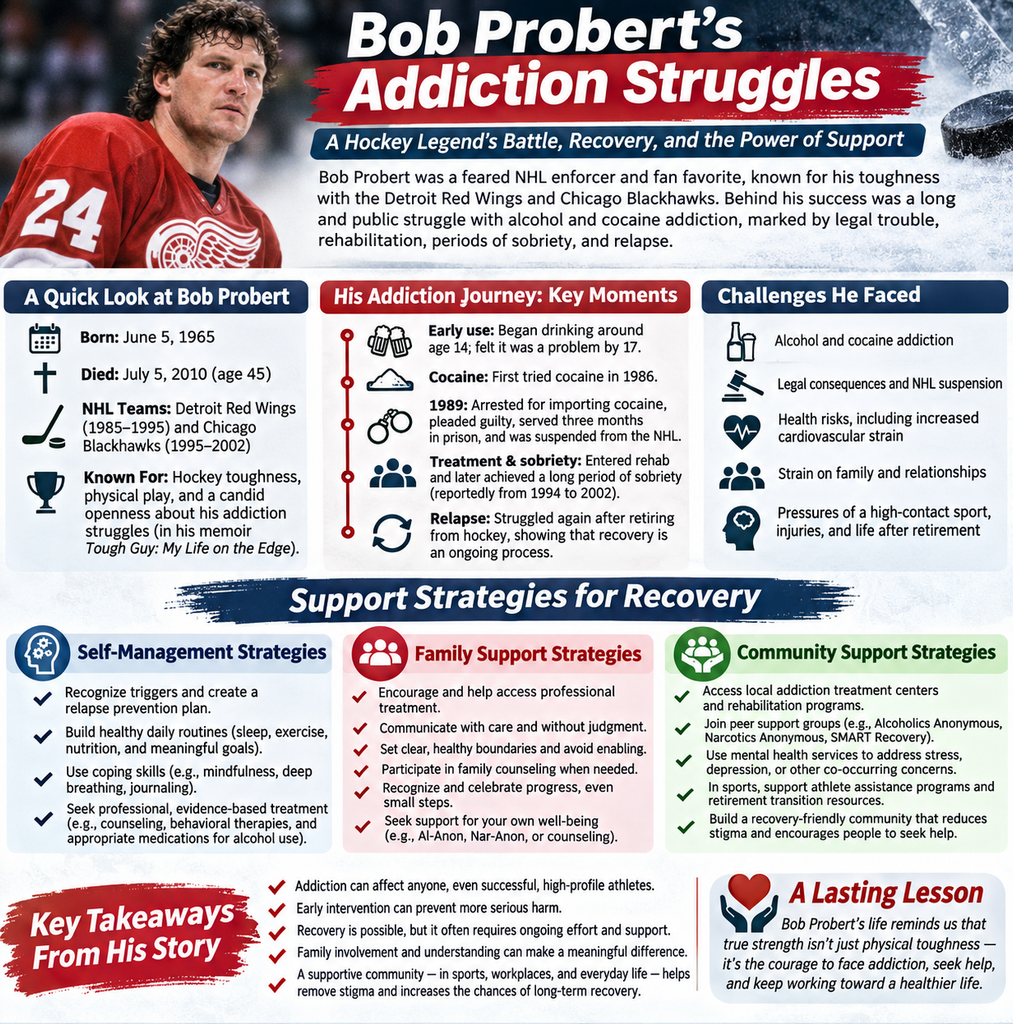
According to his posthumously published memoir, Tough Guy: My Life on the Edge, Probert began drinking at approximately age 14 and believed his drinking had become problematic by age 17. He first tried cocaine during celebrations following a championship victory in 1986. His substance use eventually became increasingly difficult to control. Sportsnet.ca+1
His early experiences illustrate how substance use can develop during adolescence and intensify when combined with social reinforcement, impulsivity, and limited coping strategies.
Several factors can increase addiction vulnerability among professional athletes:
- Physical injuries: Repeated injuries and chronic pain can complicate emotional well-being and substance use.
- Performance pressure: Expectations from coaches, teammates, and fans can contribute to stress.
- Social environments: Frequent celebrations and alcohol-centered gatherings may encourage excessive drinking.
- Emotional regulation: Some individuals use substances to manage anxiety, frustration, loneliness, or other uncomfortable emotions.
- Athletic identity: Individuals may struggle when their self-worth becomes closely connected to performance and public recognition.
These are general risk factors, not confirmed explanations for every aspect of Probert’s addiction.
Alcohol and Cocaine Addiction: A Career in Jeopardy
By the late 1980s, Probert’s alcohol and cocaine use had contributed to serious consequences involving his career, health, and legal status.
In March 1989, he was arrested while crossing the Canadian-American border with cocaine. He subsequently pleaded guilty to importing cocaine, received a three-month prison sentence, and faced suspension from professional hockey.
His struggles also involved repeated admissions to rehabilitation programs. The Washington Post+1
These events demonstrate several ways substance use disorders can disrupt a person’s life:
- Impaired judgment and increased risk-taking.
- Difficulty fulfilling professional responsibilities.
- Legal consequences and financial difficulties.
- Strained relationships with family, friends, and coworkers.
- Repeated substance use despite harmful consequences.
- Difficulty maintaining recovery without adequate long-term support.
Importantly, addiction affects brain systems involved in reward, motivation, learning, and self-control. Repeated substance exposure can reinforce compulsive use, even when someone recognizes its negative consequences.
Rehabilitation, Sobriety, and Relapse
Probert’s recovery journey was not a simple progression from addiction to permanent sobriety.
After his 1989 arrest, he participated in substance use treatment and began rebuilding his career. In a 1990 interview, he described how treatment helped him reconsider his behavior and self-esteem.
He subsequently experienced a substantial period of sobriety. An ESPN profile published in 2001 reported that Probert had remained sober since 1994. However, accounts published after his death described renewed substance use following his retirement from hockey in 2002. UPI Archives+2
His experience illustrates an important principle: recovery is an ongoing process, and recurrence of substance use does not erase earlier progress.
Relapse may occur when individuals encounter stressful life transitions, emotional difficulties, exposure to substances, or changes in their support systems.
For athletes, retirement can be especially challenging because it may involve losing daily structure, professional identity, social connections, and familiar routines.
A recurrence of use should prompt reassessment of treatment needs rather than shame or abandonment of care.
Self-Management Strategies for Addiction Recovery
Self-management involves developing practical skills that help individuals recognize triggers, manage cravings, regulate emotions, and maintain healthier behaviors.
Although these strategies are not part of Probert’s personal treatment plan, they offer valuable lessons for people experiencing similar difficulties.
Recognizing triggers and preventing relapse
Individuals recovering from alcohol or cocaine addiction benefit from identifying circumstances that increase their desire to use substances.
Helpful strategies include:
- Keeping a journal to identify emotional and environmental triggers.
- Recognizing situations involving alcohol, drugs, or unhealthy social influences.
- Developing a written relapse prevention plan with a treatment professional.
- Practicing coping skills such as mindfulness, breathing exercises, and urge surfing.
- Contacting a trusted person when cravings become difficult to manage.
- Avoiding high-risk situations, particularly during early recovery.
Building healthy daily routines
Consistent routines can reduce stress and create stability during recovery.
- Maintain regular sleeping and waking schedules.
- Participate in enjoyable physical activities.
- Eat balanced meals and stay hydrated.
- Establish realistic daily goals.
- Schedule counseling, peer support meetings, and medical appointments.
- Develop hobbies and interests unrelated to substance use.
Seeking evidence-based treatment
Professional treatment is an essential component of recovery for many individuals.
Evidence-based approaches may include cognitive behavioral therapy (CBT), motivational interviewing, contingency management for stimulant use disorder, and relapse prevention counseling.
For alcohol use disorder, medications such as naltrexone, acamprosate, or disulfiram may be appropriate depending on individual circumstances. There is currently no FDA-approved medication specifically for cocaine use disorder, although behavioral treatments can be effective.
Medical safety: People who drink heavily or have developed alcohol dependence should seek medical guidance before abruptly stopping alcohol, because withdrawal can cause seizures or delirium and may become life-threatening.
Family Support Strategies: Helping Without Enabling Addiction
Family relationships can significantly influence recovery outcomes.
Probert’s wife, Dani Probert, publicly discussed the challenges of his addiction and the importance of the years when he maintained sobriety. Her reflections reveal how substance use disorders can affect the entire family, not only the individual experiencing addiction. Sportsnet.ca
Family members may experience fear, uncertainty, emotional exhaustion, and difficulties maintaining trust.
Supportive family involvement can help individuals remain connected to treatment while protecting the well-being of loved ones.
Practical family support strategies
- Encourage professional treatment: Help loved ones identify qualified addiction specialists and appropriate rehabilitation services.
- Communicate without judgment: Express concern using calm, specific language rather than criticism or blame.
- Establish healthy boundaries: Clearly identify unacceptable behaviors while remaining supportive of recovery.
- Avoid enabling behaviors: Do not conceal dangerous substance use or repeatedly shield someone from reasonable consequences.
- Recognize warning signs: Pay attention to changes in mood, secrecy, withdrawal from responsibilities, and renewed substance use.
- Participate in family counseling: Work with professionals to improve communication and address relationship difficulties.
- Celebrate meaningful progress: Recognize treatment participation, improved coping skills, and positive behavioral changes.
Family members should also seek their own emotional support through counseling, education, and peer groups.
Support does not require tolerating abuse, unsafe behavior, or ongoing violations of personal boundaries.
Community Support Strategies: Creating a Recovery-Friendly Environment
Probert’s experience demonstrates why recovery should not depend solely on personal determination.
After his legal difficulties, he received support from people within the hockey community. He also participated in substance use education efforts directed toward young people. UPI Archives+1
Communities can help individuals recover by reducing stigma, expanding access to treatment, and creating opportunities for meaningful connection.
Community resources that strengthen recovery
- Addiction treatment centers: Provide assessment, counseling, medically supervised withdrawal management when necessary, and rehabilitation services.
- Peer recovery groups: Alcoholics Anonymous, Narcotics Anonymous, SMART Recovery, and other groups provide different approaches to mutual support.
- Mental health services: Address co-occurring depression, anxiety, trauma-related symptoms, or other psychiatric concerns.
- Athlete assistance programs: Offer confidential behavioral health services, substance use treatment referrals, and career-transition assistance.
- Family support organizations: Al-Anon, Nar-Anon, and SMART Recovery Family & Friends can help relatives develop healthier coping strategies.
- Community education: School programs, sports organizations, and public health campaigns can improve understanding of addiction.
- Recovery-friendly workplaces: Encourage access to treatment, appropriate accommodations, and nonstigmatizing policies.
For professional athletes, confidential services are particularly important because concerns about reputation, contracts, and career advancement may discourage help-seeking.
The Connection Between Professional Sports, Mental Health, and Addiction
Probert’s story raises broader questions about the relationship between high-contact sports, physical health, and substance use.
Professional hockey players may experience repeated injuries, concussions, chronic pain, and psychological stress.
Research suggests that repetitive head impacts can contribute to neurological problems in some athletes. However, it is important not to assume that a specific neurological condition caused Probert’s substance use disorder.
The relationship between athletic injuries, emotional distress, and addiction is complex and varies among individuals.
Sports organizations can help by:
- Providing confidential substance use and mental health screening.
- Ensuring appropriate treatment of pain and injuries.
- Educating athletes about alcohol and drug-related risks.
- Offering mental health counseling throughout athletic careers.
- Developing structured retirement-transition programs.
- Encouraging coaches and teammates to recognize behavioral health warning signs.
A culture that values emotional well-being alongside physical performance can reduce barriers to seeking treatment.
Bob Probert’s Death and Lasting Legacy
Bob Probert died on July 5, 2010, at age 45 after suffering a heart attack.
At the time of his death, he had been working on his memoir, which was published posthumously in October 2010. The book provided a personal account of his hockey career, substance use, rehabilitation experiences, and relationships. Kirstie McLellan Day
His death was a tragic loss to his family, friends, and the hockey community.
Although chronic alcohol and cocaine use can increase cardiovascular risk, his medical history alone does not establish that addiction directly caused his fatal heart attack.
Probert’s legacy extends beyond his reputation as an NHL enforcer. His story provides important lessons about the vulnerability of professional athletes, the chronic nature of addiction, and the importance of continued support.
Lessons From Bob Probert’s Addiction Journey
Several meaningful lessons emerge from his experiences.
- Addiction does not discriminate. Professional success, physical strength, and financial resources do not eliminate the risk of developing substance use disorders.
- Early intervention matters. Recognizing problematic substance use during adolescence or early adulthood can prevent escalating harm.
- Recovery requires ongoing attention. Long periods of sobriety are meaningful accomplishments, but life transitions may create new vulnerabilities.
- Families need support too. Addiction can affect relationships, emotional health, and family stability.
- Professional treatment can change lives. Evidence-based behavioral therapies, appropriate medications, and continuing care improve recovery opportunities.
- Community acceptance reduces stigma. Individuals are more likely to seek assistance when addiction is understood as a treatable health condition rather than a personal weakness.
Where to Find Addiction Recovery Support
People experiencing alcohol or drug-related difficulties can access confidential treatment information and support.
In the United States, FindTreatment.gov helps individuals locate substance use treatment services.
The SAMHSA National Helpline at 1-800-662-HELP (4357) provides free, confidential treatment referrals and information.
For individuals experiencing emotional distress or suicidal thoughts, the 988 Suicide & Crisis Lifeline is available by calling or texting 988.
Conclusion: Strength Beyond the Hockey Rink
Bob Probert’s life was marked by remarkable athletic achievements, public struggles with addiction, periods of sobriety, and recurring challenges.
His experiences demonstrate that physical toughness and professional accomplishments cannot protect someone from the biological, psychological, and social effects of substance use disorders.
His journey also emphasizes the importance of self-management, family encouragement, evidence-based treatment, and community support in helping individuals build healthier lives.
While Probert experienced significant setbacks, his periods of recovery and willingness to discuss his struggles offer important lessons about the possibilities and difficulties of long-term sobriety.
Ultimately, his story encourages us to look beyond addiction-related behaviors and recognize the individual who deserves understanding, dignity, and access to treatment.
True strength is not measured by how many battles someone wins, but by their willingness to seek help, embrace change, and continue working toward recovery.
Frequently Asked Questions and Answers
Bob Probert’s Personal Addiction Journey
1. Who was Bob Probert?
Bob Probert was a Canadian professional ice hockey player born on June 5, 1965. He played in the NHL from 1985 to 2002, representing the Detroit Red Wings and Chicago Blackhawks.
Known for his physical toughness, fighting ability, and loyalty to teammates, Probert became one of the league’s most recognizable enforcers.
Despite his professional accomplishments, he experienced significant personal difficulties involving alcohol and cocaine addiction.
2. What substances did Bob Probert struggle with?
Probert publicly struggled with two primary substances:
- Alcohol: His drinking began during adolescence and eventually became problematic.
- Cocaine: He began using cocaine during his professional hockey career, leading to serious legal and personal consequences.
Alcohol and cocaine both affect brain reward pathways and can contribute to substance use disorders. Using them together also increases cardiovascular risks because the body can produce cocaethylene, a toxic metabolite associated with additional cardiac harm.
3. When did Bob Probert begin using alcohol and drugs?
According to accounts in his posthumously published memoir, Tough Guy: My Life on the Edge, Probert began drinking around age 14 and recognized that his drinking had become problematic by approximately age 17.
He reportedly first tried cocaine in 1986, during celebrations following a hockey championship.
His experiences illustrate how early substance exposure can increase the risk of developing addiction later in life.
4. How did addiction affect Bob Probert’s NHL career?
Probert’s substance use contributed to professional suspensions, legal difficulties, rehabilitation admissions, and disruptions in his career.
His experiences demonstrate that addiction can interfere with employment and personal responsibilities even when someone possesses exceptional talent and professional success.
5. Was Bob Probert arrested for cocaine possession?
Yes. In March 1989, Probert was arrested at the United States–Canada border after cocaine was discovered in his possession.
He pleaded guilty to importing cocaine and received a three-month prison sentence. The incident also resulted in an NHL suspension.
The arrest became a significant turning point in his public struggles with addiction.
6. Did Bob Probert attend addiction rehabilitation programs?
Yes. Probert participated in substance use treatment and rehabilitation during his career.
Treatment provided opportunities to address problematic substance use and work toward sobriety.
His experiences illustrate why addiction often requires more than a single treatment episode. Continuing care, relapse prevention, and ongoing support can be important components of long-term recovery.
7. Did Bob Probert ever achieve long-term sobriety?
Yes. Probert experienced a substantial period of sobriety during his NHL career.
His wife, Dani Probert, later recalled that he maintained nearly eight years of sobriety, describing those years as especially meaningful for their family.
However, he experienced a significant relapse after retiring from hockey in 2002. His experience shows that even after years of progress, addiction may require continued monitoring and support. Sportsnet.ca
8. Did Bob Probert relapse after completing rehabilitation?
Yes. Probert experienced multiple periods of recovery and recurrence of substance use.
In 1995, he publicly acknowledged that treatment had helped him learn about himself but that he still needed to work on recovery. Daily Iowan
Relapse does not mean that previous treatment was worthless. Instead, it may indicate that a person’s treatment plan, coping strategies, or support network needs to be reassessed.
9. Did Bob Probert’s addiction affect his marriage and family?
Yes. His substance use created challenges within his marriage and family relationships.
His wife, Dani, publicly described the emotional difficulties associated with his addiction while also acknowledging the positive periods of sobriety they experienced together.
Their experiences demonstrate how substance use disorders can affect trust, communication, emotional stability, and family well-being. Sportsnet.ca
10. Did Bob Probert write a book about his addiction?
Yes. His memoir, Tough Guy: My Life on the Edge, was published after his death in 2010.
The book discusses his professional hockey career, alcohol and cocaine use, rehabilitation experiences, relationships, and personal challenges.
It offers readers an opportunity to understand his life beyond his reputation as one of hockey’s toughest players.
Understanding Addiction and Professional Sports
11. Why are professional athletes vulnerable to substance use disorders?
Professional athletes may experience several circumstances that increase vulnerability to substance misuse:
- Chronic pain and repeated injuries.
- Pressure to maintain exceptional performance.
- Stress associated with public expectations.
- Social environments where alcohol use is common.
- Difficulties managing emotional distress.
- Career uncertainty and retirement-related transitions.
These factors do not mean that all athletes develop addiction. Individual vulnerability depends on biological, psychological, environmental, and social influences.
12. Did hockey injuries contribute to Bob Probert’s addiction?
Probert played a physically demanding role that involved frequent fighting and substantial exposure to injuries.
Although chronic pain and repeated injuries can increase vulnerability to substance misuse, available accounts do not establish that injuries were the primary cause of his addiction.
It is important to distinguish documented personal history from general medical risk factors.
13. How does cocaine addiction affect the brain?
Cocaine increases dopamine signaling by blocking dopamine reuptake, particularly within brain reward pathways.
Repeated exposure can produce neuroadaptations associated with:
- Intense cravings.
- Difficulty controlling substance use.
- Changes in motivation and reward processing.
- Increased sensitivity to drug-related cues.
- Sleep disturbances and mood changes.
- Impaired decision-making in certain circumstances.
Cocaine use also increases the risk of arrhythmias, myocardial infarction, stroke, and other cardiovascular complications.
14. What happens when someone uses alcohol and cocaine together?
Combining alcohol and cocaine creates additional medical risks.
When both substances are present, the liver can produce cocaethylene, a metabolite associated with increased cardiotoxicity.
Potential complications include elevated blood pressure, abnormal heart rhythms, seizures, and sudden cardiac events.
The combination may also impair judgment and increase risky behavior.
15. Why can retirement increase relapse vulnerability among athletes?
Retirement can involve major changes in identity, structure, purpose, and social connections.
Athletes may lose the daily routines and relationships that previously supported their well-being.
Helpful transition strategies include career counseling, peer support, mental health treatment, structured activities, and maintaining meaningful social connections.
Probert experienced a significant relapse after his playing career ended, making this an important theme in understanding his journey. Sportsnet.ca
Self-Management and Relapse Prevention
16. What self-management strategies can help someone recovering from addiction?
Effective self-management combines behavioral skills with appropriate professional treatment.
- Identify personal triggers and high-risk situations.
- Develop a written relapse prevention plan.
- Attend scheduled counseling and medical appointments.
- Practice mindfulness, relaxation, and emotional regulation.
- Establish healthy sleep, nutrition, and exercise routines.
- Maintain regular communication with supportive individuals.
- Seek professional assistance when cravings intensify.
Self-management should complement evidence-based care rather than replace it.
17. What treatments are effective for alcohol and cocaine addiction?
For alcohol use disorder, effective approaches include cognitive behavioral therapy, motivational enhancement therapy, and medications such as naltrexone or acamprosate when clinically appropriate.
For cocaine use disorder, contingency management has particularly strong evidence, and cognitive behavioral therapy may also be helpful.
There is currently no FDA-approved medication specifically for cocaine use disorder.
Treatment should be individualized according to substance use severity, medical history, psychiatric conditions, and personal recovery goals.
18. How can someone recognize warning signs of relapse?
Warning signs may include:
- Increasing cravings or thoughts about substance use.
- Reconnecting with people or environments associated with previous use.
- Missing treatment appointments.
- Withdrawing from supportive relationships.
- Experiencing worsening sleep, anxiety, or emotional distress.
- Minimizing the consequences of previous substance use.
- Returning to substance use after a period of abstinence.
Recognizing warning signs early allows individuals and treatment professionals to intervene before additional harm occurs.
19. Can someone recover after multiple relapses?
Yes. Many individuals achieve meaningful recovery after experiencing repeated setbacks.
Recovery may involve modifying treatment, addressing co-occurring mental health conditions, strengthening social support, and developing additional coping strategies.
A recurrence of substance use should be treated as a clinical concern requiring reassessment, not as evidence that someone is incapable of recovery.
Family and Community Support
20. How can families support someone struggling with addiction?
Families can support recovery by combining compassion with clear boundaries.
Helpful approaches include:
- Encouraging professional addiction treatment.
- Listening without criticism or humiliation.
- Participating in family counseling when appropriate.
- Avoiding behaviors that unintentionally reinforce harmful substance use.
- Recognizing treatment participation and positive progress.
- Maintaining consistent expectations and healthy boundaries.
- Seeking emotional support for themselves.
Family involvement can improve treatment engagement, but loved ones cannot control another person’s recovery.
21. What should family members avoid when helping someone with addiction?
Families should avoid shaming, threatening, or humiliating someone because of their substance use.
They should also avoid providing money that is likely to support dangerous substance use, concealing harmful behavior, or ignoring threats to personal safety.
Supportive boundaries help protect both the individual experiencing addiction and their loved ones.
22. How can communities help athletes struggling with substance abuse?
Sports organizations and communities can improve recovery outcomes by providing confidential, accessible services.
These may include:
- Addiction screening and early intervention.
- Mental health counseling.
- Confidential treatment referrals.
- Peer recovery programs.
- Education about alcohol and drug-related risks.
- Career-transition and retirement counseling.
- Family support resources.
Reducing stigma is especially important in competitive sports environments where athletes may feel pressured to appear physically and emotionally invulnerable.
23. Did Bob Probert participate in substance abuse awareness activities?
Yes. Following his 1989 cocaine conviction, Probert participated in educational activities and spoke to young people about the dangers of alcohol and drug use.
His community involvement was among the factors immigration authorities considered when they granted him permission to resume traveling between the United States and Canada in 1992. UPI Archives
His willingness to discuss substance use consequences provided an opportunity to educate others.
24. What community resources are available for people seeking addiction treatment?
Several organizations provide treatment information, referrals, and peer support.
- FindTreatment.gov — Locate substance use and mental health treatment providers.
- Alcoholics Anonymous — Peer support for alcohol recovery.
- Narcotics Anonymous — Peer support for recovery from drug addiction.
- SMART Recovery — Evidence-informed mutual support and self-management tools.
- Al-Anon Family Groups — Support for people affected by another person’s drinking.
In the United States, the SAMHSA National Helpline is available at 1-800-662-HELP (4357) for confidential treatment referrals.
Bob Probert’s Death and Legacy
25. How did Bob Probert die?
Bob Probert died on July 5, 2010, at age 45, after suffering a heart attack.
Although long-term cocaine and excessive alcohol use are associated with increased cardiovascular risks, it would be inaccurate to conclude that addiction directly caused his death without sufficient medical evidence.
26. What can we learn from Bob Probert’s addiction struggles?
Probert’s experiences provide several important lessons about addiction and recovery.
First, substance use disorders can affect anyone, regardless of athletic ability, public recognition, or financial success.
Second, recovery may involve periods of progress and setbacks. Continued treatment and support can help individuals respond to new challenges.
Third, family members and communities play important roles in reducing isolation and encouraging engagement in treatment.
Finally, addiction should be approached as a treatable medical condition rather than a personal weakness.
27. What is Bob Probert’s lasting legacy in addiction awareness?
Probert is remembered as one of professional hockey’s most recognizable enforcers, but his personal struggles also offer lessons about substance use disorders.
His willingness to discuss addiction, his experiences with rehabilitation, and his periods of sobriety demonstrate the importance of acknowledging problems and seeking help.
His story encourages greater understanding of addiction among athletes, families, and communities.
Video: