Why is forgiving yourself for past relapses so important when trying to overcome addiction?
For many individuals recovering from substance use disorders, relapse can trigger overwhelming feelings of guilt, shame, disappointment, and hopelessness. After weeks, months, or even years of sobriety, returning to substance use may feel like losing everything they worked to achieve.
However, a relapse does not erase previous progress, eliminate personal growth, or mean that recovery is impossible.
Addiction is a treatable medical condition that can involve recurring symptoms and periods of improvement. Returning to substance use can signal that a treatment plan needs additional support, adjustments, or renewed attention to emotional and environmental triggers.
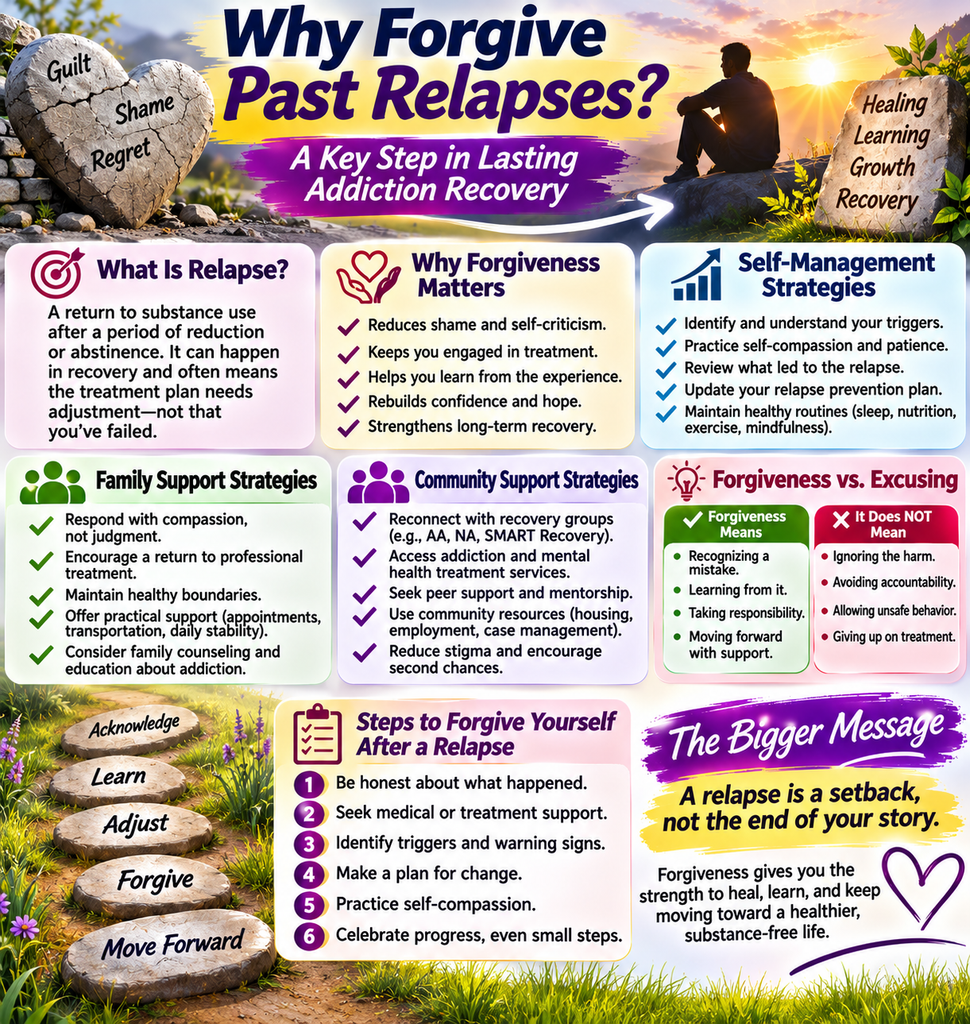
Forgiving past relapses does not mean ignoring consequences or avoiding responsibility. Instead, it involves recognizing mistakes, learning from experiences, and developing healthier strategies for moving forward.
Self-forgiveness, compassionate family relationships, and supportive communities can help reduce shame, encourage treatment engagement, and strengthen long-term recovery.
Understanding Relapse in Addiction Recovery
Relapse refers to a return to substance use after a period of reduction or abstinence. Not every episode of substance use represents a complete return to previous patterns, and treatment goals may differ among individuals.
Recovery is often described as a process rather than a single event.
Some individuals achieve sustained recovery without returning to substance use, while others experience setbacks before establishing long-term stability.
Why Relapses May Occur
Several biological, psychological, and environmental factors can contribute to relapse:
- Brain changes: Repeated substance exposure can affect reward processing, motivation, stress responses, and decision-making.
- Emotional distress: Anxiety, depression, grief, and unresolved trauma may increase vulnerability.
- Environmental triggers: Returning to places or social situations associated with previous substance use can increase cravings.
- Limited coping skills: Difficulty managing stress or uncomfortable emotions may contribute to renewed substance use.
- Social isolation: Lack of supportive relationships can increase vulnerability during challenging periods.
- Treatment interruptions: Discontinuing medication, counseling, or recovery support may increase risk.
Understanding these influences helps individuals recognize that relapse is a clinical concern requiring attention rather than proof of personal failure.
Why Forgiving Past Relapses Matters
Self-forgiveness is an important emotional skill that can help individuals move beyond shame and remain engaged in recovery.
When people repeatedly blame themselves for past substance use, they may begin to believe that meaningful change is impossible.
This belief can discourage treatment participation and increase emotional distress.
Reducing Shame and Self-Criticism
Guilt and shame are related but different emotional experiences.
Guilt generally involves recognizing that a particular behavior was harmful.
Shame involves believing that one’s entire identity is defective or unworthy.
For example:
- Guilt: “I returned to drinking, and I need to understand what happened.”
- Shame: “I relapsed because I am a failure.”
Guilt may encourage accountability and behavior change, while persistent shame can contribute to withdrawal, hopelessness, and avoidance.
Self-forgiveness helps individuals separate their identity from their past behavior.
Encouraging Continued Treatment
Individuals who believe they have permanently failed may avoid counseling, recovery meetings, or medical appointments.
Self-forgiveness can help them recognize that returning to treatment is a constructive response.
It encourages individuals to ask:
- What circumstances contributed to my relapse?
- Which warning signs did I overlook?
- What support was missing?
- How can I strengthen my recovery plan?
- What can I do differently moving forward?
These questions promote problem-solving rather than self-punishment.
Rebuilding Confidence
Relapse may damage self-confidence and create fear about future setbacks.
Forgiveness helps individuals recognize past achievements and set realistic expectations.
Recovery progress may include improved emotional awareness, healthier relationships, increased treatment participation, and stronger coping skills.
These accomplishments remain meaningful even when setbacks occur.
Self-Management Strategies: Learning From Relapse Without Shame
Self-management involves developing practical skills to recognize triggers, regulate emotions, and maintain recovery activities.
After a relapse, individuals may benefit from reviewing what happened and developing a revised treatment plan.
Practice Self-Compassion
Self-compassion involves responding to personal difficulties with understanding rather than harsh criticism.
Helpful practices include:
- Acknowledging relapse without minimizing its seriousness.
- Avoiding negative labels such as “failure” or “hopeless.”
- Recognizing that recovery involves learning and behavioral change.
- Speaking to yourself with the same compassion you would offer a loved one.
- Focusing on immediate actions that support safety and recovery.
Self-compassion does not eliminate accountability. It creates an emotional foundation for constructive change.
Identify Relapse Triggers
Understanding the circumstances surrounding relapse can help prevent future episodes.
Common triggers include:
- Emotional stress or unresolved conflict.
- Loneliness and social isolation.
- Exposure to alcohol or drugs.
- Sleep deprivation and physical exhaustion.
- Relationship difficulties.
- Financial pressure.
- Overconfidence about managing high-risk situations.
A recovery journal can help identify recurring patterns and early warning signs.
Develop a Personalized Relapse Prevention Plan
A relapse prevention plan should include practical steps for managing cravings and high-risk situations.
Important components include:
- A list of personal triggers.
- Early warning signs of emotional or behavioral changes.
- Healthy coping strategies.
- Contact information for trusted support people.
- Scheduled counseling or recovery appointments.
- Emergency resources for substance-related crises.
- A plan for promptly reconnecting with treatment after substance use.
For opioid use disorder, medications such as buprenorphine and methadone can reduce overdose risk and support long-term recovery.
Establish Healthy Daily Routines
Consistent routines can help reduce stress and support emotional stability.
Recommended practices include:
- Maintaining regular sleep schedules.
- Participating in physical activity.
- Eating balanced meals.
- Practicing mindfulness or relaxation.
- Attending treatment and peer support meetings.
- Developing meaningful hobbies.
- Setting achievable daily goals.
Small, consistent behaviors can strengthen confidence and engagement in recovery.
Family Support Strategies: Forgiveness Without Enabling
Families often experience fear, disappointment, anger, and exhaustion when a loved one returns to substance use.
These emotions are understandable, especially when relapse has affected trust, finances, relationships, or household stability.
However, responding with humiliation or rejection may increase shame and discourage engagement in treatment.
Communicate With Compassion
Supportive communication can encourage individuals to discuss setbacks honestly.
Families can:
- Listen without immediately criticizing.
- Express concern using respectful language.
- Encourage professional treatment.
- Recognize efforts to return to recovery.
- Avoid repeatedly bringing up past mistakes during unrelated disagreements.
- Discuss safety concerns calmly and directly.
For example, a family member might say:
“I know this setback has been difficult. I care about your recovery, and I want to help you reconnect with treatment. We also need to talk about how to keep everyone safe.”
This approach combines empathy with accountability.
Establish Healthy Boundaries
Forgiveness does not require accepting harmful behavior.
Families may need to establish boundaries that protect emotional, physical, and financial well-being.
Healthy boundaries include:
- Refusing to provide money for substance use.
- Protecting children from unsafe situations.
- Establishing expectations for respectful communication.
- Encouraging treatment participation.
- Seeking professional assistance when safety is threatened.
- Maintaining personal mental health support.
Boundaries should focus on safety and realistic expectations rather than punishment.
Rebuild Trust Gradually
Trust may take time to restore after repeated relapses.
Individuals can rebuild trust through consistent behavior, honest communication, and engagement in treatment.
Families should recognize progress while allowing themselves time to process previous experiences.
Forgiveness and restored trust are not necessarily the same thing.
A person may forgive a loved one while maintaining boundaries until meaningful changes occur.
Encourage Family Counseling
Family therapy can help address unresolved conflicts and improve communication.
Potential benefits include:
- Understanding addiction and relapse.
- Reducing blame and resentment.
- Developing healthier boundaries.
- Improving conflict resolution.
- Rebuilding emotional connections.
- Creating shared expectations for recovery support.
Family members may also benefit from individual counseling or peer support groups.
Community Support Strategies: Creating Second Chances
Communities play an important role in helping individuals recover from relapse.
Stigma, discrimination, and limited access to treatment can make it difficult for people to seek help after returning to substance use.
Supportive communities can encourage recovery by providing accessible healthcare, peer relationships, and opportunities to rebuild stability.
Expand Access to Addiction Treatment
Communities can improve recovery outcomes by offering:
- Affordable outpatient and residential treatment.
- Medication treatment for opioid and alcohol use disorders.
- Mental health counseling.
- Trauma-informed healthcare.
- Peer recovery coaching.
- Transportation assistance.
- Recovery housing.
- Crisis intervention services.
Treatment programs should encourage individuals to return after setbacks rather than treating relapse as a reason for permanent exclusion.
Promote Peer Recovery Support
Peer support groups provide opportunities to connect with people who understand the challenges of addiction.
Helpful organizations include:
- Alcoholics Anonymous (AA): Peer support for individuals recovering from alcohol problems.
- Narcotics Anonymous (NA): Support for people recovering from drug addiction.
- SMART Recovery: Skills-based approaches to managing addictive behaviors.
- Recovery Dharma: Mindfulness-based peer recovery support.
- LifeRing Secular Recovery: Peer support emphasizing personal empowerment.
Recovery communities can reduce isolation and encourage continued engagement in treatment.
Reduce Addiction Stigma
Stigmatizing language may discourage people from seeking treatment after relapse.
Communities can promote more supportive attitudes by:
- Using person-first language.
- Educating the public about substance use disorders.
- Recognizing addiction as a treatable medical condition.
- Encouraging compassionate healthcare practices.
- Sharing recovery stories responsibly.
- Supporting employment and housing opportunities for people in recovery.
Encourage Meaningful Opportunities
Employment, education, volunteering, and community participation can help individuals rebuild confidence.
Recovery involves more than avoiding substances. It also includes developing purpose, stability, relationships, and quality of life.
The Difference Between Forgiveness and Excusing Relapse
One common misconception is that forgiving relapse means accepting repeated substance use without consequences.
However, forgiveness and accountability can exist together.
| Forgiveness | Excusing harmful behavior |
|---|---|
| Recognizes that people can change | Ignores the need for change |
| Encourages responsibility | Minimizes consequences |
| Supports treatment engagement | May discourage addressing problems |
| Allows healthy boundaries | May overlook unsafe behavior |
| Focuses on learning and growth | Avoids examining what happened |
Self-forgiveness involves acknowledging harmful behavior while remaining committed to healthier choices.
It does not require others to forgive immediately, restore trust, or remain in unsafe relationships.
How to Forgive Yourself After a Relapse
Self-forgiveness is often a gradual process.
- Acknowledge what happened. Recognize the relapse without denial or excessive self-criticism.
- Prioritize safety. Seek medical help when needed, especially if overdose, severe withdrawal, or psychiatric symptoms are possible.
- Reconnect with treatment. Contact an addiction professional, counselor, or recovery support person.
- Identify contributing factors. Examine triggers, emotional stressors, and gaps in the previous recovery plan.
- Take responsibility. Address harmful consequences and make appropriate efforts to repair relationships.
- Practice self-compassion. Avoid defining your entire identity by one episode of substance use.
- Set realistic recovery goals. Focus on manageable steps rather than expecting immediate perfection.
- Recognize continued progress. Acknowledge skills, insights, and positive changes developed during previous recovery efforts.
The goal is not to forget the relapse. It is to learn from the experience without allowing shame to prevent further progress.
Why Shame Can Increase the Risk of Future Relapse
Shame can create a harmful emotional cycle.
How shame may reinforce substance use
Return to substance use
Guilt, shame, and self-criticism
Withdrawal from treatment and support
Increased distress and vulnerability
This pattern can increase the likelihood of further substance use.
Self-compassion, professional treatment, and supportive relationships can help interrupt this cycle.
When individuals feel safe discussing relapse, they may be more willing to seek assistance and address problems before they escalate.
Forgiving Relapse While Maintaining Accountability
Forgiveness should be accompanied by responsibility and behavioral change.
Individuals can demonstrate accountability by:
- Being honest about substance use.
- Returning to professional treatment.
- Following an individualized recovery plan.
- Addressing financial or interpersonal harm when appropriate.
- Respecting family boundaries.
- Developing healthier coping strategies.
- Maintaining consistent communication with support systems.
Accountability helps transform regret into constructive action.
For families, accountability also means recognizing that recovery is the individual’s responsibility, even when loved ones provide encouragement.
Important Safety Considerations After Relapse
Returning to substance use can be especially dangerous after a period of abstinence because tolerance may decrease.
This is particularly important for opioids.
A previously tolerated dose may cause a fatal overdose after a period without opioid use.
Important precautions include:
- Seek prompt medical assessment after an overdose or serious substance-related event.
- Keep naloxone available when opioid exposure is possible.
- Avoid using substances alone.
- Consider evidence-based medication treatment for opioid use disorder.
- Obtain medical supervision for potentially dangerous alcohol or benzodiazepine withdrawal.
- Contact a healthcare professional if depression, suicidal thoughts, or severe psychiatric symptoms occur.
Forgiveness should never replace immediate medical attention when someone is in danger.
Lessons for Individuals, Families, and Communities
Forgiving past relapses can help create a healthier recovery environment.
Several principles are especially important.
Recovery progress is not erased by setbacks. Previous periods of abstinence, treatment participation, and personal growth remain meaningful.
Shame can interfere with treatment. Compassionate responses may help individuals remain engaged in recovery.
Forgiveness does not eliminate accountability. People remain responsible for addressing harmful behavior and making constructive changes.
Families deserve support. Loved ones can offer compassion while maintaining boundaries and protecting their well-being.
Communities can create opportunities for renewed recovery. Accessible treatment, peer support, stable housing, and reduced stigma can help individuals rebuild their lives.
There is no single recovery pathway. Treatment should reflect the individual’s medical needs, personal goals, and circumstances.
Conclusion: Forgiving the Past to Strengthen the Future
Forgiving past relapses is not about pretending that substance use never happened or minimizing its consequences.
It is about recognizing that recovery is an ongoing process of learning, responsibility, emotional healing, and personal growth.
People who experience relapse may struggle with guilt, shame, and fear that they have disappointed themselves or their loved ones. However, remaining trapped in self-criticism can make it harder to seek treatment and rebuild confidence.
Through self-management, compassionate family relationships, professional addiction treatment, and supportive communities, individuals can move beyond past setbacks and strengthen their recovery.
Forgiveness creates space for accountability without allowing shame to define the future.
A relapse may be part of someone’s history, but it does not have to determine the rest of their story. Recovery remains possible, and every new step toward healing matters.
Addiction Recovery Resources
For people seeking help after relapse:
- SAMHSA National Helpline: 1-800-662-HELP (4357) for confidential treatment referrals.
- 988 Suicide & Crisis Lifeline: Call or text 988 for immediate emotional or mental health crisis support.
- SMART Recovery: Recovery meetings and coping resources.
- FindTreatment.gov: Find substance use treatment services.
- Narcotics Anonymous: Peer recovery support meetings.
Frequently Asked Questions and Answers
Understanding Relapse and Self-Forgiveness
1. Why is it important to forgive yourself after an addiction relapse?
Forgiving yourself after a relapse helps reduce shame, rebuild confidence, and encourage continued participation in recovery.
Individuals who experience relapse may feel disappointed, guilty, or hopeless. Excessive self-criticism can increase emotional distress and discourage people from seeking treatment.
Self-forgiveness allows individuals to acknowledge what happened, take responsibility, and focus on healthier choices.
Forgiveness does not mean ignoring relapse. It means learning from the experience without allowing it to define your future.
2. Does relapse mean addiction recovery has failed?
No. A return to substance use does not automatically mean that recovery has failed.
Substance use disorders are treatable conditions that may involve recurring symptoms and setbacks.
Relapse can indicate that additional treatment, improved coping strategies, or changes to the recovery plan are needed.
Previous progress, including periods of abstinence, improved relationships, and healthier behaviors, remains meaningful.
3. What is the difference between guilt and shame after relapse?
Guilt involves recognizing that a particular behavior was harmful, while shame involves believing that one’s entire identity is defective.
For example:
- Guilt: “I returned to drinking, and I need to understand why.”
- Shame: “I relapsed because I am a failure.”
Guilt can encourage responsibility and constructive change. Persistent shame may increase emotional distress, isolation, and avoidance of treatment.
Self-forgiveness helps individuals separate their behavior from their personal worth.
4. Does forgiving yourself mean excusing harmful behavior?
No. Self-forgiveness and accountability can coexist.
Forgiveness involves acknowledging the relapse, recognizing its consequences, and making constructive changes.
Excusing harmful behavior involves minimizing consequences or avoiding responsibility.
A person can forgive themselves while remaining committed to treatment, repairing relationships, and preventing future substance use.
5. Why do people experience repeated relapses?
Repeated relapses may occur because of interacting biological, psychological, and environmental factors.
Common contributors include:
- Intense cravings and changes in brain reward pathways.
- Emotional distress, anxiety, or depression.
- Exposure to environments associated with substance use.
- Limited coping skills.
- Social isolation.
- Interrupted treatment.
- Untreated co-occurring psychiatric conditions.
- Housing or financial instability.
Repeated relapse may indicate a need for more comprehensive treatment rather than greater self-punishment.
6. Can self-forgiveness improve long-term addiction recovery?
Self-forgiveness may support recovery by reducing shame, improving emotional regulation, and encouraging individuals to reconnect with treatment.
It can also help people develop a more balanced understanding of their experiences.
However, self-forgiveness alone does not prevent relapse. Long-term recovery often requires evidence-based treatment, coping skills, supportive relationships, and ongoing monitoring.
Self-Management Strategies After Relapse
7. How can someone begin forgiving themselves after a relapse?
Self-forgiveness often begins with acknowledging what happened without excessive self-criticism.
Helpful steps include:
- Recognize the relapse honestly.
- Prioritize immediate medical and personal safety.
- Identify emotional and environmental triggers.
- Contact a healthcare professional or recovery supporter.
- Develop a revised relapse prevention plan.
- Practice self-compassion.
- Focus on manageable recovery goals.
The goal is to transform regret into constructive action.
8. What self-management strategies help prevent future relapses?
Effective self-management strategies include:
- Maintaining consistent sleep and exercise routines.
- Attending addiction treatment appointments.
- Taking prescribed medications as directed.
- Recognizing cravings and emotional triggers.
- Practicing mindfulness and stress reduction.
- Avoiding high-risk environments.
- Developing healthy social connections.
- Keeping a written relapse prevention plan.
These strategies are most effective when combined with appropriate professional treatment.
9. How can someone manage cravings after returning to recovery?
Cravings may continue after a person stops using substances.
Helpful techniques include:
- Urge surfing: Observing cravings without acting on them.
- Delay techniques: Waiting while using a coping strategy.
- Distraction: Participating in exercise, hobbies, or meaningful activities.
- Cognitive restructuring: Challenging thoughts that encourage substance use.
- Peer support: Contacting a trusted recovery supporter.
- Medication treatment: Using evidence-based medications when clinically appropriate.
Persistent cravings should be discussed with an addiction treatment professional.
10. How can journaling help with self-forgiveness and relapse prevention?
Journaling provides an opportunity to identify emotional patterns, recognize triggers, and reflect on recovery progress.
Useful journaling questions include:
- What happened before my relapse?
- What emotions was I experiencing?
- Which warning signs did I overlook?
- What support did I need?
- What did I learn?
- What can I do differently next time?
Writing can help individuals process emotions without becoming overwhelmed by self-criticism.
11. How can someone rebuild confidence after repeated relapses?
Confidence often develops through consistent actions rather than immediate emotional changes.
Helpful approaches include:
- Setting small, achievable daily goals.
- Attending treatment consistently.
- Recognizing previous accomplishments.
- Developing healthy coping skills.
- Rebuilding supportive relationships.
- Celebrating progress without expecting perfection.
- Seeking counseling for persistent shame or hopelessness.
Recovery confidence grows as individuals make constructive decisions over time.
12. How long does it take to forgive yourself after a relapse?
There is no universal timeline for self-forgiveness.
Some individuals begin feeling more hopeful after reconnecting with treatment, while others need additional time to process guilt, shame, and relationship difficulties.
The process may be influenced by the severity of the relapse, previous experiences, emotional health, and available support.
Professional counseling can help when self-blame interferes with daily functioning or recovery.
Family Support and Rebuilding Trust
13. Why should families consider forgiving a loved one after relapse?
Forgiveness may help families reduce resentment, improve communication, and create a more supportive recovery environment.
However, forgiveness is a personal choice and should never be demanded.
Families can encourage treatment and express compassion while maintaining boundaries.
Forgiveness does not require immediately restoring trust or accepting unsafe behavior.
14. How can families respond when a loved one relapses?
Families can respond with compassion while addressing immediate safety concerns.
Helpful strategies include:
- Remaining calm when possible.
- Avoiding humiliation or threatening language.
- Encouraging professional assessment.
- Discussing what contributed to the relapse.
- Supporting a return to treatment.
- Maintaining healthy boundaries.
- Seeking family counseling when needed.
A supportive response can encourage honesty and reduce fear about asking for help.
15. What should families avoid saying after a relapse?
Statements that label someone as hopeless or permanently unsuccessful may increase shame.
Examples to avoid include:
- “You will never change.”
- “You ruined everything.”
- “You are a failure.”
- “All your progress was worthless.”
More constructive communication might include:
“I am concerned about what happened. I want you to be safe, and I hope you will reconnect with treatment. We also need to discuss how to prevent this from happening again.”
16. Can families forgive someone without trusting them immediately?
Yes. Forgiveness and trust are separate processes.
Forgiveness may involve releasing some resentment, while trust typically requires consistent behavior over time.
Families can forgive while maintaining boundaries related to finances, household safety, communication, and treatment participation.
Trust should be rebuilt gradually through honesty, accountability, and meaningful behavioral change.
17. How can family counseling help after repeated relapses?
Family counseling can help individuals and loved ones address emotional distress, communication difficulties, and unresolved conflicts.
Potential benefits include:
- Understanding addiction and relapse.
- Reducing blame and resentment.
- Establishing healthy boundaries.
- Improving communication.
- Rebuilding trust.
- Developing realistic expectations.
- Supporting the emotional well-being of family members.
Family counseling can be beneficial even when the individual experiencing addiction is not ready to participate.
18. How can families protect their emotional health while supporting recovery?
Family members should recognize that they cannot control another person’s substance use.
Healthy self-care strategies include:
- Attending support groups.
- Seeking individual counseling.
- Maintaining personal routines and relationships.
- Setting financial and emotional boundaries.
- Protecting children from unsafe situations.
- Recognizing when professional intervention is necessary.
Supporting a loved one should not require sacrificing personal safety or well-being.
Community Support and Second Chances
19. How can communities help individuals recover after relapse?
Communities can reduce barriers to recovery by providing accessible treatment and supportive services.
Important resources include:
- Affordable addiction treatment programs.
- Medication treatment for opioid and alcohol use disorders.
- Mental health counseling.
- Peer recovery coaching.
- Recovery housing.
- Employment assistance.
- Transportation services.
- Overdose prevention education.
Supportive communities encourage individuals to return to treatment rather than treating relapse as permanent failure.
20. Why are peer support groups important after relapse?
Peer support groups provide opportunities to connect with people who understand addiction and recovery.
They can reduce isolation, encourage accountability, and provide practical coping strategies.
Examples include Alcoholics Anonymous, Narcotics Anonymous, SMART Recovery, Recovery Dharma, and LifeRing Secular Recovery.
Peer support can complement professional addiction treatment.
21. How does addiction stigma affect people who relapse?
Stigma can discourage individuals from seeking help because they fear criticism, discrimination, or rejection.
People experiencing relapse may avoid healthcare appointments or recovery meetings when they expect judgment.
Communities can reduce stigma by:
- Using respectful, person-first language.
- Educating the public about substance use disorders.
- Encouraging treatment without humiliation.
- Recognizing recovery progress.
- Supporting access to healthcare, housing, and employment.
22. Can returning to treatment after relapse improve recovery outcomes?
Yes. Reengaging with professional treatment provides an opportunity to reassess the individual’s needs and adjust the recovery plan.
Treatment changes may include medication adjustments, increased counseling, more intensive outpatient care, or additional recovery support.
For opioid use disorder, buprenorphine and methadone are evidence-based medications that reduce overdose mortality.
Prompt treatment engagement can help reduce the risks associated with continued substance use.
Safety, Accountability, and Long-Term Recovery
23. Is relapse more dangerous after a long period of sobriety?
Yes, particularly with opioids.
After a period of abstinence, opioid tolerance may decrease. Returning to a previously tolerated dose can cause a life-threatening overdose.
Important precautions include:
- Keeping naloxone available.
- Avoiding substance use alone.
- Seeking prompt medical assessment.
- Considering medication treatment for opioid use disorder.
- Recognizing that alcohol and benzodiazepine withdrawal can require medical supervision.
Anyone experiencing a suspected overdose should receive immediate emergency assistance.
24. What is the difference between a lapse and a relapse?
The terms are used differently across treatment settings.
A lapse often refers to a brief episode of substance use after abstinence.
A relapse may describe a more sustained return to previous patterns of use.
However, there is no universally accepted distinction, and both situations deserve attention.
Even a single episode of opioid use can be dangerous because of reduced tolerance or exposure to fentanyl.
25. Can someone recover after multiple relapses?
Yes. Individuals can achieve meaningful recovery after repeated returns to substance use.
Multiple relapses may indicate the need for additional treatment, more intensive services, medication adjustments, or improved support systems.
Recovery outcomes vary, and no single approach works for everyone.
Continued engagement with evidence-based treatment can improve opportunities for stability.
26. What is the most important lesson about forgiving past relapses?
The central lesson is that self-forgiveness and accountability are not opposites.
Individuals can acknowledge the seriousness of relapse, take responsibility for consequences, and still recognize their capacity for change.
Forgiveness helps create emotional space for learning, while professional treatment and recovery support provide practical tools for moving forward.
A relapse may be part of someone’s recovery history, but it does not have to determine their future.
Video: