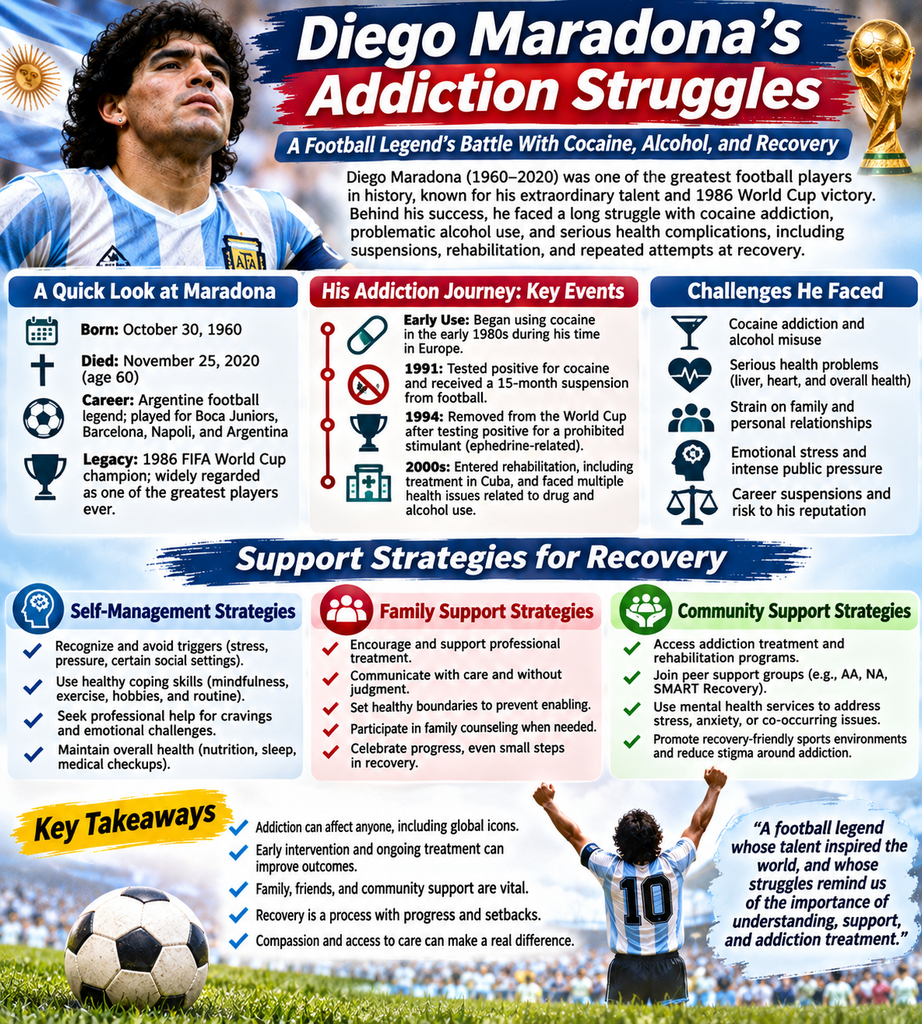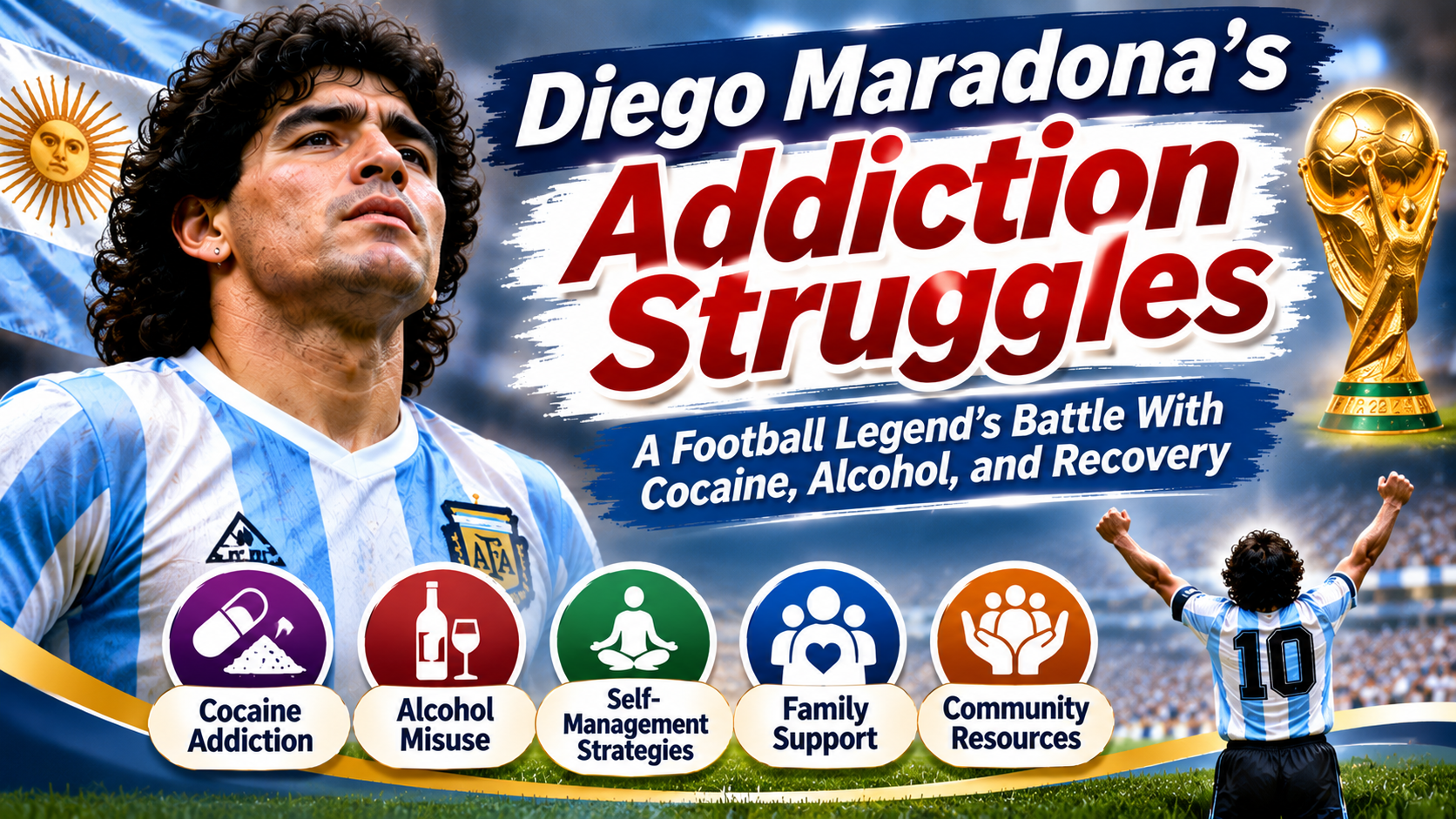
Diego Maradona was one of the greatest football players in history, celebrated for his extraordinary talent, creativity, and unforgettable performances on the international stage. As the captain of Argentina’s 1986 FIFA World Cup-winning team, Maradona became a global sporting icon whose achievements inspired millions.
However, behind his remarkable success was a prolonged struggle with cocaine addiction, problematic alcohol use, and serious health complications. His substance use affected his professional career, personal relationships, emotional well-being, and physical health.
Maradona’s journey included drug-related suspensions, rehabilitation efforts, periods of improvement, and recurring difficulties with substance use. His experiences demonstrated that fame, wealth, and exceptional athletic ability do not protect individuals from addiction.
His life also raises important questions about the pressures professional athletes face, the influence of social environments, and the challenges of maintaining recovery under intense public scrutiny.
Understanding his journey offers valuable lessons about self-management, professional addiction treatment, family involvement, and community support that can help individuals experiencing substance use disorders.
Diego Maradona’s Early Life and Rise to Football Greatness
October 30, 1960 – November 25, 2020 | Argentina
Maradona rose from a modest upbringing in Argentina to become an international football superstar, playing for clubs including Boca Juniors, Barcelona, and Napoli.
Maradona’s extraordinary dribbling, vision, and goal-scoring ability established him as one of football’s most influential players.
His performance during the 1986 World Cup, particularly against England, became a defining moment in football history.
Despite his success, Maradona faced increasing pressure from celebrity status, demanding competition, and public expectations.
During his years in European football, his cocaine use became an increasingly serious problem.
His experiences illustrate how addiction can develop alongside professional achievement, sometimes remaining hidden until significant consequences emerge.
How Diego Maradona’s Cocaine Addiction Developed
Maradona publicly acknowledged that his cocaine use began during his playing career in Europe, around 1982.
His drug use became particularly problematic during his years with Napoli, where he achieved enormous professional success while also experiencing intense public attention.
Cocaine is a powerful central nervous system stimulant that increases dopamine signaling within brain reward pathways.
Repeated use can contribute to cravings, impaired control over substance use, and serious cardiovascular and psychiatric complications.
Factors that may increase addiction vulnerability
Several circumstances can increase the risk of substance use disorders among elite athletes:
- Performance pressure: Intense expectations from fans, coaches, and sporting organizations.
- Emotional stress: Difficulty coping with anxiety, frustration, or personal conflict.
- Social influences: Environments where recreational drug use is normalized.
- Limited privacy: Constant media attention and public criticism.
- Physical exhaustion: Demanding training schedules, injuries, and insufficient recovery time.
- Unhealthy coping mechanisms: Using substances to temporarily escape difficult emotions.
These are general risk factors and should not all be assumed to have directly caused Maradona’s addiction.
Drug-Related Suspensions and Career Consequences
Maradona’s cocaine addiction eventually led to serious professional consequences.
In 1991, while playing for Napoli, he tested positive for cocaine and received a 15-month suspension from football.
The suspension significantly disrupted his career and increased public attention surrounding his substance use.
In 1994, during the FIFA World Cup in the United States, Maradona was removed from the tournament after testing positive for prohibited stimulants, including ephedrine-related substances.
It is important to distinguish this incident from his 1991 cocaine-positive test. The 1994 violation was not a positive cocaine test.
These events illustrate how substance use and drug-related controversies can affect athletic careers, reputations, and personal well-being.
Common consequences of untreated substance use disorders
- Professional suspensions or employment difficulties.
- Impaired judgment and risky behavior.
- Strained relationships with loved ones.
- Financial and legal complications.
- Increased emotional distress.
- Serious cardiovascular and neurological risks.
- Social isolation and public stigma.
Although Maradona remained a beloved football figure, his addiction struggles continued to affect his life long after his playing career ended.
Alcohol Misuse and Additional Health Complications
Alongside his cocaine addiction, Maradona experienced serious problems involving alcohol use and physical health.
Over the years, he was hospitalized on multiple occasions for medical complications associated with his health and substance use history.
In 2007, Maradona was hospitalized in Argentina with hepatitis and other complications reportedly associated with excessive alcohol consumption.
His medical difficulties also included cardiovascular problems, weight-related health concerns, and neurological complications.
How cocaine and alcohol affect physical health
Cocaine-related health risks include:
- Increased blood pressure and heart rate.
- Coronary artery constriction and reduced blood flow.
- Abnormal heart rhythms.
- Increased risk of heart attack and stroke.
- Anxiety, agitation, and sleep disturbances.
- Increased risk of seizures.
Alcohol-related health risks include:
- Liver inflammation, fibrosis, and cirrhosis.
- Alcohol-associated cardiomyopathy.
- High blood pressure and arrhythmias.
- Pancreatitis.
- Depression and anxiety symptoms.
- Cognitive impairment with prolonged heavy use.
When cocaine and alcohol are used together, the liver can produce cocaethylene, a metabolite associated with additional cardiovascular toxicity.
Maradona’s experiences emphasize the importance of addressing both substance use and associated medical conditions during addiction treatment.
Rehabilitation, Recovery Attempts, and Relapse
Maradona underwent several treatment episodes during his life, including rehabilitation for substance use disorders.
In 2000, he traveled to Cuba, where he spent extended periods receiving treatment and attempting to address his cocaine addiction.
In 2004, he experienced a serious cardiac emergency and required intensive medical care. His hospitalization brought renewed attention to his history of substance use and ongoing health problems.
Although Maradona experienced periods of improvement and later publicly described abstinence from cocaine, his difficulties with alcohol and other health concerns continued.
His journey illustrates the chronic and sometimes recurrent nature of substance use disorders.
Why relapse may occur
Relapse can be influenced by multiple factors:
- Exposure to environments associated with previous substance use.
- Emotional distress and difficulty regulating feelings.
- Inadequate continuing care after rehabilitation.
- Social isolation or unhealthy relationships.
- Untreated psychiatric conditions.
- Major life transitions.
- Persistent cravings and changes in brain reward pathways.
Relapse should not automatically be interpreted as a lack of motivation or personal weakness.
Instead, recurrence of substance use may indicate a need to reassess treatment, strengthen support systems, and address additional medical or psychological concerns.
Self-Management Strategies for Addiction Recovery
Maradona’s experiences demonstrate why recovery requires more than temporarily stopping substance use.
Self-management involves developing coping skills, recognizing triggers, improving emotional regulation, and establishing routines that support physical and psychological well-being.
The following strategies are general evidence-based recommendations, not a description of Maradona’s individual treatment plan.
Recognizing triggers and preventing relapse
Individuals recovering from cocaine or alcohol addiction benefit from identifying situations that increase cravings.
Helpful strategies include:
- Keeping a journal to identify emotional and environmental triggers.
- Recognizing people, places, and situations associated with previous substance use.
- Developing a written relapse prevention plan.
- Practicing mindfulness, relaxation, and urge-surfing techniques.
- Contacting a counselor or trusted recovery supporter when cravings intensify.
- Avoiding unnecessary exposure to high-risk environments.
- Seeking professional assistance promptly if substance use resumes.
Developing healthier coping mechanisms
Some individuals use substances to temporarily manage stress, loneliness, anxiety, or emotional pain.
Healthier alternatives may include:
- Cognitive behavioral therapy to address harmful thinking patterns.
- Regular physical activity appropriate to medical limitations.
- Deep breathing and relaxation exercises.
- Creative activities and meaningful hobbies.
- Building supportive friendships.
- Participating in structured counseling.
- Developing realistic personal goals.
Maintaining physical health
Recovery also involves addressing medical complications associated with substance use.
Individuals may benefit from:
- Regular primary care appointments.
- Cardiovascular assessment when clinically indicated.
- Liver function evaluation when appropriate.
- Nutritional counseling.
- Sleep management.
- Treatment for co-occurring psychiatric conditions.
- Medication review to identify potentially harmful interactions.
People with significant alcohol dependence should not abruptly stop drinking without medical guidance because severe alcohol withdrawal can cause seizures, delirium, and other life-threatening complications.
Evidence-Based Treatment for Cocaine and Alcohol Addiction
Professional treatment is an important component of recovery, particularly for individuals with severe or recurrent substance use disorders.
Cocaine use disorder treatment
There is currently no FDA-approved medication specifically for cocaine use disorder.
However, several behavioral interventions have demonstrated effectiveness.
- Contingency management: Uses structured positive reinforcement to encourage treatment participation and abstinence.
- Cognitive behavioral therapy: Helps individuals identify triggers and develop healthier coping strategies.
- Community reinforcement approach: Encourages rewarding activities and relationships that support recovery.
- Motivational interviewing: Helps individuals explore ambivalence and strengthen motivation for change.
Alcohol use disorder treatment
Evidence-based treatment may include behavioral therapy and medications.
Common medication options include:
- Naltrexone: Helps reduce alcohol reward and heavy drinking.
- Acamprosate: Supports maintenance of abstinence after alcohol cessation.
- Disulfiram: Produces an unpleasant reaction when alcohol is consumed and may be appropriate for selected patients.
Medication decisions should consider medical history, liver and kidney function, treatment goals, and other clinical factors.
Individuals experiencing both alcohol and cocaine use disorders may benefit from integrated treatment addressing both conditions.
Family Support Strategies: Helping Loved Ones Through Addiction
Maradona’s addiction affected not only his personal life but also relationships with family members and loved ones.
His family relationships were frequently discussed in public, and several relatives expressed concern about his health and well-being over the years.
His experiences illustrate the emotional challenges families may encounter when supporting someone with a substance use disorder.
Family members may experience anxiety, frustration, fear, and uncertainty, particularly when addiction involves repeated medical emergencies or relapse.
Practical family support strategies
- Encourage professional treatment: Help loved ones connect with addiction specialists and appropriate rehabilitation services.
- Communicate compassionately: Express concern without humiliation, criticism, or blame.
- Establish healthy boundaries: Clearly identify unacceptable behaviors while supporting recovery.
- Avoid enabling behaviors: Do not conceal dangerous substance use or repeatedly shield someone from reasonable consequences.
- Participate in family counseling: Improve communication and address unresolved conflict.
- Recognize recovery progress: Celebrate meaningful improvements without demanding perfection.
- Support medical follow-up: Encourage treatment for substance-related health complications.
- Seek independent emotional support: Family members should prioritize their own well-being.
Why family boundaries matter
Supporting someone with addiction does not require accepting unsafe or harmful behavior.
Healthy boundaries can protect family relationships and encourage personal accountability.
Families should also recognize that they cannot force another person to maintain sobriety.
Recovery ultimately requires appropriate treatment, individual participation, and supportive circumstances.
Community Support Strategies: Building a Recovery-Friendly Environment
Maradona’s public struggles demonstrate the importance of community involvement in addiction prevention and treatment.
Professional athletes often experience intense public scrutiny, which may discourage them from acknowledging emotional difficulties or seeking help.
Communities can reduce these barriers by promoting understanding and making treatment more accessible.
Community resources that support recovery
- Addiction treatment centers: Provide assessment, rehabilitation, outpatient counseling, and continuing care.
- Mental health clinics: Address anxiety, depression, trauma-related symptoms, and other psychiatric concerns.
- Peer recovery groups: Alcoholics Anonymous, Narcotics Anonymous, SMART Recovery, and other programs provide mutual support.
- Family support organizations: Offer education and coping strategies for loved ones affected by addiction.
- Sports organizations: Provide confidential counseling and referrals for substance use treatment.
- Community education programs: Increase awareness of cocaine and alcohol-related risks.
- Recovery-friendly workplaces: Encourage treatment engagement and reduce discrimination.
- Social support networks: Help individuals establish meaningful relationships outside substance-using environments.
The role of sports organizations
Football clubs and athletic associations can support addiction prevention through:
- Confidential mental health and substance use screening.
- Education about recreational drugs and alcohol.
- Access to qualified addiction specialists.
- Support during injuries and career transitions.
- Training for coaches and staff to recognize warning signs.
- Policies that encourage early treatment rather than relying exclusively on punishment.
These measures can help athletes receive assistance before substance use results in serious personal or professional consequences.
Fame, Public Pressure, and Mental Health
Maradona’s experiences also raise questions about how fame influences emotional well-being.
As one of the world’s most recognizable athletes, he experienced extraordinary public attention throughout his career and retirement.
Celebrity status may create unique challenges, including reduced privacy, constant criticism, and difficulty establishing trustworthy relationships.
However, fame alone does not cause addiction.
Substance use disorders arise through complex interactions among biological vulnerability, psychological factors, environmental influences, and substance exposure.
Supporting mental health among high-profile individuals
Helpful strategies include:
- Maintaining confidential access to behavioral health services.
- Developing relationships based on trust rather than celebrity status.
- Establishing boundaries around media and public attention.
- Addressing anxiety, depression, and emotional distress.
- Encouraging healthy routines outside professional responsibilities.
- Creating opportunities for meaningful activities and personal development.
Mental health support should remain available throughout an athlete’s career and after retirement.
Diego Maradona’s Death and Health Legacy
Diego Maradona died on November 25, 2020, at age 60.
His death was attributed to acute pulmonary edema associated with chronic heart failure, in the setting of dilated cardiomyopathy.
Although cocaine and excessive alcohol use can contribute to cardiovascular disease, Maradona’s complex medical history makes it inappropriate to attribute his death solely to addiction.
His death prompted international mourning and renewed discussion about his extraordinary sporting achievements, medical difficulties, and personal struggles.
Maradona’s life illustrates the importance of comprehensive medical care for individuals with long-standing substance use disorders.
Addiction treatment should address not only substance use but also cardiovascular health, neurological conditions, psychiatric symptoms, and other medical complications.
Important Lessons From Diego Maradona’s Addiction Journey
Maradona’s experiences offer valuable lessons for individuals, families, healthcare professionals, and communities.
- Addiction can affect anyone. Fame, wealth, athletic talent, and professional success do not eliminate vulnerability to substance use disorders.
- Early intervention matters. Recognizing problematic substance use before severe consequences develop can improve outcomes.
- Recovery requires ongoing support. Rehabilitation is often only one component of a longer recovery process.
- Physical health must be addressed. Cocaine and alcohol can contribute to serious cardiovascular and other medical complications.
- Mental health treatment is essential. Emotional distress and co-occurring psychiatric conditions may complicate addiction recovery.
- Families need education and support. Loved ones can encourage treatment while maintaining healthy boundaries.
- Communities can reduce stigma. Compassionate education and accessible treatment may encourage earlier help-seeking.
- Relapse does not erase progress. A recurrence of substance use should prompt clinical reassessment and additional support.
Where to Find Addiction Recovery Resources
Individuals experiencing cocaine or alcohol addiction can access professional treatment and peer recovery resources.
United States resources
- FindTreatment.gov — Locate substance use and mental health treatment providers.
- SAMHSA National Helpline — Call 1-800-662-HELP (4357) for confidential treatment information and referrals.
- Alcoholics Anonymous — Peer support for alcohol recovery.
- Narcotics Anonymous — Mutual support for people recovering from drug addiction.
- SMART Recovery — Evidence-informed self-management and recovery tools.
- Al-Anon Family Groups — Support for families affected by another person’s drinking.
Anyone experiencing chest pain, severe confusion, seizures, or other serious symptoms following cocaine or alcohol use should receive emergency medical evaluation.
Conclusion: Diego Maradona’s Legacy Beyond Football
Diego Maradona’s life was defined by extraordinary sporting achievements, international fame, and deeply personal struggles with cocaine addiction, alcohol misuse, and health complications.
His experiences demonstrate how substance use disorders can affect even the most accomplished individuals and how addiction may continue long after professional success has been achieved.
Although Maradona experienced periods of improvement and sought treatment, his ongoing difficulties illustrate the challenges associated with long-term recovery.
His journey emphasizes the importance of self-management, professional addiction treatment, compassionate family involvement, and strong community resources.
Rather than viewing his addiction as a personal failure, his story encourages a broader understanding of substance use disorders as complex, treatable medical conditions.
Diego Maradona’s legacy reminds us that extraordinary talent does not eliminate human vulnerability. True support begins with understanding, compassion, and access to effective treatment.
Frequently Asked Questions and Answers
Diego Maradona’s Addiction Journey
1. Who was Diego Maradona?
Diego Maradona was an Argentine professional football player and coach, born on October 30, 1960.
He played for clubs including Boca Juniors, Barcelona, and Napoli and captained Argentina to victory in the 1986 FIFA World Cup.
Widely regarded as one of football’s greatest players, Maradona also experienced serious personal difficulties involving substance use and health complications.
He died on November 25, 2020, at age 60.
2. What substances did Diego Maradona struggle with?
Maradona publicly acknowledged a long history of cocaine addiction and also experienced periods of problematic alcohol consumption.
Cocaine is a powerful stimulant that affects the brain’s reward system and can cause significant cardiovascular and psychological complications.
Alcohol is a central nervous system depressant that can contribute to dependence, liver disease, heart problems, and neurological impairment when consumed excessively.
Both substances can produce serious health consequences, particularly with prolonged or combined use.
3. When did Diego Maradona begin using cocaine?
Maradona publicly stated that he began using cocaine during his European football career, around 1982.
His cocaine use became especially problematic during his years with Napoli in Italy.
Although he achieved extraordinary professional success during this period, his substance use eventually contributed to disciplinary action and serious health concerns.
4. Why did Diego Maradona develop a cocaine addiction?
No single factor can fully explain why Maradona developed a cocaine addiction.
Substance use disorders typically arise through interactions among biological vulnerability, psychological factors, environmental influences, and repeated substance exposure.
Maradona experienced intense celebrity pressure, demanding professional expectations, and substantial public scrutiny.
These circumstances may increase addiction vulnerability, but they should not be considered proven causes of his individual condition.
5. How did cocaine addiction affect Maradona’s football career?
Maradona’s cocaine use contributed to a major professional suspension in 1991.
While playing for Napoli, he tested positive for cocaine and received a 15-month ban from professional football.
The suspension disrupted his career and brought international attention to his substance use.
His experiences demonstrate how addiction can affect professional responsibilities, even among exceptionally talented athletes.
6. Was Diego Maradona banned from the 1994 World Cup because of cocaine?
No. Maradona was removed from the 1994 FIFA World Cup after testing positive for prohibited stimulants, including ephedrine-related substances.
This incident was separate from his positive cocaine test in 1991.
Distinguishing these events is important when discussing his addiction history accurately.
7. Did Diego Maradona struggle with alcohol addiction?
Maradona experienced serious problems involving excessive alcohol consumption.
In 2007, he was hospitalized in Argentina with hepatitis and other medical complications that physicians associated with heavy alcohol use.
His experiences highlight the risks of prolonged excessive drinking, including liver injury, cardiovascular disease, and other health complications.
8. Did Diego Maradona attend rehabilitation programs?
Yes. Maradona participated in several rehabilitation and treatment programs throughout his life.
In 2000, he traveled to Cuba, where he spent extended periods receiving treatment and addressing his cocaine addiction.
He also received medical and behavioral health care later in life.
His experiences demonstrate that substance use disorders may require repeated treatment episodes and continuing support.
9. Did Diego Maradona ever recover from cocaine addiction?
Maradona publicly reported that he had stopped using cocaine and described extended periods without the drug.
However, his later difficulties with alcohol and other health concerns continued.
His experience illustrates that improvement in one substance-related problem does not necessarily eliminate other medical or behavioral health needs.
Recovery may involve ongoing treatment for multiple conditions.
10. Did Diego Maradona experience relapse?
Maradona’s substance use history included periods of treatment, improvement, and recurring difficulties.
Relapse can occur during recovery from substance use disorders, particularly when individuals encounter stress, environmental triggers, or inadequate continuing support.
A recurrence of substance use does not erase earlier progress. Instead, it may indicate the need to reassess treatment and strengthen recovery resources.
Cocaine, Alcohol, and Physical Health
11. How does cocaine addiction affect the brain?
Cocaine increases dopamine signaling by blocking dopamine reuptake in the brain.
Repeated exposure can alter reward processing, motivation, and responses to drug-related cues.
Potential effects include:
- Intense cravings.
- Difficulty controlling substance use.
- Changes in mood and motivation.
- Anxiety and irritability.
- Sleep disturbances.
- Increased sensitivity to substance-related triggers.
- Impaired decision-making in certain circumstances.
These effects can contribute to compulsive use despite negative consequences.
12. What are the long-term health risks of cocaine use?
Long-term cocaine use can contribute to serious medical complications, including:
- High blood pressure.
- Coronary artery constriction.
- Heart attacks and abnormal heart rhythms.
- Cardiomyopathy.
- Stroke.
- Seizures.
- Anxiety and mood disturbances.
- Sleep problems.
Cocaine can cause cardiovascular emergencies even in individuals without previously diagnosed heart disease.
13. What happens when cocaine and alcohol are used together?
Combining cocaine and alcohol can increase cardiovascular and neurological risks.
When both substances are present, the liver can produce cocaethylene, a metabolite associated with additional toxicity.
Potential complications include increased cardiac strain, abnormal heart rhythms, seizures, and sudden cardiac events.
Using both substances together can also impair judgment and increase dangerous behavior.
14. Can alcohol addiction cause liver disease?
Yes. Prolonged excessive alcohol consumption can cause alcohol-associated liver disease.
The condition may progress through several stages:
- Alcohol-associated fatty liver.
- Alcohol-associated hepatitis.
- Liver fibrosis.
- Cirrhosis.
- Liver failure in severe cases.
Early identification and treatment of alcohol use disorder can reduce the risk of progressive liver damage.
15. Did Diego Maradona experience serious heart problems?
Yes. Maradona experienced significant cardiovascular problems during his life.
In 2004, he was hospitalized with a serious cardiac emergency and required intensive medical treatment.
His medical history included cardiomyopathy and other health complications.
Although cocaine and excessive alcohol use can contribute to cardiovascular disease, the precise contribution of each factor to his individual medical conditions cannot be established solely from public reports.
16. What caused Diego Maradona’s death?
Maradona died on November 25, 2020, at age 60.
His death was attributed to acute pulmonary edema associated with chronic heart failure in the setting of dilated cardiomyopathy.
Although his history of substance use may be relevant to his overall health, it would be inaccurate to state that cocaine or alcohol addiction alone caused his death.
His medical history was complex and involved multiple health concerns.
Self-Management and Relapse Prevention
17. What self-management strategies can help someone recovering from cocaine addiction?
Self-management involves developing coping skills and routines that support recovery alongside professional treatment.
Helpful strategies include:
- Identifying emotional and environmental triggers.
- Creating a written relapse prevention plan.
- Practicing mindfulness and emotional regulation.
- Avoiding high-risk substance use environments.
- Maintaining regular sleep and exercise routines.
- Attending counseling appointments.
- Building supportive relationships.
- Seeking professional help when cravings intensify.
Self-management is most effective when integrated with evidence-based treatment.
18. What treatments are effective for cocaine addiction?
Evidence-based treatment for cocaine use disorder focuses primarily on behavioral interventions.
Effective approaches include:
- Contingency management: Uses structured positive reinforcement to encourage abstinence and participation in treatment.
- Cognitive behavioral therapy: Helps individuals recognize triggers and develop healthier coping strategies.
- Community reinforcement approach: Encourages rewarding activities and supportive relationships that compete with substance use.
- Motivational interviewing: Helps individuals explore ambivalence and strengthen motivation for recovery.
There is currently no FDA-approved medication specifically for cocaine use disorder.
19. What treatments are available for alcohol use disorder?
Alcohol use disorder can be treated with behavioral therapy, medication, and continuing support.
Common medication options include:
- Naltrexone: Helps reduce heavy drinking and alcohol reward.
- Acamprosate: Supports maintenance of abstinence.
- Disulfiram: Produces an unpleasant reaction when alcohol is consumed and may be appropriate for selected individuals.
Treatment should be individualized according to medical history, substance use severity, and personal recovery goals.
People with significant alcohol dependence should seek medical guidance before abruptly stopping alcohol because withdrawal can cause seizures or delirium.
20. How can someone manage cravings during addiction recovery?
Cravings can be managed through behavioral strategies and professional support.
Helpful techniques include:
- Recognizing triggers before cravings intensify.
- Practicing urge surfing.
- Using relaxation and breathing exercises.
- Contacting a recovery counselor or trusted supporter.
- Engaging in meaningful activities.
- Maintaining structured daily routines.
- Attending peer recovery meetings.
- Seeking treatment reassessment when cravings become persistent.
Cravings are common during recovery and do not necessarily indicate treatment failure.
21. Why is relapse prevention important?
Relapse prevention helps individuals identify situations that may increase the risk of returning to substance use.
A comprehensive plan may include identifying triggers, developing coping strategies, establishing emergency contacts, and maintaining regular participation in treatment.
It should also address co-occurring psychiatric conditions, medical problems, and social stressors.
Recovery plans should be reviewed and adjusted as circumstances change.
Family and Community Support
22. How did Diego Maradona’s addiction affect his family?
Maradona’s substance use and health problems created significant concerns for his family and loved ones.
His personal relationships were frequently discussed in the media, and family members publicly expressed concern about his well-being.
His experiences illustrate how addiction can affect family communication, emotional stability, trust, and relationships.
However, the private experiences and motivations of individual family members should not be assumed beyond their public statements.
23. How can families support someone struggling with addiction?
Families can provide important emotional and practical support.
Helpful strategies include:
- Encouraging professional treatment.
- Communicating without judgment.
- Learning about substance use disorders.
- Establishing healthy boundaries.
- Participating in family counseling when appropriate.
- Recognizing recovery progress.
- Avoiding behaviors that reinforce dangerous substance use.
- Seeking emotional support for themselves.
Family members can support recovery, but they cannot control another person’s substance use decisions.
24. What should families avoid when helping someone with addiction?
Families should avoid shaming, humiliating, or threatening someone because of their addiction.
They should also avoid concealing dangerous substance use, repeatedly providing resources that enable harmful behavior, or neglecting their own safety.
Healthy boundaries can protect relationships while encouraging personal responsibility.
25. Why is family counseling important during addiction recovery?
Family counseling can help address communication problems, emotional injuries, and relationship difficulties associated with addiction.
It may also help family members understand relapse warning signs and develop healthier responses.
Family therapy can improve engagement in treatment and strengthen support networks when participation is safe and appropriate.
26. How can communities help individuals recovering from cocaine or alcohol addiction?
Communities can strengthen recovery by expanding access to treatment and reducing stigma.
Important resources include:
- Addiction treatment centers.
- Outpatient counseling programs.
- Mental health clinics.
- Peer recovery organizations.
- Family support groups.
- Community education programs.
- Recovery-friendly workplaces.
- Housing and employment assistance.
Community support helps reduce isolation and provides opportunities for meaningful social connection.
27. What role should professional sports organizations play in addiction prevention?
Sports organizations can help athletes by providing confidential behavioral health services and education about substance use risks.
Effective strategies include:
- Routine substance use screening.
- Access to qualified addiction specialists.
- Mental health counseling.
- Education about cocaine, alcohol, and other substances.
- Support during injuries and retirement.
- Training for coaches and staff.
- Policies that encourage early treatment.
These approaches may help athletes receive assistance before substance use causes serious harm.
Lessons From Diego Maradona’s Life
28. What does Diego Maradona’s story teach us about addiction?
Maradona’s experiences demonstrate that addiction can affect individuals regardless of fame, wealth, talent, or professional accomplishments.
His journey also highlights the importance of early intervention, comprehensive medical care, and long-term recovery support.
Substance use disorders are complex medical conditions influenced by biological, psychological, and social factors.
Understanding these factors can help reduce stigma and encourage treatment.
29. Can someone recover after multiple relapses?
Yes. Many individuals achieve meaningful recovery after experiencing repeated setbacks.
A recurrence of substance use may indicate that treatment intensity, coping strategies, or support systems need adjustment.
Recovery can involve continued behavioral therapy, treatment of co-occurring psychiatric conditions, peer support, and improved daily functioning.
Relapse should prompt clinical reassessment rather than shame or abandonment of care.
30. Where can someone find help for cocaine or alcohol addiction?
Individuals in the United States can access confidential treatment information through the following resources:
- FindTreatment.gov — Locate addiction treatment and mental health providers.
- SAMHSA National Helpline — Call 1-800-662-HELP (4357).
- Alcoholics Anonymous — Peer support for alcohol recovery.
- Narcotics Anonymous — Peer support for drug addiction.
- SMART Recovery — Evidence-informed self-management and mutual support.
- Al-Anon Family Groups — Support for families affected by another person’s drinking.
For severe symptoms such as chest pain, seizures, loss of consciousness, or difficulty breathing after substance use, call emergency services immediately.
Video: