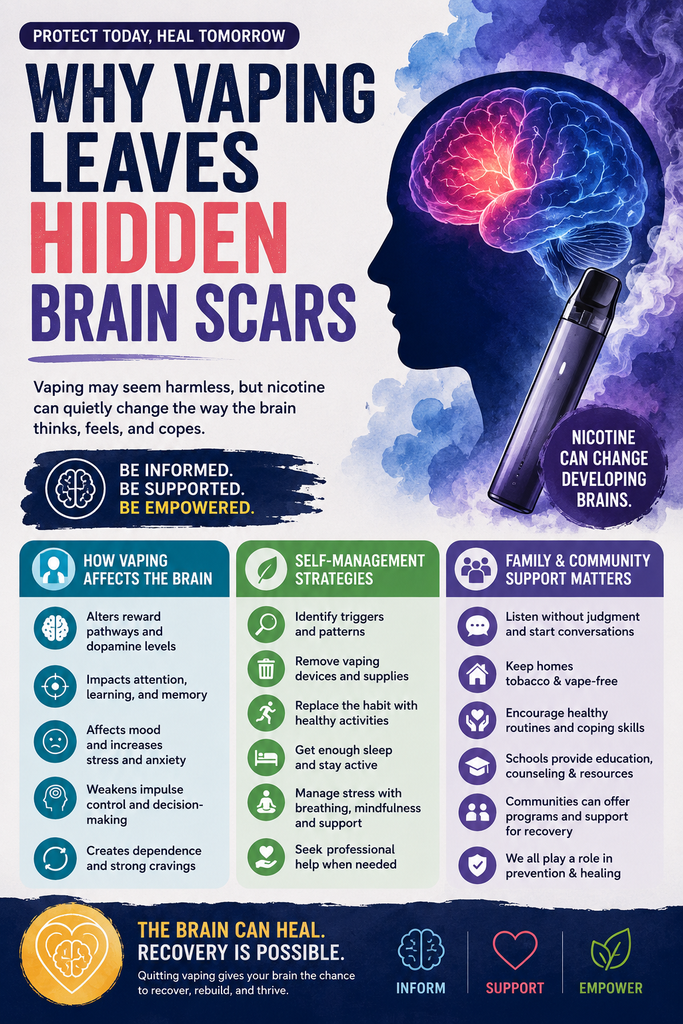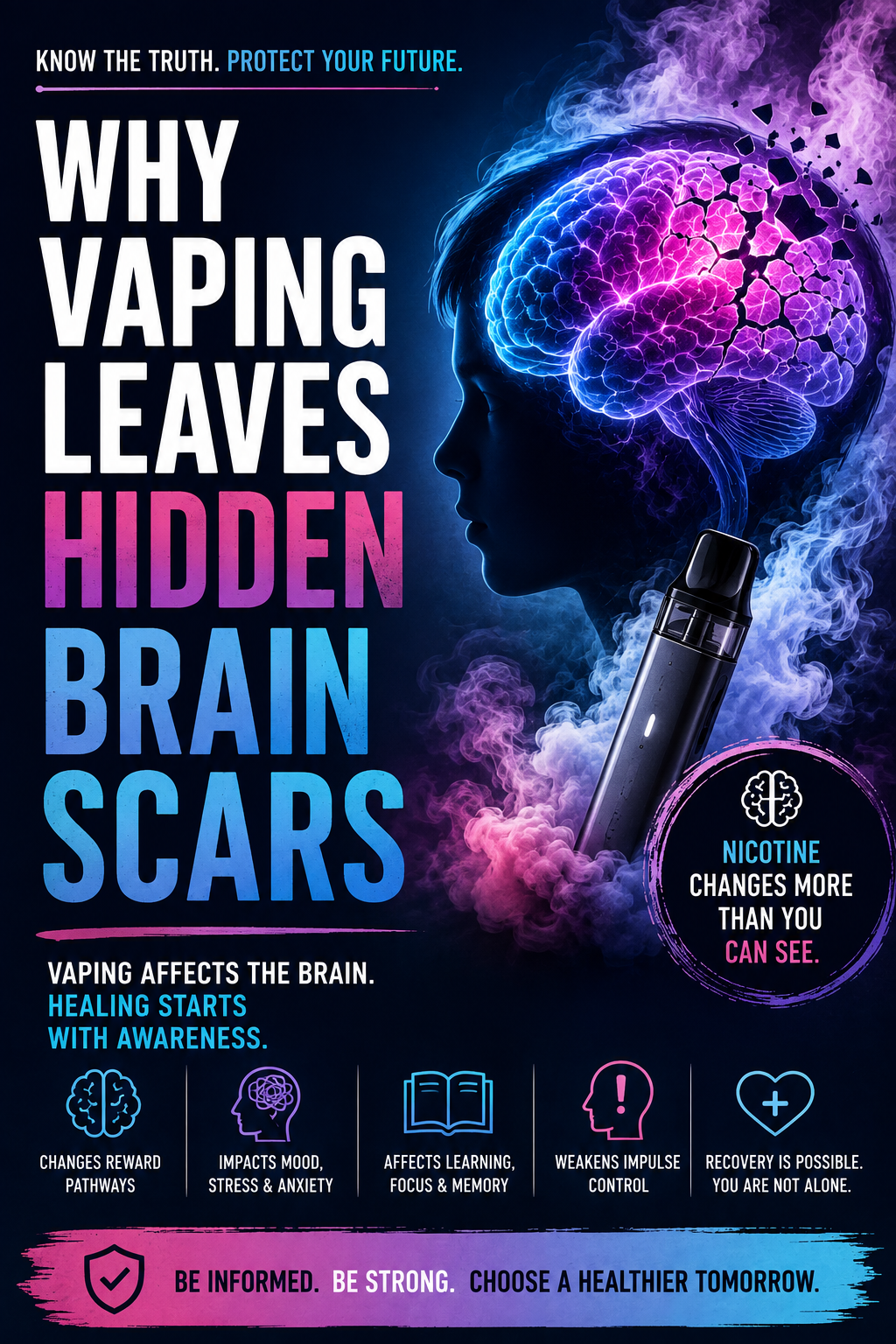
Vaping is often promoted or perceived as less harmful than smoking cigarettes, but “less harmful” does not mean harmless. Most e-cigarettes contain nicotine, a highly addictive substance that rapidly affects the brain’s reward system. This is especially concerning for adolescents and young adults because brain development continues into the mid-20s. Nicotine exposure during this period can interfere with brain systems involved in attention, learning, mood, and impulse control.
Why Vaping Leaves Hidden Brain Scars
The phrase “hidden brain scars” is a metaphor, not a medical diagnosis. Vaping does not necessarily produce literal scars that would appear on a routine brain scan. Instead, repeated nicotine exposure can produce changes in neural pathways involved in reward, craving, learning, and dependence. Some effects may improve after nicotine cessation, while researchers are still studying the long-term neurological consequences of vaping.
How Nicotine Changes the Brain
When nicotine enters the brain, it activates nicotine-sensitive receptors and influences dopamine signaling. Dopamine helps regulate motivation, reinforcement, and reward. With repeated exposure, the brain adapts to nicotine, contributing to tolerance, cravings, and dependence.
Eventually, vaping may shift from something a person chooses for pleasure or stress relief to something the brain expects in order to feel normal. When nicotine levels fall, withdrawal symptoms can appear, including irritability, anxiety, restlessness, difficulty concentrating, sleep problems, low mood, and strong cravings.
For adolescents, these effects deserve particular attention. Nicotine exposure during adolescence can affect developing brain systems responsible for:
- Attention and concentration
- Learning and memory
- Mood regulation
- Decision-making
- Impulse control
- Reward and motivation
- Vulnerability to nicotine addiction
The CDC notes that young people can develop signs of nicotine addiction surprisingly quickly, sometimes even before vaping becomes a daily behavior.
Vaping, Stress, and the Addiction Cycle
Some people begin vaping because they believe nicotine helps them relax. The relief can be misleading. Once nicotine dependence develops, falling nicotine levels can produce anxiety, irritability, restlessness, and difficulty concentrating. Taking another hit temporarily relieves withdrawal, reinforcing the belief that vaping is relieving stress when it may actually be relieving symptoms created partly by nicotine dependence.
This can create a repeating cycle:
Stress → Vape → Temporary relief → Nicotine level falls → Withdrawal or craving → Vape again
Over time, everyday situations such as driving, studying, drinking coffee, socializing, or experiencing emotional stress can become powerful vaping triggers. CDC guidance specifically recognizes that nicotine addiction and withdrawal can contribute to stress and other emotional symptoms.
Self-Management Strategies
Recovery gives the brain an opportunity to adapt to life without repeated nicotine exposure. Withdrawal can be uncomfortable, but symptoms generally improve as the brain adjusts.
Helpful strategies include:
- Identify vaping triggers. Track situations, emotions, people, and routines that create cravings.
- Remove vaping supplies. Discard devices, pods, chargers, and other reminders that make impulsive use easier.
- Delay cravings. When an urge appears, wait several minutes while walking, drinking water, breathing slowly, or changing activities.
- Replace the routine. Sugar-free gum, exercise, music, hobbies, or another healthy activity can provide an alternative response to triggers.
- Protect sleep. Consistent sleep supports concentration, emotional regulation, and coping during nicotine withdrawal.
- Exercise regularly. Physical activity can provide a healthy way to relieve stress and improve mood.
- Practice stress-management skills. Deep breathing, mindfulness, meditation, and relaxation techniques can replace vaping as a coping mechanism.
- Seek professional help when needed. A healthcare professional can evaluate nicotine dependence and recommend an individualized cessation approach.
Family Support Strategies
Family members can have an important influence on recovery, particularly when adolescents are trying to stop vaping. Criticism, threats, or shame may make someone hide their vaping rather than seek help.
Families can instead:
- Discuss vaping without immediately judging or punishing the person.
- Learn about nicotine addiction and withdrawal together.
- Ask what situations trigger the strongest cravings.
- Keep the home tobacco- and vape-free.
- Encourage healthy routines involving sleep, meals, exercise, and stress management.
- Recognize progress instead of expecting immediate perfection.
- Encourage medical or behavioral support when quitting becomes difficult.
- Avoid interpreting withdrawal-related irritability as simply “bad behavior.”
The CDC recommends that parents and caregivers maintain tobacco-free homes, discuss vaping risks openly, model tobacco-free behavior, and help young people develop healthier coping skills.
Community Support Strategies
Nicotine dependence should not be addressed only at the individual level. Schools, healthcare systems, families, and communities can work together to make prevention and recovery easier.
Community strategies include:
- Providing youth-friendly vaping cessation programs.
- Training teachers and school staff to recognize nicotine dependence.
- Connecting students with counselors instead of relying exclusively on punishment.
- Increasing access to healthcare professionals knowledgeable about nicotine cessation.
- Offering evidence-based tobacco cessation resources.
- Educating parents about modern vaping devices and nicotine concentrations.
- Creating prevention programs that address peer pressure, stress, and social-media influences.
- Promoting healthy recreational and social activities that do not involve nicotine.
Parents, educators, healthcare professionals, and community organizations all play a role in helping young people avoid or quit vaping.
Understanding the Journey
Someone struggling to stop vaping may genuinely want to quit while repeatedly returning to nicotine. That contradiction is characteristic of addiction rather than evidence that the person does not care about their health.
Understanding the neurological effects of nicotine can shift the conversation from “Why don’t you just stop?” to “What triggers your vaping, and what support could make quitting easier?”
The brain is adaptable. Nicotine dependence can be treated, triggers can be relearned, and healthier coping patterns can gradually replace vaping. The most useful message is therefore not that vaping permanently “ruins” the brain, but that nicotine can change developing and established brain pathways—and stopping exposure gives recovery an opportunity to begin.
Frequently Asked Questions
Here are some common questions:
1. Does vaping literally cause scars on the brain?
No. The phrase “hidden brain scars” is a metaphor rather than a medical diagnosis. It describes changes that repeated nicotine exposure can produce in neural pathways involved in reward, attention, learning, cravings, and addiction.
2. How does nicotine from vaping affect the brain?
Nicotine activates receptors in the brain and influences dopamine signaling. Repeated exposure can strengthen the association between vaping and reward, eventually contributing to cravings, tolerance, withdrawal, and nicotine dependence.
3. Why is vaping especially concerning for teenagers?
The adolescent brain is still developing, particularly systems involved in attention, learning, decision-making, emotional regulation, and impulse control. Nicotine exposure during this developmental period may interfere with these processes and make addiction easier to establish.
4. Can someone become addicted to vaping even if they do not vape every day?
Yes. Nicotine dependence can develop before someone recognizes that vaping has become a problem. Craving nicotine, thinking frequently about vaping, experiencing withdrawal symptoms, or having difficulty stopping are possible warning signs.
5. Why does vaping seem to reduce stress?
Nicotine may temporarily produce pleasurable or stimulating effects. Once dependence develops, however, declining nicotine levels can cause irritability, anxiety, restlessness, and cravings. Vaping again may temporarily relieve these withdrawal symptoms, creating the impression that nicotine is treating stress.
6. What are common symptoms of nicotine withdrawal?
Symptoms can include:
- Strong nicotine cravings
- Irritability or frustration
- Anxiety or restlessness
- Difficulty concentrating
- Sleep disturbances
- Increased appetite
- Low mood
- Feeling uncomfortable without vaping
Withdrawal symptoms generally improve as the body and brain adjust to functioning without nicotine.
7. Can the brain recover after someone stops vaping?
The brain has an important ability to adapt. After nicotine exposure stops, dependence-related processes can gradually change, and cravings and withdrawal typically become more manageable. The degree and timeline of recovery vary among individuals, and scientists continue to study the long-term neurological effects of vaping.
8. How long does it take the brain to recover from nicotine?
There is no single recovery timeline. It depends on factors such as age, duration and frequency of nicotine exposure, nicotine concentration, overall health, and the presence of other substance use. Some withdrawal symptoms improve relatively quickly, while learned triggers and cravings may persist longer.
9. What situations can trigger vaping cravings?
Common triggers include stress, boredom, driving, studying, drinking coffee or alcohol, socializing with people who vape, seeing vaping devices, and experiencing difficult emotions. Identifying personal triggers is an important part of developing a quit plan.
10. What can someone do when a vaping craving occurs?
Instead of immediately responding to the craving, a person can delay vaping, drink water, take a walk, exercise, practice slow breathing, chew sugar-free gum, contact a supportive person, or change environments. Cravings are temporary and can be managed without nicotine.
11. How can parents help a teenager who is vaping?
Parents can begin with a calm conversation rather than shame or punishment. Ask why the teenager vapes, what triggers cravings, and whether they have tried to stop. Maintaining a vape-free home, encouraging healthy coping strategies, and involving a healthcare professional can provide additional support.
12. Should schools punish students who are caught vaping?
Schools must maintain appropriate policies, but punishment alone may not address nicotine dependence. Education, counseling, cessation programs, family involvement, and referral to appropriate healthcare resources can help address the reasons a student continues vaping.
13. Is nicotine-free vaping harmless to the brain?
Not necessarily. Removing nicotine eliminates one major addictive component, but vaping aerosols may still contain substances that are not harmless. Products labeled nicotine-free may also vary in their contents. Avoiding vaping altogether eliminates exposure to vaping aerosol.
14. When should professional help be considered?
Professional support may be helpful when someone repeatedly tries to quit but cannot, experiences significant withdrawal, uses nicotine throughout the day, experiences strong cravings, or feels that vaping is interfering with school, work, relationships, sleep, or emotional well-being.
15. What is the most important message about vaping and brain health?
Vaping should not be viewed as harmless, particularly when nicotine is involved. At the same time, people who have become dependent on vaping should not be made to believe their brains are permanently damaged. Nicotine addiction is treatable. With cessation, healthy coping strategies, family support, community resources, and professional care when needed, the brain and behavior can continue adapting toward a healthier nicotine-free life.
Video: The Brain’s Response to Vaping: What You Need to Know #vapingeffects #brainresponse