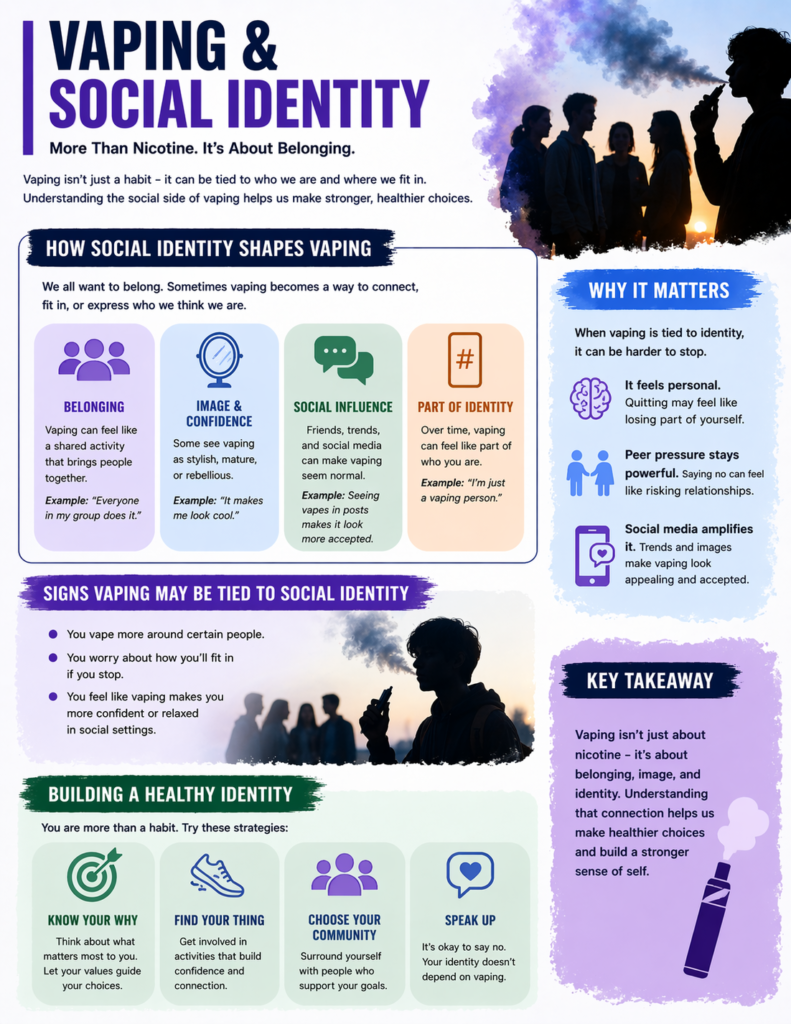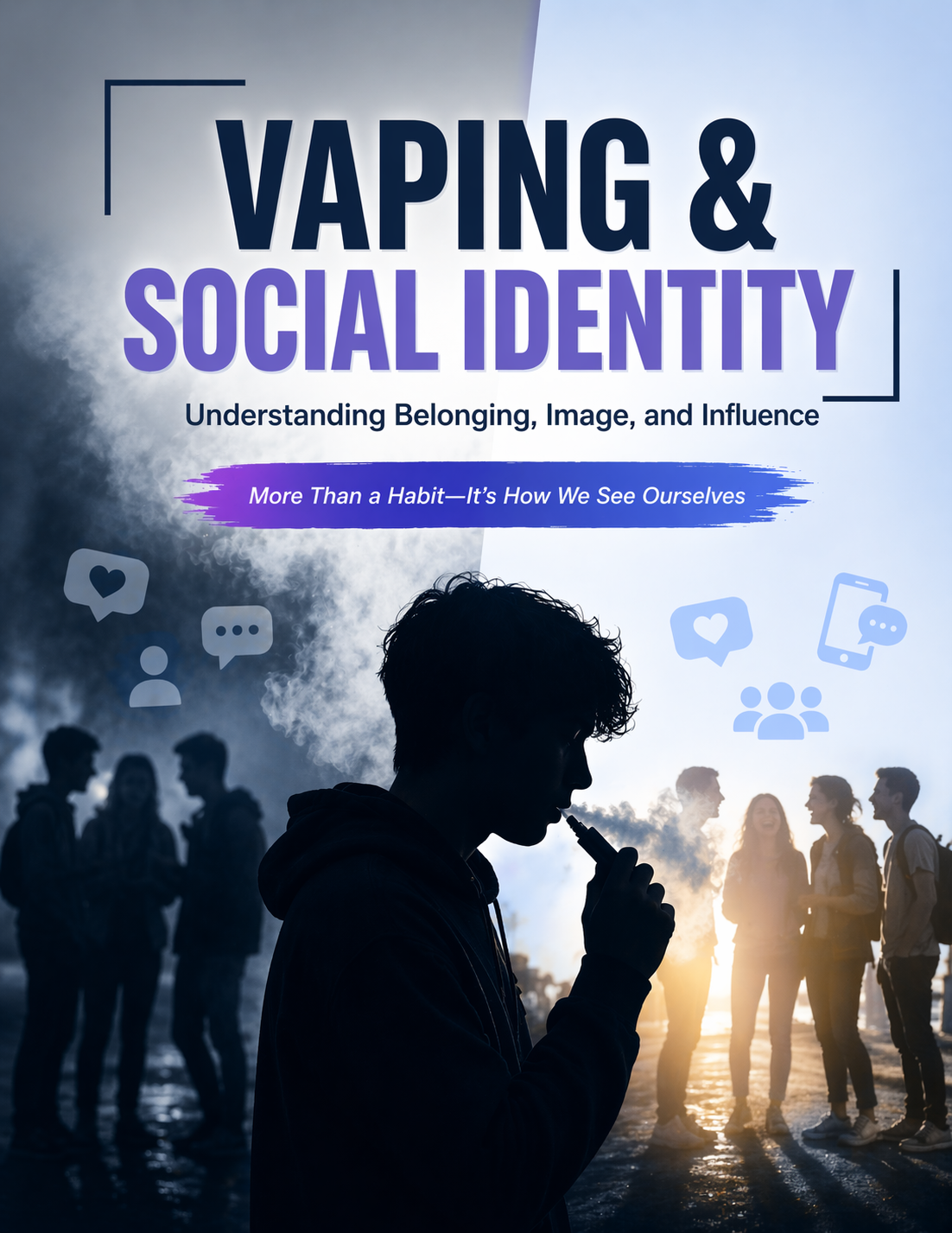
Vaping is often viewed as a health behavior or a personal choice, but its influence goes far beyond nicotine use. For many individuals—especially adolescents and young adults—vaping is closely tied to social identity. It can represent belonging, confidence, or alignment with a particular group or image. In environments where vaping is normalized or socially reinforced, the behavior becomes more than a habit; it becomes part of how individuals see themselves and how they are seen by others. Understanding the connection between vaping and social identity is essential for recognizing why the behavior persists and why it can be difficult to change.
More Than a Habit: Vaping and Social Identity
Vaping is often discussed in terms of health risks, nicotine dependence, and addiction. But for many people—especially adolescents and young adults—vaping is not just a behavior. It is part of a social identity.
To understand why vaping can be so persistent and difficult to quit, it’s important to look beyond the physical habit and examine the social and psychological roles it plays.
The Role of Belonging
Human behavior is deeply influenced by the need to belong. Social groups shape norms, behaviors, and even self-perception. In many environments, vaping has become normalized—or even expected—within certain peer groups.
When vaping is tied to:
- Friend groups
- Social settings
- Shared routines
it becomes more than an individual choice. It becomes a way to connect.
For some, not vaping can feel like being excluded.
Identity Formation and Self-Image
During adolescence and early adulthood, people are actively forming their identity—figuring out who they are and how they want to be seen.
Vaping can become part of that identity:
- A symbol of independence or rebellion
- A way to appear more relaxed or confident
- A marker of fitting into a certain “scene” or lifestyle
Over time, the behavior and identity can merge. It’s no longer just “something you do”—it’s something that feels like part of who you are.
The Influence of Image and Culture
Social media and marketing have amplified the connection between vaping and identity. Aesthetic imagery, trends, and online communities can make vaping appear:
- Stylish
- Socially accepted
- Emotionally comforting
This creates a narrative where vaping is not just normalized, but idealized.
The more visible and accepted it becomes, the stronger its role in shaping identity.
Why This Makes It Hard to Quit
When a behavior is tied to identity, stopping it is not just about breaking a habit—it can feel like losing part of yourself or your social connection.
People may worry:
- “Will I still fit in?”
- “What will people think?”
- “Who am I without this?”
These concerns are often just as powerful as physical cravings.
The Overlap with Coping
Vaping is also frequently linked to stress and anxiety relief. This creates a double layer:
- Emotional function (coping with stress)
- Social function (fitting in and expressing identity)
This combination makes the behavior more deeply reinforced.
Redefining Identity Without the Behavior
Breaking away from vaping often involves redefining identity, not just removing the behavior.
This might include:
- Finding new ways to connect socially
- Building confidence without relying on external markers
- Shifting toward identities based on values, goals, or interests
Change becomes easier when identity evolves along with behavior.
Final Thought
Vaping is not just about nicotine—it’s about connection, image, and identity.
Understanding this helps explain why simple messages like “just stop” often fall short. When a behavior is tied to how someone sees themselves and where they belong, change requires more than willpower—it requires a shift in both environment and self-perception.
The goal isn’t just to remove the habit. It’s to build an identity that no longer depends on it.
From Influence to Control: Self-Management and Vaping Identity
Vaping is often seen as a habit driven by nicotine or curiosity, but for many people, it’s more deeply rooted in social identity. It can represent belonging, confidence, or even a certain image. Because of this, managing vaping behavior isn’t just about resisting the urge—it’s about understanding why it feels important in the first place.
Self-management strategies help you recognize the connection between identity and behavior, and give you tools to take back control.
Step One: Identify the Role Vaping Plays in Your Identity
Before changing behavior, you need to understand what it represents.
Ask yourself:
- When do I vape most—alone or around others?
- What do I feel like it says about me?
- Do I associate vaping with confidence, relaxation, or fitting in?
This step is important because vaping often fulfills a psychological or social role, not just a physical one.
Step Two: Separate the Behavior from Who You Are
One of the biggest challenges is when vaping feels like part of your identity.
Instead of thinking:
- “I’m a person who vapes.”
Shift to:
- “This is something I’ve learned to do in certain situations.”
This subtle change creates distance between your identity and the behavior, making change more possible.
Step Three: Recognize Social Triggers
Vaping is often tied to specific environments:
- Certain friend groups
- Social events or parties
- Stressful or awkward situations
Pay attention to when the urge increases. Awareness of these triggers allows you to prepare rather than react automatically.
Step Four: Build Alternative Ways to Belong
If vaping is connected to social connection, removing it can feel like losing that connection.
Instead, focus on:
- Engaging in conversations or activities that don’t revolve around vaping
- Strengthening relationships that don’t depend on the behavior
- Finding new environments where vaping isn’t central
Belonging doesn’t have to depend on a shared habit.
Step Five: Redefine Your Self-Image
Identity is flexible, even if it doesn’t feel that way.
Start building a self-image based on:
- Personal values (health, independence, growth)
- Interests or goals (fitness, academics, creativity)
- Traits you want to strengthen (confidence, resilience)
The stronger your identity becomes outside of vaping, the less power the behavior has.
Step Six: Practice Responding Differently in Social Moments
Change happens in real situations, not just in theory.
Try:
- Delaying the urge when others are vaping
- Holding something else (a drink, gum, a fidget) to replace the habit
- Preparing simple responses if offered (“I’m good,” “I’m taking a break”)
These small actions build confidence over time.
Step Seven: Accept Discomfort as Part of Change
Let’s be honest—this part isn’t easy.
You may feel:
- Awkward in social settings
- Concerned about how others perceive you
- A temporary sense of not fitting in
That discomfort is not failure—it’s a sign that your identity is shifting.
Final Thought
Vaping becomes harder to manage when it’s tied to who you are and where you belong. But identity is not fixed—it evolves.
Self-management is about understanding the deeper role vaping plays, creating distance from it, and building a stronger sense of self that doesn’t depend on it. When your identity changes, your behavior often follows.
The goal isn’t just to stop vaping—it’s to become someone who no longer needs it to feel like themselves.
Helping Without Pushing Away: Family Strategies for Vaping and Social Identity
When families think about vaping, the focus is often on health risks, rules, and stopping the behavior. While those concerns are valid, they don’t always address the deeper reason why vaping continues—especially among adolescents and young adults.
For many, vaping is not just about nicotine. It’s about belonging, identity, and social connection. Understanding this can change how families approach the issue, making support more effective and less likely to backfire.
Understand What Vaping Represents
Before reacting to the behavior, it’s important to understand what it means to the person.
Vaping may represent:
- Fitting in with a friend group
- Feeling more confident or relaxed
- Expressing independence or identity
When families only focus on stopping the behavior, they may overlook these underlying needs. Addressing why it matters is just as important as addressing what is happening.
Avoid Immediate Judgment or Overreaction
Strong reactions—like anger, punishment, or ultimatums—can create distance and increase defensiveness.
If vaping is tied to identity, criticism can feel personal rather than just behavioral.
Instead of:
- “You need to stop this right now.”
Try:
- “Help me understand what this does for you.”
This approach opens conversation rather than shutting it down.
Create a Safe Space for Honest Conversation
Teens and young adults are more likely to be open when they don’t feel judged.
To encourage this:
- Choose calm moments to talk
- Listen more than you speak
- Validate feelings, even if you don’t agree with the behavior
For example:
- “It makes sense that you want to fit in—it’s hard to feel left out.”
Feeling understood reduces the need to hide behavior.
Talk About Identity, Not Just Behavior
Shift the conversation from “vaping is bad” to “how do you see yourself?”
You might explore:
- “What kind of person do you want to be?”
- “Do you feel like vaping fits that?”
- “What matters most to you right now?”
This helps them think critically about whether the behavior aligns with their values and identity.
Encourage Alternative Ways to Belong
If vaping is tied to social connection, removing it without replacing that connection can feel like a loss.
Families can help by:
- Encouraging involvement in activities, groups, or hobbies
- Supporting friendships that don’t revolve around vaping
- Creating opportunities for connection at home
Belonging is a need—not a weakness. The goal is to meet that need in healthier ways.
Set Clear but Supportive Boundaries
Support doesn’t mean ignoring the behavior.
Healthy boundaries might include:
- Clear expectations about vaping in the home
- Consistent consequences without emotional escalation
- Emphasizing safety and well-being
The key is consistency without hostility.
Model Confidence and Coping
Young people often learn more from what they see than what they’re told.
Families can model:
- Healthy ways of handling stress
- Confidence without relying on substances
- Making choices aligned with personal values
This provides a real-life example of identity that isn’t dependent on external behaviors.
Be Patient with the Process
Changing behavior tied to identity takes time.
There may be:
- Resistance
- Setbacks
- Mixed signals
This doesn’t mean failure—it means the process is ongoing.
Final Thought
When vaping is connected to social identity, it’s not just a habit to break—it’s part of how someone sees themselves and where they feel they belong.
Families are most effective when they move beyond control and toward understanding. By creating open communication, supporting healthier forms of identity, and maintaining clear boundaries, families can influence change without pushing their loved one further away.
Sometimes, the most powerful support isn’t forcing change—it’s helping someone realize they don’t need the behavior to belong or to define who they are.
Beyond the Individual: Community Strategies for Vaping and Social Identity
Vaping is often framed as an individual choice, but its roots extend far beyond personal decision-making. For many—especially young people—vaping is closely tied to social identity, peer influence, and cultural norms. It can represent belonging, image, and connection. Because of this, community-level strategies are essential for understanding and addressing vaping behavior effectively.
When communities recognize that vaping is not just about nicotine but about identity, they can shift from simply discouraging the behavior to reshaping the environment that supports it.
Why Community Influence Matters
Social identity is largely shaped by the environments people are part of—schools, neighborhoods, social media spaces, and peer groups.
When vaping is:
- Normalized in social settings
- Reinforced through peer behavior
- Presented as socially acceptable or appealing
It becomes part of a shared identity rather than an isolated habit.
Communities have the power to either reinforce or challenge these norms.
Promoting Awareness of Social Influence
One of the most important strategies is helping individuals recognize how much their environment shapes behavior.
Community education efforts can:
- Highlight how peer pressure and social identity influence decisions
- Break down the difference between personal choice and social influence
- Encourage critical thinking about trends and group norms
When people become aware of these influences, they are better able to make independent choices.
Creating Alternative Social Norms
If vaping is seen as “normal,” it becomes harder to resist. Communities can shift this by promoting alternative norms that do not center around vaping.
This can include:
- Highlighting positive role models who do not vape
- Promoting activities and groups where vaping is not part of the culture
- Reinforcing messages that confidence and belonging are not tied to substance use
Over time, these efforts can redefine what is considered typical or desirable.
Providing Structured Activities and Spaces
Unstructured environments can increase the likelihood of risk behaviors, especially when combined with peer influence.
Community programs that offer:
- Sports and fitness activities
- Arts and creative outlets
- Volunteer and leadership opportunities
Give individuals other ways to connect, express themselves, and build identity.
These alternatives reduce reliance on behaviors like vaping for social connection.
Engaging Schools and Youth Programs
Schools and youth organizations are key environments where identity is shaped.
Effective strategies include:
- Integrating education about vaping and social identity into curricula
- Training staff to recognize social influences, not just rule-breaking
- Encouraging peer-led initiatives where students promote healthier norms
Peer influence can work both ways—reinforcing harmful behavior or supporting positive change.
Addressing Social Media and Cultural Messaging
Social media plays a major role in shaping perceptions of vaping.
Communities can respond by:
- Promoting accurate information about vaping
- Challenging idealized or misleading imagery
- Encouraging digital literacy so individuals can critically evaluate what they see
When people understand how the media influences identity, they are less likely to adopt behaviors uncritically.
Reducing Stigma While Encouraging Change
Shaming or stigmatizing individuals who vape can backfire, especially when identity is involved.
Instead, communities should:
- Focus on support rather than punishment
- Encourage open conversations
- Normalize the process of change and growth
This creates an environment where individuals feel safe reconsidering their behavior.
Final Thought
Vaping is not just a personal habit—it is often a reflection of social identity and community influence.
Effective strategies go beyond telling individuals to stop. They focus on reshaping the environments, norms, and messages that make vaping feel necessary for belonging or self-expression.
When communities create spaces where people can connect, express themselves, and build identity without relying on substances, they reduce the need for behaviors like vaping.
Real change doesn’t happen in isolation—it happens when the environment changes along with the individual.
Frequently Asked Questions
Here are some common questions:
1. What does social identity have to do with vaping?
Social identity refers to how people see themselves in relation to others. Vaping can become part of that identity when it is tied to belonging, image, or fitting into a group.
2. Why do people associate vaping with belonging?
Humans naturally want to fit in. If vaping is common in a friend group or social setting, it can feel like a shared activity that helps people connect and avoid feeling left out.
3. Is vaping really about identity, or just nicotine?
It can be both. While nicotine plays a role physically, many people continue vaping because of social and psychological reasons, such as how it affects their image or relationships.
4. How does peer pressure influence vaping?
Peer pressure doesn’t always look direct. It can be subtle:
- Seeing others vape regularly
- Wanting to match group behavior
- Feeling uncomfortable saying no
This makes vaping feel like the “normal” choice.
5. Can vaping become part of someone’s personality?
Yes. Over time, people may begin to see vaping as part of who they are, especially if it is linked to confidence, social status, or a certain lifestyle.
6. Why is it harder to quit when identity is involved?
Because quitting can feel like losing:
- A sense of belonging
- A social routine
- A part of self-image
This makes it more than just breaking a habit—it feels personal.
7. How does social media affect vaping behavior?
Social media can:
- Make vaping look trendy or appealing
- Normalize the behavior
- Reinforce the idea that it’s part of a certain identity
This increases the likelihood of adoption, especially among younger users.
8. What are the signs that vaping is tied to social identity?
- Vaping more around certain people
- Feeling pressure to vape in social settings
- Worrying about fitting in if you stop
- Associating vaping with confidence or image
9. Is vaping still a choice if social pressure is involved?
Yes, but it’s an influenced choice. Social environments shape behavior, sometimes without people realizing it. Awareness helps regain control over those decisions.
10. Can someone maintain their social identity without vaping?
Absolutely. Identity is flexible. People can:
- Build confidence in other ways
- Find groups that don’t center around vaping
- Redefine what belonging looks like
11. How can someone resist vaping in social situations?
- Prepare simple responses (“I’m good,” “I don’t vape”)
- Bring alternatives (gum, drink, etc.)
- Focus on conversation rather than the behavior
- Spend time with supportive peers
12. What role do communities play in this issue?
Communities shape norms. Schools, families, and social groups can:
- Normalize not vaping
- Provide alternative activities
- Educate about social influence
This reduces pressure and changes perceptions.
13. Is vaping more common in certain groups?
Yes, it tends to be more common in groups where it is socially accepted or seen as part of the culture. This reinforces the identity connection.
14. What is the most important takeaway?
Vaping isn’t just about nicotine—it’s often about belonging and identity. Understanding that connection makes it easier to recognize influences and make more intentional choices.
Conclusion
Recognizing vaping as a component of social identity shifts the focus from simply stopping the behavior to understanding the deeper social and psychological factors behind it. When vaping is tied to belonging and self-image, change requires more than awareness of health risks—it requires redefining identity and finding alternative ways to connect and express oneself. By addressing both the social environment and individual perception, it becomes possible to reduce reliance on vaping and support healthier forms of identity. Ultimately, lasting change happens not just by removing the behavior, but by reshaping the meaning behind it.
Video: Vaping Rewired My Brain into My Identity #shorts #mentalhealth