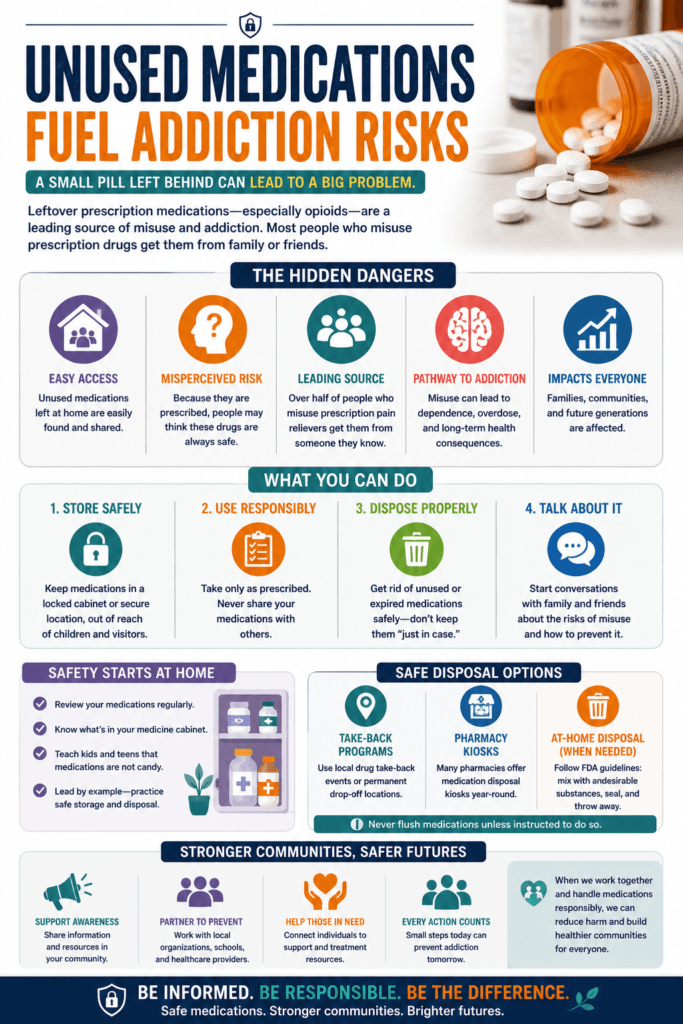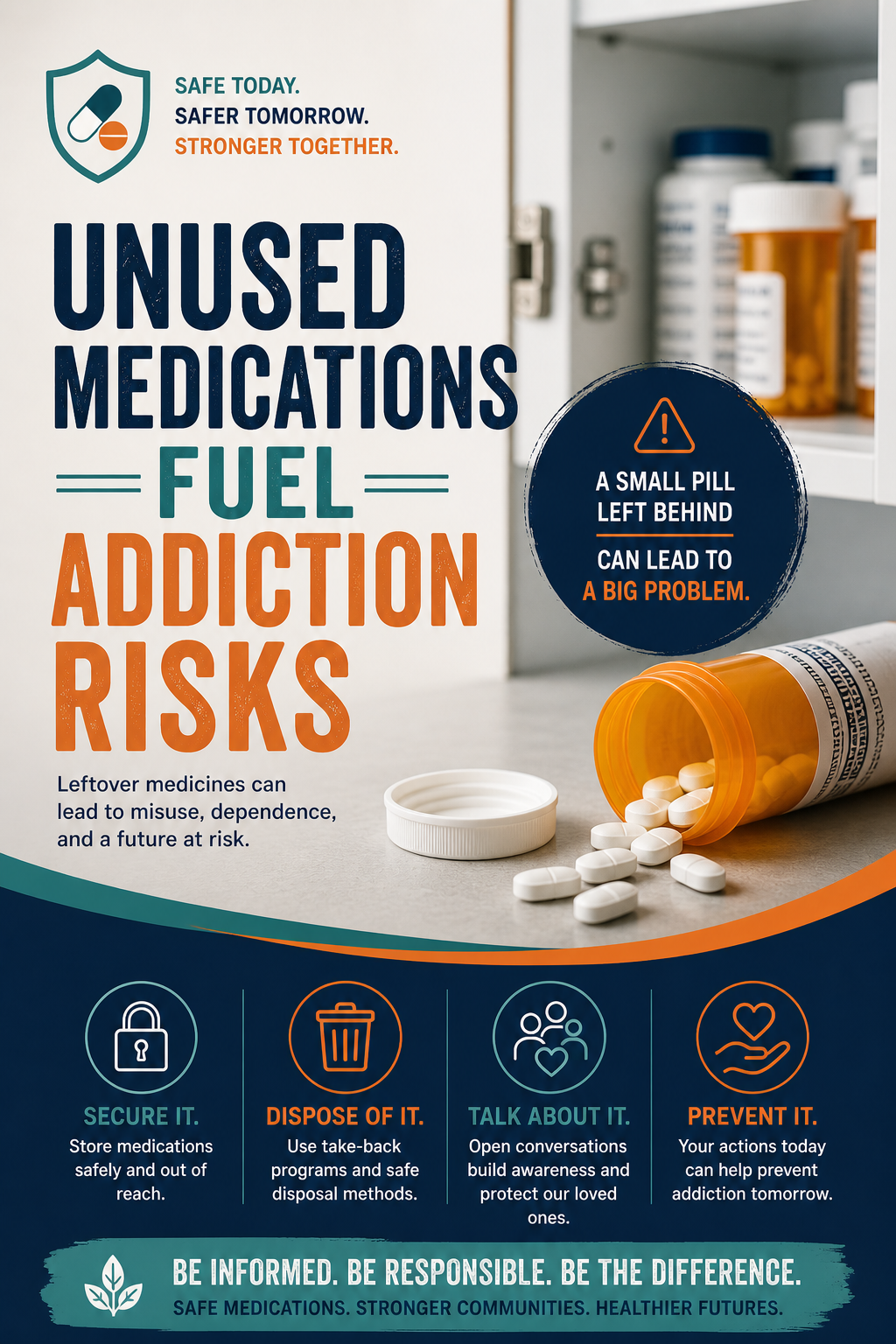
Unused medications are often overlooked, yet they pose a significant and preventable risk in the development of substance misuse and addiction. Leftover prescriptions—especially opioids and other controlled substances—can remain easily accessible in homes, increasing the likelihood of accidental use, sharing, or intentional misuse. Because these medications were originally prescribed, they are often perceived as safe, which can lower awareness of their potential dangers. Understanding how unused medications contribute to addiction risk is a critical step in promoting safer habits and protecting individuals, families, and communities.
Hidden in Plain Sight: How Unused Medications Fuel Addiction Risks
In many households, medicine cabinets quietly accumulate leftover prescriptions—painkillers from a past surgery, unused antibiotics, or medications that were never fully taken as directed. While these drugs may seem harmless sitting on a shelf, they can pose a significant and often overlooked risk. Unused medications, particularly opioids, play a critical role in increasing the likelihood of misuse, dependence, and addiction within communities.
Understanding how these medications contribute to substance use risks is an important step toward prevention and safer health practices.
Why Unused Medications Are a Problem
Unused medications often remain easily accessible in homes, making them vulnerable to misuse. Friends, family members, or even visitors may take them without proper medical guidance.
Key concerns include:
- Unsupervised access: Medications are often not securely stored
- Misunderstanding of safety: Prescription drugs may be perceived as “safe” because they were prescribed
- Delayed disposal: Many people are unsure how or when to properly dispose of medications
This combination creates an environment where misuse can begin unintentionally but escalate over time.
The Link Between Leftover Medications and Addiction
Research has shown that many individuals who misuse prescription drugs first obtain them from someone they know. Leftover medications can serve as an entry point into substance use.
Risks include:
- Experimentation: Individuals may try medications out of curiosity
- Self-medication: People may use leftover drugs to manage pain, stress, or sleep issues
- Tolerance and dependence: Repeated use without medical supervision can lead to addiction
Opioid medications are especially concerning due to their high potential for dependence, even when used as prescribed.
Common Situations That Lead to Leftover Medications
Unused medications often result from:
- Overprescribing or changes in treatment plans
- Patients stopping medication once symptoms improve
- Side effects that lead to discontinued use
- Lack of clear disposal instructions
These situations are common, making leftover medications a widespread issue rather than an isolated one.
Prevention Starts at Home
Reducing the risk begins with simple, proactive steps.
Safe storage practices:
- Keep medications in locked or secure locations
- Avoid sharing prescriptions with others
- Keep track of quantities and usage
Proper disposal methods:
- Use community drug take-back programs
- Follow FDA guidelines for safe disposal
- Avoid keeping medications “just in case”
These actions significantly reduce the chance of misuse.
The Role of Healthcare Providers and Communities
Healthcare systems and communities also play a vital role in addressing this issue.
- Providers can prescribe appropriate quantities and educate patients on risks
- Pharmacies can offer disposal information and resources
- Communities can host take-back events and awareness campaigns
A coordinated approach strengthens prevention efforts and reduces overall risk.
Raising Awareness and Changing Perceptions
One of the biggest challenges is the perception that prescription medications are inherently safe. Education is key to shifting this mindset.
Important messages include:
- Prescription drugs can be just as dangerous as illicit substances when misused
- Proper use and disposal are essential parts of medication safety
- Everyone has a role in preventing misuse
Conclusion
Unused medications may seem insignificant, but they can quietly contribute to a much larger problem. By increasing awareness, practicing safe storage and disposal, and encouraging responsible prescribing, individuals and communities can reduce the risk of addiction.
Addressing this issue doesn’t require complex solutions—it starts with small, informed actions at home. When we take responsibility for how medications are handled, we help protect not only ourselves but also those around us from the hidden dangers of misuse and addiction.
Taking Control: Self-Management Strategies to Address the Risks of Unused Medications
Unused medications may seem harmless, but they can quietly increase the risk of misuse and addiction—especially when left accessible and unmanaged. From leftover painkillers to unused prescriptions, these medications can become a gateway to unsafe use if not handled properly. Self-management strategies empower individuals and families to take responsibility for how medications are stored, used, and disposed of, reducing potential harm and supporting safer environments.
Why Self-Management Matters
Self-management involves being proactive, informed, and consistent in handling medications. By taking control of medication practices, individuals can:
- Reduce the risk of accidental or intentional misuse
- Prevent medications from being shared or diverted
- Promote safer households and communities
- Increase awareness of addiction risks
These small, intentional actions can make a significant difference in preventing substance misuse.
1. Conduct Regular Medication Check-Ups
One of the simplest strategies is to routinely review the medications you have at home.
Ask yourself:
- Are these medications still needed?
- Are any expired or no longer prescribed?
- Do I know what each medication is for?
Set a reminder to check your medicine cabinet every few months to keep it organized and up to date.
2. Practice Safe Storage Habits
Accessibility is one of the biggest risk factors for misuse.
Self-management strategies include:
- Storing medications in a locked cabinet or secure container
- Keeping them out of reach of children and visitors
- Avoiding visible or easily accessible storage areas
Secure storage reduces the likelihood of impulsive or unauthorized use.
3. Follow Prescriptions Exactly as Directed
Misuse often begins with small deviations from prescribed use.
Best practices:
- Take medications only as prescribed
- Do not increase doses without medical advice
- Never use someone else’s prescription
Understanding and following instructions helps prevent dependence and complications.
4. Dispose of Unused Medications Promptly
Holding onto unused medications “just in case” increases risk.
Safe disposal strategies:
- Use drug take-back programs in your community
- Follow pharmacy or FDA disposal guidelines
- Remove personal information from prescription labels before disposal
Prompt disposal eliminates unnecessary access.
5. Educate Yourself and Your Household
Awareness is a key part of self-management.
Take time to:
- Learn about the risks of prescription drug misuse
- Discuss medication safety with family members
- Set clear expectations about not sharing medications
Education helps prevent misunderstandings and risky behaviors.
6. Monitor and Track Medication Use
Keeping track of medications can help identify potential issues early.
Consider:
- Maintaining a simple medication log
- Noting how much medication remains
- Watching for unexpected changes in supply
This is especially important for medications with higher risk, such as opioids.
7. Communicate with Healthcare Providers
Self-management includes knowing when to seek guidance.
Be proactive about:
- Asking questions about prescriptions and side effects
- Requesting smaller quantities if appropriate
- Discussing concerns about dependency or misuse
Open communication supports safer, more informed decisions.
8. Build Safer Habits for the Long Term
Sustainable habits are the foundation of effective self-management.
Focus on:
- Making medication checks part of your routine
- Staying informed about safe practices
- Encouraging others to adopt similar habits
Over time, these behaviors become second nature and significantly reduce risk.
Conclusion
Unused medications may be easy to overlook, but they carry real risks when not properly managed. Through simple self-management strategies—such as safe storage, proper disposal, and ongoing education—individuals can take meaningful steps to prevent misuse and addiction.
Taking control of medication safety is not complicated but essential. By staying informed and proactive, we can protect ourselves, our families, and our communities from the hidden dangers of unused medications.
Stronger Together: Family Support Strategies to Reduce the Risks of Unused Medications
Unused medications sitting in the home may seem harmless, but they can quietly increase the risk of misuse and addiction—especially when they are easily accessible. Family involvement plays a critical role in recognizing these risks and taking proactive steps to manage them. By working together, families can create safer environments, promote responsible medication use, and help prevent substance misuse before it starts.
Why Family Support Matters
Medication safety is not just an individual responsibility—it’s a shared one. Families who actively engage in safe practices can:
- Reduce access to potentially harmful medications
- Encourage accountability and awareness
- Support healthy habits and decision-making
- Protect vulnerable members, including children and teens
A supportive family environment helps turn awareness into action.
1. Start Open Conversations About Medication Safety
Communication is one of the most effective prevention tools.
Families should:
- Talk openly about the risks of prescription drug misuse
- Clarify that “prescribed” does not always mean “safe for everyone”
- Encourage questions and honest discussion
These conversations reduce stigma and increase understanding.
2. Establish Clear Household Rules
Setting expectations helps prevent confusion and risky behavior.
Examples include:
- Never sharing prescription medications
- Only taking medications as directed by a healthcare provider
- Informing a parent or caregiver before using any medication
Clear rules create structure and accountability within the home.
3. Secure and Monitor Medications
Accessibility is a major factor in misuse.
Family strategies:
- Store medications in locked cabinets or containers
- Keep track of quantities, especially for high-risk medications
- Limit access to only those who need the medication
Monitoring helps identify potential issues early and prevents unauthorized use.
4. Make Medication Check-Ups a Family Routine
Regularly reviewing medications together builds awareness and responsibility.
Families can:
- Go through medicine cabinets every few months
- Identify expired or unused medications
- Decide what should be kept or safely discarded
This shared activity reinforces safe habits.
5. Practice Safe Disposal Together
Proper disposal is a key step in reducing risk.
Family actions:
- Participate in local drug take-back programs
- Follow pharmacy or FDA guidelines for disposal
- Avoid keeping medications “just in case”
Turning disposal into a family habit ensures it gets done consistently.
6. Educate Younger Family Members Early
Prevention starts with education.
Parents and caregivers can:
- Teach children about medication safety in age-appropriate ways
- Explain the dangers of taking medications without supervision
- Reinforce that medications are not to be shared or experimented with
Early education builds long-term awareness.
7. Support Loved Ones Who May Be at Risk
Families should remain attentive to behavioral changes that may signal misuse.
Support strategies:
- Approach concerns with empathy, not judgment
- Encourage seeking professional help when needed
- Stay involved and supportive throughout recovery if necessary
Compassionate support can make a critical difference.
8. Lead by Example
Family behavior sets the tone for safe practices.
Adults should:
- Follow prescriptions responsibly
- Avoid sharing medications
- Demonstrate proper storage and disposal habits
Modeling safe behavior reinforces expectations for everyone in the household.
Conclusion
Unused medications can pose hidden risks, but families have the power to reduce those risks through awareness, communication, and consistent action. By working together to establish safe habits—such as secure storage, proper disposal, and open dialogue—families can create a protective environment that minimizes the potential for misuse and addiction.
Prevention begins at home. With strong family support, small steps can lead to meaningful, lasting impact in keeping loved ones safe.
Community Action Matters: Strategies to Reduce Addiction Risks from Unused Medications
Unused medications are more than just clutter—they represent a hidden but significant risk factor in the development of substance misuse and addiction. While individual and family actions are important, communities play a critical role in addressing this issue at a broader level. Through coordinated efforts, education, and accessible resources, communities can reduce the availability of unused medications and prevent them from fueling addiction risks.
Why Community Strategies Are Essential
Unused medications often circulate beyond the home, contributing to wider public health concerns. Community-level strategies help:
- Reduce the overall supply of unused medications
- Increase public awareness about misuse risks
- Provide safe and convenient disposal options
- Support prevention efforts across diverse populations
A collective approach ensures that prevention is not limited to individual households.
1. Expand Medication Take-Back Programs
One of the most effective community strategies is providing safe disposal options.
Communities can:
- Host regular drug take-back events
- Partner with pharmacies and law enforcement agencies
- Install permanent medication disposal kiosks
These programs make it easy for individuals to التخلص safely and responsibly.
2. Increase Public Education and Awareness
Many people are unaware of the risks associated with unused medications.
Community initiatives may include:
- Public health campaigns about prescription drug safety
- Educational workshops in schools, workplaces, and community centers
- توزيع informational materials on safe use and disposal
Awareness is the first step toward behavior change.
3. Partner with Healthcare Providers and Pharmacies
Healthcare professionals are key allies in prevention.
Community collaboration can:
- Encourage providers to prescribe appropriate quantities
- Promote patient education at the point of care
- Ensure pharmacies provide clear disposal instructions
This partnership helps reduce the number of unused medications entering homes.
4. Engage Schools and Youth Programs
Young people are particularly vulnerable to experimenting with accessible medications.
Community strategies include:
- Integrating medication safety education into school curricula
- Hosting youth-focused prevention programs
- Encouraging peer-led awareness initiatives
Early education builds long-term protective behaviors.
5. Address Social and Environmental Factors
Addiction risk is influenced by broader community conditions.
Efforts should focus on:
- Expanding access to mental health and substance use services
- Supporting safe housing and stable environments
- Reducing stigma around seeking help
Addressing these factors strengthens overall prevention efforts.
6. Promote Safe Storage Initiatives
Communities can encourage safer practices at home.
Examples:
- Distributing medication lock boxes
- Educating residents on secure storage methods
- Partnering with organizations to provide safety resources
Reducing access is a key step in preventing misuse.
7. Foster Community Collaboration
No single organization can address this issue alone.
Effective strategies involve:
- Collaboration between public health agencies, nonprofits, and local governments
- Coordinated outreach and resource sharing
- Community coalitions focused on substance misuse prevention
Working together increases impact and sustainability.
8. Track and Evaluate Community Efforts
Measuring progress helps improve strategies over time.
Communities can:
- Monitor participation in take-back programs
- Assess changes in public awareness
- Evaluate trends in substance misuse
Data-driven approaches ensure resources are used effectively.
Conclusion
Unused medications may seem like a small issue, but their impact on addiction risk is significant. Through strong community resource strategies—such as education, safe disposal programs, and cross-sector collaboration—communities can reduce these risks and promote safer environments.
Prevention is most effective when it is shared. By working together, communities can transform awareness into action and help protect individuals from the hidden dangers of unused medications.
Frequently Asked Questions
Here are some common questions:
1. Why are unused medications considered a risk?
Unused medications—especially prescription painkillers—can be easily accessed, shared, or misused. This increases the risk of accidental use, experimentation, and eventually addiction.
2. Which types of medications are most concerning?
The highest risk is associated with:
- Opioid pain medications (e.g., oxycodone, hydrocodone)
- Sedatives and anti-anxiety medications
- Stimulants used for attention disorders
These drugs can be habit-forming if misused.
3. How do people usually get unused medications?
Most people who misuse prescription drugs obtain them from:
- Friends or family members
- Leftover prescriptions at home
- Shared or borrowed medications
This makes household storage a key factor in prevention.
4. Is it safe to keep medications “just in case”?
Generally, no. Keeping unused medications increases the chance of misuse or accidental ingestion. It’s safer to dispose of medications that are no longer needed.
5. What is the connection between unused medications and addiction?
Unused medications can serve as an entry point into substance misuse. People may start using them casually or for self-medication, which can lead to tolerance, dependence, and addiction over time.
6. How can I safely store medications at home?
Safe storage practices include:
- Keeping medications in a locked cabinet or container
- Storing them out of reach of children and visitors
- Avoiding visible or easily accessible locations
7. What is the safest way to dispose of unused medications?
Recommended options include:
- Drug take-back programs or events
- Pharmacy disposal kiosks
- Following FDA guidelines for at-home disposal when necessary
Avoid flushing medications unless specifically instructed.
8. Can sharing prescription medications be harmful?
Yes. Sharing medications is dangerous and illegal in many cases. A medication prescribed for one person may not be safe or appropriate for another.
9. How can families reduce the risk of misuse?
Families can:
- Talk openly about medication safety
- Monitor and track medications
- Dispose of unused drugs promptly
- Set clear rules about not sharing medications
10. Are children and teens at higher risk?
Yes. Young people may experiment with easily accessible medications, especially if they believe they are safe because they are prescribed drugs.
11. What role do healthcare providers play in prevention?
Providers can help by:
- Prescribing appropriate amounts
- Educating patients about risks
- Providing guidance on storage and disposal
12. How often should I check my medicine cabinet?
It’s a good practice to review medications every 3–6 months to remove expired or unused items.
13. What should I do if I suspect misuse in my home?
Take it seriously and respond with care:
- Secure medications immediately
- Have a calm, nonjudgmental conversation
- Seek professional help if needed
14. How can communities help reduce these risks?
Communities can:
- Offer medication take-back programs
- Provide education and awareness campaigns
- Partner with healthcare providers and schools
15. What is the most important takeaway?
Unused medications are not harmless. Proper storage, responsible use, and timely disposal are essential steps in preventing misuse and reducing addiction risks.
Conclusion
Addressing the risks associated with unused medications requires a combination of awareness, responsibility, and proactive action. Simple steps—such as proper storage, timely disposal, and open communication—can significantly reduce the chances of misuse and addiction. By recognizing that even unused prescriptions carry potential harm, individuals and communities can take meaningful steps toward prevention. Ultimately, reducing access to unused medications is not just about safety—it is about creating healthier environments and lowering the risk of addiction before it begins.
Video: Don’t Let Unused Pills Harm Your Loved Ones #health #safety