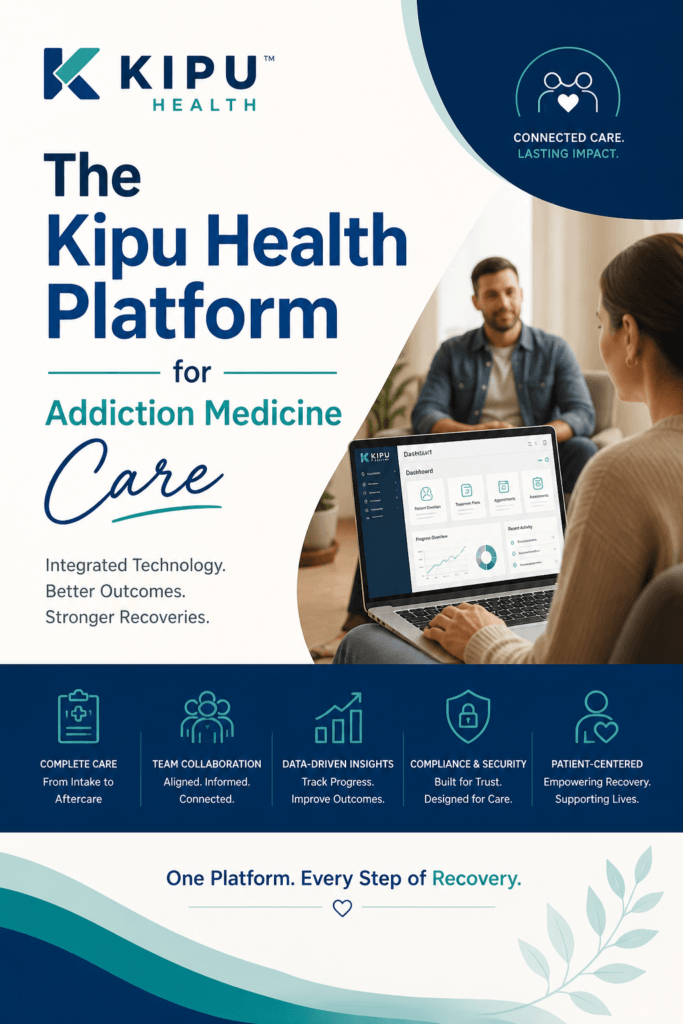
In today’s addiction treatment environment, delivering high-quality care requires more than clinical knowledge alone. Effective treatment also depends on technology that supports accurate documentation, coordinated care, and informed clinical decision-making. The Kipu Health platform is a specialized electronic health record (EHR) and practice management system developed specifically for addiction medicine. By combining patient records, workflow management, scheduling, billing, and data reporting into a single platform, it helps treatment providers efficiently manage every stage of care—from patient intake and assessment to treatment planning, discharge, and long-term recovery support. As substance use disorders continue to affect more individuals and communities, specialized platforms like Kipu are becoming increasingly valuable for improving operational efficiency, maintaining regulatory compliance, enhancing communication among care teams, and supporting better patient outcomes.
The Kipu Health Platform: Transforming Addiction Medicine Through Technology
In the evolving field of addiction treatment, technology is playing an increasingly central role in improving outcomes, streamlining operations, and supporting both clinicians and patients. One platform at the forefront of this transformation is Kipu Health, whose integrated solutions are widely used across behavioral health and substance use disorder (SUD) treatment settings.
What Is the Kipu Health Platform?
The Kipu Health Platform is a cloud-based electronic health record (EHR) and practice management system designed specifically for addiction treatment providers. Unlike generic healthcare software, it is built to address the unique workflows, compliance requirements, and clinical complexities of addiction medicine.
From intake and assessment to discharge and aftercare, the platform supports the full continuum of care. It allows providers to document treatment plans, track patient progress, and coordinate care across multidisciplinary teams—all within a single, secure system.
Key Features That Support Addiction Treatment
One of the platform’s strengths lies in its specialization. Addiction medicine requires more than basic charting—it demands tools that reflect real-world clinical practice. Kipu delivers this through:
- Customizable Clinical Documentation: Tailored templates for detox, residential, and outpatient programs help clinicians efficiently capture relevant data.
- Outcome Tracking and Reporting: Providers can monitor patient progress over time, supporting evidence-based care and quality improvement initiatives.
- Regulatory Compliance Tools: Built-in features help organizations meet standards from accrediting bodies and federal regulations, reducing administrative burden.
- Patient Engagement Capabilities: Some modules support communication, scheduling, and follow-up care, which are critical for long-term recovery.
Improving Clinical Efficiency and Care Coordination
Addiction treatment often involves multiple providers—physicians, therapists, case managers, and support staff. The Kipu platform centralizes patient information, making it easier for teams to collaborate and stay aligned on treatment goals.
This coordination is particularly important in managing co-occurring disorders, where mental health and substance use conditions intersect. Having a unified system reduces errors, improves communication, and ensures continuity of care.
Data-Driven Decision Making
In modern healthcare, data is more than documentation—it’s a tool for insight. Kipu’s analytics capabilities allow treatment centers to evaluate program effectiveness, identify trends, and make informed decisions about patient care and operational strategy.
For example, facilities can track retention rates, relapse patterns, or treatment outcomes across different programs. This kind of visibility supports both clinical excellence and organizational sustainability.
Supporting Compliance and Security
Addiction treatment providers operate in a highly regulated environment, with strict requirements around patient privacy and documentation. Kipu Health emphasizes compliance with standards such as HIPAA, helping organizations protect sensitive patient information while maintaining audit readiness.
The Bigger Picture: Technology in Addiction Recovery
The use of platforms like Kipu reflects a broader shift toward digital transformation in addiction medicine. As the opioid crisis and other substance use challenges continue to impact communities, the need for efficient, scalable, and patient-centered solutions has never been greater.
By combining clinical functionality with operational tools, Kipu Health enables providers to focus more on what matters most—helping individuals achieve and sustain recovery.
Mastering the Kipu Health Platform: Self-Management Strategies for Addiction Medicine Professionals
In addiction medicine, technology can either streamline care—or become another layer of complexity. Platforms like Kipu Health are powerful, but getting the most out of them requires more than basic familiarity. It takes intentional self-management: learning how to navigate the system efficiently, integrate it into daily workflows, and use its data to improve patient outcomes.
This blog explores practical strategies clinicians, administrators, and support staff can use to better understand and utilize the Kipu Health Platform in addiction treatment settings.
Why Self-Management Matters in Digital Health Tools
Addiction treatment environments are fast-paced and emotionally demanding. When providers struggle with documentation systems or reporting tools, it can lead to inefficiencies, frustration, and even gaps in care.
Self-management—defined here as the ability to independently learn, adapt, and optimize use of a system—helps professionals:
- Reduce time spent on administrative tasks
- Improve accuracy in clinical documentation
- Enhance collaboration across care teams
- Stay compliant with regulatory standards
Ultimately, better use of the platform translates into better patient care.
1. Build a Strong Foundation with Purposeful Learning
Instead of trying to learn everything at once, focus on the features most relevant to your role.
- Clinicians should prioritize treatment planning, progress notes, and outcome tracking
- Administrators may focus on billing, reporting, and compliance tools
- Support staff can emphasize scheduling, intake workflows, and communication features
Break learning into manageable sections and revisit them regularly. Many users benefit from creating quick-reference guides or checklists for common tasks.
2. Customize Your Workflow
One of the strengths of the Kipu platform is its flexibility. Templates, forms, and dashboards can often be tailored to fit your program’s needs.
Self-management here means:
- Adjusting documentation templates to reflect your treatment model
- Organizing dashboards to highlight the most important metrics
- Streamlining repetitive tasks with standardized workflows
Customization reduces cognitive load and helps you move through daily responsibilities more efficiently.
3. Use Data as a Clinical Tool, Not Just a Requirement
It’s easy to think of documentation as a compliance task—but within Kipu, it’s also a source of insight.
By regularly reviewing patient data, providers can:
- Identify patterns in relapse or engagement
- Track progress toward treatment goals
- Adjust care plans based on measurable outcomes
Develop the habit of briefly checking reports and analytics to reinforce data-driven decision-making in addiction medicine.
4. Create Consistent Documentation Habits
Consistency is key to both clinical quality and regulatory compliance.
Effective self-management strategies include:
- Completing notes in real time or shortly after sessions
- Using standardized language and templates
- Double-checking entries for accuracy and completeness
These habits not only improve patient records but also make collaboration smoother across the care team.
5. Collaborate and Share Knowledge
No one uses the platform in isolation. Peer learning is one of the most effective ways to build confidence and efficiency.
- Share tips and shortcuts with colleagues
- Develop internal best practices for documentation and workflows
- Participate in team trainings or informal knowledge sessions
A collaborative approach reduces individual frustration and raises the organization’s overall competence.
6. Stay Updated and Adaptable
Healthcare technology evolves, and platforms like Kipu are regularly updated with new features and improvements.
Make it part of your routine to:
- Review update notes or training materials
- Test new features in a low-risk environment
- Reflect on how changes can improve your workflow
Adaptability ensures you continue to get value from the system over time.
The Bigger Impact: Supporting Better Recovery Outcomes
When professionals effectively manage their use of the Kipu Health Platform, the benefits extend beyond efficiency. Clear documentation, coordinated care, and data-informed decisions all contribute to stronger treatment outcomes.
In addiction medicine—where continuity, accuracy, and engagement are critical—technology becomes a true ally when users feel confident and in control.
Final Thoughts
Mastering a platform like Kipu Health isn’t about becoming a technical expert overnight. It’s about developing sustainable habits, leveraging the right features, and continuously refining your approach.
With thoughtful self-management, clinicians and staff can turn a complex system into a powerful tool—one that supports both professional performance and patient recovery.
Empowering Families in Recovery: Support Strategies for Understanding the Kipu Health Platform
Addiction recovery is rarely a solo journey. Families often play a crucial role in supporting loved ones through treatment, yet they can feel overwhelmed by the systems and tools used in care. Platforms like Kipu Health are designed primarily for clinicians—but with the right guidance, families can better understand how these tools support recovery and how to stay meaningfully involved.
This blog explores practical strategies for family support to help demystify the Kipu Health Platform and strengthen collaboration in addiction medicine.
Why Families Should Understand Treatment Platforms
While families may not directly use clinical software, understanding how care is documented and coordinated can:
- Reduce confusion about treatment plans and progress
- Improve communication with providers
- Build trust in the recovery process
- Help families offer more informed support at home
Knowledge reduces uncertainty—and in addiction recovery, that clarity can make a real difference.
1. Learn the Basics of How Care Is Managed
Families don’t need technical expertise, but a general understanding of how platforms like Kipu work can be helpful.
Encourage providers to explain:
- How treatment plans are created and updated
- What progress notes and assessments track
- How different team members (therapists, physicians, case managers) contribute to care
This foundational knowledge helps families see the structure behind treatment rather than viewing it as a “black box.”
2. Ask for Clear, Translated Updates
Clinical documentation can be complex and full of terminology that isn’t always easy to interpret.
Families can:
- Request plain-language summaries of progress
- Ask providers to explain key terms or metrics
- Clarify how documented goals relate to real-life recovery milestones
Bridging the gap between technical records and everyday understanding is essential for meaningful involvement.
3. Focus on Communication, Not System Access
It’s important to recognize that platforms like Kipu are governed by strict privacy laws (such as HIPAA), which limit direct access to patient records.
Instead of seeking system access, families should prioritize:
- Regular check-ins with care teams
- Scheduled family therapy sessions (when appropriate)
- Open dialogue with their loved one about treatment progress
Strong communication channels are far more valuable than direct interaction with the software itself.
4. Support Consistency Outside the Clinical Setting
What happens outside treatment is just as important as what happens inside it.
Families can align with what’s documented in the platform by:
- Reinforcing treatment goals at home
- Encouraging adherence to schedules, appointments, and medication plans
- Observing and sharing relevant behavioral changes with providers
This consistency helps bridge clinical care with real-world recovery.
5. Educate Themselves on Addiction and Recovery
Understanding the broader context of addiction medicine makes it easier to interpret what’s being tracked in systems like Kipu.
Families may benefit from learning about:
- The stages of recovery
- Common relapse triggers and warning signs
- Co-occurring mental health conditions
This knowledge allows families to connect what they hear from providers with what they observe day-to-day.
6. Practice Healthy Boundaries and Self-Care
Supporting someone in recovery can be emotionally demanding. Families need to care for themselves as well.
Healthy strategies include:
- Setting clear boundaries
- Seeking support groups or counseling
- Avoiding over-reliance on clinical updates as the sole measure of progress
A well-supported family is better equipped to support recovery.
The Bigger Picture: Families as Partners in Care
Even though families may not directly interact with the Kipu Health Platform, they are essential partners in the recovery process it supports. When families understand how care is structured, documented, and evaluated, they can engage more effectively and confidently.
Technology organizes the treatment journey—but human connection sustains it.
Final Thoughts
Understanding a clinical platform like Kipu Health doesn’t require technical training—it requires curiosity, communication, and collaboration. By focusing on clear information, supportive involvement, and ongoing learning, families can play a powerful role in recovery.
When families and providers work together, supported by the right tools, the path to recovery becomes more connected, informed, and hopeful.
Bridging Care and Community: Resource Strategies for Understanding the Kipu Health Platform in Addiction Medicine
In addiction medicine, recovery extends far beyond clinical walls. Community resources—ranging from peer support groups to housing services—play a critical role in sustaining long-term recovery. While platforms like Kipu Health are primarily designed for providers, understanding how they connect with community-based services can strengthen care coordination and improve outcomes.
This blog explores practical strategies for leveraging community resources to better understand and support the use of the Kipu Health Platform in addiction treatment.
Why Community Resources Matter in a Digital Care Model
Addiction treatment is most effective when clinical care and community support systems work together. The Kipu platform helps providers document, track, and coordinate care—but many recovery supports exist outside that system.
Community resource strategies help:
- Extend care beyond treatment facilities
- Reinforce recovery goals in real-world settings
- Improve continuity between providers and support networks
- Reduce relapse risk through sustained engagement
Understanding this connection allows communities to become active partners in recovery.
1. Build Awareness of How Treatment Is Coordinated
Community organizations don’t need full access to clinical platforms, but they benefit from understanding how care is structured.
Strategies include:
- Partnering with treatment centers for educational sessions
- Learning how referrals, discharge planning, and follow-ups are documented
- Understanding the roles of clinicians, case managers, and peer support specialists
This awareness helps community providers align their services with clinical care plans.
2. Strengthen Referral Pathways
A key intersection between Kipu and community resources is the referral process.
Effective strategies:
- Establish clear communication channels with treatment facilities
- Create standardized referral forms or processes
- Ensure timely follow-up after discharge
When referrals are well-coordinated, the transition from clinical care to community support becomes smoother and more effective.
3. Align Services with Documented Treatment Goals
Even without direct access to Kipu, community providers can support tracking in the system.
For example:
- If a patient’s goal is maintaining sobriety, connect them with peer support groups
- If housing stability is a focus, coordinate with local housing services
- If employment is part of recovery, refer to job training programs
Alignment ensures that community services reinforce—not contradict—clinical objectives.
4. Promote Information Sharing Within Privacy Guidelines
Privacy laws (like HIPAA) limit how information is shared, but there are still ways to collaborate effectively.
Best practices include:
- Using consent forms to allow appropriate information exchange
- Communicating through designated care coordinators
- Sharing general progress updates without violating confidentiality
Responsible information sharing strengthens trust and coordination across systems.
5. Utilize Training and Cross-Sector Collaboration
Bringing together clinical providers and community organizations creates a more unified approach to recovery.
Consider:
- Joint workshops or training sessions
- Case discussions (with proper consent)
- Community coalitions focused on addiction recovery
These collaborations help demystify platforms like Kipu and clarify how each sector contributes to care.
6. Track Outcomes Beyond the Clinical Setting
Recovery doesn’t end at discharge, and outcomes extend beyond what’s captured in a clinical platform.
Community organizations can:
- Monitor engagement in support services
- Track housing, employment, or social stability
- Provide feedback to treatment providers when possible
This broader view of recovery complements the data collected within Kipu.
The Bigger Picture: A Connected Recovery Ecosystem
The Kipu Health Platform is a powerful tool for organizing and delivering clinical care—but it’s only one part of a larger ecosystem. Community resources provide the ongoing support that sustains recovery in daily life.
When community organizations understand how clinical platforms function, they can better integrate their services, creating a seamless continuum of care that supports individuals at every stage of recovery.
Final Thoughts
Understanding the Kipu Health Platform doesn’t require direct system use—it requires collaboration, communication, and shared purpose. By building strong connections between treatment providers and community resources, we create a more supportive and effective recovery environment.
In addiction medicine, technology organizes care—but community sustains it.
Frequently Asked Questions
Here are some common questions:
1. What is the Kipu Health Platform?
The Kipu Health Platform is a cloud-based electronic health record (EHR) and practice management system designed specifically for addiction treatment providers. It helps manage patient care, documentation, compliance, and operational workflows within a single integrated system.
2. Who uses the Kipu Health Platform?
Kipu is used by a wide range of professionals in addiction medicine, including:
- Physicians and psychiatrists
- Therapists and counselors
- Case managers
- Administrative and billing staff
- Treatment center executives
3. What types of addiction treatment programs does Kipu support?
The platform supports multiple levels of care, such as:
- Detoxification (detox) programs
- Residential/inpatient treatment
- Partial hospitalization programs (PHP)
- Intensive outpatient programs (IOP)
- Medication-assisted treatment (MAT)
- Aftercare and alumni programs
4. How does Kipu improve patient care?
Kipu enhances care by:
- Centralizing patient information
- Enabling real-time documentation and updates
- Supporting evidence-based treatment planning
- Improving communication among care teams
This leads to more coordinated and consistent treatment.
5. Is the Kipu Health Platform HIPAA-compliant?
Yes, Kipu is designed to meet HIPAA requirements, ensuring patient data is stored securely and handled in accordance with federal privacy regulations.
6. Can patients or families access the Kipu platform?
Direct access is typically limited to authorized staff due to privacy laws. However, providers can share updates, summaries, and progress reports with patients and families when appropriate and with proper consent.
7. What makes Kipu different from general EHR systems?
Unlike generic EHRs, Kipu is specifically built for addiction treatment. It includes:
- Specialized documentation templates
- Tools for tracking recovery progress
- Features tailored to behavioral health workflows
8. Does Kipu support data tracking and reporting?
Yes, Kipu includes robust analytics and reporting tools. These allow organizations to:
- Track patient outcomes
- Monitor program performance
- Ensure compliance with regulatory standards
9. How does Kipu support compliance and accreditation?
The platform includes built-in tools to help organizations meet requirements from accrediting bodies and government agencies. This reduces administrative burden and helps maintain audit readiness.
10. Is training required to use Kipu?
Yes, training is typically provided to ensure staff understands how to use the system effectively. Ongoing learning and self-management strategies can further improve efficiency and confidence.
11. Can Kipu integrate with other systems?
Kipu may integrate with other healthcare tools and systems, depending on the organization’s setup. Integration helps streamline operations such as billing, lab results, and communication.
12. How does Kipu support long-term recovery?
Kipu supports long-term recovery by:
- Tracking patient progress over time
- Documenting aftercare plans
- Supporting follow-up and alumni engagement
13. Is Kipu suitable for small treatment centers?
Yes, Kipu can be scaled to fit both small and large organizations. Its customizable features allow it to adapt to different operational needs.
14. What are the main benefits of using Kipu?
Key benefits include:
- Improved efficiency in documentation and workflows
- Better care coordination
- Enhanced data insights
- Strong compliance and security features
15. How does Kipu impact staff workflow?
When used effectively, Kipu streamlines daily tasks, reduces paperwork, and allows staff to spend more time focusing on patient care rather than administrative duties.
Conclusion
The Kipu Health Platform represents more than just a digital record system—it is a tool that supports a more connected, data-driven approach to addiction treatment. By streamlining clinical workflows and enabling better communication among care teams, it allows providers to focus more on patient-centered care and long-term recovery success. As addiction medicine continues to evolve, the thoughtful use of technology like Kipu will remain essential in addressing both the clinical and operational challenges of treatment. When used effectively, it not only improves organizational performance but also contributes to more consistent, informed, and compassionate care for individuals on the path to recovery.
Video: How Behavioral Health Teams Actually Save Time #AddictionCare #EHR