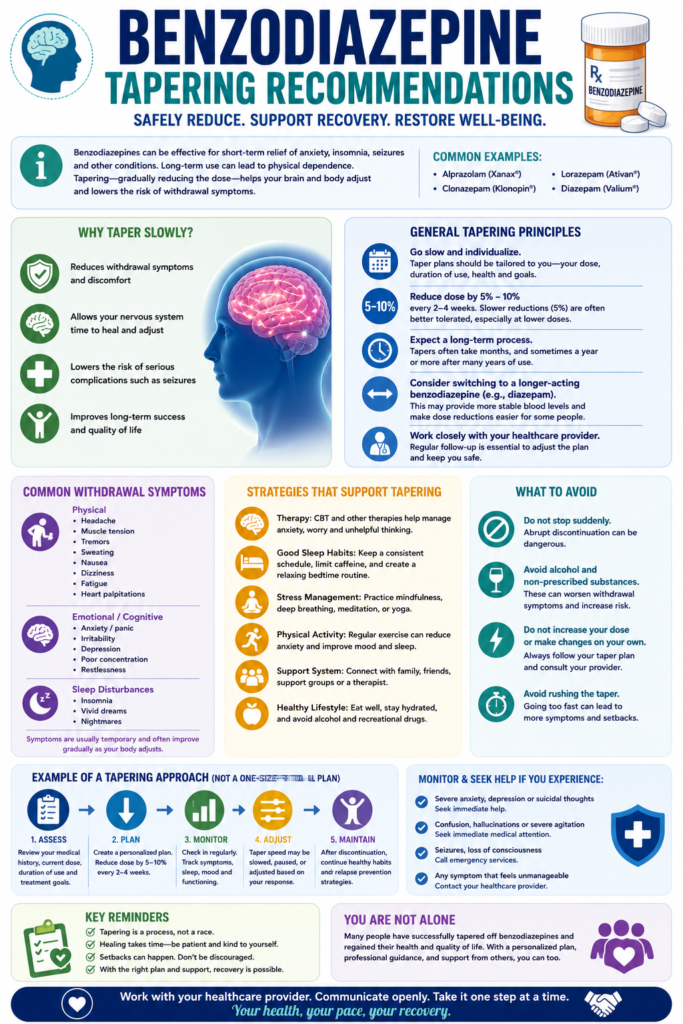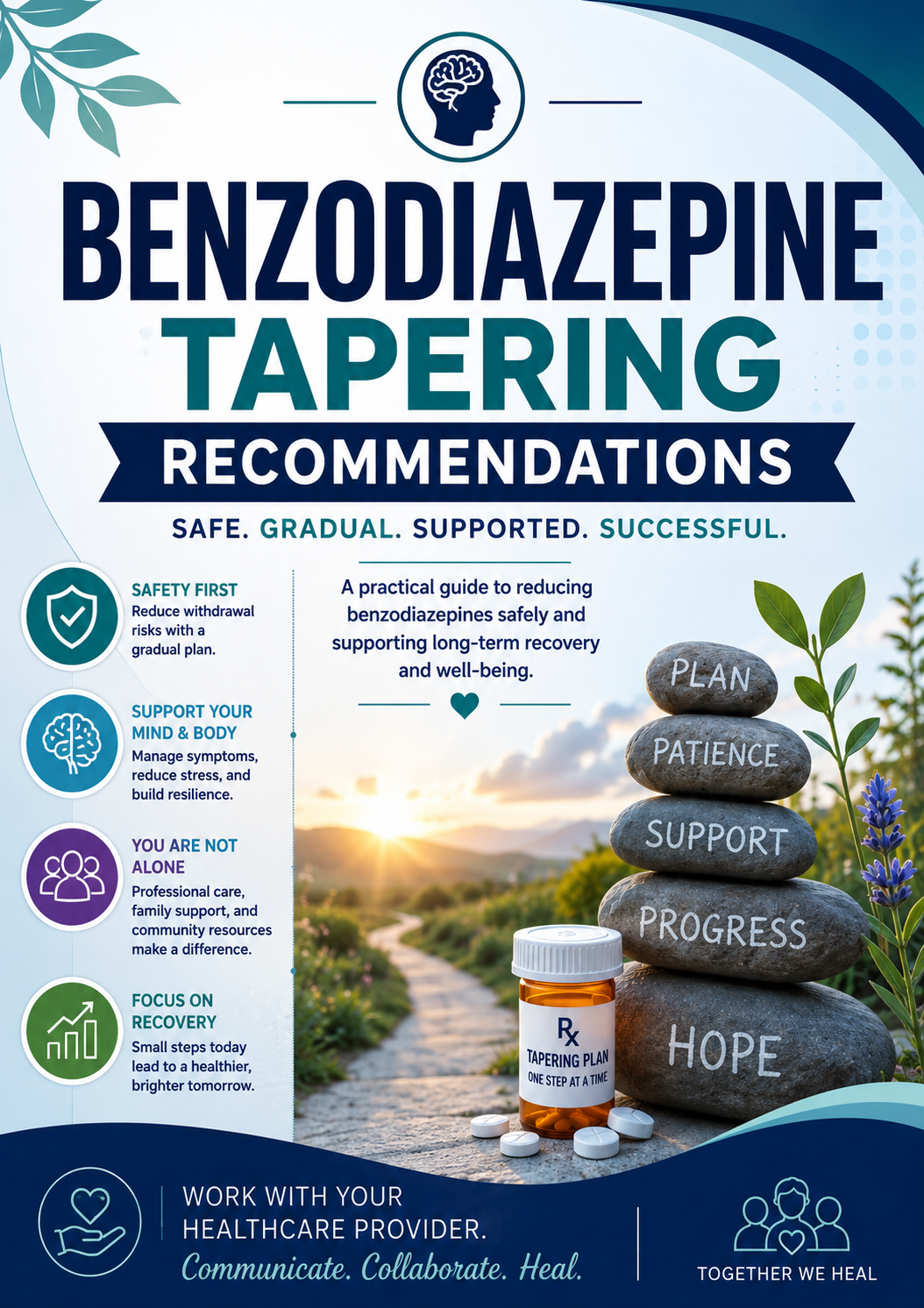
Benzodiazepines are commonly prescribed medications used to treat conditions such as anxiety, panic disorder, insomnia, seizures, and muscle spasms. While these medications can be highly effective when used appropriately, long-term use may lead to physical dependence, making discontinuation challenging. Because the brain and nervous system adapt to the presence of benzodiazepines over time, abruptly stopping them can result in significant withdrawal symptoms and, in some cases, serious medical complications. Benzodiazepine tapering involves gradually reducing the medication dose in a structured and individualized manner to allow the body to adjust safely. Understanding tapering recommendations is essential for patients, families, and healthcare providers to promote safety, reduce withdrawal discomfort, and support successful long-term recovery and wellness.
Benzodiazepine Tapering Recommendations
Introduction
Benzodiazepines are commonly prescribed medications used to treat anxiety disorders, panic disorder, insomnia, seizures, muscle spasms, and alcohol withdrawal. Common examples include Alprazolam, Lorazepam, Clonazepam, and Diazepam. While effective for short-term use, long-term use can lead to physical dependence, making it difficult to stop the medication abruptly. Benzodiazepine tapering is the gradual reduction of dosage over time to minimize withdrawal symptoms and reduce the risk of serious complications.
Why Tapering Is Important
Stopping benzodiazepines suddenly can cause significant withdrawal symptoms, including:
- Anxiety and panic attacks
- Insomnia
- Irritability
- Tremors
- Sweating
- Heart palpitations
- Nausea
- Sensory disturbances
- Seizures
- Delirium (in severe cases)
Because of these risks, benzodiazepines should generally be tapered rather than stopped abruptly, especially after prolonged use.
General Principles of Benzodiazepine Tapering
1. Individualized Treatment
There is no single tapering schedule that works for everyone. Factors influencing taper speed include:
- Current dose
- Duration of use
- Age
- Medical conditions
- Psychiatric conditions
- Previous withdrawal experiences
- Patient preferences
2. Gradual Dose Reduction
Many experts recommend reducing the dose by approximately:
- 5% to 10% every 2 to 4 weeks
- Slower reductions as lower doses are reached
Some individuals may tolerate faster tapers, while others require much slower reductions.
3. Longer Tapers for Long-Term Users
People who have taken benzodiazepines for years may require tapers lasting:
- Several months
- Six months or longer
- Occasionally, over one year
Slower tapers often improve comfort and increase success rates.
4. Consider Switching to a Longer-Acting Benzodiazepine
Some clinicians transition patients from shorter-acting medications such as alprazolam to longer-acting medications such as diazepam before beginning the taper.
Potential benefits include:
- More stable blood levels
- Less frequent withdrawal symptoms
- Easier dose adjustments
This approach may not be appropriate for every patient.
Common Withdrawal Symptoms
During tapering, individuals may experience:
Physical Symptoms
- Headaches
- Muscle tension
- Tremors
- Dizziness
- Fatigue
- Gastrointestinal upset
- Increased sensitivity to light or sound
Psychological Symptoms
- Anxiety
- Panic
- Depression
- Difficulty concentrating
- Restlessness
- Irritability
Sleep Disturbances
- Insomnia
- Vivid dreams
- Nightmares
Many symptoms improve gradually as the nervous system adjusts.
Strategies to Support Tapering
Cognitive Behavioral Therapy (CBT)
CBT can help individuals manage:
- Anxiety symptoms
- Catastrophic thinking
- Sleep difficulties
- Fear of withdrawal
Sleep Hygiene
Helpful practices include:
- Consistent sleep schedule
- Limiting caffeine
- Reducing screen time before bed
- Relaxation techniques
Stress Management
Useful techniques include:
- Mindfulness
- Meditation
- Deep breathing
- Yoga
- Progressive muscle relaxation
Physical Activity
Regular exercise may help reduce anxiety and improve mood during tapering.
Monitoring During Tapering
Patients should maintain regular follow-up appointments to monitor:
- Withdrawal symptoms
- Mood changes
- Sleep quality
- Anxiety levels
- Physical health
Dose adjustments may be needed if symptoms become severe.
Special Considerations
Older Adults
Older adults may be more vulnerable to:
- Falls
- Cognitive impairment
- Sedation
Tapering can often improve safety and cognitive functioning.
Co-Occurring Mental Health Conditions
Individuals with:
- Anxiety disorders
- Depression
- PTSD
- Substance use disorders
may benefit from additional counseling and psychiatric support during tapering.
What Not to Do
Avoid:
- Abrupt discontinuation without medical supervision
- Rapid dose reductions after long-term use
- Increasing alcohol consumption to manage symptoms
- Using non-prescribed substances to cope with withdrawal
Conclusion
Benzodiazepine tapering should be individualized, gradual, and medically supervised whenever possible. Successful tapering often involves a combination of careful dose reductions, behavioral support, stress management, and ongoing monitoring. While withdrawal symptoms can be challenging, many individuals successfully discontinue benzodiazepines and experience improvements in cognitive function, emotional stability, and overall quality of life. The key to success is patience, flexibility, and a treatment plan tailored to the individual’s needs.
Self-Management Strategies to Understand Benzodiazepine Tapering Recommendations
Benzodiazepine tapering can be a challenging but achievable process when approached with knowledge, patience, and support. Because the brain and nervous system adapt to benzodiazepines over time, gradually reducing the medication allows the body to adjust more safely and comfortably. Self-management strategies can help individuals understand the tapering process, cope with withdrawal symptoms, and improve the likelihood of long-term success.
1. Learn About Benzodiazepine Dependence
Educate yourself about how benzodiazepines affect the brain. Long-term use can lead to physical dependence, meaning the body adapts to the medication. Dependence is a biological response and does not necessarily mean addiction.
Understanding this can reduce fear, shame, and self-blame during the tapering process.
2. Understand the Purpose of a Gradual Taper
Recognize that tapering is designed to:
- Reduce withdrawal symptoms
- Minimize seizure risk
- Allow the nervous system to adapt
- Improve long-term success
Many people taper over months rather than weeks, especially after long-term use.
3. Follow the Tapering Plan Carefully
Work closely with your healthcare provider and avoid:
- Skipping doses
- Making sudden reductions
- Taking extra medication on difficult days
- Adjusting doses without medical guidance
Consistency helps stabilize the nervous system during withdrawal.
4. Track Symptoms Daily
Keep a journal documenting:
- Anxiety levels
- Sleep quality
- Mood changes
- Physical symptoms
- Medication doses
- Stress levels
Tracking symptoms can help identify patterns and guide discussions with healthcare providers.
5. Learn to Recognize Withdrawal Symptoms
Common withdrawal symptoms may include:
- Anxiety
- Insomnia
- Irritability
- Muscle tension
- Headaches
- Tremors
- Difficulty concentrating
Knowing that these symptoms can occur during tapering may help reduce fear when they arise.
6. Practice Stress-Management Techniques
Stress often intensifies withdrawal symptoms. Helpful techniques include:
- Deep breathing exercises
- Meditation
- Mindfulness practices
- Progressive muscle relaxation
- Guided imagery
Regular practice can improve emotional regulation throughout the taper.
7. Prioritize Healthy Sleep Habits
Sleep difficulties are common during tapering. Helpful strategies include:
- Maintaining a consistent bedtime
- Limiting caffeine
- Reducing screen time before bed
- Creating a relaxing bedtime routine
- Keeping the bedroom cool and comfortable
Good sleep hygiene supports nervous system recovery.
8. Stay Physically Active
Regular exercise may help:
- Reduce anxiety
- Improve mood
- Enhance sleep
- Relieve muscle tension
- Improve overall well-being
Even light activities such as walking can be beneficial.
9. Challenge Catastrophic Thinking
Withdrawal symptoms can feel overwhelming. When difficult symptoms occur, remind yourself:
- Symptoms are usually temporary.
- Recovery takes time.
- Discomfort does not mean danger.
- Improvement often occurs gradually.
Cognitive restructuring can reduce fear and anxiety during the process.
10. Avoid Alcohol and Non-Prescribed Substances
Alcohol and other substances can:
- Worsen withdrawal symptoms
- Increase health risks
- Interfere with nervous system healing
- Increase relapse risk
Focus on healthy coping strategies instead.
11. Build a Support Network
Seek support from:
- Healthcare providers
- Therapists
- Family members
- Friends
- Support groups
Recovery is often easier when individuals feel supported and understood.
12. Be Patient With the Process
Healing of the nervous system takes time. Some days may be more difficult than others. Progress is often non-linear, with improvements occurring gradually over weeks or months.
Avoid comparing your experience to others, as tapering responses vary significantly.
13. Maintain Regular Medical Follow-Up
Attend scheduled appointments to discuss:
- Withdrawal symptoms
- Mental health concerns
- Sleep difficulties
- Tapering progress
- Needed dose adjustments
Ongoing communication helps ensure the taper remains safe and manageable.
14. Focus on Overall Wellness
Support recovery through:
- Balanced nutrition
- Hydration
- Exercise
- Social connection
- Meaningful activities
- Stress reduction
A healthy lifestyle can improve resilience during tapering.
15. Celebrate Small Victories
Acknowledge progress such as:
- Completing dose reductions
- Managing symptoms effectively
- Attending appointments
- Practicing coping skills
- Improving daily functioning
Recognizing achievements can strengthen motivation and confidence.
Conclusion
Understanding benzodiazepine tapering recommendations empowers individuals to take an active role in their recovery. Through education, symptom monitoring, healthy lifestyle habits, stress management, and collaboration with healthcare providers, individuals can navigate tapering more safely and confidently. While the process may require patience and persistence, gradual tapering combined with effective self-management strategies can support nervous system healing, improve quality of life, and help individuals successfully achieve their treatment goals.
Family Support Strategies to Understand Benzodiazepine Tapering Recommendations
Family members can play a crucial role in supporting a loved one who is tapering off benzodiazepines. Because benzodiazepine withdrawal can involve both physical and emotional symptoms, understanding the tapering process can help families provide effective support while reducing fear, frustration, and misunderstandings. Education, patience, and compassionate communication are key components of successful family involvement.
1. Learn About Benzodiazepine Dependence
Family members should understand that long-term benzodiazepine use can cause physical dependence. Dependence is a normal biological adaptation and does not automatically mean addiction. Understanding this distinction can reduce stigma and promote empathy.
Common benzodiazepines include:
- Alprazolam
- Lorazepam
- Clonazepam
- Diazepam
2. Understand Why Tapering Is Necessary
Families should recognize that abruptly stopping benzodiazepines can be dangerous and may lead to:
- Severe anxiety
- Panic attacks
- Insomnia
- Tremors
- Seizures
- Serious medical complications
A gradual taper allows the brain and nervous system to adjust safely.
3. Be Patient With the Recovery Timeline
Many families expect rapid improvement after dose reductions. However, nervous system healing often takes time. Symptoms may fluctuate, and progress may occur gradually over weeks or months.
Patience can reduce pressure and help maintain a supportive environment.
4. Learn About Withdrawal Symptoms
Understanding common withdrawal symptoms can prevent misunderstandings. Symptoms may include:
- Anxiety
- Irritability
- Sleep disturbances
- Fatigue
- Difficulty concentrating
- Muscle tension
- Emotional sensitivity
Recognizing that these symptoms are often part of the tapering process can help families respond with compassion rather than criticism.
5. Encourage Open Communication
Create opportunities for honest conversations about:
- Symptoms
- Fears
- Progress
- Challenges
- Treatment goals
Listening without judgment helps loved ones feel understood and supported.
6. Avoid Minimizing Symptoms
Comments such as:
- “It’s all in your head.”
- “Just push through it.”
- “You should be over this by now.”
can increase distress. Acknowledge that withdrawal symptoms are real and can be difficult, even when they are temporary.
7. Support Adherence to the Taper Plan
Encourage your loved one to:
- Follow medical recommendations
- Attend appointments
- Take medications as prescribed
- Discuss concerns with healthcare providers
Avoid pressuring them to taper faster than recommended.
8. Help Reduce Stress
Stress can worsen withdrawal symptoms. Families can support recovery by:
- Creating a calm home environment
- Reducing unnecessary conflicts
- Encouraging relaxation activities
- Helping manage daily responsibilities when appropriate
9. Encourage Healthy Lifestyle Habits
Support habits that promote nervous system recovery, including:
- Regular exercise
- Nutritious meals
- Adequate hydration
- Consistent sleep routines
- Time outdoors
- Social connection
These habits can improve overall well-being during tapering.
10. Recognize Emotional Changes
Withdrawal may temporarily increase:
- Anxiety
- Mood swings
- Frustration
- Tearfulness
- Sensitivity to stress
Family members can help by responding calmly and avoiding personalizing these emotional reactions.
11. Participate in Family Education
Consider attending:
- Medical appointments when appropriate
- Family counseling
- Educational workshops
- Support groups
Learning together can improve understanding and strengthen family support.
12. Respect Individual Differences
Every tapering experience is unique. Avoid comparing your loved one’s experience to:
- Friends
- Online stories
- Other family members
Individual responses vary based on duration of use, dosage, health conditions, and personal biology.
13. Watch for Warning Signs
Encourage immediate medical attention if severe symptoms occur, including:
- Suicidal thoughts
- Severe depression
- Hallucinations
- Confusion
- Seizures
- Significant behavioral changes
Early intervention can improve safety and outcomes.
14. Maintain Healthy Boundaries
Supporting a loved one does not mean taking responsibility for their recovery. Families can provide encouragement while allowing the individual to remain actively involved in their own treatment decisions.
15. Practice Self-Care
Family members may experience stress during a loved one’s taper. Important self-care strategies include:
- Seeking support
- Maintaining hobbies
- Exercising regularly
- Setting healthy boundaries
- Attending support groups if needed
Healthy caregivers are better able to provide effective support.
Conclusion
Families who understand benzodiazepine tapering recommendations can become valuable partners in the recovery process. Through education, patience, open communication, and emotional support, family members can help create a safe and encouraging environment for healing. By recognizing that withdrawal symptoms are often temporary and that recovery takes time, families can reduce stress, foster resilience, and support their loved one’s journey toward improved health and independence.
Community Resource Strategies to Understand Benzodiazepine Tapering Recommendations
Communities play an important role in helping individuals safely taper from benzodiazepines and understand the recovery process. Because benzodiazepine withdrawal can be physically and emotionally challenging, access to accurate information, supportive services, and coordinated care can significantly improve outcomes. Community resources can help reduce stigma, increase education, and provide practical support throughout the tapering journey.
1. Promote Public Education About Benzodiazepine Use
Community health organizations can provide educational programs that explain:
- What benzodiazepines are
- How physical dependence develops
- The difference between dependence and addiction
- Why gradual tapering is important
- Common withdrawal symptoms
Education helps individuals and families make informed decisions about treatment.
2. Support Community Mental Health Centers
Community mental health centers often provide:
- Psychiatric evaluations
- Medication management
- Counseling services
- Crisis intervention
- Recovery support
These services can help individuals manage anxiety, depression, and other symptoms that may arise during tapering.
3. Increase Access to Behavioral Health Therapies
Evidence-based therapies can support benzodiazepine tapering, including:
- Cognitive Behavioral Therapy (CBT)
- Acceptance and Commitment Therapy (ACT)
- Mindfulness-based interventions
- Stress management training
Therapy can help individuals develop coping skills while reducing reliance on medication.
4. Expand Peer Support Programs
Peer support groups allow individuals to:
- Share experiences
- Learn practical coping strategies
- Reduce feelings of isolation
- Receive encouragement from others who understand the process
Peer support can provide hope and normalize recovery challenges.
5. Offer Family Education Programs
Communities can provide workshops that help families understand:
- Benzodiazepine dependence
- Withdrawal symptoms
- Tapering timelines
- Effective support strategies
- Communication skills
Educated families are often better equipped to support recovery.
6. Utilize Primary Care Partnerships
Primary care providers can:
- Monitor taper progress
- Coordinate care with specialists
- Identify complications
- Provide referrals to behavioral health services
Integrated care improves continuity and patient safety.
7. Increase Awareness of Crisis Resources
Communities should promote access to:
- Crisis hotlines
- Mobile crisis teams
- Behavioral health urgent care
- Emergency psychiatric services
These resources provide support during periods of severe distress or psychiatric instability.
8. Provide Stress-Management Programs
Community centers, wellness programs, and healthcare organizations can offer:
- Meditation classes
- Yoga programs
- Relaxation training
- Mindfulness workshops
- Breathing exercises
Stress reduction may help lessen withdrawal-related discomfort.
9. Promote Healthy Lifestyle Programs
Community wellness initiatives can support:
- Physical activity
- Nutrition education
- Sleep hygiene education
- Chronic disease management
Healthy lifestyle habits can improve resilience during tapering.
10. Expand Telehealth Services
Telehealth can increase access to:
- Counseling
- Psychiatry
- Medication management
- Support groups
- Educational programs
This is especially valuable for rural and underserved communities.
11. Support Workplace Mental Health Programs
Employers can assist by offering:
- Employee assistance programs (EAPs)
- Flexible scheduling
- Mental health education
- Stress-management resources
Workplace support may reduce barriers to treatment participation.
12. Reduce Stigma Through Community Awareness Campaigns
Public education campaigns can emphasize that:
- Physical dependence is a medical condition
- Withdrawal symptoms are real
- Tapering requires time and support
- Seeking help is a sign of strength
Reducing stigma encourages individuals to seek assistance earlier.
13. Encourage Pharmacist Involvement
Pharmacists can provide:
- Medication education
- Tapering information
- Medication safety counseling
- Support for adherence to taper plans
They are often among the most accessible healthcare professionals in the community.
14. Support Recovery-Oriented Community Networks
Communities can foster collaboration among:
- Healthcare providers
- Mental health agencies
- Recovery organizations
- Social service agencies
- Faith-based organizations
Strong networks provide comprehensive support throughout recovery.
15. Advocate for Access to Specialized Services
Community leaders can support policies that improve access to:
- Addiction medicine specialists
- Behavioral health services
- Psychiatric care
- Recovery support programs
- Insurance coverage for taper-related treatment
Expanding access helps individuals receive the level of care they need.
Conclusion
Community resources are essential for helping individuals understand and safely navigate benzodiazepine tapering. Through education, mental health services, peer support, family programs, telehealth, wellness initiatives, and coordinated healthcare systems, communities can provide the support necessary for successful tapering and recovery. When individuals have access to accurate information and compassionate care, they are better equipped to manage withdrawal symptoms, maintain treatment engagement, and achieve long-term health and well-being.
Frequently Asked Questions
Here are some common questions:
1. What is benzodiazepine tapering?
Answer: Benzodiazepine tapering is the gradual reduction of a benzodiazepine medication over time to minimize withdrawal symptoms and reduce the risk of serious complications.
2. Why shouldn’t benzodiazepines be stopped suddenly?
Answer: Abrupt discontinuation can lead to severe withdrawal symptoms, including anxiety, insomnia, panic attacks, tremors, seizures, and, in rare cases, life-threatening complications.
3. What are benzodiazepines?
Answer: Benzodiazepines are medications commonly prescribed for anxiety, panic disorders, insomnia, muscle spasms, seizures, and alcohol withdrawal. Examples include Alprazolam, Lorazepam, Clonazepam, and Diazepam.
4. What is the goal of tapering?
Answer: The goal is to safely reduce and eventually discontinue the medication while minimizing withdrawal symptoms and supporting nervous system recovery.
5. How long does a benzodiazepine taper take?
Answer: The duration varies widely. Some tapers may last several weeks, while others may take months or longer, depending on the dose, duration of use, and individual response.
6. Is there one tapering schedule that works for everyone?
Answer: No. Tapering plans should be individualized based on medical history, medication type, dose, duration of use, and withdrawal symptoms.
7. How much is the dose usually reduced during tapering?
Answer: Many experts recommend reducing the dose by approximately 5% to 10% every 2 to 4 weeks, although some individuals may need slower reductions.
8. What are common withdrawal symptoms?
Answer: Common symptoms include:
- Anxiety
- Insomnia
- Irritability
- Muscle tension
- Tremors
- Headaches
- Sweating
- Difficulty concentrating
- Fatigue
9. Are withdrawal symptoms dangerous?
Answer: Most withdrawal symptoms are uncomfortable but manageable. However, severe withdrawal can involve seizures, hallucinations, or delirium and requires immediate medical attention.
10. Does experiencing withdrawal mean the taper is failing?
Answer: No. Mild to moderate withdrawal symptoms are common and do not necessarily indicate a problem. They often reflect the nervous system adapting to lower medication levels.
11. Why do some people switch to diazepam before tapering?
Answer: Diazepam has a longer half-life, which may provide more stable blood levels and make dose reductions smoother for some individuals.
12. What is a “hold” during tapering?
Answer: A hold means temporarily maintaining the current dose rather than continuing reductions. This allows symptoms to stabilize before resuming the taper.
13. Can anxiety increase during tapering?
Answer: Yes. Increased anxiety is one of the most common withdrawal symptoms because benzodiazepines affect brain systems involved in stress and anxiety regulation.
14. Can sleep problems occur during tapering?
Answer: Yes. Insomnia, vivid dreams, and disrupted sleep are common during dose reductions.
15. What can help with sleep during tapering?
Answer: Helpful strategies include:
- Consistent sleep schedules
- Good sleep hygiene
- Limiting caffeine
- Relaxation techniques
- Cognitive Behavioral Therapy for Insomnia (CBT-I)
16. Can exercise help during a taper?
Answer: Yes. Regular physical activity may improve mood, reduce anxiety, decrease muscle tension, and promote better sleep.
17. Should alcohol be used to manage withdrawal symptoms?
Answer: No. Alcohol can worsen withdrawal symptoms, interfere with recovery, and increase the risk of complications.
18. Can therapy help during tapering?
Answer: Yes. Cognitive Behavioral Therapy (CBT), mindfulness-based therapies, and counseling can help individuals manage anxiety, stress, and fears related to tapering.
19. What is protracted withdrawal?
Answer: Protracted withdrawal refers to symptoms that persist for months after discontinuation. Although not everyone experiences it, symptoms generally improve over time.
20. How can family members help during tapering?
Answer: Families can provide:
- Emotional support
- Encouragement
- Patience
- Assistance with healthy routines
- Understanding of withdrawal symptoms
21. What are the signs that medical attention is needed immediately?
Answer: Seek immediate medical care for:
- Seizures
- Hallucinations
- Severe confusion
- Loss of consciousness
- Suicidal thoughts
- Severe agitation
22. Can tapering improve long-term health?
Answer: For many individuals, successful tapering can lead to improved alertness, memory, concentration, balance, and overall quality of life.
23. Is it normal to have good days and bad days during tapering?
Answer: Yes. Many people experience fluctuations in symptoms. Recovery is often non-linear, with periods of improvement and temporary setbacks.
24. What factors affect tapering success?
Answer: Important factors include:
- Individualized taper plans
- Medical supervision
- Strong support systems
- Healthy lifestyle habits
- Stress management
- Patience and flexibility
25. What is the most important thing to remember about benzodiazepine tapering?
Answer: Benzodiazepine tapering is a gradual healing process, not a race. Slow, individualized dose reductions combined with medical guidance, healthy coping skills, and strong support systems offer the safest and most effective path toward successful discontinuation and long-term recovery.
Conclusion
Benzodiazepine tapering is a carefully planned process that requires patience, flexibility, and ongoing support. Because each individual’s experience is unique, tapering recommendations should be tailored to personal needs, medical history, duration of medication use, and response to dose reductions. While withdrawal symptoms can be difficult, gradual tapering under appropriate medical supervision can significantly reduce risks and improve the likelihood of success. Combining tapering with behavioral therapies, healthy lifestyle practices, stress-management techniques, and strong support systems can further enhance recovery. By understanding the principles of safe benzodiazepine tapering, individuals and their support networks can work together to promote healing, improve quality of life, and achieve lasting health and independence.
Video: How I Tapered Off Benzos Safely #benzodiazepines #recovery