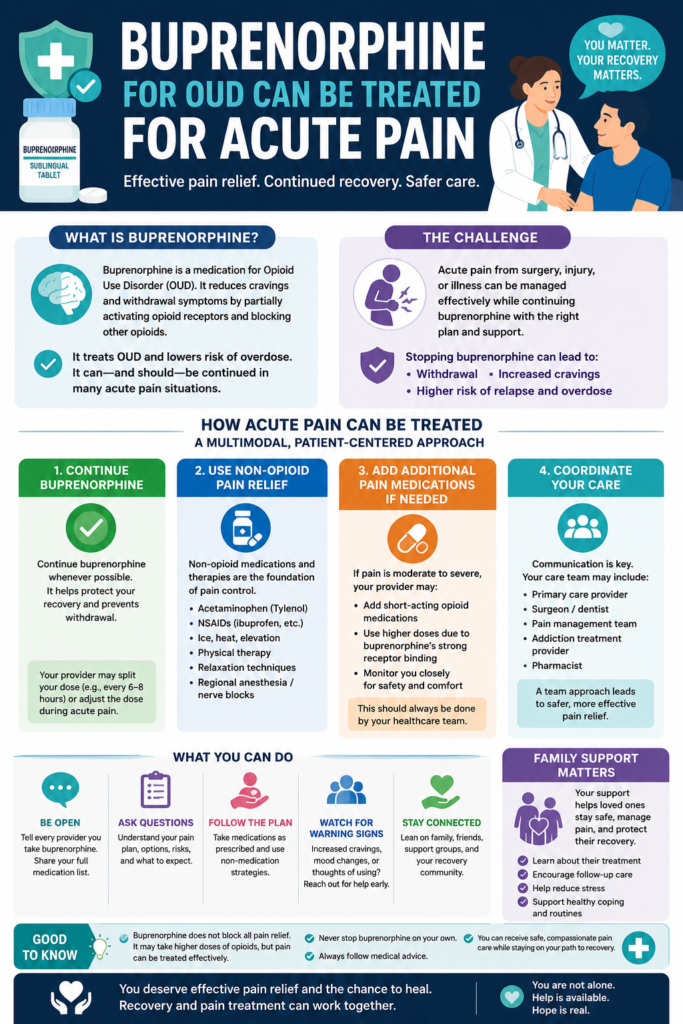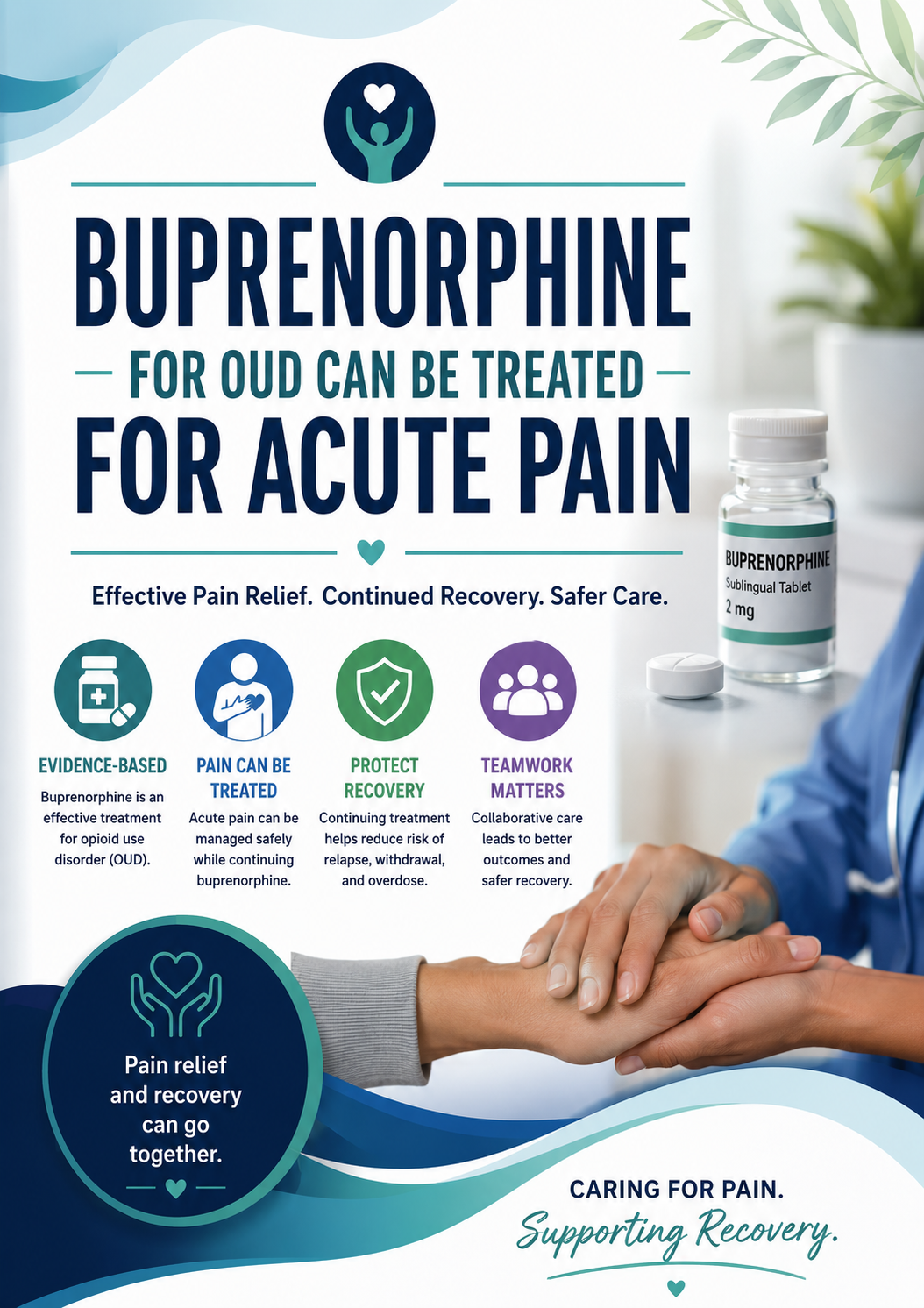
Buprenorphine is a highly effective medication used to treat opioid use disorder (OUD), helping individuals reduce cravings, prevent withdrawal symptoms, and maintain long-term recovery. However, managing acute pain in people receiving buprenorphine can present unique challenges during situations such as surgery, injury, dental procedures, or serious illness. Because buprenorphine binds strongly to opioid receptors, healthcare providers must carefully balance effective pain control with continued treatment for OUD. In recent years, clinical guidelines have increasingly supported continuing buprenorphine during episodes of acute pain while using a multimodal approach that may include non-opioid medications, regional anesthesia, and, when necessary, additional opioid pain medications. Understanding how acute pain can be safely treated while maintaining buprenorphine therapy is essential for patients, families, and healthcare professionals seeking to promote both pain relief and recovery stability.
Buprenorphine for Opioid Use Disorder (OUD) During Acute Pain Treatment
People receiving buprenorphine for opioid use disorder (OUD) may still experience acute pain from surgery, injuries, dental procedures, or medical illnesses. Historically, some clinicians stopped buprenorphine during acute pain treatment, but current evidence increasingly supports continuing buprenorphine in most situations while adjusting pain management strategies.
Why Acute Pain Management Can Be Challenging
Buprenorphine is a partial opioid agonist that binds very strongly to opioid receptors. This strong receptor binding helps reduce cravings and withdrawal symptoms while lowering overdose risk. However, because buprenorphine occupies opioid receptors, some healthcare providers worry that traditional opioid pain medications may be less effective during episodes of severe pain.
Despite these concerns, research suggests that adequate pain control can often be achieved without discontinuing buprenorphine.
Current Recommendations
Most experts recommend:
- Continuing buprenorphine during acute pain episodes whenever possible.
- Coordinating care among addiction specialists, surgeons, emergency providers, and primary care clinicians.
- Using a multimodal pain management approach.
- Avoiding unnecessary interruption of OUD treatment, which may increase relapse risk.
Stopping buprenorphine can lead to:
- Opioid withdrawal symptoms
- Increased cravings
- Higher risk of relapse
- Increased overdose risk if opioid use resumes
Strategies for Managing Acute Pain
Mild to Moderate Pain
Pain may be managed with:
- Acetaminophen (Tylenol)
- Nonsteroidal anti-inflammatory drugs (NSAIDs) such as ibuprofen
- Ice, heat, elevation, and physical therapy
- Regional anesthesia, when appropriate
Moderate to Severe Pain
Providers may:
- Continue buprenorphine and divide the daily dose into smaller doses given multiple times throughout the day.
- Increase the buprenorphine dose temporarily if clinically appropriate.
- Add short-acting full opioid agonists when necessary under close supervision.
- Use nerve blocks or regional anesthesia techniques.
Special Considerations for Surgery
Before planned surgery:
- Inform surgeons and anesthesiologists about buprenorphine treatment.
- Develop a pain management plan before the procedure.
- Coordinate follow-up with the OUD treatment provider.
After surgery:
- Continue monitoring pain control.
- Resume the maintenance treatment plan as soon as appropriate if any temporary adjustments were made.
Benefits of Continuing Buprenorphine
Continuing treatment may:
- Reduce relapse risk
- Prevent withdrawal symptoms
- Maintain recovery stability
- Improve continuity of care
- Lower overdose risk
Challenges
Potential challenges include:
- Need for higher doses of opioid pain medication in some cases
- Provider unfamiliarity with buprenorphine management
- Communication gaps between treatment teams
- Concerns about balancing pain relief and addiction treatment
Self-Management Strategies
Patients can:
- Inform all healthcare providers about their buprenorphine treatment.
- Carry a medication list.
- Discuss pain management plans before surgeries or procedures.
- Report inadequate pain control promptly.
- Continue recovery supports during stressful medical events.
Family Support Strategies
Families can:
- Help communicate medication information to healthcare providers.
- Encourage adherence to treatment plans.
- Watch for signs of relapse risk during recovery.
- Support attendance at follow-up appointments.
- Encourage use of recovery support networks.
Community and Healthcare System Strategies
Healthcare systems can:
- Train providers in acute pain management for patients receiving buprenorphine.
- Improve communication between the surgical and addiction treatment teams.
- Develop standardized protocols.
- Expand access to addiction medicine consultation services.
- Promote evidence-based OUD treatment practices.
Conclusion
Acute pain treatment for people receiving buprenorphine for OUD requires careful planning, but effective pain management is achievable. Current practice increasingly favors continuing buprenorphine while using multimodal pain strategies and coordinated care. This approach helps control pain, reduces withdrawal and relapse risk, and supports long-term recovery. Patients should work closely with their healthcare team to develop individualized treatment plans that address both pain management and ongoing recovery needs.
Self-Management Strategies to Understand How Buprenorphine for OUD Can Be Treated During Acute Pain
Managing acute pain while taking buprenorphine for opioid use disorder (OUD) can be confusing and sometimes stressful. Understanding how pain treatment works during surgery, injury, or illness can help patients stay engaged in recovery while receiving appropriate pain relief. The following self-management strategies can help individuals prepare for and safely navigate acute pain treatment.
1. Learn How Buprenorphine Works
Educate yourself about buprenorphine’s role in treating OUD. Buprenorphine reduces cravings and withdrawal symptoms by partially activating opioid receptors. Understanding that buprenorphine may affect how other opioid pain medications work can help patients participate in informed discussions with healthcare providers.
2. Keep an Updated Medication List
Maintain a current list of:
- Buprenorphine dosage and schedule
- Other prescribed medications
- Allergies
- Medical conditions
Carry this information with you, especially when visiting emergency departments, urgent care centers, or surgical facilities.
3. Communicate Early With Healthcare Providers
Before surgery, dental procedures, or planned medical treatments:
- Inform providers that you are taking buprenorphine.
- Discuss pain management expectations.
- Ask whether any adjustments to your medication are anticipated.
- Ensure your addiction treatment provider and surgical team communicate with one another.
4. Follow the Prescribed Treatment Plan
Avoid changing or stopping buprenorphine without medical guidance. Abrupt discontinuation can lead to:
- Withdrawal symptoms
- Increased cravings
- Relapse risk
- Increased overdose risk
Follow instructions provided by your healthcare team regarding any temporary dose adjustments.
5. Use Non-Opioid Pain Management Techniques
Many forms of acute pain can be improved with:
- Acetaminophen when appropriate
- Nonsteroidal anti-inflammatory medications, if approved
- Ice or heat therapy
- Relaxation exercises
- Deep breathing techniques
- Gentle movement and stretching
- Physical therapy recommendations
Combining multiple approaches often improves pain control.
6. Monitor and Report Pain Accurately
Keep track of:
- Pain intensity
- Pain location
- Activities that worsen or improve symptoms
- Medication effectiveness
Providing accurate information helps healthcare providers adjust treatment safely and effectively.
7. Prepare for High-Risk Situations
Acute pain can increase stress and trigger cravings. Develop a recovery plan that includes:
- Emergency contact numbers
- Sponsor or peer support contacts
- Counseling resources
- Recovery meetings
- Coping strategies for managing stress
8. Watch for Relapse Warning Signs
Be aware of:
- Increased thoughts about opioid use
- Emotional distress
- Isolation
- Skipping recovery activities
- Desire to self-medicate pain
Seek support early if these warning signs appear.
9. Ask Questions and Advocate for Yourself
Patients have the right to understand their treatment. Consider asking:
- Will I continue buprenorphine during treatment?
- What pain medications will be used?
- How long will treatment last?
- What are the risks and benefits of each option?
- What should I do if pain remains uncontrolled?
10. Attend Follow-Up Appointments
After acute pain treatment:
- Continue follow-up with your buprenorphine provider.
- Discuss any medication changes.
- Monitor for ongoing pain issues.
- Review relapse prevention strategies.
Conclusion
Effective self-management begins with education, communication, and active participation in treatment decisions. Individuals taking buprenorphine for OUD can successfully manage acute pain while maintaining recovery by working closely with healthcare providers, following treatment recommendations, utilizing non-opioid pain management strategies, and remaining engaged in recovery supports. Understanding the process reduces anxiety, improves pain control, and helps protect long-term recovery from opioid use disorder.
Family Support Strategies to Understand How Buprenorphine for OUD Can Be Treated During Acute Pain
Family members play an important role when a loved one receiving buprenorphine for opioid use disorder (OUD) experiences acute pain from surgery, injury, dental procedures, or illness. Understanding how buprenorphine works and how acute pain is managed can help families provide effective support while protecting recovery.
1. Learn About Buprenorphine and OUD Treatment
Families should educate themselves about:
- How buprenorphine reduces cravings and withdrawal symptoms.
- Why is buprenorphine an evidence-based treatment for OUD?
- How acute pain management may differ for individuals receiving buprenorphine.
Understanding these concepts helps reduce stigma and promotes informed decision-making.
2. Support Open Communication With Healthcare Providers
Encourage your loved one to:
- Inform all healthcare providers about their buprenorphine treatment.
- Discuss pain management plans before surgery or procedures.
- Ask questions about medication adjustments and pain control.
Family members can help by attending appointments when invited and assisting with communication during stressful situations.
3. Understand That Continuing Buprenorphine Is Often Recommended
Many families mistakenly believe buprenorphine must be stopped during acute pain treatment. Current clinical practice often supports continuing buprenorphine while using additional pain management strategies when needed. Understanding this approach can reduce anxiety and confusion.
4. Help Monitor Pain and Recovery
Family members can:
- Observe pain levels and recovery progress.
- Encourage adherence to prescribed treatment plans.
- Help track medication schedules.
- Report concerns to healthcare providers when appropriate.
Monitoring helps ensure that pain is treated effectively while supporting recovery goals.
5. Encourage Non-Opioid Pain Management Strategies
Support the use of:
- Ice and heat therapy
- Rest and proper sleep
- Physical therapy exercises
- Relaxation and breathing techniques
- Healthy nutrition and hydration
These approaches can complement medical treatment and improve comfort.
6. Recognize Relapse Risk During Acute Pain Episodes
Pain, stress, fear, and exposure to opioid medications can increase relapse risk. Family members should watch for:
- Increased cravings
- Mood changes
- Isolation from support systems
- Missed appointments
- Discussions about returning to non-prescribed opioid use
Early recognition allows intervention before problems escalate.
7. Provide Emotional Support Without Judgment
Recovery can be challenging during medical crises. Families can help by:
- Listening without criticism
- Offering encouragement
- Avoiding blame or shame
- Acknowledging recovery progress
- Supporting healthy coping skills
A supportive environment can strengthen resilience during difficult periods.
8. Assist With Medication Safety
If opioid pain medications are prescribed temporarily:
- Help ensure medications are taken exactly as prescribed.
- Secure medications safely.
- Monitor for side effects.
- Encourage proper disposal of unused medications.
Medication safety reduces the risk of misuse and accidental exposure.
9. Encourage Continued Recovery Activities
Acute pain should not interrupt recovery whenever possible. Families can encourage:
- Counseling participation
- Recovery meetings
- Peer support programs
- Communication with sponsors or recovery coaches
- Follow up with addiction treatment providers
Maintaining recovery routines promotes stability.
10. Develop an Emergency and Relapse Prevention Plan
Families should know:
- Emergency contact numbers
- Treatment provider information
- Local crisis resources
- Naloxone availability and use
- Warning signs that require immediate medical attention
Having a plan reduces confusion during emergencies.
Conclusion
Family support can significantly improve outcomes for individuals receiving buprenorphine for OUD who experience acute pain. Through education, communication, emotional support, medication safety, and relapse prevention efforts, families can help ensure that pain is effectively managed while protecting long-term recovery. A well-informed and supportive family environment can reduce stress, strengthen treatment adherence, and promote successful recovery during challenging medical situations.
Community Resource Strategies to Understand How Buprenorphine for OUD Can Be Treated During Acute Pain
Community resources play a vital role in helping individuals with opioid use disorder (OUD), their families, and healthcare providers understand how acute pain can be safely managed while continuing buprenorphine treatment. Effective community support improves education, reduces stigma, promotes evidence-based care, and helps individuals maintain recovery during medical emergencies, injuries, or surgeries.
1. Expand Community Education Programs
Community organizations can provide educational workshops that explain:
- How buprenorphine works in treating OUD.
- Why acute pain management may differ for individuals receiving buprenorphine.
- Current recommendations for continuing buprenorphine during many acute pain situations.
- The importance of balancing pain relief and recovery goals.
Education helps reduce misconceptions and increases confidence in treatment decisions.
2. Support Access to Addiction Treatment Providers
Communities can improve understanding by increasing access to:
- Buprenorphine-prescribing clinicians.
- Addiction medicine specialists.
- Behavioral health professionals.
- Recovery support services.
Accessible treatment providers can help patients and families safely navigate acute pain episodes.
3. Develop Integrated Healthcare Networks
Hospitals, emergency departments, primary care clinics, pain specialists, surgeons, dentists, and addiction treatment programs should collaborate to create coordinated care plans. Strong communication between providers helps ensure consistent treatment recommendations and safer pain management.
4. Utilize Peer Recovery Support Services
Peer Recovery Support Specialists (PRSS) can:
- Share personal recovery experiences.
- Help patients understand treatment options.
- Encourage adherence to buprenorphine therapy.
- Provide support during stressful medical events.
Peer support often increases trust and engagement in care.
5. Promote Public Awareness Campaigns
Community awareness efforts can address common myths, such as:
- “People on buprenorphine cannot receive pain treatment.”
- “Buprenorphine must always be stopped before surgery.”
- “Using buprenorphine means someone is still addicted.”
Accurate information reduces stigma and supports evidence-based treatment practices.
6. Offer Family Education Programs
Community organizations can provide classes and support groups that teach families:
- How buprenorphine works.
- What to expect during acute pain treatment.
- Signs of relapse risk.
- Strategies for supporting recovery during medical crises.
Educated families are better equipped to provide effective support.
7. Increase Access to Recovery Support Groups
Support groups can help individuals:
- Discuss concerns about surgery or pain management.
- Learn coping skills from others with similar experiences.
- Maintain recovery-focused relationships during periods of stress and discomfort.
Recovery communities provide encouragement and accountability.
8. Provide Naloxone Education and Distribution
Community programs should ensure that individuals receiving OUD treatment and their families have access to:
- Naloxone training
- Overdose prevention education
- Emergency response resources
While buprenorphine reduces overdose risk, overdose prevention remains an important community health strategy.
9. Create Educational Resources for Healthcare Providers
Local healthcare systems can offer continuing education regarding:
- Acute pain management while on buprenorphine.
- Evidence-based OUD treatment.
- Relapse prevention during medical treatment.
- Safe prescribing practices.
Improved provider knowledge leads to better patient outcomes.
10. Advocate for Policies That Support Continuity of Care
Communities can support policies that:
- Expand access to buprenorphine treatment.
- Improve insurance coverage for addiction care.
- Increase addiction medicine consultation services.
- Support integrated behavioral and medical healthcare systems.
These policies help individuals receive consistent care during acute pain episodes.
Conclusion
Community resources are essential for helping individuals understand how acute pain can be treated safely while receiving buprenorphine for OUD. Through education, healthcare coordination, peer support, family programs, provider training, and public awareness initiatives, communities can reduce stigma, improve access to evidence-based care, and support long-term recovery. A strong community network helps ensure that individuals receive effective pain management without compromising their recovery journey.
Frequently Asked Questions
Here are some common questions:
1. What is buprenorphine?
Buprenorphine is a medication used to treat opioid use disorder (OUD). It helps reduce opioid cravings, prevents withdrawal symptoms, and lowers the risk of overdose.
2. Can someone taking buprenorphine receive treatment for acute pain?
Yes. People receiving buprenorphine can safely receive treatment for acute pain caused by surgery, injury, dental procedures, or illness. Pain management plans can be tailored to meet individual needs.
3. Does buprenorphine completely block pain medications?
No. Buprenorphine binds strongly to opioid receptors, which can make pain management more complex, but effective pain relief is still possible using appropriate medical strategies.
4. Should buprenorphine be stopped before surgery?
In many cases, no. Current guidelines increasingly recommend continuing buprenorphine during surgery and acute pain treatment to reduce the risk of withdrawal, relapse, and overdose. Treatment decisions should be individualized.
5. Why is continuing buprenorphine often recommended?
Continuing buprenorphine helps:
- Prevent withdrawal symptoms
- Reduce cravings
- Lower relapse risk
- Maintain recovery stability
- Reduce overdose risk
6. How is acute pain treated while taking buprenorphine?
Treatment may include:
- Acetaminophen (Tylenol)
- NSAIDs such as ibuprofen
- Regional anesthesia or nerve blocks
- Physical therapy
- Temporary adjustments to buprenorphine dosing
- Additional opioid medications when medically necessary
7. Can opioid pain medications still work if someone is taking buprenorphine?
Yes. In some situations, healthcare providers may prescribe additional opioid pain medications. Higher doses may sometimes be required because buprenorphine occupies opioid receptors.
8. What is a multimodal pain management approach?
Multimodal pain management uses multiple methods to control pain, including medications, physical therapies, and non-drug techniques. This approach often provides better pain relief while reducing reliance on opioids.
9. Is acute pain treatment different for people with OUD?
Yes. Healthcare providers must balance effective pain control with protecting recovery from opioid use disorder. Careful planning helps manage both needs safely.
10. Can stopping buprenorphine increase relapse risk?
Yes. Abruptly stopping buprenorphine can lead to withdrawal symptoms, increased cravings, and a higher risk of relapse and overdose.
11. What should patients tell their healthcare providers before surgery or emergency treatment?
Patients should inform providers about:
- Their buprenorphine treatment
- Current dosage
- Other medications they take
- Past substance use history
- Previous pain management experiences
12. What should family members know about acute pain treatment and buprenorphine?
Families should understand that:
- Pain can be treated effectively while continuing buprenorphine.
- Recovery should remain a priority during medical treatment.
- Emotional support and medication adherence are important.
- Monitoring for relapse warning signs can be helpful.
13. Are non-opioid treatments important during acute pain management?
Yes. Non-opioid treatments often play a major role in pain control and may include:
- Acetaminophen
- NSAIDs
- Ice and heat therapy
- Physical therapy
- Relaxation techniques
- Mindfulness exercises
14. What are the warning signs that someone may be struggling during acute pain treatment?
Warning signs may include:
- Increased cravings
- Mood changes
- Isolation
- Missing recovery appointments
- Seeking non-prescribed opioids
- Increased stress or anxiety
15. How can Peer Recovery Support Specialists (PRSS) help?
PRSS can:
- Provide encouragement and recovery support
- Share personal experiences
- Help navigate healthcare systems
- Assist with relapse prevention planning
- Connect individuals with community resources
16. What should patients do if their pain is not well-controlled?
Patients should communicate openly with their healthcare team. Pain management plans can often be safely adjusted to improve comfort while supporting recovery.
17. Can dentists and emergency departments treat pain in patients taking buprenorphine?
Yes. Dentists, surgeons, emergency physicians, and other healthcare providers can safely manage pain when they are informed about a patient’s buprenorphine treatment.
18. Does taking buprenorphine mean pain will never be adequately controlled?
No. Most patients can achieve effective pain relief through coordinated care, individualized treatment plans, and a combination of medical and non-medical pain management strategies.
19. What role does communication play in treatment success?
Communication between patients, families, addiction treatment providers, surgeons, primary care clinicians, and pain specialists is critical for safe and effective pain management.
20. What is the most important takeaway about buprenorphine and acute pain?
The most important takeaway is that acute pain can be treated effectively while maintaining buprenorphine treatment for OUD. With proper planning, coordinated care, and evidence-based treatment, patients can receive adequate pain relief while protecting their recovery and reducing the risk of relapse.
Conclusion
Buprenorphine is a highly effective medication used to treat opioid use disorder (OUD), helping individuals reduce cravings, prevent withdrawal symptoms, and maintain long-term recovery. However, managing acute pain in people receiving buprenorphine can present unique challenges during situations such as surgery, injury, dental procedures, or serious illness. Because buprenorphine binds strongly to opioid receptors, healthcare providers must carefully balance effective pain control with continued treatment for OUD. In recent years, clinical guidelines have increasingly supported continuing buprenorphine during episodes of acute pain while using a multimodal approach that may include non-opioid medications, regional anesthesia, and, when necessary, additional opioid pain medications. Understanding how acute pain can be safely treated while maintaining buprenorphine therapy is essential for patients, families, and healthcare professionals seeking to promote both pain relief and recovery stability.
Video: How to Manage Pain Safely While on Buprenorphine #Recovery