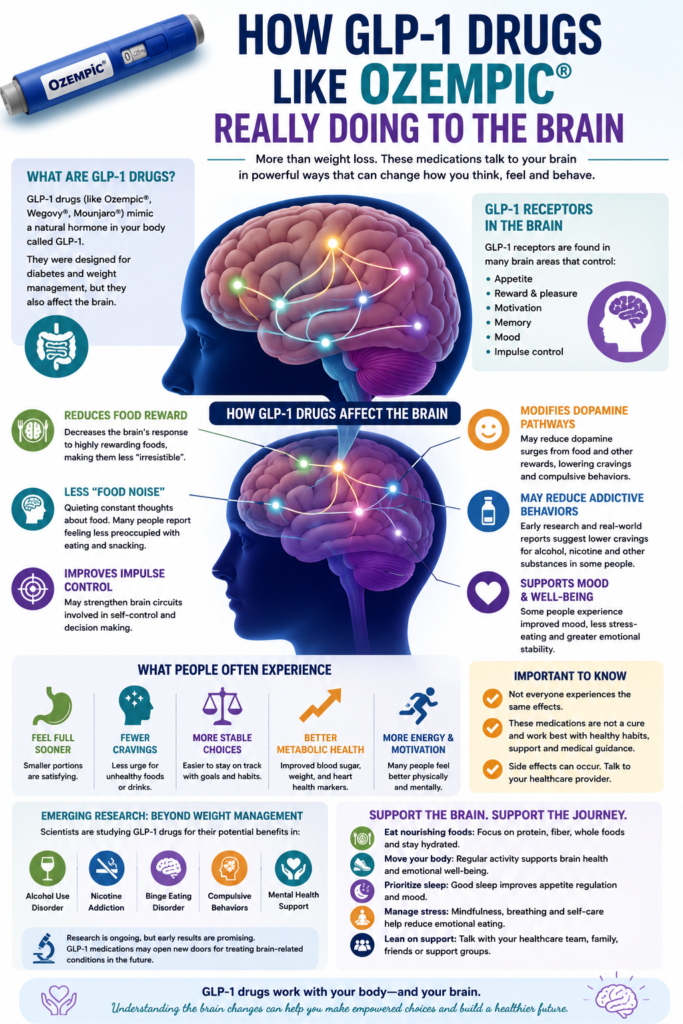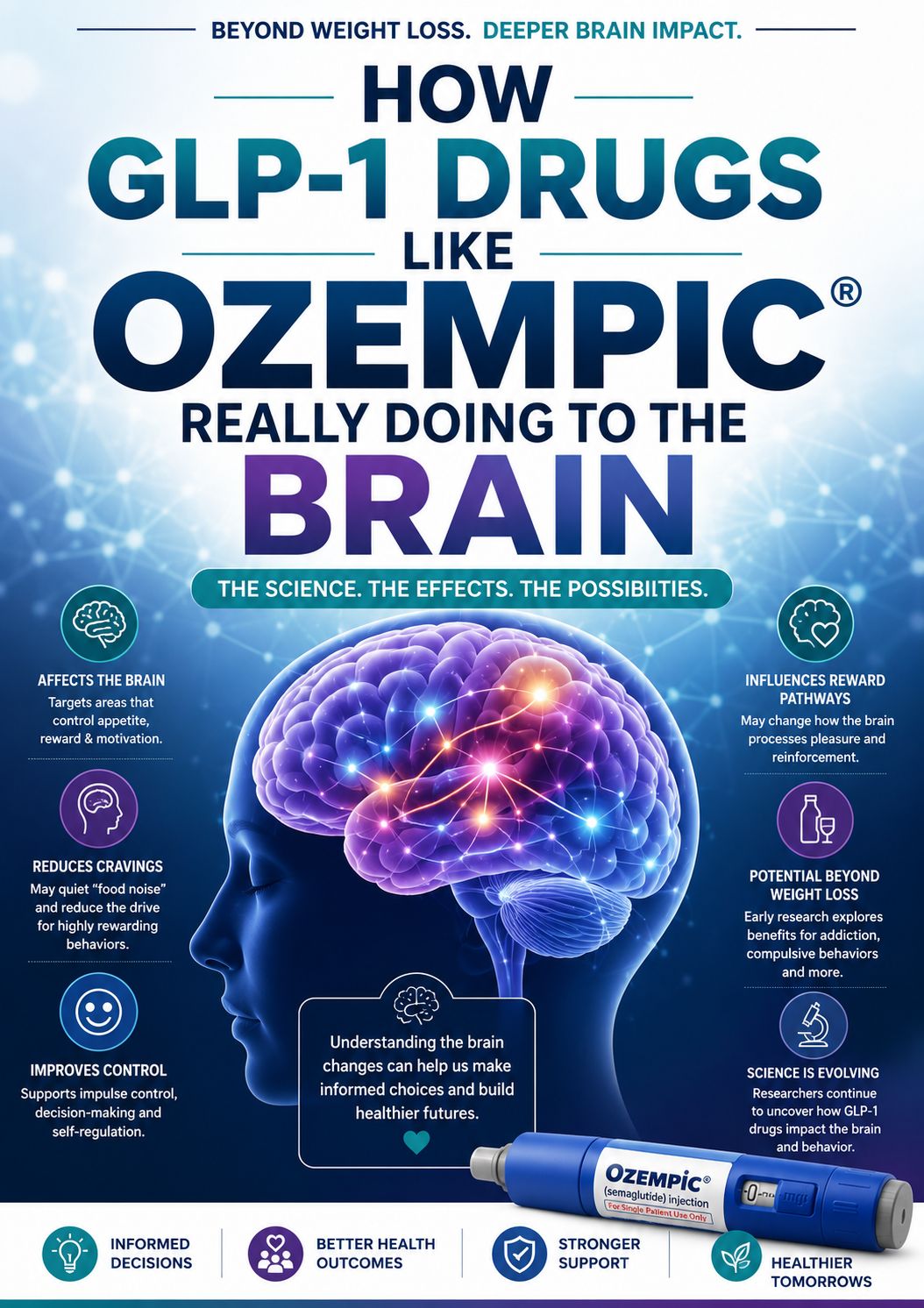
GLP-1 medications such as Ozempic, Wegovy, and Mounjaro have gained significant attention for their effectiveness in treating type 2 diabetes and obesity. However, researchers are discovering that these medications may influence much more than appetite and blood sugar control. GLP-1 receptors are found not only in the digestive system but also in brain regions involved in hunger, reward, motivation, and impulse control. Many individuals taking these medications report reduced food cravings, less “food noise,” and changes in other reward-seeking behaviors. These observations have sparked growing interest in understanding how GLP-1 drugs affect brain function and whether they may have potential applications beyond weight management. Exploring the connection between GLP-1 medications and the brain provides valuable insight into the biological factors that influence eating behaviors, cravings, and overall health.
What Are GLP-1 Drugs Like Ozempic Really Doing to the Brain?
Medications such as Ozempic, Wegovy, and Mounjaro were originally developed to treat type 2 diabetes and obesity. However, researchers are increasingly interested in their effects on the brain, particularly their influence on appetite, cravings, reward, and addictive behaviors.
The Brain’s Reward System
The brain contains a network of structures that help regulate motivation, pleasure, and reward. These areas use neurotransmitters such as dopamine to reinforce behaviors necessary for survival, including eating.
Highly rewarding activities—such as consuming sugary foods, drinking alcohol, gambling, or using addictive substances—can overstimulate this reward system, increasing cravings and compulsive behaviors.
What Is GLP-1?
GLP-1 (glucagon-like peptide-1) is a hormone naturally produced in the intestines after eating. It helps regulate:
- Hunger
- Blood sugar
- Digestion
- Feelings of fullness
Scientists have discovered that GLP-1 receptors are also located throughout the brain, including areas involved in reward, motivation, and impulse control.
How GLP-1 Drugs Affect the Brain
1. Reduce Food Reward
GLP-1 medications appear to decrease the brain’s response to highly rewarding foods. Many people report:
- Less obsession with food
- Reduced emotional eating
- Fewer cravings
- Feeling satisfied with smaller portions
Researchers believe these medications may dampen reward signaling associated with eating.
2. Reduce “Food Noise”
One of the most commonly reported effects is a reduction in constant thoughts about food, often referred to as “food noise.”
Many patients describe:
- Less preoccupation with eating
- Reduced mental effort to resist cravings
- Greater control over food
This suggests changes in brain circuits involved in attention and reward.
3. Influence Dopamine Pathways
Early research suggests that GLP-1 medications may indirectly affect dopamine signaling in the brain’s reward centers. Rather than creating pleasure themselves, they may reduce the intensity of reward-seeking behavior.
This has sparked interest in their potential role for:
- Alcohol use disorder
- Nicotine addiction
- Opioid use disorder
- Gambling disorder
- Compulsive overeating
Potential Effects on Addiction
Researchers have observed that some patients taking GLP-1 medications report:
- Reduced alcohol cravings
- Reduced interest in smoking
- Less compulsive shopping
- Reduced binge-eating behaviors
While these reports are promising, researchers are still conducting clinical trials to determine whether GLP-1 medications can become approved treatments for addiction.
Effects on Impulse Control
Some studies suggest GLP-1 drugs may improve the brain’s ability to pause before acting on impulses. This could help individuals make more deliberate decisions rather than reacting automatically to cravings.
Possible benefits include:
- Better self-regulation
- Reduced impulsive eating
- Improved decision-making
- Greater adherence to health goals
Mood and Mental Health
Researchers are also studying whether GLP-1 medications affect:
- Depression
- Anxiety
- Stress-related eating
- Emotional regulation
Current evidence is mixed, and more research is needed to determine whether these medications directly improve mental health symptoms.
What GLP-1 Drugs Do NOT Do
GLP-1 medications are not:
- A cure for addiction
- A replacement for therapy
- A substitute for recovery support
- A way to eliminate all cravings
Behavioral therapies, counseling, lifestyle changes, and social support remain important components of treatment.
Why This Matters
The discovery that GLP-1 medications affect both the gut and the brain has changed how scientists think about obesity and addiction. Rather than viewing cravings solely as a matter of willpower, researchers increasingly recognize that biological systems strongly influence motivation and reward.
Conclusion
GLP-1 medications such as Ozempic appear to do much more than help people lose weight. They interact with brain circuits involved in hunger, reward, cravings, and impulse control. Many individuals experience reduced food noise, fewer cravings, and less compulsive reward-seeking behavior. While research into addiction treatment is still ongoing, these medications are providing new insights into how the brain regulates motivation, pleasure, and self-control. Their effects may eventually help shape future treatments for obesity, substance use disorders, and other compulsive behaviors.
Self-Management Strategies to Understand How GLP-1 Drugs Like Ozempic Affect the Brain
As medications such as Ozempic, Wegovy, and Mounjaro become more widely used, many people are noticing changes that go beyond weight loss. Some report reduced cravings, less “food noise,” improved impulse control, and changes in reward-seeking behaviors. Understanding these effects can help individuals actively participate in their treatment and make informed decisions about their health.
1. Educate Yourself About How GLP-1 Medications Work
Learn that GLP-1 medications affect both the body and the brain. They help regulate:
- Hunger signals
- Fullness cues
- Blood sugar levels
- Reward pathways
- Craving responses
Understanding that these effects are biological—not simply a matter of willpower—can help reduce self-blame and improve treatment engagement.
2. Pay Attention to Changes in Cravings
Keep a journal to track:
- Food cravings
- Alcohol cravings
- Emotional eating urges
- Impulsive behaviors
- Frequency of food-related thoughts
Many individuals notice gradual changes in these areas after starting treatment.
3. Monitor “Food Noise”
Food noise refers to persistent thoughts about eating, dieting, or food. Track whether you notice:
- Less preoccupation with food
- Reduced snacking thoughts
- Easier decision-making around meals
- Increased satisfaction after eating
Recognizing these changes can help you better understand how the medication is affecting your brain’s reward system.
4. Practice Mindful Eating
Although GLP-1 medications reduce appetite, mindful eating remains important:
- Eat slowly
- Pay attention to fullness signals
- Avoid distracted eating
- Focus on hunger versus emotional urges
Mindfulness strengthens awareness of how the medication is influencing eating behaviors.
5. Distinguish Physical Hunger From Emotional Hunger
Ask yourself:
- Am I physically hungry?
- Am I stressed, bored, lonely, or anxious?
- What emotion am I experiencing right now?
Understanding the difference can help you recognize how GLP-1 medications may reduce biological cravings while emotional triggers may still require coping skills.
6. Track Mood and Emotional Changes
Monitor:
- Mood stability
- Anxiety levels
- Stress management
- Emotional eating patterns
- Motivation levels
While GLP-1 medications are not psychiatric medications, changes in eating and reward pathways may influence emotional experiences.
7. Observe Other Reward-Seeking Behaviors
Some people report changes in:
- Alcohol consumption
- Nicotine use
- Shopping behaviors
- Gambling urges
- Social media use
Tracking these behaviors can provide insight into how reward systems may be changing over time.
8. Continue Building Healthy Habits
The medication works best when paired with:
- Regular exercise
- Healthy nutrition
- Consistent sleep
- Stress management
- Therapy when needed
Medication can reduce cravings, but healthy habits support long-term changes in brain and behavior.
9. Set Realistic Expectations
GLP-1 medications may:
- Reduce cravings
- Increase feelings of fullness
- Improve impulse control
However, they do not eliminate all urges, solve emotional challenges, or replace healthy coping skills. Recovery and behavior change remain active processes.
10. Communicate Regularly With Your Healthcare Provider
Discuss:
- Appetite changes
- Mood changes
- Craving reductions
- Side effects
- Unexpected behavioral changes
Open communication helps providers adjust treatment and monitor overall progress.
11. Avoid Viewing the Medication as a “Magic Solution”
While these medications can be highly effective, lasting success often involves:
- Behavioral changes
- Self-awareness
- Lifestyle improvements
- Emotional growth
- Ongoing support
The medication can make healthy choices easier, but it cannot make those choices for you.
12. Stay Informed About Emerging Research
Researchers are actively studying GLP-1 medications for:
- Alcohol use disorder
- Nicotine addiction
- Opioid use disorder
- Binge eating disorder
- Other compulsive behaviors
Understanding the evolving science can help you make informed treatment decisions and maintain realistic expectations.
Conclusion
Understanding how GLP-1 medications affect the brain can help individuals become active partners in their treatment. By monitoring cravings, food noise, mood, and reward-seeking behaviors, individuals can gain valuable insight into how these medications influence appetite, motivation, and self-control. When combined with healthy lifestyle habits, mindfulness, and ongoing medical support, this knowledge can help maximize the benefits of treatment and promote long-term health and well-being.
Family Support Strategies to Understand How GLP-1 Drugs Like Ozempic Affect the Brain
As medications such as Ozempic, Wegovy, and Mounjaro become more common, many families are noticing changes that extend beyond weight loss. Individuals may experience reduced cravings, less food preoccupation, improved impulse control, and changes in reward-seeking behaviors. Understanding these brain-related effects can help families provide informed, compassionate support while avoiding misunderstandings about how these medications work.
1. Learn That GLP-1 Medications Affect the Brain and Body
Families should understand that these medications do more than reduce appetite. They influence brain regions involved in:
- Hunger and fullness
- Reward and pleasure
- Motivation
- Impulse control
- Craving regulation
Understanding the biological effects can help reduce judgment and misconceptions about weight, eating habits, and self-control.
2. Recognize That Reduced Cravings Are Real
Many people taking GLP-1 medications report:
- Less “food noise”
- Fewer cravings
- Reduced emotional eating
- Less interest in highly rewarding foods
Family members should recognize that these changes are legitimate treatment effects rather than signs that a loved one is simply “trying harder.”
3. Avoid Making Food the Center of Family Interactions
Families can support treatment by reducing pressure around food and avoiding comments such as:
- “You’re hardly eating anything.”
- “Just have one more serving.”
- “You used to enjoy this.”
Respecting changing hunger signals helps support healthy adjustment.
4. Support New Eating Patterns
Individuals using GLP-1 medications often eat:
- Smaller portions
- More slowly
- Less frequently
Family members can help by being flexible with meal expectations and recognizing that nutritional needs may change during treatment.
5. Understand Emotional Eating May Not Completely Disappear
Although biological cravings may decrease, emotional triggers such as:
- Stress
- Anxiety
- Loneliness
- Depression
may still affect eating behaviors. Families can encourage healthy coping skills rather than assuming the medication solves every challenge.
6. Observe Positive Behavioral Changes
Some individuals report improvements in:
- Impulse control
- Decision-making
- Alcohol consumption
- Compulsive shopping
- Other reward-seeking behaviors
Families can acknowledge these positive changes and celebrate progress.
7. Encourage Open Conversations
Ask supportive questions such as:
- “How has the medication changed your appetite?”
- “Have you noticed changes in cravings?”
- “What differences have you experienced?”
Open dialogue helps family members better understand the individual’s experience.
8. Avoid Stigmatizing Medication Use
Some people mistakenly believe GLP-1 medications are a shortcut or an “easy way out.” Families can reduce stigma by recognizing that obesity and eating behaviors are influenced by complex biological systems, not simply willpower.
9. Support Healthy Lifestyle Changes
Families can encourage:
- Physical activity
- Nutritious meals
- Adequate sleep
- Stress management
- Regular medical follow-up
These habits work alongside the medication to promote long-term health.
10. Be Patient During Adjustment Periods
Appetite, food preferences, and eating habits may change significantly during treatment. Family members should allow time for adjustment and avoid pressuring loved ones to eat as they did before treatment.
11. Learn About Potential Side Effects
Understanding common side effects can help families provide support. These may include:
- Nausea
- Fullness
- Fatigue
- Digestive discomfort
Awareness helps families respond with empathy and encouragement.
12. Encourage Ongoing Medical Communication
Support loved ones in maintaining regular contact with healthcare providers regarding:
- Weight changes
- Appetite changes
- Mood changes
- Side effects
- Overall health goals
Professional guidance remains essential throughout treatment.
13. Focus on Overall Health Rather Than Weight Alone
Families can shift attention from appearance to broader health improvements, such as:
- Increased energy
- Better blood sugar control
- Improved mobility
- Healthier eating habits
- Enhanced quality of life
This encourages sustainable wellness rather than solely focusing on the number on the scale.
Conclusion
Families who understand how GLP-1 medications affect the brain can provide more effective and compassionate support. By recognizing changes in cravings, appetite, reward processing, and decision-making, family members can better appreciate the biological mechanisms behind treatment. Through education, open communication, reduced stigma, and encouragement of healthy lifestyle habits, families can help loved ones maximize the benefits of GLP-1 therapy and support long-term physical and emotional well-being.
Community Resource Strategies to Understand How GLP-1 Drugs Like Ozempic Affect the Brain
As medications such as Ozempic, Wegovy, and Mounjaro gain widespread attention, communities have an important role in helping people understand how these medications affect both the body and the brain. While many people know GLP-1 medications help with weight loss and blood sugar control, fewer understand their effects on cravings, reward pathways, appetite regulation, and impulse control. Community resources can provide education, reduce stigma, and promote informed decision-making.
1. Offer Community Health Education Programs
Community health centers, hospitals, and wellness organizations can provide educational workshops that explain:
- What GLP-1 medications are
- How they affect appetite and hunger
- Their influence on brain reward systems
- Current research on cravings and addictive behaviors
- Potential benefits and limitations
Accurate education helps counter misinformation and unrealistic expectations.
2. Promote Public Health Awareness Campaigns
Public health campaigns can help community members understand that obesity and eating behaviors involve complex biological processes, not simply willpower. Educational materials can explain how GLP-1 medications influence both the gut and brain.
3. Utilize Community Wellness Centers
Wellness centers can offer programs that combine:
- Nutrition education
- Physical activity programs
- Behavioral health support
- Weight management services
These programs help individuals maximize the benefits of GLP-1 treatment while developing sustainable, healthy habits.
4. Provide Access to Registered Dietitians
Dietitians can help individuals understand how reduced appetite and altered food preferences affect nutritional needs. They can provide guidance on:
- Meal planning
- Nutrient intake
- Healthy eating habits
- Long-term weight management
5. Support Behavioral Health Services
Because GLP-1 medications may affect cravings and reward pathways, access to mental health services can help individuals:
- Manage emotional eating
- Address stress-related behaviors
- Improve coping skills
- Develop healthier habits
Combining behavioral support with medication often produces better outcomes.
6. Encourage Peer Support Groups
Community support groups can provide opportunities for individuals to:
- Share experiences
- Discuss treatment challenges
- Learn from others
- Exchange practical strategies
Peer support can help normalize treatment experiences and reduce isolation.
7. Provide Educational Resources Through Libraries
Public libraries can offer:
- Health education seminars
- Evidence-based articles
- Educational book collections
- Online health resources
Libraries serve as trusted sources of information for many community members.
8. Engage Healthcare Providers in Community Outreach
Physicians, pharmacists, nurse practitioners, physician assistants, and behavioral health specialists can participate in:
- Community presentations
- Question-and-answer sessions
- Health fairs
- Educational webinars
Direct access to healthcare professionals helps improve public understanding.
9. Address Misinformation on Social Media
Community organizations can provide evidence-based information that helps counter common myths, such as:
- “These drugs are just appetite suppressants.”
- “People lose weight because they have more willpower.”
- “The medications cure overeating.”
Accurate information promotes realistic expectations.
10. Promote Integrated Care Programs
Communities can encourage healthcare systems to offer integrated programs that combine:
- Medical care
- Nutritional counseling
- Behavioral therapy
- Exercise support
- Chronic disease management
Integrated care addresses both biological and behavioral aspects of health.
11. Support Research Awareness Initiatives
Communities can educate the public about ongoing research examining how GLP-1 medications may affect:
- Alcohol cravings
- Nicotine use
- Substance use disorders
- Compulsive behaviors
- Reward processing
Understanding emerging science helps people make informed healthcare decisions.
12. Reduce Stigma Surrounding Obesity Treatment
Community leaders can promote messages emphasizing that obesity is a complex medical condition influenced by genetics, hormones, brain chemistry, environment, and behavior. Reducing stigma encourages individuals to seek treatment without shame.
13. Create Recovery and Wellness Partnerships
Partnerships between healthcare organizations, fitness centers, behavioral health providers, and community groups can provide comprehensive support for individuals using GLP-1 medications.
14. Support Long-Term Lifestyle Change Programs
Communities can offer programs focused on:
- Healthy eating
- Physical activity
- Stress management
- Sleep improvement
- Chronic disease prevention
These resources reinforce healthy behaviors alongside medication treatment.
15. Encourage Family Education Programs
Educational workshops for family members can help them understand:
- How GLP-1 medications affect appetite
- Changes in cravings and food choices
- The role of brain reward systems
- Ways to provide supportive encouragement
Informed families can become valuable partners in treatment success.
Conclusion
Community resources can play a crucial role in helping individuals understand how GLP-1 medications affect the brain, appetite, cravings, and reward systems. Through education, healthcare partnerships, behavioral health services, peer support, and public awareness initiatives, communities can promote informed decision-making and reduce stigma surrounding treatment. By recognizing that these medications influence complex biological pathways rather than simply suppressing appetite, communities can foster a more supportive environment that encourages long-term health, wellness, and sustainable behavior change.
Frequently Asked Questions
Here are some common questions:
1. What are GLP-1 drugs?
Answer: GLP-1 drugs are medications that mimic the action of a naturally occurring hormone called glucagon-like peptide-1 (GLP-1). They help regulate blood sugar, appetite, and digestion. Examples include Ozempic, Wegovy, and Mounjaro.
2. Do GLP-1 drugs affect the brain?
Answer: Yes. Researchers have found GLP-1 receptors in several brain regions involved in hunger, reward, motivation, memory, mood, and impulse control.
3. How do GLP-1 drugs reduce appetite?
Answer: These medications help the brain recognize feelings of fullness more effectively, reducing hunger signals and helping people feel satisfied with smaller portions.
4. What is “food noise”?
Answer: Food noise refers to persistent thoughts about food, eating, dieting, or cravings. Many people report that GLP-1 medications significantly reduce these repetitive thoughts.
5. Why do people say GLP-1 drugs change their relationship with food?
Answer: Many individuals experience fewer cravings, less emotional eating, reduced food obsession, and greater control over eating decisions, leading to a different experience with food.
6. Do GLP-1 drugs affect dopamine?
Answer: Research suggests GLP-1 medications may influence dopamine pathways involved in reward and motivation, potentially reducing the intensity of cravings and reward-seeking behaviors.
7. Can GLP-1 drugs reduce cravings?
Answer: Many users report fewer cravings for food, especially highly processed or high-calorie foods. Some individuals also report reduced cravings for alcohol and nicotine, though research is still ongoing.
8. Are GLP-1 drugs changing willpower?
Answer: Not exactly. Rather than increasing willpower, these medications may change biological signals related to hunger, reward, and impulse control, making healthy choices feel easier.
9. Can GLP-1 drugs affect emotional eating?
Answer: They may reduce some biological drives to eat, but emotional eating triggered by stress, anxiety, sadness, or boredom may still require behavioral and emotional coping strategies.
10. Do GLP-1 drugs improve impulse control?
Answer: Some research suggests they may help reduce impulsive reward-seeking behaviors by affecting brain regions involved in self-regulation and decision-making.
11. Why are researchers studying GLP-1 drugs for addiction?
Answer: Because these medications appear to influence reward pathways, scientists are investigating whether they might help reduce cravings and compulsive behaviors associated with addiction.
12. Can GLP-1 drugs help with alcohol use disorder?
Answer: Early studies and patient reports suggest possible reductions in alcohol cravings, but more research is needed before GLP-1 medications can be recommended specifically for alcohol use disorder.
13. Can GLP-1 drugs help people stop smoking?
Answer: Some preliminary research suggests they may reduce nicotine cravings, but larger clinical studies are needed to confirm these findings.
14. Do GLP-1 drugs affect mood?
Answer: Some people report mood improvements, while others notice little change. Researchers are still studying the relationship between GLP-1 medications and mental health.
15. Can these medications improve mental clarity?
Answer: Some users report improved focus and reduced mental distraction related to food cravings. However, responses vary from person to person.
16. Do GLP-1 drugs affect memory?
Answer: Researchers are investigating potential effects on memory and cognitive function, but current evidence is still emerging.
17. Can GLP-1 medications change other compulsive behaviors?
Answer: Some individuals report reduced urges related to shopping, gambling, alcohol use, or other reward-seeking activities. More scientific research is needed to fully understand these effects.
18. Do GLP-1 drugs directly treat addiction?
Answer: No. They are currently approved for diabetes and weight management, not addiction treatment. Research into addiction applications is ongoing.
19. Why do people feel fuller sooner on GLP-1 medications?
Answer: These medications slow stomach emptying and enhance fullness signals sent to the brain, helping individuals feel satisfied after eating less food.
20. Are the brain effects permanent?
Answer: The long-term effects are still being studied. Many of the appetite and craving benefits appear to be linked to continued medication use.
21. Do GLP-1 drugs work the same for everyone?
Answer: No. Responses vary based on genetics, biology, lifestyle, medical conditions, and individual brain chemistry.
22. Can GLP-1 drugs replace healthy habits?
Answer: No. These medications work best when combined with healthy eating, physical activity, stress management, adequate sleep, and ongoing medical care.
23. Are GLP-1 drugs a cure for obesity?
Answer: No. Obesity is a complex chronic condition. GLP-1 medications are effective tools but are not considered a cure.
24. What is the most important thing to understand about how GLP-1 drugs affect the brain?
Answer: These medications appear to influence brain circuits involved in hunger, reward, cravings, and self-control. Their effects go far beyond simple appetite suppression and are helping researchers better understand the biology of eating behavior, addiction, and motivation.
25. What does the future research look like?
Answer: Scientists are actively studying GLP-1 medications for potential use in obesity, diabetes, alcohol use disorder, nicotine addiction, binge eating disorder, and other conditions involving cravings and reward-related behaviors. The coming years may reveal even broader applications for these medications.
Conclusion
The growing body of research on GLP-1 medications suggests that their effects extend far beyond weight loss and blood sugar regulation. By interacting with brain pathways involved in appetite, reward, motivation, and impulse control, these medications may help reduce cravings and alter behaviors related to food and other rewarding activities. While scientists continue to investigate their full impact on the brain and their potential role in treating addictive and compulsive behaviors, current findings highlight the complex relationship between biology and behavior. Understanding how GLP-1 drugs influence brain function can help individuals, families, healthcare providers, and communities make informed treatment decisions and promote a more comprehensive understanding of health, obesity, and behavior change.
Video: How GLP-1s Actually Change Your Brain #weightloss #science #glp1