Sleep is supposed to be the time when the body and brain slow down, recover, and prepare for another day. But for someone who has experienced trauma, nighttime can sometimes feel like anything but peaceful.
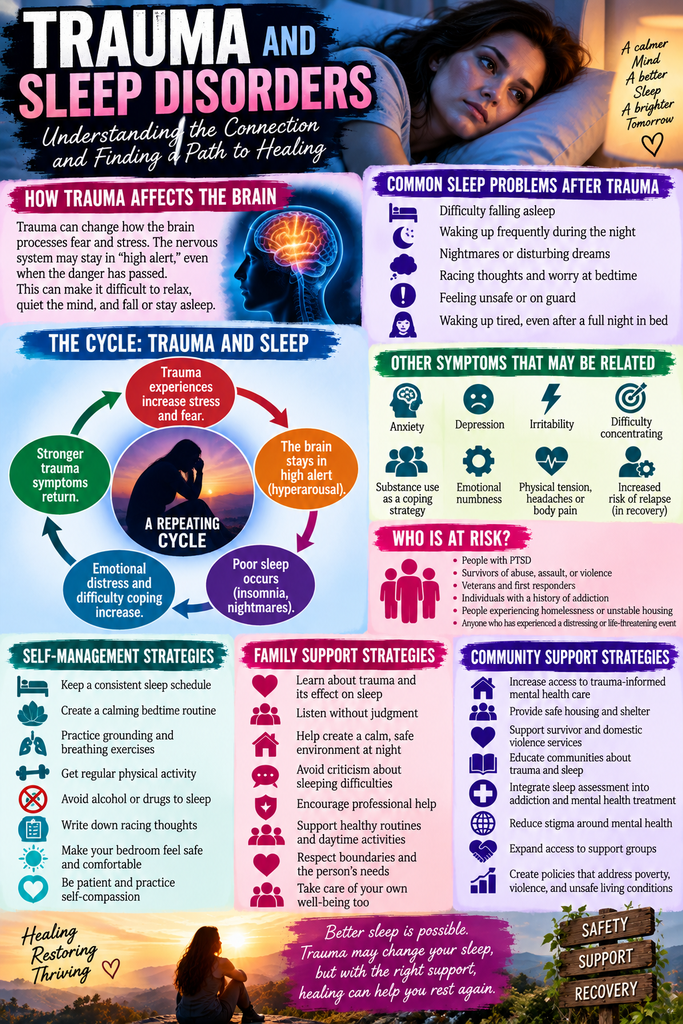
Traumatic experiences can change how the brain responds to danger. Even after the actual threat has ended, the nervous system may remain highly alert. When bedtime removes the distractions of everyday life, unwanted memories, anxious thoughts, physical tension, or nightmares may become more noticeable.
The result can be a frustrating cycle: trauma interferes with sleep, and poor sleep makes trauma symptoms harder to manage.
Understanding this relationship can be an important first step toward breaking the cycle.
Why Does Trauma Affect Sleep?
Trauma can disrupt the body’s normal stress-response system. After frightening or overwhelming experiences, the brain may become particularly sensitive to anything that resembles danger.
This response can be protective during an actual emergency. The problem occurs when the nervous system continues behaving as though danger is present even when the person is physically safe.
At bedtime, this may appear as:
- Difficulty falling asleep.
- Waking repeatedly throughout the night.
- Nightmares or disturbing dreams.
- Feeling unsafe when the room becomes dark.
- Racing thoughts about past experiences.
- Being easily startled by noises.
- Waking with sweating or a racing heartbeat.
- Avoiding sleep because of fear of nightmares.
- Feeling exhausted despite spending enough time in bed.
Not everyone who experiences trauma develops these problems. However, sleep disturbance is common among people with post-traumatic stress symptoms.
Hyperarousal: When Your Brain Won’t Turn Off
One reason trauma can interfere with sleep is hyperarousal.
Hyperarousal occurs when the nervous system remains unusually prepared to detect and respond to possible danger. Someone may feel tense, restless, irritable, or constantly “on guard.”
Imagine trying to sleep while your brain is acting like a security guard who believes something dangerous could happen at any moment.
A person may check doors repeatedly, react strongly to small sounds, scan the room, or struggle to relax enough to fall asleep.
The body may be tired while the brain continues saying:
“Stay awake. Something might happen.”
This is not simply someone refusing to relax. It can be part of the body’s learned response to trauma.
Trauma and Nightmares
Nightmares are another common reason trauma can disrupt sleep.
Some nightmares may closely resemble the traumatic experience. Others may not replay the event directly but contain similar emotions such as helplessness, danger, fear, or being trapped.
After repeatedly waking from frightening dreams, some people begin avoiding sleep.
They may:
- Stay awake watching television.
- Scroll on their phones for hours.
- Sleep with lights or televisions on.
- Use alcohol or drugs to fall asleep.
- Delay bedtime until they are completely exhausted.
These behaviors may provide temporary relief, but they can gradually make healthy sleep more difficult.
When the Bedroom Doesn’t Feel Safe
Trauma can also influence how people experience their environment.
Someone who experienced violence at night, abuse in a bedroom, a home invasion, or another frightening event may associate darkness, silence, particular sounds, or certain sleeping positions with danger.
Even when the person intellectually understands that the current environment is safe, the body may respond differently.
This demonstrates an important principle of trauma recovery:
Knowing you are safe and feeling safe are not always the same.
Treatment can help the nervous system gradually relearn that rest does not automatically mean vulnerability.
Poor Sleep Can Make Trauma Symptoms Worse
The relationship between trauma and sleep works in both directions.
Trauma can disturb sleep, but insufficient sleep can also make emotional regulation more difficult.
After several nights of inadequate sleep, people may experience increased:
- Irritability.
- Anxiety.
- Difficulty concentrating.
- Emotional sensitivity.
- Fatigue.
- Impulsive behavior.
- Negative thinking.
- Difficulty coping with stress.
- Cravings for alcohol or drugs.
This can create a repeating cycle:
Trauma symptoms → poor sleep → greater emotional distress → stronger trauma symptoms → even poorer sleep.
Breaking this cycle may become an important part of recovery.
Trauma, Sleep, and Addiction
Sleep problems deserve particular attention during addiction recovery.
Someone experiencing trauma-related insomnia may discover that alcohol, sedatives, cannabis, or other substances temporarily make falling asleep easier. Over time, however, relying on substances for sleep can interfere with natural sleep patterns and increase the risk of problematic use.
People recovering from substance use disorders may also experience sleep disturbances during withdrawal and early recovery.
The combination of trauma, insomnia, cravings, and emotional distress can increase relapse vulnerability.
Rather than simply treating the insomnia with another substance, healthcare professionals may need to address the underlying conditions contributing to poor sleep.
Self-Management Strategies for Better Sleep
Self-management strategies can help create conditions that make sleep easier. However, persistent trauma-related sleep problems may require professional treatment.
Helpful strategies include:
- Create a consistent sleep schedule. Try to go to bed and wake up at approximately the same time each day.
- Develop a calming bedtime routine. Reading, stretching, quiet music, breathing exercises, or meditation can signal that it is time to rest.
- Practice grounding techniques. Notice what you can see, hear, touch, and feel to remind yourself that you are in the present.
- Make the bedroom feel safe. Comfortable bedding, appropriate lighting, familiar objects, or other environmental adjustments may reduce anxiety.
- Limit stimulating activities before bed. News, arguments, work, and emotionally intense social media can increase arousal.
- Reduce caffeine later in the day.
- Avoid using alcohol or drugs as sleep aids.
- Get regular daytime physical activity.
- Write down racing thoughts. Keeping a notebook nearby can help move worries from your mind onto paper.
- If you cannot sleep, leave the bed temporarily. Engage in a quiet activity and return when you become sleepy.
- Seek professional help when sleep problems persist.
Sleep habits alone may not resolve insomnia when untreated PTSD, depression, anxiety, substance use, chronic pain, or another medical condition is contributing to the problem.
Professional Treatment Can Help
Chronic insomnia should not automatically be accepted as an unavoidable consequence of trauma.
Cognitive Behavioral Therapy for Insomnia (CBT-I) is a structured treatment specifically designed for chronic insomnia. Trauma-focused psychotherapy may also help when PTSD symptoms are contributing to sleep difficulties.
Depending on the individual, treatment may address:
- Trauma-related thoughts and memories.
- Fear associated with going to sleep.
- Nightmares.
- Anxiety and hyperarousal.
- Depression.
- Substance use.
- Chronic pain.
- Medication effects.
- Other sleep disorders.
Medication may sometimes be appropriate, but treatment should be individualized by a healthcare professional—particularly for people with a history of substance use disorder.
Family Support Strategies
Sleep problems can affect everyone in a household. A person who repeatedly wakes during the night may become irritable, exhausted, withdrawn, or emotionally overwhelmed during the day.
Family members may mistakenly interpret these behaviors as laziness, moodiness, or lack of effort.
Education can change that perspective.
Families can help by:
- Learning how trauma can affect sleep.
- Avoiding criticism about sleeping difficulties.
- Helping create a calm nighttime environment.
- Respecting the person’s need for predictable routines.
- Encouraging professional evaluation when insomnia continues.
- Avoiding unnecessary conflict immediately before bedtime.
- Supporting healthy daytime activities.
- Asking what makes the person feel safer at night.
- Encouraging treatment without becoming controlling.
- Watching for increasing alcohol or drug use related to sleep.
Family members should also protect their own sleep and emotional well-being. Supporting someone with trauma does not require remaining awake with that person every night.
Community Support Strategies
Healthy sleep depends on more than individual behavior.
People experiencing homelessness, unsafe housing, domestic violence, poverty, neighborhood violence, or unstable living arrangements may find it extremely difficult to create a peaceful sleeping environment.
Telling someone to practice “sleep hygiene” has limited value if they do not have a safe place to sleep.
Communities can help by:
- Expanding access to trauma-informed mental health services.
- Increasing availability of affordable behavioral sleep treatment.
- Providing safe housing and emergency shelter.
- Supporting domestic violence and sexual-assault services.
- Integrating sleep assessment into addiction and mental-health treatment.
- Educating healthcare professionals about trauma-related sleep disturbances.
- Providing PTSD and trauma support groups.
- Expanding access to substance-use treatment.
- Teaching communities about the connection between trauma and sleep.
- Reducing stigma surrounding PTSD, addiction, and mental-health treatment.
Community support addresses something sleep advice alone cannot: people need both psychological and physical safety to rest.
When Should Someone Seek Professional Help?
Occasional sleepless nights are common. Professional evaluation becomes particularly important when sleep problems continue for weeks or months or significantly interfere with everyday functioning.
Seek help when insomnia or nightmares are accompanied by:
- Severe anxiety or panic.
- Frequent trauma-related nightmares.
- Depression.
- Increasing alcohol or drug use.
- Inability to function normally during the day.
- Dangerous daytime sleepiness.
- Persistent fear of sleeping.
- Symptoms of PTSD.
- Thoughts of self-harm or suicide.
A healthcare professional can also evaluate other causes of disrupted sleep, including sleep apnea, restless legs syndrome, chronic pain, medications, and other medical conditions.
Recovery Means Teaching the Brain That Rest Can Be Safe Again
Trauma recovery is not about forcing yourself to forget what happened.
It is about gradually helping the brain and body understand an important difference:
The danger happened then. You are living in the present now.
That process may involve therapy, grounding techniques, healthy routines, supportive relationships, and repeated experiences of safety.
Progress may initially look small.
Perhaps someone sleeps for four uninterrupted hours instead of two. Maybe the nightmares become less frequent. Perhaps they stop checking the door five times before bed. Eventually, they may wake and realize that they actually rested.
Those small changes matter.
Conclusion
Trauma can interfere with sleep because the nervous system may continue behaving as though danger is nearby. Hyperarousal, intrusive memories, nightmares, anxiety, and feelings of vulnerability can make something as ordinary as going to bed surprisingly difficult.
Poor sleep can then increase emotional distress, reduce coping ability, and—in people vulnerable to addiction—increase the temptation to use alcohol or drugs for temporary relief.
Recovery therefore requires more than telling someone to “get more sleep.”
Self-management can establish healthier routines and coping strategies. Family support can create understanding, stability, and a calmer home environment. Community support can provide trauma-informed treatment, addiction services, safe housing, and access to specialized sleep care.
Most importantly, sleep problems after trauma are not simply bad habits. They may reflect a nervous system that learned to stay alert to survive.
With appropriate treatment and support, that nervous system can gradually learn something new:
It is safe to rest.
Frequently Asked Questions
Here are some common questions:
1. Can trauma cause sleep problems?
Yes. Trauma can disrupt the body’s stress-response system and leave the nervous system in a heightened state of alertness. Even when a person is physically safe, the brain may keep scanning for danger, making it hard to relax, fall asleep, or stay asleep.
2. What sleep problems are commonly associated with trauma?
People who have experienced trauma may develop several types of sleep disturbances, including:
- Difficulty falling asleep
- Frequent nighttime awakenings
- Trauma-related nightmares
- Restless or fragmented sleep
- Fear or anxiety about going to bed
- Waking too early
- Feeling unrefreshed after sleeping
- Daytime fatigue and sleepiness
Not everyone who experiences trauma develops a sleep disorder, and persistent symptoms should be professionally evaluated.
3. Why does trauma make it difficult to fall asleep?
The brain may remain in hyperarousal, meaning it continues monitoring the environment for potential threats. Racing thoughts, muscle tension, increased heart rate, anxiety, and sensitivity to sounds can make the transition into sleep difficult.
4. Why do trauma survivors experience nightmares?
Dreams are involved in processing emotions and memories. After trauma, frightening memories and emotions may appear during sleep as nightmares. Some nightmares closely resemble the traumatic event, while others involve more general themes of danger, helplessness, or fear.
5. Can someone become afraid to sleep because of trauma?
Yes. After repeated nightmares or nighttime panic, a person may begin associating sleep with distress. They may intentionally stay awake, sleep with lights or television on, or wait until exhaustion makes staying awake impossible.
6. Can PTSD cause insomnia?
Yes. Sleep disturbance is common in post-traumatic stress disorder (PTSD). Hypervigilance, intrusive memories, nightmares, anxiety, and increased physiological arousal can all contribute to insomnia.
7. Can poor sleep make trauma symptoms worse?
Yes. The relationship can become a repeating cycle. Trauma symptoms interfere with sleep, while insufficient sleep can increase irritability, anxiety, emotional reactivity, concentration difficulties, and problems coping with stress.
8. Can trauma-related sleep problems contribute to substance use?
Sometimes. A person struggling with insomnia or nightmares may begin using alcohol, cannabis, sedatives, or other substances in an attempt to sleep or suppress distress. This can become problematic and may increase the risk of dependence or relapse among people recovering from addiction.
9. Does alcohol help people with trauma sleep better?
Alcohol may initially make someone feel sleepy, but it can disrupt normal sleep architecture and contribute to fragmented or poorer-quality sleep later in the night. Regularly relying on alcohol for sleep can also increase the risk of alcohol-related problems.
10. What self-management strategies can improve trauma-related sleep?
Helpful strategies may include:
- Maintaining consistent sleep and wake times.
- Creating a relaxing bedtime routine.
- Practicing grounding or slow-breathing exercises.
- Limiting caffeine later in the day.
- Getting regular daytime physical activity.
- Reducing stimulating activities before bedtime.
- Making the sleeping environment feel comfortable and safe.
- Writing down worries or racing thoughts before bed.
- Avoiding alcohol or drugs as sleep aids.
- Seeking professional treatment when symptoms persist.
11. What is grounding, and how can it help at bedtime?
Grounding techniques redirect attention toward the present moment. Someone might notice five things they can see, four things they can touch, three things they can hear, two things they can smell, and one thing they can taste. The goal is to help the brain distinguish a traumatic memory from what is happening safely in the present.
12. What is CBT-I?
Cognitive Behavioral Therapy for Insomnia (CBT-I) is an evidence-based treatment for chronic insomnia. It helps people change behaviors and thought patterns that perpetuate sleep difficulties. Treatment may include adjusting time in bed, strengthening the connection between bed and sleep, establishing consistent schedules, and addressing sleep-related anxiety.
13. Can treating PTSD improve sleep?
It can. Trauma-focused treatment may reduce some of the anxiety, intrusive memories, and hyperarousal contributing to poor sleep. However, insomnia or nightmares can sometimes persist even when other trauma symptoms improve, which is why sleep problems may also require targeted treatment.
14. How can families support someone who struggles to sleep after trauma?
Families can learn about trauma-related sleep problems, avoid criticizing the person for being unable to sleep, support predictable routines, reduce unnecessary nighttime conflict, and ask what would help the person feel safer. They can also encourage professional care when sleep problems persist.
15. What should family members avoid doing?
Avoid statements such as “Just go to sleep,” “Stop thinking about it,” or “You’re safe, so there’s nothing to worry about.” Although well-intended, these statements can minimize the person’s experience. Feeling physically safe and having a nervous system that feels safe are not always the same thing.
16. How can communities help people experiencing trauma-related sleep disorders?
Communities can improve access to trauma-informed mental-health care, behavioral sleep treatment, substance-use services, domestic-violence resources, shelters, and stable housing. Healthcare systems can also routinely assess sleep when treating PTSD, addiction, anxiety, and depression.
17. When should someone seek professional help?
Professional evaluation is appropriate when sleep problems persist, significantly interfere with daytime functioning, or occur alongside frequent nightmares, severe anxiety, depression, increasing substance use, or PTSD symptoms. Other medical causes of disrupted sleep—such as sleep apnea, chronic pain, restless legs syndrome, or medication effects—may also need evaluation.
18. Can trauma-related sleep problems get better?
Yes. Trauma can change how the brain responds to nighttime and perceived vulnerability, but these responses are not necessarily permanent. Trauma-informed psychotherapy, CBT-I, healthy sleep habits, treatment of co-occurring conditions, and supportive relationships can significantly improve sleep for many people.
Video: