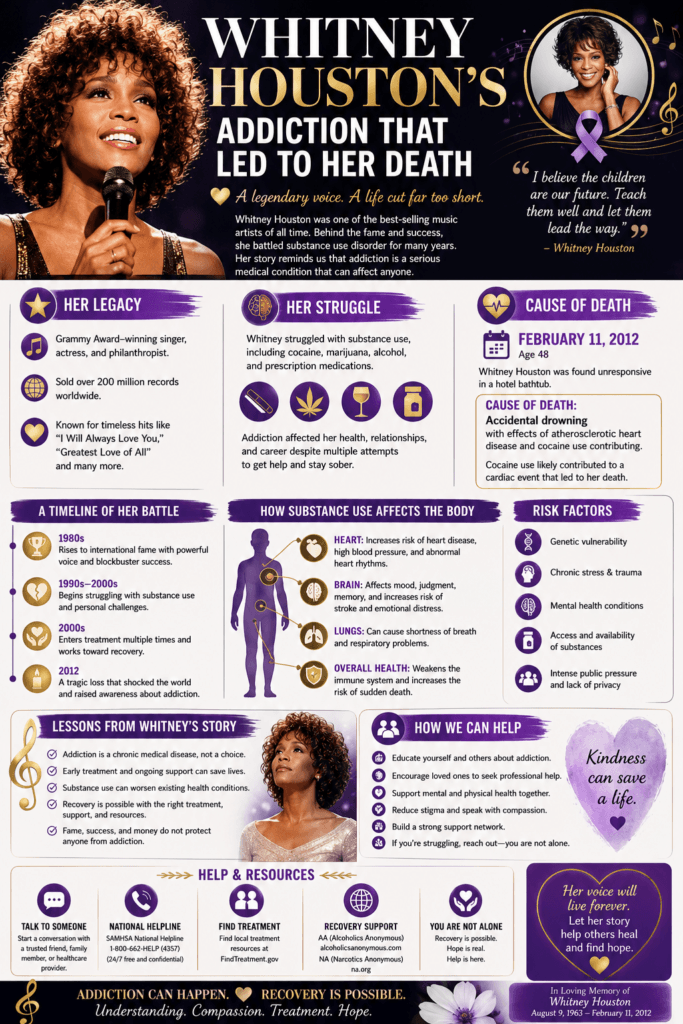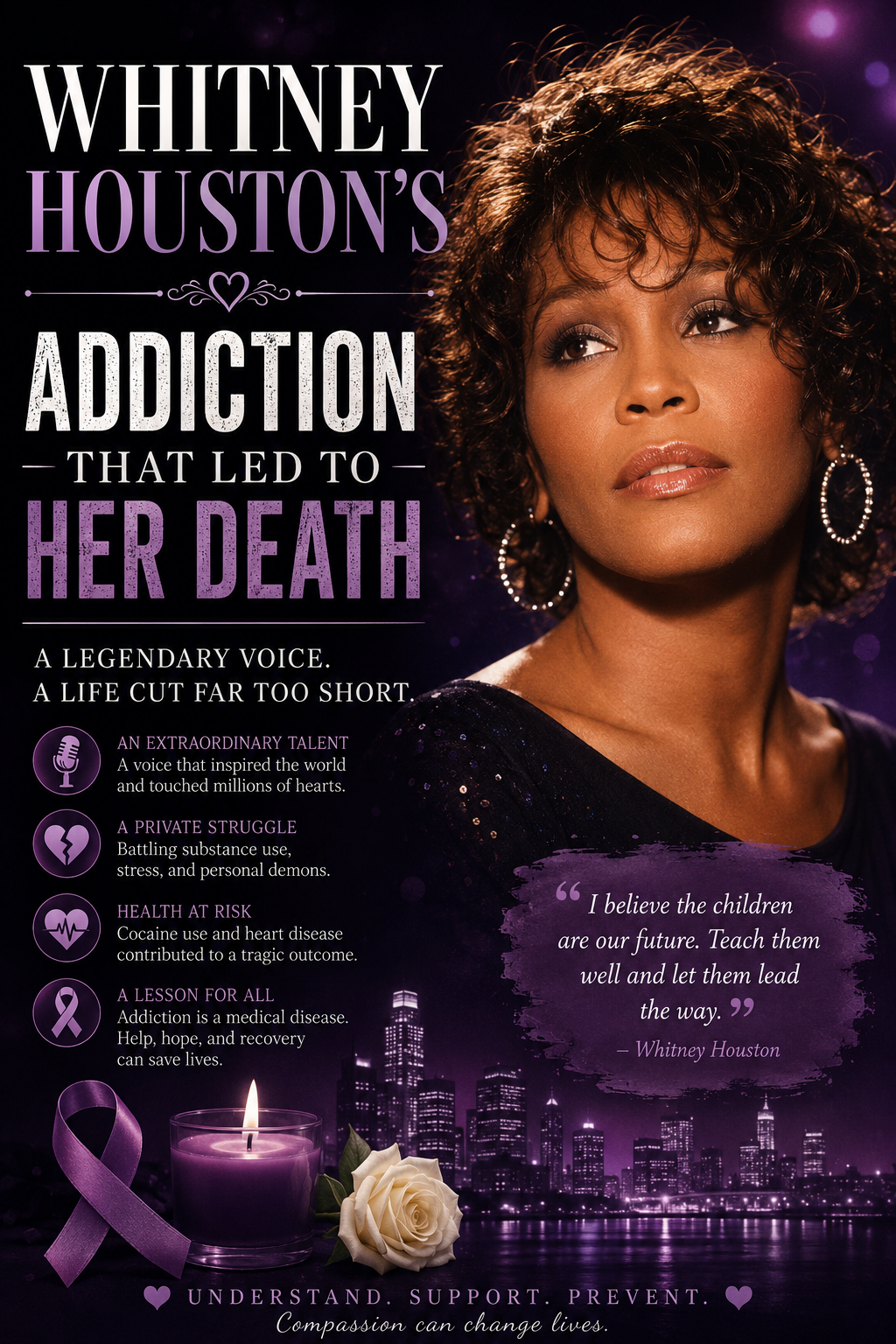
Whitney Houston was one of the most celebrated singers in music history, admired for her extraordinary voice, record-breaking career, and lasting influence on popular music. Despite her remarkable success, she struggled for many years with substance use disorder, a chronic medical condition that affected her health, relationships, and career. On February 11, 2012, Houston died at the age of 48 from accidental drowning, with cocaine use and underlying atherosclerotic heart disease identified as contributing factors. Her tragic death highlighted the complex relationship between addiction and physical health, demonstrating how substance use can increase the risk of serious medical complications. Whitney Houston’s story serves as an important reminder that addiction is a treatable medical illness requiring early intervention, comprehensive healthcare, and long-term recovery support.
Whitney Houston’s Addiction That Led to Her Death
Whitney Houston was one of the most celebrated singers in music history, known for her extraordinary vocal talent and numerous chart-topping hits. Despite her remarkable success, she struggled for many years with substance use disorder. Her death in 2012 brought worldwide attention to the serious health risks associated with addiction and the importance of recognizing substance use disorder as a chronic, treatable medical condition.
Early Struggles with Addiction
Whitney Houston began using drugs during her career, and over time her substance use became increasingly public. Reports and interviews indicated that she struggled with cocaine, marijuana, prescription medications, alcohol, and other substances during different periods of her life. Her addiction affected her health, relationships, and professional career despite repeated efforts to recover.
Like many people living with substance use disorder, her addiction likely resulted from a combination of biological, psychological, and environmental factors. High levels of stress, public scrutiny, personal challenges, and co-occurring health concerns may all have contributed to the complexity of her condition.
Attempts at Recovery
Houston sought treatment for substance use on multiple occasions and publicly acknowledged her struggles. Recovery from addiction is often not a single event but an ongoing process that may involve periods of improvement, setbacks, and renewed treatment. Her experience illustrates that long-term recovery frequently requires continued medical care, counseling, relapse prevention planning, and strong social support.
Cause of Death
Whitney Houston died on February 11, 2012, at the age of 48. The Los Angeles County Department of Medical Examiner determined that her death resulted from accidental drowning, with heart disease (atherosclerotic heart disease) and cocaine use identified as contributing factors. Toxicology testing also detected several medications in her system, but they were not identified as the direct cause of death.
Investigators concluded that cocaine use likely contributed to a cardiac event that impaired her ability to respond after entering a bathtub, resulting in drowning.
Health Effects of Long-Term Substance Use
Long-term cocaine use can significantly affect multiple body systems, including:
- Increased risk of heart attack and abnormal heart rhythms.
- Elevated blood pressure.
- Damage to blood vessels and the heart muscle.
- Increased risk of stroke.
- Anxiety, depression, and other mental health complications.
- Impaired judgment and decision-making.
When combined with underlying heart disease, stimulant use can substantially increase the risk of sudden medical emergencies.
Lessons from Whitney Houston’s Story
Whitney Houston’s life provides several important lessons:
- Addiction is a chronic medical disease that requires ongoing treatment.
- Substance use can worsen existing medical conditions, including heart disease.
- Recovery often requires long-term support rather than a single treatment episode.
- Fame, wealth, and talent do not protect individuals from addiction.
- Early intervention and evidence-based treatment can improve recovery outcomes.
Risk Factors for Substance Use Disorder
Many factors may increase the likelihood of developing addiction, including:
- Family history of addiction.
- Chronic stress.
- Trauma or adverse life experiences.
- Mental health conditions.
- Easy access to substances.
- Social and environmental influences.
Having one or more risk factors does not guarantee that someone will develop addiction, but they can increase vulnerability.
Preventing Substance-Related Deaths
Evidence-based strategies that can reduce the risk of serious complications include:
- Seeking professional treatment as early as possible.
- Participating in counseling and behavioral therapies.
- Using medications for substance use disorders when clinically appropriate.
- Treating co-occurring mental and physical health conditions.
- Building a strong support network of family, friends, and recovery peers.
- Developing a relapse prevention plan.
- Maintaining regular follow-up with healthcare providers.
Conclusion
Whitney Houston’s death was a tragic loss to the music world and serves as a reminder that addiction is a serious medical condition requiring comprehensive, long-term care. Her story demonstrates that substance use disorder can affect anyone, regardless of success or talent, and that untreated addiction may contribute to life-threatening health complications. By increasing public understanding, reducing stigma, expanding access to evidence-based treatment, and supporting individuals throughout recovery, families, healthcare professionals, and communities can help prevent similar tragedies and promote hope for lasting recovery.
Self-Management Strategies to Understand Whitney Houston’s Addiction That Led to Her Death
Whitney Houston’s life reminds us that addiction is a chronic, treatable medical condition that can affect anyone, regardless of talent, success, or financial status. Her death, caused by accidental drowning with cocaine use and heart disease identified as contributing factors, demonstrates how substance use can worsen existing medical conditions and increase the risk of fatal complications. The following self-management strategies can help individuals better understand addiction, reduce relapse risk, and support long-term recovery.
1. Learn That Addiction Is a Chronic Disease
Understanding that substance use disorder changes the brain’s reward, motivation, and decision-making systems helps reduce stigma and encourages individuals to seek treatment early.
Practice:
- Learn about addiction from reputable medical organizations.
- Discuss concerns with healthcare providers or addiction specialists.
- Attend educational workshops or recovery programs.
2. Recognize Personal Triggers
Stress, grief, relationship problems, emotional distress, and certain environments can increase cravings and the risk of relapse.
Practice:
- Keep a journal to identify emotional and environmental triggers.
- Develop healthy coping strategies before stressful situations occur.
- Avoid people, places, or events associated with past substance use.
3. Understand How Substance Use Affects Physical Health
Whitney Houston’s story illustrates that drug use can worsen chronic medical conditions, especially heart disease. Cocaine can increase blood pressure, cause abnormal heart rhythms, and increase the risk of heart attack and stroke.
Practice:
- Schedule regular medical checkups.
- Follow treatment plans for heart disease, high blood pressure, diabetes, or other chronic illnesses.
- Learn how substance use can interact with existing health conditions.
4. Build Healthy Stress Management Skills
Many people use alcohol or drugs to cope with stress, anxiety, or emotional pain. Developing healthier coping methods supports recovery.
Practice:
- Exercise regularly.
- Practice meditation, mindfulness, or deep breathing.
- Spend time outdoors.
- Participate in hobbies that provide enjoyment and relaxation.
5. Follow an Individualized Treatment Plan
Recovery is most successful when treatment is personalized and maintained over time.
Practice:
- Attend counseling consistently.
- Take prescribed medications as directed, when appropriate.
- Keep regular appointments with healthcare providers.
- Be honest about cravings or setbacks.
6. Prioritize Mental Health
Mental health conditions often occur alongside substance use disorders and can increase the risk of relapse if left untreated.
Practice:
- Seek counseling for depression, anxiety, trauma, or grief.
- Practice healthy sleep habits.
- Develop positive coping skills for emotional challenges.
- Ask for help when emotional symptoms worsen.
7. Develop a Strong Support Network
Recovery is strengthened by supportive relationships and positive social connections.
Practice:
- Attend peer recovery meetings.
- Stay connected with trusted family members and friends.
- Build relationships with people who encourage healthy behaviors.
- Avoid isolation during difficult times.
8. Maintain Healthy Daily Routines
A structured lifestyle promotes physical and emotional stability while reducing opportunities for substance use.
Practice:
- Eat balanced meals.
- Maintain consistent sleep and wake schedules.
- Exercise several days each week.
- Schedule productive daily activities and personal goals.
9. Prepare for High-Risk Situations
Planning ahead can reduce the likelihood of relapse during stressful or tempting situations.
Practice:
- Identify high-risk environments before attending events.
- Bring a supportive friend when appropriate.
- Have an exit plan if cravings become overwhelming.
- Keep emergency support contacts readily available.
10. Practice Self-Compassion During Recovery
Recovery is rarely a straight path. Setbacks should be viewed as opportunities to strengthen a recovery plan rather than as personal failures.
Practice:
- Seek professional help immediately after a relapse.
- Review triggers with your treatment team.
- Adjust your recovery plan as needed.
- Focus on long-term progress instead of perfection.
Key Lessons from Whitney Houston’s Story
Whitney Houston’s experience demonstrates that addiction is a complex medical condition that often affects both physical and mental health. Her death highlights the dangers of cocaine use, especially in individuals with underlying heart disease, and emphasizes the importance of early intervention, ongoing treatment, relapse prevention, and comprehensive healthcare. Her story also reminds us that fame, success, and wealth do not protect anyone from the effects of addiction.
Conclusion
Whitney Houston’s legacy extends far beyond her extraordinary musical achievements. Her life offers valuable lessons about recognizing addiction as a chronic disease, seeking help early, managing physical and mental health together, and maintaining lifelong recovery. By practicing healthy coping skills, following evidence-based treatment plans, building supportive relationships, and addressing relapse risks proactively, individuals can reduce the likelihood of substance-related harm and move toward lasting recovery and improved well-being.
Family Support Strategies to Understand Whitney Houston’s Addiction That Led to Her Death
Whitney Houston’s life demonstrates that substance use disorder is a chronic, treatable medical condition that can affect anyone, regardless of talent, fame, or financial success. Her death from accidental drowning, with cocaine use and heart disease identified as contributing factors, highlights the importance of family education, early intervention, and ongoing recovery support. Although families cannot control a loved one’s addiction, they can play an important role in encouraging treatment, promoting healthy behaviors, and responding appropriately to warning signs.
1. Learn About Addiction as a Chronic Disease
Understanding addiction as a medical condition helps families replace blame with compassion and informed support.
How families can help:
- Learn about substance use disorder from reliable medical sources.
- Attend family education programs or workshops.
- Speak with healthcare providers about addiction and recovery.
2. Recognize Early Warning Signs of Relapse
Relapse often develops gradually through emotional and behavioral changes before substance use resumes.
Warning signs may include:
- Increased secrecy or withdrawal from family.
- Mood swings, anxiety, or depression.
- Missing medical appointments or recovery meetings.
- Returning to unhealthy friendships or environments.
- Financial difficulties or unexplained spending.
- Changes in sleep patterns or daily routines.
Early recognition allows families to encourage professional help before a crisis occurs.
3. Encourage Ongoing Treatment
Recovery is an ongoing process that often requires long-term medical care and support.
Families can:
- Encourage attendance at counseling and healthcare appointments.
- Support participation in recovery groups.
- Encourage adherence to prescribed medications when appropriate.
- Celebrate recovery milestones while understanding that setbacks may occur.
4. Promote Compassionate Communication
Individuals struggling with addiction are more likely to seek help when they feel understood rather than judged.
Helpful communication includes:
- Listening without interrupting.
- Expressing concern calmly and respectfully.
- Using statements such as, “I’m worried about your health and want to help.”
- Avoiding criticism, arguments, or shame.
5. Understand the Impact of Physical Health
Whitney Houston’s death illustrates how substance use can worsen existing medical conditions. Cocaine use, combined with heart disease, significantly increased her risk of a life-threatening medical emergency.
Families should:
- Encourage regular medical checkups.
- Support treatment for chronic health conditions.
- Understand how substance use can affect the heart, brain, and other organs.
- Encourage discussions with healthcare providers about substance use and overall health.
6. Encourage Mental Health Care
Mental health conditions often occur alongside substance use disorders and may increase the risk of relapse if left untreated.
Families can help by:
- Encouraging counseling or psychiatric care.
- Recognizing signs of depression, anxiety, or emotional distress.
- Supporting healthy stress management strategies.
- Promoting open conversations about emotional well-being.
7. Establish Healthy Boundaries
Supporting recovery does not mean enabling substance use.
Healthy boundaries include:
- Refusing to cover up harmful behaviors.
- Avoiding financial support that could enable substance use.
- Encouraging accountability with compassion.
- Supporting treatment while maintaining consistent expectations.
8. Prepare for Emergencies
Families should know how to respond quickly if a loved one experiences a medical emergency related to substance use.
Warning signs requiring immediate medical attention include:
- Chest pain or severe shortness of breath.
- Loss of consciousness.
- Seizures.
- Difficulty breathing.
- Unresponsiveness.
- Signs of overdose or serious intoxication.
If these symptoms occur:
- Call 911 immediately.
- Do not leave the individual alone.
- Provide emergency responders with any known information about substances used.
9. Support Healthy Lifestyle Changes
Healthy daily habits strengthen recovery and improve overall well-being.
Families can encourage:
- Regular exercise.
- Nutritious meals.
- Consistent sleep schedules.
- Participation in hobbies and meaningful activities.
- Healthy methods of coping with stress.
10. Care for Your Own Well-Being
Supporting someone with addiction can be emotionally exhausting. Families need support to remain healthy and resilient.
Self-care strategies include:
- Joining family support groups.
- Seeking individual counseling if needed.
- Maintaining healthy friendships and interests.
- Practicing stress management techniques.
- Remembering that you cannot force someone into recovery, but you can encourage and support treatment.
Key Lessons from Whitney Houston’s Story
Whitney Houston’s life demonstrates that addiction is a chronic disease requiring long-term medical care, emotional support, and relapse prevention. Her death highlights how substance use can interact with existing health conditions and increase the risk of fatal complications. Families can make a meaningful difference by recognizing early warning signs, encouraging ongoing treatment, maintaining compassionate communication, supporting mental and physical health, and responding promptly during emergencies.
Conclusion
Whitney Houston’s legacy extends far beyond her extraordinary musical accomplishments. Her story reminds families that addiction can affect anyone and that recovery is often a lifelong journey requiring patience, education, and compassion. By understanding addiction as a medical condition, supporting evidence-based treatment, promoting healthy boundaries, recognizing relapse warning signs, and encouraging both physical and mental healthcare, families can become valuable partners in recovery while helping reduce the risk of future substance-related tragedies.
Community Resource Strategies to Understand Whitney Houston’s Addiction That Led to Her Death
Whitney Houston’s death serves as a powerful reminder that substance use disorder is a chronic, treatable medical condition that requires comprehensive healthcare, ongoing recovery support, and community involvement. Her death from accidental drowning, with cocaine use and heart disease identified as contributing factors, highlights the importance of addressing both addiction and physical health through evidence-based care. Communities play a critical role in preventing similar tragedies by expanding access to treatment, reducing stigma, promoting education, and supporting long-term recovery.
1. Increase Public Education About Addiction
Communities can help reduce stigma by teaching that addiction is a chronic brain disease rather than a moral failing.
Community strategies:
- Offer educational seminars in schools, colleges, workplaces, and community centers.
- Invite addiction medicine specialists and recovery advocates to share evidence-based information.
- Provide educational campaigns about the health risks associated with cocaine, alcohol, and other substances.
2. Improve Access to Evidence-Based Treatment
Early treatment can reduce the risk of serious medical complications and improve long-term recovery outcomes.
Community resources include:
- Addiction treatment centers.
- Outpatient and intensive outpatient treatment programs.
- Residential rehabilitation programs.
- Licensed addiction counselors.
- Healthcare providers trained in substance use disorder treatment.
- Medication-assisted treatment (MAT) when appropriate for opioid or alcohol use disorders.
3. Expand Mental Health Services
Mental health conditions often occur alongside substance use disorders. Treating both conditions together improves recovery success.
Community resources include:
- Behavioral health clinics.
- Individual and family counseling.
- Psychiatric evaluations and medication management.
- Crisis stabilization centers.
- Integrated programs that treat both mental health and substance use disorders.
4. Promote Heart Health and Preventive Medical Care
Whitney Houston’s death illustrates how substance use can worsen underlying heart disease. Communities should encourage preventive healthcare for individuals at risk.
Community initiatives include:
- Blood pressure and cholesterol screenings.
- Heart health education programs.
- Smoking cessation programs.
- Chronic disease management services.
- Access to primary care providers for routine medical evaluations.
5. Strengthen Recovery Community Organizations
Recovery is often more successful when individuals remain connected to supportive peers.
Examples include:
- Peer recovery centers.
- Recovery coaching programs.
- Twelve-step and other mutual-support groups.
- Sober recreational activities.
- Community-based recovery events.
These resources reduce isolation and encourage long-term recovery.
6. Expand Family Education Programs
Families often need guidance on how to support a loved one while maintaining healthy boundaries.
Communities can provide:
- Family education workshops.
- Family counseling services.
- Support groups for families affected by addiction.
- Educational materials on relapse prevention, communication, and crisis response.
7. Promote Healthy Coping Skills
Communities can encourage healthier alternatives to substance use by providing opportunities that improve emotional and physical well-being.
Examples include:
- Fitness and wellness programs.
- Yoga and mindfulness classes.
- Art and music therapy programs.
- Volunteer opportunities.
- Recreational clubs and community activities that foster social connection.
8. Create Recovery-Friendly Environments
Reducing stigma makes it easier for people to seek help before addiction leads to serious health consequences.
Community initiatives may include:
- Recovery-friendly workplaces.
- Public awareness campaigns highlighting that recovery is possible.
- Employment assistance for individuals in recovery.
- Community policies that encourage treatment and rehabilitation rather than discrimination.
9. Improve Crisis and Emergency Response
Communities should ensure that people experiencing substance-related medical emergencies receive rapid, appropriate care.
Important community resources include:
- Emergency departments.
- Mobile behavioral health crisis teams.
- Crisis stabilization units.
- Local behavioral health crisis services.
- Emergency medical services (911).
Public education should emphasize that chest pain, difficulty breathing, loss of consciousness, seizures, or suspected overdose require immediate emergency medical attention.
10. Encourage Long-Term Recovery Support
Recovery is an ongoing process that continues well beyond formal treatment.
Communities can support recovery by providing:
- Relapse prevention programs.
- Vocational rehabilitation and employment services.
- Stable housing assistance.
- Continuing education and life-skills training.
- Peer mentoring and recovery coaching.
- Opportunities for meaningful community involvement.
Key Lessons from Whitney Houston’s Story
Whitney Houston’s life demonstrates that addiction can affect anyone, regardless of fame, wealth, or extraordinary talent. Her death underscores the importance of treating addiction and chronic medical conditions together, recognizing relapse risks, and ensuring access to comprehensive healthcare. Communities can reduce the likelihood of similar tragedies by expanding treatment services, promoting mental and physical health, supporting families, and creating environments that encourage help-seeking rather than stigmatize it.
Conclusion
Whitney Houston’s legacy extends beyond her remarkable musical achievements by reminding us of the importance of compassion, education, and evidence-based healthcare in addressing addiction. Communities that invest in prevention, early intervention, integrated mental and physical healthcare, family education, recovery support, and public awareness can help individuals living with substance use disorders achieve lasting recovery. By working together to reduce stigma and improve access to quality care, communities can save lives, strengthen families, and foster hope for those affected by addiction.
How Whitney Houston’s Addiction Struggles Could Be Managed Using Today’s Treatment Strategies
Whitney Houston was one of the most celebrated vocalists in music history. Alongside her extraordinary success, she experienced years of substance use disorder involving cocaine and other drugs, as well as periods of treatment and recovery attempts. She died in 2012 after an accidental drowning, with heart disease and cocaine use identified as contributing factors. While it is impossible to know how her life might have unfolded with different care, today’s evidence-based addiction treatment strategies offer several approaches that could have improved her chances of long-term recovery and reduced the risk of overdose and other health complications.
Understanding Her Addiction
Modern addiction medicine recognizes that substance use disorder develops through a complex interaction of biological, psychological, social, and environmental factors. Potential contributors in Whitney Houston’s case may have included:
- Long-term cocaine use
- Use of multiple substances over time
- Chronic stress associated with international fame
- Demanding work schedules and public scrutiny
- Possible genetic vulnerability to addiction
- Emotional and relationship stress
- Co-occurring mental or physical health conditions
Addiction is now understood as a chronic, treatable medical condition rather than a moral failing.
How Today’s Treatment Strategies Could Have Helped
1. Comprehensive Medical and Addiction Assessment
Treatment would begin with a thorough evaluation by an addiction medicine team to assess:
- Substance use history
- Physical health
- Mental health conditions
- Cardiovascular health
- Medication use
- Nutritional status
- Family and social supports
- Recovery goals
- Risk of relapse
This information would guide a personalized treatment plan.
2. Medically Supervised Detoxification
Depending on the substances being used, medically supervised withdrawal management could provide:
- Continuous monitoring
- Treatment of withdrawal symptoms
- Hydration and nutrition
- Cardiac monitoring if clinically indicated
- Management of sleep disturbances
- Safe transition into ongoing treatment
Detoxification alone is not considered sufficient treatment but serves as the first step toward recovery.
3. Treatment for Stimulant (Cocaine) Use Disorder
Unlike opioid or alcohol use disorder, there are currently no FDA-approved medications specifically for cocaine use disorder. Treatment instead focuses on evidence-based behavioral approaches, including:
- Cognitive Behavioral Therapy (CBT)
- Contingency Management (providing incentives for meeting recovery goals)
- Motivational Interviewing
- Community Reinforcement Approach
- Structured outpatient or residential treatment programs when appropriate
These therapies help reduce drug use, strengthen coping skills, and improve long-term recovery outcomes.
4. Treatment of Co-Occurring Mental Health Conditions
Many individuals with substance use disorders also experience:
- Anxiety
- Depression
- Trauma-related symptoms
- Sleep disorders
Integrated treatment addresses both addiction and mental health simultaneously through psychotherapy, psychiatric evaluation, and medications when appropriate for diagnosed conditions.
5. Relapse Prevention Planning
Recovery is strengthened by identifying high-risk situations before they lead to substance use.
A relapse prevention plan may include:
- Recognizing personal triggers
- Developing healthy coping strategies
- Emergency support contacts
- Regular therapy appointments
- Recovery coaching
- Crisis planning
- Monitoring early warning signs
6. Family Therapy and Social Support
Family involvement can improve recovery by helping loved ones:
- Understand addiction as a medical condition
- Improve communication
- Set healthy boundaries
- Recognize relapse warning signs
- Encourage treatment participation
- Reduce enabling behaviors
Healthy relationships often provide important protection against relapse.
7. Stress Management and Wellness Programs
Performers often face intense pressures that can contribute to substance use.
Today’s recovery plans commonly include:
- Mindfulness practices
- Meditation
- Yoga
- Regular physical activity
- Nutrition counseling
- Sleep hygiene
- Time for recovery and recreation
- Healthy stress-management techniques
These strategies help reduce reliance on substances for coping.
8. Peer Recovery Support
Connecting with others in recovery can reduce isolation and strengthen motivation.
Support may include:
- Peer recovery coaches
- Mutual-help groups
- Recovery community organizations
- Sober social activities
- Recovery mentoring
Long-term peer support has been associated with improved recovery outcomes for many individuals.
9. Ongoing Medical Monitoring
Because cocaine can affect the heart and blood vessels, today’s treatment would likely include regular monitoring for:
- Blood pressure
- Heart rhythm abnormalities
- Cardiovascular disease
- Stroke risk
- Overall physical health
Routine medical care helps identify and treat complications early.
10. Long-Term Continuing Care
Modern addiction treatment emphasizes that recovery requires ongoing support.
Continuing care may involve:
- Regular appointments with addiction specialists
- Individual counseling
- Group therapy
- Telehealth follow-up
- Recovery coaching
- Mental health treatment
- Lifestyle counseling
- Periodic reassessment of treatment needs
How These Strategies Might Have Reduced Risk
Although no treatment can guarantee recovery, earlier or sustained engagement with today’s comprehensive addiction care might have:
- Reduced cocaine use
- Lowered the risk of relapse
- Improved management of stress and emotional challenges
- Supported healthier coping skills
- Strengthened family and recovery supports
- Improved cardiovascular health monitoring
- Reduced the likelihood of drug-related medical complications
- Improved overall quality of life
Lessons for Others
Whitney Houston’s story demonstrates that addiction can affect people regardless of talent, wealth, or worldwide success. Her experience also highlights the importance of recognizing addiction as a chronic medical condition that often requires long-term treatment rather than a single episode of care. Today, evidence-based treatment combines behavioral therapies, treatment of co-occurring mental health conditions, family involvement, peer recovery support, medical monitoring, and continuing care to help individuals build and maintain recovery.
While it is appropriate to consider how current treatment strategies might have supported Whitney Houston, it is important to acknowledge that these discussions are hypothetical. No treatment can guarantee a specific outcome, but early access to comprehensive, compassionate, evidence-based care can significantly improve the chances of recovery and reduce the risk of serious health complications.
Frequently Asked Questions
Here are some common questions:
1. Who was Whitney Houston?
Whitney Houston was a Grammy Award-winning American singer, actress, producer, and one of the best-selling music artists of all time. She was known for iconic songs such as I Will Always Love You, Greatest Love of All, and I Wanna Dance with Somebody.
2. Did Whitney Houston struggle with addiction?
Yes. Whitney Houston struggled with substance use disorder for many years. She publicly acknowledged her addiction and sought treatment on multiple occasions. Like many people with addiction, she experienced periods of recovery as well as setbacks.
3. What substances did Whitney Houston use?
Over the years, reports indicated that Whitney Houston used cocaine, marijuana, alcohol, prescription medications, and other substances. Cocaine use was identified as one of the contributing factors in her death.
4. When did Whitney Houston die?
Whitney Houston died on February 11, 2012, at the age of 48.
5. What was the official cause of death?
The official cause of death was accidental drowning. The medical examiner determined that atherosclerotic heart disease and cocaine use were contributing factors that likely led to the events resulting in her drowning.
6. How did cocaine contribute to her death?
Cocaine can increase blood pressure, trigger abnormal heart rhythms, reduce oxygen supply to the heart, and increase the risk of heart attack or sudden cardiac events. In Whitney Houston’s case, cocaine use, combined with underlying heart disease, likely contributed to a medical emergency that impaired her ability to respond while in the bathtub.
7. Why is heart disease important in understanding her death?
Underlying heart disease can weaken the cardiovascular system. When combined with stimulant drugs such as cocaine, the risk of serious complications—including abnormal heart rhythms, heart attack, and sudden cardiac events—can increase significantly.
8. Is addiction considered a disease?
Yes. Addiction is recognized as a chronic medical condition that changes brain function and affects judgment, decision-making, motivation, and self-control. It is treatable through evidence-based medical care, counseling, and long-term recovery support.
9. What factors may contribute to addiction?
Addiction usually develops from a combination of factors, including:
- Genetics and family history
- Mental health conditions
- Trauma or adverse life experiences
- Chronic stress
- Environmental influences
- Easy access to substances
- Social pressures
10. Can people recover from substance use disorder?
Yes. Recovery is possible. Many individuals achieve long-term recovery through comprehensive treatment, counseling, peer support, healthy lifestyle changes, and ongoing medical care. Recovery often requires long-term commitment and continued support.
11. What are common warning signs of relapse?
Warning signs may include:
- Increased stress or emotional distress
- Mood swings or depression
- Withdrawal from family and friends
- Missing counseling or recovery meetings
- Returning to high-risk environments
- Cravings or talking about substance use
- Changes in sleep, appetite, or daily routines
12. What treatments are available for substance use disorder?
Treatment may include:
- Medical evaluation and supervised detoxification when needed
- Individual and group counseling
- Cognitive behavioral therapy (CBT)
- Motivational interviewing
- Family therapy
- Peer recovery support groups
- Treatment for co-occurring mental health conditions
- Long-term relapse prevention planning
13. What can families learn from Whitney Houston’s story?
Families can learn the importance of:
- Recognizing addiction as a medical condition
- Encouraging treatment early
- Supporting long-term recovery
- Maintaining healthy boundaries
- Learning the warning signs of relapse
- Promoting both physical and mental healthcare
- Responding quickly to medical emergencies
14. How can communities help prevent similar tragedies?
Communities can:
- Expand access to addiction treatment services
- Increase public education about addiction
- Reduce stigma surrounding mental illness and substance use disorders
- Support recovery-friendly workplaces and schools
- Improve access to mental health services
- Encourage early screening and intervention
15. Why is treating mental and physical health together important?
Many individuals with substance use disorders also have mental health conditions or chronic medical illnesses. Treating all health conditions together improves overall health, reduces the risk of relapse, and supports long-term recovery.
16. What emergency signs require immediate medical attention?
Seek emergency medical care immediately if someone experiences:
- Chest pain
- Difficulty breathing
- Loss of consciousness
- Seizures
- Severe confusion
- Unresponsiveness
- Suspected overdose
Call 911 immediately if these symptoms occur.
17. What is the most important lesson from Whitney Houston’s story?
Whitney Houston’s life reminds us that addiction can affect anyone, regardless of fame, talent, or success. Her story highlights the importance of early intervention, evidence-based treatment, addressing both physical and mental health conditions, and providing ongoing support throughout recovery. By increasing awareness, reducing stigma, and expanding access to quality healthcare, we can h
Conclusion
Whitney Houston’s death was a profound loss to her family, fans, and the music industry, but it also brought greater public awareness to the realities of substance use disorder. Her experience illustrates that addiction does not discriminate based on talent, fame, or financial success, and that untreated substance use can have devastating effects on both mental and physical health. Her story emphasizes the importance of recognizing addiction as a chronic disease, seeking evidence-based treatment, addressing co-occurring medical and mental health conditions, and providing ongoing recovery support. By reducing stigma, expanding access to quality healthcare, strengthening family and community support, and encouraging individuals to seek help early, we can honor Whitney Houston’s legacy while helping prevent future substance-related tragedies and promoting hope for lasting recovery.
Video: The Death That Shocked the World #whitney #tragedy